
How to Overcome Post-Holiday Depression and Feel Joyful?
Key Highlights
- Post-holiday depression is a common emotional response after celebrations end and routines return.
- It lasts longer and feels heavier than post-holiday blues, often affecting motivation and focus.
- Common symptoms include low mood, fatigue, lack of motivation, and social withdrawal.
- For many people, symptoms ease within days or weeks as structure and routine return.
- Small, steady steps like rebuilding routine, staying connected, and supporting physical health can help.
- For ongoing or intense symptoms, Total Life Counseling provides professional counseling and mental health support.
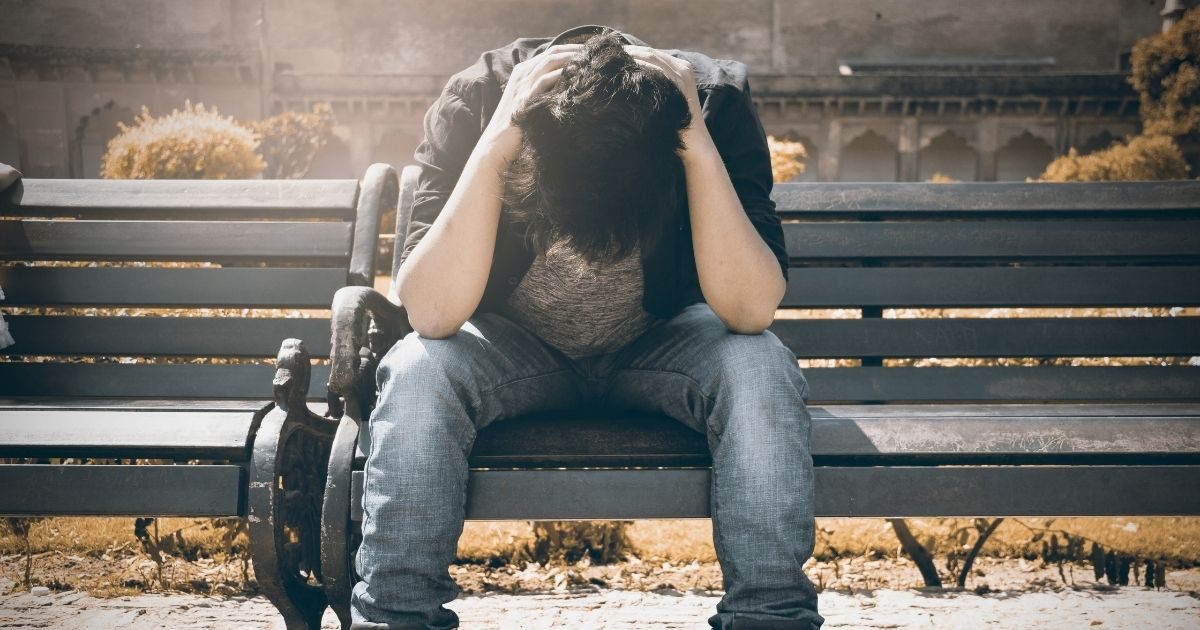
For many people, the days after the holidays feel unexpectedly heavy. Once celebrations end and routines return, low mood, fatigue, and lack of motivation can appear. What should feel like a fresh start often feels quiet, overwhelming, and emotionally draining.
This post-holiday dip can be confusing and frustrating. The shift from excitement and connection to daily responsibilities, along with disrupted routines, unmet expectations, and seasonal changes, can make it hard to regain focus and energy. Even those who usually feel emotionally balanced may notice their mood drop during this period.
This blog explains why post-holiday depression happens, how it differs from ongoing depression, and what you can do to move forward. It offers practical, manageable ways to restore balance, rebuild routine, and gradually feel more joyful and grounded again.
What Is Post-Holiday Depression?
Post-holiday depression is a term commonly used to describe the emotional downturn some people feel once holidays or extended celebrations come to an end. After weeks of anticipation, social connection, and changes in routine, returning to everyday life can feel abrupt and emotionally draining. This is why many people report feeling depressed after holidays are over, even when nothing is “wrong” on the surface.
Although post-holiday depression syndrome is not a clinical diagnosis, the experience itself is valid. It reflects a natural emotional response to change, rather than a personal weakness or failure to cope.
For most people, this form of depression after a holiday is temporary. As structure returns and new routines form, mood and energy levels often improve. Recognizing what post-holiday depression is can make it easier to respond with self-compassion and take steps toward feeling better.
Is Post-Holiday Depression Different From Post-Holiday Blues?
Many people use the terms post-holiday blues and post-holiday depression interchangeably, but they describe different emotional experiences. Understanding how they differ can help you recognize what you’re feeling and respond in a healthier, more supportive way, without minimizing your emotions or assuming something is wrong too quickly.
The table below highlights the key differences between post-holiday blues and post-holiday depression.
| Aspect | Post-Holiday Blues | Post-Holiday Depression |
|---|---|---|
| Intensity of feelings | Mild sadness or emotional letdown | Deeper, heavier emotional distress |
| Duration | Typically lasts a few days | May last several weeks |
| Impact on daily life | Little disruption to routine | Interferes with motivation and focus |
| Emotional experience | Temporary disappointment or nostalgia | Ongoing sadness, emptiness, or numbness |
| Recovery | Improves naturally as routine returns | Often requires intentional coping steps |
| How it’s commonly described | “Feeling a bit low.” | “Depressed after the holidays.” |
Why Do People Feel Depressed After the Holidays?
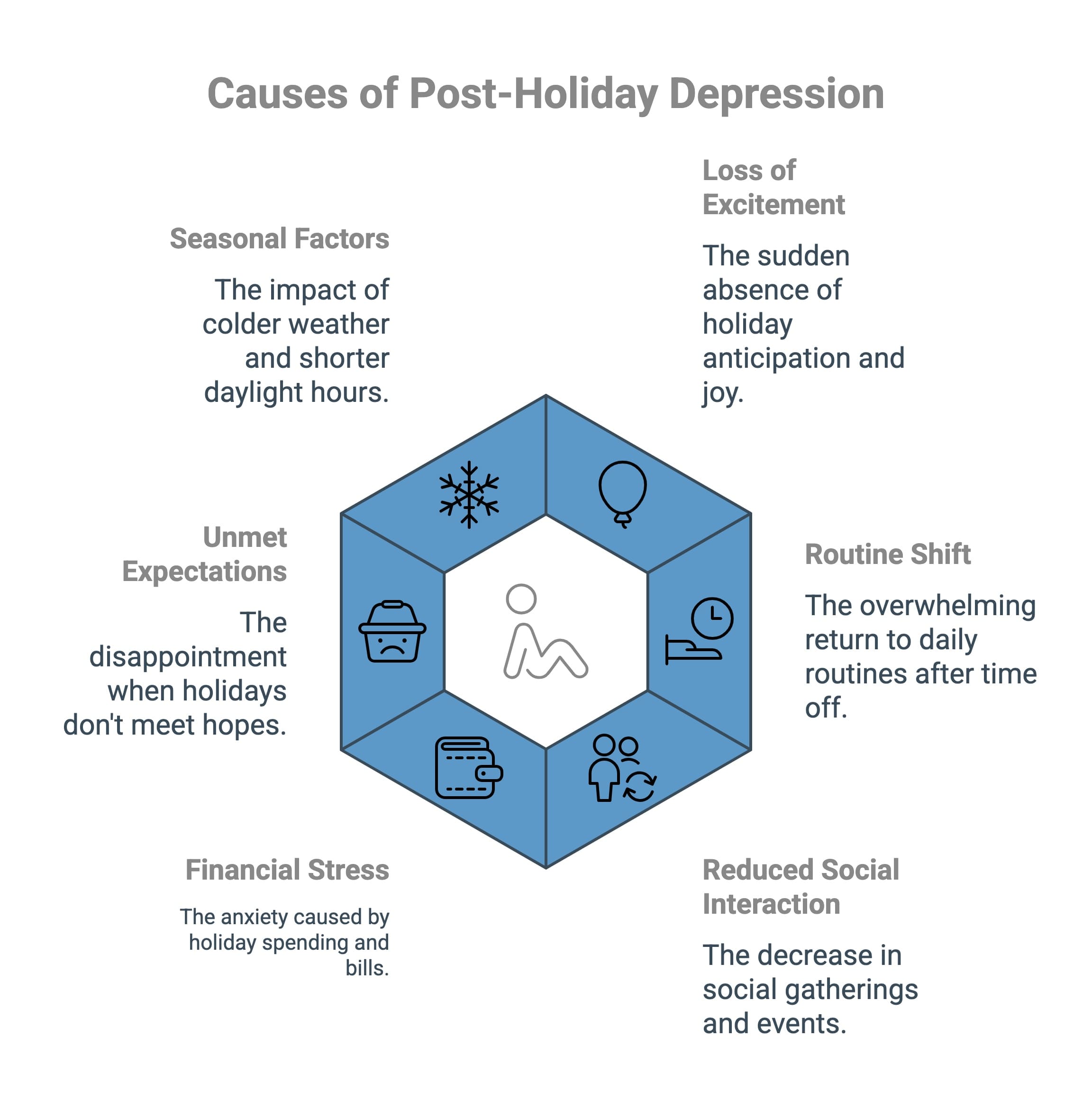
Feeling low once celebrations end is more common than many people realize. For some, this emotional shift shows up as post-holiday depression, while others describe it simply as depression after a holiday. In both cases, the underlying causes are often linked to sudden changes in routine, expectations, and emotional stimulation.
Common reasons people feel depressed after the holidays include:
- A sudden loss of excitement and anticipation after weeks of planning and celebration
- Returning to regular routines after time off, which can feel overwhelming or monotonous
- Reduced social interaction once gatherings, travel, and events come to an end
- Financial stress following holiday spending
- Unmet expectations, especially if the holidays didn’t feel as joyful as hoped
- Seasonal factors such as colder weather and shorter daylight hours.
When holidays create a temporary sense of escape or connection, their end can leave an emotional gap. This is why many people feel depressed after the holidays are over, even if life appears stable on the surface. Understanding these triggers can help normalize the experience and make it easier to work through post-holiday depression with patience and self-awareness.
What Are the Common Post-Holiday Depression Symptoms?
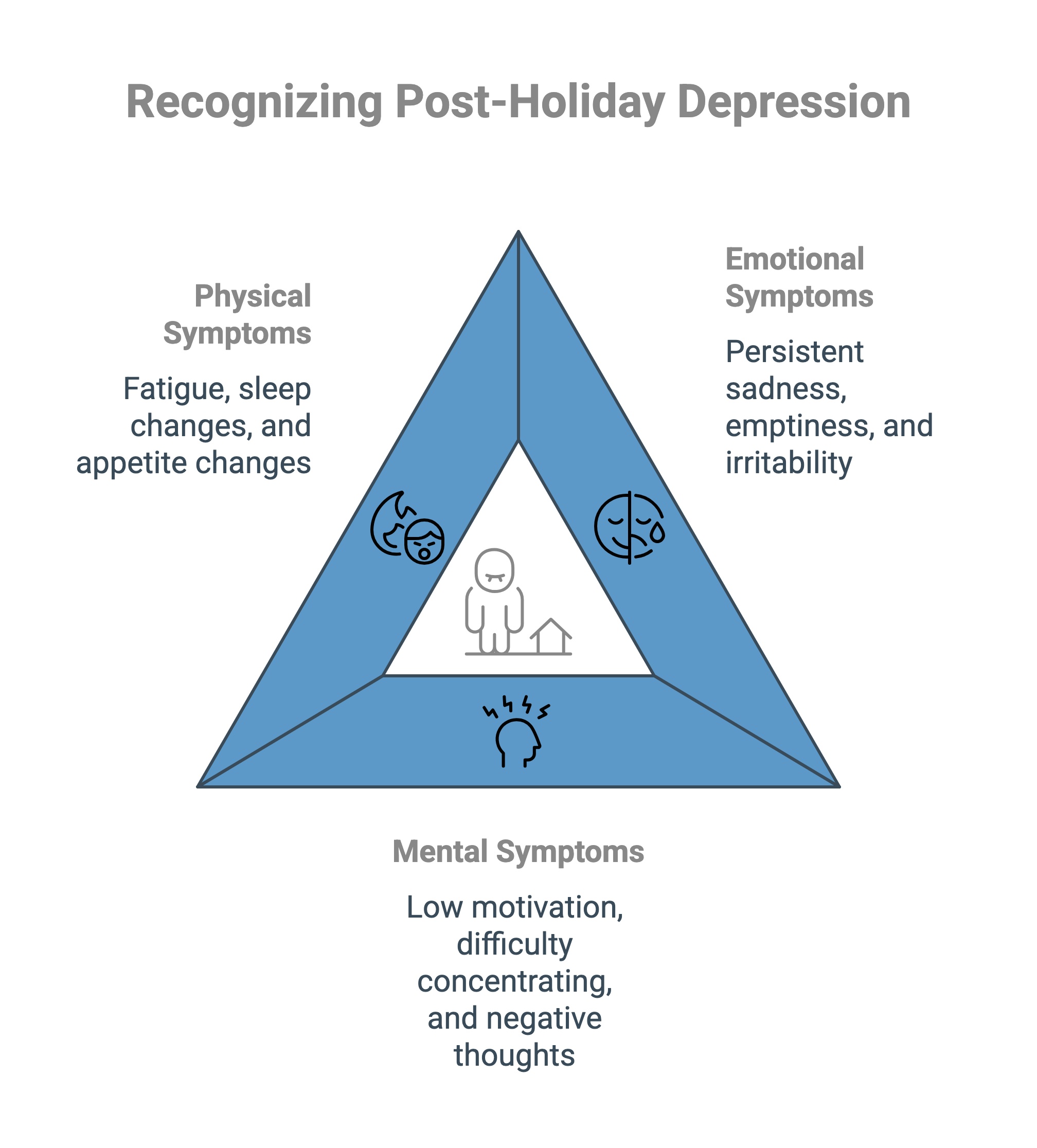
Post-holiday depression can show up in different ways, and the symptoms aren’t always obvious at first. Many people notice emotional and physical changes once the excitement of the holidays fades, especially if they feel depressed after the holidays or find it hard to return to normal routines.
Common post-holiday depression symptoms include:
1. Emotional Symptoms
- Persistent sadness or low mood
- Feeling empty, disconnected, or emotionally flat
- Increased irritability or frustration
- Loss of interest in activities that were recently enjoyable
2. Mental and Cognitive Symptoms
- Low motivation or reduced drive
- Difficulty concentrating or staying focused
- Negative or self-critical thoughts
- Feeling overwhelmed by everyday responsibilities
3. Physical and Behavioral Symptoms
- Ongoing fatigue or low energy
- Changes in sleep patterns
- Appetite changes or emotional eating
- Pulling back from social interactions
Experiencing some of these symptoms does not automatically mean there is a serious issue. For many people, this reflects depression after a holiday and improves as structure and emotional balance return. Paying attention to these signs can help you respond early and take steps to support your well-being.
How Long Does Post-Holiday Depression Last?
Post-holiday depression can last anywhere from a few days to a couple of weeks, depending on emotional resilience, life circumstances, and how quickly daily routines are re-established. As work, social interaction, and structure return, many people notice gradual improvements in mood and energy.
However, if you continue to feel depressed after the holidays for several weeks without improvement or experience increasing withdrawal or difficulty functioning, it may signal more than a temporary adjustment. In those cases, additional support can help you move toward recovery.
How to Deal With Post-Holiday Depression? 10 Strategies Inside
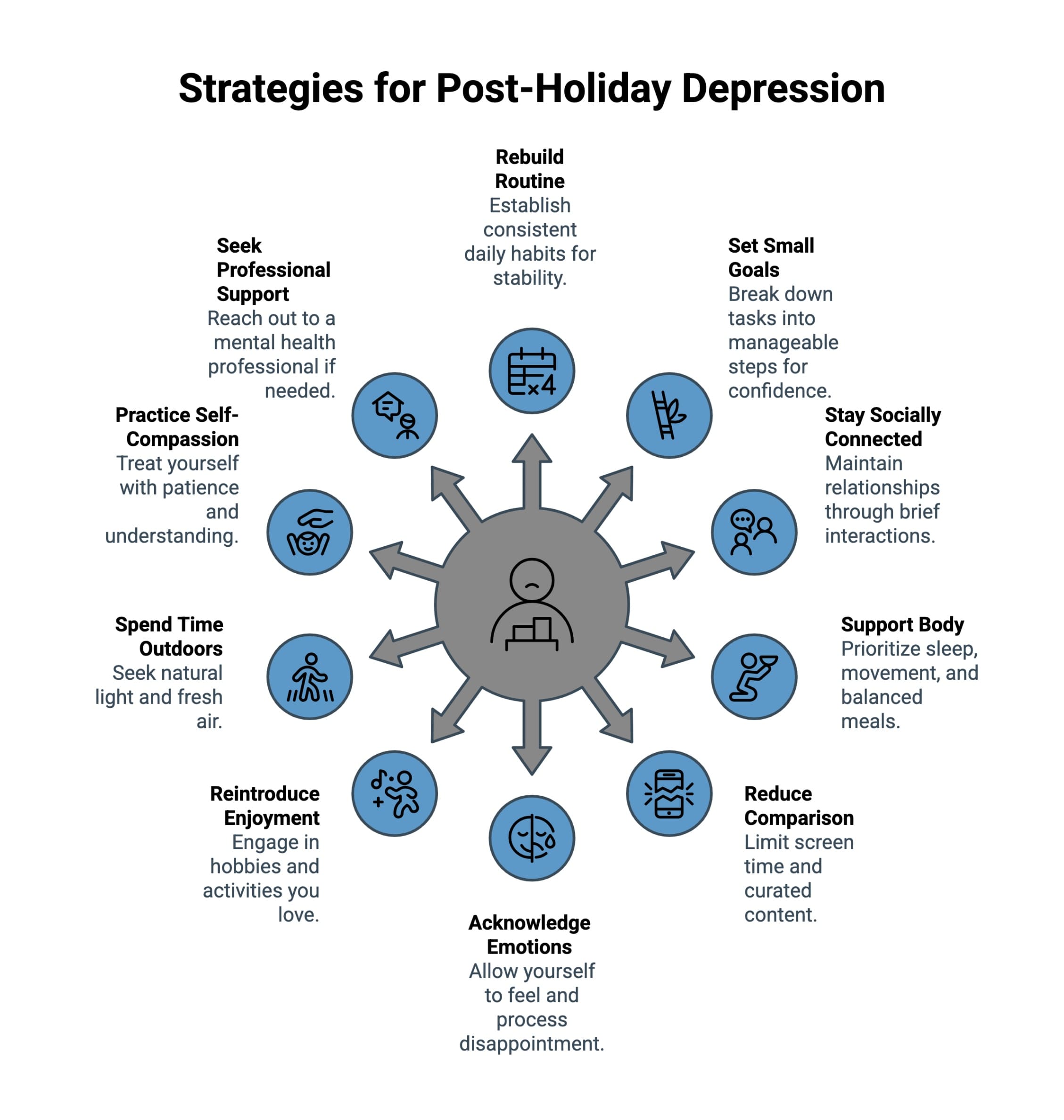
Learning how to deal with post-holiday depression often means focusing on small, steady changes rather than trying to feel better all at once. When the holidays end, the emotional shift can feel sudden and unsettling, especially if you are feeling depressed after the holidays or struggling to regain motivation.
Here are practical steps that can help you deal with post-holiday depression and gradually restore emotional balance.
1. Rebuild a Gentle Daily Routine
After the holidays, the lack of structure can intensify feelings of depression after a holiday. Creating a simple daily routine, such as consistent wake-up times, regular meals, or a short planning session, can restore stability without feeling overwhelming.
2. Set Small and Achievable Goals
Large goals can feel intimidating during periods of low mood. Breaking tasks into small, manageable steps helps rebuild confidence and momentum while dealing with post-holiday depression.
3. Stay Socially Connected
Social withdrawal is common when feeling depressed after the holidays are over. Staying connected through brief conversations, messages, or casual meetups can reduce isolation, even if you do not feel particularly social at first.
4. Support Your Body With Rest and Movement
Fatigue can worsen post-holiday depression symptoms. Prioritizing sleep, light physical activity, and balanced meals helps regulate mood and energy levels over time.
5. Reduce Comparison and Overstimulation
Constant exposure to curated content on social media can make post-holiday blues depression feel heavier. Limiting screen time and creating mental space allows you to focus on your own pace of recovery.
6. Acknowledge the Emotional Letdown
Post-holiday sadness often comes from the contrast between high expectations and everyday reality. Allowing yourself to acknowledge disappointment or grief, rather than pushing it away, can reduce emotional pressure and help feelings pass more naturally.
7. Reintroduce Activities You Enjoy
Even small moments of pleasure matter when dealing with post-holiday depression. Reintroducing hobbies, creative outlets, or simple routines you enjoy can help restore a sense of normalcy and emotional reward.
8. Spend Time Outdoors and Seek Natural Light
Shorter days and reduced sunlight can affect mood after the holidays. Spending time outdoors, even briefly, can support emotional regulation and help counter seasonal low mood.
9. Practice Self-Compassion
It is common to feel frustrated for not “bouncing back” quickly. Practicing self-compassion by adjusting expectations and treating yourself with patience can ease emotional strain during recovery.
10. Know When to Seek Professional Support
If post-holiday depression feels intense, lasts longer than expected, or interferes with daily functioning, reaching out to a mental health professional can be a positive step. Therapy or counseling can help you understand what you are experiencing and develop coping strategies tailored to your needs.
These strategies are meant to support gradual improvement. Seeking help is not a sign of failure, but a meaningful way to care for your mental and emotional well-being when self-support alone is not enough.
Looking for Professional Support to Navigate Post-Holiday Depression?
If post-holiday depression feels overwhelming or long-lasting, professional support can help. At Total Life Counseling, we support children, teens, adults, couples, and families through emotional challenges, life transitions, and ongoing mental health concerns.
We provide a range of counseling services designed to meet you where you are, including:
- Individual therapy for depression, anxiety, and emotional stress
- Couples and family counseling to strengthen communication and relationships
- Child and teen counseling for behavioral, emotional, and social challenges
- Evidence-based approaches such as cognitive behavioral therapy, play therapy, and trauma-informed care
We offer both in-person and online counseling options to make getting support more accessible and convenient.
Seeking help is a proactive step toward healing. We are here to support you as you work through post-holiday depression and move toward greater emotional balance and well-being.
Final Thoughts
Feeling low after the holidays is a normal response to change, not a personal shortcoming. Post-holiday depression often reflects the shift from excitement back to routine, and for many people, it eases with small, intentional steps.
Focus on rebuilding structure, staying connected, and listening to your emotional needs. And if the feelings linger, seeking professional support is a healthy next step. With time and care, balance and joy can return.
Frequently Asked Questions
Is it normal to feel down after holidays like Christmas?
Yes. After the holiday season, the end of the holidays, family gatherings, stressors, and January routines can trigger feelings of sadness, loneliness, or a funk. For some, seasonal affective disorder or disrupted circadian rhythm plays a role.
Can young people also experience post-holiday letdown?
Yes. During the holiday period, changes around school breaks, family members, and holiday celebrations can lead to feelings of anxiety, loneliness, or symptoms of depression in young people, especially around the new year or New Year’s Eve.
What support resources are available for post-holiday depression in the US?
Mental health resources include mental health services, American Psychological Association guidance, and the National Alliance on Mental Illness (NAMI), which offer support for mental health problems, extreme cases, and suicidal thoughts.
Is post-holiday depression real?
Yes. It is a real emotional response during certain times of the year, often linked to the end of the holidays, seasonal affective disorder, and feelings of sadness or loneliness after holiday celebrations.
How to get over post-holiday depression?
Recovery often involves restoring routine, relaxation, mindfulness, social connection with family members, and managing stressors. These steps support mental health during January and the new year.
Is it normal to feel depressed after the holidays?
Yes. Many people experience a temporary funk after the holiday season due to changes in routine, family gatherings ending, and heightened loneliness during the holiday period.
When should I seek professional help for post-holiday depression?
Seek mental health services if symptoms of depression persist, worsen, involve suicidal thoughts, substance use, or resemble clinical depression or other mental illness, especially in extreme cases.
Filed in: Blog, Holiday Depression
Share This Story, Choose Your Platform!
Total Life Counseling Center consists of Licensed Counselors, masters level therapists, Español counselors, Licensed Mental Health Counselors, business coaches, and image enhancement coaches who provide counseling for emotional, mental, physical and spiritual care including marriage, individual, family, substance abuse and more. TLC’s family, trauma and marriage experts have been interviewed on National and Local TV/Radio over 200 times for their expert advice on Fox News, OWN, WETV, ABC’s Medical Minute and more. Our skilled counselors are relational, approachable and specialists providing therapy services in the Central Florida area including: Orlando, Winter Park, MetroWest, Windermere, Dr. Phillips, East Orlando, Lake Mary, and Clermont, Boca Raton Florida, and Dallas, TX.
About the Author: Sarah Dornas