

How Counseling for Stress at Work Can Transform You?

Key Highlights
- Work stress develops over time from constant pressure, long hours, and limited recovery, often leading to burnout and emotional exhaustion.
- Counseling for stress at work helps identify stress triggers and change patterns that keep stress ongoing.
- Ongoing fatigue, anxiety, sleep issues, and declining work performance signal the need for professional support.
- Structured therapies such as cognitive and mindfulness-based approaches improve emotional regulation and stress response.
- Effective work stress counseling focuses on practical, skill-based strategies with regular progress review.
- Long-term therapy supports healthier boundaries, better focus, and improved relationships.
- Total Life Counseling provides evidence-based, flexible therapy options to help individuals manage work-related stress and burnout.
For many professionals today, work-related stress is no longer occasional. It has become a constant source of pressure that leads to burnout, anxiety, and emotional exhaustion. Deadlines, performance expectations, and an always-on work culture often push people beyond their limits, with stress affecting sleep, health, and relationships.
This type of stress rarely appears all at once. It builds gradually through long hours, mental overload, and limited recovery, leaving you feeling overwhelmed, irritable, or emotionally disconnected even outside of work. Over time, it can reduce both your effectiveness at work and your overall well-being.
In this blog, you will learn how counselling for stress at work helps you understand the root causes of work stress, develop healthier coping strategies, and restore balance so work no longer controls your mental and emotional health.
What Is Work-Related Stress and Why Does It Feel Overwhelming?
Work-related stress refers to the emotional and mental strain that arises when job demands consistently exceed your ability to cope. It can stem from heavy workloads, tight deadlines, unclear roles, lack of support, job insecurity, or challenging workplace relationships. While short-term pressure can be motivating, ongoing stress places your nervous system in a constant state of alert.
What makes work stress feel overwhelming is its cumulative effect. When stress is repeated without enough recovery, your body and mind do not get the chance to reset.
This can lead to persistent anxiety, difficulty concentrating, irritability, fatigue, and a sense of losing control. Over time, many people begin to feel stuck, exhausted, and unsure how to regain balance without support.
What Are The Common Causes of Work-Related Stress?
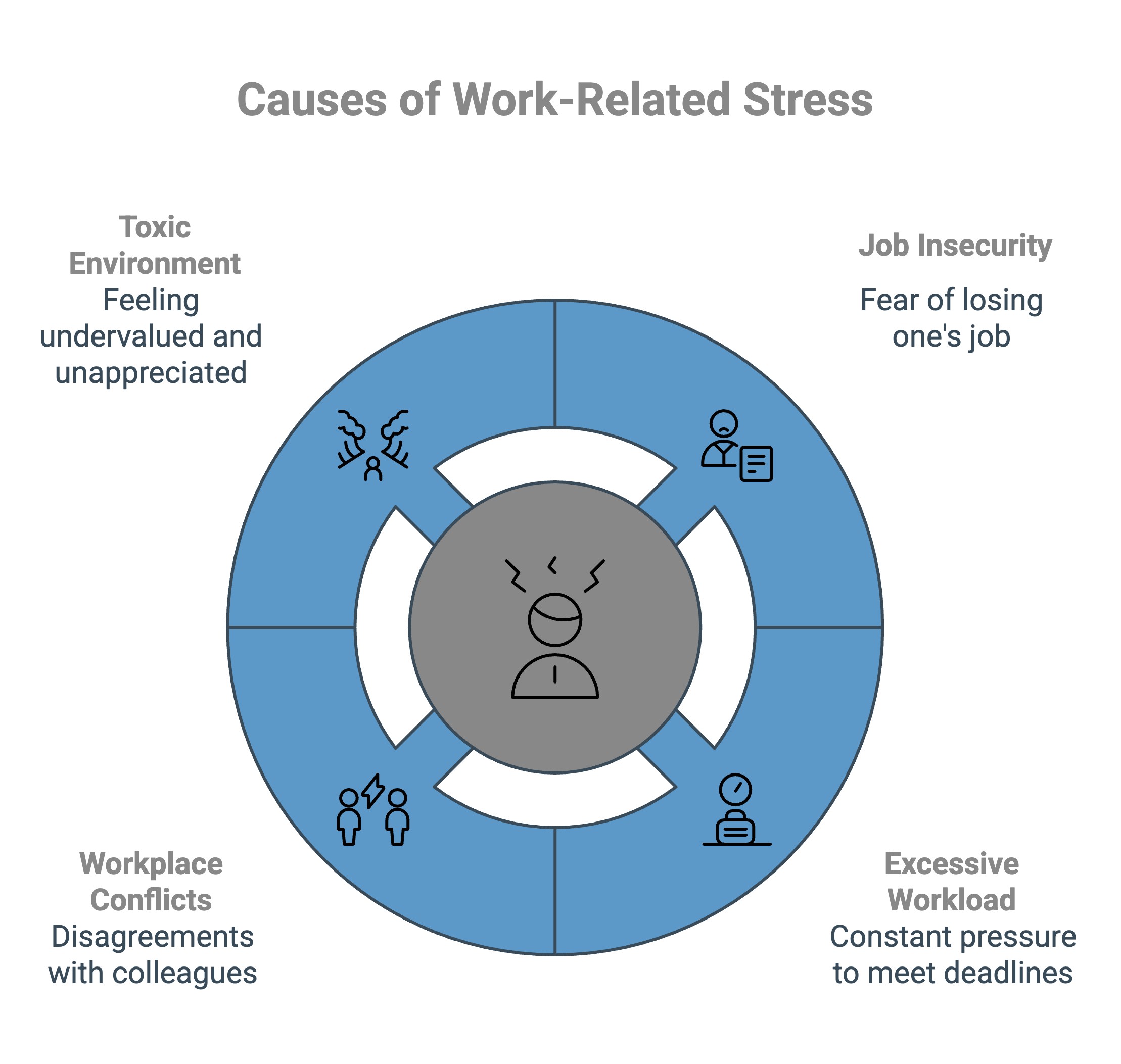
Job stress can stem from various workplace stressors that make your professional life difficult. A lack of control over your tasks or decisions can also cause significant frustration and feelings of helplessness.
When these stress triggers overlap, they can quickly become overwhelming. Common sources of work-related stress include:
- Job insecurity and the fear of losing your position
- An excessive workload with constant pressure to meet deadlines
- Conflicts with colleagues or poor communication
- A negative or toxic work environment where you feel undervalued
When you feel unsupported at work, these feelings can intensify. A negative work culture can amplify your stress levels, turning your job into a major source of mental strain.
What Are The Signs and Symptoms Indicating You May Need Counseling?
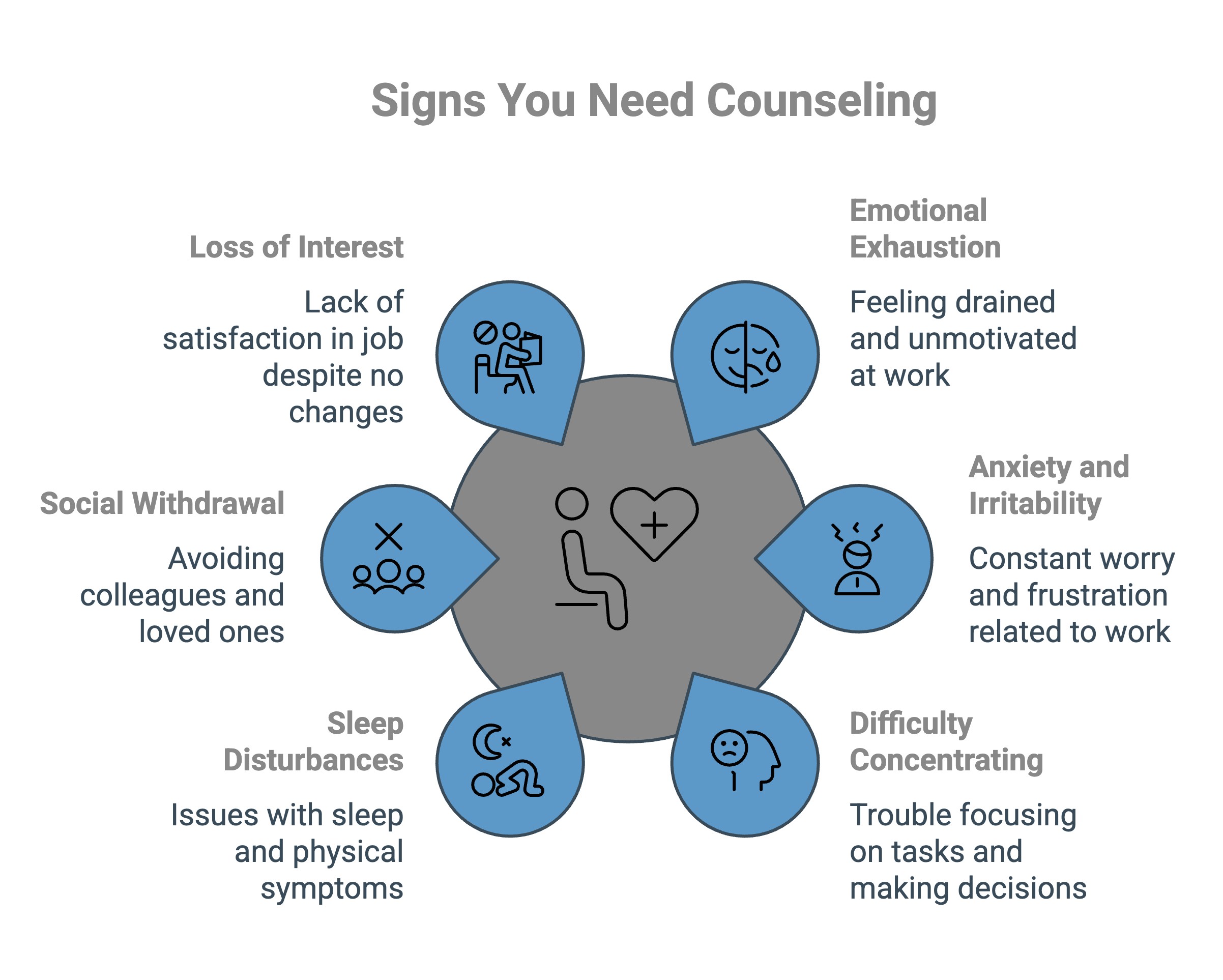
Work stress becomes a concern when it starts affecting how you feel, think, and function on a regular basis. While occasional pressure is normal, persistent stress that does not improve with rest or time off often signals the need for professional support.
You may want to consider counseling if you notice:
- Emotional exhaustion or burnout, feeling drained, unmotivated, or detached from your work
- Ongoing anxiety or irritability, especially related to deadlines, performance, or job security
- Difficulty concentrating or making decisions, even on routine tasks
- Sleep disturbances or physical symptoms, such as fatigue, headaches, or constant tension
- Withdrawal from colleagues or loved ones, or increased conflict at work or home
- Loss of interest or satisfaction in your job, even if nothing specific has changed
When these symptoms persist, counseling can help you understand what is driving your stress and develop healthier ways to cope before it begins to impact your long-term well-being.
What Is Work Stress Counseling?
Work stress counseling is a specialized form of therapy designed to help you manage the pressures of your professional life. With the guidance of mental health professionals, you can explore the specific challenges you face at your job and develop effective stress management strategies.
This type of counseling provides a safe and supportive space to talk about your experiences. A therapist can help you identify stress triggers, learn new coping mechanisms, and build resilience. The goal is to equip you with the tools you need to navigate stressful work situations and improve your overall well-being.
If work stress is affecting your sleep, mood, or performance, we’re here to help. Book a session with Total Life Counseling.
How Counseling for Stress at Work Supports Emotional Well-being?
Counseling for stress at work provides a safe, supportive space to step back and understand what is driving your stress. Rather than focusing only on surface-level symptoms, therapy helps you explore emotional triggers, workplace pressures, and thought patterns that keep stress ongoing. Feeling heard and supported often brings immediate emotional relief.
Through counseling for stress at work, you can develop skills that improve how you respond to pressure and restore balance, including:
- Emotional awareness by recognizing stress triggers and early warning signs before burnout sets in
- Healthier coping strategies to manage anxiety, overwhelm, and emotional fatigue
- Stronger boundaries that reduce overwork and protect your mental wellbeing
- Greater resilience to handle challenges with clarity instead of constant tension
Should You Choose Counseling or Self-Help for Work Stress?
Self-help strategies can be useful for managing occasional stress, but they often provide only temporary relief. When stress becomes ongoing or starts affecting your work, health, or relationships, counseling offers deeper support by addressing the underlying causes and helping you build lasting coping skills.
Here’s a simple comparison to help you understand the difference:
| Feature | Counseling | Self-Help Approaches |
|---|---|---|
| Guidance | Provided by a trained mental health professional. | Self-directed and managed by you. |
| Structure | Follows a structured, evidence-based treatment plan. | Flexible and can be used as needed. |
| Focus | Addresses root causes and builds long-term skills. | Often provides immediate, short-term relief. |
| Personalization | Tailored specifically to your individual needs and goals. | General strategies, not specific to your situation. |
What Are the Long-Term Benefits of Therapy for Work Stress?
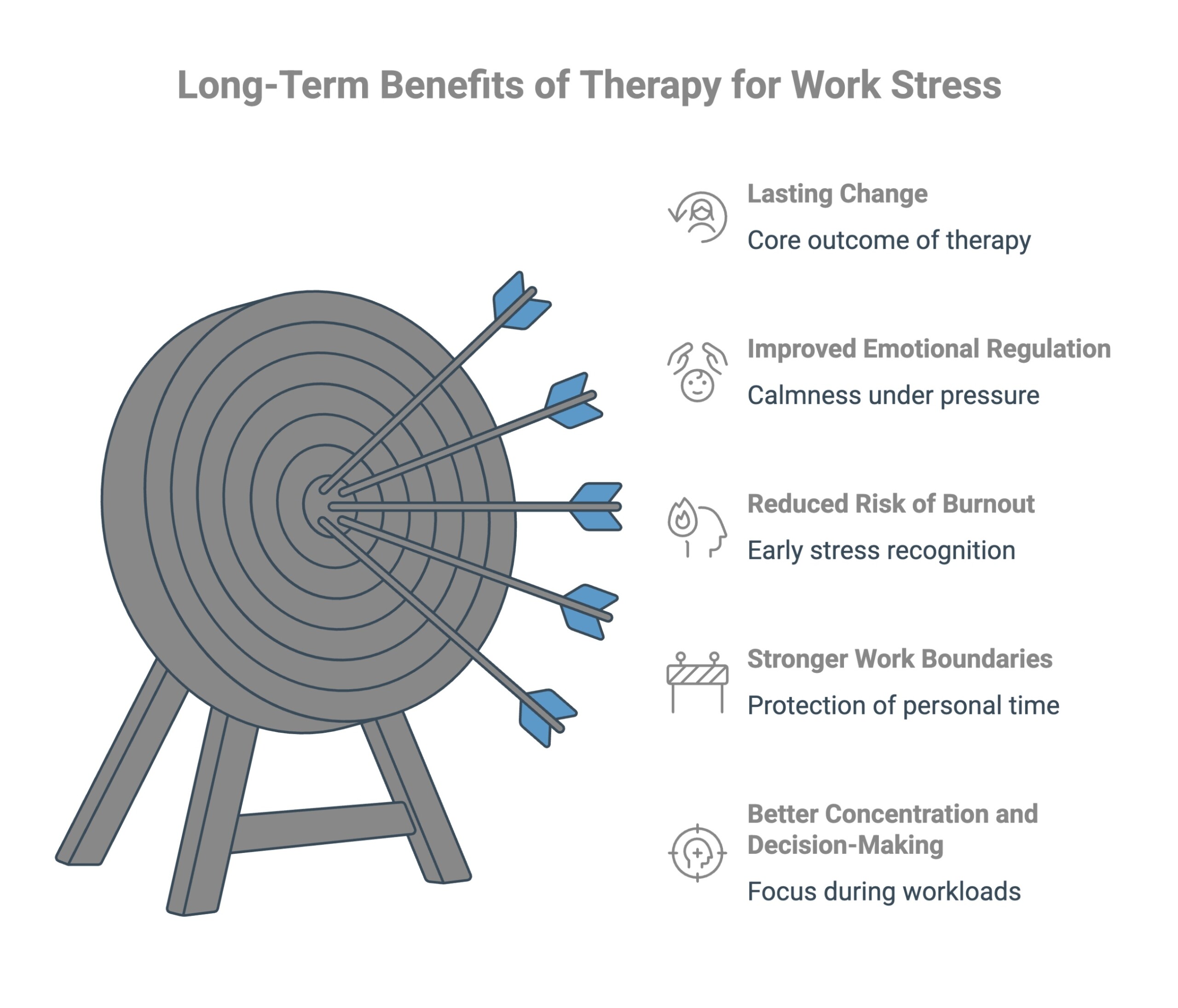
Therapy for work stress supports lasting change by helping you understand stress patterns and respond to pressure in healthier ways. Instead of repeatedly reaching a breaking point, therapy equips you with skills that sustain your well-being over time.
Long-term benefits of therapy may include:
- Improved emotional regulation, allowing you to stay calm and focused during high-pressure situations
- Reduced risk of burnout by recognizing stress early and addressing it before it escalates
- Stronger work boundaries, helping you protect personal time and energy
- Better concentration and decision-making, even during demanding workloads
- Healthier relationships, both at work and at home, due to improved communication and emotional balance
These benefits help create a more sustainable and fulfilling relationship with work rather than constant stress management.
When Should You Consider Professional Help for Workplace Stress?
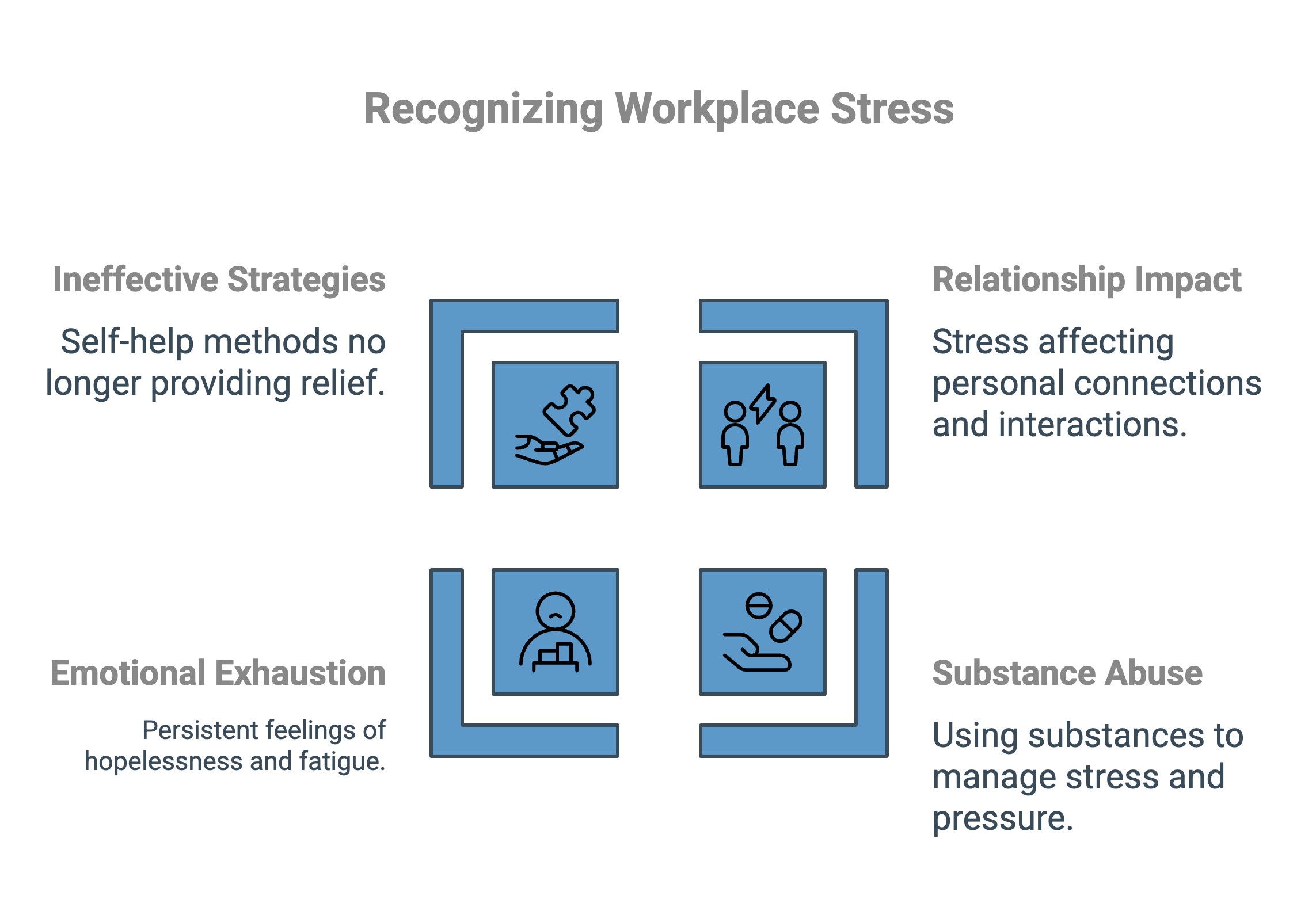
It can be hard to know when to reach out for professional help, but certain signs indicate that your stress has become unmanageable. If your stress is causing physical symptoms like high blood pressure or chronic pain, it’s a clear signal that your body is struggling to cope.
Another key indicator is when chronic stress starts to dominate your life. If you find yourself trapped in a cycle of negative thoughts or notice significant behavioral changes, professional support can make a difference. These mental health challenges can be difficult to overcome on your own.
Consider seeking help if you notice any of the following:
- Your stress is impacting your personal relationships.
- You are turning to substance abuse to cope with the pressure.
- Feelings of hopelessness or emotional exhaustion are constant.
- Self-help strategies are no longer effective.
If workplace stress is severely affecting your quality of life, a therapist can provide the guidance and tools you need to move forward.
What Types of Therapy Approaches Help With Work Stress?
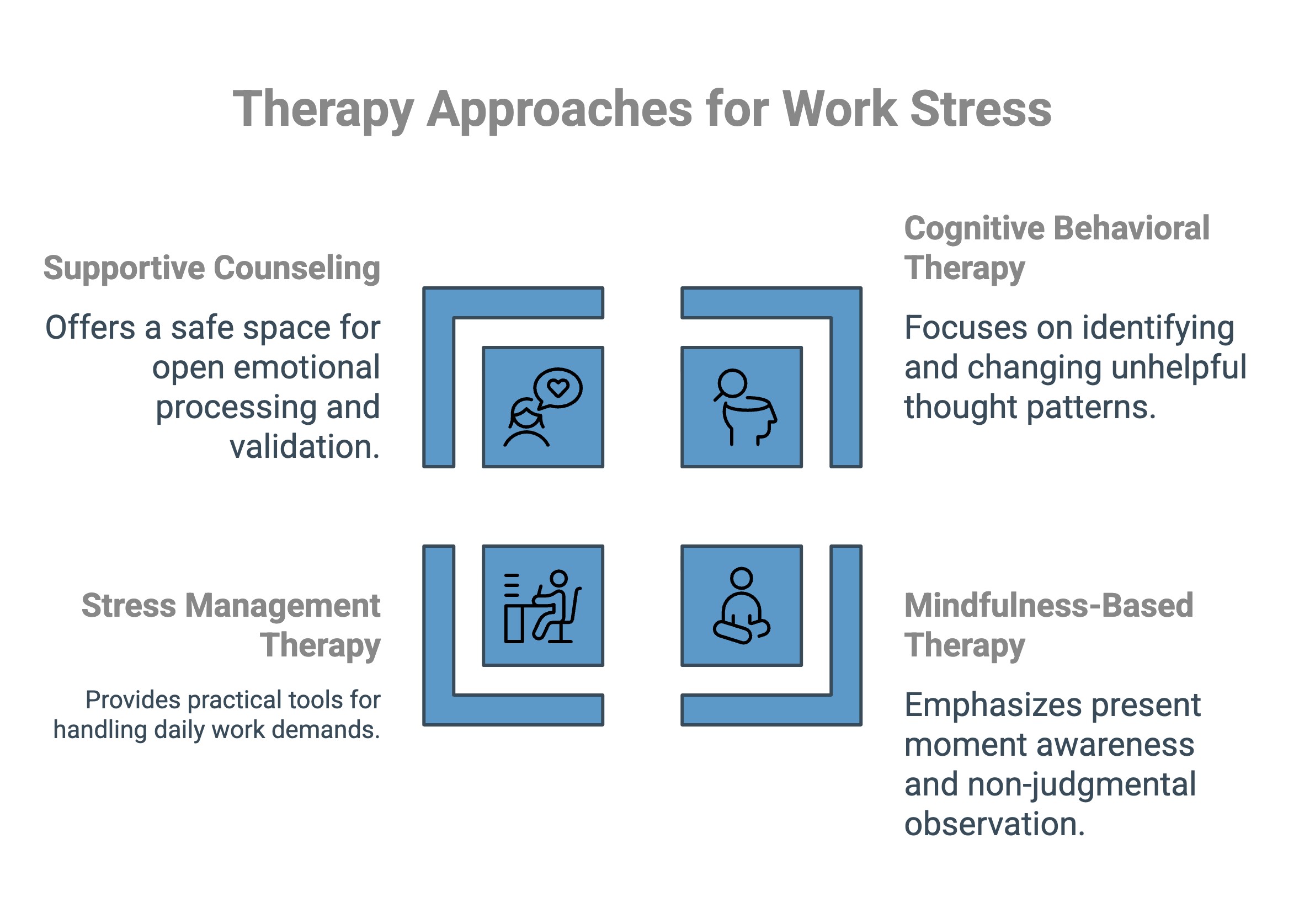
Different therapy approaches address work stress in specific ways, depending on what is driving your overwhelm. A therapist may use one method or blend approaches to support both immediate relief and long-term emotional balance.
- Cognitive Behavioral Therapy (CBT) focuses on how your thoughts influence stress and emotional reactions at work. It helps you identify unhelpful thinking patterns, such as constant self-criticism or fear of failure, and replace them with healthier, more realistic responses. Over time, this reduces anxiety and improves confidence at work.
- Mindfulness-Based Therapy helps you become more aware of your thoughts, emotions, and physical stress responses in the moment. By practicing presence and non-judgmental awareness, you learn to reduce mental overload, manage pressure calmly, and prevent stress from escalating during busy workdays.
- Stress Management Therapy centers on practical tools for handling daily work demands. This approach may include time management, relaxation techniques, and boundary-setting to reduce emotional exhaustion and improve work-life balance.
- Supportive Counseling provides a space to talk openly about work challenges without judgment. It helps you process emotions, gain clarity, and feel validated while developing healthier ways to cope with ongoing stress and workplace pressures.
How Do You Find the Right Therapy for Work–Related Stress and Burnout?
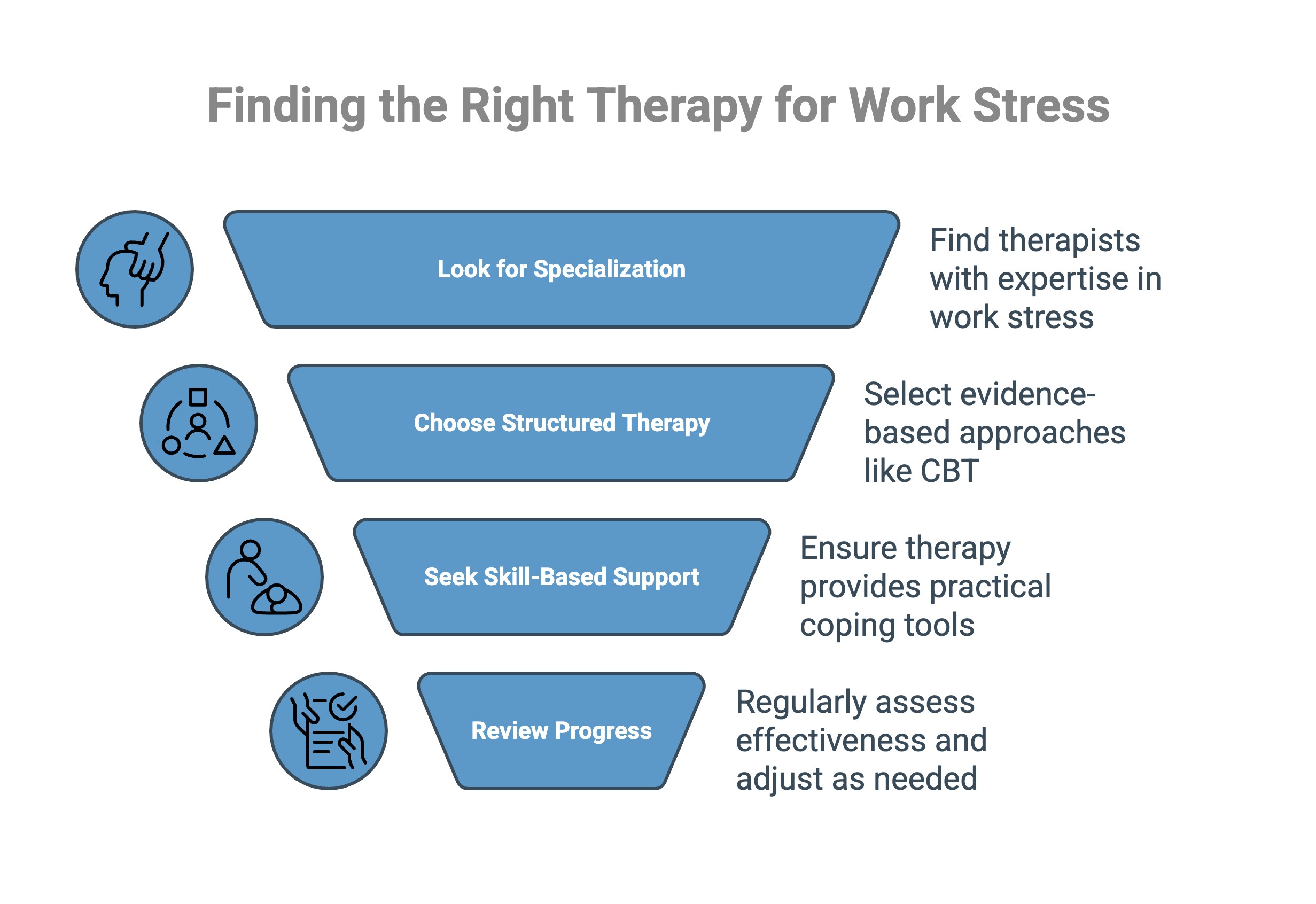
Finding the right therapy means knowing exactly what to look for and why it matters. Work stress and burnout need targeted, skills-based support rather than general talk therapy alone.
Searching for work stress counseling near me can help you connect with therapists who specialize in workplace stress, burnout, and practical coping strategies tailored to your daily work demands.
1. Look for a Therapist Who Specializes in Work-Related Stress
Choose a licensed therapist who explicitly works with workplace stress, burnout, anxiety, or professional performance issues. These therapists understand job pressure, role overload, perfectionism, and work-life imbalance, and they tailor sessions around real work situations, not just general emotional concerns.
2. Choose Structured, Evidence-Based Therapy
Effective therapy for work stress is usually structured, not open-ended. Approaches like cognitive behavioral therapy or stress-focused therapy use clear frameworks, exercises, and goals. Sessions focus on identifying stress triggers, changing unhelpful thought patterns, and practicing skills that reduce stress in real work scenarios.
3. Look for Skill-Based Support You Can Use at Work
The right therapy teaches practical tools you can apply during your workday. This may include techniques to manage anxiety before meetings, handle deadlines without panic, set boundaries with managers, and stop overthinking after work hours. Skill-based therapy helps you function better, not just talk about stress.
4. Make Sure Progress Is Actively Reviewed
Quality therapy includes regular check-ins on what is improving and what still feels difficult. A therapist should help you measure changes in stress levels, focus, sleep, and emotional balance, and adjust the approach if burnout symptoms persist. This ensures therapy stays effective and goal-oriented.
The Counseling Process: What Can You Expect?
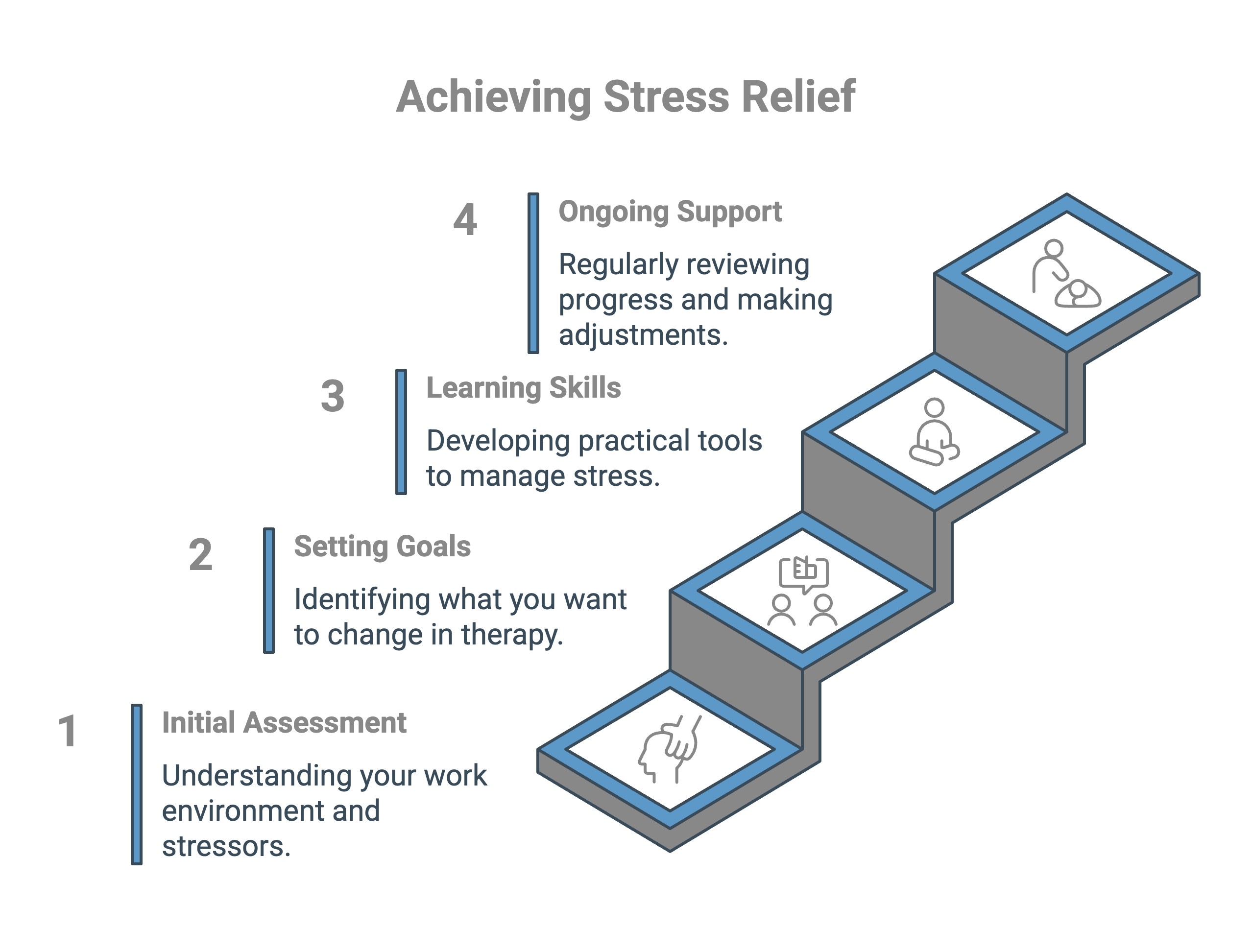
Starting work–related stress counseling can feel uncertain if you are not sure what happens in therapy. Understanding the process helps reduce anxiety and makes it easier to take the first step.
1. Initial Assessment and Understanding Your Stress
In the first few sessions, your therapist focuses on understanding your work environment, stressors, and how stress is affecting your thoughts, emotions, and daily functioning. This helps clarify whether stress is situational, chronic, or linked to burnout.
2. Setting Clear Goals for Therapy
Together, you and your therapist identify what you want to change. Goals may include reducing anxiety, preventing burnout, improving work-life balance, or managing pressure more effectively at work. Clear goals guide each session and keep therapy focused.
3. Learning and Practicing Coping Skills
As therapy continues, you learn practical tools to manage stress, regulate emotions, and respond differently to work challenges. These skills are practiced in sessions and applied to real situations, helping stress feel more manageable over time.
4. Ongoing Support and Progress Review
Throughout counseling, your therapist regularly reviews what is improving and what still feels challenging. Adjustments are made as needed to ensure therapy continues to support lasting stress relief and emotional balance.
How Can Total Life Counseling Help With Work-Related Stress?
When work stress starts affecting your focus, health, or relationships, managing it alone can feel overwhelming. Total Life Counseling helps individuals address work-related stress and burnout through structured, evidence-based counseling.
We provide professional, evidence-based counseling for individuals experiencing work-related stress, burnout, and anxiety.
With options for in-person and online sessions, we offer flexible support that fits busy work schedules. Our structured, goal-focused approach helps clients restore balance, improve emotional resilience, and prevent work stress from affecting their health and relationships.
Final Words
Ongoing work stress does not have to control your life. With the right support, you can move from constant pressure to greater clarity, balance, and emotional control. Counseling helps you address stress at its source and build skills that last beyond short-term relief.
Taking action early can protect your well-being, relationships, and long-term happiness. Support is available, and a healthier, more sustainable way to manage work stress is within reach.
Frequently Asked Questions
How do I find the right therapist for dealing with work stress?
Look for licensed therapists experienced in workplace stress who use evidence-based therapeutic approaches. Choose someone who understands your specific needs, sources of stress, job title, and supports healthy coping mechanisms, clear boundaries, and work performance improvement.
Are there specific types of therapy best suited for stress at work?
Yes. Common therapeutic approaches include cognitive-based methods and mindfulness techniques. These focus on stress management techniques, deep breathing exercises, progressive muscle relaxation, communication skills, and healthy strategies for managing physical and emotional strain.
What should I expect during my first counseling session for work-related stress?
Your first session typically explores the causes of stress, work demands, personal life impacts, and physical symptoms such as changes in sleep or heart rate. The therapist helps identify goals, coping strategies, and healthy boundaries to support a more balanced life.
What role do employers play in supporting employee counseling for workplace stress?
Employers may offer mental health resources such as employee assistance programs, promote a supportive environment, encourage social support, and allow access to counseling. These efforts can improve job satisfaction, personal growth, and overall employee well-being.
What is the best therapy for work stress?
There is no single best option. Effective therapy often uses evidence-based therapeutic approaches that teach stress management techniques, mindfulness techniques, and healthy coping mechanisms to improve work performance, physical health, and emotional balance.
How to let go of stress from work?
Letting go of work stress involves setting clear boundaries, practicing deep breathing exercises, regular exercise, adequate sleep, and physical activity. These healthy ways help lower heart rate, reduce tension, and support a balanced life.
How to handle mental stress at work?
Handling mental stress requires identifying sources of stress, using stress management techniques, healthy coping mechanisms, social support, and mental health resources. Consistent healthy habits can protect job satisfaction, personal life, and overall well-being.
How does therapy help with work-life stress for families?
Therapy helps families manage work-life stress by improving communication skills, strengthening healthy boundaries, and building social support. This support protects personal life, relationships with family members, and promotes a more balanced life.
How does cognitive therapy work for stress relief?
Cognitive therapy helps identify causes of stress and unhelpful thinking patterns. It teaches stress management techniques, mindfulness techniques, and healthy coping mechanisms to reduce anxiety, regulate heart rate, and improve emotional control.
How to find therapy for work-related stress and burnout?
Cognitive therapy helps identify causes of stress and unhelpful thinking patterns. It teaches stress management techniques, mindfulness techniques, and healthy coping mechanisms to reduce anxiety, regulate heart rate, and improve emotional control.
Filed in: Work Stress
Share This Story, Choose Your Platform!
Total Life Counseling Center consists of Licensed Counselors, masters level therapists, Español counselors, Licensed Mental Health Counselors, business coaches, and image enhancement coaches who provide counseling for emotional, mental, physical and spiritual care including marriage, individual, family, substance abuse and more. TLC’s family, trauma and marriage experts have been interviewed on National and Local TV/Radio over 200 times for their expert advice on Fox News, OWN, WETV, ABC’s Medical Minute and more. Our skilled counselors are relational, approachable and specialists providing therapy services in the Central Florida area including: Orlando, Winter Park, MetroWest, Windermere, Dr. Phillips, East Orlando, Lake Mary, and Clermont, Boca Raton Florida, and Dallas, TX.
About the Author: Jim West
