

What Is Psychodynamic Therapy and How Does It Work?

Key Highlights
- Psychodynamic psychotherapy is a form of therapy that explores how the unconscious mind, past experiences, and emotional patterns influence present thoughts, feelings, and human behavior.
- This approach helps individuals gain deeper self-awareness by understanding hidden emotional conflicts and patterns that affect relationships, decisions, and overall well-being.
- Common therapeutic techniques in psychodynamic therapy may include exploring past experiences, discussing emotional reactions, and sometimes methods like dream analysis to uncover deeper insights.
- The therapeutic relationship between the client and therapist plays an important role in helping individuals safely explore emotions and develop healthier coping strategies.
- Research highlights several benefits of psychodynamic therapy, including improved emotional awareness, stronger relationships, and long-term personal growth.
- Total Life Counseling (TLC) offers compassionate support from a trained psychodynamic therapist, helping individuals explore emotional patterns and build healthier responses to life’s challenges.
Many people searching for what psychodynamic therapy is are often trying to understand why certain emotions, relationship challenges, or mental health concerns continue to appear in their lives. When these patterns feel difficult to explain, professional therapy can help uncover the deeper causes.
In many cases, emotional reactions and behaviors are influenced by past experiences, unconscious thoughts, and early relationships that shape how individuals respond to situations. Exploring these deeper influences can help people gain insight into their feelings and develop healthier coping strategies.
This blog explains how this therapy approach works, the techniques commonly used, and how it compares with other approaches such as CBT. It also explores how this method can support emotional growth and mental well-being.
What Is The Psychodynamic Therapy Definition?
Psychodynamic therapy is a form of talk therapy that focuses on understanding how unconscious thoughts, past experiences, and early relationships influence a person’s emotions and behaviors. The psychodynamic therapy definition centers on exploring deeper emotional patterns that may affect how individuals respond to challenges in their daily lives.
During therapy sessions, individuals work with a therapist to reflect on past experiences, recurring emotional reactions, and relationship patterns. The goal is to increase self-awareness and gain insight into how unresolved feelings or conflicts may influence present thoughts and behaviors.
By understanding these underlying influences, psychodynamic therapy helps individuals develop healthier perspectives, improve emotional understanding, and build more positive coping strategies for personal growth and emotional well-being.
Curious about how talking with a therapist can improve emotional well-being? Discover what talk therapy is and how it can improve mental health, and how it helps people manage stress, emotions, and daily challenges.
How Does Psychodynamic Therapy Work?
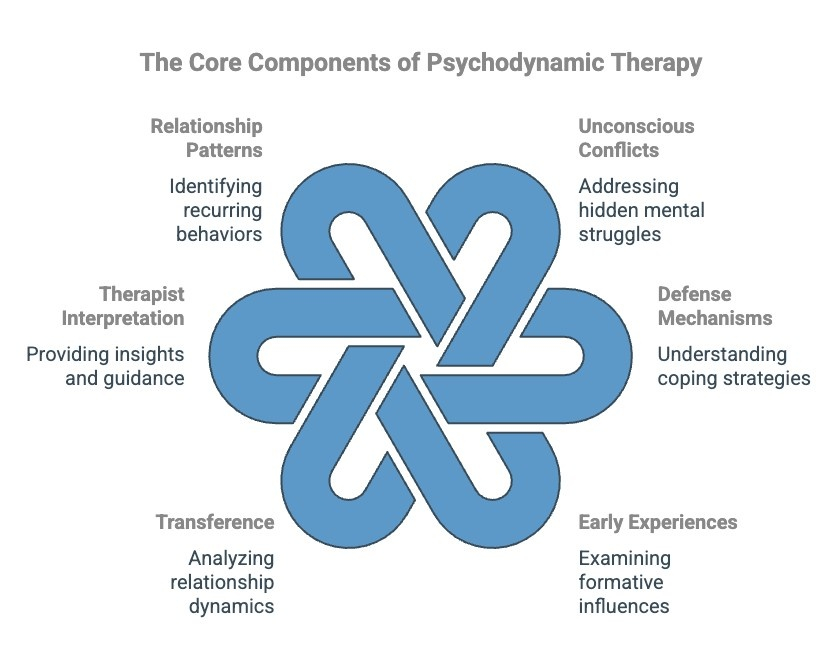
Psychodynamic therapy helps individuals understand how past experiences, emotions, and unconscious processes influence present thoughts and behaviors. Rather than focusing only on current symptoms, this approach explores deeper psychological patterns that shape emotional responses and relationships.
Below are key ways psychodynamic therapy works during treatment:
- Exploring unconscious conflicts: Therapists help individuals examine internal conflicts that may exist outside of conscious awareness. These unresolved tensions between emotions, desires, or past experiences can influence behavior and emotional reactions.
- Understanding defense mechanisms: Many people use psychological defense mechanisms such as denial, avoidance, or rationalization to cope with difficult emotions. Therapy helps individuals recognize these patterns and understand how they may affect decision-making and relationships.
- Examining early experiences and emotional development: Conversations often explore childhood experiences and formative relationships that shaped emotional responses and beliefs about oneself and others.
- Working with transference in the therapeutic relationship: During therapy, individuals may unconsciously project feelings or expectations from past relationships onto the therapist. Exploring these reactions, known as transference, can reveal important emotional patterns.
- Therapist interpretation and guided reflection: Therapists help interpret patterns that emerge in conversations, emotions, and behaviors. These interpretations support deeper insight and help individuals connect present struggles with underlying psychological processes.
- Exploring relationship patterns in present life: Sessions may also examine how unconscious patterns appear in current relationships, communication styles, and emotional responses in everyday situations.
Through this deeper exploration, psychodynamic therapy helps individuals develop greater self-understanding and healthier emotional responses over time.
What Are Common Psychodynamic Therapy Techniques?
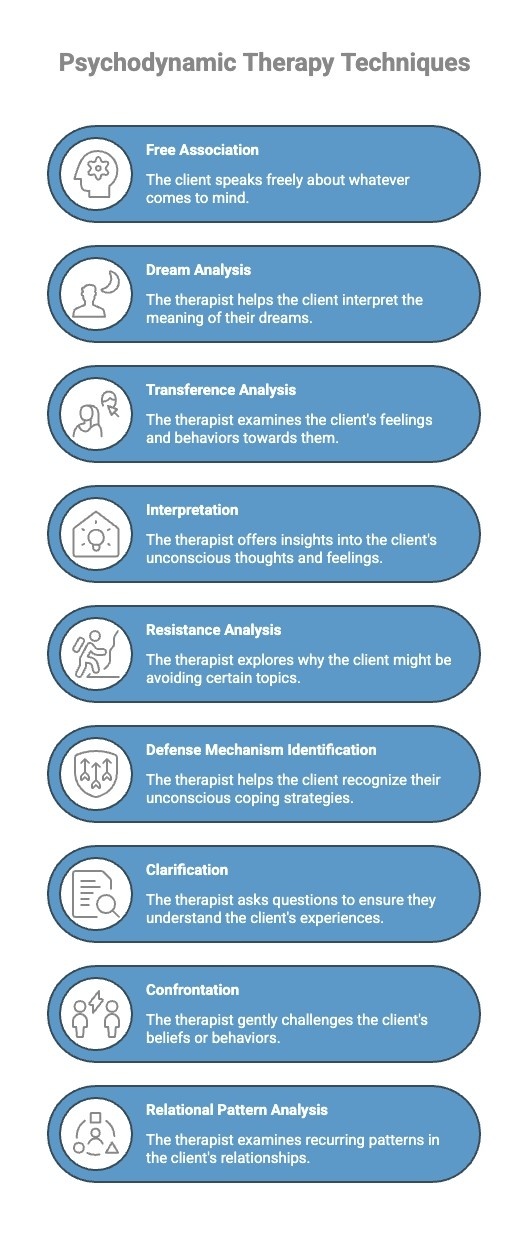
Psychodynamic therapy uses several techniques to help individuals explore unconscious thoughts, past experiences, and emotional patterns that influence present behavior. These techniques allow therapists to identify hidden conflicts, relationship patterns, and defense mechanisms that may shape emotional responses.
Below are common psychodynamic therapy techniques used in therapy sessions:
1) Free Association
Free association encourages individuals to speak openly about whatever thoughts, memories, or feelings come to mind without filtering or censoring them. This technique allows therapists to observe patterns in thoughts and emotions that may reveal underlying concerns or unresolved experiences. By discussing spontaneous thoughts, individuals may uncover connections between past experiences and present emotional reactions, helping develop deeper self-awareness during therapy.
2) Dream Analysis
Dream analysis explores the symbolic meaning of dreams to better understand unconscious thoughts and emotional conflicts. Therapists may examine recurring themes, emotions, or symbols in dreams to identify unresolved experiences that may influence current behavior.
3) Transference Analysis
In psychodynamic therapy, individuals may unconsciously transfer feelings or expectations from past relationships onto the therapist. Examining these reactions helps reveal emotional patterns that may also appear in other relationships.
4) Interpretation
Therapists use interpretation to help individuals understand the deeper meaning behind thoughts, emotions, behaviors, or memories that emerge during sessions. These interpretations can reveal connections between past experiences and present emotional responses.
5) Resistance Analysis
Sometimes individuals may avoid discussing certain memories, emotions, or topics during therapy. This resistance can indicate areas where unconscious conflict or emotional discomfort exists. Exploring resistance helps uncover underlying concerns that may need attention.
6) Defense Mechanism Identification
Therapists help individuals recognize defense mechanisms such as denial, repression, or rationalization that may be used to avoid difficult emotions. Understanding these patterns allows individuals to develop healthier emotional responses.
7) Clarification
Clarification involves helping individuals organize and better understand their thoughts or feelings during discussion. Therapists may ask questions or summarize statements to ensure emotional experiences are clearly expressed and explored.
8) Confrontation
Confrontation gently highlights inconsistencies between a person’s thoughts, behaviors, or emotional responses. This helps individuals recognize patterns that may previously have gone unnoticed.
9) Relational Pattern Analysis
Therapists examine recurring patterns in relationships, communication styles, and emotional reactions. Identifying these relational patterns helps individuals understand how past experiences may influence present interactions.
Through these techniques, psychodynamic therapy helps individuals gain deeper emotional insight and develop healthier ways of responding to life experiences.
What Are Examples of Psychodynamic Therapy in Practice?
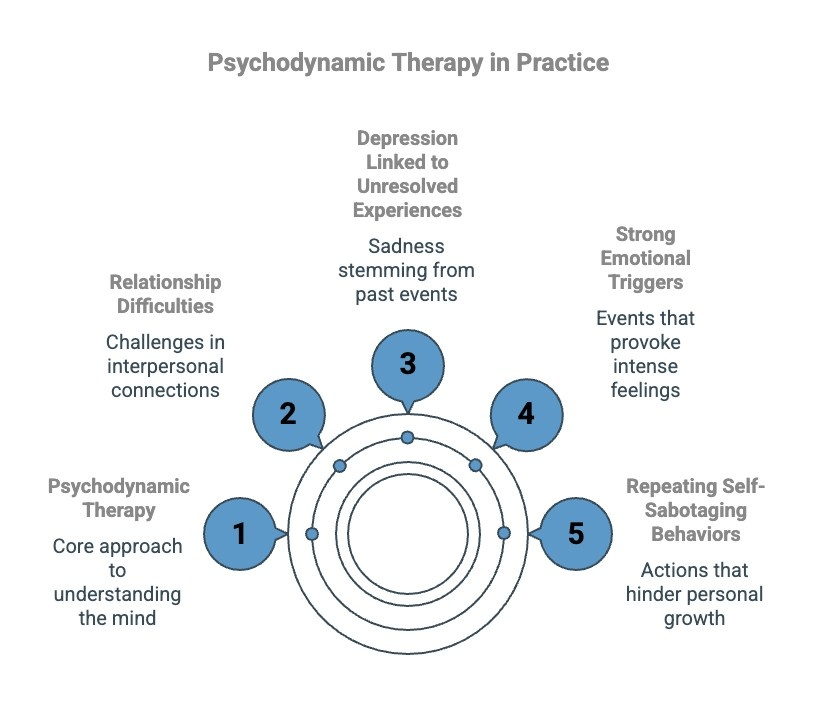
Psychodynamic therapy is most effective when it connects real-life struggles to deeper emotional patterns in a practical, relatable way. Instead of staying abstract, it helps individuals recognize what is happening in specific situations and why those reactions feel so strong.
Below are real-life examples of how psychodynamic therapy works in practice:
1) Relationship conflicts that keep repeating
A client notices that every time a partner becomes less responsive, they feel anxious and start overthinking or pulling away. In therapy, they realize this reaction mirrors earlier experiences of inconsistency in close relationships.
With this awareness, they begin to separate past fears from present reality and respond more calmly instead of assuming the worst.
2) Depression without a clear external cause
An individual feels persistently low despite having a stable job and supportive environment. In therapy, they uncover long-held feelings of not being “good enough” that were never addressed earlier in life.
As these emotions are explored and named, their mood gradually improves because the therapy is addressing the root, not just the surface symptoms.
3) Overreaction to workplace feedback
A professional becomes disproportionately upset after receiving mild criticism from a manager. In sessions, they connect this response to earlier experiences of being judged harshly.
This insight helps them pause, reassess the situation, and respond more objectively rather than reacting emotionally.
4) Avoiding growth opportunities
Someone repeatedly delays applying for promotions or taking on visible projects. Therapy reveals an underlying fear of failure and exposure that operates outside their conscious awareness.
By working through this fear, they start making decisions based on current reality instead of internalized doubts.
5) Emotional patterns showing up in therapy itself
A client begins to assume the therapist is disappointed in them, even without evidence. Instead of dismissing this, the therapist explores it in real time.
This moment becomes a powerful example of how the client expects others to react, creating an opportunity to reshape those expectations safely.
How Does Psychodynamic Therapy Compare to CBT?
Psychodynamic therapy and cognitive behavioral therapy (CBT) are both widely used approaches in mental health treatment. However, they focus on different aspects of emotional healing and personal growth.
Below are key differences between psychodynamic therapy and CBT:
| Aspect | Psychodynamic Therapy | Cognitive Behavioral Therapy (CBT) |
|---|---|---|
| Primary Focus | Explores unconscious thoughts, emotional conflicts, and underlying psychological patterns that influence behaviour. | Focuses on identifying and changing negative thought patterns that affect behaviour and emotions. |
| Therapy Approach | Emphasises insight into deeper emotional processes and long-term psychological patterns. | Uses structured techniques to change thinking patterns and behaviours in present situations. |
| Focus on Past vs Present | Often explores past experiences and early relationships to understand present emotional responses. | Primarily focuses on current thoughts, behaviours, and problem-solving in the present. |
| Time Frame | Often longer term, allowing time to explore underlying emotional influences and patterns. | Usually shorter-term and goal-focused, often structured around specific problems. |
| Structure of Sessions | Sessions tend to be more open-ended, allowing individuals to explore thoughts, emotions, and experiences freely. | Sessions are highly structured and often follow a clear agenda focused on specific goals. |
| Therapist Role | The therapist helps interpret emotional patterns, unconscious processes, and relational dynamics that emerge during therapy. | The therapist takes a more directive role, teaching strategies to change thinking patterns and behaviours. |
| Techniques Used | Techniques may include free association, interpretation, transference analysis, and exploring defence mechanisms. | Techniques often include cognitive restructuring, behavioural exercises, and exposure-based strategies. |
| Use of Homework Assignments | Homework is not typically emphasised, as much of the work happens through discussion and insight during sessions. | Homework exercises are commonly assigned to practice skills and reinforce new thinking patterns between sessions. |
| Evidence-Based Research | Research supports its effectiveness for long-term emotional insight and personality-related concerns. | Strong evidence base for treating anxiety, depression, and many specific mental health conditions. |
| Therapy Goal | Increase self-awareness and resolve deeper emotional conflicts that influence behaviour. | Improve coping skills and change unhelpful thought patterns that contribute to distress. |
Both approaches can be highly effective depending on a person’s needs and therapy goals. A licensed therapist can help determine whether psychodynamic therapy, CBT, or a combination of both may be the most helpful option.
Wondering how relationships affect emotional well-being? Explore what interpersonal therapy is and how it works and how it helps improve communication, resolve conflicts, and strengthen relationships.
Why Is Psychodynamic Therapy Helpful for Emotional Growth?
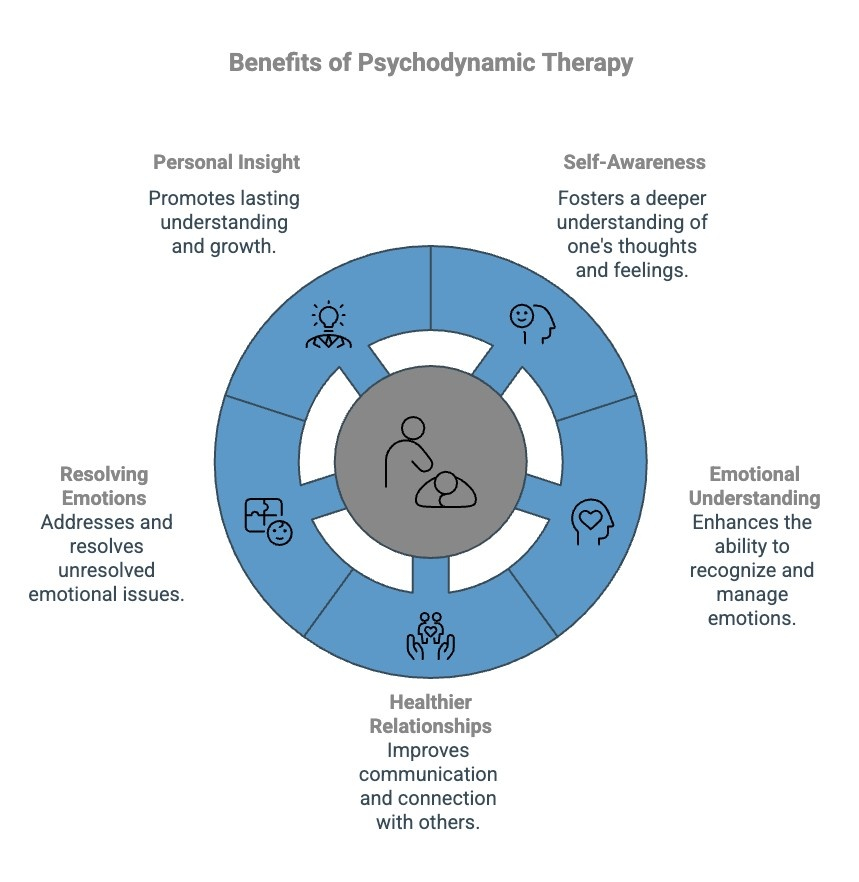
Emotional growth often begins with understanding the deeper experiences and feelings that shape how people think, react, and relate to others. Psychodynamic therapy focuses on increasing self-awareness and exploring emotional patterns that influence behavior.
Below are several ways psychodynamic therapy supports emotional growth:
- Encourages deeper self-awareness: Therapy helps individuals recognize emotional patterns and understand how past experiences influence present thoughts and behaviors.
- Improves emotional understanding: Exploring feelings and reactions can help individuals better understand their emotional responses to different situations.
- Supports healthier relationships: By recognizing relationship patterns, individuals can develop better communication and stronger connections with others.
- Helps resolve unresolved emotions: Therapy provides a safe space to explore and process difficult experiences that may still influence daily life.
- Promotes lasting personal insight: Understanding underlying emotional patterns can support long-term emotional growth and healthier coping strategies.
Through insight and reflection, psychodynamic therapy can help individuals build stronger emotional awareness and more balanced responses to life’s challenges.
How Can Total Life Counseling Help With Psychodynamic Therapy?
Total Life Counseling (TLC) provides compassionate, client-centered therapy designed to help individuals better understand their emotions, relationships, and personal experiences. Through psychodynamic therapy, TLC therapists guide clients in exploring how past experiences, emotional patterns, and unconscious influences may affect current thoughts and behaviors.
At TLC, therapists create a safe and supportive environment where individuals can openly discuss their concerns, reflect on personal experiences, and develop deeper self-awareness. By identifying emotional patterns and underlying conflicts, psychodynamic therapy can help clients build healthier coping strategies, improve relationships, and gain greater emotional clarity.
The therapists at Total Life Counseling tailor each treatment plan to the individual’s goals and mental health needs. Whether someone is dealing with depression, relationship challenges, or ongoing emotional stress, psychodynamic therapy can provide valuable insight and support.
If you are interested in psychodynamic therapy, contact Total Life Counseling to learn how their experienced therapists can support your emotional well-being and personal growth.
Conclusion
Psychodynamic therapy is rooted in psychoanalytic theory, originally influenced by Sigmund Freud, and focuses on understanding how unconscious processes and early childhood experiences shape present emotions and behaviors. From a psychodynamic perspective, exploring unresolved conflicts and defense mechanisms can help individuals better understand patterns that contribute to psychological distress and other mental health issues.
This psychodynamic approach is often used to support individuals experiencing conditions such as anxiety disorder, depression, or personality disorders. By gaining insight into emotional patterns and past experiences, individuals can develop healthier ways of responding to challenges in daily life.
With professional guidance, psychodynamic therapy can support deeper self-awareness, emotional healing, and long-term personal growth.
Frequently Asked Questions
Can psychodynamic therapy help with depression?
Yes, psychodynamic therapy for depression helps individuals explore unconscious conflicts and early experiences that influence emotional patterns. This therapeutic approach, based on psychodynamic theory, helps people gain insight into psychological problems and develop healthier ways of responding to emotional challenges.
Can you access psychodynamic therapy online?
Yes, many providers now offer psychodynamic therapies through secure online sessions. This allows individuals to access this type of therapy from home while exploring relationship issues, emotional patterns, and psychological problems with a licensed therapist.
How can you find psychodynamic therapy near me?
To find psychodynamic therapy near you, search therapist directories or healthcare networks that list professionals offering psychodynamic therapies. You can also ask a doctor for referrals to therapists who treat mental disorders and emotional challenges.
What is brief psychodynamic therapy?
Brief psychodynamic therapy is a focused type of therapy that addresses specific psychological issues within a limited number of sessions. It uses psychodynamic principles to explore emotional patterns and how early experiences influence present thoughts and behaviors.
What is relational psychodynamic therapy?
Relational psychodynamic therapy focuses on interpersonal dynamics and relationship patterns. Influenced by ideas like object relations and attachment theory, this approach explores how early relationships shape emotional responses and communication in adulthood.
How long does psychodynamic therapy usually take?
The length of psychodynamic therapy varies depending on personal goals and psychological problems. Some people benefit from short-term treatment, while others continue longer to explore deeper emotional patterns and unresolved conflicts.
Can you describe a typical psychodynamic therapy session?
During a session, individuals talk openly about thoughts, emotions, and experiences while therapists explore underlying patterns. The goal is to increase conscious awareness of unconscious conflicts that influence current behavior and emotional responses.
Are there any risks or downsides to psychodynamic therapy?
Psychodynamic therapy may bring up difficult emotions as people explore past experiences or unresolved conflicts. However, working through these issues with professional support can help address psychological problems and improve emotional well-being.
How does psychodynamic therapy differ from psychoanalysis?
Psychodynamic therapy developed from psychoanalytic therapy, founded by Sigmund Freud, the father of psychoanalysis. Unlike traditional psychoanalysis, psychodynamic therapy is usually shorter and more flexible while still exploring unconscious processes and emotional patterns.
How effective is psychodynamic therapy compared to other therapy types?
Psychodynamic therapy is considered an effective therapeutic approach for many mental disorders. In discussions of psychodynamic therapy vs. CBT, psychodynamic therapy focuses on emotional insight and past experiences, while CBT targets present thoughts and behaviors.
Filed in: Psychodyanmic Therapy
Share This Story, Choose Your Platform!
Total Life Counseling Center consists of Licensed Counselors, masters level therapists, Español counselors, Licensed Mental Health Counselors, business coaches, and image enhancement coaches who provide counseling for emotional, mental, physical and spiritual care including marriage, individual, family, substance abuse and more. TLC’s family, trauma and marriage experts have been interviewed on National and Local TV/Radio over 200 times for their expert advice on Fox News, OWN, WETV, ABC’s Medical Minute and more. Our skilled counselors are relational, approachable and specialists providing therapy services in the Central Florida area including: Orlando, Winter Park, MetroWest, Windermere, Dr. Phillips, East Orlando, Lake Mary, and Clermont, Boca Raton Florida, and Dallas, TX.
About the Author: SeoSurge
