

How to Choose the Right Therapist for Your Needs?

Key Highlights
- Understand the differences between types of therapists, such as psychologists, psychiatrists, and social workers, by checking their therapist credentials.
- Achieving your therapy goals often depends on finding a good fit, so it’s vital to feel comfortable with your therapist.
- You can receive treatment in person or through online therapy, expanding your options for care.
- Ask potential therapists about their experience, approach, and how they will help you achieve your goals.
- The connection you feel is crucial for your mental health journey.
- Total Life Counseling provides compassionate, personalised counselling support to help you feel heard, understood, and guided throughout your journey.
Starting therapy is a significant step toward improving your mental health and fostering personal growth. If this is your first time seeking help, the process of finding the right therapist can feel overwhelming.
With so many different types of professionals and approaches, how do you know where to begin?
This guide is designed to simplify the process, helping you navigate the mental health system with confidence and find a therapist who is the perfect match for you.
How the Right Therapist Can Impact Your Mental Health Journey?
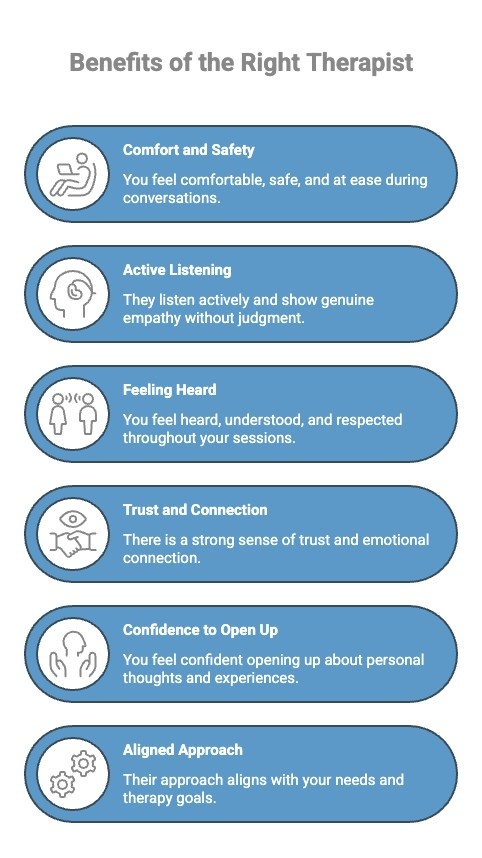
The right therapist can significantly shape your mental health journey, influencing how comfortable, supported, and understood you feel throughout the process. A strong therapeutic relationship built on trust and empathy allows you to open up, work through challenges, and make meaningful, lasting progress over time.
Here are key signs you’ve found the right fit:
- You feel comfortable, safe, and at ease during conversations.
- They listen actively and show genuine empathy without judgment.
- You feel heard, understood, and respected throughout your sessions.
- There is a strong sense of trust and emotional connection.
- You feel confident opening up about personal thoughts and experiences.
- Their approach aligns with your needs and therapy goals.
Trust your instincts after initial sessions, as feeling supported and understood is essential for building a positive and effective therapy experience.
What Are the Different Types of Therapists and Their Qualifications?
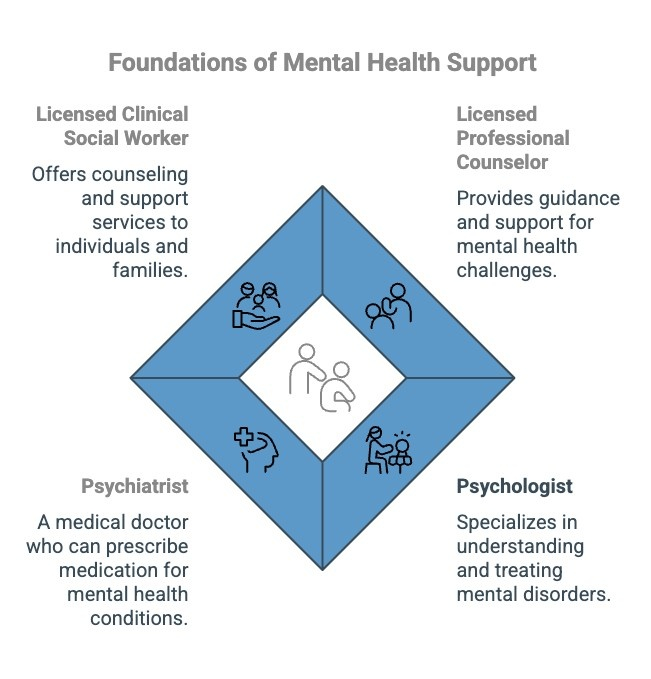
When searching for mental health support, you’ll often encounter professionals with different titles and credentials. These qualifications reflect their education, training, and areas of specialization. Understanding what these credentials mean can help you identify a mental health professional who aligns with your needs.
Below are some of the most common types of therapists and mental health professionals, along with the roles they typically play in providing emotional and psychological support.
1. Licensed Professional Counselor
Licensed Professional Counselors (LPCs) are trained mental health professionals who typically hold a master’s degree in counseling or a related field. They complete supervised clinical training and must meet licensing requirements before providing counseling services independently.
These professionals often help individuals manage stress, relationship challenges, life transitions, and emotional concerns. Many counselors use structured approaches such as cognitive behavioral therapy to help clients build coping skills and improve their overall emotional well-being.
2. Psychologist
Psychologists are mental health professionals who usually hold a doctoral degree in psychology, such as a PhD or PsyD. Their advanced training focuses on psychological assessment, diagnosis, research, and therapeutic treatment methods.
They often use evidence-based therapies to support individuals dealing with anxiety, depression, trauma, and behavioral challenges. Psychologists may also conduct psychological testing and evaluations to better understand a person’s mental health needs and guide treatment.
3. Psychiatrist
Psychiatrists are medical doctors who specialize in diagnosing and treating mental health conditions. Their medical training allows them to evaluate both psychological and biological factors that may influence mental health.
Unlike most other therapists, psychiatrists can prescribe medication when necessary as part of a broader treatment plan. They often work with individuals experiencing complex mental health conditions and may collaborate with therapists or counselors to provide comprehensive care.
4. Licensed Clinical Social Worker
Licensed Clinical Social Workers (LCSWs) hold a Master of Social Work (MSW) degree and complete extensive supervised clinical training before receiving licensure to provide mental health services. Their training focuses on both psychological treatment and the social factors that influence well-being.
Clinical social workers provide therapy while also helping individuals navigate life transitions, social challenges, and community resources. Their holistic approach allows them to support both emotional health and the practical aspects of daily life.
Understanding these different therapist roles can make the process of choosing mental health support clearer. Each professional brings a unique perspective, training background, and therapeutic approach to helping individuals improve their emotional health and overall well-being.
Ready to take the first step towards better mental health? Contact Total Life Counselling today and connect with a caring expert who understands your needs.
How to Prepare Before Getting Started?
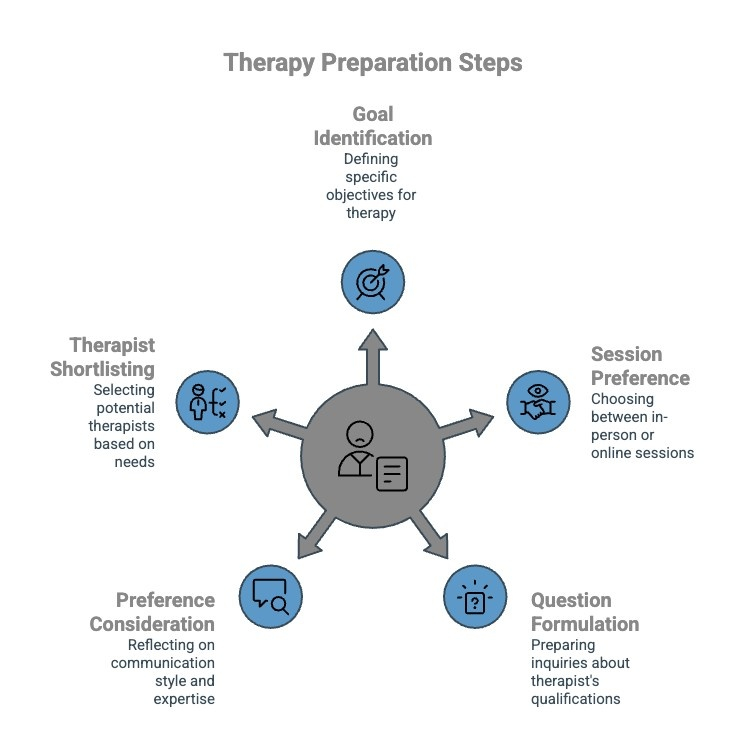
Preparing before starting your search for a therapist can make the process clearer and less overwhelming. By understanding your needs, goals, and practical considerations, you can approach your search with confidence and make more informed decisions about the support that’s right for you.
Here’s what to prepare before you begin:
- Identify your therapy goals, such as managing anxiety, relationships, or personal growth.
- Consider whether you prefer in-person sessions or the flexibility of online therapy options.
- Make a list of questions about therapist’s experience, approach, and session structure.
- Think about your preferences, including communication style, availability, and areas of expertise.
- Shortlist potential therapists who align with your needs and expectations.
Taking time to prepare ensures you can approach your first consultation with clarity, ask the right questions, and choose a therapist who feels like the right fit.
How to Choose the Right Therapist?
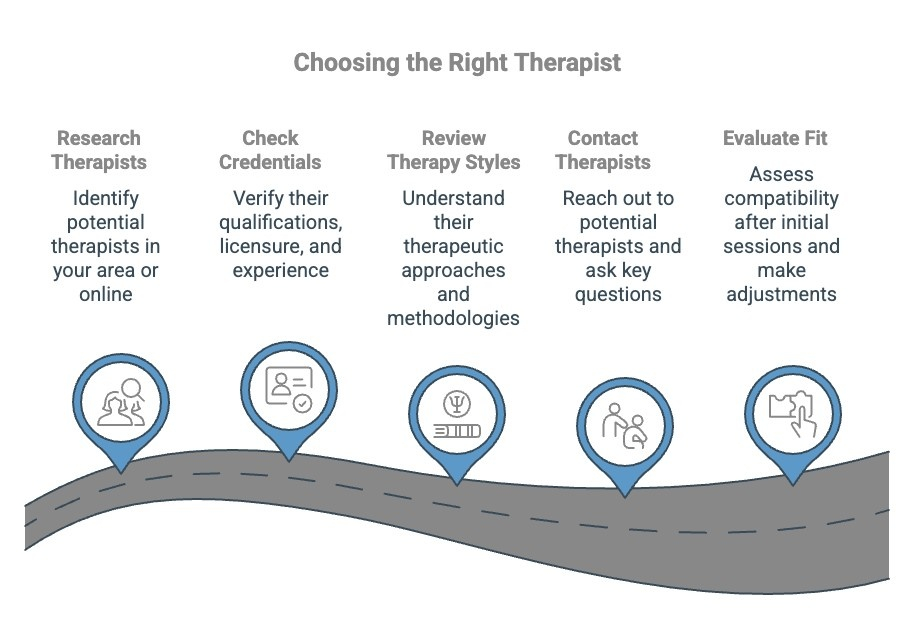
Finding the right therapist can feel overwhelming, but it doesn’t have to be.
This guide simplifies the process into clear steps, from choosing a licensed professional to exploring in-person or online options, helping you find the right fit with confidence:
Step 1: Research Therapists in Your Area or Online
The first step in finding a mental health professional is to start your research. There are several reliable ways to find trustworthy information about therapists near you or those offering online therapy. A great starting point is asking for a referral from a trusted source.
Consider these options for finding reputable therapists:
- Ask your primary care physician for a referral.
- Get a recommendation from a friend or family member who has had a positive experience.
- Check online directories like the one provided by Psychology Today.
- Contact a local university hospital’s psychiatry department for recommendations.
However, be aware that these lists can sometimes be outdated, so always double-check with the therapist’s office to confirm they are still part of your plan. This initial research will help you create a list of potential therapists who meet your specific needs.
Step 2: Check Credentials, Licensure, and Experience
Once you have a list of potential therapists, the next step is to verify their qualifications. Checking their credentials, licensure, and clinical experience is crucial to ensure you receive care from a qualified professional. Licensure indicates that the therapist has met rigorous state standards, including education, supervised practice, and passing an exam.
You can usually find this information on their website or professional directory profile. Look for their degree (e.g., MSW, PhD, PsyD) and their license type (e.g., LPC, LCSW, LMFT).
Don’t hesitate to ask about their specific experience treating conditions similar to yours or any advanced training they may have.
Step 3: Review Therapy Styles and Approaches
A therapist’s approach is a very important part of your decision, as different therapy styles work better for different people and conditions.
Many therapists use an “eclectic” approach, combining several methods to tailor treatment to your needs. It’s helpful to have a basic understanding of some common therapeutic approaches.
Some therapists specialize in specific types of therapy, which can be highly effective for certain issues. For example, some approaches are proven to work well for anxiety, depression, or trauma.
A therapist should be able to explain why they recommend a particular style for you.
Here are some common therapeutic approaches:
- Cognitive Behavioral Therapy (CBT): Focuses on changing negative thought patterns and behaviors.
- Interpersonal Therapy: A short-term therapy that helps with relationship issues.
- Psychoanalytic Therapy: A longer-term approach that explores unconscious thoughts and past experiences.
- Somatic Experiencing: A body-centered therapy effective for trauma.
- EMDR (Eye Movement Desensitization and Reprocessing): A therapy specifically used for trauma.
Step 4: Contact Potential Therapists and Ask Key Questions
After narrowing down your list, the next step is to contact the therapists. Many offer a free initial consultation, which is the perfect opportunity to ask questions and see if it’s a good fit. This conversation will help you gauge their personality and approach before committing to a first session.
Feeling comfortable is key, so use this time to get a sense of their communication style. Do they listen well? Do you feel at ease talking to them? This initial call or meeting is your chance to interview them just as much as they are assessing you.
Be prepared with a list of questions to help you make an informed decision about your therapy goals. Consider asking:
- What are your credentials and experience with my specific condition?
- What therapy styles do you use, and why would they work for me?
- What can I expect from our sessions, and how will we measure progress?
Not sure where to start, or just need someone to talk it through with? Call us on 407-248-0030 for a complimentary 15-minute phone consultation to connect with a supportive expert who will listen, understand, and guide you every step of the way. Spanish and Portuguese-speaking counsellors are available.
Step 5: Evaluate Fit After Initial Sessions and Make Adjustments
Finding a good fit doesn’t always happen on the first try, and it is absolutely okay to switch therapists if you don’t feel comfortable after the first few sessions.
The initial appointments are a trial period for both of you. It’s normal to feel worse before you feel better, as therapy can bring difficult emotions to the surface, but you should still feel a sense of hope and a strong connection with your therapist.
Pay attention to how you feel during and after your sessions. A good therapist should be empathetic, a good listener, and make you feel supported.
Signs that a therapist may not be the right fit include feeling judged, unheard, or that the therapist has their own agenda. If you feel they are pushing you to commit to a schedule before understanding your needs, that could be a red flag.
Don’t be afraid to voice your concerns or decide to look for someone else. Evaluating your comfort level is key to ensuring a high quality of care and achieving your therapy goals. Here are some questions to ask yourself:
- Do I feel comfortable and safe opening up to this person?
- Does the therapist listen to me and show empathy?
- Do I feel like we are working toward my therapy goals together?
- Do I trust this person to guide me on my mental health journey?
What Are Common Misconceptions About Therapy and Therapists?
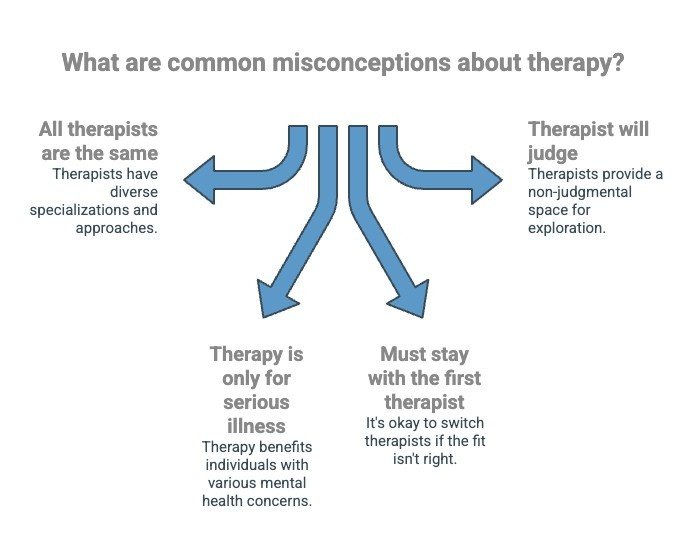
Many people hesitate to seek therapy because of misunderstandings about how it works or what therapists actually do. These misconceptions can create unnecessary barriers to mental health support. In reality, therapy is flexible, personalized, and designed to meet individual emotional and psychological needs.
Understanding the truth behind common therapy myths can make it easier for people to approach mental health care with confidence and realistic expectations.
- All therapists are the same: Therapists come from different educational backgrounds, hold different licenses, and specialize in different therapeutic approaches. Some focus on relationship counseling, while others specialize in trauma, anxiety, or long-term mental health conditions.
- Therapy is only for serious mental illness: Many people believe therapy is only necessary for severe psychological conditions. In reality, therapy can help with everyday challenges such as stress, life transitions, relationship conflicts, personal growth, and emotional resilience.
- You must stay with the first therapist you choose: Finding the right therapist is a personal process, and it’s normal to try more than one professional before finding a good fit. Comfort, trust, and communication style play an important role in successful therapy.
- A therapist will judge your thoughts or experiences: Therapy is designed to provide a safe, confidential, and non-judgmental environment. Mental health professionals are trained to listen, understand, and guide individuals without criticism or personal bias.
Recognizing these misconceptions can help people approach therapy with a more open mindset and feel more comfortable seeking the support they need for their mental and emotional well-being.
Why Choose Total Life Counseling for Professional Support?
At Total Life Counselling, we believe that everyone deserves access to compassionate and effective mental health care. Our team of highly trained professionals is dedicated to supporting you on your journey toward personal growth and well-being. Whether you’re seeking help for yourself, your relationship, or your family, we are here to provide a safe and welcoming space for healing.
We offer a wide range of services, from individual therapy to family counseling, tailored to meet your unique needs. Our counselors bring diverse expertise and a shared commitment to helping you navigate life’s challenges.
We understand that taking the first step can be difficult, but you don’t have to do it alone. Contact us today and let us help you build a happier, healthier future.
Conclusion
Choosing the right therapist is a pivotal step in your mental health journey. By understanding the different types of therapists and their qualifications, as well as knowing what to look for, you empower yourself to make an informed decision that best suits your needs.
Remember, it’s perfectly okay to evaluate your options and find a therapist who resonates with you, ensuring a comfortable and productive therapeutic relationship. Don’t hesitate to seek support; taking care of your mental health is paramount.
Frequently Asked Questions
How do I know if a therapist is a good fit for me?
If you’re wondering how to choose the right therapist for you, or how do I choose the right therapist, it often comes down to connection. You’ll likely feel comfortable, heard, and supported early on. Trust your instincts, as a strong relationship supports real progress.
Is it okay to change therapists if I don’t feel comfortable?
Yes, it’s completely okay. If you’re trying to choose the right therapist support and it doesn’t feel like a match, switching is part of the process. Your growth matters, and finding someone aligned with your needs is essential.
What questions should I ask during the first session?
If you’re learning how to choose the right therapist for you, ask about experience, approach, and specialisations. You can also ask how they will support your goals. These answers make it easier to choose the right therapist with clarity.
What is cognitive behavioral therapy?
Cognitive behavioral therapy (CBT) is a structured approach that helps you identify and change unhelpful thoughts and behaviors. It is commonly considered when deciding how do I choose the right therapist based on treatment style.
What should I do if I’m dissatisfied with my therapist?
If you feel unsure about your therapist, start by discussing your concerns. If things do not improve, it is okay to move on. The priority is to choose the right therapist support that helps you feel understood and make progress.
How do I choose the right physical therapist for my needs?
To understand how to choose the right physical therapist for my needs, focus on their specialisation, experience with your condition, and treatment approach. Make sure they explain your recovery plan clearly and make you feel comfortable throughout the process.
Filed in: Therapy
Share This Story, Choose Your Platform!
Total Life Counseling Center consists of Licensed Counselors, masters level therapists, Español counselors, Licensed Mental Health Counselors, business coaches, and image enhancement coaches who provide counseling for emotional, mental, physical and spiritual care including marriage, individual, family, substance abuse and more. TLC’s family, trauma and marriage experts have been interviewed on National and Local TV/Radio over 200 times for their expert advice on Fox News, OWN, WETV, ABC’s Medical Minute and more. Our skilled counselors are relational, approachable and specialists providing therapy services in the Central Florida area including: Orlando, Winter Park, MetroWest, Windermere, Dr. Phillips, East Orlando, Lake Mary, and Clermont, Boca Raton Florida, and Dallas, TX.
About the Author: Jim West