

Are You Experiencing Signs of Emotional Burnout?

Key Highlights
- Emotional burnout is a state of exhaustion caused by prolonged and excessive chronic stress.
- Recognizing the signs of emotional exhaustion is the first step toward recovery and preventing further mental health challenges.
- The symptoms of burnout can be emotional, physical, and behavioral, affecting all areas of your life.
- While often linked to work, personal life factors can also contribute significantly to developing emotional burnout.
- Distinguishing burnout from depression is crucial for seeking the right kind of support and treatment.
- Recovery involves identifying stressors, seeking support, and building resilience through self-care and professional help.
- Total Life Counseling provides compassionate, professional support to help you manage burnout and regain balance in your life.
Do you feel completely exhausted, even on days when you should be resting? If constant stress has left you feeling drained, hopeless, and detached, you might be experiencing more than just a rough patch.
This state of emotional exhaustion can significantly impact your mental health and overall well-being. It’s a sign that your body and mind have been under chronic stress for too long.
Understanding what you are going through is the first step toward regaining control and feeling like yourself again.
What Is Emotional Burnout and How Common Is It?
Emotional burnout is a state of physical, mental, and emotional exhaustion caused by prolonged exposure to stress. It often develops when individuals face constant demands without enough time for recovery, leaving them feeling overwhelmed, drained, and unable to sustain their usual energy or motivation.
Key aspects of emotional burnout include:
- Chronic stress overload: Burnout typically develops when long-term stress continues without effective coping strategies or adequate recovery time. The World Health Organization (WHO) defines burnout as a syndrome resulting from chronic workplace stress that has not been successfully managed.
- Deep emotional exhaustion: Research shows emotional exhaustion is a core dimension of burnout, often accompanied by depersonalization and a reduced sense of accomplishment. In meta-analysis studies, about 40% of workers report high emotional exhaustion, one of the strongest indicators of burnout.
- Reduced motivation and engagement: Burnout can lead to detachment from work, decreased productivity, and lower professional satisfaction, which affects both individual well-being and workplace performance.
- Observed across many industries: Some occupational studies report burnout prevalence rates around 44.5% among workers in demanding environments, highlighting how widespread chronic workplace stress can be.
Recognizing emotional burnout early can help individuals address chronic stress before it begins affecting long-term mental health, productivity, and overall well-being.
What Are the 10 Alarming Signs of Emotional Burnout?
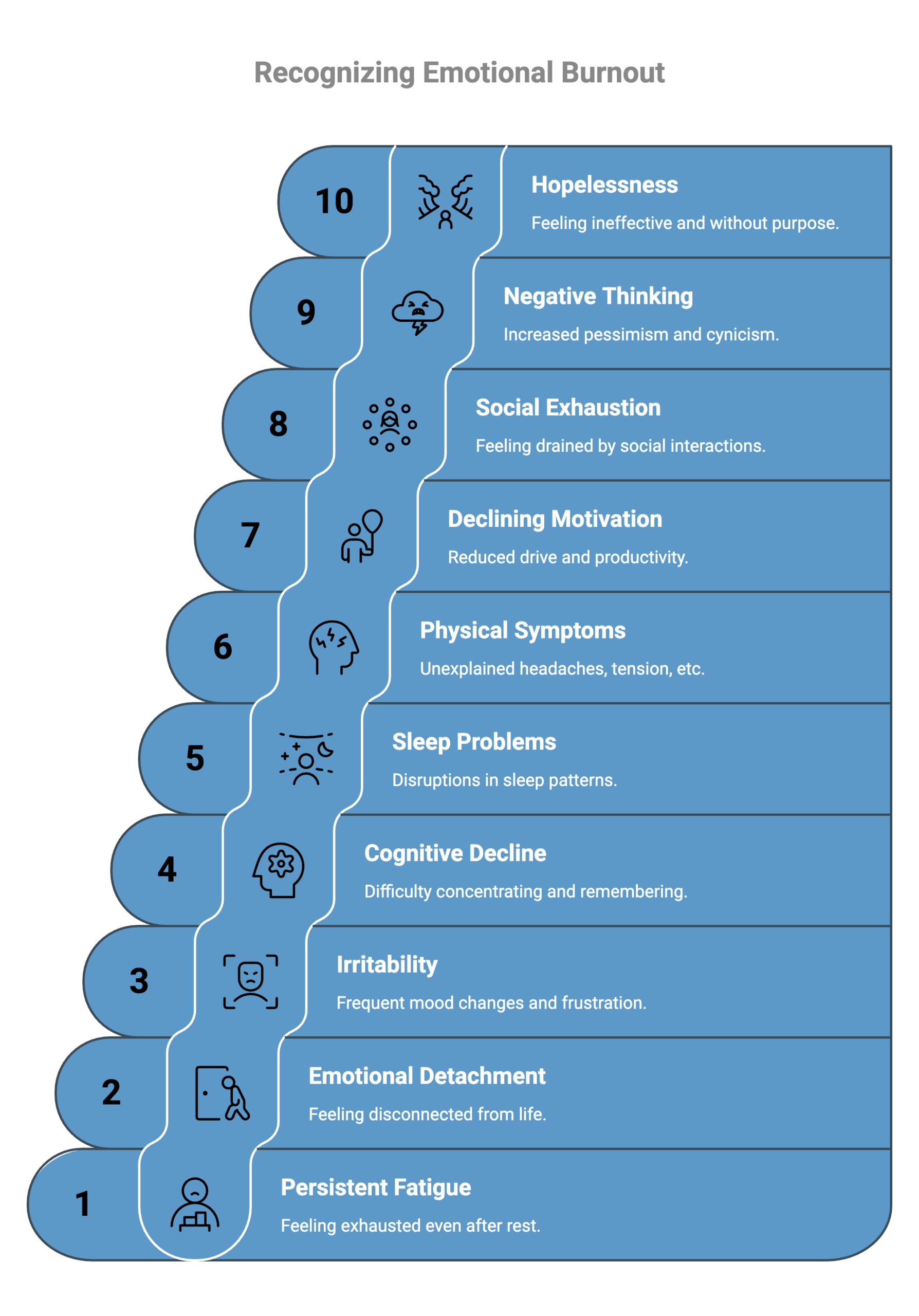
Experiencing persistent fatigue, emotional exhaustion, and a loss of motivation can feel overwhelming. Recognizing signs of emotional and mental burnout early is important because burnout affects both mental and physical well-being.
Understanding these warning signals can help individuals identify when stress has become harmful and when support or recovery strategies may be needed.
1. When You Feel Constantly Drained, Even After Rest
Feeling exhausted most of the time is one of the most common emotional burnout signs. This fatigue goes beyond normal tiredness and often remains even after proper sleep. Chronic stress keeps the body in a prolonged alert state, gradually draining energy and leaving individuals feeling mentally and physically depleted.
2. When You Begin Feeling Emotionally Detached From Life
One of the most noticeable emotional signs of burnout is a growing sense of detachment. People may feel disconnected from their work, daily routines, or relationships. Activities that once felt enjoyable can start to feel meaningless or exhausting as emotional energy becomes increasingly depleted.
3. When Irritability and Mood Changes Become Frequent
Burnout often makes emotional regulation more difficult. Individuals may experience irritability, sudden frustration, or unpredictable mood changes. These reactions can sometimes resemble signs of anxiety and emotional burnout, especially when stress has been building for a long period without proper recovery.
4. When Concentration and Memory Start to Decline
Mental exhaustion can affect cognitive functioning, making it harder to focus, remember details, or stay organized. Difficulty concentrating, frequent forgetfulness, and mental fog are common emotional burnout signs that indicate the brain is struggling to cope with prolonged stress.
5. When Sleep Problems Start Affecting Your Energy
Although burnout causes intense fatigue, it can also disrupt healthy sleep patterns. Many people experience difficulty falling asleep or waking up feeling unrested. Sleep disturbances are often overlooked signs of emotional and mental burnout, as chronic stress keeps the mind active even when rest is needed.
6. When Unexplained Physical Symptoms Begin Appearing
Emotional burnout can also appear through physical discomfort. Frequent headaches, muscle tension, stomach issues, and lowered immunity are common stress-related symptoms. These physical changes often accompany deeper emotional signs of burnout when the body remains under constant pressure.
7. When Motivation and Productivity Begin to Decline
A noticeable drop in motivation or performance is another key warning signal. Tasks that once felt manageable may start to feel overwhelming or pointless. These changes are often clear signs of emotional burnout at work, especially when ongoing pressure reduces engagement and satisfaction in professional responsibilities.
8. When Social Interaction Starts Feeling Exhausting
Burnout can make social interaction feel draining rather than energizing. Individuals may withdraw from friends, colleagues, or family members because conversations and gatherings require emotional effort. This isolation can deepen burnout symptoms if supportive relationships begin to fade.
9. When Negative Thinking Becomes More Frequent
Chronic stress can gradually shift a person’s mindset toward pessimism or cynicism. People experiencing burnout may focus on problems more than solutions, criticize themselves harshly, or feel dissatisfied with their work and relationships. These thought patterns often develop as emotional exhaustion increases.
10. When You Start Feeling Hopeless or Ineffective
In more advanced stages of burnout, individuals may feel that their efforts no longer matter. A sense of hopelessness, lack of accomplishment, or feeling ineffective can appear after prolonged stress.
Recognizing these symptoms early can help individuals pause, seek support, and begin rebuilding emotional resilience.
Addressing burnout proactively can improve overall well-being and prevent long-term mental and physical health challenges. Small, consistent steps toward rest, boundaries, and self-care can make a meaningful difference in recovery.
Struggling with perfectionism? Learn what perfectionism really is and how to manage it effectively to reduce pressure and build a healthier mindset.
When Should You Seek Support for Emotional Burnout?
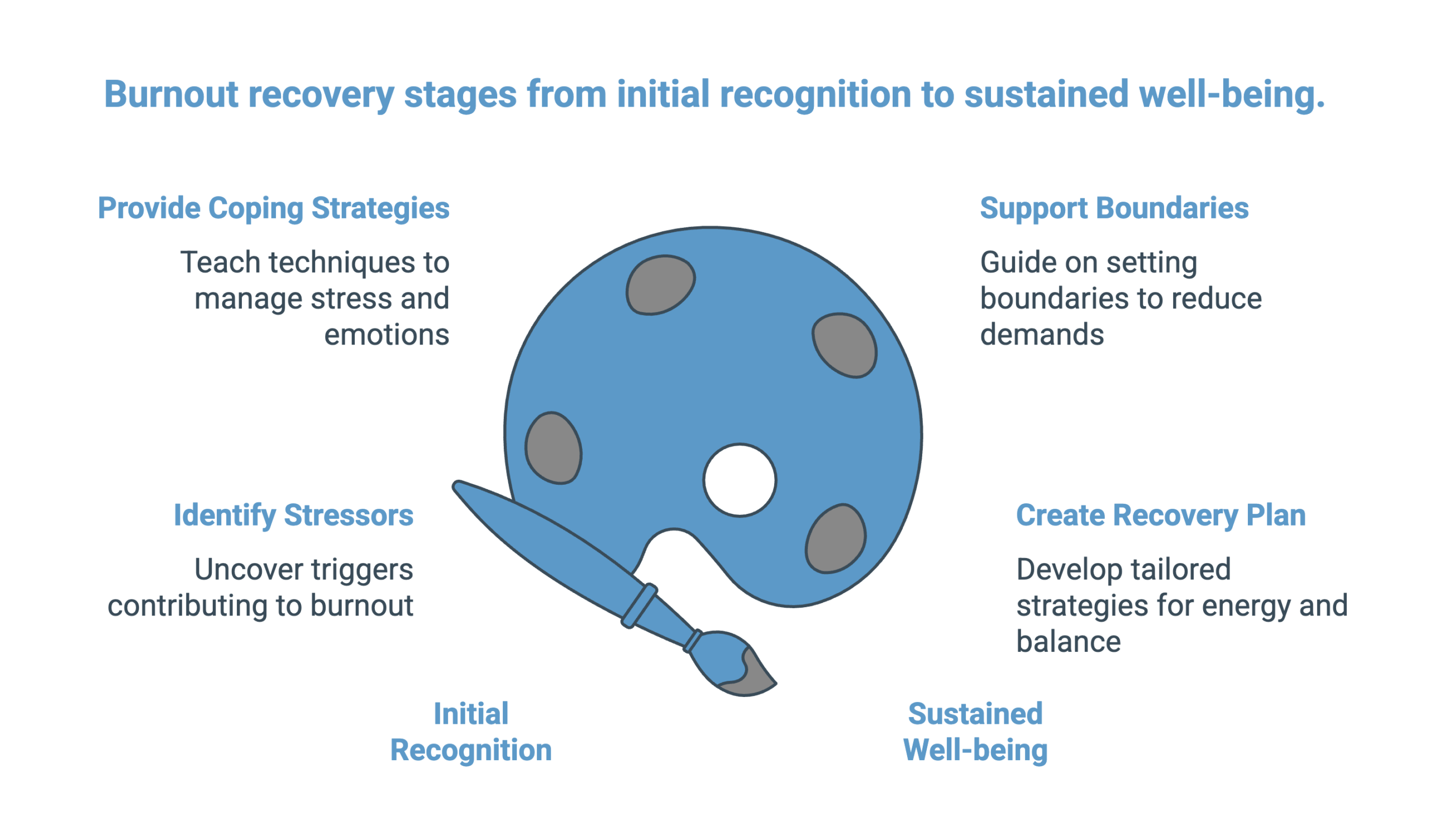
Recognizing burnout and reaching out for help is an important step toward recovery. When emotional exhaustion, low motivation, or persistent stress begin affecting daily responsibilities, relationships, or work performance, professional support can provide guidance, clarity, and structured strategies to help manage burnout effectively.
How a mental health professional can support burnout recovery:
- Identify underlying stressors: A therapist helps uncover workplace pressures, lifestyle factors, or emotional triggers contributing to burnout.
- Provide structured coping strategies: Professionals teach practical techniques to manage stress, regulate emotions, and prevent overwhelm.
- Support healthier boundaries: Guidance on communication and boundary-setting can help reduce excessive demands at work or in personal life.
- Create a personalized recovery plan: Therapists develop tailored strategies focused on rebuilding energy, resilience, and sustainable work-life balance.
Seeking professional help early can make burnout easier to manage and support long-term emotional and mental well-being. If you’re looking for personalized guidance, book a consultation with us today!
What Common Situations Can Trigger Emotional Burnout?
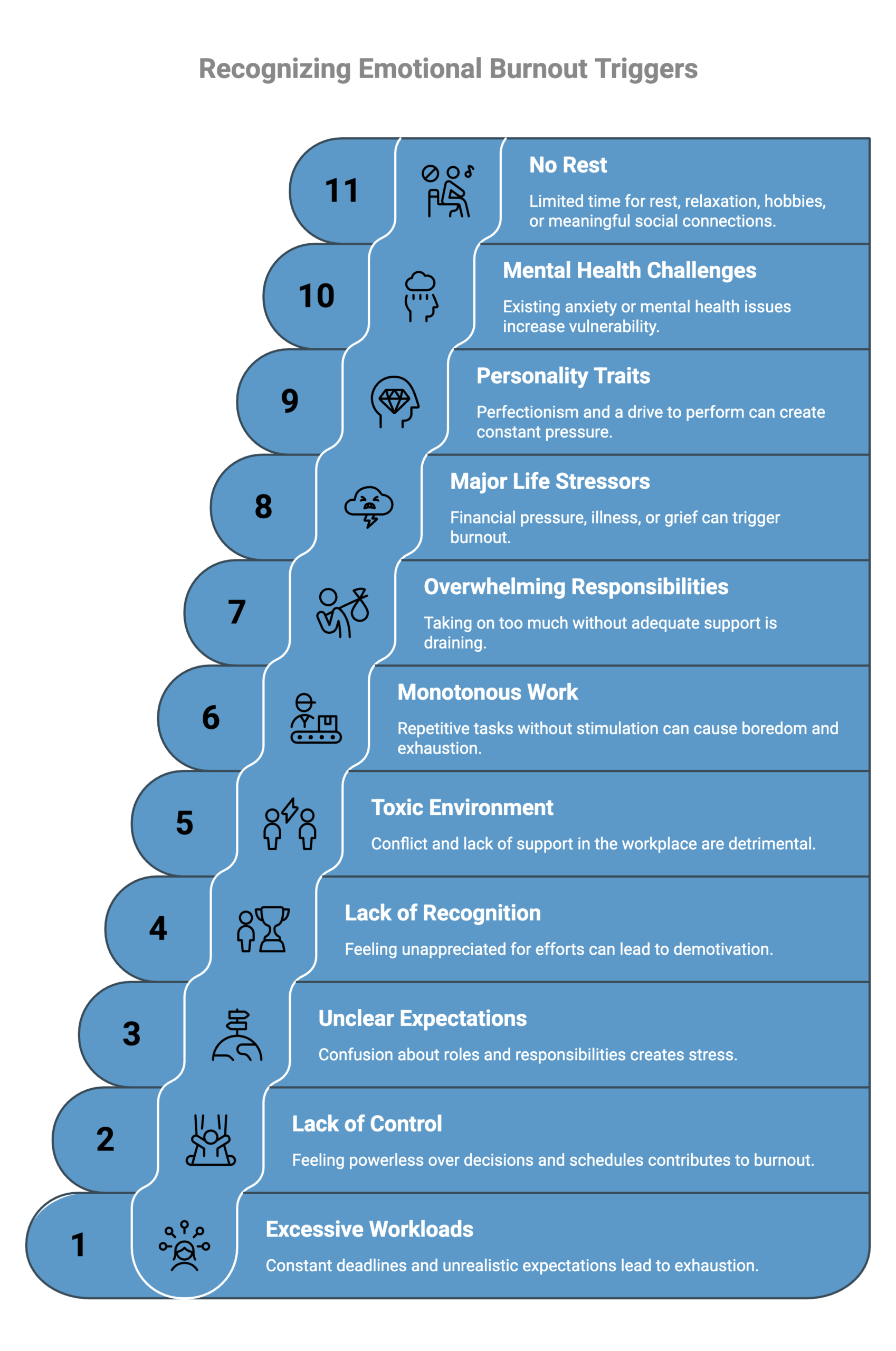
Emotional burnout often develops when ongoing stress from work, responsibilities, or life challenges continues without enough time for recovery. While it is frequently linked to demanding jobs, many different situations across work and personal life can contribute to long-term emotional exhaustion.
Common scenarios that can trigger emotional burnout include:
- Excessive workloads, constant deadlines, and unrealistic expectations that leave little time for rest or recovery.
- Feeling a lack of control over work decisions, schedules, or responsibilities in professional environments.
- Unclear job expectations that create confusion about roles, responsibilities, or performance standards.
- Lack of recognition or appreciation for consistent effort and achievements at work.
- Working in a toxic environment where conflict, bullying, or a lack of support from leadership is present.
- Performing repetitive or monotonous work that provides little stimulation, challenge, or sense of purpose.
- Taking on too many personal responsibilities without adequate support from family, colleagues, or caregivers.
- Major life stressors such as financial pressure, illness, grief, or relationship challenges.
- Personality traits such as perfectionism or a strong “Type A” drive that create constant pressure to perform.
- Living with existing mental health challenges or anxiety can increase vulnerability to chronic stress.
- Limited time for rest, relaxation, hobbies, or meaningful social connections.
Recognizing these triggers can help individuals identify where stress is building and take steps to create healthier routines and boundaries.
Focusing on women’s mental health? Explore how women’s mental health support can address unique challenges and promote emotional
Feeling Emotionally Exhausted and Unsure How to Cope?
Emotional burnout can make everyday life feel overwhelming. When constant stress leaves you feeling drained, detached, or unable to enjoy things you once cared about, it may be time to seek professional support. We at Total Life Counseling are here to help you navigate emotional burnout with compassionate and personalized care.
Our team of Licensed Counselors, Licensed Mental Health Counselors, Master’s Level Therapists, Español counselors, business coaches, and image enhancement coaches provides support for emotional, mental, physical, and spiritual well-being. We understand that emotional burnout can stem from work pressure, relationship challenges, caregiving responsibilities, or major life transitions.
We work with individuals, couples, families, children, and teens who may be experiencing emotional exhaustion, anxiety, depression, trauma, ADHD, ASD, or other stress-related challenges. Our certified and experienced professionals help you explore the root causes of burnout and develop healthier coping strategies that support long-term emotional balance.
Through supportive conversations and practical guidance, we aim to help you rebuild energy, restore motivation, and regain a sense of control in your daily life.
If emotional burnout is affecting your well-being, contact us at Total Life Counseling today to schedule a consultation and begin your path toward renewed emotional health and resilience.
Conclusion
Recognizing the signs of emotional burnout is vital for maintaining your mental well-being. From constant fatigue to feelings of detachment, these symptoms can significantly impact your daily life. By understanding what triggers burnout and knowing when to seek support, you can take proactive steps towards recovery.
Whether it’s through professional help or personal self-care strategies, addressing emotional burnout can lead to a healthier, more balanced life. Remember, it’s okay to seek assistance; don’t hesitate to reach out to your close ones.
Frequently Asked Questions
How long do symptoms of emotional burnout usually last?
Symptoms of emotional burnout can last weeks or months, depending on stress levels, lifestyle changes, and available support. When the root causes remain unresolved, exhaustion may continue longer. With rest, healthier routines, and guidance, many people gradually begin noticing improvements.
Can emotional burnout go away on its own, or do I need treatment?
Emotional burnout rarely disappears completely without some form of change. Reducing stress, getting enough sleep, having a balanced diet, and seeking support often help recovery. Clients benefit from therapy because professionals provide coping strategies, identify triggers, and support long-term emotional resilience.
What steps can I take to recover from emotional burnout quickly?
Recovering from emotional burnout usually requires reducing stress, improving sleep, and creating healthier routines. Practicing relaxation techniques such as mindfulness, breathing exercises, or gentle movement can help regulate stress. Seeking support and setting boundaries can also speed up recovery.
What are the 7 signs of emotional burnout?
Common signs of emotional burnout include persistent exhaustion, emotional detachment, reduced motivation, difficulty concentrating, sleep disturbances, irritability, and declining productivity. These symptoms often develop gradually when chronic stress continues without enough recovery time or support.
Are there physical symptoms that can indicate emotional burnout?
Yes, emotional burnout can cause physical symptoms. People may experience headaches, muscle tension, fatigue, digestive issues, or frequent illness. These physical reactions often occur because chronic stress affects the body’s nervous system and overall energy levels.
How long do the symptoms of emotional burnout usually last?
The length of emotional burnout symptoms varies for each person. Some people notice improvement within weeks after reducing stress, while others require several months of recovery. Lifestyle changes, rest, and professional support often influence how quickly symptoms begin improving.
How do I know whether I am burnt out or stressed, anxious, or depressed?
Burnout is usually linked to ongoing stress from specific areas like work, while anxiety and depression affect broader aspects of life. Burnout often includes exhaustion and detachment from responsibilities, whereas depression involves persistent sadness and loss of interest in many activities.
What does emotional exhaustion feel like, and how is it related to burnout?
Emotional exhaustion often feels like having no mental energy left to handle daily demands. People may feel overwhelmed, drained, or disconnected from work and relationships. It is considered one of the core components of burnout and often appears after prolonged stress.
Can you list the warning signs of emotional burnout at work?
Warning signs of emotional burnout at work include declining productivity, constant fatigue, irritability with colleagues, loss of motivation, difficulty concentrating, and feeling detached from responsibilities. These patterns often develop gradually when work demands remain consistently overwhelming.
How can emotional burnout impact my daily life or relationships?
Emotional burnout can affect many areas of life. People may withdraw socially, feel impatient with loved ones, struggle with concentration, or lose motivation for routine activities. Over time, these changes can strain relationships and reduce overall emotional well-being.
Filed in: Emotions
Share This Story, Choose Your Platform!
Total Life Counseling Center consists of Licensed Counselors, masters level therapists, Español counselors, Licensed Mental Health Counselors, business coaches, and image enhancement coaches who provide counseling for emotional, mental, physical and spiritual care including marriage, individual, family, substance abuse and more. TLC’s family, trauma and marriage experts have been interviewed on National and Local TV/Radio over 200 times for their expert advice on Fox News, OWN, WETV, ABC’s Medical Minute and more. Our skilled counselors are relational, approachable and specialists providing therapy services in the Central Florida area including: Orlando, Winter Park, MetroWest, Windermere, Dr. Phillips, East Orlando, Lake Mary, and Clermont, Boca Raton Florida, and Dallas, TX.
About the Author: Matthew Martin

Related Posts