

Emotional Wellness Definition: What Does It Really Mean?

Key Highlights
- Emotional wellness is the ability to understand and manage your emotions effectively.
- It is a key component of your overall mental health, but it is distinct from it.
- Developing a positive mindset and practicing mindfulness are central to emotional well-being.
- Building supportive relationships and strong social connections can greatly improve your emotional state.
- You can enhance your emotional wellness through relaxation techniques and healthy coping strategies.
- Strong emotional wellness helps you build resilience and navigate life’s challenges.
- Seeking professional counseling from Total Life Counseling can provide support for improving emotional balance.
Have you ever felt overwhelmed by your emotions without fully understanding why? Many people experience stress, frustration, or sadness, but struggle to identify what those feelings mean or how to manage them. When emotions feel confusing or difficult to control, they can affect relationships, productivity, and overall well-being. This is often where emotional wellness becomes especially important.
Most people want to feel balanced, resilient, and confident in handling life’s challenges. The goal of emotional wellness is not to eliminate negative emotions, but to understand them and respond in healthy, constructive ways. It involves recognizing your feelings, managing them effectively, and building coping skills that help you navigate both everyday stress and major life changes.
In this blog, you will learn what emotional wellness truly means, how experts define it, and why it matters in daily life. We will explore its key components, how it differs from mental health, and practical ways to strengthen it. By the end, you will have a clear and simple understanding of how emotional wellness supports a more balanced and fulfilling life.
What Does It Mean to Define Emotional Wellness?
Defining emotional wellness means understanding your emotions and being able to handle life’s challenges in a healthy way. It is about knowing how you feel, why you feel that way, and how your emotions affect your actions.
Emotional wellness includes being aware of your thoughts and feelings without judging yourself too harshly. It means recognizing your strengths and areas where you may need growth. This awareness helps you make better choices and build a more balanced life.
It also involves managing emotions in a constructive way. Instead of ignoring or suppressing feelings, emotional wellness allows you to express them calmly and appropriately.
The American Psychological Association (APA) also explains that individual well-being involves emotional functioning, resilience, and adaptive coping skills, which contribute to both personal and professional effectiveness.
When someone has strong emotional wellness, they are better able to face problems, recover from setbacks, and maintain a generally positive and stable outlook on life.
What Is the Difference Between Emotional Wellness and Mental Health?
Emotional wellness and mental health are closely connected but not identical. Mental health refers to overall psychological functioning, while emotional wellness focuses specifically on how you recognize, process, and manage emotions in daily life.
The table below outlines the key differences to make the comparison clearer and easier to understand:
| Aspect | Mental Health | Emotional Wellness |
|---|---|---|
| Definition | A broad concept that includes emotional, psychological, and social well-being. It influences how a person thinks, feels, and behaves. | A focused aspect of well-being that centers on recognizing, understanding, and managing emotions effectively. |
| Scope | Encompasses overall functioning, including mood, cognition, behavior, and the presence or absence of mental health conditions. | Concentrates specifically on emotional awareness, regulation, and coping skills in everyday life. |
| Focus Area | May involve diagnosis, treatment, therapy, or medical support when symptoms significantly affect functioning. | Emphasizes daily practices such as self-awareness, stress management, and healthy emotional expression. |
| Role in Daily Life | Affects long-term psychological stability, decision-making, relationships, and overall quality of life. | Supports resilience in the moment, helping individuals respond calmly and constructively to challenges. |
| Development | Can be influenced by biological, psychological, and environmental factors, sometimes requiring professional intervention. | Can be strengthened through intentional habits like mindfulness, reflection, communication, and stress management. |
Building emotional wellness supports mental health by strengthening self-awareness, emotional regulation, and healthy responses to life’s challenges.
What Are the Key Components of Emotional Wellness?
Emotional wellness is supported by a set of core skills and habits that help individuals understand their emotions, respond thoughtfully, and maintain balance during life’s challenges.
These components work together to strengthen emotional stability, improve relationships, and enhance overall well-being.
1. Self-Awareness
Self-awareness is the ability to recognize and understand your emotions as they arise. It involves identifying feelings, understanding triggers, and noticing patterns in thoughts and behaviors.
When self-awareness is strong, individuals can name their emotions instead of feeling controlled by them. This clarity improves communication, supports better decision-making, and reduces impulsive reactions. Over time, self-awareness builds a stronger sense of identity and alignment with personal values.
2. Emotional Regulation
Emotional regulation refers to the ability to manage emotions in healthy and constructive ways. It does not mean suppressing feelings. Instead, it involves responding appropriately rather than reacting automatically.
In daily life, emotional regulation helps maintain composure during conflict, manage frustration under pressure, and recover from setbacks more quickly. It supports calm communication, balanced problem-solving, and steady focus even during stressful situations.
Evidence-based relaxation methods such as deep breathing, progressive muscle relaxation, and guided imagery are also recommended by the National Center for Complementary and Integrative Health (NCCIH) to support stress reduction and emotional balance.
3. Resilience and Adaptability
Resilience is the capacity to recover from challenges, while adaptability is the ability to adjust to change. Together, they allow individuals to move forward despite uncertainty or difficulty.
Resilient individuals view setbacks as opportunities for growth rather than permanent failures. Adaptability supports flexibility in thinking and behavior, which is especially important during major life transitions. These qualities strengthen long-term emotional stability and confidence.
4. Positive Relationships
Healthy emotional wellness is closely connected to supportive relationships. Positive relationships are built on trust, empathy, respect, and open communication.
Strong connections provide validation and a sense of belonging. They create safe spaces for expressing emotions and seeking support during difficult times. Positive relationships also encourage personal growth by fostering accountability and mutual understanding.
5. Stress Management
Stress is a natural part of life, but managing it effectively is essential for emotional wellness. Stress management includes recognizing early signs of tension and using healthy coping strategies.
Techniques such as deep breathing, physical activity, structured planning, and setting boundaries help reduce emotional overload. Effective stress management prevents burnout, improves concentration, and supports emotional balance across work, school, and personal life.
6. Self-Care and Mindfulness
Self-care involves intentional actions that support physical, emotional, and mental well-being. Mindfulness complements self-care by encouraging present-moment awareness without judgment.
In everyday life, self-care may include adequate sleep, balanced nutrition, meaningful activities, and time for rest. Mindfulness practices such as meditation or reflective journaling improve focus and emotional clarity. Together, these habits strengthen emotional regulation and promote long-term well-being.
By developing these components consistently, individuals build a strong emotional foundation that supports healthier relationships, improved daily performance, and long-term resilience.
What Shapes Emotional Wellness and How Does It Affect Your Daily Life?
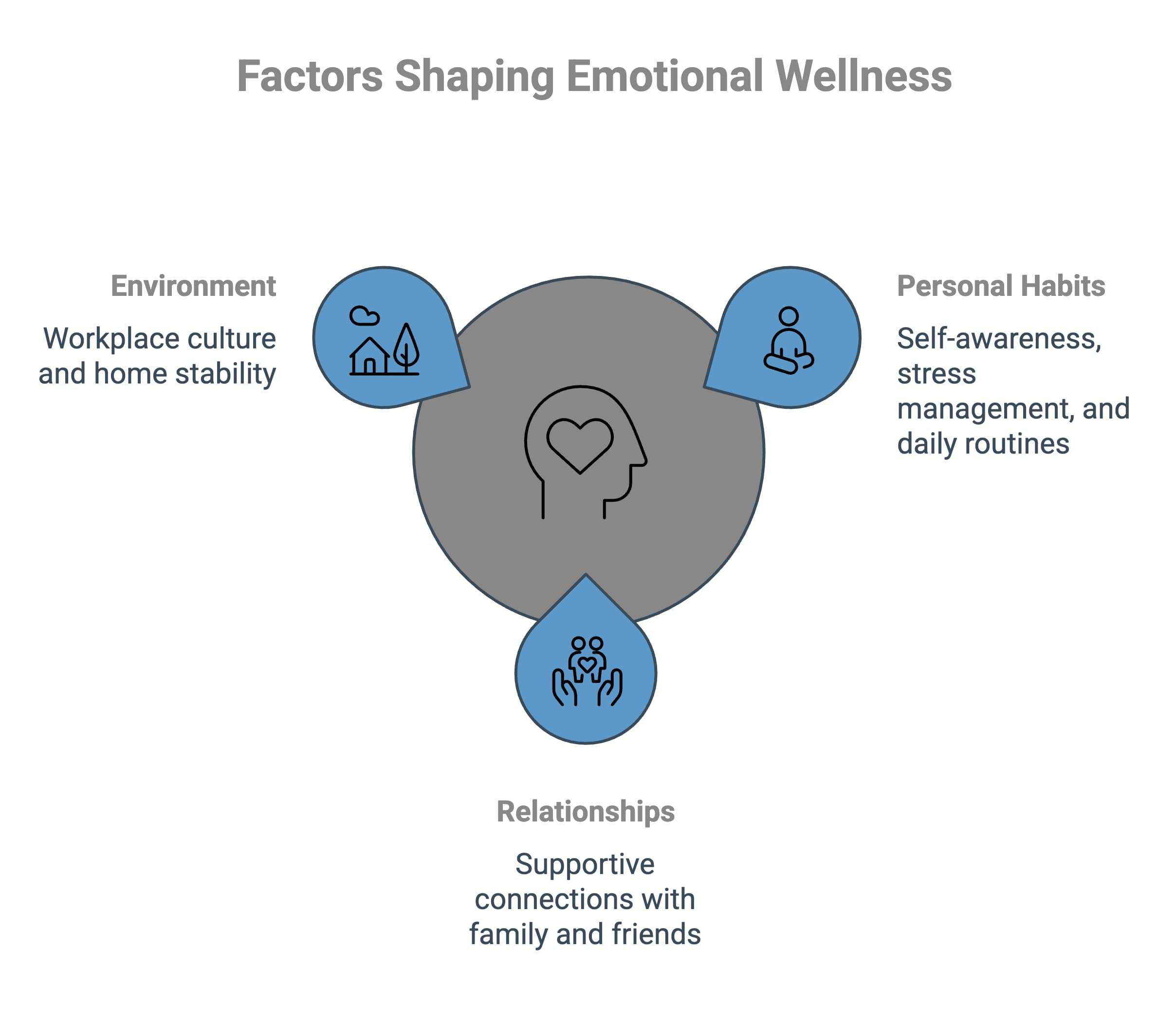
Emotional wellness does not develop in isolation. It is shaped by a combination of internal habits and external experiences, and it directly influences how you function each day. The way you manage emotions, interact with others, and respond to your environment all contribute to your emotional balance. In turn, that balance affects relationships, productivity, resilience, and overall life satisfaction.
Below are the three major areas that influence emotional wellness and how each one appears in everyday life.
1. Personal Habits, Self-Regulation, and Mental Resilience
Emotional wellness is strongly shaped by personal habits and emotional regulation skills. Self-awareness, stress management techniques, coping strategies, and daily routines all play a role.
Practices such as mindfulness, journaling, exercise, and adequate rest support emotional stability.
A clear sense of purpose and alignment with personal values also strengthen resilience, helping individuals respond thoughtfully rather than react impulsively.
When personal regulation skills are strong, daily challenges feel more manageable. You are more likely to pause before reacting, communicate calmly during conflict, and recover more quickly from setbacks.
Emotional resilience supports clearer decision-making, steady motivation, and confidence when facing uncertainty. Without these skills, stress may feel overwhelming, mood shifts may increase, and small challenges can escalate into larger emotional disruptions.
2. Relationships, Social Support, and Emotional Connection
Human connection is a central pillar of emotional wellness. Supportive relationships with family, friends, colleagues, or partners provide emotional safety and validation.
Trust, empathy, open communication, and mutual respect create a foundation where individuals feel understood and valued. In contrast, conflict-heavy or emotionally distant relationships can increase stress and emotional strain.
Emotionally healthy connections improve communication and reduce misunderstandings. You may find it easier to express needs clearly, listen without defensiveness, and resolve conflicts constructively.
Support systems provide reassurance and perspective during stressful periods. When relationships lack support or stability, individuals may experience isolation, frustration, or heightened emotional reactivity that affects other areas of life.
3. Environment, Lifestyle, and Daily Performance
Your physical and social environment significantly affects emotional balance. Factors such as workplace culture, academic pressure, home stability, financial stress, and daily routines shape mood and stress levels.
Lifestyle patterns, including sleep quality, nutrition, physical activity, and work-life boundaries, also influence emotional regulation capacity.
In supportive environments, individuals often feel calmer, more focused, and better able to manage responsibilities. Emotional balance supports productivity, problem-solving, and engagement at work or school.
Healthy routines help prevent burnout and improve concentration. In contrast, chaotic or high-pressure environments can contribute to irritability, fatigue, difficulty concentrating, and reduced motivation.
Emotional wellness is shaped by daily experiences and reflected in how you navigate them. Personal habits build resilience, relationships provide support, and environments influence stress levels.
Strengthening any of these areas can positively affect the others and create a more stable and fulfilling emotional foundation.
What Is the Impact of Poor Emotional Wellness?
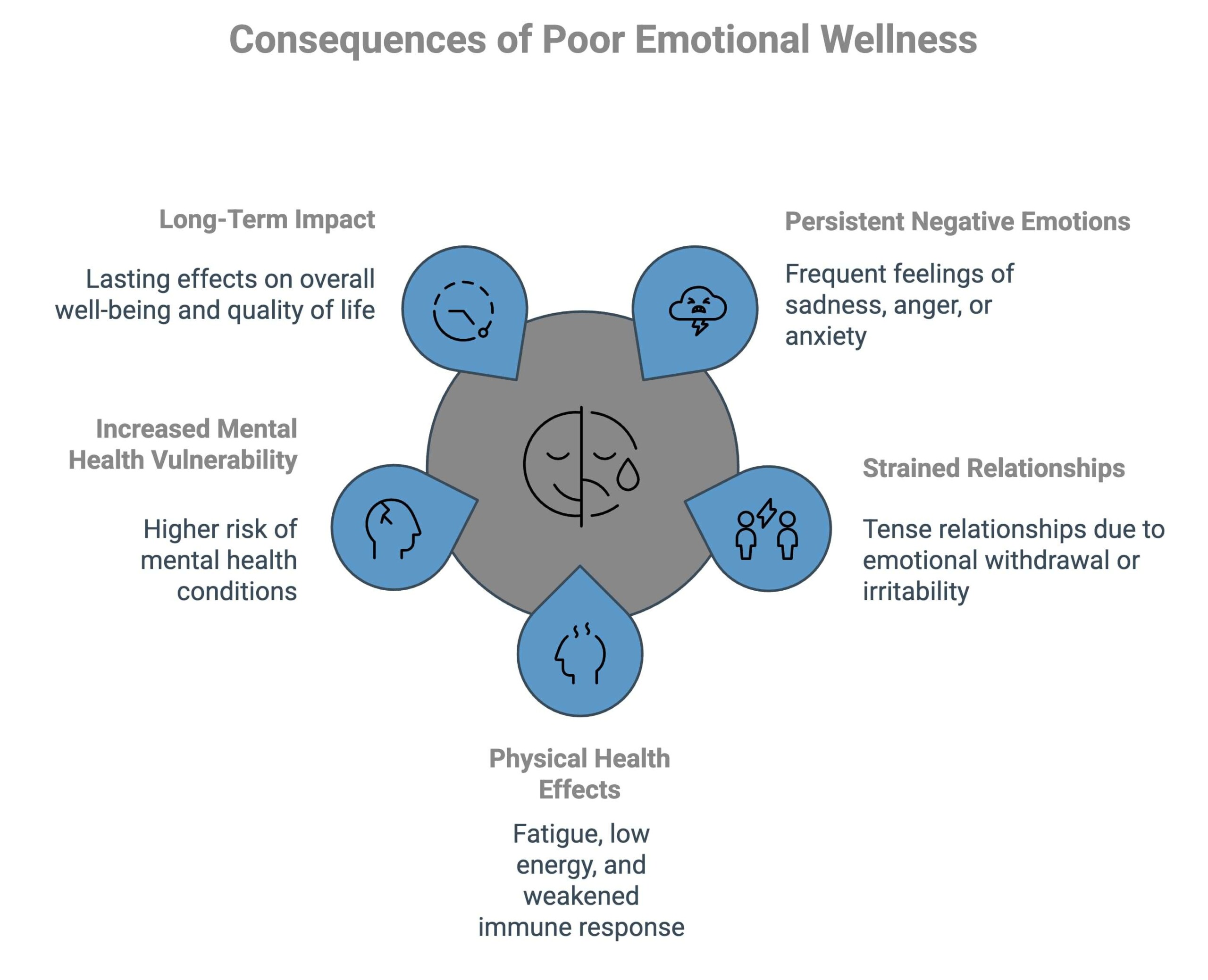
Poor emotional wellness can affect how you think, feel, and function each day. When emotions become overwhelming or unmanaged, they often spill into relationships, work, and physical health. Recognizing these effects early helps individuals understand when support or positive change may be needed.
- Persistent Negative Emotions: Frequent feelings of sadness, anger, or anxiety can make it harder to cope with everyday stress and emotional challenges.
- Strained Relationships: Relationships may become tense due to emotional withdrawal, irritability, or difficulty communicating needs clearly.
- Physical Health Effects: Ongoing emotional distress can contribute to physical symptoms such as fatigue, low energy, and a weakened immune response.
- Increased Mental Health Vulnerability: Poor emotional wellness may increase vulnerability to mental health conditions when stress and negative emotions remain unaddressed.
- Long-Term Impact on Overall Well-Being: Ignoring emotional struggles can lead to lasting effects on overall well-being and quality of life.
Understanding the consequences of poor emotional wellness is an important step toward seeking support and restoring emotional balance.
What Are the Benefits of Strong Emotional Wellness?
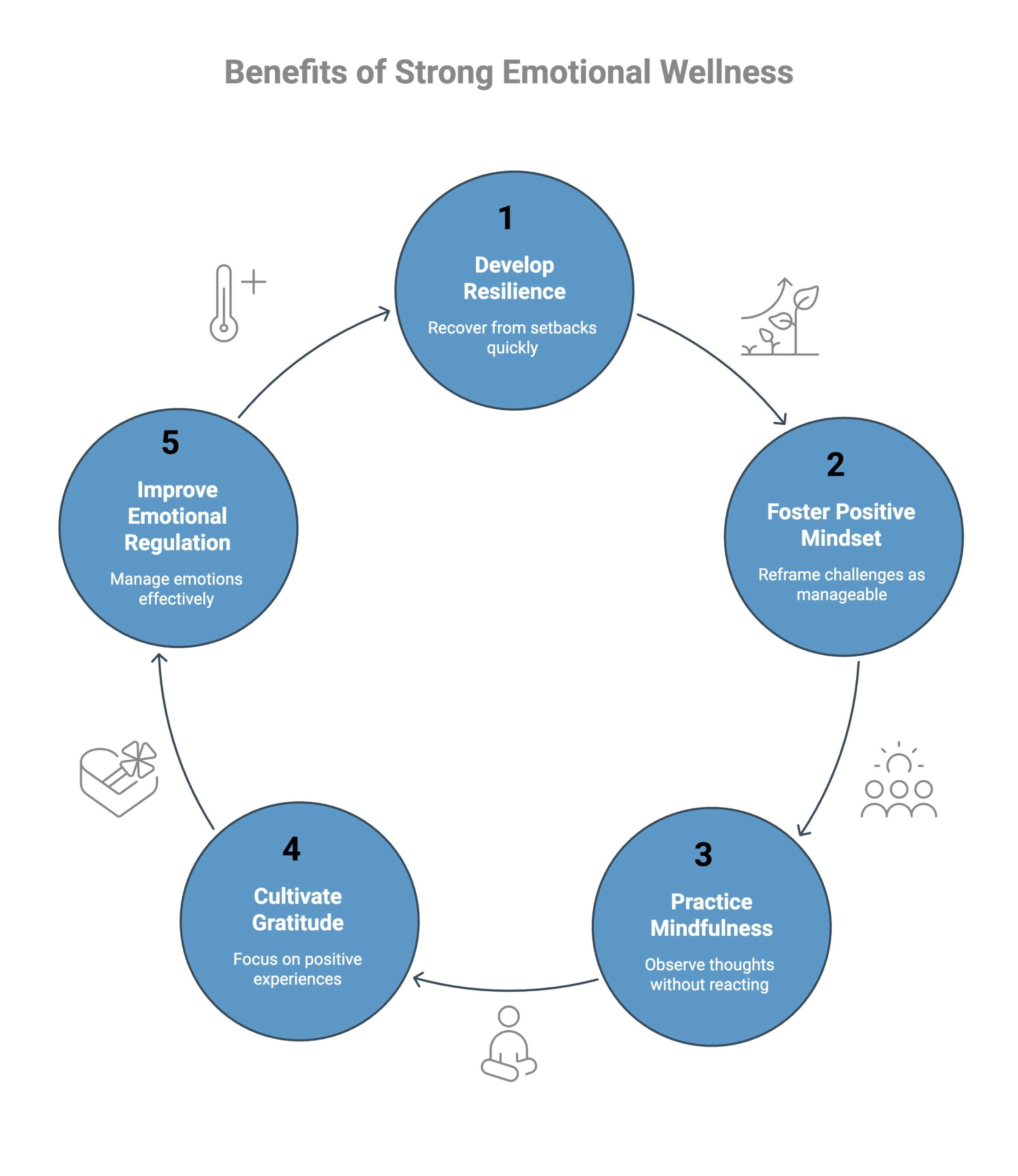
Strong emotional wellness positively shapes how you respond to stress, change, and everyday challenges. When emotions are well managed, individuals experience greater balance and confidence. Developing emotional wellness skills helps build resilience, improve mood, and support a more fulfilling, adaptable approach to life.
- Increased Emotional Resilience: Increased emotional resilience allows you to recover from setbacks more quickly without becoming stuck in negative or self-defeating thought patterns. Instead of dwelling on mistakes or disappointments, resilient individuals reflect, adjust, and move forward. This ability reduces emotional exhaustion and builds confidence in handling future challenges.
- Positive Mindset: A positive mindset helps reframe challenges as temporary and manageable rather than overwhelming obstacles. It does not ignore difficulties, but it encourages realistic optimism. By focusing on solutions and growth opportunities, individuals are more likely to stay motivated and maintain emotional balance during stressful situations.
- Mindfulness Practices: Mindfulness practices encourage present-moment awareness, helping individuals observe thoughts and emotions without reacting impulsively. This awareness reduces stress, anxiety, and emotional reactivity in daily situations. Over time, mindfulness strengthens focus, improves patience, and supports calmer responses during conflict or pressure.
- Gratitude: Gratitude strengthens emotional well-being by shifting attention toward positive experiences, even during challenging times. Regularly acknowledging what is going well can improve mood, increase appreciation for relationships, and foster a more optimistic outlook. This habit helps balance negative thinking patterns and supports long-term emotional stability.
- Improved Emotional Regulation: Improved emotional regulation supports healthier relationships, clearer decision-making, and greater overall life satisfaction. When emotions are managed effectively, communication becomes more respectful and thoughtful. Individuals are less likely to react impulsively, which leads to stronger connections, better problem-solving, and a greater sense of control in everyday life.
By strengthening emotional wellness, individuals gain the tools needed to manage stress effectively, build resilience, and thrive emotionally in everyday life.
How Can You Optimize Your Emotional Wellness?
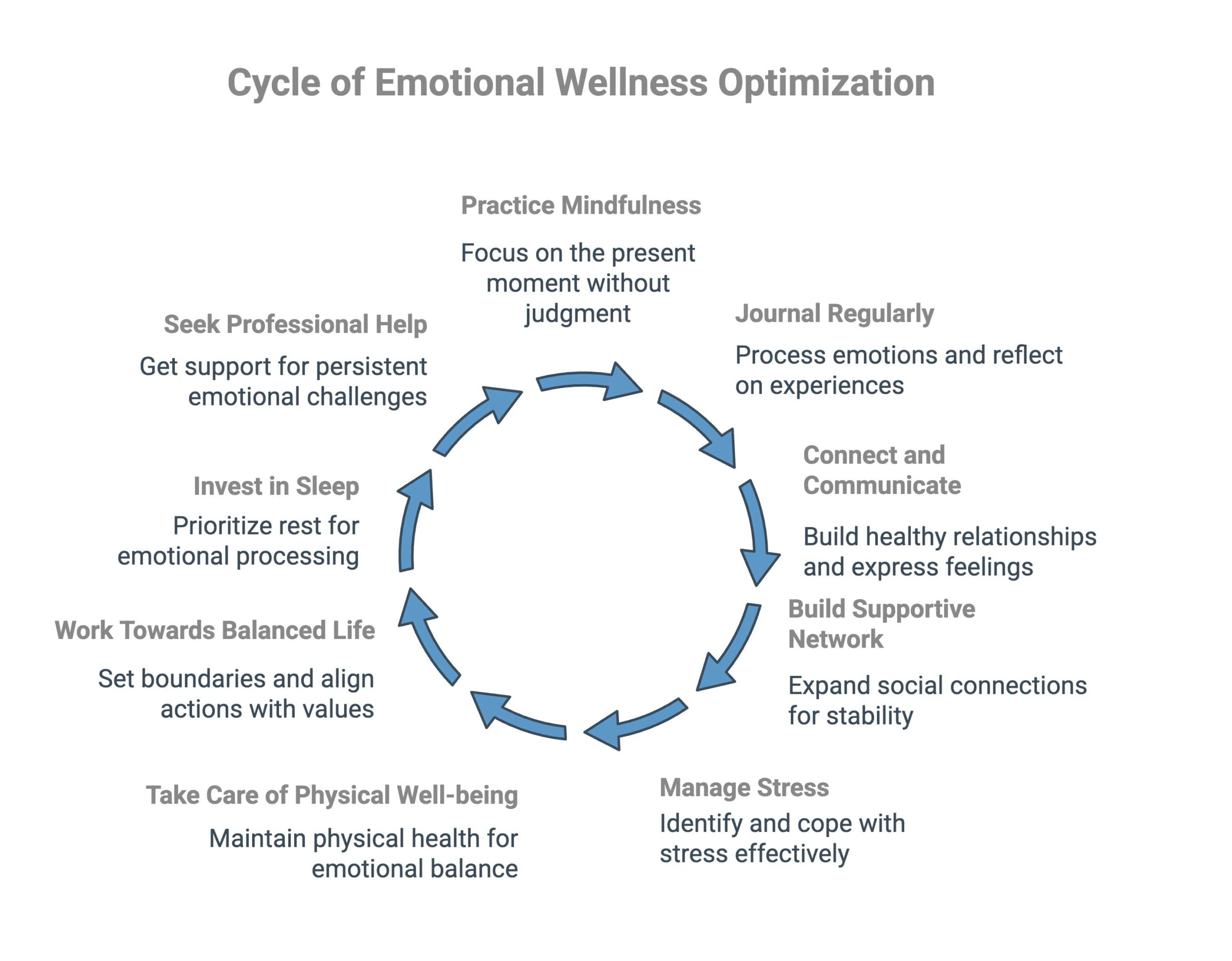
Optimizing emotional wellness involves building consistent habits that support emotional balance, resilience, and self-awareness. Small, intentional actions practiced daily can improve how you manage stress, connect with others, and respond to challenges. The strategies below focus on practical ways to strengthen emotional well-being over time.
1. Practice Mindfulness
Mindfulness is the practice of paying attention to the present moment without judging your thoughts or emotions. Instead of reacting automatically, you learn to pause and observe what you are feeling. This reduces emotional reactivity and helps you respond more calmly in stressful situations.
Mindfulness strengthens emotional regulation by creating space between a trigger and your response. When you notice your emotions early, you are less likely to feel overwhelmed by them.
Practical tips:
- Start with 5 minutes of focused breathing each day.
- Notice physical sensations when emotions arise, such as tension in your shoulders or a racing heartbeat.
- Try brief check-ins during the day by asking yourself, “What am I feeling right now?”
2. Journal Regularly
Journaling provides a safe space to process emotions and reflect on experiences. Writing down thoughts helps clarify feelings that may otherwise feel confusing or overwhelming. Over time, journaling can reveal emotional patterns, triggers, and progress.
This habit strengthens self-awareness and emotional regulation by helping you slow down and think more clearly before reacting.
Practical tips:
- Set aside 10 minutes daily to write freely without editing yourself.
- Reflect on one challenge and what you learned from it.
- Keep a gratitude section to balance difficult emotions with positive reflections.
3. Connect and Communicate With Others
Healthy relationships provide emotional support, perspective, and reassurance. Talking openly about thoughts and feelings reduces isolation and builds trust. Feeling understood strengthens emotional security and helps regulate stress.
Strong communication prevents misunderstandings that can create emotional strain. When people feel safe expressing themselves, relationships become a source of comfort rather than tension.
Practical tips:
- Practice active listening without interrupting.
- Express needs clearly using calm and respectful language.
- Schedule regular time for meaningful conversations.
4. Build a Supportive Social Network
Beyond close relationships, a broader support network strengthens emotional stability. Being connected to community groups, faith communities, professional networks, or peer support groups increases your sense of belonging.
A supportive network offers encouragement, shared experiences, and accountability, especially during stressful periods.
Practical tips:
- Join local or virtual groups aligned with your interests.
- Stay in touch with supportive peers consistently, not only during crises.
- Seek environments where open communication and encouragement are valued.
5. Manage Stress
Stress is unavoidable, but how you handle it determines its impact on emotional wellness. Effective stress management prevents emotional overload and burnout. Identifying stress triggers early allows proactive coping.
Managing stress improves focus, patience, and emotional stability.
Practical tips:
- Identify common stress triggers and prepare coping strategies.
- Break large tasks into smaller steps.
- Use relaxation techniques such as deep breathing, stretching, or short walks.
6. Take Care of Your Physical Well-Being
Physical and emotional health are closely connected. Regular movement supports mood regulation, while balanced nutrition maintains steady energy levels and reduces mood fluctuations.
When the body is cared for, emotional resilience improves naturally.
Practical tips:
- Engage in regular physical activity you enjoy.
- Maintain balanced meals and stay hydrated.
- Limit substances that negatively impact mood or sleep.
7. Work Towards a Balanced Life
Balance prevents emotional exhaustion. Setting boundaries and aligning daily actions with personal values protects emotional energy and promotes long-term stability.
Practical tips:
- Establish clear work-life boundaries.
- Schedule downtime intentionally.
- Revisit personal goals regularly to ensure alignment with values.
8. Invest in Sleep
Sleep is essential for emotional processing and resilience. Without proper rest, emotions feel more intense and harder to regulate.
Practical tips:
- Maintain a consistent sleep schedule.
- Create a calming bedtime routine.
- Keep the sleep environment dark, quiet, and comfortable.
9. Seek Professional Help When Needed
Sometimes emotional challenges require professional guidance. Persistent stress, relationship difficulties, trauma, anxiety, or depression can benefit from structured support provided by licensed mental health professionals.
Total Life Counseling offers tele-therapy and in-person counseling for individuals, couples, teens, and families. Their licensed therapists specialize in ADHD, anxiety, trauma, marriage counseling, and more, using evidence-based approaches such as EMDR and Gottman Method therapy.
Those seeking personalized support can call (407) 248-0030 to schedule a complimentary 15-minute consultation.
By practicing these habits consistently, individuals can strengthen emotional wellness and build a more balanced and resilient approach to everyday life. Small daily improvements often create meaningful long-term changes.
Why Choose Total Life Counseling for Emotional Wellness Support?
If you or your family need guidance navigating emotional challenges, Total Life Counseling provides comprehensive therapy services for children, teens, adults, couples, and families.
The center offers both tele-therapy and in-person counseling, with same-week appointments often available across Central Florida and the Dallas–Fort Worth area. Licensed mental health counselors specialize in ADHD, anxiety, trauma, depression, marriage counseling, anger management, and social skills development.
The team includes Gottman-trained couples therapists and EMDR-trained trauma specialists to provide evidence-based care tailored to individual needs. Multilingual counselors are also available.
Those seeking professional, relational, and approachable support can reach out to us to schedule a complimentary 15-minute consultation and take the next step toward stronger emotional wellness.
Conclusion
Emotional wellness plays a significant role in shaping our relationships, influencing our performance at work or school, and impacting our overall mental health. By recognizing the factors that contribute to emotional wellness, including personal, social, and environmental influences, we can take actionable steps towards improvement. Prioritizing emotional wellness not only enhances our quality of life but also fosters resilience against challenges.
Frequently Asked Questions
What are some real-life examples of emotional wellness skills?
Real-life examples include practicing mindfulness to stay present during stressful moments, journaling to process emotions, setting healthy boundaries in relationships, and using coping strategies like exercise or deep breathing. These skills help manage reactions, reduce stress, and maintain emotional balance.
How does emotional wellness benefit overall health?
Emotional wellness supports overall health by lowering stress levels, improving sleep quality, and strengthening resilience. It positively affects immune function and heart health while also enhancing mood and focus. Managing emotions effectively reduces burnout and promotes long-term psychological well-being.
Are there connections between emotional wellness and other wellness dimensions?
Yes, emotional wellness connects closely with physical, social, and mental well-being. Managing emotions reduces physical stress symptoms, strengthens relationships through healthy communication, and supports clearer thinking. When balanced, emotional wellness enhances overall life satisfaction.
Is emotional wellness linked to resilience?
Emotional wellness is strongly linked to resilience because it improves how individuals respond to setbacks and stress. When emotions are understood and regulated effectively, challenges feel more manageable. This strengthens adaptability, encourages problem-solving, and supports recovery after disappointments.
What are examples of emotional wellness activities?
Examples include mindfulness meditation, gratitude journaling, regular exercise, reflective writing, therapy sessions, and engaging in meaningful conversations. Relaxation techniques such as deep breathing or progressive muscle relaxation also support emotional balance and stress reduction in daily routines.
What are the 4 pillars of emotional well-being?
The four pillars commonly include self-awareness, emotional regulation, resilience, and healthy relationships. Self-awareness builds insight, regulation supports balanced responses, resilience strengthens adaptability, and positive relationships provide connection. Together, these pillars create a stable foundation for emotional growth and daily stability.
What does it mean to be emotionally supported?
Being emotionally supported means feeling heard, understood, and validated by others. It involves having trusted individuals who provide empathy, encouragement, and reassurance during challenges. Emotional support reduces isolation, strengthens confidence, and helps individuals cope more effectively with stress or uncertainty.
Filed in: Emotions
Share This Story, Choose Your Platform!
Total Life Counseling Center consists of Licensed Counselors, masters level therapists, Español counselors, Licensed Mental Health Counselors, business coaches, and image enhancement coaches who provide counseling for emotional, mental, physical and spiritual care including marriage, individual, family, substance abuse and more. TLC’s family, trauma and marriage experts have been interviewed on National and Local TV/Radio over 200 times for their expert advice on Fox News, OWN, WETV, ABC’s Medical Minute and more. Our skilled counselors are relational, approachable and specialists providing therapy services in the Central Florida area including: Orlando, Winter Park, MetroWest, Windermere, Dr. Phillips, East Orlando, Lake Mary, and Clermont, Boca Raton Florida, and Dallas, TX.
About the Author: Jim West

Related Posts