

How Can You Recognize and Manage Holiday Depression?

Key Highlights
- Holiday depression is a temporary form of depression linked to the holidays, often triggered by loneliness, financial stress, and family dynamics.
- Several factors, including financial strain, family gatherings, and media pressure, can contribute to feelings of sadness or isolation during the holidays.
- Symptoms of holiday depression include persistent low mood, fatigue, irritability, changes in sleep and appetite, and feelings of hopelessness or anxiety.
- Coping strategies include staying connected with loved ones, engaging in self-care, volunteering, practicing mindfulness, and limiting social media exposure.
- Overloading your schedule with holiday obligations can intensify stress; balancing downtime is essential for emotional well-being.
- If depressive symptoms last more than a few weeks, cause withdrawal, or involve suicidal thoughts, seeking professional help is crucial.
- Total Life Counseling offers professional support for holiday depression, with both in-person and telehealth options available for those in need.
The holiday season is often portrayed as a time of joy, but for many, it can bring feelings of sadness and isolation. Holiday depression is a very real challenge that many individuals face, especially with the unique pressures and expectations this time of year brings.
These feelings are not just fleeting; they can significantly impact emotional well-being. From financial stress to family conflicts, and even seasonal changes, the holiday season can trigger deep feelings of loneliness or sorrow. It’s important to recognize when these emotions go beyond the usual holiday stress and begin to affect your daily life.
This blog aims to shed light on the signs of holiday depression, provide coping strategies, and offer guidance on when it’s time to seek professional help. We’ll explore practical ways to navigate this challenging time, so you can embrace the season with a healthier mindset and emotional balance.
What Is Holiday Depression?

Holiday depression refers to a temporary form of depression linked to the holidays. Most of the time, these emotions accompany feelings of sorrow, loneliness, or despair during the holiday season. It is a case of situational depression, different from clinical depression, which lasts for most of the year.
Why Are the Holidays So Depressing?
The holiday season brings its own set of challenges that can take a toll on emotional well-being. A NAMI survey found that 68% of individuals feel financially strained over the holidays, highlighting the pressure of holiday spending.
These stresses are often compounded by emotional challenges. For many, the holidays can amplify feelings of loneliness and sadness. A ValuePenguin survey revealed that 55% of Americans reported feeling lonely during the holidays, emphasizing how the festive season can bring out feelings of isolation.
Here are some of the factors that can contribute to holiday stress and affect your mood during the season:
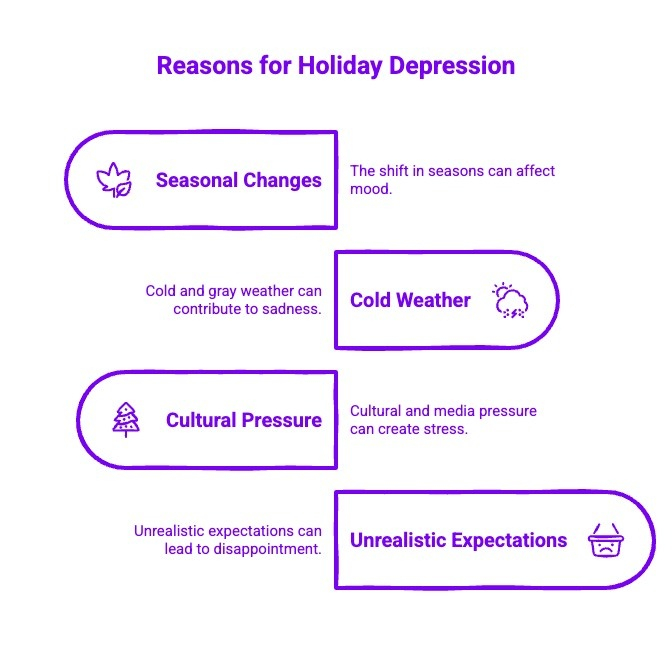
- Seasonal Changes: The shorter daylight hours in winter can lead to symptoms of Seasonal Affective Disorder (SAD), which can make a person’s mood worse.
- Cold and Gray Weather: The dreariness of winter weather can drain energy and motivation.
- Cultural and Media Pressure: Media and cultural expectations often place undue pressure on individuals during the holidays, with constant messages about the “perfect holiday” and idealized family gatherings. This can increase feelings of stress when reality doesn’t match the expectations set by advertisements and social media.
- Unrealistic Expectations: Many people feel the weight of holiday pressures.
Altogether, these stresses and unmet expectations can make the season feel less joyful and more depressing.
What Are the 5 Signs of Holiday Depression?
While the holiday season is typically seen as a time of joy, it can also trigger sadness and isolation for many. Holiday anxiety and depression, or seasonal depression, often mirrors clinical depression. Recognizing these signs early is key, especially if they persist.
Here are some signs to watch for:
1) Persistent Low Mood and Loss of Interest
People with depression during the holidays often experience persistent feelings of sadness, emptiness, or hopelessness, which can last throughout the winter months. Additionally, a loss of interest in activities once enjoyed is common, significantly impacting daily life and social interactions.
2) Fatigue, Low Energy, Sleep and Appetite Changes
Fatigue, oversleeping, and weight gain are typical symptoms associated with depression around the holidays. The loss of energy often makes it difficult for individuals to engage in usual activities, and many experience increased cravings for carbohydrates. These symptoms typically worsen during the winter months.
3) Trouble Concentrating, Irritability or Restlessness
Difficulty concentrating, irritability, and restlessness are commonly reported in individuals with holiday depression. These cognitive and emotional symptoms can lead to challenges in managing daily tasks, and social interactions often become more difficult as the individual struggles to focus.
4) Feelings of Hopelessness, Worthlessness or Anxiety
SAD and depression and the holidays can also bring on feelings of hopelessness, worthlessness, or anxiety. In some cases, these emotions can escalate to suicidal thoughts, signaling the need for immediate professional intervention. It’s important to seek support if these feelings persist.
5) Seasonal Onset With Remission After Winter
SAD is distinct in that it has a seasonal onset, typically beginning in the fall or early winter, with symptoms often fading as the weather improves in the spring or summer. This cyclical pattern differentiates it from other forms of depression that do not follow a seasonal pattern.
If you’re feeling overwhelmed, don’t wait to seek support. Reach out to Total Life Counseling today for compassionate guidance and mental health services. Take the first step toward healing, contact us now to start your journey toward well-being.
What Are The 8 Ways To Cope with Holiday Depression?

The holiday season can bring added stress and emotional challenges. However, there are ways to better manage your feelings and improve your mental well-being.
Here are 8 ways to cope with holiday depression:
1) Reconnect with Loved Ones
Spending time with family and friends can help alleviate feelings of loneliness and isolation. Even brief phone calls or video chats can provide emotional support, reminding you that you’re not alone in your struggles. This is especially important if you’re depressed and anxious during holidays, as social connections can bring relief.
2) Volunteer
Giving your time to a cause can help shift your focus from personal stress to helping others. Volunteering at a local charity can provide a sense of purpose, improve mood, and remind you of the kindness around you. Many people feel depressed for the holidays, but volunteering can be a powerful antidote.
3) Join a Support Group
Support groups can offer comfort during the holiday season, allowing you to connect with others facing similar struggles. Whether in person or virtually, sharing your feelings with others can provide much-needed emotional relief and connection, especially when you’re experiencing Christmas holiday depression or any other seasonal mood change.
4) Limit Social Media Exposure
Social media can often contribute to holiday stress by presenting unrealistic images of “perfect” holidays. By unfollowing accounts or muting posts that make you feel pressured, you can reduce stress and feel more grounded. If you’re feeling depressed at holidays, it’s crucial to avoid content that amplifies negative emotions.
5) Prioritize Self-Care
Taking time for yourself is essential. Each day, set aside time for activities that make you feel good, like reading, taking a walk, or enjoying a relaxing bath, allowing your mind and body to recharge. If you’re depressed for the holidays, self-care can be a simple but effective way to combat stress.
6) Stay Physically Active
Exercise is a great way to improve your mood. Whether it’s walking, yoga, or a exercising, physical activity releases endorphins, helping to reduce anxiety and depression during holidays. Staying active also boosts overall well-being and energy levels, making it easier to cope with emotional struggles.
7) Practice Mindfulness or Meditation
Incorporating mindfulness or meditation into your daily routine can help calm your mind and reduce stress. Even just five minutes of deep breathing can help center your thoughts, improve focus, and promote relaxation. These practices can be especially helpful if you’re dealing with Christmas holiday depression.
8) Avoid Overloading Your Schedule
Avoid packing your days with excessive holiday obligations. Instead, balance your time by scheduling relaxation and downtime, which will help reduce stress and prevent emotional burnout. Overloading yourself can intensify feelings of being depressed at holidays, so be mindful of your limits.
When Should You Seek Professional Help?
While mild holiday blues may pass after a short time, long-lasting or severe depression requires attention. If the symptoms persist or worsen, it’s essential to reach out for professional help. Here are signs that indicate it’s time to seek support:
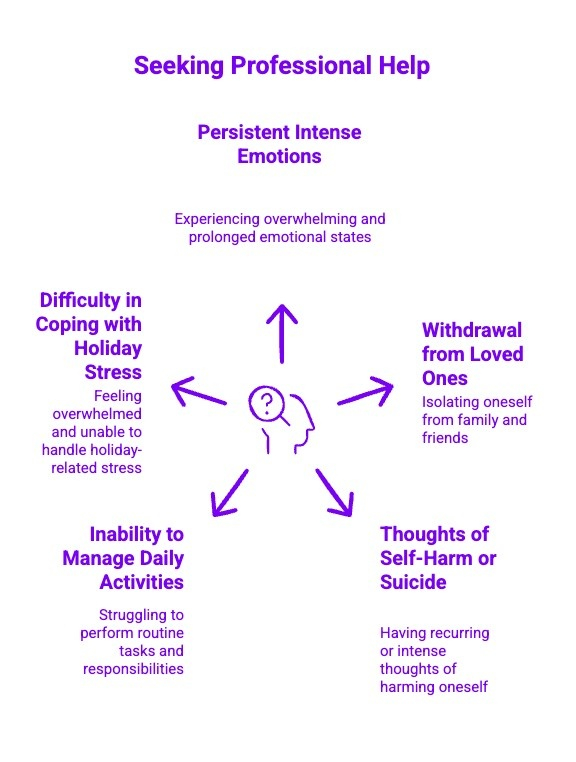
- Persistent Intense Emotions: If feelings of sadness, anxiety, or hopelessness are overwhelming and don’t improve after a couple of weeks, it may indicate the need for professional intervention.
- Withdrawal from Loved Ones: Isolating yourself from the people you live with or feeling unable to function normally due to depressive symptoms is a sign that help may be needed.
- Thoughts of Self-Harm or Suicide: If you find yourself considering self-harm or feeling that life is not worth living, it’s crucial to reach out immediately for support from a mental health professional.
- Inability to Manage Daily Activities: If depressive feelings prevent you from carrying out everyday tasks, such as working, eating, or personal hygiene, it’s a strong indicator that professional help is necessary.
- Difficulty in Coping with Holiday Stress: For those dealing with holiday-related mood issues, therapists are equipped to offer support tailored to navigating seasonal depression and anxiety.
If you or someone you care about is experiencing any of these signs, don’t hesitate to seek guidance from a mental health professional. Getting help is a proactive step towards healing.
Are You Ready to Get the Support You Deserve with Total Life Counseling?
If you’re struggling with holiday depression or seasonal mood changes, it’s important to seek professional help. At Total Life Counseling, we specialize in helping individuals manage seasonal affective disorder (SAD) and other emotional challenges during the holidays. Our licensed counselors offer personalized care to help you navigate these difficult times with understanding and effective treatment.
Would you prefer in-person sessions or the convenience of telehealth? Regardless of your choice, Total Life Counseling is here to provide the support you need. Don’t let holiday stress overwhelm you. Take the first step toward healing today.
Contact us to schedule your appointment now and start your journey towards emotional well-being.
Conclusion
Feeling blue during the holidays is a common experience that many people face, and it’s important to recognize that you’re not alone. Acknowledge these feelings and take action by using coping strategies like reaching out for support, engaging in activities you enjoy, and prioritizing self-care.
Remember, your mental health matters, and it’s okay to seek help when needed. If you’re struggling, take the next step today, whether that’s reaching out to a counselor, joining a support group, or talking to someone you trust. Embrace the season with both joy and care for your well-being!
Frequently Asked Questions
Can holidays and depression affect anyone, even those who aren’t usually depressed?
Yes, this form of depression can affect people of all ages, regardless of their history with mental illness. The unique pressures of this time of year, such as financial strain, family events, grief, or even less sunlight, can trigger symptoms of depression. You don’t have to have a prior condition to feel overwhelmed.
What are some quick ways to cope if I feel depressed on the holidays?
To improve your mental health, try to get some regular physical activity, even if it’s just a short walk. Limit alcohol, which is a depressant, and make time for yourself to relax. Connecting with a trusted friend or support group can also help you maintain positive feelings and feel less isolated.
Can depression in holidays and holiday anxiety happen together?
Absolutely. The holiday blues and holiday anxiety often go hand-in-hand, as high stress levels can trigger both. The pressure of social events, financial worries, and family expectations can cause feelings of anxiety, which may worsen or lead to symptoms of depression. This overlap is common for many who struggle during this season.
How can older adults cope with depression during the holidays?
Older adults can cope by staying socially connected, engaging in activities they enjoy, prioritizing self-care, and reaching out to family or professional support. Joining a senior support group can also help reduce loneliness.
What are some resources or hotlines for people struggling with holiday depression?
Resources like the U.S. Suicide & Crisis Lifeline (988), the National Alliance on Mental Illness (NAMI), and the Crisis Text Line provide immediate support for holiday depression. Many mental health organizations also offer online counseling services.
Filed in: Holiday Depression
Share This Story, Choose Your Platform!
Total Life Counseling Center consists of Licensed Counselors, masters level therapists, Español counselors, Licensed Mental Health Counselors, business coaches, and image enhancement coaches who provide counseling for emotional, mental, physical and spiritual care including marriage, individual, family, substance abuse and more. TLC’s family, trauma and marriage experts have been interviewed on National and Local TV/Radio over 200 times for their expert advice on Fox News, OWN, WETV, ABC’s Medical Minute and more. Our skilled counselors are relational, approachable and specialists providing therapy services in the Central Florida area including: Orlando, Winter Park, MetroWest, Windermere, Dr. Phillips, East Orlando, Lake Mary, and Clermont, Boca Raton Florida, and Dallas, TX.
About the Author: Jim West

Related Posts