

Therapy for Burnout: What Is It and How Does It Work?

Key Highlights
- Burnout is a state of emotional, mental, and physical exhaustion caused by prolonged, unmanaged stress, most often linked to work or caregiving roles.
- Common symptoms include persistent fatigue, detachment, reduced performance, sleep disturbances, and physical stress-related complaints.
- Burnout differs from stress and depression in its cause, progression, and overall impact across professional and personal life.
- Effective treatment options include cognitive behavioral therapy for burnout, executive therapy for burnout, and burnout therapy for professionals.
- Specialized support is available, including therapy for caregiver burnout, therapy for women with burnout, and therapy for professional burnout.
- Online therapy and therapy for burnout near me can provide flexible, evidence-based care with outcomes comparable to in-person sessions.
- Total Life Counseling offers structured, personalized burnout therapy designed to support recovery, resilience, and long-term prevention.
Feeling constantly exhausted, unmotivated, and emotionally drained can make even simple tasks feel overwhelming. If rest no longer restores your energy, you may be dealing with more than ordinary stress.
Burnout can affect professionals, caregivers, executives, and women balancing multiple responsibilities. Left unaddressed, it can impact productivity, relationships, physical health, and long-term emotional well-being. The good news is that therapy for burnout offers steady, practical support to help you recover at a manageable pace and gradually restore balance and resilience.
This blog explains what burnout is, how it differs from stress and depression, the stages and causes, and how therapy, including cognitive behavioral therapy for burnout and other evidence-based approaches, can support lasting recovery and prevention.
What Is Burnout?
Burnout is a state of emotional, mental, and physical exhaustion caused by prolonged, unmanaged stress, most commonly linked to work. It builds over time when demands stay high, and recovery stays low until your energy, focus, and motivation start to drop consistently.
Unlike ordinary tiredness, burnout tends to show up in three ways:
- Feeling emotionally and physically drained most days, even after rest.
- Becoming more negative, cynical, or detached about work and responsibilities.
- Noticing a decline in effectiveness or productivity, despite continued effort and hard work.
Small tasks can begin to feel overwhelming, patience may shorten, and it can become harder to care about outcomes you once valued.
Burnout is not just being busy. The World Health Organization describes it as an occupational phenomenon resulting from chronic workplace stress that has not been successfully managed.
What Are the Signs and Symptoms of Burnout?
Burnout often develops quietly, disguised as everyday stress until it starts affecting performance, mood, and overall health. Recognizing early warning signs can help prevent deeper exhaustion and long-term consequences.
Here are the common signs and symptoms to watch for:
| Emotional Signs & Symptoms | Behavioral Signs & Symptoms | Physical Signs & Symptoms |
|---|---|---|
| Persistent feelings of exhaustion or emotional depletion | Decreased productivity and performance | Chronic fatigue or low energy |
| Loss of motivation and enthusiasm | Difficulty concentrating or making decisions | Frequent headaches or muscle pain |
| Feeling detached, numb, or disconnected from work or others | Withdrawal from work, social interactions, or responsibilities | Sleep disturbances, including insomnia or restless sleep |
| Increased irritability, frustration, or impatience | Procrastination or avoidance of important tasks | Weakened immune system or frequent illness |
| Sense of helplessness, hopelessness, or defeat | Increased absenteeism or frequent lateness | Changes in appetite or weight |
| Reduced sense of accomplishment or purpose | Reduced initiative or engagement | Gastrointestinal issues, such as stomach discomfort |
| Increased cynicism or negative outlook | Changes in work habits, such as doing the bare minimum | Physical tension, especially in the neck and shoulders |
| Feeling overwhelmed by responsibilities | Using unhealthy coping mechanisms (overeating, excessive screen time, substance use) | General decline in physical well-being |
Recognizing these signs early makes it easier to address burnout before it significantly impacts your well-being and career.
You do not have to navigate this alone. The experienced team at Total Life Counseling provides compassionate, evidence-based support to help you regain clarity, restore balance, and build long-term resilience. Reach out today and take the first step toward recovery.
What Is the Difference Between Stress, Burnout, and Depression?
Stress, burnout, and depression are often confused because they share overlapping symptoms, yet they differ in cause, intensity, and impact. Understanding these distinctions is essential for choosing the right support and response.
Below are the key differences explained clearly:
| Aspect | Stress | Burnout | Depression |
|---|---|---|---|
| Primary Cause | Short-term or ongoing pressure from demands | Prolonged, unmanaged work-related stress | Complex mix of biological, psychological, and environmental factors |
| Energy Levels | Overactive, tense, “too much” energy | Exhausted, depleted, emotionally drained | Low energy, persistent fatigue |
| Emotional Pattern | Anxiety, urgency, irritability | Cynicism, detachment, reduced motivation | Persistent sadness, hopelessness, emptiness |
| Sense of Control | Feels overwhelmed but still hopeful | Feels helpless and disengaged from work | Feels powerless across many areas of life |
| Scope of Impact | Usually tied to specific situations | Primarily work-related | Affects all areas of life, not just work |
| Recovery Approach | Rest, time management, and boundary setting | Workload adjustment, recovery time, structural change | Professional mental health treatment may be required |
While stress can be temporary and burnout is typically work-driven, depression is a medical condition that requires proper care. Identifying the difference helps ensure appropriate and timely support.
What Are the Stages of Burnout?
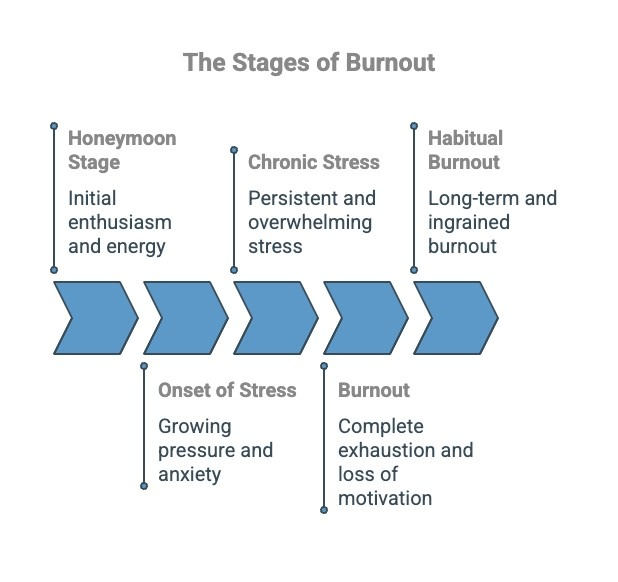
Burnout rarely happens overnight. It develops gradually through emotional and behavioral shifts that may go unnoticed at first. Understanding how it progresses can help individuals intervene earlier and prevent long-term damage.
Here are the common stages of burnout explained:
1. Honeymoon Stage
At this stage, motivation and commitment are high. You may take on extra responsibilities, feel enthusiastic, and push yourself to perform at your best. Stress levels exist, but feel manageable. However, boundaries are often unclear, and self-care may be overlooked. Over time, sustained overcommitment without adequate recovery lays the foundation for deeper exhaustion.
2. Onset of Stress
Work demands start feeling heavier and more constant. You may notice irritability, difficulty concentrating, or changes in sleep patterns. Productivity can fluctuate, and minor setbacks feel more frustrating than usual. Physical symptoms such as headaches or fatigue may begin to appear. Although you may still be meeting expectations, the warning signs of burnout become more frequent, more intense, and increasingly difficult to ignore.
3. Chronic Stress
Stress becomes ongoing rather than occasional. Exhaustion increases, motivation declines, and emotional resilience weakens. You may withdraw socially, procrastinate more, or feel overwhelmed by routine tasks. Sleep disturbances and physical tension become more frequent. At this stage, performance may noticeably decline, and feelings of pressure begin affecting both work and personal life.
4. Burnout
Emotional and physical depletion become dominant. You may feel detached from your work, cynical about outcomes, and disconnected from colleagues. Productivity drops significantly, and even small tasks can feel overwhelming. Chronic fatigue, low motivation, and reduced job satisfaction are common. Recovery now requires intentional rest, structural change, and sometimes professional support.
5. Habitual Burnout
Burnout becomes embedded in daily life. Persistent exhaustion, negative thinking, and emotional numbness may feel normal. Work performance and overall well-being are significantly impacted. Without intervention, this stage can lead to more serious mental health concerns. Long-term recovery may involve redefining boundaries, adjusting responsibilities, and prioritizing consistent support and self-care.
Recognizing these stages early creates an opportunity to reset before burnout becomes deeply entrenched and harder to reverse.
What Causes Burnout at Work and in Daily Life?
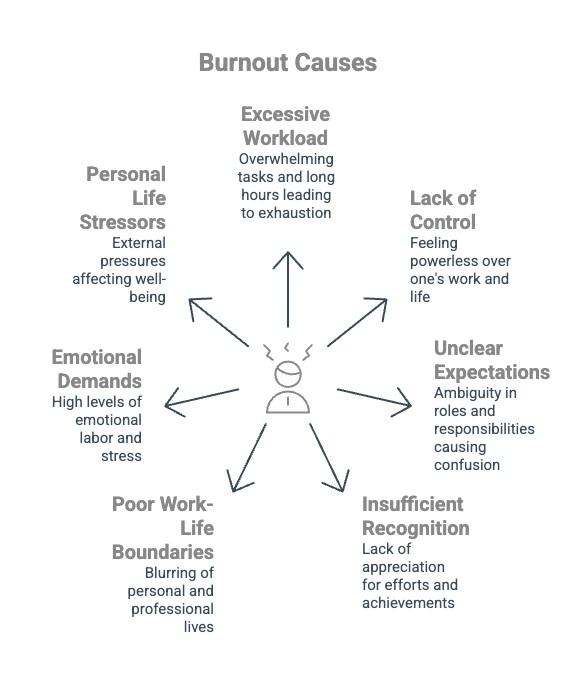
Burnout can stem from both professional pressures and personal responsibilities that accumulate without relief. When demands consistently exceed emotional, mental, or physical capacity, exhaustion begins to build. Recognizing root causes is essential for prevention.
Here are the most common causes of burnout at work and in daily life:
- Excessive Workload: Consistently high demands, tight deadlines, and long hours leave little time for recovery. When workload outpaces available resources or staffing, sustained pressure becomes the norm rather than the exception.
- Lack of Control: Limited autonomy over decisions, schedules, or priorities can create frustration and helplessness. Feeling powerless reduces motivation and increases emotional strain over time.
- Unclear Expectations: Ambiguous roles, shifting responsibilities, or inconsistent feedback create confusion and stress. Without clarity, individuals may overextend themselves trying to meet undefined standards.
- Insufficient Recognition or Reward: A lack of appreciation, compensation, or acknowledgment for effort can erode engagement. Over time, feeling undervalued contributes to detachment and reduced commitment.
- Poor Work-Life Boundaries: Constant connectivity, after-hours emails, or blurred personal and professional roles prevent true rest. Without clear separation, recovery becomes difficult.
- Emotional Demands: Caregiving, customer-facing roles, or high-conflict environments require sustained emotional labor. Managing others’ needs without support accelerates exhaustion.
- Personal Life Stressors: Financial strain, family responsibilities, health concerns, or major life changes can compound workplace stress, increasing vulnerability to burnout.
Burnout rarely has a single cause. It often results from layered pressures that persist without adequate support, recovery, or structural change.
How to Deal With Burnout? 5 Tips Inside
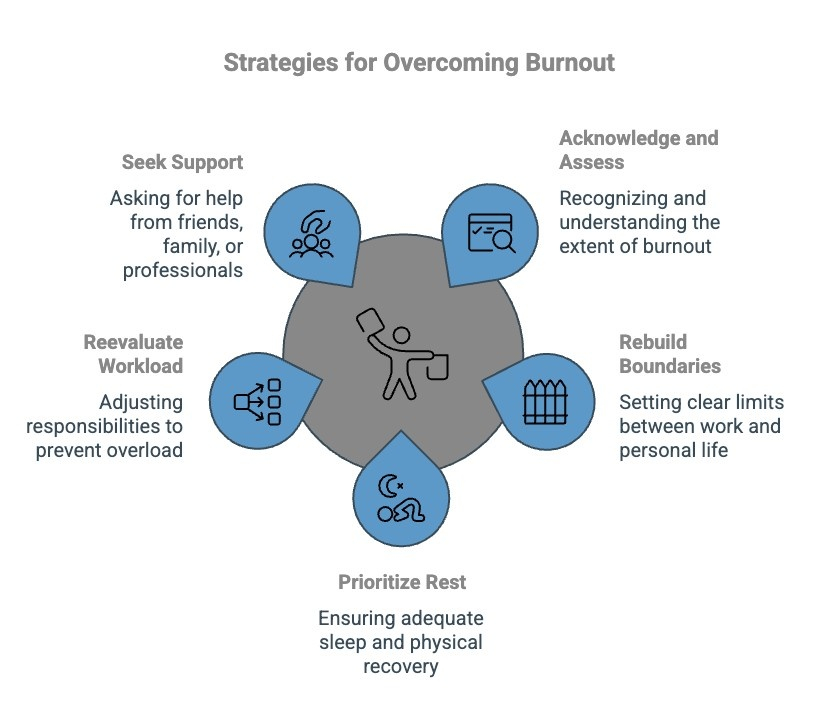
Burnout can feel overwhelming, but recovery is possible with intentional changes and consistent support. Addressing it early prevents deeper emotional and physical exhaustion. Small, practical steps often create meaningful progress over time.
Here are effective strategies to deal with burnout:
1. Acknowledge and Assess the Situation
The first step is recognizing that burnout is present rather than dismissing it as temporary stress. Reflect on what feels most draining and identify patterns contributing to exhaustion. Honest self-assessment creates clarity. Once you understand the sources, you can begin making targeted adjustments instead of pushing through fatigue and worsening long-term strain.
2. Rebuild Boundaries
Burnout often develops when personal and professional limits blur. Establish clearer boundaries around work hours, communication, and availability. Protect recovery time by disconnecting after work and limiting unnecessary commitments. Consistent boundaries restore balance and help retrain both yourself and others to respect sustainable expectations rather than constant accessibility.
3. Prioritize Rest and Physical Recovery
Chronic exhaustion requires deliberate recovery. Focus on consistent sleep, regular meals, hydration, and gentle physical movement. Even short breaks during the day help regulate stress levels. Physical recovery supports emotional resilience. Without adequate rest, productivity and mood continue declining, making burnout harder to reverse.
4. Reevaluate Workload and Responsibilities
If possible, adjust expectations or redistribute tasks. Discuss workload concerns with supervisors or collaborators. Clarifying priorities reduces unnecessary pressure. Sometimes recovery involves renegotiating deadlines, delegating responsibilities, or pausing nonessential projects. Structural changes often have a greater impact than individual coping tactics alone.
5. Seek Support
Talking with trusted colleagues, friends, or a mental health professional can reduce isolation and provide perspective. External support helps validate experiences and identify practical solutions. In more severe cases, professional guidance ensures burnout does not progress into deeper mental health challenges.
Burnout recovery is gradual, not instant. With awareness, boundaries, and consistent support, energy and motivation can be rebuilt over time.
Learn how therapy for work-life balance can help you set healthier boundaries, reduce chronic stress, and restore balance between your career and personal life.
What Is Therapy for Burnout and How Does It Work?
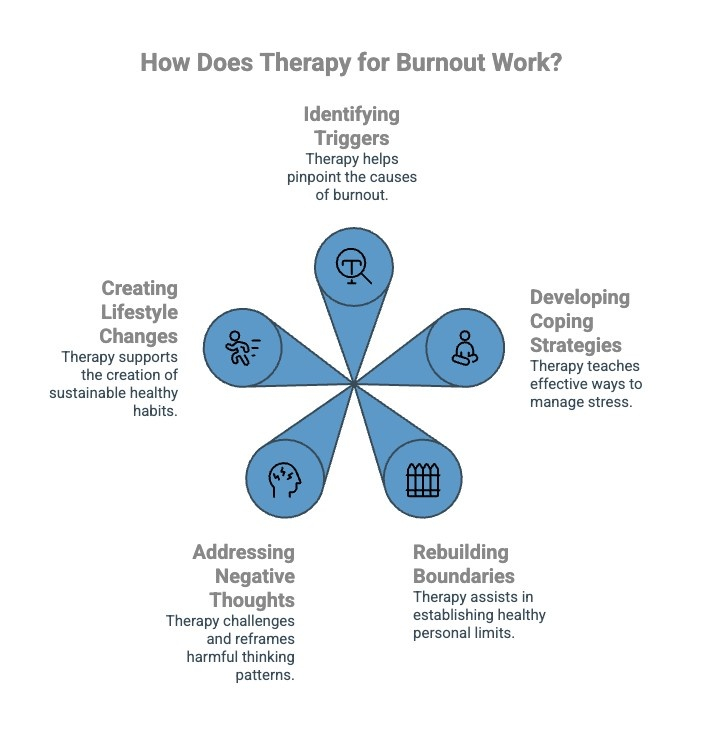
Burnout can feel isolating and overwhelming, especially when rest alone no longer helps. Therapy offers structured guidance to understand root causes and rebuild emotional resilience. Professional support creates space for recovery.
Here are the key ways therapy for burnout works:
- Identifying underlying triggers: Therapists help uncover patterns such as perfectionism, boundary issues, or chronic workplace stress contributing to exhaustion.
- Developing coping strategies: Practical tools like stress regulation techniques, cognitive reframing, and emotional processing reduce daily overwhelm.
- Rebuilding healthy boundaries: Therapy supports setting realistic limits around work, responsibilities, and relationships.
- Addressing negative thought cycles: Structured approaches help shift persistent self-criticism, hopelessness, or detachment.
- Creating sustainable lifestyle changes: Therapists guide long-term adjustments that protect energy and prevent relapse.
With consistent support, therapy can restore clarity, motivation, and emotional balance while preventing burnout from becoming a deeper mental health concern.
When Should You See a Burnout Therapist?
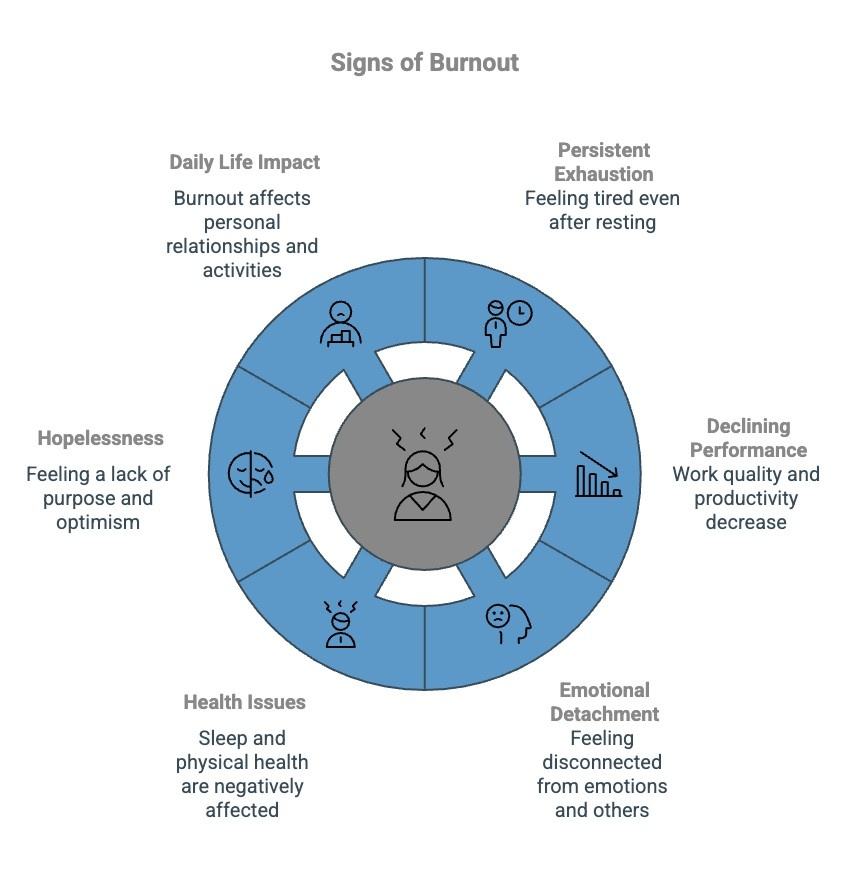
Burnout can sometimes improve with rest and lifestyle adjustments, but there are moments when professional support becomes necessary. Recognizing when to seek help can prevent deeper emotional and physical consequences.
Here are signs that it may be time to see a burnout therapist or counselor:
- Exhaustion does not improve with rest: Persistent fatigue continues even after time off or reduced workload.
- Work performance is significantly declining: Concentration, motivation, and productivity noticeably drop.
- Emotional detachment increases: You feel cynical, numb, or disconnected from work and relationships.
- Sleep and physical health are affected: Ongoing insomnia, headaches, or stress-related symptoms worsen.
- Feelings of hopelessness appear: You struggle to see improvement or feel stuck in a negative cycle.
- Burnout begins impacting daily life: Strain spreads beyond work into family, friendships, and personal wellbeing.
Seeking support early can shorten recovery time and reduce the risk of burnout progressing into more serious mental health conditions.
Feeling stuck or constantly drained? Connect with Total Life Counseling today and take the first step toward restored energy and balance.
What Is the Best Therapy or Counseling for Burnout?
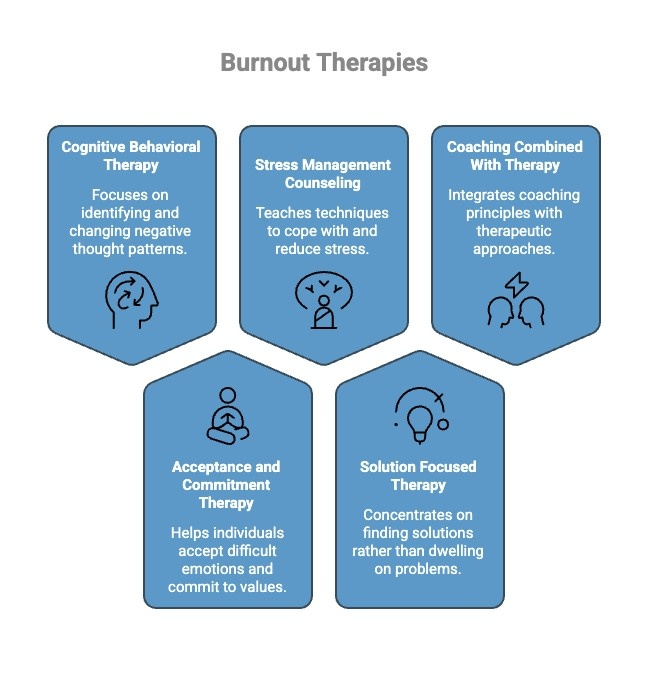
Burnout affects emotional health, motivation, and overall functioning, so choosing the right therapy can significantly influence recovery. Different approaches target thought patterns, stress responses, and behavioral habits. The best option depends on individual needs.
Here are effective therapy approaches for burnout:
- Cognitive Behavioral Therapy: Helps identify and reframe negative thought patterns such as perfectionism and self-criticism. Teaches practical coping skills, emotional regulation, and boundary setting to reduce chronic stress.
- Acceptance and Commitment Therapy: Encourages acceptance of difficult emotions while aligning actions with personal values. Builds psychological flexibility, helping individuals respond to stress with clarity and purpose.
- Stress Management Counseling: Focuses on relaxation techniques, time management, and lifestyle adjustments. Supports healthier routines and reduces physical stress responses linked to ongoing exhaustion.
- Solution Focused Therapy: Emphasizes strengths and small, achievable changes. Helps individuals regain confidence and momentum by focusing on practical improvements rather than prolonged problem analysis.
- Coaching Combined With Therapy: Integrates emotional support with career strategy. Addresses psychological strain while improving workload clarity, professional goals, and long-term resilience against repeated burnout.
There is no single best therapy for everyone. The right approach depends on severity, preferences, and underlying causes.
How Does Therapy for Work Burnout Differ From General Stress Counseling?
Work burnout therapy focuses specifically on chronic job-related exhaustion and its psychological impact, while general stress counseling addresses broader life pressures. Although both reduce distress, their scope and strategies differ.
Below are the key differences explained clearly:
| Aspect | Therapy for Work Burnout | General Stress Counseling |
|---|---|---|
| Primary Focus | Chronic, job-related exhaustion and disengagement | Short-term or situational stress across life areas |
| Root Cause Exploration | Examines workload, boundaries, role clarity, and workplace culture | Identifies general stress triggers such as life changes or conflicts |
| Emotional Pattern Addressed | Cynicism, detachment, loss of motivation | Anxiety, tension, feeling overwhelmed |
| Intervention Approach | Boundary rebuilding, workload restructuring, value alignment | Relaxation techniques, coping skills, and time management |
| Scope of Change | Often includes career or structural adjustments | Typically focuses on personal coping improvement |
| Duration of Treatment | May require deeper, longer-term intervention | Often shorter-term and solution-focused |
While both approaches support emotional health, burnout therapy targets deeper occupational exhaustion that usually requires structural and behavioral change beyond simple stress relief.
Overwhelmed by constant pressure at work? Discover how counseling for stress at work can help you reduce anxiety, rebuild resilience, and regain control over your professional and personal life.
Why Choose Total Life Counseling for Burnout Therapy?
Burnout requires more than quick stress tips. It needs structured support, personalized strategies, and consistent guidance. Choosing the right counseling provider can significantly influence recovery outcomes.
Here are key reasons to choose Total Life Counseling for burnout therapy and counseling:
- Specialized burnout support: Therapists understand workplace exhaustion, boundary breakdown, and chronic stress patterns that drive burnout.
- Personalized treatment plans: Counseling is tailored to your workload, emotional triggers, and lifestyle demands rather than offering generic advice.
- Evidence-based approaches: Methods such as cognitive behavioral therapy and stress regulation techniques are used to promote lasting change.
- Flexible session options: Both in-person and secure online counseling sessions support busy professionals.
- Holistic focus: Therapy addresses emotional health, work structure, relationships, and long-term prevention strategies.
Ready to take the next step? Contact us today to schedule a confidential consultation and begin your path toward recovery and renewed energy.
Conclusion
Addressing burnout is essential for protecting both your mental and physical well-being. Left unmanaged, chronic stress can affect your sleep, relationships, focus, and overall quality of life. Therapy offers structured support to help you understand the root causes of your exhaustion, identify patterns that contribute to overwhelm, and develop healthier coping strategies.
You can learn how to set boundaries, manage workload expectations, and rebuild a sense of control and purpose. With consistent guidance, recovery is possible. Seeking support is a proactive and responsible decision that strengthens resilience and supports long-term personal and professional sustainability.
Frequently Asked Questions
How does therapy address both burnout and emotional exhaustion?
Therapy addresses burnout and emotional exhaustion by identifying chronic stress patterns, rebuilding boundaries, and restoring depleted energy. Approaches such as cognitive behavioral therapy for burnout help reframe negative thoughts, regulate emotions, and develop sustainable routines that support long term recovery.
What coping strategies do therapists recommend for managing burnout?
Therapists recommend structured coping tools, including boundary setting, workload prioritization, stress regulation techniques, and realistic goal planning. In therapy for professional burnout or executive therapy for burnout, strategies also include delegation skills and resetting performance expectations to prevent recurring exhaustion.
What should I expect during my first therapy session for burnout?
During your first session, the therapist explores stress levels, workload pressures, emotional symptoms, and personal history. Whether you are seeking therapy for burnout near me or therapy for women with burnout, the focus is on clarity, assessment, and creating a personalized recovery plan.
Can therapy prevent burnout from happening again in the future?
Yes, the best therapy for burnout supports both recovery and prevention. Therapy builds awareness of triggers, strengthens stress management skills, and reinforces healthy boundaries. Burnout therapy for professionals often includes relapse prevention planning tailored to long-term career demands.
Are there specific therapy techniques useful for professionals experiencing job burnout?
Yes. Techniques such as cognitive behavioral therapy for burnout, solution-focused strategies, and coaching integration are especially effective. Therapy for professional burnout targets perfectionism, leadership pressure, and chronic overcommitment to restore engagement and sustainable productivity.
How to help a burned-out caregiver?
Helping a burned-out caregiver involves validation, practical relief, and professional support. Therapy for caregiver burnout addresses emotional depletion, guilt, and chronic stress. Encouraging shared responsibilities, regular rest, and access to counseling strengthens long-term resilience and overall well-being.
Is online therapy or online counseling for job burnout effective?
Online therapy for job burnout can be highly effective when sessions remain consistent and goal-focused. It offers flexible access, evidence-based techniques, privacy, and accountability. Research shows virtual counseling delivers outcomes comparable to in-person support for stress-related conditions.

Filed in: Therapy
Share This Story, Choose Your Platform!
Total Life Counseling Center consists of Licensed Counselors, masters level therapists, Español counselors, Licensed Mental Health Counselors, business coaches, and image enhancement coaches who provide counseling for emotional, mental, physical and spiritual care including marriage, individual, family, substance abuse and more. TLC’s family, trauma and marriage experts have been interviewed on National and Local TV/Radio over 200 times for their expert advice on Fox News, OWN, WETV, ABC’s Medical Minute and more. Our skilled counselors are relational, approachable and specialists providing therapy services in the Central Florida area including: Orlando, Winter Park, MetroWest, Windermere, Dr. Phillips, East Orlando, Lake Mary, and Clermont, Boca Raton Florida, and Dallas, TX.
About the Author: Jim West

Related Posts