

What Are 10 Simple Ways for a Mental Health Reset?

Key Highlights
- A mental health reset involves simple coping strategies you can use in your daily life.
- Quick activities like mindful walking or deep breathing can provide an instant mood boost.
- Taking a break from screens and decluttering your space helps restore mental clarity.
- Practicing gratitude and connecting with loved ones are effective ways to reset your mind.
- These small, consistent habits contribute positively to your overall health and well-being.
- Recognizing the signs of mental exhaustion is the first step toward a necessary reset.
- Professional support from Total Life Counseling can help you reset, refocus, and regain emotional balance safely.
Do you ever feel like you’re running on empty, juggling countless tasks and feeling completely drained? It’s easy to get caught up in the rush of your daily routine and neglect your own needs. When this happens, you might feel disconnected and overwhelmed, struggling to find balance.
Taking a moment to pause and reset your mental health is not a luxury; it’s essential for regaining your focus and achieving mental clarity. When your mind is constantly overstimulated, even small tasks can feel overwhelming, making it harder to think clearly, manage emotions, or stay present. Creating intentional moments of mental rest allows your brain to recover, helping you feel more grounded.
In this blog, we will explore 10 simple, practical ways to reset your mental health, recognize the signs of mental exhaustion, and build small daily habits that support clarity, calm, and overall well-being, without requiring drastic changes or professional intervention.
What Are The 10 Simple Ways to Reset Your Mental Health Today?
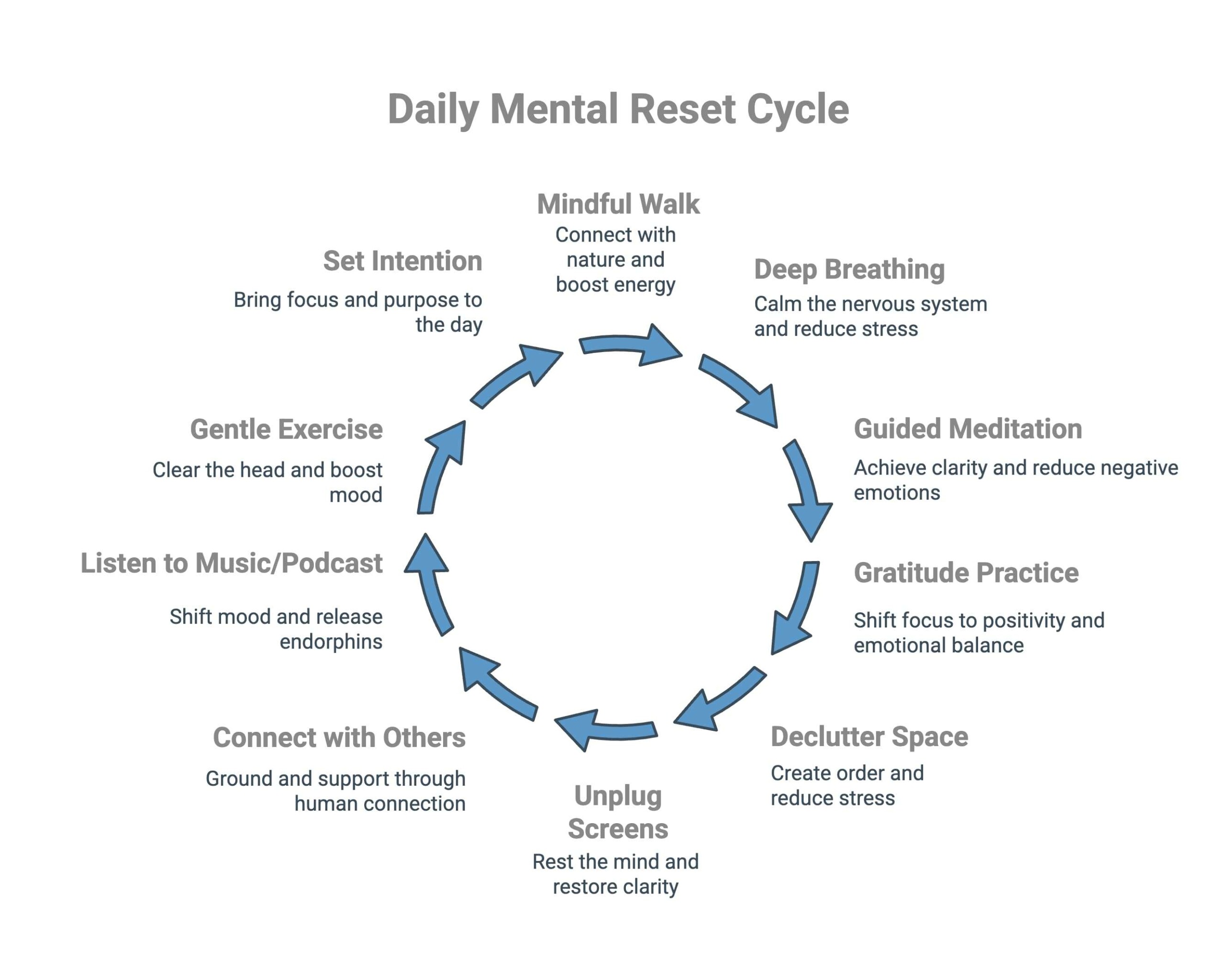
Feeling stuck or overwhelmed doesn’t require a complicated solution. A mental reset can be an easy way to refresh your mind and improve your outlook. You don’t need a grand plan or a long vacation to feel better. The best ways to find relief often involve small, intentional actions you can weave into your daily life.
Let’s look at some small daily habits that can help.
1. Take a Mindful Walk Outdoors
Spending time in nature is one of the most effective ways to reset your mind and boost your mental energy. A short walk outside increases blood flow and provides a much-needed mood boost, helping you disconnect from stressors and reconnect with the present moment. You don’t need to go far; even a stroll around your neighborhood can make a significant difference.
To get the most out of your walk, try to be fully present. This simple form of physical activity can work wonders for your well-being. Here are a few tips:
- Leave your phone behind or put it on airplane mode to avoid distractions.
- Pay attention to your surroundings: the sounds of birds, the feeling of the breeze, and the sights around you.
- Focus on your breathing and the sensation of your feet on the ground.
This practice allows your mind to wander and de-stress naturally. By immersing yourself in the experience without focusing on the outcome, you give yourself a genuine mental break. It’s a quick way to reset when you’re feeling stuck.
2. Practice Deep Breathing Techniques
When you need immediate mental health support, deep breathing is a powerful tool that can help you find emotional balance. This simple technique sends a signal to your brain to calm down, helping to lower stress and quiet an overactive mind. It’s a straightforward practice you can do anywhere, anytime you feel overwhelmed.
Following just a few steps can help you reset your nervous system. Here’s how you can do it:
- Find a comfortable seated position and close your eyes.
- Inhale slowly and deeply through your nose, allowing your belly to rise. Then, exhale slowly through your mouth.
Repeat this for several minutes, focusing only on the sensation of your breath. If your mind wanders, gently guide your attention back to your breathing. This practice is an effective way to reset and find a moment of peace in your day.
Helping children manage stress? Get effective tips for parents to help their children cope with stress and build resilience.
3. Try a Five-Minute Guided Meditation
Guided meditation is an excellent way to achieve mental clarity and give your mind a mini-vacation. Even a short five-minute session can help you tune out the noise of daily life, reduce negative emotions, and reconnect with yourself. You can find countless free guided meditations online or through apps that walk you through the process, making it easy for beginners.
To start, find a quiet spot where you won’t be disturbed. Close your eyes, take a deep breath, and follow the instructor’s voice. The goal isn’t to empty your mind completely but to focus your attention, usually on your breath or bodily sensations. If your thoughts drift, just gently bring your focus back.
Regularly practicing meditation can have significant benefits for your cognitive function and overall well-being. It trains your brain to be less reactive to stress and helps you maintain a sense of calm throughout the day, making it a valuable tool for a mental health reset.
4. Write Down Three Things You’re Grateful For
Shifting your focus from negativity to positivity is a powerful way to improve your mental state, and practicing gratitude is a simple way to do it. This habit trains your brain to notice the good things in your life, no matter how small. It’s not about ignoring challenges but about grounding yourself in what’s going well, which can provide a surprising sense of emotional balance.
You don’t need to write down profound thoughts. Keep it simple and focus on the small joys. Here are some ideas:
- “My coffee was really good this morning.”
- “I’m grateful I handled that difficult conversation well.”
- “I appreciate the sunny weather today.”
This is one of the easiest small daily habits that help with a mental health reset. By taking a few moments to acknowledge good news or simple pleasures, you can cultivate a more positive mental health outlook over time.
5. Declutter a Small Space in Your Home
Your physical environment has a direct impact on your mental clarity. A cluttered space can contribute to feelings of stress and overwhelm, making it difficult to focus. Taking just ten minutes to declutter a small area, like your desk or a kitchen counter, can provide an immediate mood boost and a sense of control.
To start, set a timer for ten minutes and tackle one area that’s been stressing you out. You’ll be surprised at how much you can accomplish in a short time. This simple exercise gives your hands something to do, allowing your mind to rest and reset. Don’t worry about cleaning the entire house; the goal is to create a small pocket of order.
Incorporating this quick cleanup into your daily routine can have a lasting impact on your mental well-being. It’s a tangible step you can follow for a mental health reset that leaves you with a visible result and a clearer mind.
6. Unplug from Screens for a Set Period
In our hyper-connected world, digital overload is a common source of mental fatigue. Constant notifications and endless scrolling can leave your nervous system on edge. Unplugging from screens is an effective way to give your mind a much-needed rest and restore mental clarity. Even a short break can make a big difference in how you feel.
How can you reset your mental energy in just a few minutes? Try setting aside specific times to disconnect. Here are a couple of ideas:
- Put your phone away for an hour before bed to improve your sleep.
- Designate mealtimes as screen-free to be more present.
Use that time to do something you enjoy, like reading a book, chatting with someone in person, or simply sitting in silence. Reducing your screen time helps lower stress, improves focus, and allows you to feel more relaxed and engaged with the world around you.
Struggling with social media habits? Learn practical steps to stop social media addiction and build healthier digital routines.
7. Connect With a Friend or Loved One
While social media and texting have their place, nothing replaces a real, human connection. Hearing the voice of a friend or one of your family members can be incredibly grounding and provide a powerful mood boost. Meaningful conversation allows you to see things from a new perspective and feel supported, which is essential for a positive mental health reset.
Instead of sending another text, try picking up the phone for a quick call. If you don’t have the energy for a real-time chat, exchanging voice messages can be a great alternative. Spending time with people you care about can also increase oxytocin, the “love hormone,” which helps reduce stress.
Making time for connection is a practical strategy for resetting your mental health, whether it’s the start of a New Year or just a tough Tuesday. It reminds you that you’re not alone and strengthens the bonds that matter most, moving beyond the limits of support groups.
Ready to improve wellbeing in 2026? Find actionable strategies to achieve your mental health goals this year and thrive.
8. Listen to Uplifting Music or a Favorite Podcast
Sometimes, the easiest way to shift your mood is to change what you’re listening to. Putting on uplifting music or a podcast you love can be a simple yet powerful tool for a mental reset. Music, in particular, can trigger a release of endorphins, the brain’s feel-good chemicals, providing an instant mood boost and helping you find mental clarity.
This is an easy way to give your brain a break from overthinking. Instead of focusing on your worries, you can let the music or conversation wash over you. It doesn’t require much effort but can effectively shift your emotional state and help you feel more positive and energized.
Whether you need a burst of motivation or a moment of calm, turning to audio can be a foundational part of your mental health care. This habit can help with clarity and focus by providing a pleasant distraction and a much-needed emotional lift.
9. Move Your Body With Gentle Exercise
Your physical health and mental well-being are deeply connected. When you feel mentally stuck, gentle exercise is one of the best steps you can follow for a reset. Moving your body helps clear your head, boosts blood flow, and releases endorphins, which act as natural mood lifters. It’s also an excellent way to manage chronic stress.
You don’t need an intense workout to feel the benefits. A brisk walk, a quick yoga flow, or even a few minutes of stretching can make a difference. The key is to find an activity you enjoy so it doesn’t feel like a chore. Even a 30-second plank can help reset your nervous system.
By incorporating gentle movement into your day, you can improve your ability to handle stress and foster positive mental health. This simple act of self-care addresses both your body and mind, leaving you feeling more balanced and resilient.
10. Set an Intention for the Rest of Your Day
Setting an intention is a powerful way to bring focus and purpose to your day, especially after you’ve taken a moment to mentally rest. Instead of reacting to whatever comes your way, an intention helps you decide how you want to feel and respond. This simple practice supports clarity and healthier daily habits.
Your intention doesn’t need to be a major goal. It can be as simple as, “I will be present in my conversations” or “I will approach my tasks with calm focus.” Writing it down or saying it aloud reinforces your commitment and keeps you aligned with your values throughout the day.
Practicing a mental health reset regularly, paired with setting an intention, shows you how to mentally reset in a sustainable way. Over time, it shifts your mindset from reactive to intentional, helping you build a more balanced and meaningful routine.
Feeling low after the holidays? Find practical ways to overcome post-holiday depression and rediscover joy and motivation.
How to Tell When You Need Help?
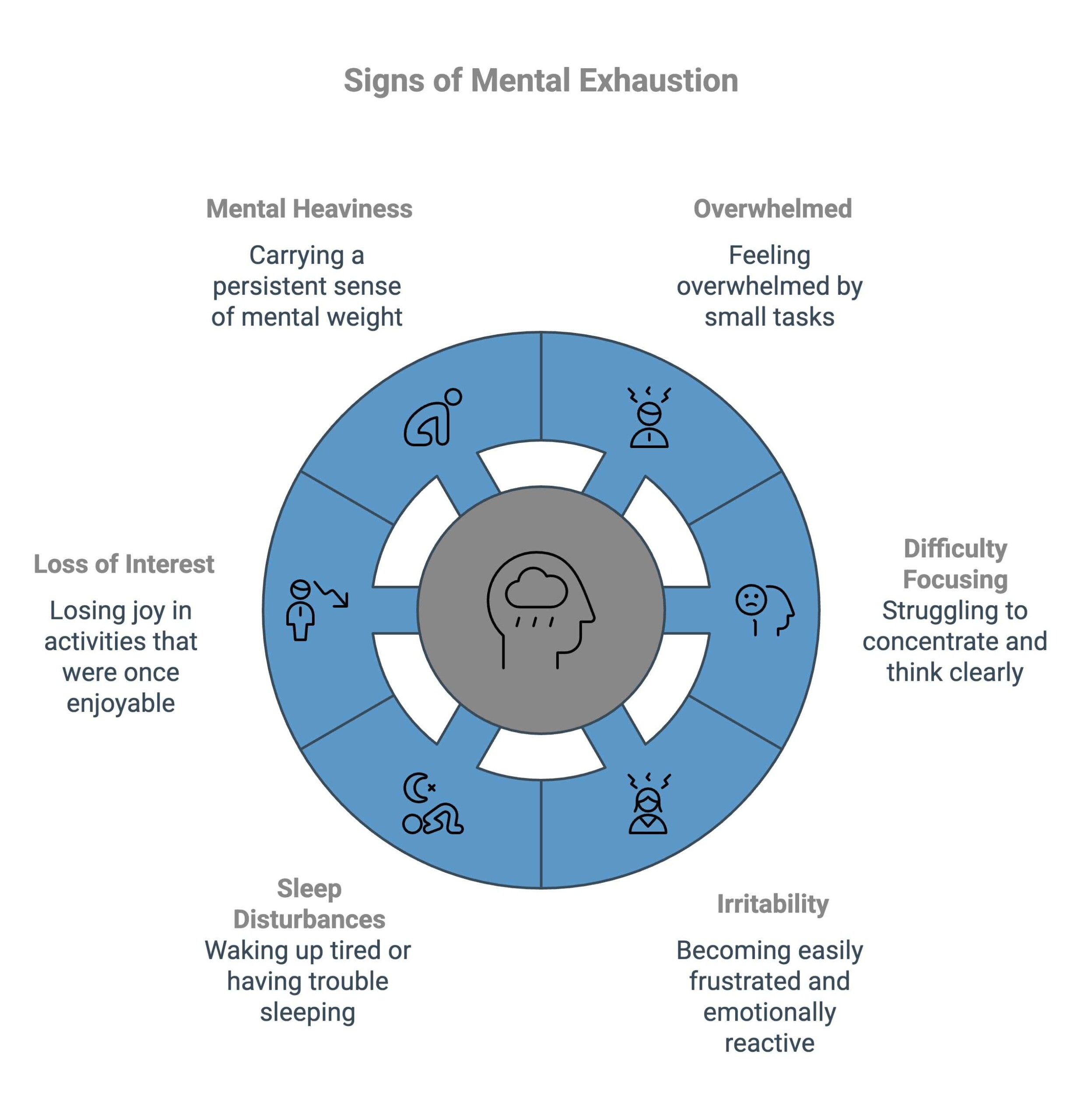
Sometimes, the signs aren’t dramatic; they show up quietly in your day-to-day life. When your mental load stays high for too long, your mind begins signaling that it’s time to slow down and learn how to reset yourself mentally.
You might be due for a mental health reset if you notice:
- Feeling constantly overwhelmed, even by small or routine tasks
- Struggling to focus, think clearly, or make simple decisions
- Becoming more irritable, emotionally reactive, or easily frustrated
- Waking up tired despite getting enough sleep, or having trouble falling asleep
- Losing interest in activities that normally bring you joy or comfort
- Carrying a sense of mental heaviness that doesn’t lift, even on “good” days
These experiences don’t mean something is wrong with you; they’re signs that your mind is overworked and needs care. Paying attention to them early allows you to reset before exhaustion turns into burnout, helping you restore balance, clarity, and emotional well-being.
Looking for Support on Your Mental Health Journey? Here’s How We Help
When everyday stress starts to feel overwhelming, having the right support can make all the difference. At Total Life Counseling, we offer both tele-therapy and in-person counseling, making it easier to get the help you need, often with same-week appointments available. We work with children, teens, adults, couples, and families, supporting concerns such as anxiety, depression, trauma, ADHD, relationship challenges, and major life transitions.
What sets us apart is our whole-person approach. We take the time to understand your unique experiences and tailor therapy using evidence-based methods delivered with warmth and compassion. Whether you’re feeling mentally exhausted, emotionally stuck, or simply ready for a healthier balance, we’re here to help you move forward with clarity and confidence.
Ready to take the next step? Contact us today to schedule a complimentary 15-minute consultation and let us help you begin your journey toward better mental well-being.
Conclusion
Taking the time to reset your mental health doesn’t have to be overwhelming. The ten simple methods discussed can be easily integrated into your daily routine to help restore balance and clarity. From mindful walks to connecting with loved ones, each step encourages you to prioritize your well-being and cultivate a positive mindset.
Remember, small changes can lead to significant improvements in your mental health. So why wait? Start implementing these strategies today and see the difference for yourself.
Frequently Asked Questions
Is a brain detox the same as a mental health reset?
While the terms are often used interchangeably, a “brain detox” typically refers to specific practices aimed at clearing mental clutter to improve cognitive function. A mental health reset is a broader concept focused on refreshing your overall mental state, which can include a brain detox as one of its components to achieve mental clarity.
What are practical steps for how to reset your mind?
Some of the best ways for a mental reset include practicing deep breathing, taking a short walk in nature, or writing in a journal. These easy coping strategies don’t require much time or effort but are highly effective. You can also connect with friends or family members instead of formal support groups.
How do I take care of my mental health on a daily basis?
Daily mental health support involves building good habits into your daily routine. Prioritize quality sleep, eat a balanced diet, engage in regular physical activity, and practice mindfulness. These actions form a strong mental health foundation and contribute to your overall health, helping you stay balanced and resilient.
How can I reset my mental energy in just a few minutes?
You can reset mental energy quickly by stepping away briefly, breathing deeply, stretching, or walking outside. These micro stress resets calm your nervous system, reduce mental noise, and help you feel refreshed, grounded, and more capable within minutes.
Can mental reset habits help with clarity and focus?
Yes, consistent mental reset habits improve clarity and focus by lowering stress and mental clutter. Learning how to reset your mental health through simple daily practices trains your brain to concentrate better, think calmly, and respond calmly consistently.
Is a brain detox the same as a mental health reset?
No, a brain detox is often a casual term for unplugging from stimulation, while a mental health reset focuses on emotional balance, habits, and awareness. A mind reset emphasizes practical actions that restore calm, clarity, and resilience gently.
What is the 3-3-3 rule for overthinking?
The 3-3-3 rule for overthinking helps calm anxiety by naming three things you see, three sounds you hear, and moving three body parts. It grounds your attention in the present moment and interrupts racing thoughts quickly when needed.
What should you include in a positive reset routine?
A positive reset routine should include short breaks, movement, mindful breathing, reduced screen time, and intentional connection. Keeping routines simple and repeatable helps you recharge regularly, support emotional balance, and maintain mental clarity during busy or challenging days.
Filed in: Mental Health
Share This Story, Choose Your Platform!
Total Life Counseling Center consists of Licensed Counselors, masters level therapists, Español counselors, Licensed Mental Health Counselors, business coaches, and image enhancement coaches who provide counseling for emotional, mental, physical and spiritual care including marriage, individual, family, substance abuse and more. TLC’s family, trauma and marriage experts have been interviewed on National and Local TV/Radio over 200 times for their expert advice on Fox News, OWN, WETV, ABC’s Medical Minute and more. Our skilled counselors are relational, approachable and specialists providing therapy services in the Central Florida area including: Orlando, Winter Park, MetroWest, Windermere, Dr. Phillips, East Orlando, Lake Mary, and Clermont, Boca Raton Florida, and Dallas, TX.
About the Author: Jim West

Related Posts