

What is Emotional Intimacy and How Does It Strengthen Bonds?

Key Highlights
- Emotional intimacy is about feeling emotionally safe, understood, and accepted through trust, vulnerability, and open communication.
- Low emotional intimacy often shows up as shallow conversations, emotional distance, and unmet emotional needs.
- Emotional intimacy strengthens trust, communication, conflict resolution, and long-term relationship satisfaction.
- Couples can build emotional closeness through honest conversations, empathetic listening, emotional presence, and validation.
- Thoughtful questions and guided communication help partners connect beyond surface-level interactions.
- Couples therapy supports emotional intimacy by addressing patterns, improving communication, and rebuilding emotional safety.
- Total Life Counseling offers emotional intimacy therapy for individuals and couples seeking deeper connection, trust, and lasting emotional closeness.
Many people feel emotionally disconnected in their relationships, even when love exists. Emotional distance is a leading reason couples seek therapy, often rooted in feeling unseen, unheard, or misunderstood.
When emotional intimacy is low, conversations become shallow, and vulnerability feels unsafe. This emotional gap can slowly erode trust, closeness, and relationship satisfaction.
In this blog, we explain what emotional intimacy is, clarify the emotional intimacy definition, and show how to build a deeper emotional connection, including how emotional intimacy therapy and couples therapy can help.
What Is Emotional Intimacy?
Emotional intimacy is the ability to share your thoughts, feelings, fears, and needs openly with another person while feeling safe, accepted, and understood. At its core, the emotional intimacy definition centers on trust, vulnerability, and mutual emotional presence.
It goes beyond talking regularly or spending time together. Emotional intimacy means being emotionally available, listening without judgment, and responding with empathy. This is what creates true emotional closeness and gives real depth to a relationship.
Why Emotional Intimacy Is Essential for Healthy Relationships?
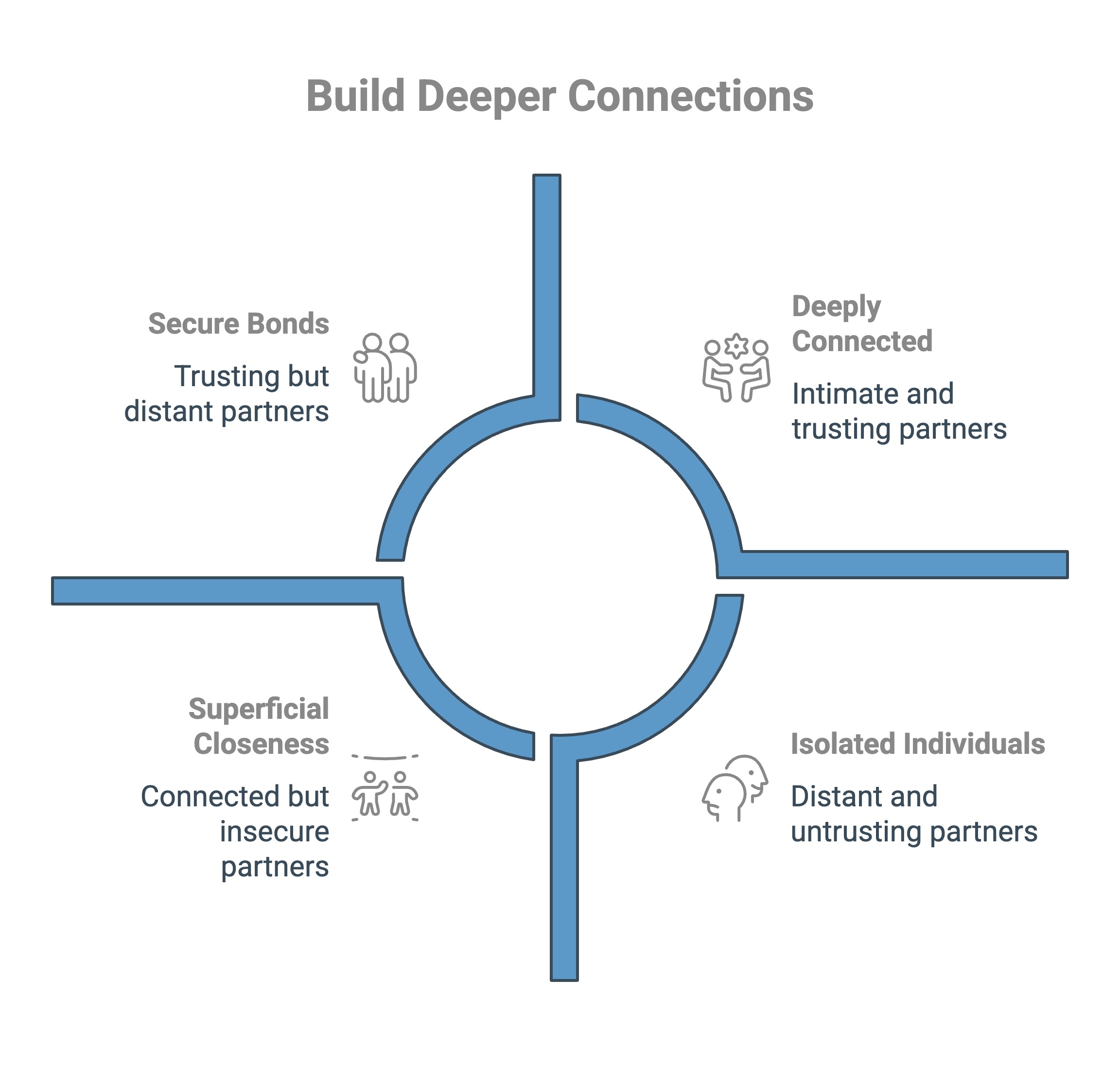
Emotional intimacy allows partners to feel emotionally safe with each other. It creates a sense of security where both people can express thoughts and feelings without fear of judgment, rejection, or misunderstanding. This emotional safety is what sustains connection beyond attraction or routine.
When emotional intimacy is present, relationships benefit in clear, practical ways:
- Conflicts are handled with empathy instead of defensiveness
- Communication becomes more honest and meaningful
- Emotional needs are recognized and validated
- Long-term trust and relationship satisfaction increase
Without emotional intimacy, relationships may feel distant or disconnected. With it, couples are more resilient, emotionally bonded, and better equipped to grow together.
Emotional Intimacy Versus Physical Intimacy: What’s the Difference?
People often associate intimacy with physical closeness, but emotional intimacy is different. It focuses on trust, vulnerability, and emotional closeness rather than touch, shaping the emotional connection’s meaning within a relationship.
To make the difference clearer, here’s a simple table comparing emotional intimacy and physical intimacy.
| Emotional Intimacy | Physical Intimacy |
|---|---|
| Feeling understood, seen, and accepted for who you are. | Expressing affection through touch, such as hugging or holding hands. |
| Sharing your deepest fears, hopes, and feelings. | Engaging in sexual activity and other forms of physical closeness. |
| Building connection through conversation and shared experiences. | Releasing hormones like oxytocin that enhance feelings of bonding. |
| Based on trust, vulnerability, and mutual respect. | Based on physical attraction and the desire for physical contact. |
What Are The Signs of Emotional Intimacy Between Partners?
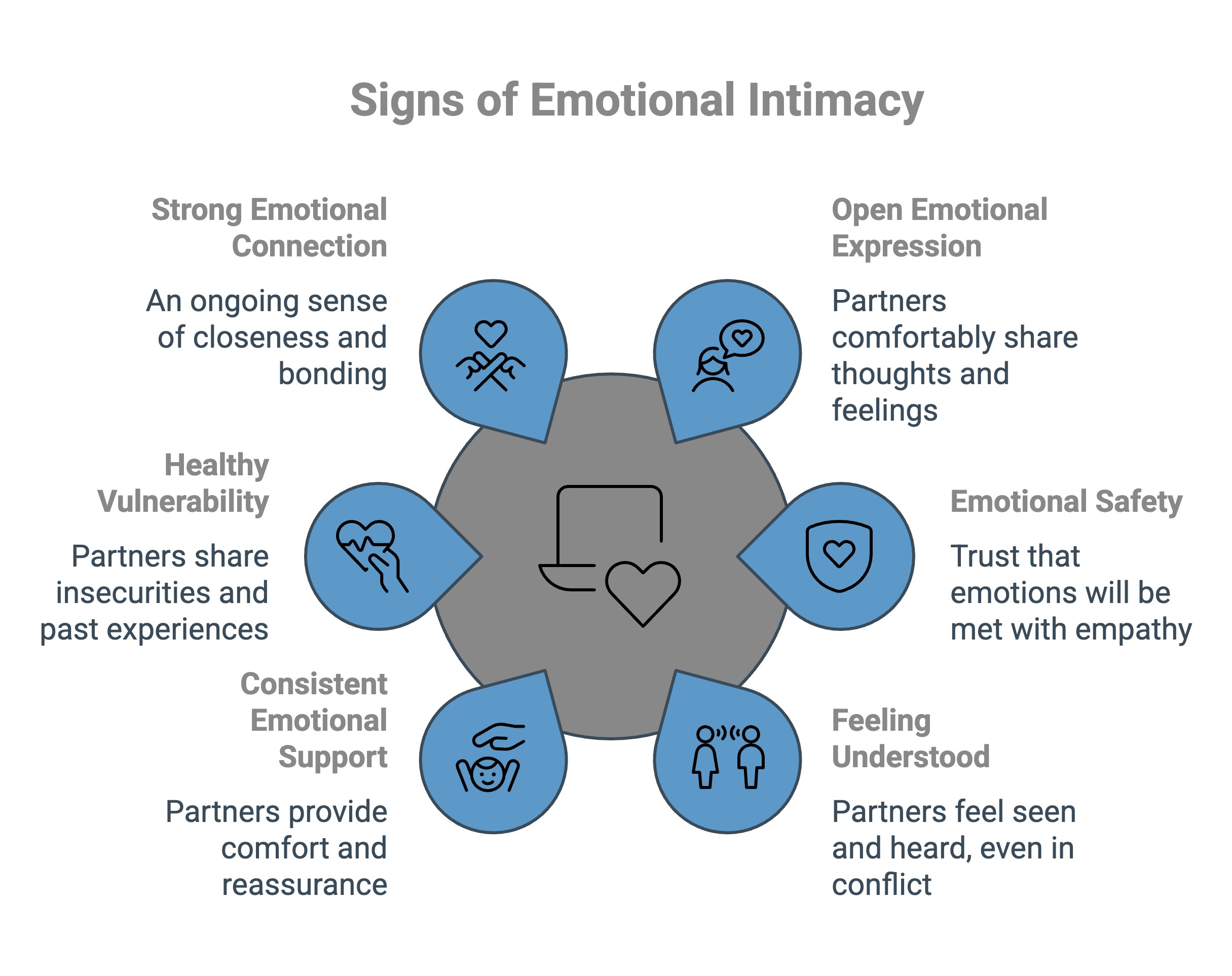
Emotional intimacy is reflected in how partners relate to each other emotionally on a daily basis. It is less about grand gestures and more about feeling emotionally safe, understood, and connected over time. When emotional intimacy is present, partners experience a steady sense of emotional closeness rather than occasional moments of connection.
Key signs of emotional intimacy include:
- Open emotional expression: Partners feel comfortable sharing thoughts, feelings, fears, and needs without holding back or fearing judgment.
- Emotional safety: There is trust that emotions will be met with empathy rather than criticism, dismissal, or defensiveness.
- Feeling understood: Each partner feels genuinely seen and heard, even when they disagree or experience conflict.
- Consistent emotional support: Partners turn to each other for comfort, reassurance, and understanding during stressful or challenging times.
- Healthy vulnerability: Both people are willing to be emotionally honest, including sharing insecurities or past experiences.
- Strong emotional connection: There is an ongoing sense of closeness, warmth, and emotional bonding that deepens the relationship.
These signs indicate a healthy emotional relationship where emotional intimacy strengthens trust, communication, and long-term connection.
What Are the Most Common Barriers to Emotional Intimacy?
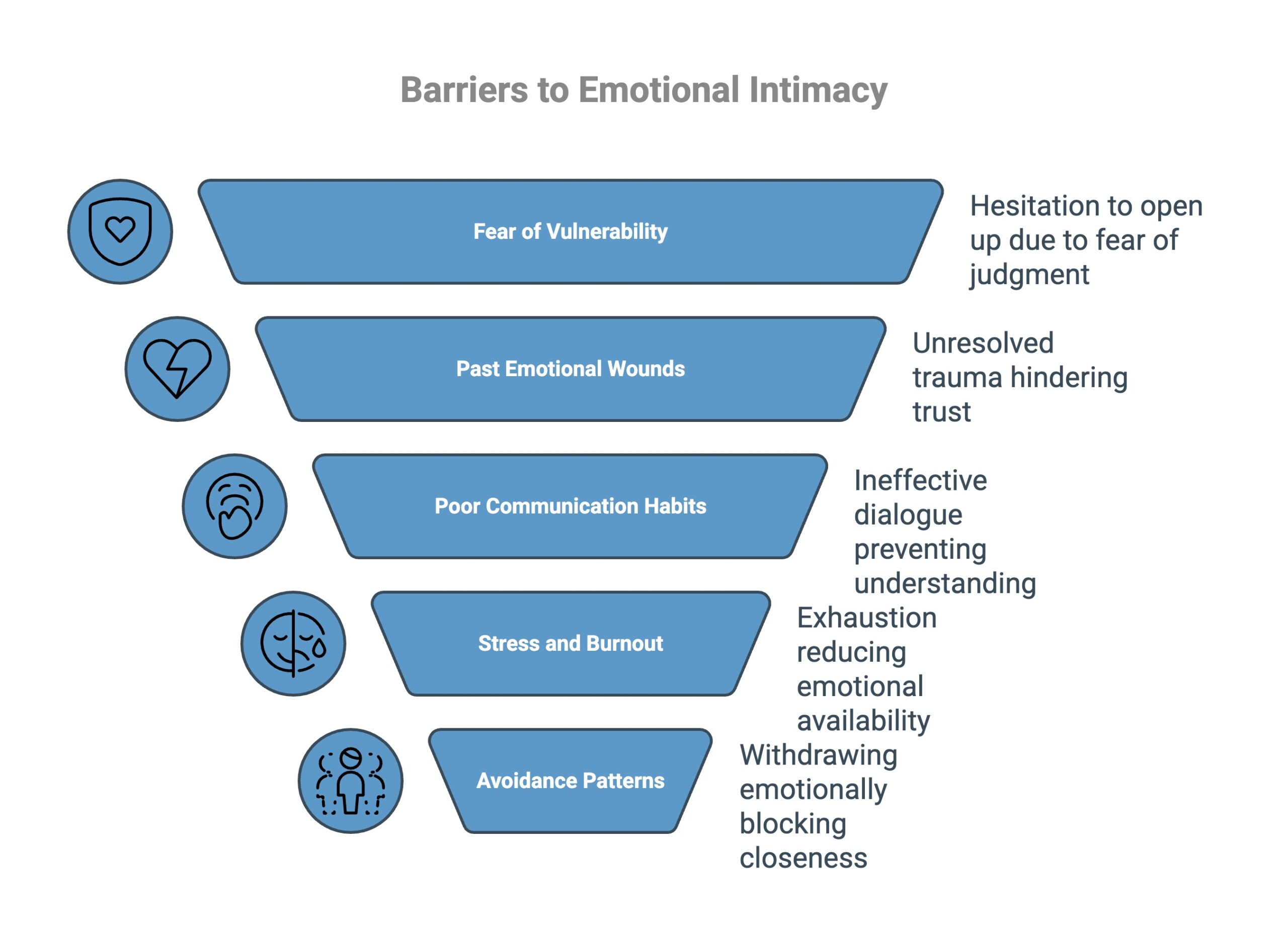
Emotional intimacy can be challenging to build and maintain, even in loving relationships. Certain emotional, relational, and situational factors can quietly interfere with connection and make closeness feel difficult over time.
Common barriers to emotional intimacy include:
- Fear of vulnerability: Concerns about being judged, rejected, or emotionally hurt can make it hard to share thoughts and feelings openly.
- Past emotional wounds: Unresolved trauma, betrayal, or painful relationship experiences can create emotional guards that limit trust and openness.
- Poor communication habits: Avoidance, emotional shutdown, or reactive conversations can prevent partners from feeling heard and understood.
- Stress, burnout, or life transitions: Ongoing pressure, exhaustion, or major life changes can reduce emotional availability and weaken connection.
- Avoidance patterns: Withdrawing emotionally, staying distracted, or minimizing emotions can block intimacy even when closeness is desired.
Identifying these barriers is an important step toward rebuilding emotional connection and understanding when additional support may be helpful.
How Emotional Intimacy Impacts a Relationship? (Short and Long Term)
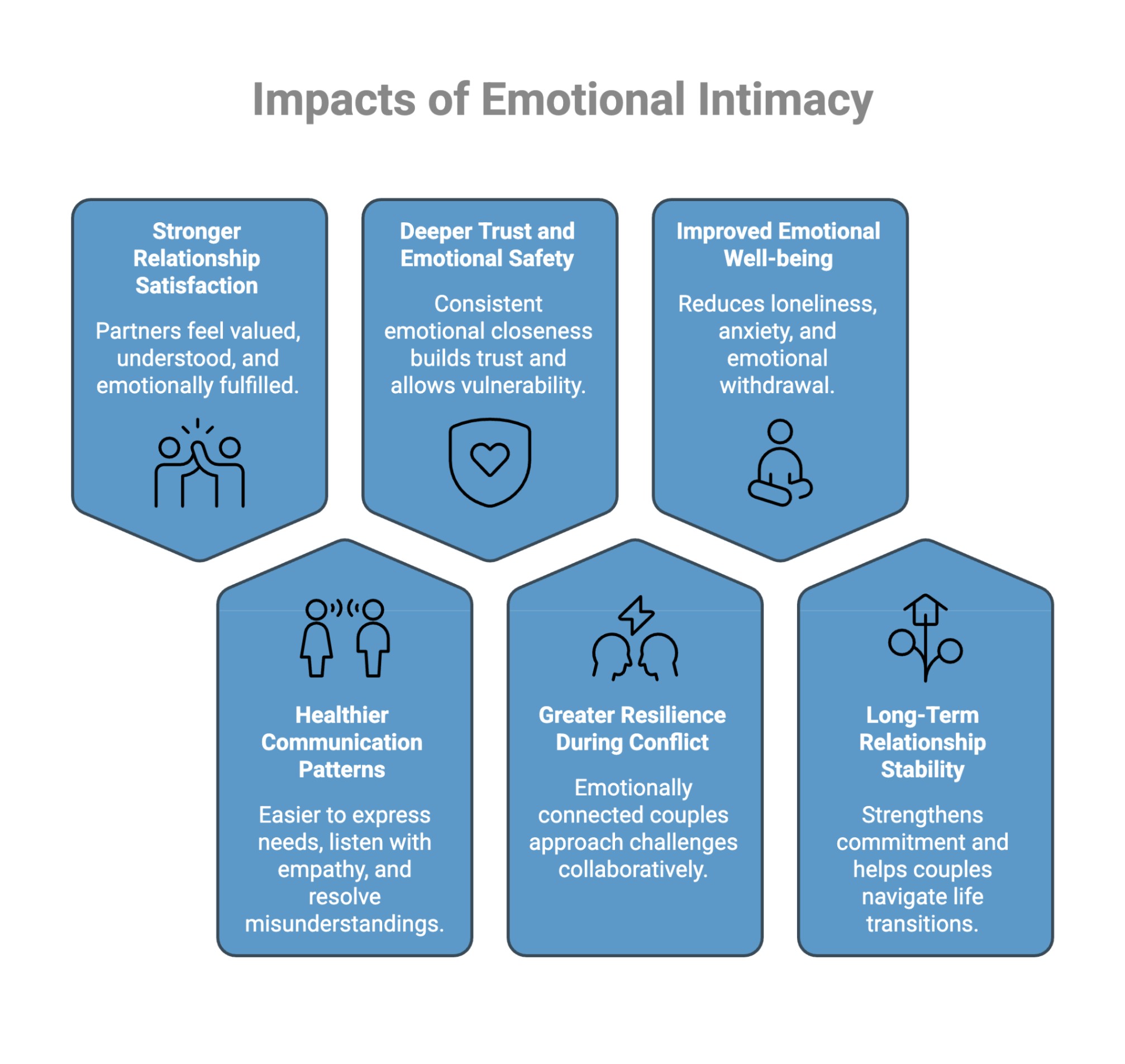
Emotional intimacy influences both the daily experience of a relationship and its long-term stability. When partners feel emotionally connected, the relationship becomes a source of safety, understanding, and support. This connection shapes how couples communicate, handle challenges, and grow together over time.
The impact of emotional intimacy includes:
- Stronger relationship satisfaction: Partners feel valued, understood, and emotionally fulfilled in everyday interactions, leading to greater overall contentment.
- Healthier communication patterns: Emotional connection makes it easier to express needs, listen with empathy, and resolve misunderstandings before they escalate.
- Deeper trust and emotional safety: Consistent emotional closeness builds trust, allowing partners to share vulnerabilities without fear of judgment or rejection.
- Greater resilience during conflict and stress: Emotionally connected couples approach challenges collaboratively, reducing defensiveness and long-term resentment.
- Improved emotional well-being: Feeling emotionally connected reduces loneliness, anxiety, and emotional withdrawal, supporting individual mental health.
- Long-term relationship stability and commitment: Over time, emotional intimacy strengthens commitment and helps couples navigate life transitions while maintaining a secure bond.
Overall, emotional intimacy supports both the present health and future strength of a relationship, creating emotional closeness that endures as partners grow together.
For couples considering additional support, learning more about whether couples therapy really works and what to expect can provide helpful clarity.
How Can You Improve Emotional Intimacy?
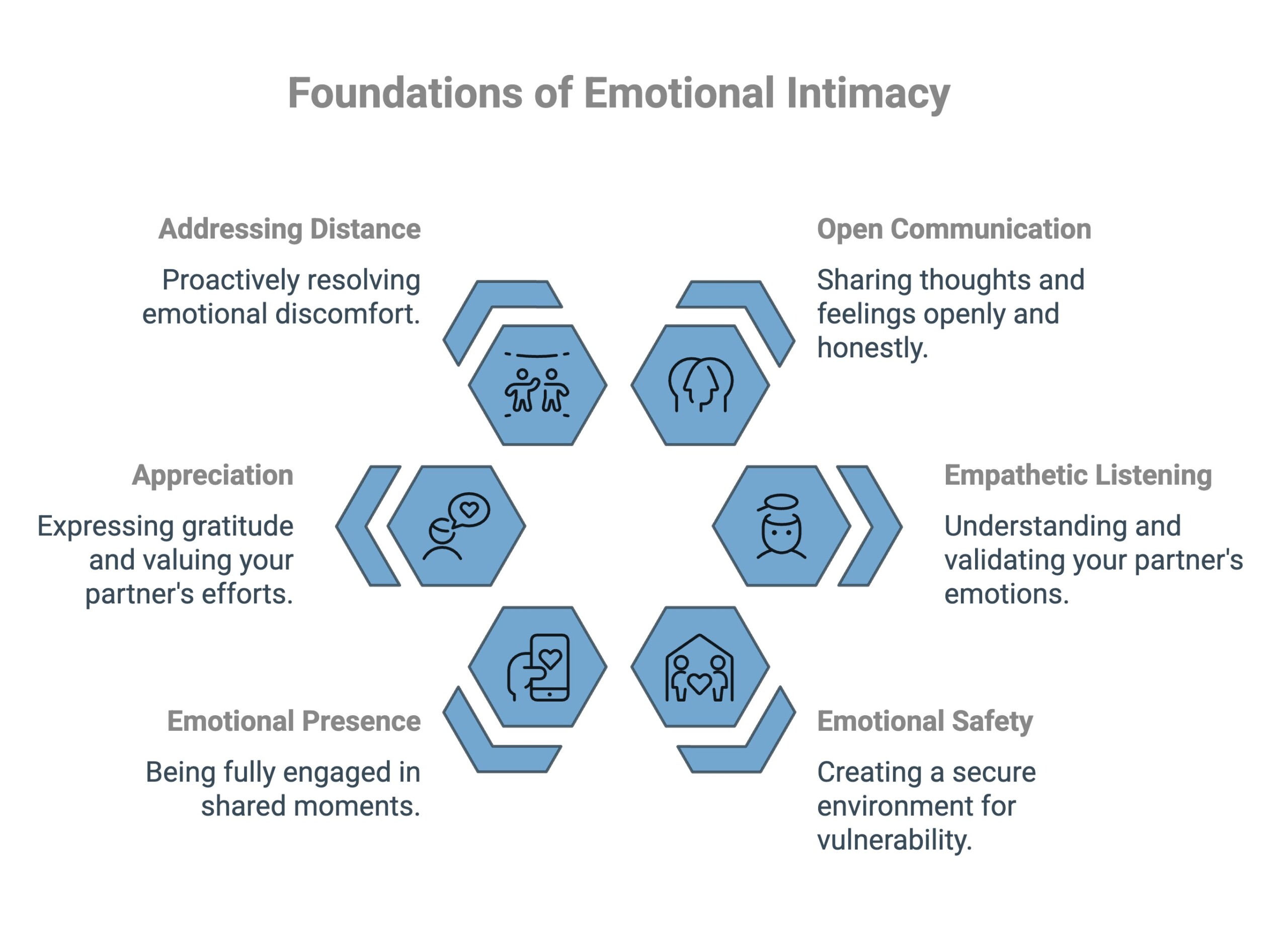
Building emotional intimacy is a gradual process that depends on emotional safety, consistency, and mutual effort. The following approaches focus on strengthening emotional closeness in practical, sustainable ways.
1. Practice Open and Honest Communication
Emotional intimacy grows when partners share their thoughts, feelings, and needs openly. This includes expressing difficult emotions without blaming or shutting down. Honest communication helps both partners feel understood and reduces emotional distance over time.
2. Listen With Empathy, Not Judgment
Listening is just as important as speaking. When you listen with empathy, you focus on understanding your partner’s emotional experience rather than correcting, defending, or minimizing it. This builds trust and reinforces emotional safety.
3. Create Emotional Safety
Emotional intimacy cannot exist without safety. Responding with validation, patience, and respect allows your partner to feel secure sharing vulnerable emotions. Over time, this sense of safety deepens emotional connection and closeness.
4. Be Emotionally Present
Being emotionally present means giving your full attention during conversations and shared moments. Putting away distractions and staying engaged shows your partner that their emotions matter, strengthening emotional intimacy in everyday interactions.
5. Express Appreciation and Validation
Regularly acknowledging your partner’s efforts, feelings, and experiences helps them feel valued. Validation does not require agreement; it simply communicates understanding, which supports emotional closeness.
6. Address Emotional Distance Early
Ignoring emotional discomfort can lead to resentment and withdrawal. Addressing concerns early, with openness and care, prevents emotional gaps from widening and supports a healthier emotional relationship over time.
What Questions Can Couples Ask Each Other to Improve Emotional Intimacy?
Asking thoughtful, open-ended questions helps couples move beyond surface-level conversation and connect at a deeper emotional level. These questions create space for honesty, vulnerability, and emotional understanding, which are essential for building emotional intimacy.
Couples can use questions like these to strengthen emotional connection:
- What helps you feel most emotionally supported by me?
- When do you feel closest to me, and what makes those moments meaningful?
- Are there feelings or needs you find hard to express in our relationship?
- What has been emotionally challenging for you lately?
- How can I show up for you better during stressful or difficult times?
- What helps you feel emotionally safe in our relationship?
- Is there something you wish I understood more deeply about your inner world?
Regularly asking and revisiting these questions encourages open communication, emotional awareness, and deeper emotional intimacy over time.
For additional guidance, explore these expert tips to strengthen your marriage and continue building a deeper emotional connection together.
How Does Couples Therapy Help Build Emotional Intimacy?
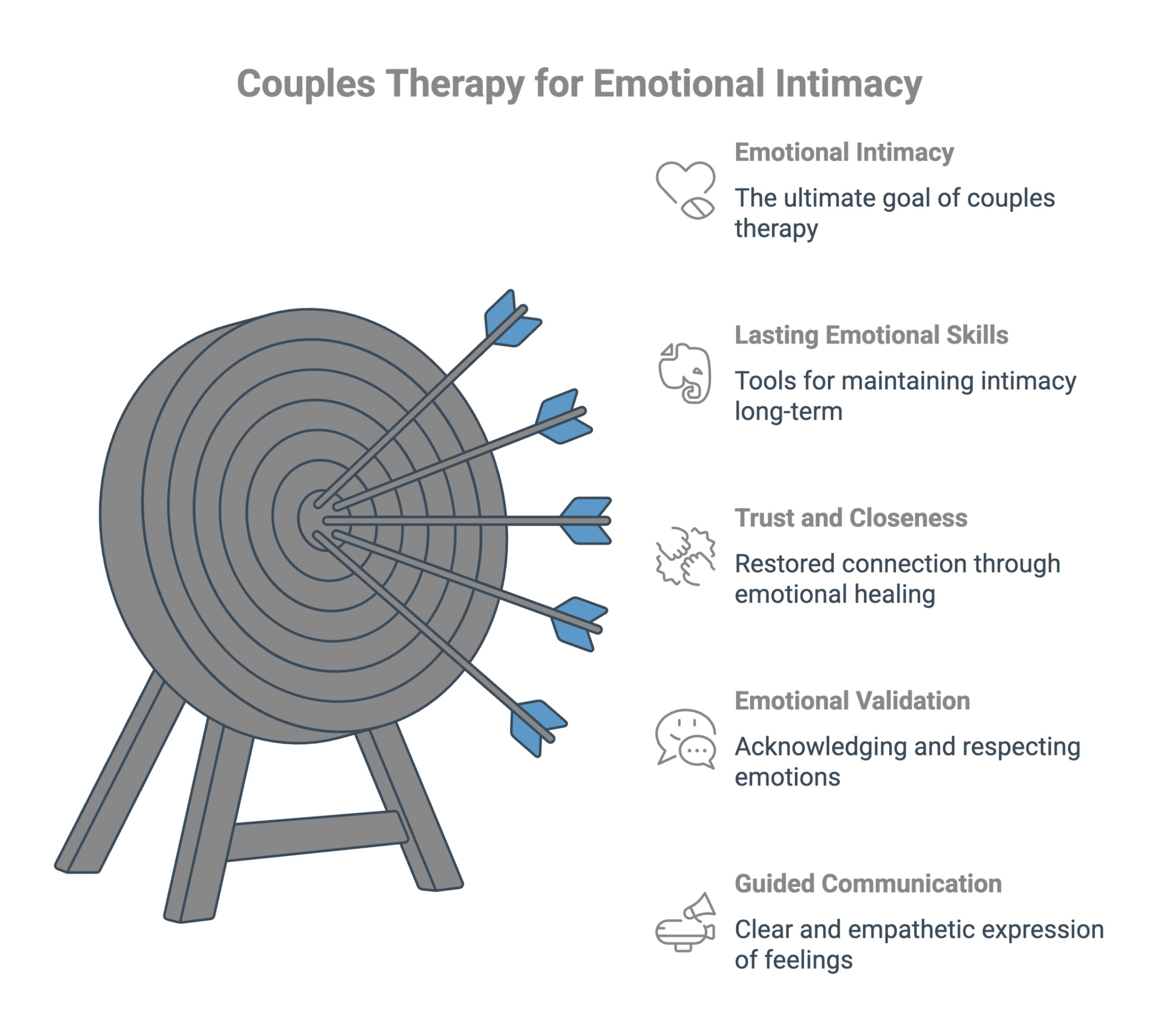
Couples therapy helps partners slow down and understand what is really happening beneath surface-level conflict or distance. In emotional intimacy couples therapy, the focus is not on assigning blame but on identifying emotional needs, patterns, and experiences that have weakened the connection over time.
Emotional intimacy building couples therapy strengthens the connection through several intentional steps:
- Creates emotional safety: Therapy provides a neutral environment where partners can share vulnerable feelings without fear of criticism or escalation.
- Improves guided communication: Therapists help partners express emotions clearly and listen with empathy, reducing misunderstandings and defensiveness.
- Supports emotional validation: Each partner learns how to acknowledge and validate the other’s emotions, even when perspectives differ.
- Rebuilds trust and closeness: By addressing emotional wounds and unmet needs, couples can restore trust and deepen emotional connection.
- Develops lasting emotional skills: Couples gain tools they can continue using in daily life to maintain emotional intimacy beyond therapy.
Through this process, couples therapy helps partners reconnect at a deeper emotional level, strengthening emotional intimacy and supporting long-term relationship health.
When Professional Support Can Help Strengthen Emotional Intimacy?
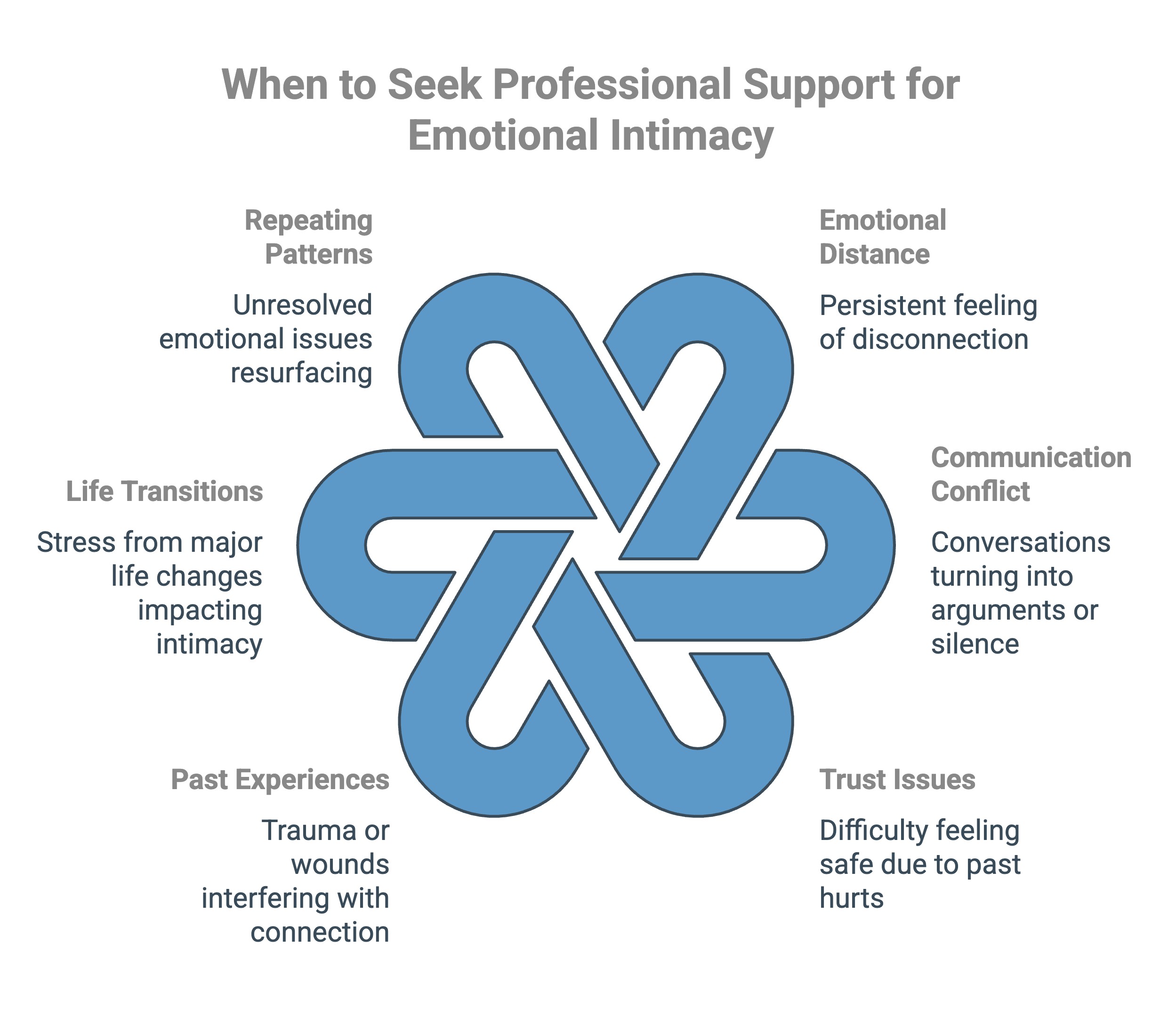
Seeking professional support can be helpful when emotional intimacy feels difficult to build, maintain, or restore. While many challenges are a normal part of relationships, certain patterns may signal that extra guidance could be beneficial.
You may consider professional help if:
- Emotional distance feels persistent: You or your partner feels disconnected, unheard, or emotionally shut down despite repeated efforts to reconnect.
- Communication often leads to conflict or withdrawal: Conversations about feelings regularly turn into arguments, avoidance, or silence rather than understanding.
- Trust has been strained or broken: Experiences such as betrayal, secrecy, or unresolved hurt make emotional closeness feel unsafe or difficult.
- Past experiences affect present connection: Trauma, attachment wounds, or previous relationship pain interfere with vulnerability and emotional openness.
- Life transitions create ongoing strain: Changes like parenthood, career stress, illness, or loss are impacting emotional connection and support.
- You feel stuck repeating the same patterns: The same emotional issues resurface without resolution, leading to frustration or hopelessness.
A qualified therapist or counselor can help create a safe space to explore emotional needs, improve communication, and rebuild trust. Professional support is not a sign of failure, but a proactive step toward strengthening emotional intimacy and creating a healthier, more connected relationship.
How Can Total Life Counseling Help You Build Emotional Intimacy?
Strengthening emotional intimacy often requires guidance, especially when patterns of disconnection or miscommunication feel hard to break. At Total Life Counseling, we provide professional support to help individuals and couples reconnect emotionally in a safe, structured environment.
Our approach to emotional intimacy therapy focuses on practical, relationship-centered care, including:
- Improving emotional awareness and communication between partners
- Rebuilding trust and emotional safety
- Identifying patterns that block emotional closeness
- Supporting healthier ways to express needs and emotions
- Strengthening long-term emotional connection and relationship resilience
With experienced therapists and both in-person and teletherapy options, we help couples move from emotional distance toward deeper understanding, connection, and lasting emotional intimacy.
Final Words
Emotional intimacy is about feeling safe, seen, and truly understood by someone who matters to you. When that connection feels strong, relationships feel easier, warmer, and more supportive. When it feels missing, even the closest relationships can feel lonely.
The good news is that emotional intimacy can be built and rebuilt. With awareness, honest communication, and the right support, a deeper emotional connection is possible. Taking small, intentional steps today can lead to more meaningful, emotionally fulfilling relationships over time.
Frequently Asked Questions
How can couples tell if they lack emotional intimacy?
A lack of emotional intimacy often shows up as poor communication, lack of support, or feeling disconnected from a romantic partner’s inner world. Couples may struggle to share difficult feelings, spend quality time together, or build deeper mutual trust.
What are effective ways to improve emotional intimacy?
Effective ways include open communication, active listening, and creating a safe space to express one’s own needs. Building emotional intelligence, spending intentional quality time, and seeking professional help can strengthen the foundation of emotional intimacy and deepen connection.
Can couples therapy help develop emotional intimacy?
Yes. Couples therapy helps partners understand emotional needs, improve communication, and rebuild trust. Therapy for emotional intimacy focuses on creating emotional safety, validating feelings, and strengthening connection through guided conversations and practical tools.
What is an emotional relationship?
An emotional relationship is one where partners share trust, vulnerability, and emotional understanding. It involves feeling safe to express thoughts and emotions and maintaining a meaningful emotional bond beyond daily interactions.
What is emotional closeness to a man?
Emotional closeness to a man means feeling emotionally safe, understood, and supported by him. It often involves open communication, mutual trust, and the ability to share vulnerable emotions without fear of judgment.
Is an emotional connection the same as love?
Not always. Emotional connection meaning refers to feeling understood and emotionally bonded, while love may also include commitment, affection, and long-term intention. Emotional connection can exist with or without romantic love.
How to fix the lack of emotional intimacy?
Fixing a lack of emotional intimacy starts with open communication, active listening, and addressing unmet emotional needs. In deeper cases, therapy for emotional intimacy can help couples rebuild trust and reconnect emotionally.
What are the main pillars or foundations of emotional intimacy?
The foundations of emotional intimacy include trust, emotional safety, open communication, empathy, vulnerability, and consistent emotional support. These pillars help sustain deep emotional connection through life’s challenges.
Filed in: Emotional Intimacy
Share This Story, Choose Your Platform!
Total Life Counseling Center consists of Licensed Counselors, masters level therapists, Español counselors, Licensed Mental Health Counselors, business coaches, and image enhancement coaches who provide counseling for emotional, mental, physical and spiritual care including marriage, individual, family, substance abuse and more. TLC’s family, trauma and marriage experts have been interviewed on National and Local TV/Radio over 200 times for their expert advice on Fox News, OWN, WETV, ABC’s Medical Minute and more. Our skilled counselors are relational, approachable and specialists providing therapy services in the Central Florida area including: Orlando, Winter Park, MetroWest, Windermere, Dr. Phillips, East Orlando, Lake Mary, and Clermont, Boca Raton Florida, and Dallas, TX.
About the Author: Jim West
