

What Is Interpersonal Therapy and How Does It Work?

Key Highlights
- Interpersonal therapy is a structured, time-limited treatment that connects emotional distress to relationship challenges such as conflict, grief, and major life transitions.
- It is strongly supported for depression and postpartum depression, improving communication skills and overall social functioning.
- Interpersonal and social rhythm therapy for bipolar treatment stabilizes sleep and daily routines to reduce relapse risk.
- Core interpersonal therapy techniques include communication analysis, role playing, emotion exploration, grief work, and structured problem solving.
- The approach focuses on present relationship patterns rather than deep childhood analysis or cognitive restructuring.
- Pros include strong research backing and practical skill building, while limitations include less focus on trauma and distorted thinking patterns.
- Total Life Counseling provides personalized, evidence-based interpersonal therapy for depression, postpartum recovery, and bipolar mood stabilization.
Relationship conflict, major life changes, grief, or ongoing isolation can quietly impact your emotional well-being. According to the World Health Organization (WHO), an estimated 5.7% of adults worldwide suffer from depression, and interpersonal stress is often a contributing factor.
Many people try to manage these challenges alone, hoping time will improve things. However, unresolved interpersonal stress can deepen emotional distress and affect work performance, family relationships, and daily functioning.
This blog explains what interpersonal therapy is, how it works, the conditions it treats, its benefits and limitations, and when seeking professional support may help you restore stability and stronger connections.
What Is Interpersonal Therapy?
Interpersonal therapy is a structured, time-limited form of therapy that focuses on how your relationships affect your mental health. It is based on the idea that emotional struggles such as depression often develop or worsen due to conflict, grief, life transitions, or social isolation.
Instead of focusing heavily on childhood experiences or distorted thinking patterns, interpersonal therapy centres on improving communication, strengthening support systems, and resolving current relationship challenges.
Sessions typically follow a clear framework and target specific interpersonal problem areas. According to a comprehensive meta-analysis published in the American Journal of Psychiatry, IPT is effective in the acute treatment of depression.
Navigating a major life change? Discover how counseling for life transitions can help you thrive and learn practical ways to build resilience during change.
What Conditions Does Interpersonal Therapy Treat?
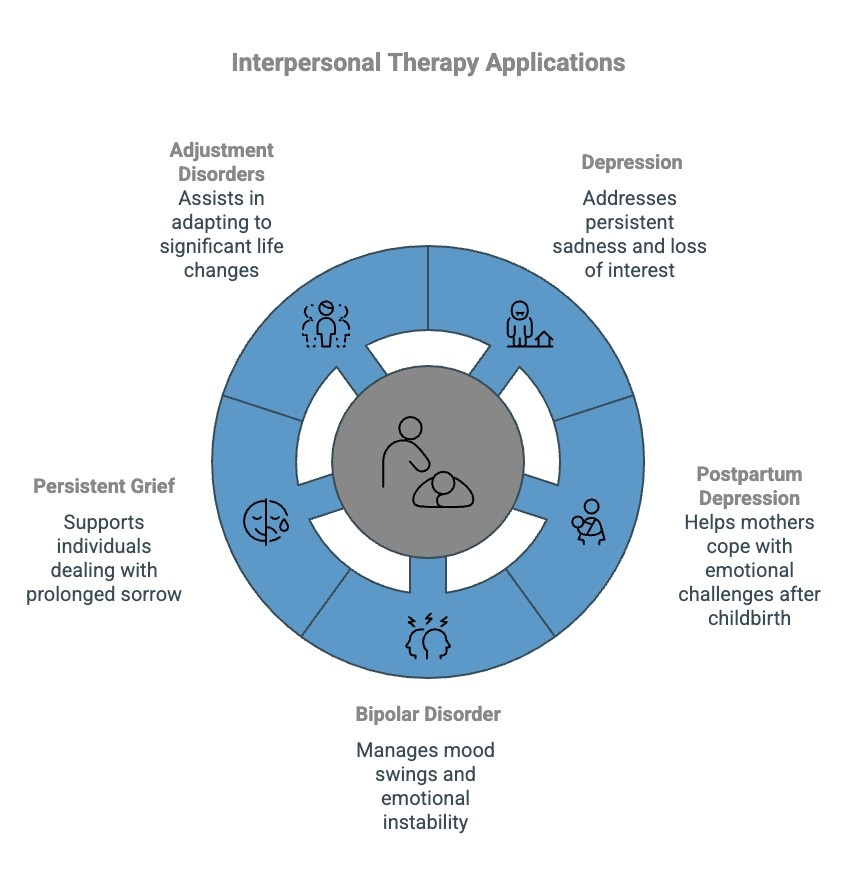
Interpersonal therapy treats mental health conditions that are closely linked to relationship stress, life changes, and social functioning difficulties. It is especially effective for mood disorders where emotional symptoms are influenced by conflict, loss, or isolation.
Below are the primary conditions interpersonal therapy addresses:
- Depression: Interpersonal therapy for depression focuses on resolving relationship conflict, grief, and major life transitions that contribute to low mood.
- Postpartum Depression: Interpersonal therapy for postpartum depression supports new parents navigating identity shifts, hormonal changes, and reduced social support.
- Bipolar Disorder: Through interpersonal and social rhythm therapy, it helps stabilize routines and manage interpersonal stress that can trigger mood episodes.
- Persistent Grief: Addresses prolonged grief reactions affecting daily functioning.
- Adjustment Disorders: Supports individuals coping with divorce, relocation, career changes, or other major transitions.
By targeting relationship patterns and communication, interpersonal therapy helps reduce symptoms while strengthening emotional resilience.
How Does the Interpersonal Process Work and How Long Does It Take?
Interpersonal therapy follows a structured, time-limited framework that focuses on present relationship patterns and their connection to emotional distress. It is goal oriented, practical, and designed to produce measurable improvement within a defined number of sessions.
Most individuals participate in 12 to 16 weekly sessions. While the duration can vary depending on symptom severity and personal goals, interpersonal therapy generally progresses through 3 clear phases:
1) Initial Phase: Assessment and Goal Setting
The therapist evaluates symptoms, reviews relationship history, and identifies one primary interpersonal problem area such as grief, role disputes, role transitions, or interpersonal deficits. Clear, measurable goals are established.
2) Middle Phase: Focused Intervention and Skill Building
This is the active working stage. Clients practice communication skills, engage in role playing, explore emotional responses, and resolve interpersonal conflicts. Techniques such as communication analysis and structured problem solving are applied to create behavioral change.
3) Final Phase: Consolidation and Maintenance
Progress is reviewed, symptom reduction is assessed, and new relationship skills are reinforced. Clients prepare to maintain improvements independently after therapy concludes.
Can Therapy Last Longer?
Although interpersonal therapy is designed as a short-term treatment, it may extend beyond 16 sessions in cases such as bipolar disorder, chronic depression, or recurrent mood instability. Maintenance sessions may be recommended to support long-term stability.
Overall, interpersonal therapy combines a clear structure with a defined timeline, helping clients achieve meaningful emotional and relational improvement without open-ended treatment.
Want to make the most of your therapy journey? Explore 10 Effective Tips for Setting Goals for Therapy to learn how clear, structured goals can accelerate progress and create lasting emotional change.
What Are the Core Interpersonal Therapy Techniques?
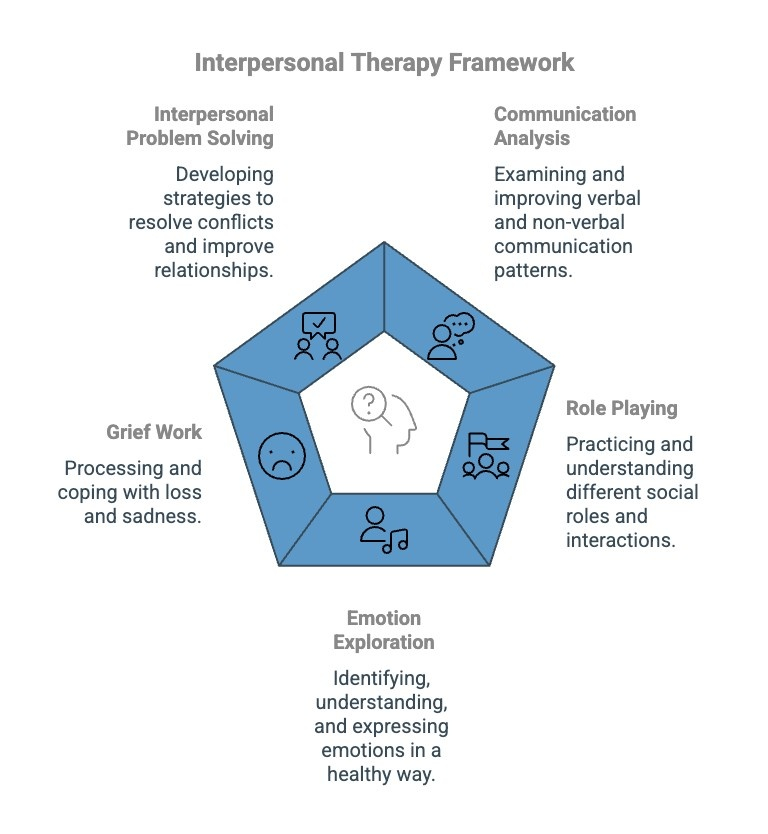
Interpersonal therapy focuses on improving relationship patterns that influence emotional well-being. Rather than analyzing thoughts alone, it strengthens communication, emotional expression, and social support systems.
Below are the core interpersonal therapy techniques used in sessions:
1) Communication Analysis
This technique examines recent conversations to identify misunderstandings, unspoken expectations, and emotional reactions. The therapy provider helps you break down what was said, what was meant, and how it was interpreted. By analyzing tone, timing, and response patterns, clients learn clearer expression and active listening skills. Over time, this reduces conflict, improves connection, and builds more constructive communication habits.
2) Role Playing
Role playing allows clients to practice difficult conversations in a safe and structured setting. The therapy provider may act as a partner, colleague, or family member while the client rehearses new responses. This builds confidence, emotional regulation, and assertiveness before real-life interactions. It also helps identify emotional triggers and refine healthier ways of expressing needs and boundaries.
3) Emotion Exploration
Emotion exploration focuses on identifying and expressing feelings that may be suppressed, misunderstood, or misdirected. Clients learn to connect emotional experiences to specific interpersonal events, such as conflict or rejection. By increasing emotional awareness, individuals gain clarity about their reactions and needs. This technique strengthens emotional regulation and reduces patterns of avoidance or passive communication.
4) Grief Work
Grief work addresses unresolved loss, whether from death, separation, or a major life change. The therapy provider helps clients process sadness, anger, or guilt connected to the loss while rebuilding daily functioning. This structured approach prevents prolonged grief from deepening into depression. It also supports developing new roles and support systems after significant personal transitions.
5) Interpersonal Problem Solving
This technique targets current relationship challenges and breaks them into manageable steps. Clients identify the core issue, evaluate possible responses, and consider the consequences of different actions. The therapy provider guides structured decision-making and encourages practical solutions. This approach builds confidence in handling conflict and reduces feelings of helplessness within personal or professional relationships.
These techniques work together to improve relationships, reduce emotional distress, and promote lasting psychological resilience.
What Are the Pros and Cons of Interpersonal Therapy?
Interpersonal therapy offers structured, relationship-focused support, but like any treatment, it has strengths and limitations. Understanding both can help individuals decide whether it aligns with their mental health goals.
Below are the main pros and cons of interpersonal therapy:
| Pros of Interpersonal Therapy | Cons of Interpersonal Therapy |
|---|---|
| Strong research support for depression and postpartum depression treatment | May not deeply explore childhood trauma or unconscious patterns |
| Structured and time-limited approach with clear goals | Less focus on cognitive distortions compared to CBT |
| Improves communication and conflict resolution skills | Requires active participation and emotional openness |
| Addresses real-life relationship stressors directly | May need combination therapy for complex personality disorders |
| Adaptable through interpersonal and social rhythm therapy for bipolar disorder | Not heavily focused on behavioral exposure techniques |
Interpersonal therapy is highly effective for many individuals, especially those whose symptoms are closely tied to relationships and life transitions.
How Is Interpersonal Therapy Different from CBT or Psychodynamic Therapy?
Interpersonal therapy differs from CBT and psychodynamic therapy in its focus, structure, and treatment goals. While all three are evidence-based approaches, they target emotional distress from different angles and use distinct techniques to create change.
Below are the key differences:
| Key Factors | Interpersonal Therapy IPT | Cognitive Behavioral Therapy CBT | Psychodynamic Therapy |
|---|---|---|---|
| Primary Focus | Focuses on current relationships and social functioning | Focuses on changing negative thought patterns and behaviors | Explores unconscious processes and early life experiences |
| Structure and Duration | Time-limited and structured, typically 12 to 16 sessions | Structured and skills-based, often short to medium term | Often longer term and less structured |
| Core Targets | Targets grief, conflict, role transitions, and isolation | Targets cognitive distortions and maladaptive behaviors | Examines deep-rooted emotional conflicts |
| Therapeutic Emphasis | Emphasizes communication improvement and emotional expression | Emphasizes thought restructuring and behavioral change | Emphasizes insight and understanding of past influences |
| Time Orientation | Present-focused with limited exploration of childhood history | Present focused with structured exercises | Strong focus on childhood and early relationships |
In short, interpersonal therapy centers on improving relationship patterns, CBT focuses on changing thoughts and behaviors, and psychodynamic therapy seeks deeper insight into past experiences.
What Is Interpersonal and Social Rhythm Therapy?
Interpersonal and social rhythm therapy is a structured, time-limited psychotherapy that integrates interpersonal therapy principles with strategies that stabilize daily biological rhythms. It is built on the understanding that emotional health is closely connected to both relationships and routine.
There are two major components that form the foundation of this approach:
- Interpersonal Component: Focuses on relationship patterns, communication challenges, grief, role transitions, and interpersonal conflicts.
- Social Rhythm Component: Emphasizes maintaining consistent daily routines such as sleep, meals, physical activity, and social interactions.
Its effectiveness is guided by two interconnected mechanisms:
- Circadian Rhythm Regulation: Stabilizing sleep and daily habits helps support biological processes that influence mood.
- Interpersonal Stress Management: Improving communication and resolving relational tension reduces emotional stress that may disrupt routine and stability.
This dual focus connects social functioning with biological regulation, creating a structured framework that supports emotional balance.
How Does Interpersonal and Social Rhythm Therapy Help Bipolar Disorder?
Interpersonal and social rhythm therapy helps bipolar disorder by combining relationship-focused therapy with structured daily routine stabilization. Because mood episodes in bipolar disorder are often triggered by disrupted sleep, stress, or interpersonal conflict, this approach targets both biological rhythms and social functioning.
Below are the key ways interpersonal and social rhythm therapy for bipolar disorder provides support:
- Stabilizes Daily Routines: Encourages consistent sleep, wake times, meals, and activities to regulate mood cycles.
- Reduces Interpersonal Stress: Identifies relationship conflicts that may trigger mood shifts.
- Improves Emotional Awareness: Helps patients recognize early warning signs of mania or depression.
- Strengthens Communication Skills: Builds healthier responses to conflict and stress.
- Prevents Relapse: Structured rhythm tracking lowers the risk of recurring mood episodes.
By aligning daily structure with relationship health, this therapy supports long-term mood stability.
When Should You See a Therapy Provider for Interpersonal Therapy?
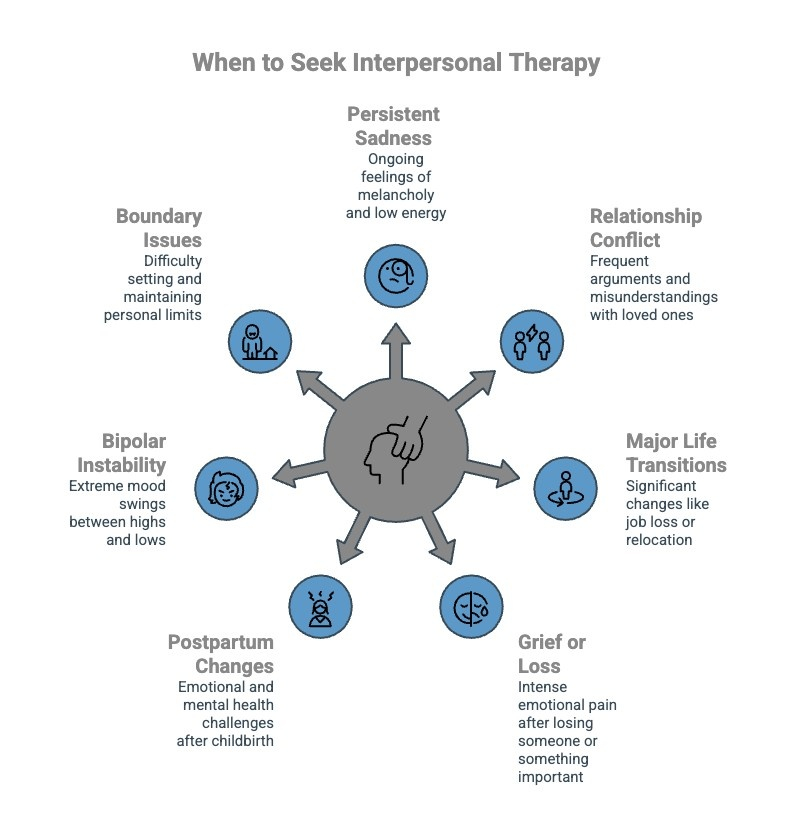
You should consider seeing a therapy provider for interpersonal therapy when emotional distress begins affecting your relationships, daily functioning, or overall quality of life. Early support can prevent symptoms from deepening and improve long-term emotional stability.
Below are common signs that it may be time to seek interpersonal therapy:
- Persistent sadness or low mood that lasts for weeks and impacts work or home life.
- Ongoing relationship conflict that feels unresolved or emotionally draining.
- Major life transitions such as divorce, career change, relocation, or becoming a parent.
- Grief or loss that feels overwhelming or prolonged.
- Postpartum emotional changes, including isolation, irritability, or anxiety.
- Bipolar mood instability, where disrupted routines or interpersonal stress trigger episodes.
- Difficulty maintaining boundaries or expressing needs clearly.
Seeking therapy early can help you rebuild connection, improve communication, and restore emotional balance.
Why Choose Total Life Counseling for Interpersonal Therapy?
When relationship stress, depression, or life transitions begin affecting your daily life, having the right therapy support makes a meaningful difference. Total Life Counseling offers structured, evidence-based interpersonal therapy tailored to your unique needs.
Below is what sets TLC apart:
- Specialized Mood Treatment: Support for interpersonal therapy for depression, postpartum depression, and interpersonal and social rhythm therapy for bipolar management.
- Experienced Providers: Licensed clinicians trained to define interpersonal therapy clearly and apply it effectively.
- Personalized Treatment Plans: Therapy goals aligned with your relationships, lifestyle, and emotional triggers.
- Flexible Options: In-person and secure online therapy sessions to fit busy schedules.
- Holistic Support: Focus on communication, boundaries, stress regulation, and long-term relapse prevention.
Whether you are seeking interpersonal therapy for depression or interpersonal and social rhythm therapy for bipolar support, our team is ready to guide you. Schedule your confidential consultation now.
Conclusion
Interpersonal therapy is a focused, research-supported treatment that directly addresses the relationship patterns and social stressors driving emotional distress. By targeting real-world interpersonal challenges, it offers practical tools that reduce depressive symptoms and strengthen long-term functioning.
For individuals whose mood is closely linked to relationship stress, interpersonal psychotherapy provides a clear, structured path toward stability, healthier connections, and sustained emotional resilience.
Frequently Asked Questions
Are there any risks or side effects associated with interpersonal therapy?
Interpersonal therapy is generally safe, but discussing conflict, grief, or trauma can temporarily increase emotional discomfort. Some individuals may feel vulnerable during sessions. Structured guidance minimizes risks. Approaches like interpersonal reconstructive therapy may involve deeper emotional processing.
How can someone find a therapist trained in interpersonal therapy?
To find a qualified provider, search for licensed professionals specializing in interpersonal therapy or interpersonal and social rhythm therapy bipolar treatment. Review credentials and clinical experience. During consultation, ask them to define interpersonal therapy and explain how they apply it in practice.
Are there any risks or side effects associated with interpersonal therapy?
Side effects are usually mild and may include temporary emotional intensity when addressing relationship conflicts or loss. Because sessions focus on current interpersonal stressors, some discomfort is expected. With proper support, these reactions often lead to improved communication and symptom relief.
What is the evidence for the effectiveness of interpersonal therapy?
Research shows interpersonal therapy is highly effective for depression and postpartum depression. Studies also support interpersonal and social rhythm therapy bipolar management for reducing relapse rates. Clinical evidence demonstrates improved social functioning and sustained symptom reduction across mood-related conditions.
How Is IPT Specifically Used in Addiction Treatment?
In addiction treatment, interpersonal therapy addresses relationship triggers that contribute to substance use. It helps individuals repair damaged connections, strengthen support networks, and improve emotional regulation. Interpersonal reconstructive therapy may be used when long-standing relational patterns fuel addictive behaviors.
How Does IPT Work alongside Motivational Interviewing?
IPT complements Motivational Interviewing by strengthening relationships that support behavior change. While Motivational Interviewing builds motivation and readiness, interpersonal therapy improves communication and reduces interpersonal stressors that may trigger relapse, creating a balanced, relationship-focused recovery approach.
What are the main goals of interpersonal therapy?
The main goals of interpersonal therapy are to reduce emotional distress by improving communication and relationship patterns. It targets grief, role disputes, and life transitions, while strengthening social support, emotional awareness, and coping skills to support long-term mood stability.
Filed in: Interpersonal Therapy
Share This Story, Choose Your Platform!
Total Life Counseling Center consists of Licensed Counselors, masters level therapists, Español counselors, Licensed Mental Health Counselors, business coaches, and image enhancement coaches who provide counseling for emotional, mental, physical and spiritual care including marriage, individual, family, substance abuse and more. TLC’s family, trauma and marriage experts have been interviewed on National and Local TV/Radio over 200 times for their expert advice on Fox News, OWN, WETV, ABC’s Medical Minute and more. Our skilled counselors are relational, approachable and specialists providing therapy services in the Central Florida area including: Orlando, Winter Park, MetroWest, Windermere, Dr. Phillips, East Orlando, Lake Mary, and Clermont, Boca Raton Florida, and Dallas, TX.
About the Author: Jim West
