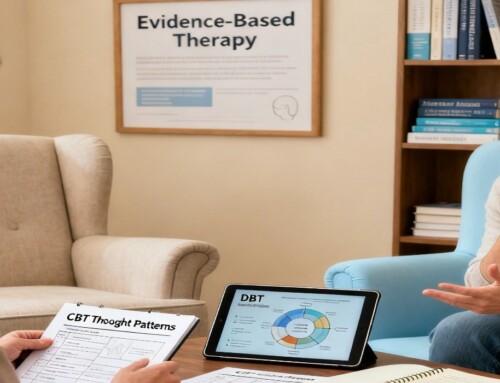

What Is Talk Therapy and How Can It Improve Mental Health?

Key Highlights
- Talk therapy is a structured mental health treatment, also called psychotherapy, designed to improve emotional well-being through guided, goal-focused conversations.
- It works by identifying harmful thought patterns, processing emotions, building coping skills, and setting measurable progress goals.
- Different types of talk therapy, including cognitive behavioral therapy and dialectical behavior therapy, address specific mental health needs.
- Talk therapy treats depression, anxiety disorders, BPD, trauma, relationship conflicts, and stress-related challenges.
- Online talk therapy and virtual talk therapy provide flexible, accessible care without compromising effectiveness.
- Benefits include improved emotional regulation, stronger relationships, increased self-awareness, and long-term resilience.
- Total Life Counseling offers professional talk therapy services both in person and virtually to support individuals, couples, and families.
Many people push through low mood, anxiety, or emotional strain hoping it will pass. Over time, it can begin affecting sleep, focus, relationships, and work. When usual coping strategies stop working, the goal becomes clear: find support that feels practical, safe, and effective.
This experience is more common than many realize. The American Psychological Association reports that 75 percent of Americans experienced at least one symptom of stress in the past month. When emotional strain builds up, it becomes difficult to tell what is temporary, what signals a deeper concern, and what kind of support would truly help.
This blog explains what talk therapy is, how it works, the types of talk therapy available, the conditions it can treat, and the benefits you can expect. You will also learn how online talk therapy and virtual talk therapy compare to in-person options and how long talk therapy may take to show results.
What Is Talk Therapy?
Talk therapy is a structured mental health treatment where individuals speak with a licensed therapist to explore thoughts, emotions, and behaviors in a safe, confidential space. Sessions are conducted by licensed mental health professionals such as psychologists, licensed clinical social workers, or licensed counselors. It is designed to help people better understand themselves and manage psychological challenges.
Also known as psychotherapy, talk therapy uses evidence-based approaches to identify patterns that may contribute to emotional distress. Unlike casual conversations with friends or family, sessions follow a purposeful, goal-oriented framework.
Talk therapy can address concerns such as depression, anxiety, trauma, relationship conflict, and personality disorders. Sessions may take place in person or through online talk therapy platforms. Over time, this process builds self-awareness, strengthens coping skills, and supports long-term emotional well-being.
Also Read: Big life change ahead? Whether you’re navigating career shifts, divorce, relocation, or personal growth, discover how the right support can turn uncertainty into clarity in counseling for life transitions and how it can help you thrive.
How Does Talk Therapy Work?
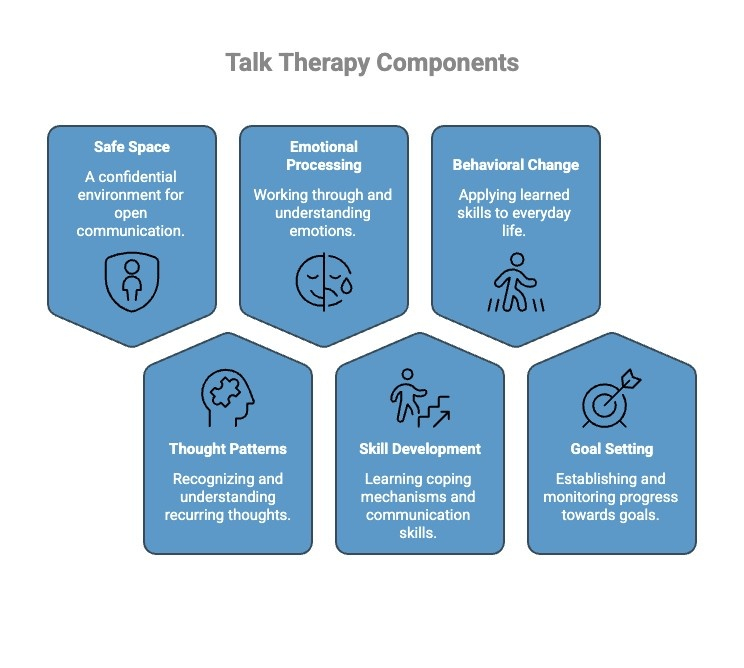
Talk therapy works by creating a structured, supportive space where individuals can explore emotions, thoughts, and behaviors with professional guidance. Although approaches differ, most forms of talk therapy share several core elements. Below are the core ways talk therapy supports emotional growth and lasting psychological change.
- Safe and Confidential Space: Therapy provides a private setting where individuals can speak openly without fear of judgment, helping build trust and emotional safety.
- Identifying Thought Patterns: Therapists help uncover negative thinking styles and recurring behavioral patterns that may contribute to anxiety, depression, or relationship challenges.
- Emotional Processing: Sessions encourage individuals to explore and process difficult emotions rather than suppressing or avoiding them.
- Skill Development: Therapy teaches practical coping tools, communication techniques, and stress management strategies.
- Behavioral Change Application: Clients practice new coping or communication skills between sessions to reinforce growth and apply insights to real-life situations.
- Goal Setting and Progress Tracking: Clear treatment goals help measure improvement and maintain focus throughout the therapy process.
With consistency and commitment, talk therapy creates insight, builds resilience, and supports long-term mental well-being.
What Are the Different Types of Talk Therapy?
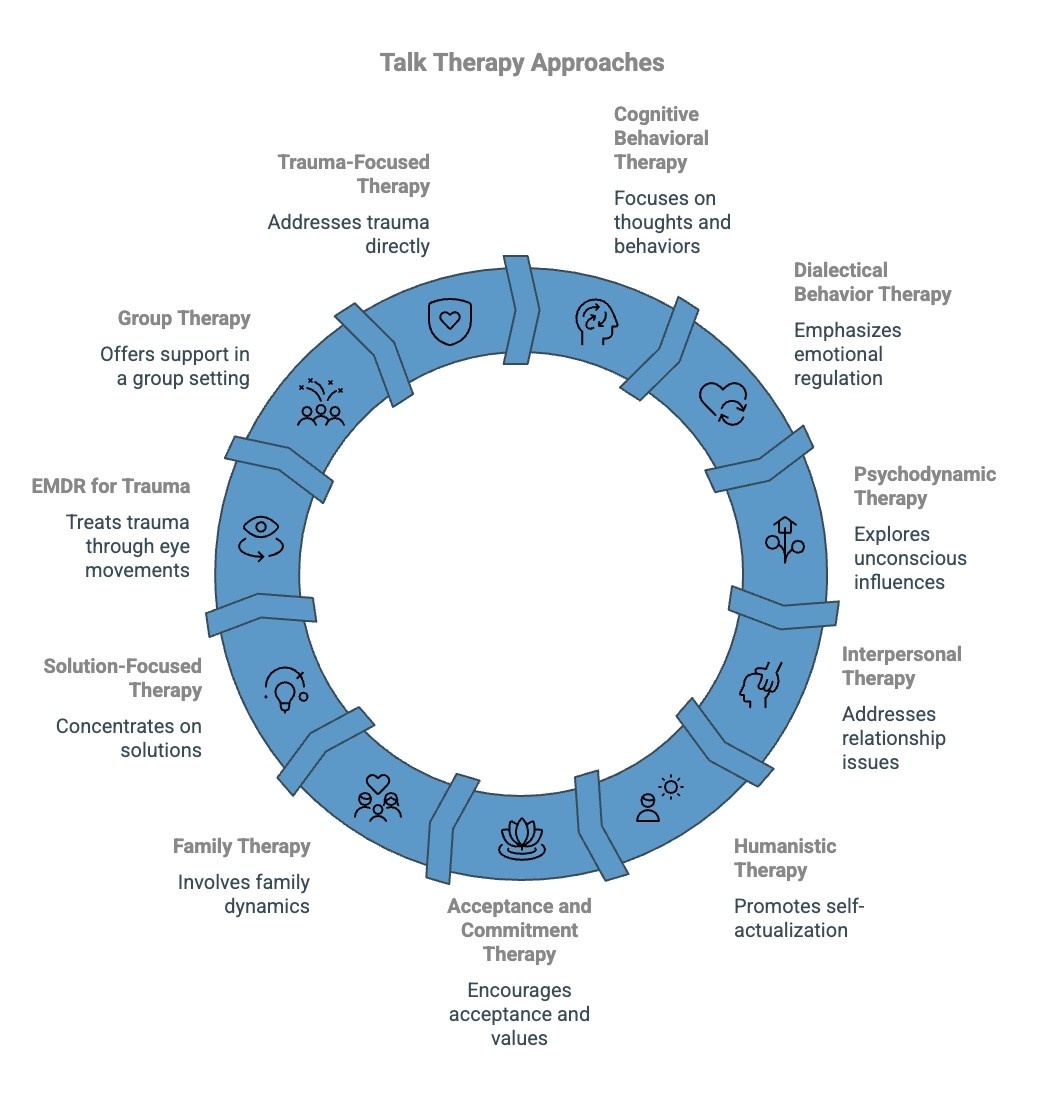
Talk therapy, also known as psychotherapy, involves working with a trained mental health professional to identify, understand, and manage emotional or psychological challenges. Different types of talk therapy focus on thoughts, behaviors, emotions, relationships, or past experiences.
Here are the main types:
1. Cognitive Behavioral Therapy (CBT)
Cognitive Behavioral Therapy focuses on identifying and changing negative thought patterns that influence emotions and behavior. It helps individuals recognize distorted thinking, challenge unhelpful beliefs, and develop healthier coping strategies. CBT is structured, goal-oriented, and commonly used for anxiety, depression, phobias, stress, and sleep difficulties. It often includes practical exercises between sessions.
2. Dialectical Behavior Therapy (DBT)
Dialectical behavior therapy is a specialized form of cognitive therapy designed to help people manage intense emotions. It combines acceptance strategies with behavioral change techniques. DBT teaches skills such as emotional regulation, distress tolerance, mindfulness, and interpersonal effectiveness. It is often recommended for individuals experiencing emotional instability, self-harm tendencies, or relationship difficulties.
3. Psychodynamic Therapy
Psychodynamic therapy explores unconscious patterns, early life experiences, and unresolved conflicts that influence present behavior. It focuses on understanding how past relationships shape current emotional responses. Through guided conversation and reflection, individuals gain insight into recurring patterns and develop healthier ways of relating to others. This approach is often longer term and insight focused.
4. Interpersonal Therapy (IPT)
Interpersonal therapy focuses on improving communication and addressing relationship challenges that contribute to emotional distress. It helps individuals manage grief, role transitions, conflicts, and social isolation. IPT is commonly used to treat depression and mood-related conditions. Sessions are structured and time-limited, with clear goals aimed at strengthening interpersonal functioning.
5. Humanistic Therapy
Humanistic therapy centers on personal growth, self-awareness, and individual potential. It emphasizes empathy, acceptance, and a supportive therapeutic environment. Approaches such as person-centered therapy encourage clients to explore feelings openly without judgment. The goal is to build self-confidence, improve emotional clarity, and foster meaningful change through self-understanding.
6. Acceptance and Commitment Therapy (ACT)
Acceptance and Commitment Therapy encourages individuals to accept difficult thoughts and feelings rather than avoid them. It focuses on psychological flexibility and living in alignment with personal values. ACT combines mindfulness techniques with behavior change strategies. It is often used for anxiety, chronic stress, and life transitions where avoidance patterns limit growth.
7. Family Therapy
Family therapy involves multiple family members working together to improve communication and resolve conflicts. It examines family dynamics and interaction patterns that may contribute to stress or misunderstandings. This approach helps strengthen relationships, clarify roles, and build healthier support systems. It is commonly used when behavioral or emotional issues affect the family unit.
8. Solution-Focused Therapy
Solution-focused therapy is a brief, goal-oriented approach that concentrates on strengths and future solutions rather than past problems. It helps individuals identify existing resources, set clear goals, and take small, actionable steps toward change. This therapy is often used for short-term concerns, relationship challenges, and situations where clients want practical progress quickly.
9. EMDR for Trauma
Eye Movement Desensitization and Reprocessing, commonly known as EMDR, is a structured therapy designed to help individuals process traumatic memories. It uses guided bilateral stimulation, such as eye movements, to reduce emotional intensity linked to distressing experiences. EMDR is widely used for post-traumatic stress disorder, childhood trauma, and other trauma-related conditions.
10. Group Therapy
Group therapy brings together individuals facing similar concerns in a supportive setting led by a trained therapist. Participants share experiences, learn coping strategies, and gain perspective from others. It fosters connection, reduces isolation, and builds communication skills. Group therapy can be effective for anxiety, addiction recovery, grief support, and social challenges.
11. Trauma-Focused Therapy
Trauma-focused therapy is designed to help individuals process and recover from distressing experiences. It uses structured techniques to reduce emotional triggers and build resilience. Approaches may include cognitive processing methods and gradual exposure techniques. This therapy supports healing, improves emotional regulation, and helps individuals regain a sense of safety and control.
Each type of talk therapy serves different needs. The best approach depends on your concerns, personality, and goals. A licensed mental health professional can help determine which method is most suitable for you.
What Conditions Can Talk Therapy Treat?
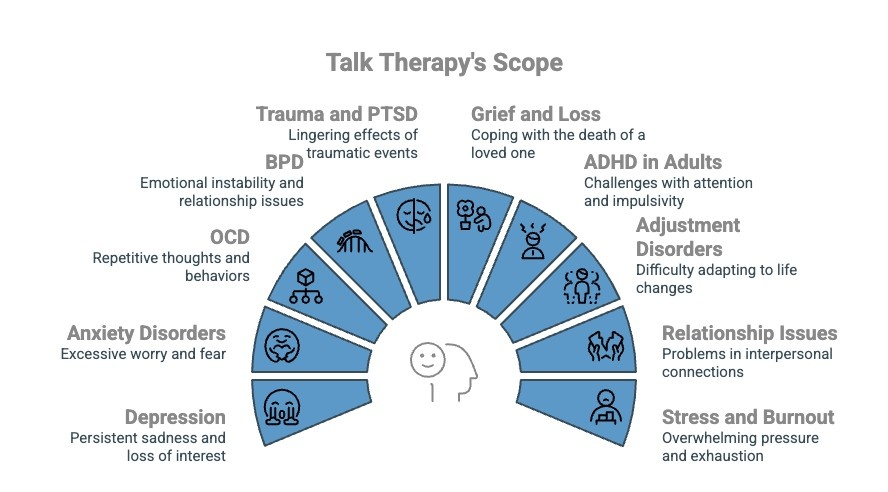
While these approaches differ in method, they are all designed to support measurable emotional and behavioral improvement.
Talk therapy is widely used to treat a broad range of mental health and emotional concerns. It can support individuals facing short-term stress as well as long-term psychological conditions.
Below are some of the most common conditions talk therapy helps address:
- Depression: Talk therapy for depression helps individuals identify negative thought patterns, improve mood regulation, and rebuild motivation and daily functioning.
- Anxiety Disorders: Therapy supports those experiencing generalized anxiety, panic attacks, social anxiety, or phobias by teaching coping strategies and reducing avoidance behaviors.
- Obsessive Compulsive Disorder (OCD): Structured approaches such as exposure-based therapy help individuals manage intrusive thoughts and compulsive behaviors, improving daily functioning and reducing distress.
- Borderline Personality Disorder (BPD): Talk therapy for BPD, particularly Dialectical Behavior Therapy, helps manage intense emotions, impulsivity, and unstable relationships.
- Trauma and PTSD: Therapy provides a structured space to process traumatic experiences and reduce symptoms such as flashbacks, hypervigilance, and emotional reactivity.
- Grief and Loss: Therapy supports individuals navigating bereavement, complicated grief, or life changes by helping them process emotions and adjust to new realities.
- ADHD in Adults: Talk therapy helps adults with attention deficit hyperactivity disorder develop organizational skills, manage impulsivity, and address related emotional challenges such as frustration or low self-esteem.
- Adjustment Disorders: Therapy helps individuals cope with significant life transitions such as divorce, relocation, career changes, or medical diagnoses by building adaptive coping strategies.
- Relationship and Communication Issues: Couples and family therapy improve communication patterns, resolve conflict, and strengthen interpersonal bonds.
- Stress and Burnout: Therapy helps individuals manage overwhelming responsibilities, workplace stress, and emotional exhaustion.
With professional guidance, talk therapy can be tailored to meet individual needs and promote meaningful, long-term improvement.
Is Online Talk Therapy Effective?
Yes, online talk therapy is effective for many common mental health concerns such as anxiety, depression, stress, and relationship difficulties. Research shows that virtual therapy can deliver outcomes comparable to in-person sessions when guided by a licensed professional. It provides structured support, practical coping tools, and consistent emotional guidance through secure video or audio platforms.
One major advantage is accessibility. Online therapy removes travel time, offers flexible scheduling, and allows individuals to attend sessions from a comfortable environment. This convenience often improves regular attendance, which is essential for progress.
However, severe mental health conditions or crisis situations may require in-person care. Online therapy is not recommended during psychiatric emergencies. Individuals experiencing thoughts of self-harm, suicidal intent, or acute psychiatric symptoms should seek immediate in-person or emergency medical support. For many individuals managing non-crisis concerns, online therapy remains a reliable and practical option.
What Can You Expect in Your First Talk Therapy Session?
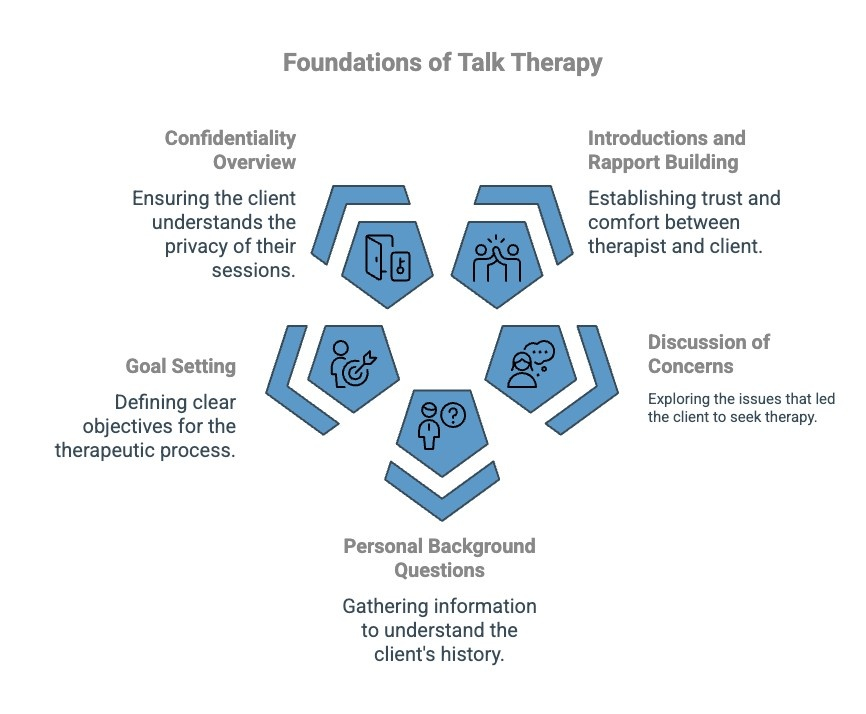
Starting talk therapy can feel unfamiliar, but the first session is usually calm, structured, and focused on understanding your needs and concerns. It sets the foundation for trust and collaboration. Therapy sessions typically last 45 to 60 minutes. In many cases, sessions are scheduled once per week, though frequency may vary based on individual needs, treatment goals, and symptom severity. Below are what you can typically expect:
- Introductions and Rapport Building: The therapist will introduce themselves and create a safe, nonjudgmental space for open conversation.
- Discussion of Concerns: You will be asked about your current challenges, emotions, and reasons for seeking therapy.
- Personal Background Questions: The therapist may explore your medical history, relationships, work, or major life events to better understand context.
- Goal Setting: You may discuss what you hope to achieve through therapy and how progress will be measured.
- Confidentiality Overview: The therapist will explain privacy policies, professional boundaries, and session structure.
The first session is about clarity and comfort. It allows you to ask questions, understand the therapeutic process, and begin building a supportive working relationship.
What Are the Benefits of Talk Therapy?
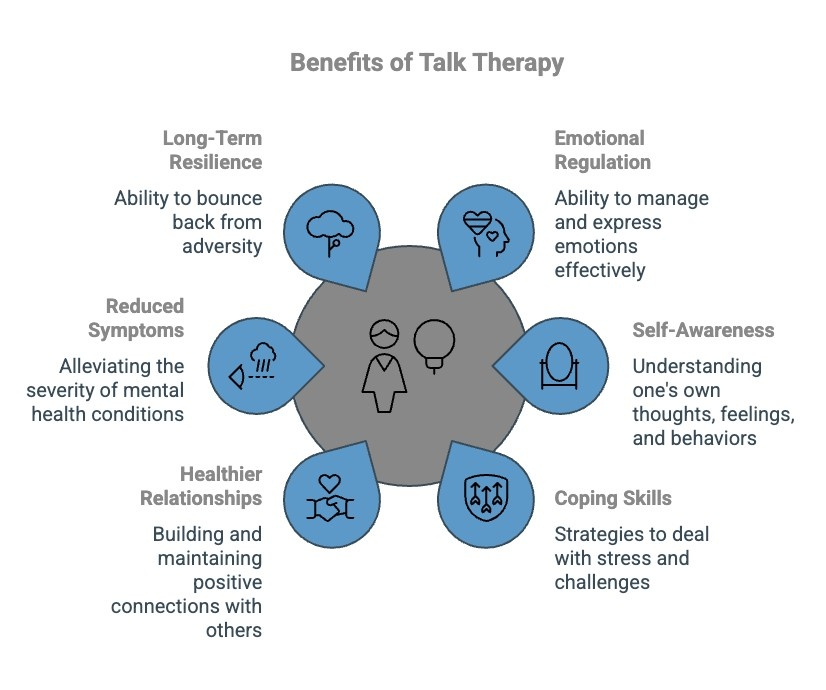
Talk therapy offers practical and emotional benefits that extend beyond symptom relief. It supports personal growth, improves mental clarity, and strengthens resilience over time. Below are some of the key benefits individuals experience through consistent therapy.
- Improved Emotional Regulation: Therapy helps individuals understand and manage intense emotions in healthier, more balanced ways.
- Greater Self-Awareness: Exploring thoughts and behaviors increases insight into patterns that may influence relationships and decision-making.
- Stronger Coping Skills: Talk therapy teaches practical tools for handling stress, conflict, anxiety, and life transitions.
- Healthier Relationships: Improved communication and boundary setting lead to more stable and fulfilling interpersonal connections.
- Reduced Symptoms of Mental Health Conditions: Many people experience relief from depression, anxiety, trauma symptoms, and mood instability.
- Long-Term Resilience: Therapy builds problem-solving skills and emotional strength that support well-being long after sessions end.
With commitment and consistency, talk therapy can create lasting positive change in both mental health and daily life.
When Should You Consider Talk Therapy?
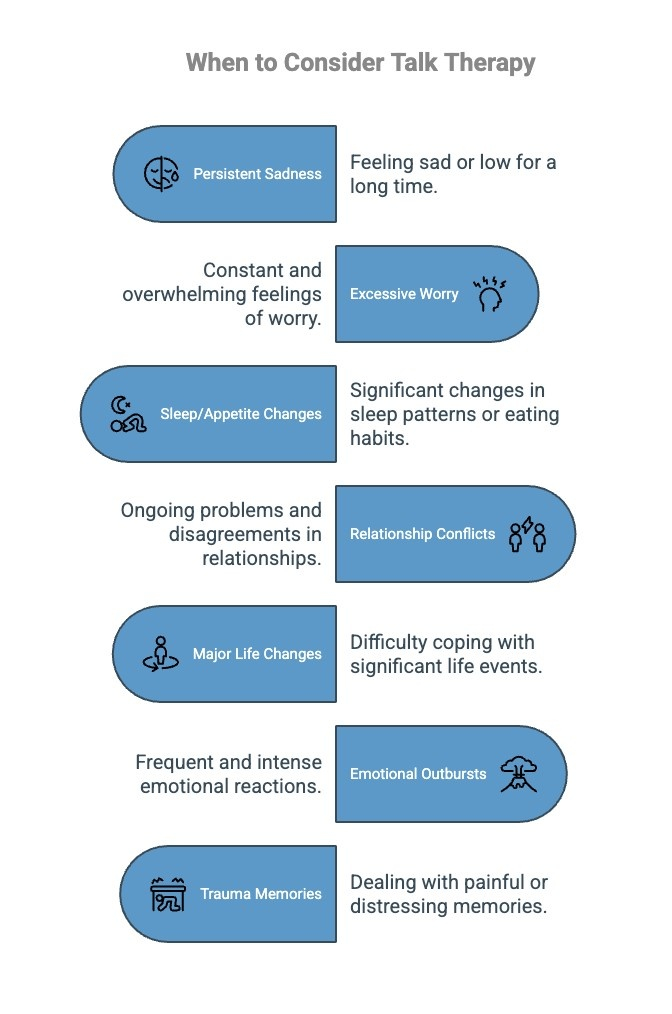
Many people wait until problems feel overwhelming before seeking help, but talk therapy can be beneficial at any stage of emotional difficulty. Below are common signs that it may be time to consider professional support.
- Persistent Sadness or Low Mood: Ongoing feelings of hopelessness, emptiness, lack of motivation, or loss of interest in activities you once enjoyed may indicate depression that can benefit from therapy.
- Excessive Worry or Anxiety: Constant nervousness, racing thoughts, panic attacks, or difficulty relaxing are signs that structured coping support may be helpful.
- Changes in Sleep or Appetite: Noticeable shifts in sleeping patterns, insomnia, oversleeping, reduced appetite, or emotional eating can signal underlying emotional distress.
- Relationship Conflicts: Repeated arguments, communication breakdowns, or difficulty maintaining boundaries can improve through therapy.
- Major Life Changes: Divorce, job loss, relocation, medical diagnoses, or grief can create emotional strain that talk therapy helps process.
- Emotional Outbursts or Mood Swings: Difficulty managing anger, irritability, or intense emotional reactions may signal the need for professional guidance.
- Trauma or Distressing Memories: Flashbacks, avoidance behaviors, heightened alertness, or intrusive memories may indicate unresolved trauma.
If emotional struggles begin to affect daily functioning, relationships, or work performance, talk therapy can provide timely and effective support.
Also Read: Supporting a loved one who struggles with worry or panic? Learn practical, compassionate strategies that truly make a difference in how to help someone with anxiety.
How Long Does Talk Therapy Take to Work?
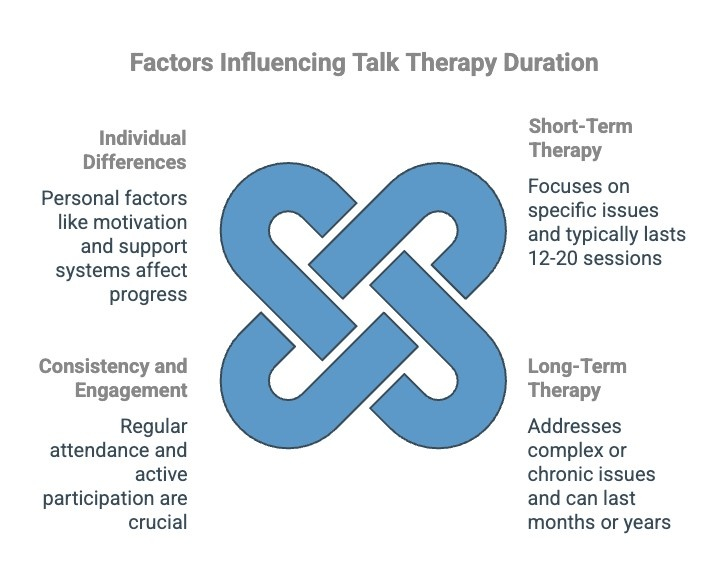
The timeline for talk therapy varies depending on the individual, the condition being treated, and the type of therapy used. Some people notice small improvements within a few sessions, while others require longer-term support for deeper emotional patterns.
- Short-Term Therapy: Structured approaches such as cognitive behavioral therapy may show measurable progress within six to twelve sessions.
- Long-Term Therapy: Complex concerns like trauma, personality disorders, or chronic depression may require ongoing therapy over several months or longer.
- Consistency and Engagement: Regular attendance, openness, and practicing skills outside sessions significantly influence how quickly progress occurs.
- Individual Differences: Personal history, severity of symptoms, and support systems all affect outcomes.
While results differ for everyone, many individuals begin experiencing relief and increased clarity once they actively engage in the therapeutic process.
Why Choose Total Life Counseling for Talk Therapy?
At Total Life Counseling, our licensed and compassionate clinicians provide personalized, evidence-based care tailored to your unique needs. Whether you are managing anxiety, depression, relationship challenges, or life transitions, our team offers structured support in a safe and confidential environment.
We provide both in-person sessions and virtual talk therapy, making it easier to access care that fits your schedule and comfort level. If you have been searching for talk therapy near me, our experienced professionals are committed to helping you build coping skills, strengthen emotional resilience, and create meaningful change.
Ready to Take the First Step? Contact Total Life Counseling today to schedule your confidential consultation. Our team is here to listen, guide, and support you on your journey toward improved mental health and long-term well-being.
Conclusion
Talk therapy offers structured, evidence-based support for managing emotional, behavioral, and relationship challenges. From traditional in-person sessions to flexible virtual talk therapy options, individuals can choose an approach that fits their comfort and lifestyle.
Whether you are exploring what is talk therapy called, searching for talk therapy near me, or considering specialized support such as small talk therapy for communication skills, the key is finding a qualified professional who aligns with your needs. With the right guidance, talk therapy can strengthen coping skills, improve self-awareness, and support long-term mental well-being.
Frequently Asked Questions
How can I find a licensed talk therapist near me?
Search trusted directories, hospital websites, or mental health platforms using terms like “talk therapy near me.” Verify licensing, credentials, and specializations before booking. You can also ask your primary care doctor for referrals to qualified professionals.
Are there free talk therapy or support resources available near me?
Community clinics, nonprofit organizations, universities, and helplines may offer free or low-cost support. Searching for talk therapy near me along with community services can help you locate affordable resources in your area.
How do I choose between different online therapy platforms for talk therapy?
Compare therapist qualifications, privacy standards, pricing, and communication methods. When considering virtual talk therapy, choose a platform that matches your comfort level and mental health needs.
What’s the difference between talk therapy and counseling?
Talk therapy, also known as psychotherapy, is often used to treat mental health conditions. Counseling typically focuses on short-term life challenges. If you ask what talk therapy is called, it is commonly referred to as psychotherapy.
What is small talk speech & language therapy?
Small talk therapy in speech and language care helps improve everyday communication skills. It focuses on vocabulary, sentence formation, listening ability, and social interaction, especially for children developing conversational confidence.
Filed in: Therapy
Share This Story, Choose Your Platform!
Total Life Counseling Center consists of Licensed Counselors, masters level therapists, Español counselors, Licensed Mental Health Counselors, business coaches, and image enhancement coaches who provide counseling for emotional, mental, physical and spiritual care including marriage, individual, family, substance abuse and more. TLC’s family, trauma and marriage experts have been interviewed on National and Local TV/Radio over 200 times for their expert advice on Fox News, OWN, WETV, ABC’s Medical Minute and more. Our skilled counselors are relational, approachable and specialists providing therapy services in the Central Florida area including: Orlando, Winter Park, MetroWest, Windermere, Dr. Phillips, East Orlando, Lake Mary, and Clermont, Boca Raton Florida, and Dallas, TX.
About the Author: Jim West

Related Posts