

What Is Person Centered Therapy and How Does It Work?

Key Highlights
- Person-centered therapy is a humanistic therapeutic approach that prioritizes empathy, authenticity, and unconditional positive regard.
- The key concepts of person-centered therapy include core conditions that create emotional safety and encourage self-discovery.
- Person-centered therapy techniques such as reflection and empathetic understanding support client-led growth and confidence.
- This approach is effective for anxiety, depression, life transitions, and other common mental health issues.
- While empowering, person-centered therapy treatment may be combined with other forms of therapy for complex mental disorders.
- Scientific research supports its role in promoting therapeutic change and long-term emotional well-being.
- Total Life Counseling provides compassionate, personalized, person-centered therapy to support lasting emotional growth.
Many people struggle with feeling unheard, misunderstood, or judged when seeking help for emotional challenges. According to the National Alliance on Mental Illness, 1 in 5 adults in the United States experiences a mental health condition each year. Yet despite how common mental health concerns are, not everyone feels comfortable with structured or advice-driven therapy approaches.
Traditional forms of therapy can sometimes feel directive, clinical, or focused primarily on symptom reduction. When navigating anxiety, depression, or life transitions, you may want support that allows space for your own thoughts, true feelings, and personal pace rather than rigid techniques.
This blog explains what person-centered therapy is, how it works, its techniques and benefits, and when it may be most effective, helping you decide whether this therapeutic approach aligns with your emotional needs and growth goals.
What Is Person Centered Therapy?
Person-centered therapy is a humanistic approach to mental health treatment that focuses on the individual rather than the problem. If you are wondering what is person centered therapy is, it is a method that emphasizes empathy, unconditional positive regard, and genuine understanding within the therapeutic relationship. Instead of giving advice or directing the session, the therapy professional creates a safe, nonjudgmental space where clients can explore their thoughts and emotions freely.
The belief behind person centered therapy is that people have an innate ability to grow, heal, and find their own solutions when they feel truly heard and accepted. This supportive environment encourages self-awareness, emotional clarity, and lasting personal development over time.
Also Read: Navigating a major life change? Discover how professional support can make the transition smoother in How Counseling for Life Transitions Can Help You Thrive, and learn how to move forward with clarity and confidence.
What Are the Main Person-Centered Therapy Techniques?
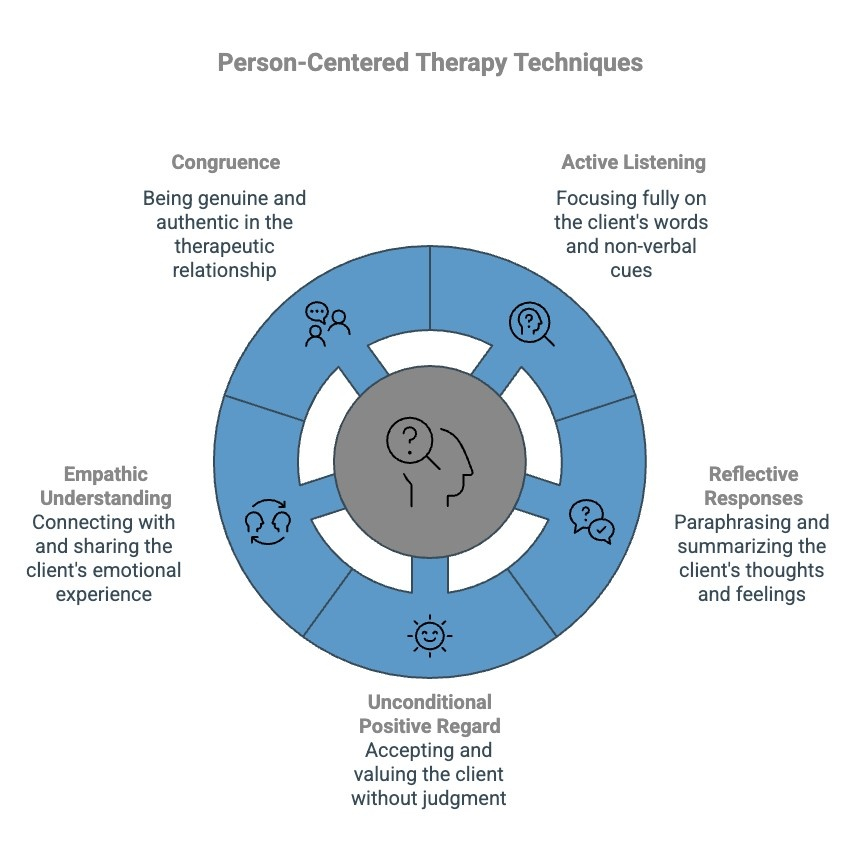
Person centered therapy techniques focus on building trust, emotional safety, and self-awareness rather than directing behavior. The approach relies on the therapeutic relationship to facilitate growth and insight.
Below are the main person centered therapy techniques used in treatment:
1) Active Listening
Active listening involves giving full attention to the client without interruption, judgment, or distraction. The therapy professional carefully hears not only the words spoken but also the emotions beneath them. By maintaining eye contact, open body language, and verbal affirmations, they create a space where clients feel valued. This encourages deeper sharing and strengthens emotional safety within sessions.
2) Reflective Responses
Reflective responses include paraphrasing and summarizing what the client has expressed to confirm understanding. Instead of interpreting or analyzing, the therapy professional mirrors feelings and key thoughts back to the client. This process helps individuals hear their own experiences more clearly, often leading to new insights. Reflection deepens self-awareness and promotes clarity without directing the conversation.
3) Unconditional Positive Regard
This technique involves offering consistent acceptance and nonjudgmental support regardless of what the client shares. The therapy professional communicates respect, warmth, and validation at all times. When individuals feel accepted without criticism, they are more likely to explore vulnerable emotions. Unconditional positive regard reduces defensiveness and fosters authentic self-expression within the therapeutic relationship.
4) Empathic Understanding
Empathic understanding means genuinely attempting to experience the client’s perspective and emotional reality. The therapy professional conveys empathy through tone, language, and thoughtful responses. This helps clients feel deeply understood rather than evaluated. Empathy strengthens trust and encourages emotional processing. Over time, this shared understanding supports healing, confidence, and personal growth.
5) Congruence or Authentic Presence
Congruence refers to the therapy professional being genuine and transparent rather than distant or overly clinical. Authentic presence builds trust because clients sense honesty in the interaction. When professionals model openness and consistency, it encourages clients to do the same. This real, human connection enhances the effectiveness of person centered therapy treatment.
Together, these techniques create a supportive environment where individuals discover their own solutions and build lasting emotional resilience.
How Does Person-Centered Therapy Work in Practice Over Time?
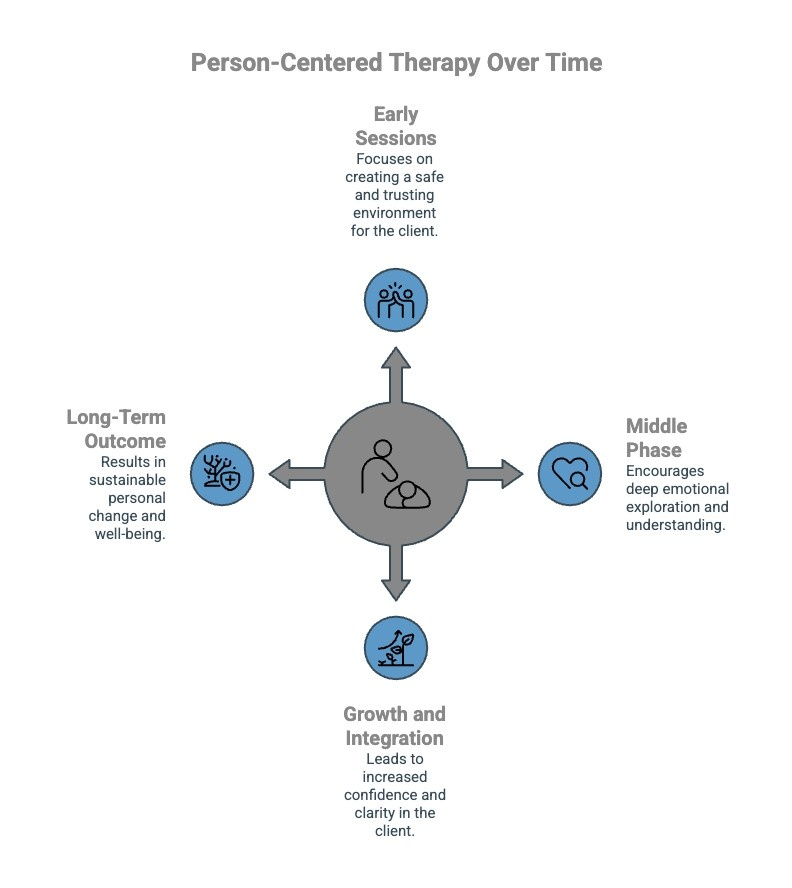
Person centered therapy works gradually through the strength of the therapeutic relationship rather than structured assignments or behavioral tasks. Progress unfolds in phases, guided by trust, emotional safety, and self-discovery.
1) Early Sessions: Building Safety and Trust
In the beginning, the therapy professional focuses on creating a warm, nonjudgmental environment. Clients begin sharing concerns at their own pace. The emphasis is on psychological safety, active listening, and establishing emotional trust.
2) Middle Phase: Deep Emotional Exploration
As trust grows, clients explore deeper feelings, patterns, and internal conflicts. Through reflection and empathy, they begin recognizing inconsistencies between their true self and their lived experiences. Insight develops naturally rather than through direct instruction.
3) Growth and Integration: Increasing Confidence and Clarity
Over time, clients experience greater self-acceptance and emotional regulation. They start making decisions that align more closely with their values. Confidence increases because solutions emerge from within, not from external advice.
4) Long-Term Outcome: Sustainable Personal Change
Rather than focusing only on symptom relief, person centered therapy supports lasting personality growth. Clients often leave therapy with stronger self-trust, healthier relationships, and improved resilience that continues beyond sessions.
Over time, the power of person centered therapy lies not in structured techniques but in the consistency of empathy, authenticity, and acceptance. As trust deepens, insight expands naturally. This steady, relationship-driven process allows meaningful change to emerge from within, creating growth that feels both authentic and sustainable.
How Is Person-Centered Therapy Different From Other Therapies?
Person centered therapy differs from many other therapies in structure, focus, and method. While some approaches emphasize techniques, diagnosis, or behavior change plans, person centered therapy centers on the therapeutic relationship and client autonomy.
Below is a comparison table highlighting the key differences:
| Area of Comparison | Person-Centered Therapy | Other Therapies (e.g., CBT, Psychodynamic) |
|---|---|---|
| Approach Style | Nondirective and client-led | Often directive and structured |
| Role of Therapy Professional | Facilitates empathy and reflection | Provides guidance, interpretation, or strategies |
| Primary Focus | Personal growth and self-awareness | Symptom reduction or behavior change |
| Techniques Used | Active listening, reflection, unconditional positive regard | Worksheets, cognitive restructuring, exposure techniques |
| Session Structure | Open-ended and flexible | Goal-oriented with defined interventions |
| View of Change | Change emerges through insight and acceptance. | Change occurs through structured skill building. |
Understanding these differences can help individuals choose the therapy approach that best fits their needs, preferences, and treatment goals.
What Are the Benefits of Person-Centered Therapy?
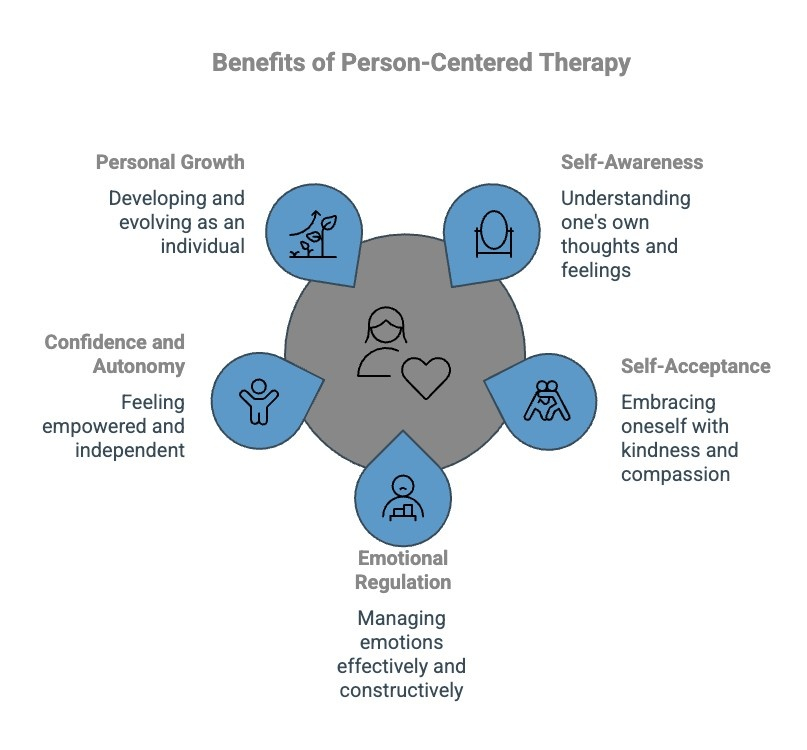
Person centered therapy supports emotional healing by creating a safe, accepting space for self-exploration. Its emphasis on empathy and authenticity encourages big, lasting change.
Below are the key benefits of person centered therapy:
1) Greater Self-Awareness
Through reflective dialogue and open conversation, clients gain clearer insight into their emotions, beliefs, and behavioral patterns. Instead of being directed toward specific conclusions, they arrive at understanding naturally. This increased awareness strengthens emotional intelligence and helps individuals make thoughtful decisions aligned with their values and personal goals.
2) Improved Self-Acceptance
Unconditional positive regard reduces self-criticism and internal shame. When individuals feel consistently accepted without judgment, they begin to treat themselves with greater compassion. This shift improves self-esteem and emotional resilience. Over time, improved self-acceptance supports healthier relationships and a stronger sense of identity.
3) Stronger Emotional Regulation
By processing feelings in a supportive environment, clients learn to sit with difficult emotions rather than avoid or suppress them. The therapeutic relationship models calm reflection. As emotional awareness increases, individuals respond more thoughtfully to stress, resulting in steadier mood patterns and healthier coping strategies.
4) Increased Confidence and Autonomy
Because insight develops from within, clients build trust in their own judgment. Each breakthrough reinforces personal capability and resilience. This empowerment strengthens independent decision-making and problem-solving skills. Confidence gained in therapy often extends into professional life, relationships, and long-term goals.
5) Authentic Personal Growth
Person centered therapy fosters growth that feels genuine rather than forced. Change emerges through understanding rather than pressure. Clients align more closely with their true identity and values, creating sustainable progress. This authenticity supports meaningful development that continues beyond the therapy setting.
Together, these benefits create a strong foundation for clarity, emotional strength, and lasting personal growth.
Also Read: Taking care of your mental health starts with taking care of yourself. Explore practical, therapist-guided strategies in Are You Making Time for Self-Care? 6 Tips to Take Care of You and learn how small changes can create lasting balance.
Are There Any Limitations of Person-Centered Therapy?
Person centered therapy is supportive and empowering, but it may not address every mental health need. Because it is nondirective, some individuals may require more structured or intensive care. Below are the key limitations of person centered therapy:
- Lack of Structured Techniques: It does not provide worksheets, behavioral plans, or step-by-step coping strategies.
- Slower Progress for Some: Clients who prefer direct guidance may feel progress develops gradually.
- Not Ideal for Crisis Situations: Severe depression, suicidal thoughts, or psychosis require immediate medical support.
- Limited Focus on Symptom Reduction: It emphasizes self-growth rather than targeted symptom management.
- May Need Integration: Some individuals benefit from combining person centered therapy treatment with other therapies.
Understanding these limitations helps ensure the right level of care and support for lasting improvement.
When to See a Healthcare Provider?
If emotional distress becomes overwhelming or begins affecting daily functioning, professional support may be necessary. While person centered therapy can support growth and insight, some situations require immediate medical or psychiatric care.
While many people benefit from supportive therapy, certain symptoms require more immediate care. Below are signs it may be time to see a healthcare provider:
- Persistent Sadness or Anxiety: Ongoing low mood, panic, or emotional numbness lasting several weeks.
- Difficulty Functioning: Struggles at work, school, or in relationships due to emotional distress.
- Thoughts of Self-Harm: Any thoughts of harming yourself require urgent professional attention.
- Severe Trauma Symptoms: Flashbacks, nightmares, or intense emotional reactions that disrupt daily life.
- Sudden Behavioral Changes: Drastic shifts in mood, sleep, appetite, or energy levels.
Seeking timely help ensures appropriate care and supports long-term emotional stability and safety.
Why Choose Total Life Counseling for Person-Centered Therapy?
Choosing the right support is an important step toward meaningful emotional growth. At Total Life Counseling, person centered therapy treatment is delivered with empathy, professionalism, and a deep commitment to client autonomy.
- Experienced and Compassionate Therapy Professionals: Our team is trained in person centered therapies and focuses on creating a safe, nonjudgmental environment. Clients feel heard, respected, and understood throughout every stage of therapy.
- Personalized, Client-Led Approach: Each session is guided by your goals, concerns, and pace. We emphasize authentic connection, reflective dialogue, and emotional clarity to support lasting personal development.
- Flexible In-Person and Online Sessions: We provide both in-person and secure online therapy options, making consistent care accessible for busy professionals, families, and individuals.
- Integrated Support When Needed: If additional care is appropriate, we can integrate person centered therapy with other evidence-based approaches to ensure comprehensive support.
Are you ready to feel truly heard and supported in your healing journey? Contact us today to schedule your consultation with Total Life Counseling and take the first step toward clarity, confidence, and lasting emotional growth.
Conclusion
Person centered therapy, also known as Rogerian therapy, offers a compassionate and empowering path toward emotional healing and self-discovery. Grounded in its core conditions of empathy, authenticity, and unconditional positive regard, it creates a safe space where individuals can explore their true feelings without judgment. Rather than focusing only on symptom reduction like some other forms of therapy, it encourages deeper self-awareness and connection to the true self.
While it may not address every mental health issue, many people benefit from this client-led structure. Through genuine empathetic understanding, individuals build confidence, clarity, and lasting emotional well-being.
Frequently Asked Questions
Are there any specific conditions or issues where person centered therapy is most effective?
Based on the person centered therapy definition, this approach is effective for anxiety, depression, relationship concerns, and self-esteem struggles. Person centered therapy examples often include stress and life transitions, where emotional support and empathy encourage positive changes and reduce negative emotions.
What is the difference between person centered therapy and client centered therapy?
When professionals define person centered therapy, they often use client centered therapy interchangeably. Both describe the same therapeutic approach developed by Carl Rogers. The key concepts of person centered therapy, including empathy and unconditional positive regard, remain identical across both terms.
What should someone expect during their first session of person centered therapy?
During the first therapy session, early person centered therapy interventions focus on building psychological contact and trust. The therapist listens carefully, reflects feelings, and creates a safe environment. Clients are encouraged to share their own thoughts without pressure, advice, or structured direction.
Is person centered therapy supported by scientific research?
Yes, empirical research and systematic review findings support this type of therapy. Studies show that the techniques of person centered therapy, especially accurate empathic understanding and unconditional positive regard, promote therapeutic change across various mental health conditions and emotional challenges.
What role does empathy play in person centered therapy?
Empathy is central to the key concepts of person centered therapy. Through accurate empathic understanding and reflection of feelings, the therapist connects with the client’s internal frame of reference, reducing incongruence and supporting emotional growth toward becoming a fully functioning person.
What are the five key elements of person-centered care?
The five elements include psychological contact, congruence, the therapist’s unconditional positive regard, accurate empathy, and client perception of acceptance. These person centered therapy interventions create essential therapeutic conditions that strengthen the client’s ability to grow and support meaningful therapeutic personality change.
Share This Story, Choose Your Platform!
Total Life Counseling Center consists of Licensed Counselors, masters level therapists, Español counselors, Licensed Mental Health Counselors, business coaches, and image enhancement coaches who provide counseling for emotional, mental, physical and spiritual care including marriage, individual, family, substance abuse and more. TLC’s family, trauma and marriage experts have been interviewed on National and Local TV/Radio over 200 times for their expert advice on Fox News, OWN, WETV, ABC’s Medical Minute and more. Our skilled counselors are relational, approachable and specialists providing therapy services in the Central Florida area including: Orlando, Winter Park, MetroWest, Windermere, Dr. Phillips, East Orlando, Lake Mary, and Clermont, Boca Raton Florida, and Dallas, TX.
About the Author: Dana West