

How to Recover from Burnout? Signs You Need to Know

Key Highlights
- Recognizing the signs of burnout, such as emotional exhaustion and physical fatigue, is the first step toward recovery.
- Burnout recovery involves identifying the root causes, which can stem from chronic stress at work or in your personal life.
- Effective strategies for healing include setting boundaries, prioritizing self-care, and reframing your perspective on work.
- The recovery time for burnout varies, but seeking professional help can provide you with tools and support for a smoother journey.
- Lifestyle changes like a healthy diet, regular exercise, and good sleep habits are crucial for restoring energy and well-being.
- Total Life Counseling provides personalised support and guidance to help you recover from burnout and rebuild a healthier, balanced lifestyle.
Feeling completely drained, overwhelmed, and unable to keep up with life’s demands? You might be experiencing burnout. It’s more than just a bad week; it’s a state of exhaustion caused by prolonged or excessive chronic stress.
This condition can seriously affect your mental health and overall well-being, leaving you feeling hopeless. The good news is that recovery is possible, and understanding how to recover from burnout can help you take the first steps toward healing.
Understanding what burnout is, recognizing its signs, and learning how to heal are key to regaining your energy and passion for life.
What Is Burnout and Who Is at Risk?
Burnout is a state of physical, emotional, and mental exhaustion caused by prolonged stress and constant pressure. It often develops in demanding environments where expectations remain high and recovery time is limited.
Certain individuals and professions face a higher risk of burnout due to workload, emotional demands, or cognitive strain:
- Healthcare professionals, therapists, and caregivers often experience burnout due to emotional intensity, long hours, and constant responsibility for others’ well-being.
- Teachers, social workers, and counseling professionals may face chronic stress from emotional labor, large caseloads, and limited time for recovery.
- Managers, entrepreneurs, and high-performing professionals frequently encounter sustained pressure, deadlines, and decision fatigue that gradually lead to exhaustion.
- Neurodivergent professionals may experience cognitive overload, prompting many to look for guidance on how to recover from ADHD burnout.
Recognizing these risks helps people identify early signs that they are recovering from burnout and better understand as they begin the recovery process.
What Are the Signs and Symptoms of Burnout?
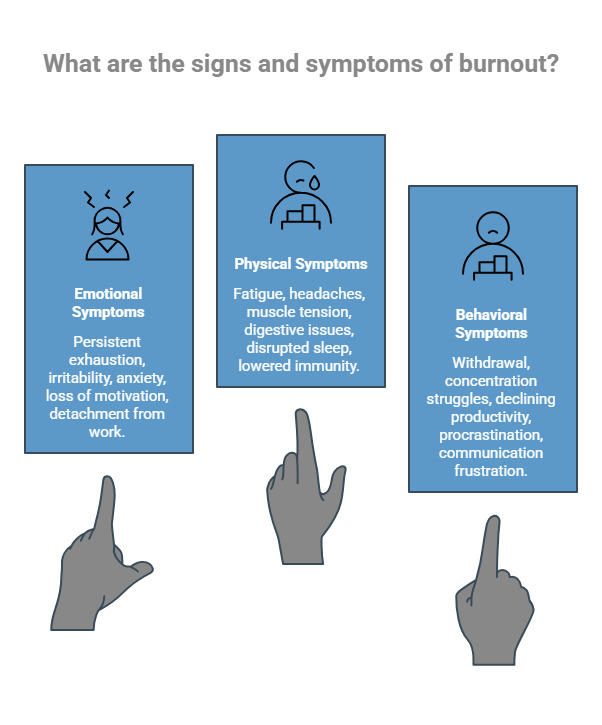
Burnout symptoms can appear emotionally, physically, and behaviorally, gradually affecting energy, focus, and motivation. When these challenges persist, many people begin searching for answers to how do you recover from burnout.
Below are the most common categories of burnout symptoms and how they may appear in daily life.
1. Emotional Symptoms of Burnout
Emotional symptoms are often the earliest indicators that burnout is developing. Persistent emotional exhaustion can make even simple tasks feel overwhelming. People may experience irritability, anxiety, loss of motivation, and growing detachment from work or responsibilities, making daily activities feel increasingly draining.
2. Physical Symptoms of Burnout
Burnout can also manifest through physical symptoms caused by prolonged stress. Persistent fatigue that does not improve with rest is common. Individuals may also experience headaches, muscle tension, digestive issues, disrupted sleep patterns, and lowered immunity due to ongoing emotional and physical strain.
3. Behavioral Symptoms of Burnout
Behavioral changes often emerge as burnout progresses. People may withdraw from coworkers or social interactions, struggle with concentration, and experience declining productivity. Increased procrastination, missed deadlines, and frustration in communication can also appear as stress continues affecting work habits and daily routines.
As individuals begin addressing these symptoms, many wonder how long does it take to recover from burnout, since recovery timelines often vary depending on stress levels, support systems, and lifestyle changes.
Not sure which therapy approach is right for you? Explore how solution-focused therapy works and how it helps you move forward with practical, goal-driven strategies.
What Are the Main Causes of Burnout in Modern Life?
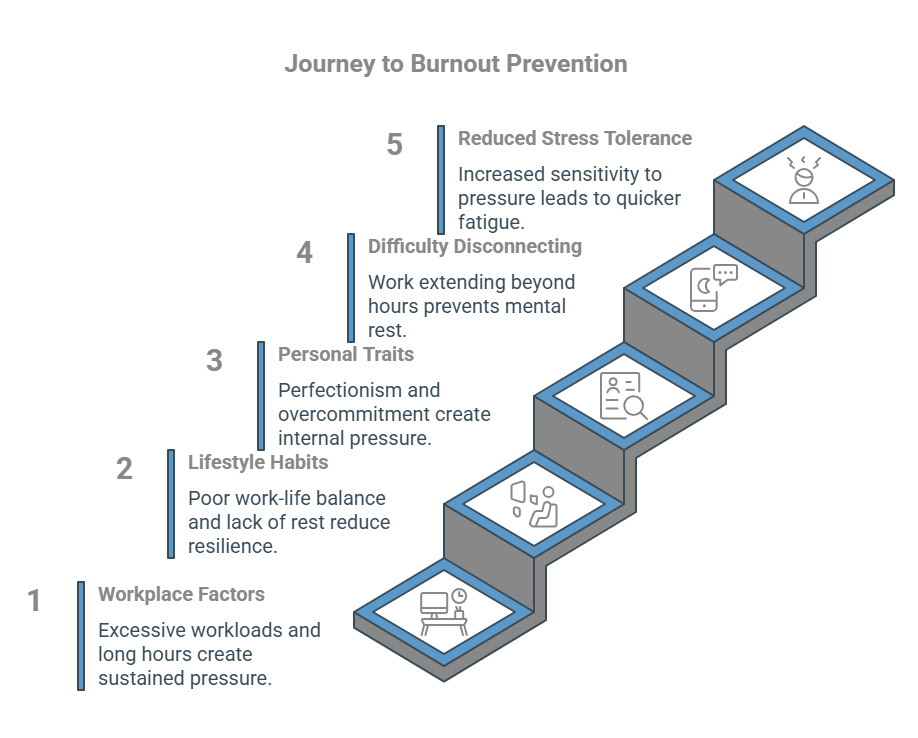
Burnout develops gradually when ongoing stress is not balanced with recovery. It is rarely caused by a single factor, but instead results from a mix of work demands, lifestyle habits, personal tendencies, and behavioural patterns that continuously drain energy over time.
1. Workplace Factors
Burnout often begins at work, where excessive workloads, long hours, and constant deadlines create sustained pressure. Limited control, unclear expectations, poor communication, and lack of recognition can deepen frustration, especially when personal values do not align with organisational goals.
2. Lifestyle and Daily Habits
Daily habits can either support recovery or accelerate burnout. Poor work-life balance, lack of rest, irregular sleep, limited physical activity, and weak social support reduce resilience, making it harder for the body and mind to recover from ongoing stress.
3. Personal Traits
Certain personality traits increase vulnerability to burnout. Perfectionism, overcommitment, and a constant drive for productivity can create internal pressure. Difficulty setting boundaries, handling uncertainty, or managing negative thinking patterns can intensify stress and make recovery more difficult over time.
4. Difficulty Disconnecting From Work
When work consistently extends beyond working hours, recovery time disappears. Constant notifications, after-hours tasks, and blurred boundaries prevent mental rest, keeping stress levels elevated and increasing the risk of long-term exhaustion and reduced emotional capacity.
5. Reduced Stress Tolerance Over Time
As stress builds without recovery, individuals become more sensitive to pressure. Tasks that once felt manageable may begin to feel overwhelming, leading to quicker fatigue, emotional strain, and a lower ability to cope with everyday demands.
Understanding these causes helps identify patterns early, making it easier to set boundaries, improve recovery habits, and prevent burnout from becoming a persistent, long-term condition.
Not sure if talk therapy is the right step for burnout recovery? Explore how talk therapy works and how it can support your mental health and emotional well-being.
What Are the 5 Stages of Burnout?
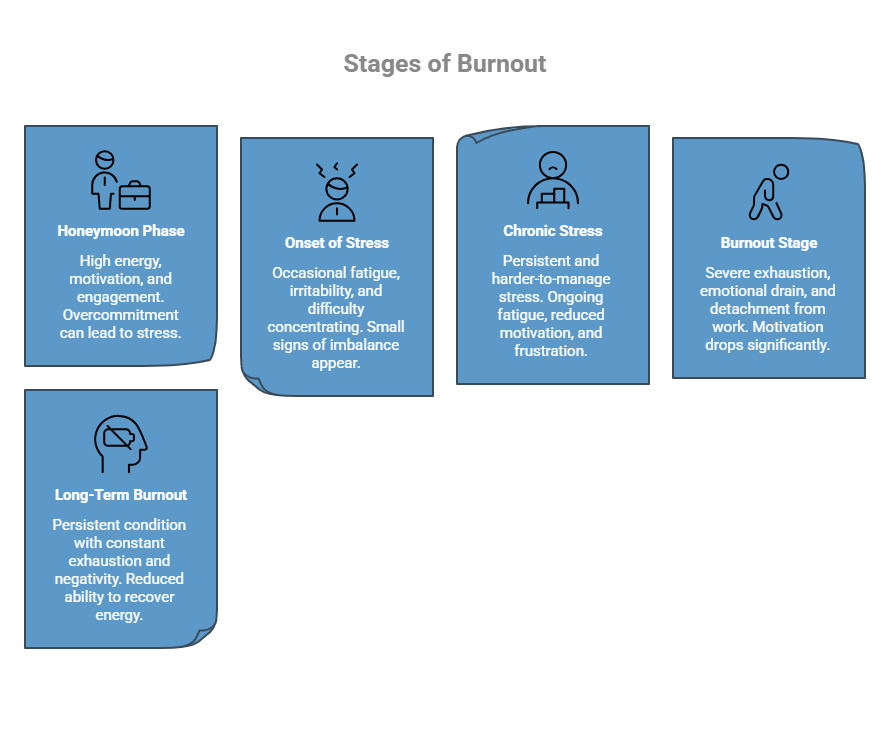
Burnout does not happen overnight. It develops gradually as stress builds without enough recovery, moving through distinct stages that affect energy, mindset, and overall well-being. Understanding these stages helps you identify early warning signs and take action before burnout becomes a long-term condition that impacts both work and daily life.
Stage 1: Honeymoon Phase
At this stage, you feel motivated, productive, and engaged in your work. Energy levels are high, and you may take on extra responsibilities with confidence. However, this phase can also involve overcommitment. Without proper rest and boundaries, sustained pressure can slowly begin to introduce stress.
Stage 2: Onset of Stress
Stress starts to appear more consistently. You may notice occasional fatigue, irritability, or difficulty concentrating. While you can still perform well, small signs of imbalance begin to show. These early symptoms are often easy to ignore, which allows stress to build over time.
Stage 3: Chronic Stress
Stress becomes persistent and harder to manage. You may experience ongoing fatigue, reduced motivation, and increased frustration. Work can start to feel overwhelming, and maintaining focus becomes more difficult. Physical symptoms such as headaches or disrupted sleep may also appear.
Stage 4: Burnout Stage
At this point, exhaustion becomes more severe and noticeable. You may feel emotionally drained, detached from work, or less capable of handling daily responsibilities. Tasks that once felt manageable may now feel difficult, and motivation drops significantly. This stage often impacts both professional performance and personal well-being.
Stage 5: Long-Term Burnout
In this stage, burnout is no longer temporary. It becomes a persistent condition, where symptoms are ongoing rather than occasional.
You may experience:
- Constant exhaustion that does not improve with rest
- Ongoing negativity or detachment toward work
- Reduced ability to recover energy between tasks or days
- A lasting sense of mental and emotional fatigue
At this point, burnout affects your baseline state, not just your stress response. Recovery typically requires intentional changes, such as workload adjustments, lifestyle changes, and in some cases, professional support.
Recognizing burnout early makes it easier to reset habits, restore balance, and prevent it from becoming a long-term condition that is harder to reverse.
Not sure if therapy is the right step for burnout? Explore how professional support works and what to expect from therapy for burnout.
How to Recover from Burnout and Rebuild Your Energy?
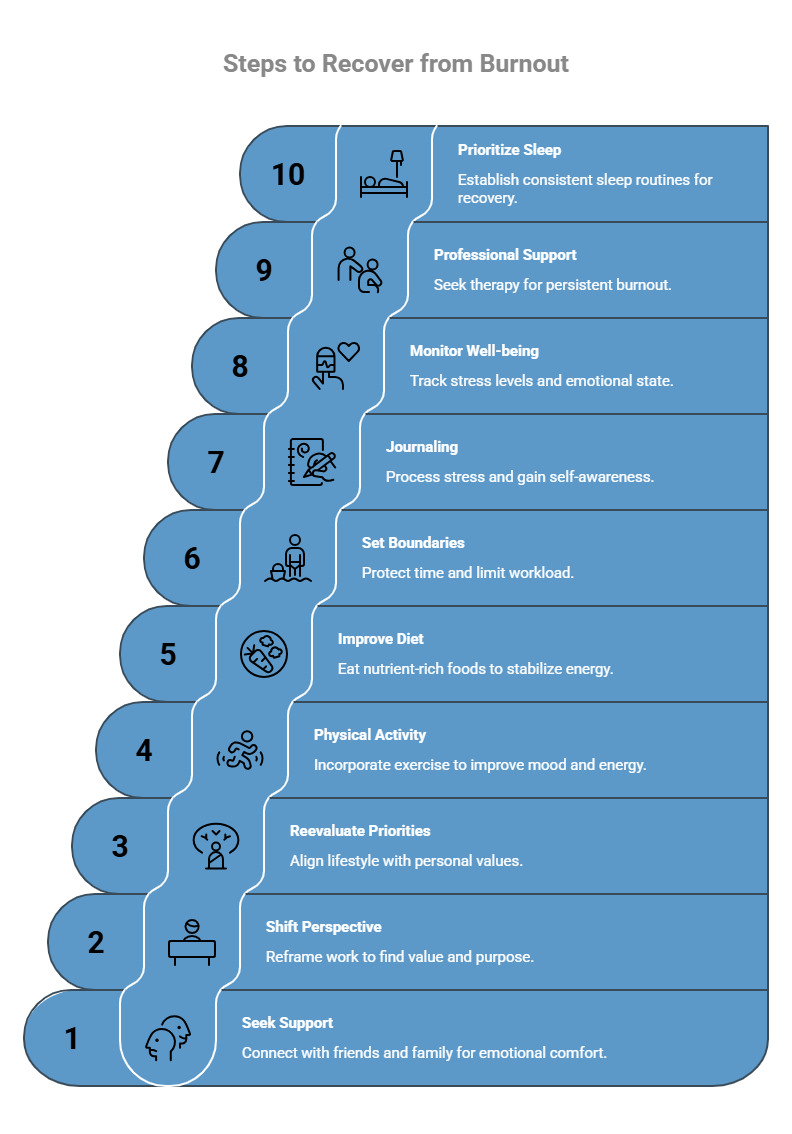
Recovering from burnout requires intentional changes in how you think, work, and care for your well-being. The process begins with acknowledging that chronic stress has taken a toll and committing to healthier routines. With supportive habits and practical strategies, you can gradually restore energy, clarity, and motivation.
1. Seek Support and Reconnect With Others
Connecting with supportive people is one of the most effective ways to recover from burnout. Talking openly with trusted friends, family members, or support groups helps reduce isolation and validates your experiences. Positive social interactions provide emotional comfort, fresh perspectives, and encouragement, making it easier to navigate the recovery process and rebuild a sense of balance.
2. Shift Your Perspective on Work
Recovering from burnout often involves changing how you view your work and responsibilities. Instead of focusing entirely on frustrations, try identifying aspects of your job that provide value, learning opportunities, or personal growth. Reframing your perspective can help reduce feelings of helplessness and restore a sense of purpose in your daily routine.
3. Reevaluate What Truly Matters
Burnout frequently occurs when daily responsibilities drift away from personal values and priorities. Taking time to reflect on what truly matters can help realign your lifestyle with your goals and well-being. This reflection encourages healthier decisions, such as setting boundaries, protecting personal time, and prioritizing activities that restore energy and meaning.
4. Make Physical Activity Part of Your Routine
Regular physical activity can significantly support burnout recovery by improving mood, reducing stress, and increasing energy levels. Exercise helps regulate the nervous system and releases endorphins that naturally elevate mood. Even light activities like walking, stretching, or yoga can help restore mental clarity and physical resilience during the recovery process.
5. Improve Your Diet to Restore Energy
Nutrition plays an important role in rebuilding energy and supporting mental health during burnout recovery. A balanced diet with nutrient-rich foods helps stabilize energy levels and improve resilience to stress. Reducing excessive caffeine and processed foods while focusing on whole foods can help the body recover from prolonged mental and physical strain.
6. Set Clear Boundaries at Work
Establishing clear boundaries is essential to prevent burnout from continuing or returning. Protecting your time, limiting excessive workload, and communicating expectations with colleagues can help you regain control over your responsibilities. Healthy boundaries support a better work-life balance and reduce the ongoing pressure that often contributes to chronic stress.
7. Use Journaling to Process Stress
Journaling provides a private space to reflect on thoughts, emotions, and experiences that may contribute to burnout. Writing regularly can help clarify feelings, identify stress triggers, and release pent-up emotions. Over time, journaling improves self-awareness and helps individuals understand patterns that may need adjustment to maintain long-term well-being.
8. Monitor Stress and Emotional Well-Being
Developing awareness of your stress levels is an important step in burnout recovery. Regularly checking in with your emotional and physical state helps identify warning signs before stress escalates. This awareness allows you to apply coping strategies early, such as taking breaks, adjusting workloads, or practicing relaxation techniques to maintain balance.
9. Consider Professional Support
Seeking professional support can be a valuable step when burnout feels overwhelming or persistent. Mental health professionals can help identify underlying causes, develop coping strategies, and guide meaningful lifestyle adjustments. Therapy also provides a safe environment to process stress, build resilience, and create sustainable habits that support long-term recovery.
10. Prioritize Restful and Consistent Sleep
Quality sleep is essential for restoring both physical and mental energy during burnout recovery. Establishing consistent sleep routines helps regulate mood, improve concentration, and support overall well-being. Creating a relaxing bedtime environment and maintaining regular sleep schedules can significantly improve the body’s ability to recover from chronic stress.
Burnout recovery takes time, patience, and consistent effort, but small, intentional changes can lead to meaningful progress. By prioritising your well-being and building healthier habits, you can gradually restore balance, energy, and a stronger sense of control in your daily life.
When Should You Seek Professional Help for Burnout?
Self-care strategies can be effective in the early stages of burnout. However, when symptoms persist or begin to affect daily functioning, professional support becomes important. Ongoing exhaustion, emotional strain, or a lack of motivation despite making lifestyle changes are clear signs that additional help may be needed.
At this point, a mental health professional can help assess the severity of burnout, identify underlying causes, and rule out related conditions such as anxiety or depression. More importantly, they provide structured guidance and practical strategies to support recovery and restore emotional balance over time.
What Therapy Options Help With Burnout Recovery?
Once professional support is considered, the next step is understanding which approaches can help. Different therapy methods focus on managing stress, improving thought patterns, and rebuilding emotional resilience.
1. Cognitive Behavioral Therapy (CBT)
CBT helps identify and change negative thought patterns and behaviours that contribute to stress and burnout. It focuses on building healthier responses to pressure and improving day-to-day coping.
2. Mindfulness-Based Practices
Mindfulness techniques, such as meditation and breathing exercises, help regulate stress and improve awareness. They support staying present, reducing mental overload, and managing emotional responses more effectively.
3. Compassion-Focused Therapy (CFT)
CFT encourages self-kindness and reduces self-criticism, which are common in burnout. It helps individuals develop a more supportive inner dialogue and rebuild emotional resilience over time.
Seeking professional support is not a last resort. It is a practical step toward understanding burnout more clearly and creating sustainable, long-term recovery strategies.
Not sure how to make therapy more effective? Learn practical ways to set clear, achievable goals with your therapist and get better results from every session.
Feeling Overwhelmed by Burnout and Looking for Professional Support?
If burnout is leaving you emotionally drained, unmotivated, or struggling to manage daily responsibilities, seeking support can be an important step toward recovery. Total Life Counseling works with individuals experiencing burnout, chronic stress, and emotional exhaustion to help restore balance and well-being.
Burnout can affect many areas of life, including work, relationships, and physical health. At Total Life Counseling, we understand how overwhelming this experience can feel and provide a supportive environment where individuals can talk openly about stress, exhaustion, and life transitions.
Our team includes Licensed Counselors, Licensed Mental Health Counselors, Master’s Level Therapists, Español counselors, business coaches, and image enhancement coaches who provide support for emotional, mental, physical, and spiritual well-being.
We work with individuals, couples, families, children, and teens who may be experiencing challenges related to burnout, including anxiety, depression, trauma, relationship stress, ADHD, ASD, and major life transitions. Our goal is to help clients understand the root causes of burnout and develop practical strategies for long-term emotional resilience.
If you’re feeling overwhelmed by burnout, contact us at Total Life Counseling today to schedule a consultation and take the first step toward restoring your energy, clarity, and emotional well-being.
Conclusion
Recovering from burnout is a journey that requires patience and self-compassion. Recognizing the signs and symptoms is the first crucial step toward reclaiming your mental and emotional well-being.
A typical burnout recovery timeline varies for each person, but many individuals begin noticing gradual improvements in energy, focus, and emotional balance within a few weeks to several months after reducing stress and making supportive lifestyle changes.
By implementing practical strategies, such as seeking support from others, reevaluating your priorities, and maintaining healthy habits, you can effectively pave the way for recovery.
Frequently Asked Questions
How long does it usually take to recover from burnout?
Recovery time varies widely depending on the severity of burnout and lifestyle changes made afterwards. Some people begin feeling better within weeks, while others need several months. Consistent rest, stress management, and supportive routines often help restore emotional and physical energy gradually.
What are the most common signs that indicate recovery?
Signs of recovery from burnout often appear gradually. People may notice increased energy, improved focus, and a more positive outlook. Returning interest in hobbies, better sleep patterns, and reduced irritability also indicate that emotional balance and resilience are slowly improving.
What are effective coping strategies for managing burnout symptoms?
Effective coping strategies include setting clear boundaries, maintaining supportive relationships, and incorporating stress-management habits into daily routines. Practices such as mindfulness, exercise, journaling, and scheduled downtime can help regulate stress levels and strengthen long-term emotional resilience.
Can you recover from burnout without quitting your job?
Yes, many individuals recover from burnout without leaving their jobs. Adjusting workloads, setting clearer work boundaries, and improving communication can help reduce stress. Taking regular breaks and prioritizing meaningful tasks can gradually restore balance and motivation at work.
Burnout vs. stress vs. depression: how can you tell the difference?
Stress is usually temporary and connected to specific pressures, while burnout involves chronic exhaustion and emotional detachment from responsibilities. Depression is a broader clinical condition that affects many areas of life and often includes persistent sadness and loss of interest.
How can someone recover from autistic burnout?
Recovering from autistic burnout involves reducing sensory overload, allowing extended rest, and rebuilding routines slowly. Support from therapists and trusted networks can help restore balance. Practicing deep breathing and supportive coping mechanisms may also improve emotional regulation and overall physical health.
How can you recover from burnout at work?
Recovering from burnout at work begins with identifying stressors that contribute to job burnout and adjusting responsibilities. Setting boundaries, improving communication, and taking regular breaks help reduce pressure. Maintaining healthy routines, including enough hours of sleep, supports steady recovery.
How can someone recover from ADHD burnout?
Recovering from ADHD burnout often requires simplifying responsibilities, reducing overwhelm, and building structured routines. Support from therapy, planning tools, and supportive environments can help restore focus and motivation. Addressing stress early is important to prevent severe burnout and long-term exhaustion.
How can I set boundaries to prevent burnout from happening again?
Setting boundaries helps protect energy and reduce chronic stress. This may include defining clear work hours, limiting excessive responsibilities, and prioritizing rest or personal time. Communicating needs openly and protecting recovery time supports long-term emotional well-being.
What are the 12 stages of burnout?
The 12 stages of burnout include compulsion to prove yourself, working harder, neglecting personal needs, displacement of conflicts, revision of values, denial of problems, withdrawal, behavioral changes, depersonalization, inner emptiness, depression, and finally full burnout. These stages often develop gradually over time.
How to recover from burnout while still working?
Recovering while working starts with reducing workplace stress and setting boundaries. Address excessive demands, improve clarity in your work environment, and take regular breaks. Prioritise enough sleep, protect personal relationships, and seek mental health support if recovery feels difficult.
How to recover from autistic burnout?
Recovery from autistic burnout focuses on reducing sensory and emotional overload in a specific situation. Creating a low-stimulation environment, spending time resting, and accessing mental health support are essential. Flexible routines and reduced expectations can help restore emotional health over time.
How long does it take to recover from burnout?
Burnout recovery varies depending on severity and overall health conditions. Mild burnout may improve in weeks, while habitual burnout can take months. Factors like workplace stress, lack of control, and access to treatment options all influence recovery and long-term quality of life.
How to recover from burnout at work?
Start by identifying sources of workplace stress, such as excessive demands or lack of clarity. Adjust priorities, communicate boundaries, and improve your work environment. Taking breaks, maintaining emotional health, and seeking occupational health or mental health support can support steady recovery.
Filed in: Burnout
Share This Story, Choose Your Platform!
Total Life Counseling Center consists of Licensed Counselors, masters level therapists, Español counselors, Licensed Mental Health Counselors, business coaches, and image enhancement coaches who provide counseling for emotional, mental, physical and spiritual care including marriage, individual, family, substance abuse and more. TLC’s family, trauma and marriage experts have been interviewed on National and Local TV/Radio over 200 times for their expert advice on Fox News, OWN, WETV, ABC’s Medical Minute and more. Our skilled counselors are relational, approachable and specialists providing therapy services in the Central Florida area including: Orlando, Winter Park, MetroWest, Windermere, Dr. Phillips, East Orlando, Lake Mary, and Clermont, Boca Raton Florida, and Dallas, TX.
About the Author: Gemima McMahon
