

How to Prepare for First Therapy Session? A Comprehensive Guide

Key Highlights
- Your first therapy session is primarily for you and your new therapist to get to know each other and build a connection.
- Feeling nervous before your first session is completely normal and an expected part of the process.
- The initial meeting focuses on your background, current concerns, and therapy goals, not on finding immediate solutions.
- You are in control of your therapy journey and can share information at a pace that feels comfortable.
- This first appointment is a great time to determine if the therapist is a good fit for your mental health needs.
- Therapy is a safe space designed to support you without judgment.
- Total Life Counseling provides a welcoming, supportive environment where you can feel comfortable from your very first session.
Starting therapy is an important step toward improving your mental and emotional well-being, but it is common to feel uncertain before the first appointment. Many people worry about what will happen during the session, what they should talk about, or how to explain their concerns clearly. These questions often lead people to search for how to prepare for first therapy session so they can feel more confident and comfortable when meeting their therapist.
The first session usually focuses on understanding your concerns, discussing your goals, and building trust with your therapist. It is an opportunity to share what brought you to therapy and begin a supportive conversation about your wellbeing.
Learning how to prepare for your first therapy session can help you organise your thoughts, reduce anxiety, and approach the session with a clearer sense of direction.
What Should You Expect After Your First Therapy Session?
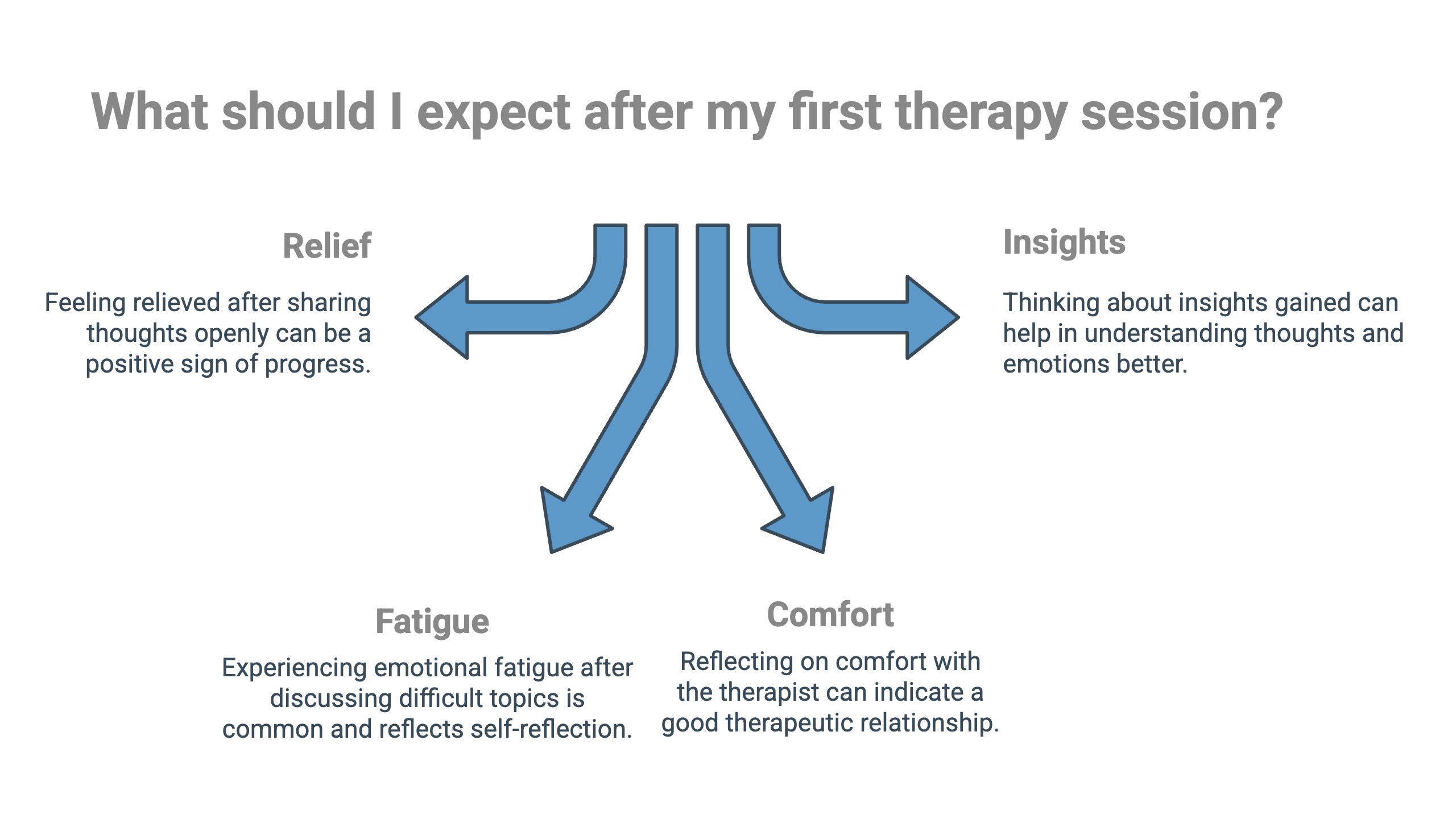
After your first therapy session, it is normal to experience a range of emotions. Some people feel relieved after sharing their thoughts openly, while others may feel emotionally tired after discussing personal challenges. These reactions are common and often reflect the beginning of a deeper self-reflection process.
Common Emotional Reactions After the First Session
Many people notice a few emotional responses once the session ends, especially if they discussed meaningful or sensitive topics.
- Feeling relieved after talking openly about personal concerns.
- Experiencing emotional fatigue after discussing difficult memories or stressful experiences.
- Reflecting on how comfortable you felt with the therapist.
- Thinking about insights or perspectives that came up during the conversation.
These reactions are a natural part of starting therapy and often help people better understand their thoughts and emotions.
What Happens Next in the Therapy Process?
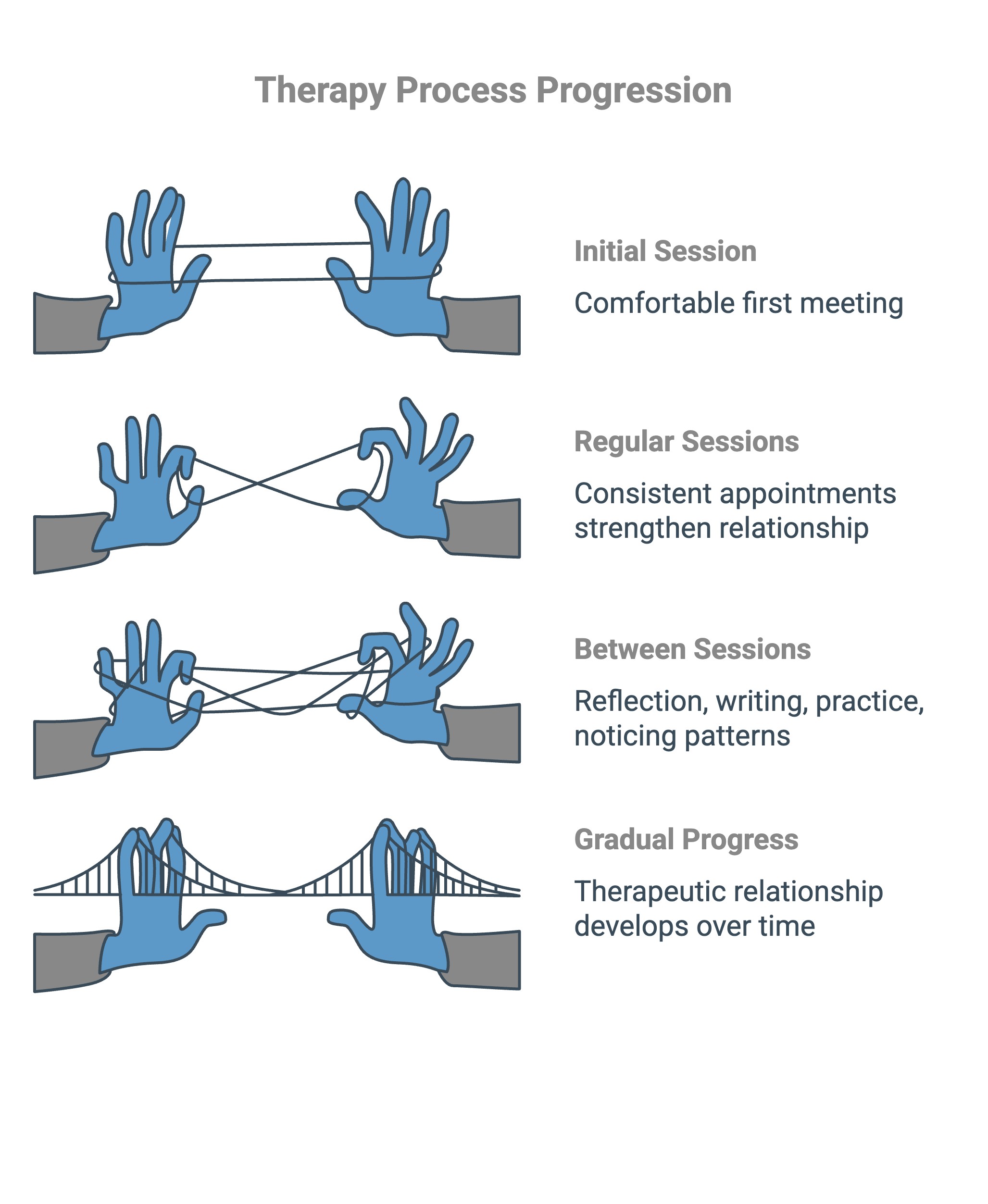
If the first session feels comfortable, the next step is usually scheduling another appointment. Regular sessions help strengthen the therapeutic relationship and allow progress to develop gradually. Therapy often works best when sessions occur consistently over time.
Guidance You May Receive Between Sessions
Therapists sometimes suggest small activities between sessions to help you stay engaged with the therapy process.
Examples may include:
- Reflecting on key emotions or situations discussed during the session.
- Writing down thoughts or observations that arise during the week.
- Practicing simple coping or mindfulness techniques.
- Noticing patterns in mood, stress levels, or daily experiences.
Therapy is a gradual process, and meaningful change typically develops over time. Staying open to the process and continuing to reflect between sessions can support long-term emotional growth.
How Can You Prepare for Your First Therapy Session?
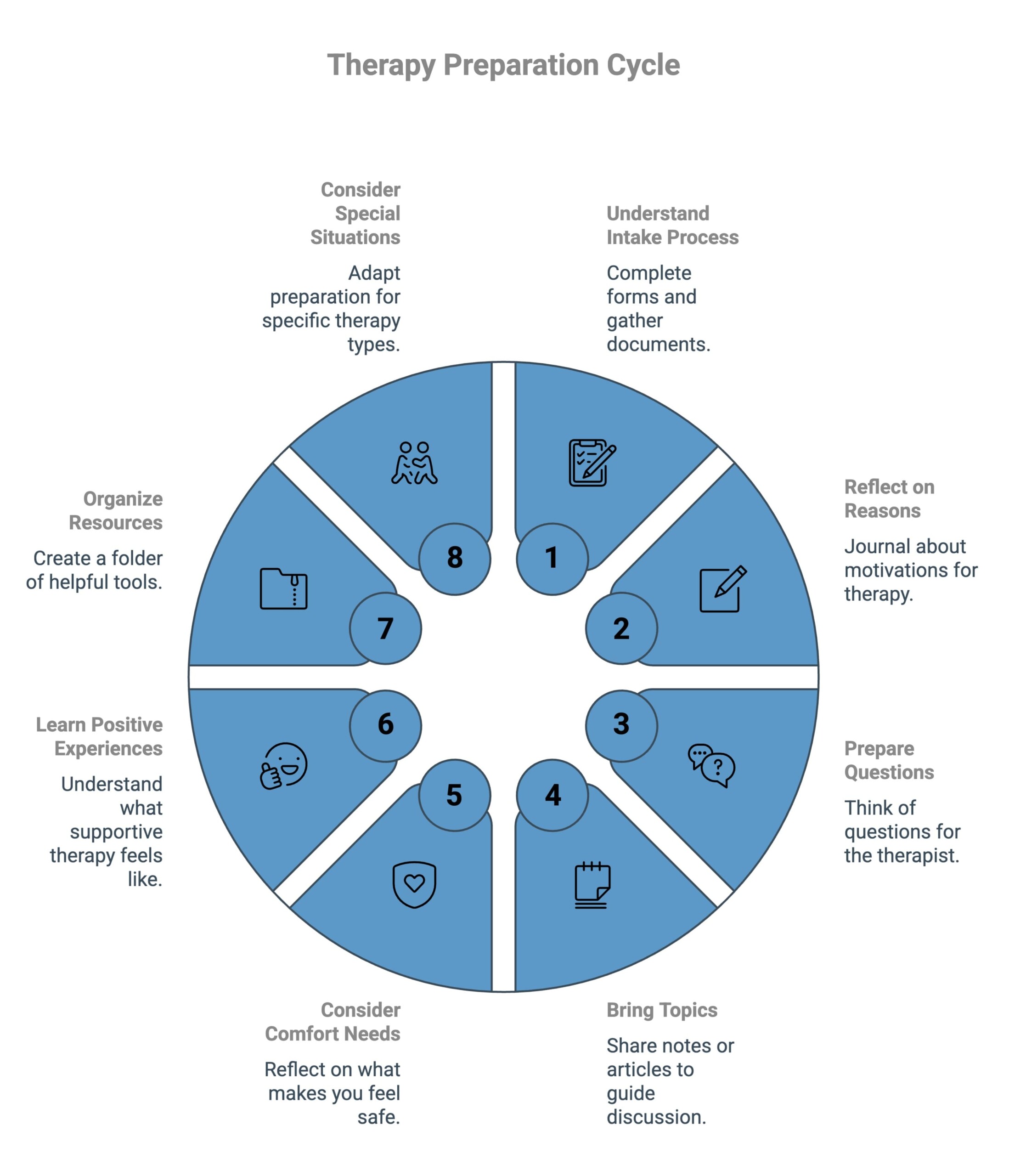
Starting therapy can feel unfamiliar, and many people wonder how to prepare for the first therapy session conversations so they feel less intimidating. Taking a little time to reflect beforehand can help you feel more comfortable, organized, and confident as you begin this important step in your mental health journey.
1. Understand the Intake Process Before Your First Session
When preparing for the first therapy session paperwork, you will usually complete intake forms that provide information about your medical history, mental health background, and previous therapy experiences. This helps therapists understand your situation and plan the first discussion. Bringing identification, insurance information, and a medication list can make the process smoother.
2. Reflect on Why You Want to Start Therapy
Many people ask themselves how should I prepare for my first therapy session, and one helpful step is reflecting on their reasons for seeking support. You might be dealing with anxiety, relationship concerns, or personal growth goals. Writing down your thoughts or journaling beforehand can make it easier to express your concerns during the session.
3. Prepare Questions for Your Therapist
Another useful way to prepare for the first therapy session conversations is by thinking about questions you want to ask. Therapy works best when there is a strong connection between you and the therapist.
Asking about their approach, experience, or treatment methods can help you decide if their style aligns with your needs.
4. Bring Topics or “Therapy Inspiration” to Discuss
If you are unsure how to prepare for my first therapy session, consider bringing notes, articles, or quotes that resonate with you.
These can help guide the conversation and give your therapist insight into your thoughts or experiences, especially if it feels difficult to explain everything verbally.
5. Think About What Helps You Feel Safe and Supported
Understanding your comfort needs is an important part of learning how to prepare for a first therapy session. Some people prefer a direct, solution-focused approach, while others feel more comfortable with a slower and exploratory style.
Reflecting on what helps you feel safe can help you evaluate whether a therapist is a good fit.
6. Learn What Positive Therapy Experiences Can Feel Like
It can also help to understand what supportive therapy sessions typically feel like when thinking about how to prepare for the first therapy session.
A good therapist creates a space where you feel heard and respected. While progress takes time, many people leave early sessions with a sense of relief or clarity.
7. Organize Helpful Therapy Resources
If you want to go a step further in preparing for the first therapy session’s success, consider creating a small folder of helpful resources.
This might include mental health articles, journaling prompts, mindfulness apps, or contact details for support services.
These tools can help you stay engaged in the therapy process between sessions.
8. Consider Special Situations Like Couples Therapy
Preparation can look slightly different depending on the type of therapy you are starting.
For example, understanding how to prepare for the first couples therapy session discussions may involve reflecting on relationship goals, communication challenges, and what both partners hope to improve together.
Taking time to reflect, organize your thoughts, and ask questions can make your first session feel less overwhelming. Learning how to prepare for your first therapy session helps create a smoother start and allows you to focus on building a supportive therapeutic relationship.
How Do You Know If Your Therapist Is the Right Fit?
Finding the right therapist is an important part of a successful therapy experience. The connection you share with your therapist, often called the therapeutic relationship, can strongly influence how comfortable you feel opening up and how effective your sessions become over time.
Signs your therapist may be a good fit include:
- You feel heard, respected, and understood during conversations.
- The therapist listens carefully and responds with empathy and professionalism.
- You feel comfortable discussing personal experiences and difficult emotions.
- The therapist explains their approach and therapy goals clearly.
- Sessions leave you feeling supported, even when conversations are challenging.
It is also normal for the therapeutic relationship to take time to develop. Many people need two or three sessions before they begin to feel comfortable and build trust with a therapist.
Prioritizing your comfort and trust is essential for building a strong and effective therapy experience.
Thinking About Starting Therapy for the First Time?
Beginning therapy can feel like a big step, especially if it is your first experience speaking with a mental health professional. At Total Life Counseling, we understand that starting therapy may come with questions, uncertainty, or even nervousness, and we are here to make the process comfortable and supportive.
Our team includes Licensed Counselors, Licensed Mental Health Counselors, Master’s Level Therapists, Español counselors, business coaches, and image enhancement coaches who work together to provide care for emotional, mental, physical, and spiritual well-being. We create a welcoming environment where you can talk openly and explore the challenges you are facing.
We work with individuals, couples, families, children, and teens dealing with concerns such as anxiety, depression, relationship challenges, stress, trauma, ADHD, ASD, and life transitions. Our experienced professionals take time to understand your situation and guide you toward meaningful progress at a pace that feels right for you.
Starting therapy is often the first step toward gaining clarity, building healthier coping skills, and improving overall well-being.
If you are considering therapy for the first time, contact us at Total Life Counseling today to schedule an appointment and begin your journey toward greater emotional balance and personal growth.
Conclusion
Preparing for your first therapy session can be both exciting and nerve-wracking. By familiarizing yourself with the intake process, clarifying your reasons for seeking therapy, and gathering questions to ask your therapist, you set a solid foundation for your journey ahead.
Remember, it’s essential to collect inspiration and reflect on what makes you feel safe during this process. As you embark on this important step toward mental well-being, don’t hesitate to bookmark helpful resources that resonate with you. Therapy is a personal journey, and being well-prepared can help you feel more comfortable and open.
Frequently Asked Questions
Is it normal to feel nervous before starting therapy?
Yes, feeling nervous the first time you begin therapy is very common. Many people feel uncertain before opening up to someone new. Your therapist understands this and will move the conversation at your own pace, helping you gradually feel more comfortable.
What should I talk about during my first session?
During your first therapy session, focus on concerns affecting your daily life. Share what prompted you to schedule a therapy appointment, along with your goals or current struggles. The therapist will guide the discussion so you can talk openly and comfortably.
How honest should I be with my therapist?
Honesty helps your therapist understand your situation and develop an effective treatment plan. Sharing accurate details about your mental health history, experiences, and concerns allows them to provide guidance that truly supports your needs and therapy goals.
What happens after the first therapy session?
After the first session, your therapist will usually talk about goals for future sessions and may schedule the next session. They might suggest small reflections or exercises that help you continue thinking about important topics between appointments.
Is it normal to cry during therapy?
Yes, it is completely normal to cry during therapy. Emotional reactions often appear when discussing personal experiences. Expressing these feelings can support healing and help with building trust, which is an important part of developing a strong therapeutic relationship.
How to prepare for first couples therapy session?
If you are wondering how to prepare for your first couples therapy session, start by discussing goals with your partner. Reflecting on communication patterns, relationship concerns, and shared expectations can provide a helpful starting point for open and productive conversations.
Is it normal to feel nervous before my first therapy appointment?
Yes, feeling nervous before your first therapy appointment is very common. Meeting a therapist for the first time may feel unfamiliar, but many people become more comfortable once they understand the therapist’s therapeutic approach and how the sessions work.
Should I prepare a list of topics or concerns to discuss in my first therapy session?
Preparing a short list of concerns can be a good idea before your first session. Writing down topics you want to discuss helps you stay organized and ensures important thoughts are not forgotten during the conversation.
How does a counselor prepare for an initial session with a client?
Before meeting a new client, counselors review intake details and consider suitable types of therapy that might help. For virtual sessions, they also confirm scheduling logistics and test the internet connection to ensure everything runs smoothly.
What are some common mistakes people make in their first therapy session?
Some people enter therapy with realistic expectations, while others feel pressure to explain everything perfectly in one meeting. It helps to remember that the first session is only a beginning, and you can share your family history and experiences gradually.
Filed in: Therapy
Share This Story, Choose Your Platform!
Total Life Counseling Center consists of Licensed Counselors, masters level therapists, Español counselors, Licensed Mental Health Counselors, business coaches, and image enhancement coaches who provide counseling for emotional, mental, physical and spiritual care including marriage, individual, family, substance abuse and more. TLC’s family, trauma and marriage experts have been interviewed on National and Local TV/Radio over 200 times for their expert advice on Fox News, OWN, WETV, ABC’s Medical Minute and more. Our skilled counselors are relational, approachable and specialists providing therapy services in the Central Florida area including: Orlando, Winter Park, MetroWest, Windermere, Dr. Phillips, East Orlando, Lake Mary, and Clermont, Boca Raton Florida, and Dallas, TX.
About the Author: Gemima McMahon