

What are 10 Effective Tips for Setting Goals for Therapy?

Key Highlights
- Setting clear therapy goals provides direction and focus for your mental health journey.
- Your treatment plan should include goals for things like developing healthier habits, improving communication, or building self-compassion.
- Using the SMART goal framework helps make your objectives specific, measurable, and achievable.
- An effective therapy plan allows for flexibility, letting you and your therapist adjust goals as you progress.
- Tracking your progress regularly is crucial for staying motivated and recognizing behavior change.
- A strong therapeutic alliance helps you collaboratively set meaningful goals for successful outcomes.
- At Total Life Counseling, a diverse clinical team works collaboratively with clients to create personalized, goal-driven therapy plans that support lasting growth.
Starting therapy can feel both hopeful and overwhelming. You may know you need support, but feel unsure where to begin or what to expect.
Having clarity about what you want to work on can help you feel more confident, focused, and supported as you begin your therapy journey.
This blog will walk you through practical ways to set clear, meaningful goals for therapy. It explains how to turn broad hopes into achievable objectives, work collaboratively with your therapist, and create a focused treatment plan so each session supports real, lasting change.
What Are the 10 Most Effective Strategies for Setting Therapy Goals?
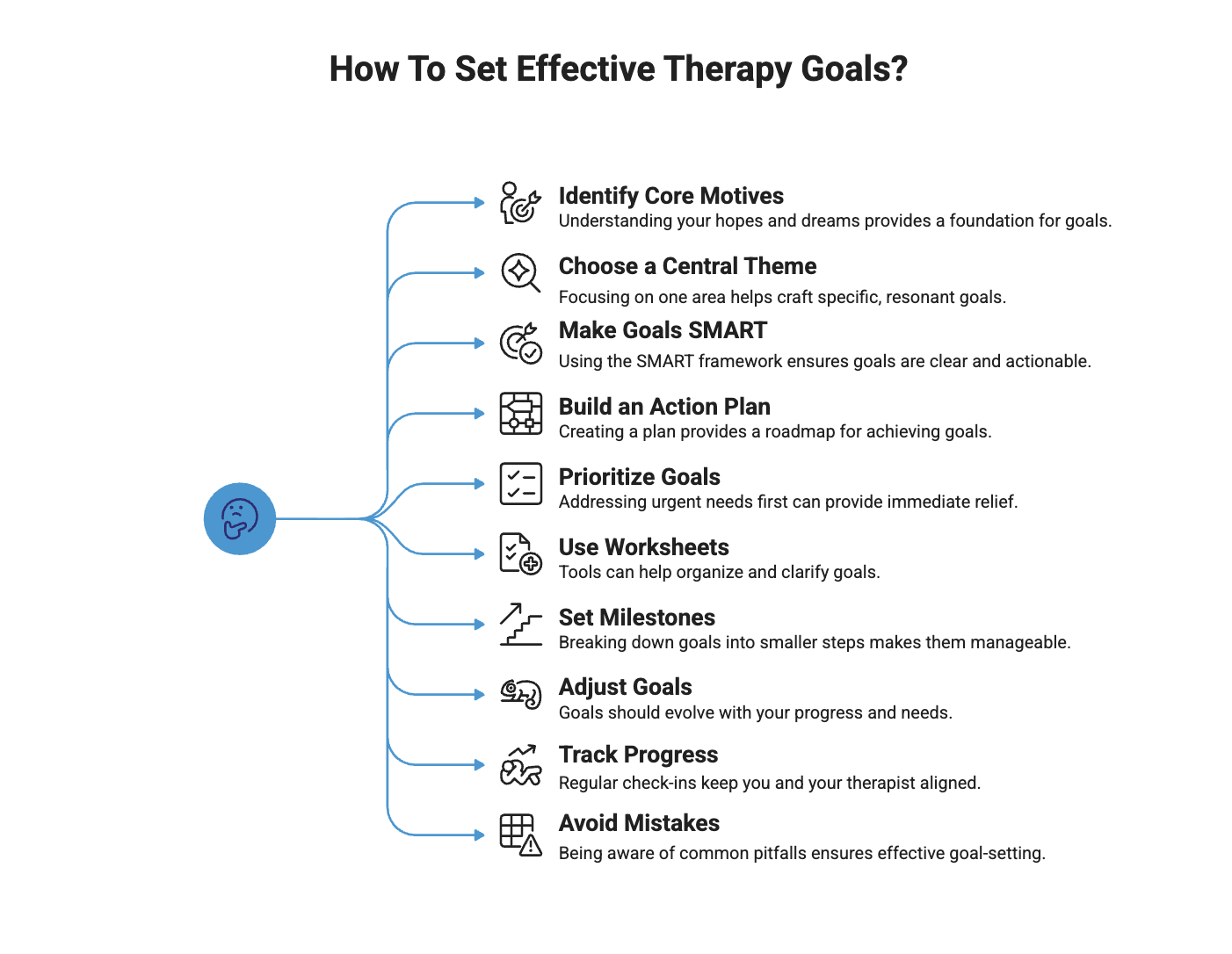
Knowing you want to improve your mental health is the first step, but how do you turn that desire into effective goals? The process of setting treatment goals for your therapy sessions doesn’t have to be complicated. By using a few simple strategies, you can clarify what you want to work on and create a clear path forward.
These strategies will help you define what success looks like for you. They provide a framework for creating meaningful objectives that you and your therapist can work toward together, making your therapeutic journey more focused and rewarding.
1. Identify Your Core Motives, Hopes, and Dreams
Before you get into the details, take a moment to look at the big picture. What are your biggest hopes for your life? Think about what a happier, healthier version of yourself looks like. What would you like to accomplish or change to improve your overall well-being? Answering these questions can provide a valuable starting point.
Don’t worry about being too specific right away. Your initial thoughts might be broad, like “I want to feel less anxious” or “I want to have better relationships.” These general motives are perfect for opening a discussion with your therapist.
These broad dreams act as the foundation for your therapy objectives. They help you and your therapist understand your core values and what truly matters to you, guiding your personal growth journey from the very first session. This initial exploration ensures your mental health goals are genuinely aligned with the life you want to build.
Helpful tips:
- Write down a few life areas you want to improve (emotions, relationships, confidence, balance).
- Think about how you want to feel daily, not just what you want to fix.
- Focus on values, not outcomes, during this initial reflection.
2. Choose a Central Theme and Narrow It Into Specific Goals
Selecting a central theme sets the stage for successful therapy sessions. This approach helps in crafting specific goals that resonate with your values and unique experiences.
Whether focusing on emotional regulation, improving coping skills, or enhancing social interactions, having a designated theme clarifies your therapeutic journey. Once a theme is established, collaborate with your therapist to narrow it down into concrete goals.
These can be aligned with the SMART goal framework, providing a clear roadmap for your treatment plan and measurable outcomes to track your progress effectively.
Follow these useful tips:
- Choose one main focus area to avoid trying to change everything at once.
- Ask your therapist which themes align best with your current challenges.
- Revisit and adjust your theme as your needs evolve.
3. Make Your Goals Concrete, Measurable, and SMART
To create effective therapy goals, it helps to use the SMART goal framework. This approach turns vague intentions into clear, actionable objectives by ensuring each goal is specific, measurable, achievable, relevant, and time-bound. When goals are structured this way, they become easier to understand, commit to, and track over time.
For instance, instead of saying, “I want to be less stressed,” a SMART goal might involve practicing a specific stress-management technique for a set amount of time over a defined period.
This level of clarity allows you and your therapist to monitor progress, adjust strategies when needed, and stay focused on meaningful, realistic change that supports your overall mental health journey.
Here’s important tips you can follow:
- Break larger goals into smaller, manageable steps.
- Set realistic timelines that fit your lifestyle.
- Review your goals regularly and adjust them as you grow.
To learn more about helping children manage stress, read our guide on how parents can support kids through challenging times.
4. Build a Clear Action Plan to Achieve and Track Your Goals
Once you have a SMART goal, the next step is to create an action plan. This plan is your clear roadmap to success, breaking down your larger goal into small, actionable steps. Working with your therapist, you can build this plan into your overall treatment plan, outlining what you need to do both in and out of therapy.
Having a plan helps you stay motivated because you can see the path forward. Instead of feeling overwhelmed by a big objective, you can focus on completing one small step at a time. This approach makes achieving your goals feel much more manageable and provides a sense of accomplishment along the way.
Your action plan might include:
- Journaling for 10 minutes each evening.
- Try one new social activity per week.
- Practicing a new communication skill learned in your session.
5. Prioritize and Rank Your Goals for Therapy
You may have several things you want to work on in therapy, and that’s completely normal. However, trying to tackle everything at once can be overwhelming. A key strategy is to prioritize your treatment goals. Sit down with your therapist and decide which goals are most important to you right now.
Think about which objectives have the greatest sense of urgency. Are there issues that are causing you the most distress? Addressing these first can provide immediate relief and build momentum. You might also consider which goals will lead to the most significant changes in your daily life.
Ranking your goals helps focus your energy where it matters most. For example, if poor sleep is impacting your mood and work performance, making sleep hygiene a top priority might be more beneficial than a longer-term goal like changing careers. This ensures your therapy is efficient and impactful from the start.
Helpful tips:
- Start with goals that affect your daily functioning, such as sleep, anxiety, or emotional regulation.
- Ask your therapist which goals may create positive ripple effects in other areas of life.
- Re-evaluate priorities regularly as progress is made and new insights emerge.
6. Utilize Worksheets and Tools for Goal-Setting in Therapy
You don’t have to rely on memory alone to set and track your goals. Many therapy worksheets and tools are designed to make this process easier and more organized. These resources can help you brainstorm, define, and monitor your objectives for effective therapy. Using them can be part of the collaborative process between you and your therapist.
These tools provide structure and can help you clarify your thoughts. They often include prompts and exercises that guide you through breaking down big ideas into smaller, manageable steps. This can be especially helpful if you feel stuck or unsure where to begin.
Simple tools can make a big difference.
You might use:
- Goal-setting worksheets
- Journaling apps
- Mood trackers
- Symptom checklists
For social anxiety, a clear goal could be to initiate one conversation at a social event by practicing a simple conversation starter and asking one open-ended question.
7. Set Measurable and Realistic Milestones
Big goals can feel intimidating, but breaking them down into smaller milestones makes them achievable. Instead of focusing on the final destination, concentrate on the next small step. Setting measurable outcomes for your progress helps you see that you’re moving forward, which is incredibly motivating.
For each specific goal, work with your therapist to define what success looks like in the short term. For example, if your goal is to reduce panic attacks, a milestone might be using a grounding technique during a moment of high anxiety. Achieving this milestone shows tangible progress.
Ask yourself what you can realistically accomplish in the next week or by next month.
Your milestones could include:
- Practicing mindfulness for 10 minutes, three times this week.
- Identifying and writing down negative thoughts daily.
- Going for a 30-minute walk twice a week to improve mood.
8. Adjust and Refine Goals of Therapy as Needed
Your therapy goals are not set in stone. As you move forward and learn how to set goals in therapy that reflect your evolving needs, it’s normal for those goals to shift. Setting goals in therapy is an ongoing process, and your objectives should grow with you as therapy progresses.
As you track progress, you may realize a goal you set earlier is no longer a priority. You might have achieved it, or uncovered something more meaningful to address. This is a positive sign of growth and part of learning how to set goals for your therapy journey, not a setback.
Open communication matters. Talk with your therapist about refining goals, breaking long-term goals into smaller steps, or expanding short-term goals. This flexibility keeps your treatment relevant and effective.
Ways to adapt your goals:
- Reassess goals periodically to see what still feels meaningful.
- Scale goals up or down based on progress and capacity.
- Replace completed goals with new areas of focus.
- View shifting priorities as signs of growth, not regression.
9. Track Progress Regularly with Your Therapist
Checking in on progress is essential when setting goals in therapy. Regular discussions during sessions help you and your therapist see what’s working, what needs adjustment, and where measurable change is happening.
Tracking progress also makes it easier to recognize small wins. Because change is often gradual, reflecting over weeks or months can highlight improvements you might otherwise miss. This reinforces motivation and confidence in the therapeutic process.
Your therapist can help identify growth in areas like emotional regulation, thought patterns, or relationships. This collaborative review ensures your goals remain aligned with your needs and keeps your therapy moving forward.
Ways to monitor progress:
- Set aside time during sessions to review goals and outcomes.
- Notice changes in emotions, behaviors, or daily functioning.
- Acknowledge small improvements to stay motivated.
- Use therapist feedback to stay engaged and focused.
10. Address Common Mistakes When Setting Therapy Goals
Setting effective goals is a skill, and it’s easy to make a few common mistakes along the way. Being aware of these pitfalls can help you create clear goals that provide a functional road map for your therapy. One of the most frequent errors is setting a vague goal.
An objective like “I want to be happier” is too broad to be actionable. Without specificity, it’s impossible to measure progress or know when you’ve achieved it. Another mistake is setting unrealistic goals that set you up for frustration. Aiming to completely eliminate anxiety in a month, for example, is likely not achievable.
To avoid these issues, watch out for:
- Goals that are too vague. Always strive for specific, well-defined objectives.
- Unrealistic expectations. Ensure your goals are achievable within a reasonable timeframe.
- Focusing only on outcomes. Remember to create a plan with actionable steps to get there.
How Does Total Life Counselling Help You Achieve Your Goals?
At Total Life Counselling, our mental health professionals are dedicated to helping you navigate your path to well-being. We work with you to build a strong therapeutic alliance, creating a safe and supportive space where you feel heard and understood. This partnership is fundamental to unlocking the benefits of therapy and ensuring your goals are meaningful to you.
Our team is skilled in guiding you through the process of identifying what you want to achieve, from broad dreams to specific, actionable steps. We use our expertise to help you craft a treatment plan that aligns with your values and addresses your unique challenges.
By fostering a trusting relationship, we empower you to take an active role in your personal growth, celebrating your progress and adjusting your plan as you evolve.
Reach out for a consultation, and let’s work together on a customized plan tailored to your needs.
Conclusion
Setting goals for therapy is essential to foster personal growth and achieve meaningful change. By identifying your motives, creating SMART goals, and regularly tracking your progress, you empower yourself to navigate your therapeutic journey with clarity and purpose. Remember that flexibility is key; adjusting your goals as needed will keep them relevant and attainable.
Frequently Asked Questions
What are some examples of good goals to set for therapy?
Good goals are specific and focus on behavior change. Examples include reducing crying spells from seven to two times a week in six weeks, engaging in 30 minutes of physical activity three times a week to improve mood, or practicing active listening in conversations to enhance relationships during your therapy sessions.
Why is having clear goals important in psychological treatment?
Clear treatment goals are crucial because they provide a clear direction and focus for your therapy. They make your progress easier to track with measurable outcomes, which keeps you motivated. Having well-defined objectives ensures that you and your therapist are working together toward the same purpose for effective therapy.
How do therapists help clients create meaningful goals?
A good therapist facilitates a collaborative process to create goals. They use open-ended questions and motivational interviewing to help you explore your needs and the client’s values. This strong therapeutic relationship ensures your therapy objectives are personally meaningful, relevant to your life, and genuinely motivating for you.
What are common therapy goals for people starting cognitive behavioral therapy?
Common therapy goals in cognitive behavioral therapy include identifying negative thought patterns, building coping strategies, improving emotional regulation, changing unhelpful behaviors, reducing symptoms like anxiety or depression, strengthening problem-solving skills, and developing tools for managing everyday stress.
What are the 4 P’s of goal setting?
The 4 P’s of goal setting are Purpose, Plan, Process, and Progress. They help clarify why a goal matters, how it will be achieved, the steps involved, and how success is measured over time.
Share This Story, Choose Your Platform!
Total Life Counseling Center consists of Licensed Counselors, masters level therapists, Español counselors, Licensed Mental Health Counselors, business coaches, and image enhancement coaches who provide counseling for emotional, mental, physical and spiritual care including marriage, individual, family, substance abuse and more. TLC’s family, trauma and marriage experts have been interviewed on National and Local TV/Radio over 200 times for their expert advice on Fox News, OWN, WETV, ABC’s Medical Minute and more. Our skilled counselors are relational, approachable and specialists providing therapy services in the Central Florida area including: Orlando, Winter Park, MetroWest, Windermere, Dr. Phillips, East Orlando, Lake Mary, and Clermont, Boca Raton Florida, and Dallas, TX.
About the Author: Jim West

Related Posts