

What Is Early Intervention Therapy for Autism?

Key Highlights
- Early intervention therapy for autism supports young children on the autism spectrum by addressing developmental needs and helping them build essential social skills, communication abilities, and daily life skills.
- Starting therapy soon after an early diagnosis can help improve language skills, support learning, and encourage positive behaviors during important early developmental stages.
- Early intervention services may include speech therapy, physical therapy, behavioral support, and personalized intervention strategies tailored to each child’s unique needs.
- Recognizing early autism symptoms, such as delayed speech, limited social interaction, or repetitive behaviors, can help families seek professional guidance and support sooner.
- Evidence-based approaches like the Early Start Denver Model and other developmental therapies focus on strengthening communication, learning, and emotional understanding.
- Parent involvement and parent training play an important role in reinforcing therapy techniques and supporting a child’s cognitive development at home.
- Providence families can explore professional services such as Total Life Counseling (TLC) for compassionate early intervention, autism therapy, and personalized support that helps children reach their full potential and improve their overall quality of life.
Noticing developmental differences in a young child can bring many questions for parents and caregivers. When a child struggles with communication, social interaction, or developmental milestones, families often want to understand what support options are available.
Autism-related signs can appear during the early years of childhood, but many families are unsure when to seek help or what therapies may benefit their child. Early guidance from professionals can provide clarity and reassurance during this important stage of development.
This blog explains what early intervention therapy for autism is, why starting support early matters, the types of therapies available, early signs to watch for, and how families can access helpful services and resources.
How Does Early Intervention Therapy for Autism Support Child Development?
Early intervention therapy for autism is specialized support designed for young children who show signs of autism or developmental differences, usually during the first few years of life. This early stage is an important period for building communication, social, and learning skills.
The goal of early intervention autism therapy is to help children develop everyday abilities such as communication, social interaction, play, and emotional understanding. Support is personalized and may include therapies such as speech therapy, Applied Behavior Analysis (ABA), occupational therapy, and guided play-based activities.
Early intervention also helps families learn practical ways to support their child’s progress at home. With consistent guidance and supportive environments, children can strengthen their abilities, express themselves more comfortably, and engage with the world around them with greater confidence.
Why Is Early Intervention Autism Therapy Important for Child Development?
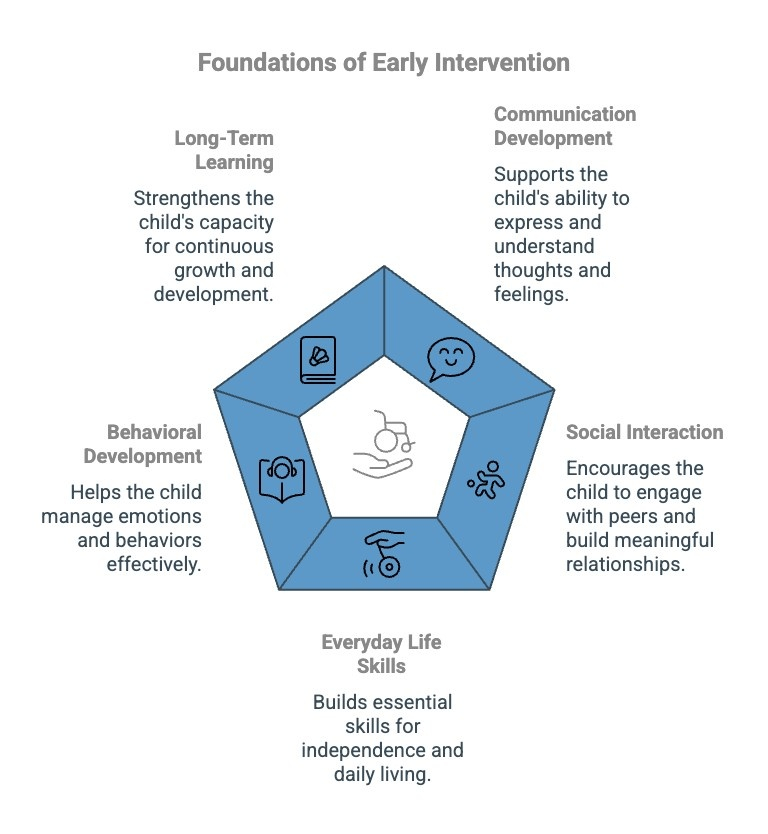
Early intervention autism therapy supports children during a stage when the brain is highly responsive to learning and development. Timely support helps strengthen communication, social interaction, and everyday life skills.
Below are key ways early intervention can support a child’s development:
- Supports communication development: Early intervention autism speech therapy helps children build language, express needs, and improve understanding during important early learning years.
- Encourages social interaction: Therapy helps children learn skills like eye contact, shared play, and responding to others in comfortable and supportive environments.
- Builds everyday life skills: Children develop independence through routines, play-based learning, and guided activities that support daily functioning.
- Supports behavioral development: Early intervention can help children manage behaviors, improve focus, and adapt to new situations through structured guidance and supportive learning environments.
- Strengthens long-term learning: Early therapy builds foundational skills that support school readiness and ongoing development.
With the right support at the right time, early intervention can help children grow with confidence while supporting their individual strengths.
Discover practical tips on using simple reward systems to help children with autism stay on track with routines like getting to school on time and encourage positive daily habits.
What Are the Early Signs That a Child May Need Early Intervention Therapy for Autism?
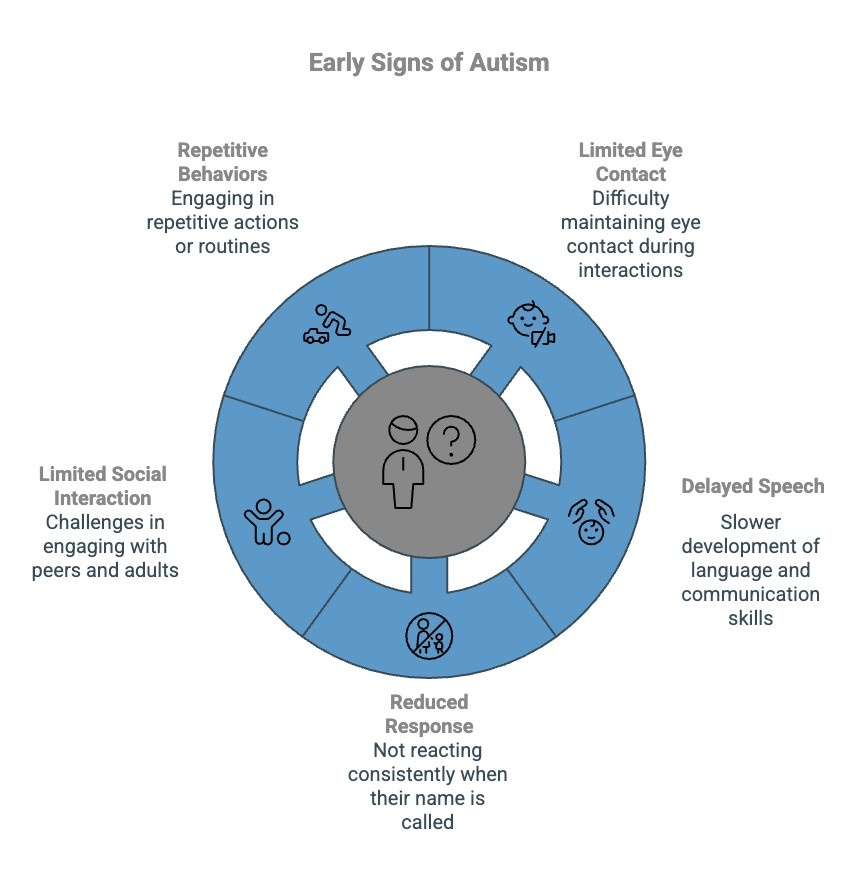
Some children show early developmental differences that may suggest they could benefit from additional support. Recognizing these signs early can help families explore early intervention therapy for autism and access guidance that supports healthy development.
Below are some common signs parents and caregivers may notice:
- Limited eye contact: A child may avoid eye contact or show less interest in looking at faces during interaction.
- Delayed speech or language development: Some children may speak later than expected or have difficulty expressing their needs and thoughts.
- Reduced response to their name: A child may not consistently respond when their name is called, even in familiar environments.
- Limited social interaction: Children may show less interest in playing with others or engaging in shared activities.
- Repetitive behaviors: Repeated movements or strong focus on certain objects or routines may sometimes be observed.
If parents notice several of these signs, speaking with a pediatrician or developmental specialist can help determine whether early intervention therapy for autism may be helpful.
What Types of Early Intervention Autism Therapy Are Available?
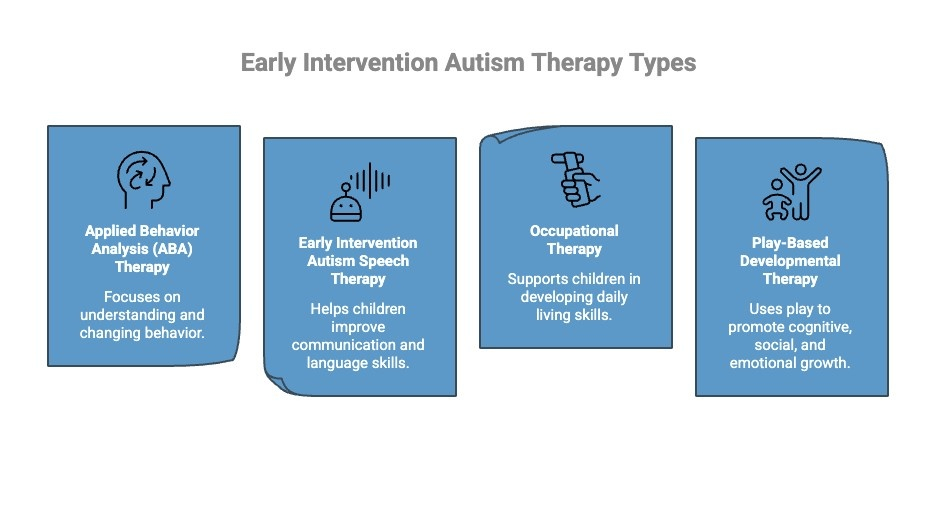
Early intervention autism therapy includes several supportive approaches designed to help children develop communication, social, and everyday life skills. These therapies are tailored to each child’s needs and strengths.
Below are some common therapies used in early intervention programs:
1) Applied Behavior Analysis (ABA) Therapy
Applied behavior analysis is a widely used early intervention autism therapy that focuses on understanding how children learn and interact with their environment. Therapists use structured activities, positive reinforcement, and guided practice to help children develop communication, social, and learning skills.
ABA programs are personalized to match each child’s abilities and developmental goals. Through consistent support and repetition, children gradually build helpful behaviors, strengthen focus, and improve everyday interactions in a supportive learning environment.
2) Early Intervention Autism Speech Therapy
Speech therapy plays an important role in helping children build communication skills. Early intervention autism speech therapy focuses on improving language development, helping children express their needs, understand spoken language, and engage in conversations.
Therapists may use visual tools, play-based activities, and simple communication techniques suited to the child’s learning style. Over time, children can develop stronger language abilities, improve understanding, and feel more confident when communicating with parents, caregivers, and peers in everyday situations.
Sensory-based approaches can also support early development. Learn more about the benefits of sensory enrichment therapy for autism and how it helps improve focus, behavior, and learning.
3) Occupational Therapy
Occupational therapy helps children develop skills needed for everyday activities such as playing, eating, dressing, and interacting with others. In early intervention autism therapy, occupational therapists focus on improving fine motor skills, sensory processing, and coordination.
Therapists may use hands-on exercises, sensory activities, and guided routines to help children practice everyday tasks in supportive settings. These approaches help children build independence, become more comfortable with sensory experiences, and gain confidence in daily routines at home, school, and other environments.
4) Play-Based Developmental Therapy
Play-based developmental therapy supports learning through natural interactions and enjoyable activities. Therapists use games, toys, and shared play experiences to help children develop communication, social engagement, and emotional understanding.
Through guided play, therapists encourage skills such as taking turns, responding to others, and expressing emotions in meaningful ways. These activities help children build stronger relationships, improve social confidence, and engage more comfortably in everyday interactions.
Early intervention therapy often combines multiple approaches to support a child’s unique developmental journey while helping families feel more confident in guiding their child’s growth.
When Should Early Intervention Therapy for Autism Begin?
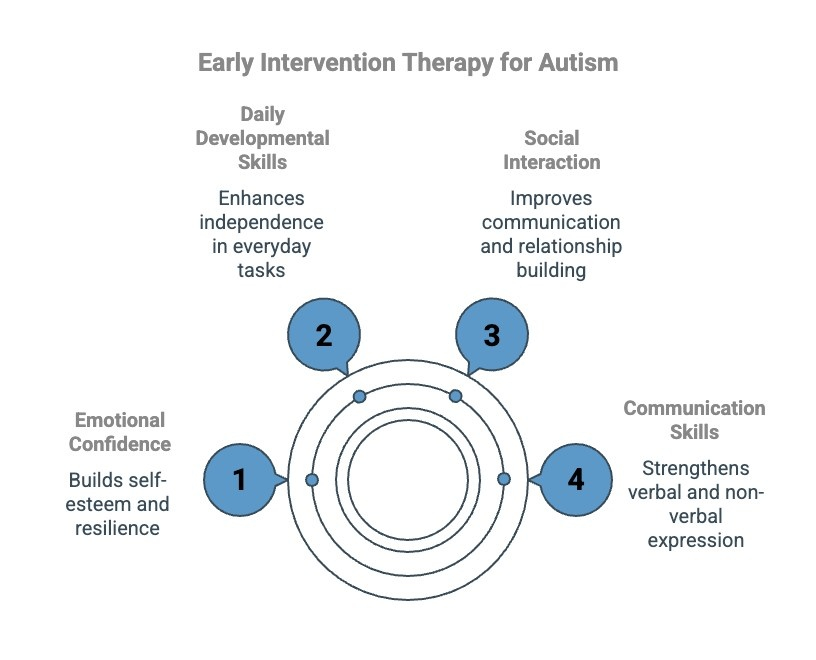
Early intervention therapy for autism should begin as soon as developmental differences or autism-related signs are noticed. Many specialists recommend starting support during the toddler years, often between ages one and three, when a child’s brain is rapidly developing and highly responsive to learning.
Starting early intervention autism therapy during this stage can help support key areas of development, including:
- Communication skills: Helping children express needs and understand language.
- Social interaction: Encouraging engagement with caregivers, peers, and shared activities.
- Daily developmental skills: Supporting routines, play, and early learning behaviors.
- Emotional confidence: Helping children feel more comfortable expressing themselves.
Even if a child does not yet have a formal autism diagnosis, parents can still seek developmental evaluations and therapy guidance. Starting support early can create meaningful opportunities for growth and positive developmental progress.
How Can Parents Access Early Intervention Autism Therapy?
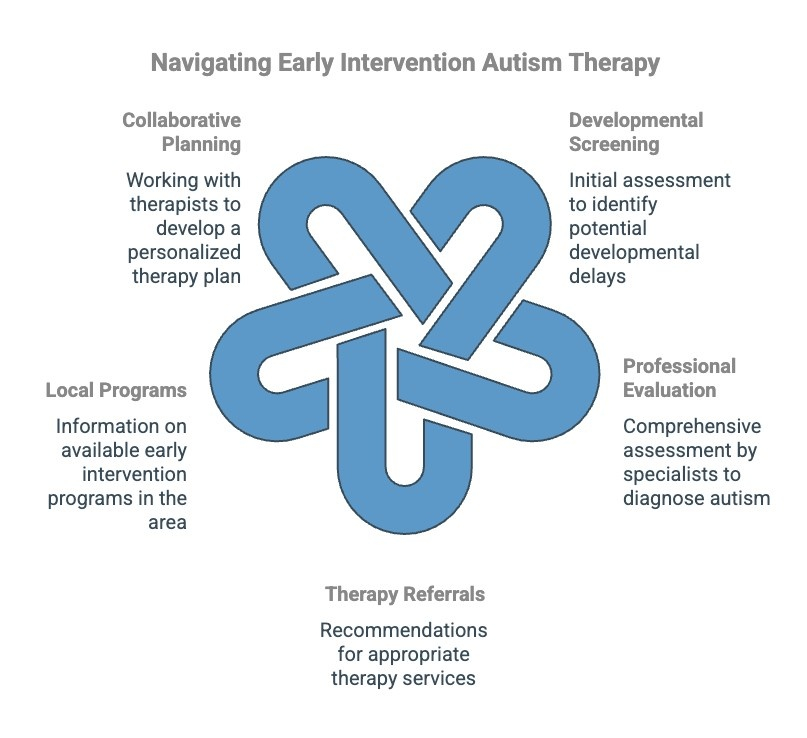
Recognizing early developmental differences can feel overwhelming for many families. Understanding the steps to access early intervention autism therapy can make the process clearer and help children receive support sooner.
Below are common ways parents can begin the journey toward early intervention therapy for autism.
Step 1: Start with a developmental screening.
Parents can speak with a pediatrician or healthcare provider if they notice delays in speech, social interaction, or behavior. Early screenings help identify whether further evaluation is needed.
Step 2: Request a Professional Evaluation
A developmental specialist, psychologist, or autism specialist can assess the child’s development and recommend appropriate therapies.
Step 3: Get Referrals for Therapy Services
After evaluation, professionals may recommend early intervention autism therapy such as speech therapy, behavioral therapy, or occupational therapy.
Step 4: Connect With Local Early Intervention Programs
Many communities offer government or clinic-based programs designed specifically for young children who need developmental support.
Step 5: Work With Therapists to Create a Plan
Once therapy begins, professionals develop an individualized support plan tailored to the child’s needs and strengths.
Taking the first step toward evaluation and support can help families access valuable resources that encourage healthy development and learning.
Autism is a lifelong spectrum, and understanding how it appears across different ages can be helpful for families. Explore this guide on autism symptoms in adults and a helpful checklist to learn how signs may present later in life.
Where Can Families Find Early Intervention Autism Therapy in Providence Services?
Families searching for early intervention autism therapy in Providence can begin by speaking with pediatricians, developmental specialists, or local therapy centers that provide support for young children with autism or developmental delays. Early evaluations and professional guidance help families understand the most appropriate therapies for their child’s needs.
In Providence, many therapy providers offer comprehensive early intervention autism therapy programs that may include behavioral therapy, early intervention autism speech therapy, occupational therapy, and developmental support. These services are designed to help children strengthen communication, social interaction, and everyday life skills during important early learning years.
One option families can explore is Total Life Counseling (TLC), which offers compassionate and personalized therapy services for children and families. Their experienced professionals focus on creating supportive therapy plans that encourage healthy development and emotional growth.
If you are looking for early intervention autism therapy, contact Total Life Counseling to learn more about available services and how their team can support your child’s developmental journey.
Conclusion
Early intervention therapy autism programs can provide meaningful support during a child’s most important developmental years. When children receive guidance early, they often have greater opportunities to build communication, social, and everyday life skills in ways that respect their unique strengths and needs.
Understanding the signs, exploring available therapies, and connecting with experienced professionals can help families make informed decisions about their child’s care. Early support is not about changing who a child is but about helping them grow, learn, and express themselves more comfortably.
With compassionate therapy and strong family involvement, early intervention can create a positive foundation for long-term development and well-being.
Frequently Asked Questions
Is early intervention therapy covered by insurance or government programs?
Coverage often depends on location and insurance plans. Many private insurance providers and state-funded early intervention programs offer support for autism therapies, especially for children under age three. Parents can check with healthcare providers or local early intervention programs.
Are there studies showing the benefits of early intervention for toddlers with autism?
Yes, many studies show that early intervention autism therapy can improve communication, social interaction, and learning skills. Research suggests that children who receive support early often develop stronger developmental foundations during critical early learning years.
At what age should early intervention therapy for autism typically begin?
Early intervention therapy for autism is often recommended as soon as developmental concerns appear, sometimes as early as age one or two. Starting therapy before age three can be especially beneficial because the brain is highly responsive during early childhood.
How does ABA therapy fit into early intervention for autism?
Applied Behavior Analysis, or ABA therapy, is commonly used in early intervention programs. It focuses on teaching helpful behaviors, improving communication skills, and supporting learning through structured activities, positive reinforcement, and individualized therapy plans.
Are there any risks associated with delaying early intervention?
Delaying early intervention may reduce opportunities to support important developmental skills during early childhood. When therapy begins later, children may need more intensive support to build communication, social interaction, and learning abilities.
How can parents and caregivers support early intervention at home?
Parents can support early intervention by practicing communication activities, encouraging play and interaction, following therapist guidance, and maintaining consistent routines. Daily engagement and positive reinforcement help children practice new skills learned during therapy sessions.
Filed in: Therapy
Share This Story, Choose Your Platform!
Total Life Counseling Center consists of Licensed Counselors, masters level therapists, Español counselors, Licensed Mental Health Counselors, business coaches, and image enhancement coaches who provide counseling for emotional, mental, physical and spiritual care including marriage, individual, family, substance abuse and more. TLC’s family, trauma and marriage experts have been interviewed on National and Local TV/Radio over 200 times for their expert advice on Fox News, OWN, WETV, ABC’s Medical Minute and more. Our skilled counselors are relational, approachable and specialists providing therapy services in the Central Florida area including: Orlando, Winter Park, MetroWest, Windermere, Dr. Phillips, East Orlando, Lake Mary, and Clermont, Boca Raton Florida, and Dallas, TX.
About the Author: SeoSurge

Related Posts