

How Do You Recognize Autism Symptoms in Adults?

Key Highlights
- Adult autism symptoms often differ from those seen in children and can go unnoticed for years.
- Social challenges, sensory sensitivities, and repetitive behaviors are common autism traits in adults.
- Many autistic adults use masking strategies that can delay recognition and diagnosis.
- Autism symptoms in women are often overlooked due to social adaptation and coping mechanisms.
- Autistic burnout can result from prolonged stress, masking, and sensory overload.
- An adult diagnosis can provide clarity, validation, and access to support.
- Understanding autism can improve relationships, work experiences, and daily life.
Autism Spectrum Disorder (ASD) is a developmental condition that affects millions of adults across the United States, presenting unique challenges in social communication, behavior, and daily functioning.
Recent estimates suggest that approximately 2.21% of adults in the US live with ASD, which is around 5.4 million individuals! This prevalence highlights the importance of awareness and understanding of autism symptoms in adults, as many remain undiagnosed or misidentified.
As awareness of autism continues to grow, recognition of the fact that symptoms can manifest differently in adults compared to children is also increasing. Research indicates that autism is nearly four times more common in men than in women, and symptoms can often be subtle, making accurate identification crucial for obtaining appropriate support and resources.
This article provides a checklist of adult autism symptoms to help individuals and professionals recognize and address their needs more effectively. By understanding these symptoms, you can improve outcomes in areas like employment, social relationships, and overall quality of life for autistic adults.
What Does Autism Look Like in Adults?
Recognizing autism spectrum disorder (ASD) in adults can be tricky. It can show up in different ways compared to children. Sometimes, the signs are missed or mistaken for other issues. Adults might also hide their challenges with coping mechanisms. Because of this, it is essential to know the signs and symptoms of adult autism. This helps in self-identification and raises awareness.
The symptoms of ASD usually involve social interaction, communication styles, sensory processing, and repetitive behaviors. It is vital to remember that the autism spectrum is broad. Not everyone will have all symptoms or feel them in the same way.
What Are the Core Symptoms of Autism?
One of the common symptoms of autism in adults is difficulty in handling social situations, often needing time to process conversations and respond adequately. Understanding nonverbal cues, like body language and facial expressions, can also be a struggle, making it hard to gauge others’ emotions.
As a result, your straightforward communication style might be perceived as rude, leading to misunderstandings and challenges in building relationships. Neurotypical peers may not realize why you struggle with social cues, often lacking the patience to accommodate you.
Common Autism Symptoms Include:
Social and communication challenges can affect daily interactions, relationships, and overall well-being. While experiences vary from person to person, recognizing these common signs can help individuals better understand autism and seek appropriate support when needed.
- Feeling anxious in large groups: Crowded social situations may feel overwhelming or difficult to navigate.
- Difficulty forming and maintaining friendships: Building and maintaining relationships may require extra effort and can sometimes feel challenging.
- Uncertainty about appropriate behavior in social contexts: Understanding what to say or how to act in different social situations may be difficult.
- Misinterpretation of social cues, resulting in awkward interactions: Facial expressions, body language, or tone of voice may be misunderstood, leading to social misunderstandings.
What Are the Common Symptoms of Autism in Adults?
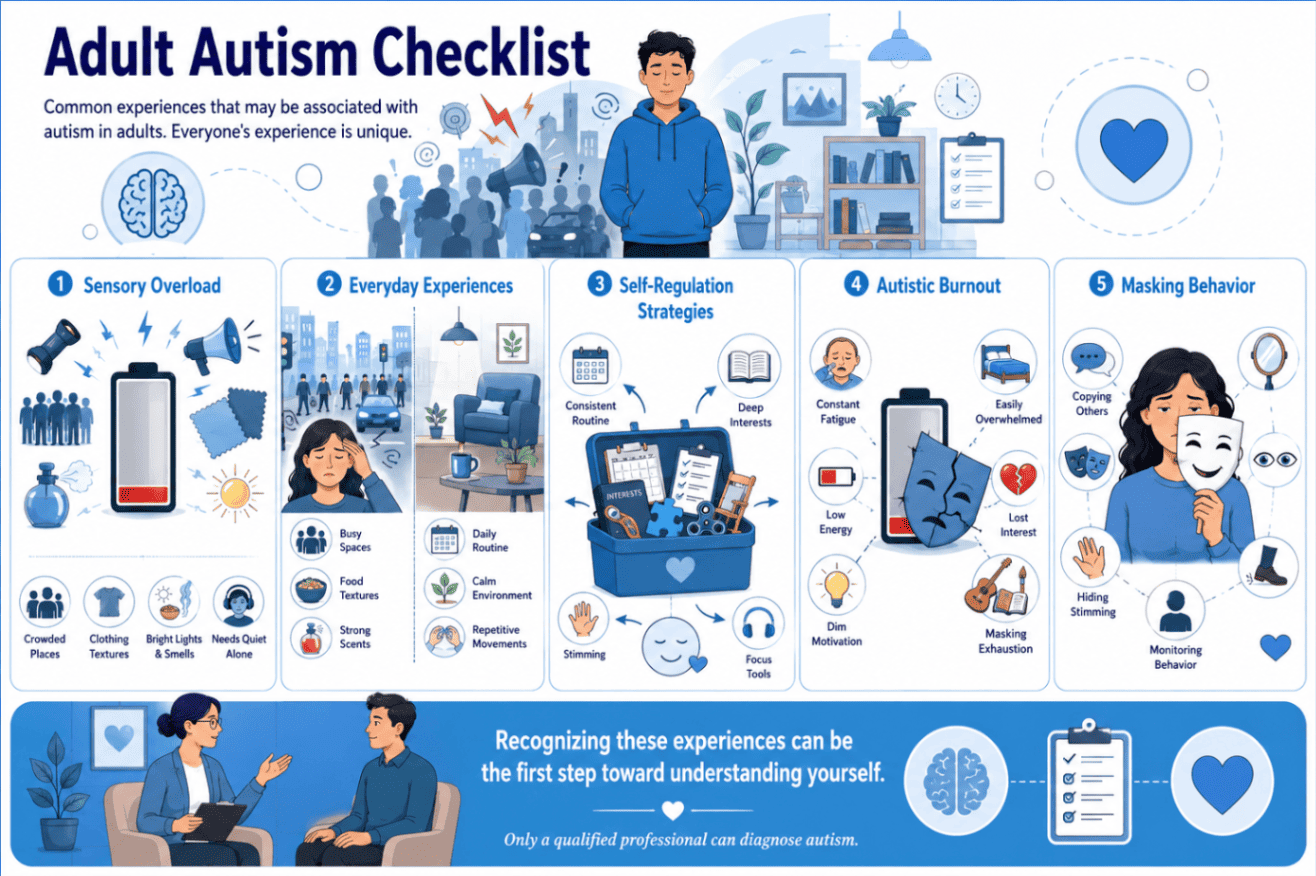
Let’s understand more symptoms that will help identify adult symptoms in adults with a checklist.
1. Sensory Overload
You may experience discomfort with various sensory inputs like fabrics, sounds, and smells leading to overwhelm, especially in noisy environments. This can make daily tasks challenging, causing you to feel burnt out or to need solitude to recharge.
Common sensory experiences may include:
- Feeling overwhelmed in noisy or crowded environments.
- Difficulty tolerating certain fabrics, textures, or clothing materials.
- Sensitivity to bright lights, strong smells, or background noises that others may barely notice.
- Needing time alone or quiet spaces to recover after sensory overload.
These experiences can make everyday tasks feel more demanding and may contribute to exhaustion or the need for solitude to recharge.
2. Common Autism Experiences
Understanding everyday experiences can help build awareness of how autism presents in daily life. These common patterns often relate to sensory processing, routines, and emotional responses, shaping how individuals interact with their environment and manage different situations.
- Distress in crowded places: Busy or crowded environments may feel overwhelming due to noise, lights, or large groups of people.
- Difficulty tolerating certain textures or scents: Certain fabrics, smells, sounds, or food textures may cause discomfort or irritation.
- Overstimulation that requires time alone: Too much sensory input can become exhausting, making quiet time necessary to relax and recharge.
- Repetitive behaviors and interests: Following routines, engaging in repetitive movements, or focusing deeply on specific interests may provide comfort and reduce stress.
If routines and specific interests provide comfort, this may reflect autistic traits. Many find solace in structure and have intense passions. Stimming like hand-flapping or rocking serves as a method of self-regulation.
3. Common Self-Regulation Strategies
After recognizing common experiences, it becomes important to explore how individuals naturally cope with sensory and emotional challenges. Self-regulation strategies often develop as supportive tools that help maintain balance, reduce stress, and create predictability in daily life.
- Establishing daily routines: Following a consistent schedule can provide comfort and make daily life feel more predictable.
- Deep knowledge of specific subjects: Developing a strong interest in certain topics can bring enjoyment, confidence, and a sense of purpose.
- Using repetitive actions to focus or calm yourself: Behaviors such as rocking, tapping, or fidgeting may help reduce stress and improve concentration.
- Autistic Burnout: Autistic burnout is a state of physical, mental, and emotional exhaustion caused by prolonged stress, or the effort of coping with daily challenges.
4. What Is Autistic Burnout?
While self-regulation strategies can be helpful, stress may still take a toll over time. It is important to understand how continuous demands without adequate recovery can lead to emotional, physical, and mental exhaustion.
- Persistent fatigue: Feeling physically or mentally exhausted even after getting enough rest.
- Heightened emotional sensitivity: Becoming more easily overwhelmed, frustrated, or emotional than usual.
- Reduced motivation for enjoyable activities: Losing interest or energy for hobbies and activities that once felt enjoyable.
- Masking: Hiding natural behaviors or forcing yourself to fit social expectations can become mentally and emotionally exhausting over time.
Social exhaustion and autistic burnout can affect daily life. Explore how therapy can help manage burnout symptoms.
5. Understanding Masking Behavior
In social environments, many individuals consciously or unconsciously adapt their behavior to fit in with others. While this may help with acceptance, it can also require significant emotional effort and lead to long-term fatigue if done continuously.
- Mimicking neurotypical behaviors to blend in: Copying social behaviors, expressions, or communication styles to fit in with others.
- Suppressing stimming or specific interests: Hiding natural behaviors or interests to avoid drawing attention.
- Constantly monitoring your actions to avoid standing out: Carefully watching your words, reactions, or behavior to appear socially accepted.
Why Are Autism Symptoms Often Missed in Adult Women?
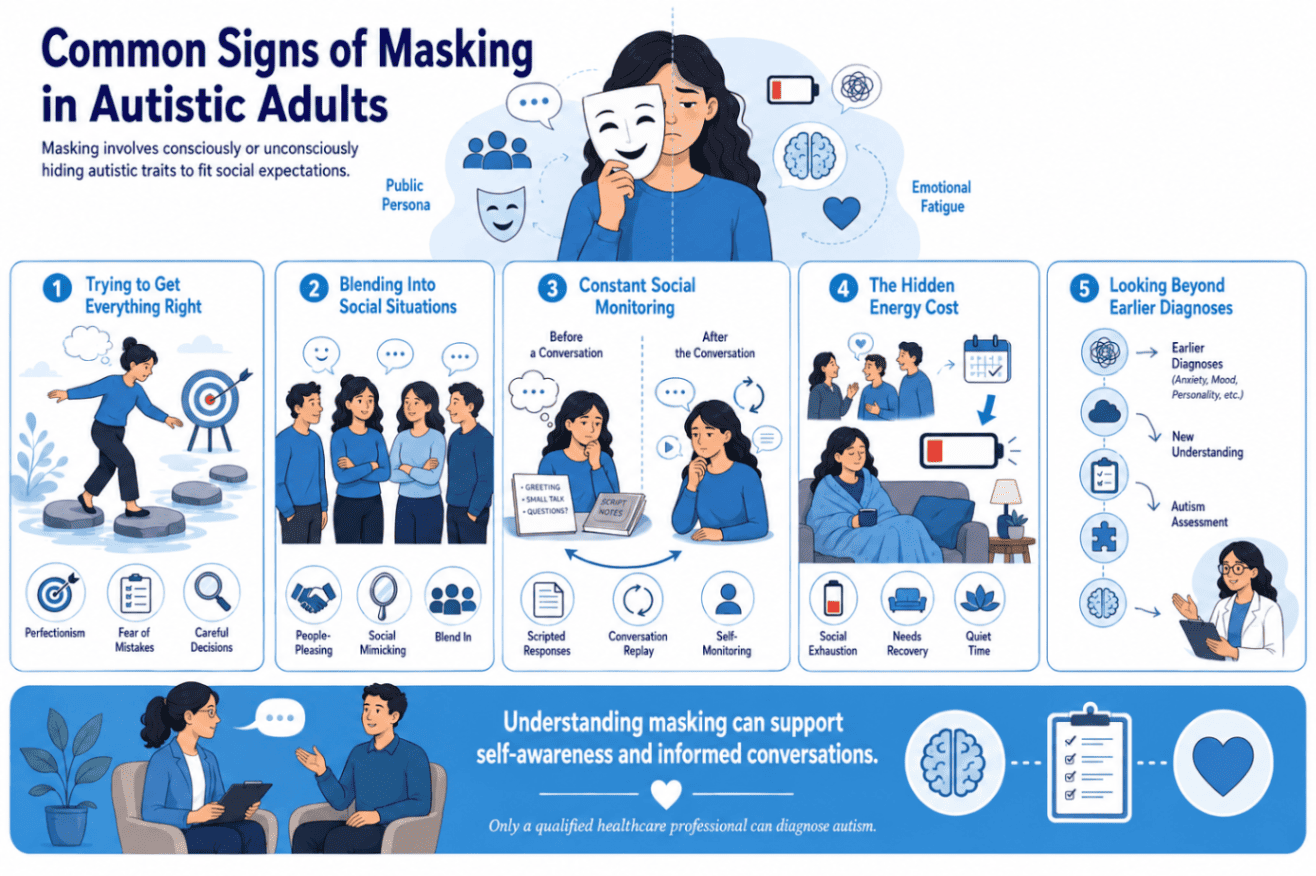
The symptoms of autism in adult women can sometimes be difficult to recognize because many women learn to hide or compensate for their challenges. This process, known as masking, may make the symptoms of autistic adults with lower support needs less noticeable to others.
Some women may copy social behaviors, rehearse conversations, or imitate the tone of voice and expressions of others to fit in. While these strategies can help them navigate social situations, they often lead to anxiety and exhaustion.
Common signs may include:
- Perfectionism and a strong need to avoid making social mistakes.
- People-pleasing behaviors to reduce conflict or avoid standing out.
- Rehearsing conversations in advance or replaying them afterward to analyze what was said.
- Using scripted responses or memorized social patterns to navigate interactions.
- Copying the communication styles, interests, or behaviors of friends to fit in more easily.
- Feeling emotionally or physically exhausted after social events, even when they seemed enjoyable at the time.
- Receiving earlier diagnoses of anxiety, depression, or personality disorders before autism is considered.
Because these communication differences can be subtle, many women receive a late diagnosis or spend years searching for answers.
How Important Is Understanding Adult Autism?
Recognizing autistic traits can help people accept themselves and feel good about their differences. This understanding can lead to more compassion from family, friends, and employers.
Getting a formal diagnosis can open doors to support services made for autistic adults. These services can include social skills training, help with finding a job, and therapies for issues like anxiety or depression.
In the end, raising awareness about adult autism helps us build a society that accepts everyone. With the proper support, individuals can do well and feel included.
Call for a Complimentary 15 Minute Phone Consultation
Se Habla Español: We have Portuguese and Spanish speaking counselors as well.
What Are the Communication Challenges in Autistic Adults?
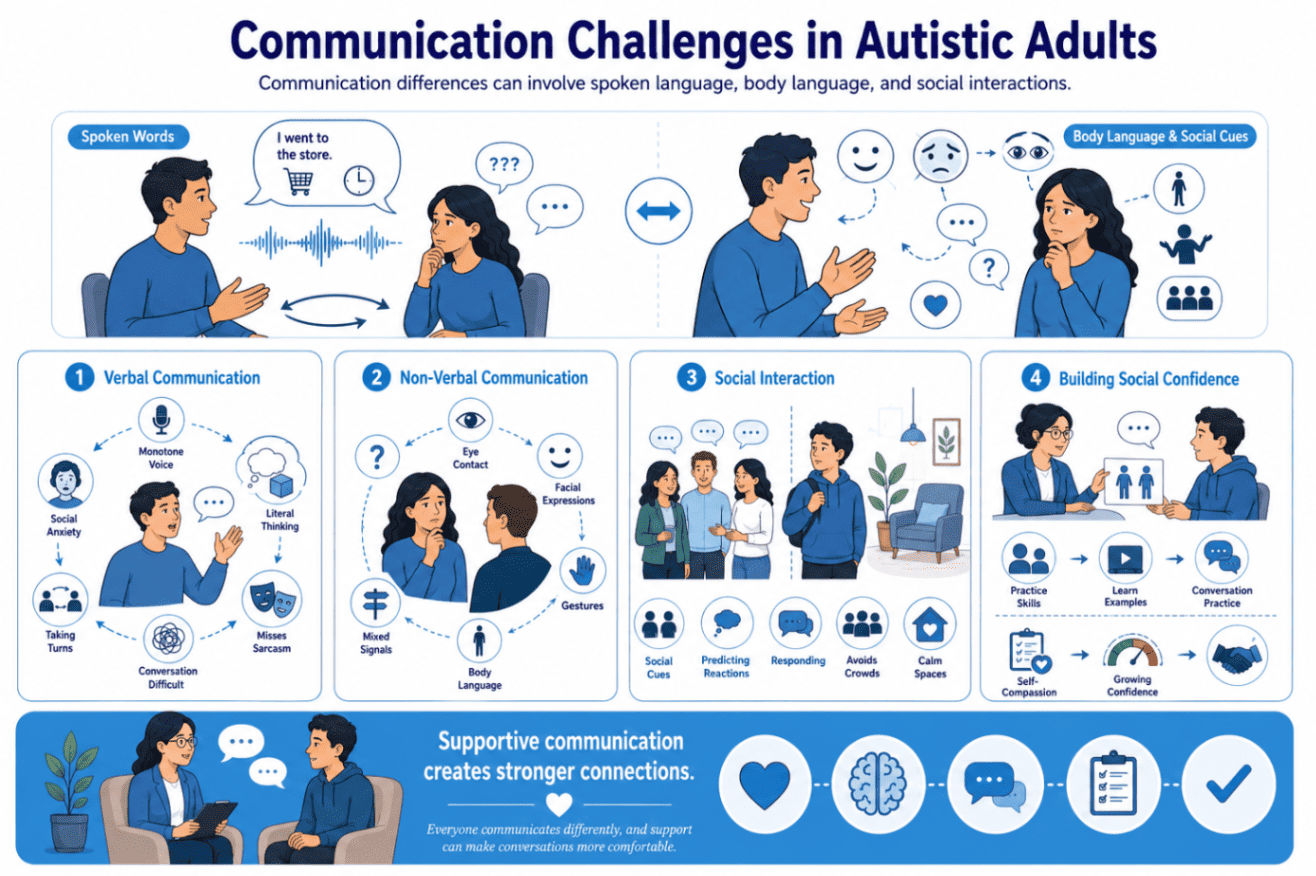
Communication can be a big challenge for adults with autism spectrum disorder (ASD). It requires understanding both spoken words and body language. This can be hard for many individuals with autism.
Adults with autism often face misunderstandings and feel that others do not understand them. Let’s see how talking and body language affect adult autism.
How Autism Can Affect Verbal Communication?
Autistic adults often have unique ways of talking. Some may use a monotone voice, which means they do not change their pitch to show feelings. Others take words literally and may have trouble understanding metaphors, idioms, or sarcasm.
They might need help sharing speaking time in conversations. Starting and keeping a conversation going can feel challenging, which can lead to social anxiety and a desire to avoid these situations.
Both autistic individuals and others need to understand these differences in communication. By being aware of these patterns, we can help create better, more caring communication methods.
Challenges With Non-Verbal Communication
Nonverbal communication adds more challenges for autistic adults. Understanding body language, including gestures, posture, and eye contact, can be complex.
Reading facial expressions is also challenging. An autistic person might misread a slight smile or frown, which can cause confusion or misunderstandings.
One must exert effort to navigate nonverbal communication well. Knowing these challenges is the first step to finding better ways to communicate.
Social Interaction Difficulties
Social interactions can be challenging for individuals with autism. Interpreting social cues, predicting others’ actions, and appropriately responding can be daunting. Some individuals with autism may avoid social situations, leading to feelings of isolation and loneliness.
Creating sensory-friendly environments and promoting clear communication can help them feel more at ease and engage better in social interactions.
Strategies for Improving Social Skills
Improving social skills takes time. It’s essential to be patient and kind to yourself during this journey. Here are some ways to help you handle social situations better.
Social skills training programs can help you learn and practice interacting with others. These programs often include role-playing, videos, and feedback. They can build your confidence and skills.
It’s essential to find ways to deal with social anxiety. Techniques like mindfulness, deep breathing, and slowly getting used to social settings can help reduce stress. This promo promotes calm.
What Are the Repetitive Behaviors and Special Interests of Adults With ASD?
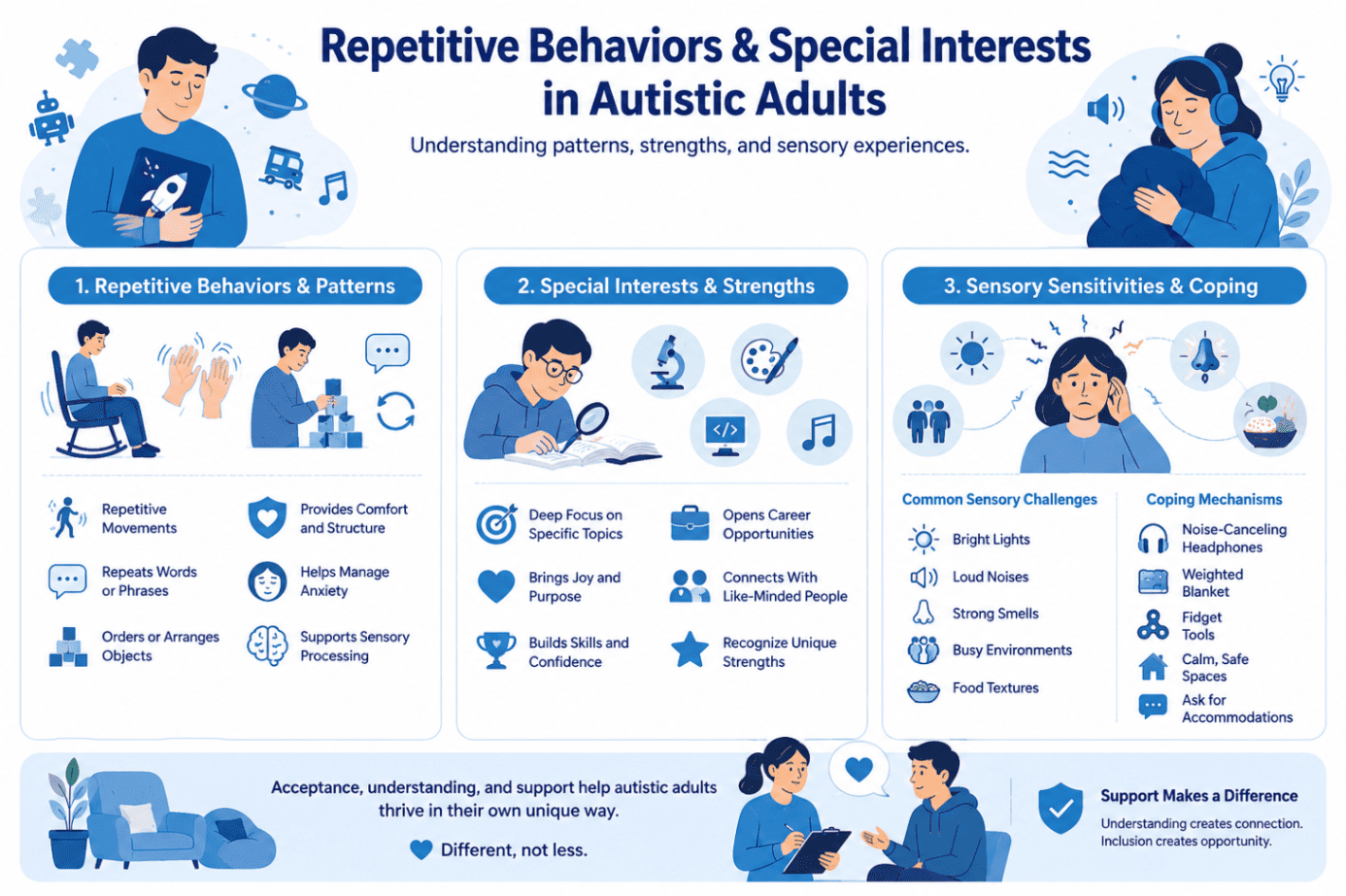
Repetitive behaviors and vital interests are critical traits of autism spectrum disorder. They can help bring comfort and structure to a world that often feels mixed up.
Let’s learn more about these behaviors and see how important they are for autistic adults.
Identifying Repetitive Autism Patterns
Repetitive actions in autism include physical movements, such as rocking or flapping hands. They can also be quieter actions, like repeating words or putting objects in a certain way. These behaviors often help with managing anxiety or handling sensory information.
Another type of repetitive behavior is special interests. These are deep dives into specific topics. They can give a sense of purpose and joy, leading to pride and better self-esteem.
It is essential to see these repetitive patterns as natural parts of neurodiversity. This awareness helps promote acceptance and understanding.
The Role of Special Interests in Autistic Adults
Specific interests often play an essential role in the lives of autistic individuals. They can affect their job choices, hobbies, and how they connect with others. The knowledge and passion that come with these interests can be a great advantage in many areas.
These unique strengths can lead to beautiful careers in technology, science, art, or music. Careful attention and a love for detail are essential in these areas.
Sensory Sensitivities and Overloads
For many people on the autism spectrum, the world can feel very noisy and bright. Everyday things like sights, sounds, and smells that others hardly notice can be too much or even hurt. This strong reaction to sensory stimuli is an essential part of autism spectrum disorder (ASD) and can affect daily life a lot.
Common Sensory Challenges
Sensory stimuli that many ignore, like bright lights or refrigerator sounds, can be challenging for autistic individuals. Loud noises, such as traffic or busy places, can cause anxiety, fear, or pain.
Bright lights can confuse and overwhelm them, and specific food textures can also feel too much for them to handle. Because of these sensitivities, daily tasks like grocery shopping, commuting, or social events can be very tough.
Understanding these sensory challenges is essential. We must show empathy and create sensory-friendly spaces where autistic individuals can thrive.
Coping Mechanisms for Sensory Issues
Developing ways to cope with sensory issues is very important. It helps handle sensory overload and manage everyday life. This often means discovering what prompts these feelings and planning to reduce or avoid them.
For example, wearing noise-canceling headphones in busy places, carrying a weighted blanket for comfort, or using fidget toys for sensory input can help. Critical steps for inclusion and support are creating comfortable spaces at home and asking for needed changes in work and public areas.
How to Pursue an Autism Diagnosis as an Adult?
Some adults may have felt different for a long time. Others might start to think about autism later in life. This could happen after certain events occur or when their child is diagnosed.
Getting a formal diagnosis as an adult can be an extensive process. It can provide clarity, offer validation, and make it easier to find support.
When and Why to Seek a Diagnosis?
Deciding to get a formal diagnosis is a personal choice. There is no right or wrong way to go about it. If you find it hard to socialize, have trouble with certain sensations, or repeat certain behaviors, getting a diagnosis could help you understand these things better.
A diagnosis can relieve you. It can show you that your experiences are authentic and help explain the challenges you face with autism spectrum disorder (ASD). This process might connect you with support groups, therapists who know about autism, and resources that fit your needs.
It is also important to address mental health issues that often come with autism, like anxiety, depression, or feelings of isolation, when looking to get a diagnosis.
Steps for Seeking a Diagnostic Assessment
Obtaining a diagnosis involves a comprehensive assessment conducted by qualified professionals, such as psychologists or psychiatrists specializing in autism spectrum disorder.
The assessment may include interviews, questionnaires like the Autism Spectrum Quotient (AQ), and behavior observations.
| STEPS |
Description |
|---|---|
|
1. Self-Assessment/Research |
Take online tests and research the diagnostic criteria for autism in the DSM-5 (Diagnostic and Statistical Manual of Mental Disorders). |
| 2. Consult a Healthcare Provider: | Speak to your doctor about your concerns and request referrals to specialists. |
| 3. Diagnostic Assessment: | Undergo a comprehensive assessment involving interviews, questionnaires, and potential input from family members. |
Why Do Some People Receive an Autism Diagnosis Later in Adulthood?
Many adults receive an autism diagnosis in their 30s, 40s, or even later in life. A late diagnosis does not mean the signs were absent. Instead, the symptoms may have been overlooked or mistaken for other conditions.
Several factors can contribute to delayed recognition:
- Some autism traits may have been present during childhood but were not recognized or understood.
- Coping strategies and masking can hide ASD symptoms, making them harder to recognize or diagnose in adulthood.
- Autism symptoms can sometimes be mistaken for anxiety, depression, or ADHD, delaying the correct diagnosis.
- Increased awareness about autism has helped many adults better understand their lifelong experiences and challenges.
- Some adults begin exploring autism after a child or family member is diagnosed and they notice similar traits in themselves.
Receiving an accurate diagnosis can help adults better understand their experiences and connect with appropriate health care and autism support services when needed.
Living as an Autistic Adult
Getting an autism diagnosis as an adult can change your life. It can make you think, discover more about yourself, and better understand your strengths and challenges.
Living as an autistic adult means accepting neurodiversity. It also means speaking up for your needs and creating a support system that helps you succeed.
Autistic Childhood to Adulthood
Finding your place in a world that primarily caters to neurotypical people can be challenging, but it’s possible. Autistic adults often approach social situations in their own way. They also process information differently and have their unique styles of communication.
Embracing these differences is essential for living true to yourself. It means standing up for your needs, asking for help when needed, and looking for spaces where your strengths are appreciated.
Vocational rehabilitation services can be beneficial. They assist you in discovering career paths that match your interests and give you the support you need to succeed. It’s important to value your thoughts, feelings, and experiences as essential and worthy.
Empowering Autistic Adults in Various Life Aspects
Living a fulfilling life as an autistic adult needs good support, self-advocacy, and a helpful community. Having resources that help with sensory issues, social problems, and job needs is essential.
Dealing with mood disorders like anxiety and depression is also very important. These issues are more common in autistic individuals. Ways to improve emotional health include therapy, medication, and making changes to your lifestyle.
Daily tasks, such as grinding or appointments, can feel too much to handle. You can try strategies like shopping online, using noise-canceling headphones, and making visual cues to make things easier. These methods can help in daily life.
How Can Autism Symptoms Affect Daily Life in Adults?
The symptoms of autism in adults can influence many areas of everyday life, including work, relationships, routines, and personal responsibilities. While experiences vary from person to person, many adults notice that certain challenges become more apparent as life demands increase.
For some individuals, mild autism symptoms in adults may cause occasional difficulties, while others with autism level 1 symptoms may appear independent but still struggle with social communication, organization, or sensory experiences.
Daily life challenges may include:
- Feeling overwhelmed in busy workplaces or crowded environments
- Difficulty maintaining friendships or relationships
- Struggling with unexpected changes in schedules
- Becoming mentally exhausted after social interactions
- Finding it difficult to balance work and personal responsibilities
Work and Career Challenges
Many people with symptoms of autistic adults with lower support needs successfully maintain jobs and careers. However, workplace expectations such as meetings, teamwork, multitasking, or frequent changes in routine can sometimes create additional stress.
Common workplace difficulties may include:
- Managing multiple tasks at once
- Navigating office communication styles
- Experiencing sensory overload in busy environments
- Feeling exhausted after prolonged social interactions
- Difficulty adapting to sudden workplace changes
Relationships and Social Life
The impact of autism and adults symptoms may also extend to friendships, family relationships, and romantic partnerships. Communication differences can sometimes lead to misunderstandings, even when intentions are positive.
Some adults prefer direct communication, need additional time to process conversations, or require periods of solitude to recharge after social situations. Research also suggests that many adults develop coping strategies that help them manage these situations over time.
Managing Daily Responsibilities
For individuals experiencing symptoms of autistic adults with lower support needs and ADHD in adults, difficulties with attention, organization, and executive functioning may make daily responsibilities more challenging. Adults with both autism and ADHD often report unique experiences that affect work, routines, and self-identity.
Similarly, symptoms of autistic adults with lower support needs in female adults and symptoms of autism in adult women may appear differently, as many women develop coping strategies that can mask their challenges for years.
Recognizing these adult autism signs and symptoms can help individuals better understand their experiences. Although an autism symptoms in adults checklist cannot provide a diagnosis, understanding how these traits affect daily life may encourage someone to seek professional guidance if needed.
Autism and ADHD frequently occur together in adults. Read our guide to ADHD therapy for more insights into symptoms, diagnosis, and treatment.
Get the Best Adult Counseling Services in Orlando
Diagnosing autism in adults requires expertise in recognizing symptoms, preparing a checklist of manifestations, and accurately identifying ASD. Total Life Counseling can help you overcome the challenges of identifying, analyzing, and managing autistic symptoms. Get in touch with us here for more information.
Conclusion
Understanding adult autism and its symptoms is very important. It helps us give the proper support and build a more inclusive community. By seeing the challenges in communication, social interactions, repetitive behaviors, and sensory sensitivities, we can help autistic adults.
It’s essential to pursue a diagnosis for a better understanding. We should provide acceptance, care, and resources that fit their needs. We all want to create a world where people with autism feel valued and fully supported in life.
If you think you or someone close to you may show autism symptoms, getting a diagnosis and finding the proper support can improve your quality of life.
Licensed Counselors & Therapists
Meet Our Team of Certified & Experienced Professionals
Total Life Counseling Center consists of Licensed Counselors, Masters Level Therapists, Espanol Counselors, Licensed Mental Health Counselors, Business Coaches, Image Enhancement Coaches who provide counseling for emotional, mental, physical and spiritual care including marriage, individual, family, substance abuse and more. Our team of certified and experienced professionals, dedicated to serving a comprehensive spectrum of mental health and relationship issues such as couples, women and men’s issues, children and teens with oppositional defiance, video game addiction, ADHD, ASD, anxiety, depression, and trauma survivors, is here to support and guide you through your journey towards healing and navigating life transitions. This approach not only enhances the effectiveness of the counseling provided but also builds trust within the community and among potential clients, who may be seeking support.
We offer next level counselors specialized in areas such as relationships, video game & drug/alcohol addictions, abuse, trauma, depression, and ADHD. Our Therapists are EMDR (eye movement desensitization) trauma therapy trained, cognitive behavioral therapy, specialize in ADHD and Oppositional Defiant Children, and are also professional Gottman method marriage couples counselors to give the best results to couples and to provide the best comprehensive spectrum of mental health and relationship care for our clients.
Struggling with Anger? We offer 8 hour anger management group therapy!
Discounted Rates and the president of Total Life Counseling Center Jim West does not want to turn people away and we have counselors at various levels of experience at a discounted rate that are trained by our next level counselors!

Jim West
MA, LICENSED MENTAL HEALTH COUNSELOR, national certified counselor
President, Counselor, Guest Speaker, Author, Social Skills, ADHD, ODD, ASD, children, teens, and more!

Dana West
MSW, Licensed clinical social worker
Vice President, Counselor, Guest Speaker, Addictions, Trauma, Couples, Abuse, and more!

Mathew Martin
MS, LICENSED MENTAL HEALTH COUNSELOR
Counselor, Coach, Guest Speaker, Marriage, Individual Males, Substance Abuse and more!

Brandon Feinberg
MS, LICENSED MENTAL HEALTH COUNSELOR
Male Counselor, Licensed Mental Health Counselor specializing in ADHD, Asperger Syndrome, Autism Spectrum Disorders, and more!
Lyris Steuber
MS, licesned marriage & family therapist
Counselor, Coach, Marriage & Family, Play Therapy, Divorce, Adolescent and more!

Valerie Ware
Licensed Psychologist and Behavioral Specialist
Psychological Evaluator, Autism, ADHD, Learning Disabilities, Anxiety, Gifted, Career Pathways, and emotional assessments.

Gemima McMahon
MA, LICENSED MENTAL HEALTH COUNSELOR
Licensed Mental Health Counselor specializing in Women’s issues, Trauma, Anxiety, Depression, Cutting, Couples, Children and Teenagers and more!

Audrey DeBruler
MS, LMHC, Licensed Mental Health Counselor
Children, Adolescents, Young Adults, Faith Based Counseling, Trauma Recovery, Anxiety and more!

David Duany
MA, LICENSED MENTAL HEALTH COUNSELOR
Licensed Mental Health Counselor specializing in ADHD, Social Skills, and Anger Management counseling for children, young adults, and families.

Katherine Waldheim
MS, Registered Mental Health Counseling Intern
Trauma, anxiety, couples counseling, and child & adolescent counseling services and more!

Sarah Dornas Albuquerque
MS – Registered Mental Health Counselor Intern
EMDR, Anxiety, Depression, Children, Teens, Young Adults, English, Spanish and Portugues and Adult Counseling

Frequently Asked Questions
What Are the First Steps to Getting Diagnosed With Autism as an Adult?
If you think you might have adult autism, begin by taking online autism tests. These tests can’t be a diagnosis, but they can show what areas you might need help with. Next, chat with your doctor or a mental health expert. This is important for getting a formal diagnosis and looking into support options.
How Do Autism Symptoms Differ Between Men and Women?
Autistic women often show the same signs of autism as men. However, they might hide their symptoms better. This can cause them to be diagnosed less often. They may also understand social cues more and copy social behavior well. This makes it hard for others to notice their condition.
Can Someone Develop Autism Later in Life, or Are Symptoms Always Present?
Autism can be seen in adults, even if they were not diagnosed when they were kids. Some people show signs from a young age, while others might start to show signs later on. Knowing about these differences is essential for getting the correct diagnosis and support.
Are There Specific Challenges Autistic Adults Face in the Workplace?
Autistic individuals often have difficulties in the workplace. They may struggle with sensory sensitivities, social interactions, and communication. Making adjustments or accommodations is essential to helping them do well at work. Supporting them and increasing understanding is crucial for creating better job opportunities.
What Are Signs of Autism in Non-Diagnosed Adults?
Signs of autism in undiagnosed adults may include difficulty understanding social cues, sensory sensitivities, strict routines, social exhaustion, masking behaviors, and intense interests. Many adults recognize these traits later in life and seek professional evaluation for clarity.
Edited by TLC intern: Alyssa Champion
Call our in-person and Virtual (Teen Counselors in Orlando for help now at 407-248-0030! We also have teen counselors near Altamonte in Winter Park, Lake Mary, Clermont, and East Orlando Waterford Lakes, Avalon Park, Dr. Phillips, Windermere. We also help with EMDR therapy for anxiety and trauma, and treat ADHD often without medication, and the News Media called us 200+ times for our mental health advice.
Filed in: Anxiety, Autism, Blog, Depression, Diet, Family, Jim West, Orlando, Parenting, Self-Care, Self-growth, Social Skills
Share This Story, Choose Your Platform!
Total Life Counseling Center consists of Licensed Counselors, masters level therapists, Español counselors, Licensed Mental Health Counselors, business coaches, and image enhancement coaches who provide counseling for emotional, mental, physical and spiritual care including marriage, individual, family, substance abuse and more. TLC’s family, trauma and marriage experts have been interviewed on National and Local TV/Radio over 200 times for their expert advice on Fox News, OWN, WETV, ABC’s Medical Minute and more. Our skilled counselors are relational, approachable and specialists providing therapy services in the Central Florida area including: Orlando, Winter Park, MetroWest, Windermere, Dr. Phillips, East Orlando, Lake Mary, and Clermont, Boca Raton Florida, and Dallas, TX.
About the Author: Jim West