

Is ADHD Genetic? How ADHD Runs in Families

Key Highlights
-
ADHD is strongly linked to genetics, with research showing heritability rates between 70% and 80%.
-
ADHD-related traits can be inherited from either parent and often appear differently across generations.
-
Environmental influences such as prenatal stress, trauma, and sleep disruption can affect symptom severity.
-
Many adults recognize ADHD later in life when work, parenting, or daily responsibilities increase executive functioning demands.
-
There is currently no single genetic or blood test for ADHD, and diagnosis still relies on clinical evaluation and behavioral patterns.
-
ADHD in adults, especially women, is often overlooked because symptoms may appear as disorganization or chronic overwhelm instead of hyperactivity.
-
Structure, routines, emotional support, and practical coping strategies can significantly improve ADHD symptom management over time.
Many people begin asking whether ADHD is genetic after noticing similar attention, organization, or impulsivity challenges in close relatives. A parent may recognize familiar behaviors in their child, while an adult may start connecting lifelong struggles after someone they love receives a diagnosis. These moments often raise important questions about where ADHD comes from and whether heredity plays a role.
Research shows that genetics significantly influences ADHD risk, but genes do not tell the whole story. Environmental influences, early life experiences, and daily stressors can also affect how symptoms develop and appear over time. Understanding how these factors work together can help explain why ADHD affects people differently.
In this guide, we’ll explore what research says about ADHD and genetics, whether ADHD can be inherited from either parent, how environmental influences affect symptom development, and what steps individuals and parents can take when ADHD begins affecting daily life.
What Is ADHD?
Attention deficit hyperactivity disorder (ADHD) is a neurodevelopmental condition that affects attention regulation, impulse control, and executive functioning. While symptoms can vary from person to person, ADHD commonly affects focus, organization, emotional regulation, and the ability to manage daily responsibilities consistently.
Symptoms may appear differently across age groups and individuals. Some people primarily struggle with inattention and disorganization, while others experience hyperactivity, impulsivity, or a combination of both. Because ADHD affects brain-based processes involved in self-regulation, its impact can extend to school, work, relationships, and everyday routines.
Why Does It Often Run in Families?
Many families notice similar patterns of inattention, impulsivity, disorganization, or emotional regulation difficulties appearing across generations. Research suggests this is not simply a coincidence. ADHD is one of the most highly inherited neurodevelopmental conditions, which helps explain why multiple family members may experience similar challenges.
ADHD often runs in families because many of the genetic variations associated with attention regulation, impulse control, motivation, and executive functioning can be passed from one generation to the next. Rather than being caused by a single “ADHD gene,” the condition is influenced by multiple genes that affect how the brain develops and processes information.
According to the research published in PubMedCentral, family and twin studies estimate ADHD’s heritability at approximately 74%, making genetics one of the strongest contributors to ADHD risk. However, inherited traits do not always appear the same way in every family member. One person may struggle with chronic disorganization and time management, while another experiences hyperactivity, impulsivity, or emotional regulation difficulties.
This variation is one reason ADHD can go unrecognized within families for years. In many cases, parents only begin recognizing their own ADHD-related traits after a child receives a diagnosis and similar behavioral patterns become easier to identify.
Can ADHD Skip Generations?
ADHD does not typically skip generations in the traditional sense, but it can sometimes appear that way. Because ADHD is influenced by multiple genetic variations, inherited traits may be expressed differently among family members.
For example, one relative may have symptoms that are obvious enough to receive a diagnosis, while another develops coping strategies that mask attention, organization, or executive functioning challenges. In previous generations, ADHD was also less frequently recognized, meaning many people lived with symptoms without ever receiving an evaluation.
As a result, what appears to be ADHD “skipping” a generation is often inherited traits that were overlooked, misunderstood, or expressed differently across family members.
Is ADHD Genetic From the Mother or the Father?
Many families wonder whether ADHD is inherited more from the mother’s side or the father’s side. Current research published in PubMed Central suggests that ADHD-related genetic traits can be inherited from either parent, with no clear evidence that one side contributes more strongly than the other.
ADHD is influenced by multiple genetic variations rather than a single inherited gene. Because these genetic factors can be passed down through both maternal and paternal family lines, a child may inherit ADHD-related traits regardless of which parent has a diagnosis or family history of the condition.
Research has also found that both maternal and paternal ADHD are associated with a higher likelihood of ADHD symptoms in children. This suggests that family history on either side can be relevant when evaluating inherited ADHD risk.
When discussing ADHD inheritance, it is often more helpful to look at overall family patterns rather than focusing exclusively on whether the condition came from the mother’s or father’s side.
Understanding this can help families move away from blame and focus on support, structure, and symptom management.
Genetics vs. Environment: What Else Shapes ADHD?
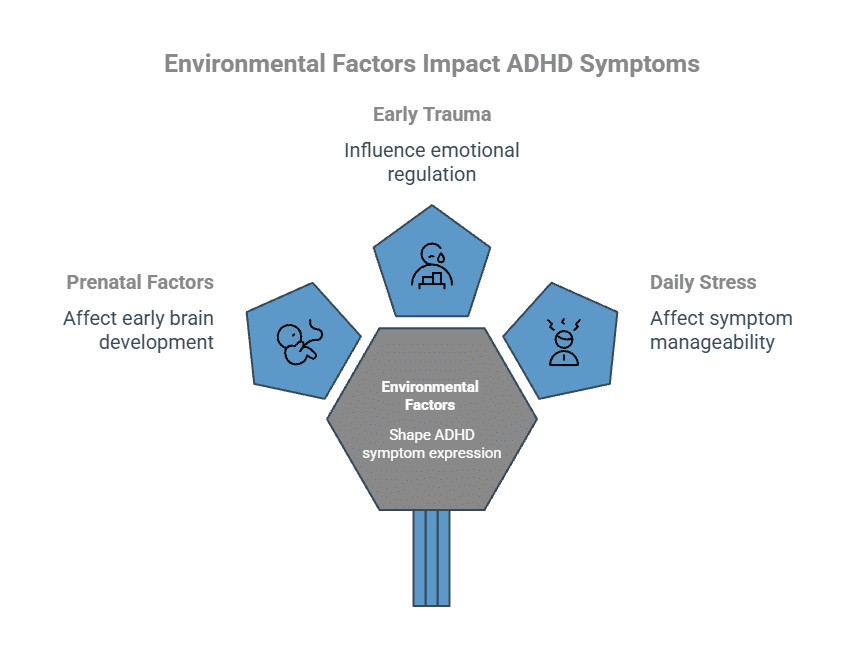
Research shows that genetics plays a major role in ADHD, but inherited risk does not affect everyone in exactly the same way. Researchers have found that certain developmental experiences and environmental influences can affect how ADHD symptoms appear, how severe they become, and how much they impact daily functioning.
While genetics influences ADHD risk, researchers have identified several developmental and environmental factors that may shape how symptoms appear and affect daily functioning. The following factors are among the most commonly studied.
1. Prenatal and Early Development Factors
Some of the earliest influences on brain development occur before and shortly after birth. A report published in PubMed Central suggests that certain prenatal and birth-related factors may be associated with a higher likelihood of ADHD symptoms, particularly in children who already have a genetic predisposition to ADHD.
Commonly studied factors include:
-
Maternal smoking during pregnancy
-
Alcohol exposure during pregnancy
-
High levels of chronic maternal stress
-
Premature birth
-
Low birth weight
-
Pregnancy or birth complications affecting early brain development
These factors may influence neurological development in ways that affect attention regulation, impulse control, and executive functioning later in life.
2. Early Trauma, Neglect, or Significant Loss
According to the PubMedCentral report, Childhood experiences can also influence how ADHD-related challenges appear and affect daily functioning. Chronic stress, trauma, neglect, or significant loss may affect emotional regulation and stress-response systems during key stages of development.
These experiences do not directly cause ADHD, but they can contribute to difficulties that overlap with ADHD symptoms or increase the challenges faced by someone who is already genetically predisposed to the condition.
3. Stress, Sleep, and Daily Structure
Daily experiences can influence how manageable ADHD symptoms feel over time. According to PubMed Central, Poor sleep, inconsistent routines, stress, and limited structure may make attention, organization, emotional regulation, and executive functioning more difficult.
Although these factors do not create ADHD, they can affect symptom severity and day-to-day functioning. In contrast, consistent routines, healthy sleep habits, and supportive environments often help individuals manage ADHD-related challenges more effectively.
Why Do Some People Recognize ADHD Later in Life?
Many people assume ADHD would have been identified during childhood if it were present. However, ADHD often goes unrecognized for years, especially when symptoms are less obvious or when strong support systems help compensate for everyday challenges.
In many cases, the signs were present all along. Structured school environments, parental support, academic strengths, or learned coping strategies may have helped someone manage attention, organization, or time-management difficulties without realizing ADHD was contributing to those struggles.
As responsibilities increase during adulthood, those challenges can become harder to ignore. Managing work deadlines, finances, relationships, parenting responsibilities, and household tasks requires executive functioning skills that ADHD directly affects. As a result, long-standing patterns that once seemed manageable may become more noticeable.
For some families, questions about inherited ADHD begin when one person receives a diagnosis. A parent may recognize familiar attention, organization, or emotional regulation difficulties after seeing similar patterns in their child. In other cases, adults begin exploring ADHD after learning more about their family history and realizing those challenges have existed for years.
Why Adults, Especially Women, Often Go Undiagnosed
ADHD does not always appear as visible hyperactivity. Many adults, particularly women, experience symptoms that are easier to overlook, such as inattentiveness, chronic overwhelm, mental restlessness, or difficulty managing multiple responsibilities consistently.
Strong academic performance, perfectionism, people-pleasing behaviors, or well-developed coping strategies can also make symptoms less noticeable. As a result, ADHD may be mistaken for stress, anxiety, burnout, or personality traits rather than a neurodevelopmental condition.
Greater awareness of adult ADHD has helped many people better understand challenges that previously felt confusing or unexplained. For some, a diagnosis provides clarity not only about their own experiences but also about patterns that may exist across generations within the same family.
How ADHD Can Look Different Within the Same Family?
When ADHD runs in families, symptoms do not always look the same from one person to another. Even relatives who share similar genetic traits may experience ADHD differently depending on age, personality, life circumstances, and individual strengths.
For example, a parent may struggle with chronic procrastination, disorganization, or difficulty managing time, while a child shows more visible signs such as hyperactivity, impulsive behavior, or trouble focusing in school. In another family, one sibling may appear constantly restless and energetic, while another primarily struggles with inattentiveness and forgetfulness.
Some common examples include:
-
A parent who frequently misses deadlines, forgets appointments, or struggles with organization, while their child has difficulty staying seated or completing schoolwork.
-
One sibling is highly talkative and impulsive, while another appears quiet but regularly loses focus and overlooks details.
-
An adult who developed coping strategies that mask symptoms, while a younger family member shows more obvious ADHD-related challenges.
These differences can sometimes make inherited ADHD harder to recognize. Families may not realize similar underlying patterns exist because symptoms appear differently across individuals and stages of life. Understanding this variation can help families better identify ADHD traits, reduce self-blame, and seek appropriate support when needed.
Can You Test for Genetic ADHD?
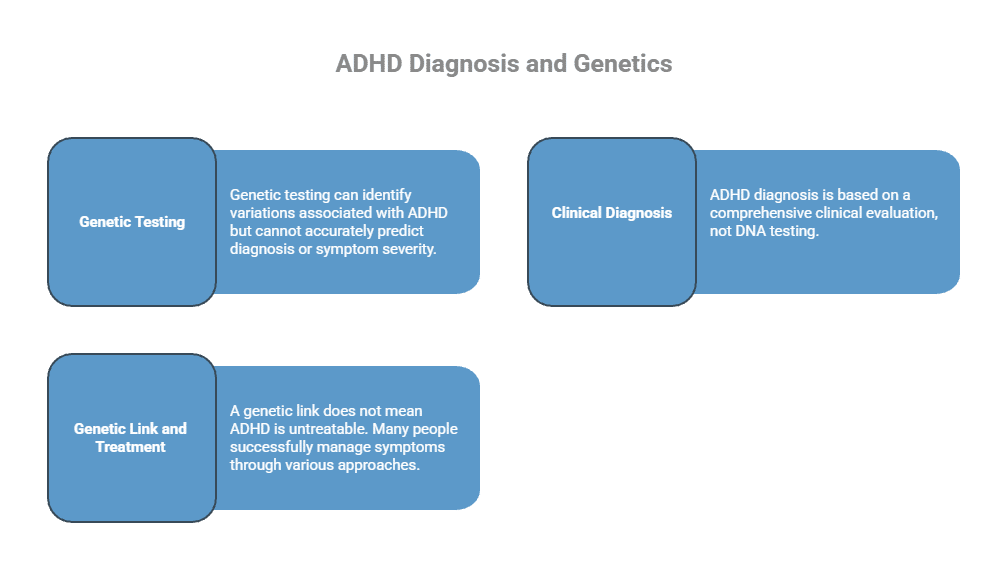
Despite ADHD’s strong genetic link, there is currently no genetic or blood test that can confirm whether someone has ADHD. Researchers have identified many genetic variations associated with ADHD, but the condition is influenced by multiple genes rather than a single inherited mutation.
1. Can Genetic Testing Predict ADHD Risk?
Genetic testing may identify certain genetic variations associated with ADHD, but it cannot accurately predict who will develop the condition or how symptoms will appear. ADHD risk is influenced by many genes working together, along with environmental and developmental factors.
As a result, genetic testing is primarily used in research settings rather than as a diagnostic tool.
2. ADHD Is Still Diagnosed Clinically
ADHD diagnosis is based on a comprehensive clinical evaluation rather than DNA testing. Clinicians evaluate attention, impulsivity, executive functioning, emotional regulation, developmental history, and family history to determine whether symptoms are consistent with ADHD.
They also assess how symptoms affect daily functioning across different settings, such as school, work, relationships, and home life. While genetics helps explain why ADHD often runs in families, a thorough clinical assessment remains the most reliable way to identify the condition.
3. A Genetic Link Does Not Mean ADHD Is Untreatable
Having a genetic predisposition to ADHD does not determine future outcomes. Many people successfully manage symptoms through therapy, behavioral strategies, healthy routines, lifestyle adjustments, and other evidence-based treatment approaches.
Understanding ADHD’s genetic component can help reduce self-blame and encourage individuals and families to focus on practical support and long-term symptom management.
How Can Families Support ADHD More Effectively?
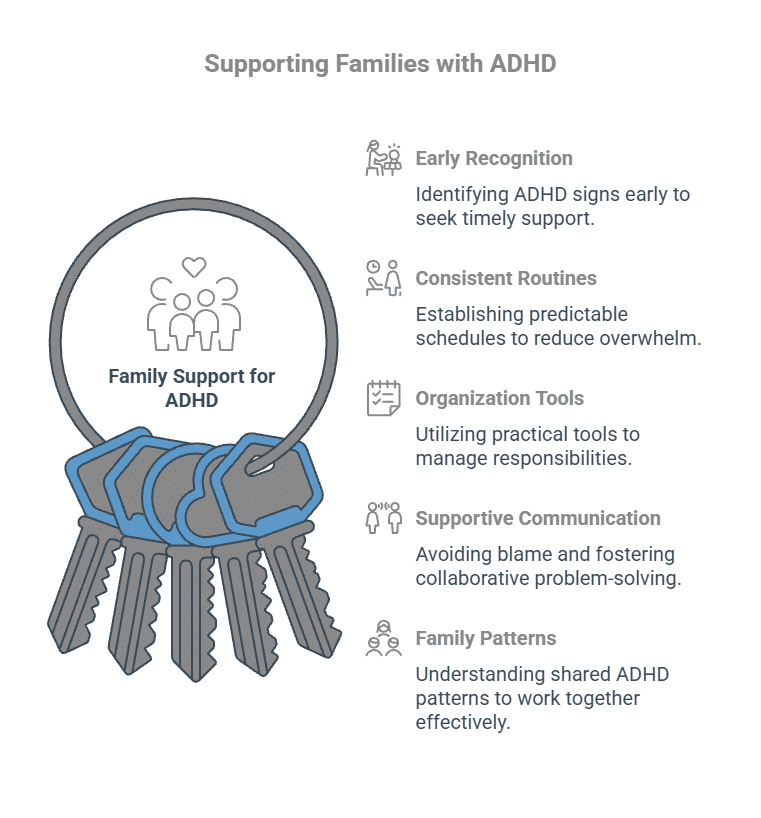
Learning that ADHD often runs in families can raise practical questions for parents. While genetics cannot be changed, recognizing ADHD-related patterns early can help families respond more effectively and reduce unnecessary frustration.
If ADHD runs in the family, parents can often help by:
-
Paying attention to early signs: Difficulties with focus, organization, emotional regulation, impulsivity, or completing tasks may appear differently from one family member to another. Early recognition can make it easier to seek support before challenges begin affecting school, relationships, or daily life.
-
Creating consistent routines: Predictable schedules for sleep, homework, meals, and responsibilities can help reduce overwhelm and improve daily structure.
-
Using practical organization tools: Calendars, visual reminders, checklists, and task-management systems can make responsibilities easier to manage for both children and adults with ADHD.
-
Avoiding blame and criticism: ADHD-related challenges are not typically caused by laziness or a lack of effort. Clear expectations, supportive communication, and collaborative problem-solving are often more effective than repeated criticism.
-
Looking at family patterns as a whole: In some households, a child’s diagnosis may lead parents or siblings to recognize similar attention, organization, or emotional regulation challenges in themselves. Understanding these shared patterns can help families work together more effectively.
When ADHD runs in a family, support often begins with awareness. Recognizing inherited patterns, building practical routines, and creating a supportive home environment can help both children and adults manage ADHD-related challenges more successfully over time.
When Should Someone Seek Professional Support for ADHD?
Occasional distraction, forgetfulness, or restlessness does not automatically mean someone has ADHD. However, it may be time to seek an evaluation when attention difficulties, impulsive behaviors, disorganization, or emotional challenges become persistent and begin interfering with school, work, relationships, or everyday responsibilities.
Some signs that a professional evaluation may help include:
-
Ongoing difficulty focusing or completing tasks
-
Chronic disorganization or poor time management
-
Frequent impulsive behavior or emotional outbursts
-
Academic or workplace struggles despite strong effort
-
Persistent overwhelm with routine responsibilities
-
Relationship conflicts linked to forgetfulness or inconsistency
Many adults do not recognize ADHD until years of struggling with procrastination, burnout, emotional exhaustion, or executive functioning challenges. Others begin questioning ADHD after noticing similar attention or organizational difficulties in a child.
A professional evaluation can help determine whether ADHD or another condition may be contributing to these challenges. Earlier identification often makes it easier to develop effective coping strategies, improve functioning, and reduce difficulties at school, work, and home.
Seeking support is not about labeling normal struggles. It’s about understanding patterns that consistently interfere with quality of life and finding healthier ways to manage them through professional guidance, practical coping strategies, and structured ADHD treatment for kids and families.
How Total Life Counseling Supports ADHD and Families
Learning that ADHD often runs in families can provide answers, but understanding the genetic connection is only one part of the journey. Many individuals and families still need practical support to navigate attention difficulties, emotional regulation challenges, executive functioning struggles, and the impact ADHD can have on daily life.
At Total Life Counseling, we help children, teens, adults, and families better understand how ADHD affects behavior, relationships, school performance, work responsibilities, and everyday routines. Our approach focuses on building practical skills that improve daily functioning while helping clients recognize patterns that may be affecting multiple family members.
Support may include:
-
Building healthier routines and organization systems
-
Improving emotional regulation and stress management
-
Strengthening communication within families and relationships
-
Developing coping strategies for attention and executive functioning challenges
-
Addressing overwhelm, frustration, procrastination, or burnout associated with ADHD symptoms
Because ADHD often affects more than one person within a household, support may also involve helping families better understand inherited behavioral patterns, reduce conflict, and create strategies that work across different ages and life stages.
If ADHD symptoms are affecting school, work, relationships, or family life, professional guidance can help. Book a confidential session with the Total Life Counseling team to gain practical tools, personalized support, and strategies that help individuals and families manage ADHD more effectively over time.
Conclusion
Learning that ADHD often has a genetic component can help explain challenges that may have felt confusing or difficult to understand for years. For many people, that understanding replaces self-blame with greater awareness and helps put long-standing struggles with focus, organization, impulsivity, or emotional regulation into context.
While genetics may influence ADHD risk, it does not determine future outcomes. With early recognition, practical strategies, and appropriate guidance, people with ADHD can learn to manage challenges more effectively and build greater confidence in everyday life, helping to mitigate the increased risk of future complications.
Frequently Asked Questions
Can ADHD be passed down if only one parent has it?
ADHD can be inherited even if only one parent has it. Because ADHD is influenced by multiple genetic factors and external factors, a child may still have a higher likelihood of developing ADHD-related traits when one parent has the condition, similar to how fraternal twins may inherit these traits.
What signs suggest ADHD might run in my family?
Shared patterns of disorganization, impulsivity, forgetfulness, emotional regulation difficulties, chronic lateness, or long-standing attention challenges across multiple family members may suggest ADHD-related traits run in the family.
Is ADHD genetic from the mother or the father?
ADHD-related genetic traits can be inherited from either parent. Current research does not show that ADHD comes more strongly from the mother’s side or the father’s side.
Can ADHD skip generations?
ADHD does not typically skip generations, but it can sometimes appear that way. Symptoms may be overlooked, masked by coping strategies, or expressed differently among family members, making inherited patterns harder to recognize.
Can genetic testing predict ADHD risk?
Genetic testing may identify certain genetic variations associated with ADHD, including those linked to autism spectrum disorder, but it cannot accurately predict who will develop ADHD or how symptoms will appear. ADHD diagnosis still relies on clinical evaluation informed by medical professionals and scientific research rather than solely on genetic testing.
Why do some adults discover ADHD later in life?
Many adults recognize ADHD only after increasing responsibilities make long-standing challenges with organization, focus, time management, or emotional regulation, including the symptoms of ADHD and mental health, more difficult to manage. In most cases, the symptoms existed earlier but were never formally identified by qualified healthcare providers.
What should parents do if ADHD runs in the family?
Parents can help by recognizing ADHD-related patterns early, creating consistent routines, reducing blame-based communication, and seeking support when symptoms begin affecting school, relationships, or daily functioning.
Does having genetic ADHD mean symptoms cannot improve?
No. Although genetics can increase ADHD risk, many people successfully manage symptoms through therapy, practical coping strategies, healthy routines, family support, and other evidence-based treatment approaches.
What is the difference between genetic and hereditary ADHD?
Genetic means a condition is influenced by genes, while hereditary means those genes are passed down through families. Identical twins with ADHD share about an 80% chance of both developing the disorder if one twin has it, highlighting how ADHD is both genetic and hereditary because inherited genes can increase the likelihood of developing ADHD.
Filed in: ADHD, Blog, Gemima McMahon
Share This Story, Choose Your Platform!
Total Life Counseling Center consists of Licensed Counselors, masters level therapists, Español counselors, Licensed Mental Health Counselors, business coaches, and image enhancement coaches who provide counseling for emotional, mental, physical and spiritual care including marriage, individual, family, substance abuse and more. TLC’s family, trauma and marriage experts have been interviewed on National and Local TV/Radio over 200 times for their expert advice on Fox News, OWN, WETV, ABC’s Medical Minute and more. Our skilled counselors are relational, approachable and specialists providing therapy services in the Central Florida area including: Orlando, Winter Park, MetroWest, Windermere, Dr. Phillips, East Orlando, Lake Mary, and Clermont, Boca Raton Florida, and Dallas, TX.
About the Author: Gemima McMahon