

What Is Digital Dopamine and Why Is It So Hard to Stop?

Key Highlights
- Digital dopamine is the brain’s response to fast, repeated digital rewards, driven by scrolling, notifications, and app use
- Dopamine is linked to anticipation, not just pleasure, which makes checking your phone feel hard to resist
- Platforms use variable rewards, algorithms, and infinite scroll to keep engagement continuous
- Frequent screen exposure can raise your reward threshold, making offline activities feel less satisfying
- Common signs include compulsive checking, reduced focus, sleep disruption, and mental fatigue
- At Total Life Counseling (TLC), these patterns are commonly seen in clients, and small, consistent habit changes are often more effective than extreme detox approaches.
You pick up your phone for a quick check, and before you know it, 20 minutes have passed. It happens while waiting, resting, or even when you plan to focus. If you have been wondering why it feels so hard to stop, you are not alone.
What makes this difficult is not just the habit, but how it quietly affects your day. You may struggle to focus, feel restless without your phone, or notice your attention slipping during simple tasks. Over time, this can lead to poor sleep, constant distraction, and a mind that rarely feels at ease.
In this guide, you will understand what digital dopamine is, why it feels addictive, how it impacts your brain and behaviour, and what actually helps you build a healthier, more balanced relationship with technology.
What Is Digital Dopamine?
Digital dopamine refers to the repeated activation of the brain’s reward and anticipation system through activities like scrolling, notifications, and app use. Dopamine is not just a “pleasure chemical.” Research from the National Institute on Drug Abuse (NIDA) and studies referenced in journals like Nature Neuroscience show that dopamine is more closely linked to motivation and anticipation than pleasure itself. It increases when your brain expects a potential reward, which is why checking your phone can feel so compelling.
In digital environments, this system is triggered constantly. Each notification or update signals a possible reward, creating a simple loop:
- Cue: a notification, boredom, or habit
- Action: checking your device
- Reward: something new, interesting, or socially validating
Over time, this loop strengthens and begins to feel automatic.
Digital dopamine is not about lack of control. It reflects how modern technology repeatedly engages your brain’s natural reward system, shaping habits that can become difficult to break.
How Are Platforms Designed to Keep the Dopamine Loop Running?
It would be one thing if digital dopamine were just a side effect of using technology. In reality, it is often part of the design.
Platforms like Instagram, TikTok, and Facebook study human behaviour to keep you engaged. As explained in this breakdown of why technology is engineered to hook your attention, the goal is simple: hold your attention for as long as possible by tapping into your brain’s reward system.
At the core is a key psychological principle:
- Variable Rewards: Unpredictable outcomes drive repeated behaviour. You never know what you will see or how others will respond, which keeps you checking.
This loop is strengthened through:
- Personalised Algorithms: Content is tailored to what keeps you engaged
- Infinite Scroll: No natural stopping point
- Micro-Rewards: Likes and notifications act as frequent triggers
This is why digital addictions and dopamine are increasingly discussed together. This is not about willpower. It is about understanding systems designed to keep you engaged.
What Happens to Your Brain With Digital Dopamine Over Time?
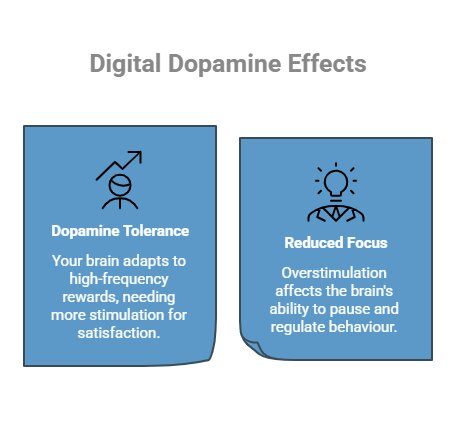
If everyday activities are starting to feel less engaging, there is a reason. Changes in dopamine with digital screen time can shift how your brain experiences reward and focus.
Frequent, fast dopamine signals from screens train the brain to expect constant stimulation. Over time, this raises your reward threshold, making slower activities like reading or conversations feel less satisfying.
Why Does Dopamine Tolerance Build?
This is known as dopamine desensitisation. With repeated exposure:
- Your brain adapts to high-frequency rewards
- More stimulation is needed to feel the same satisfaction
- You return to screens more often without real intention
How Does This Affect Focus and Control?
Overstimulation can also affect the brain’s ability to pause and regulate behaviour:
- Reduced attention span
- More impulsive checking habits
- Difficulty staying with deeper tasks
These effects can be stronger in younger users. As explained in this guide on the effects of technology addiction, developing brains are more sensitive to repeated digital reward cycles. This is not a personal failure. The brain is adaptable, and with small changes, it can return to a healthier balance.
Call for a Complimentary 15 Minute Phone Consultation
Se Habla Español: We have Portuguese and Spanish speaking counselors as well.

How Do You Know If Digital Dopamine Is Affecting You?
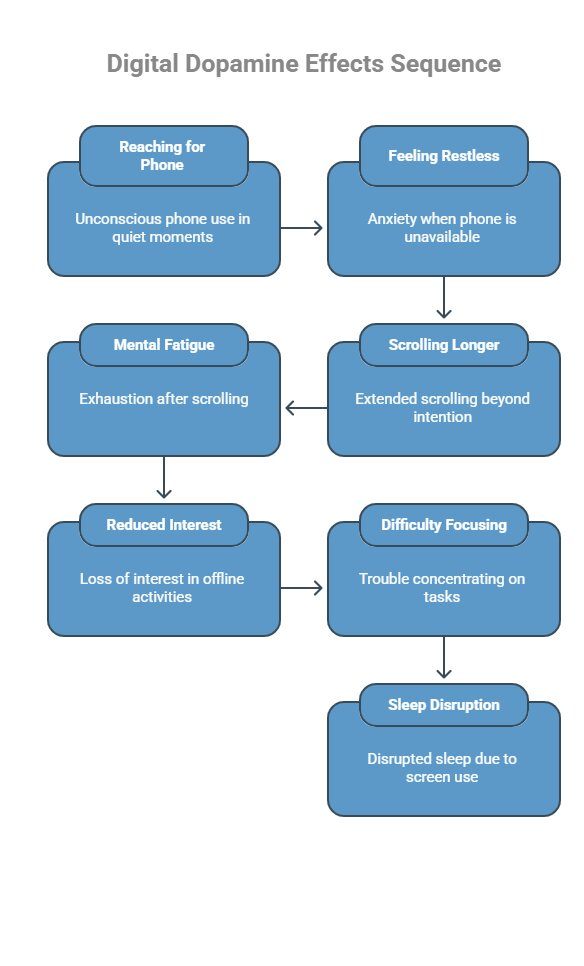
These patterns can be easy to miss because they feel routine. It is important to understand that this is not about weak willpower, but a response to repeated digital stimulation.
You may notice:
- Reaching for your phone in quiet moments without a clear reason
- Feeling restless or anxious without access to it
- Scrolling longer than intended, often followed by mental fatigue
- Reduced interest in slower, offline activities
- Difficulty focusing on tasks or conversations
- Sleep disruption due to late-night screen use
These are signs of how changes in dopamine with digital screen time can affect attention and behaviour over time.
Most people experiencing this are not dealing with a clinical condition. However, these patterns can still impact mental well-being, as explained in the effects of social media addiction.
For children and teens, the effects can be more pronounced due to ongoing brain development. Learn more about kids and social media addiction. Recognising these signs is the first step toward making more intentional changes.
What Are the Long-Term Effects of Digital Dopamine on Mental Health?
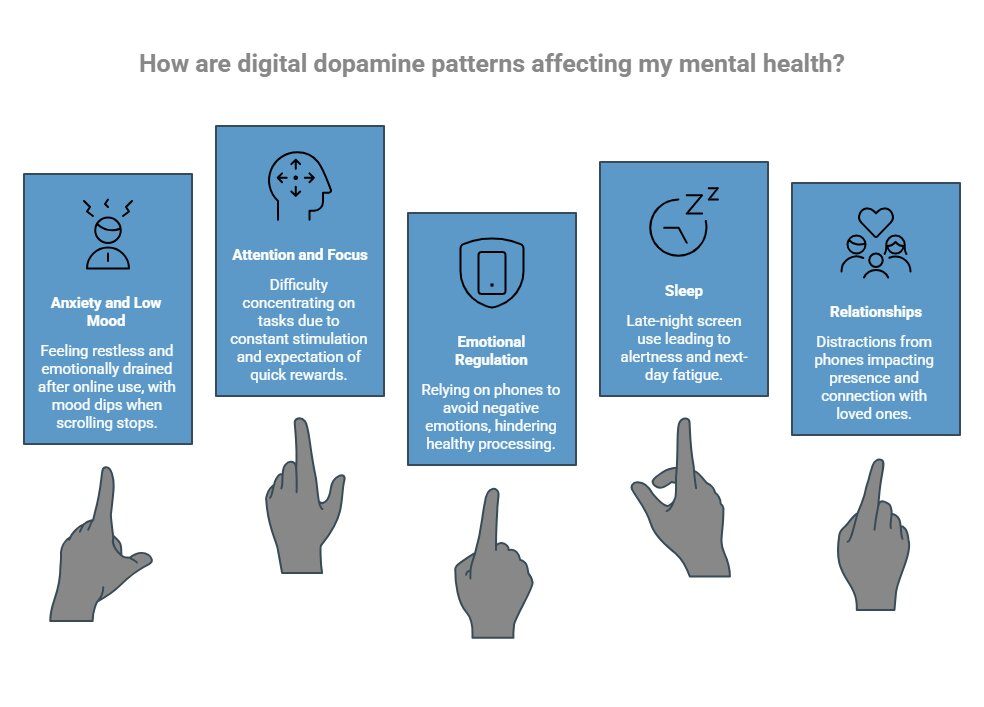
Over time, digital habits can shape how you feel, focus, and connect with others. These changes are often gradual, which makes them easy to miss. Here is how digital dopamine patterns can begin to affect your mental and emotional well-being:
1. Anxiety and Low Mood
You might notice feeling more restless, tense, or emotionally drained after spending time online. It can be hard not to compare your life to what you see on screen. And when the scrolling stops, there is sometimes a dip in mood that pulls you back in again.
2. Attention and Focus
If focusing feels harder than it used to, you are not imagining it. Constant stimulation can train your mind to expect quick rewards. Slower tasks like reading, working, or even having a conversation may start to feel more effortful.
3. Emotional Regulation
It is very common to reach for your phone when you feel bored, stressed, or overwhelmed. In the moment, it helps you avoid those feelings. Over time, this can make it harder to sit with emotions and healthily process them.
4. Sleep
You may plan to sleep on time, then end up scrolling longer than expected. Late-night screen use can leave your mind feeling alert when your body needs rest, which can affect your mood, patience, and energy the next day.
5. Relationships
Phones can quietly slip into moments that matter, like conversations or time with family. Even small, repeated distractions can make it harder to feel fully present and connected.
| Note on Teens and Adolescents: Younger minds are still learning how to manage impulses and emotions. This can make it harder for teens to step away from something designed to hold their attention. It is not about discipline. It is about development. |
|---|
None of this means something is wrong with you. It simply means your brain is responding to a highly stimulating environment. And once you understand that, it becomes easier to take small, meaningful steps toward change.
What Actually Helps: Building a Healthier Relationship With Technology
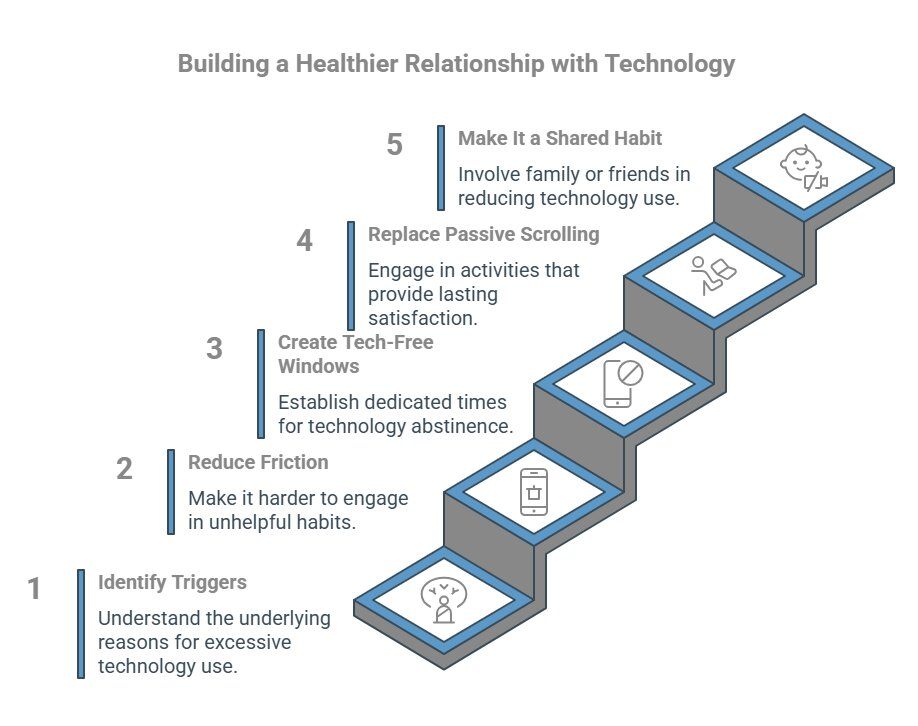
There is no single fix for digital dopamine. What works depends on your habits, triggers, and environment. Instead of trying to quit technology, the focus is on making small, sustainable changes that help you feel more in control.
Here are a few approaches that consistently make a difference:
1. Start With the Trigger, Not Just the Behaviour
Before reducing screen time, notice what is driving it. Is it boredom, stress, loneliness, or avoidance? When you understand the trigger, you can respond to the need behind it, rather than replacing one habit with another.
2. Reduce Friction Instead of Relying on Willpower
Willpower is limited, especially when platforms are designed to hold your attention.
Simple changes can help:
- Move distracting apps off your home screen
- Turn off non-essential notifications
- Keep your phone away from your bed
These shifts make unhelpful habits less automatic.
3. Create Tech-Free Windows That Feel Realistic
You do not need to cut off completely. Start with small, consistent boundaries.
High-impact windows include:
- The first 30 minutes after waking up
- Mealtimes
- The hour before sleep
Even one protected window can improve focus and sleep over time.
4. Replace Passive Scrolling With Effort-Based Activities
Not all dopamine is harmful. The difference lies in how it is earned. Activities like exercise, cooking, reading, or meaningful conversations provide more stable and lasting satisfaction. They may take more effort to start, but they help reset your attention and reward system.
5. Make It a Shared Habit, Especially for Families
Screen habits are shaped by what feels normal at home. Change becomes easier when it is shared. For families, this means setting expectations together rather than enforcing rules on children alone. If you are looking for practical ways to start, these tips to help teens reduce social media usage offer helpful, realistic strategies.
The goal is not to remove technology from your life. It is to use it in a way that supports your focus, well-being, and daily routines.
What Does Digital Dopamine Mean for Your Kids and Teens?
Many parents begin to notice small but meaningful changes. A child may seem more irritable without their phone, less interested in activities they once enjoyed, or more distracted during schoolwork. It can be difficult to tell whether this is a phase or something that needs attention.
Part of the answer lies in how the adolescent brain develops. The reward system becomes highly active during these years, while impulse control is still catching up. This makes repeated digital stimulation more engaging and harder to regulate.
Why Are Kids and Teens More Vulnerable?
Because of this imbalance, digital rewards can feel especially compelling. The brain is wired to seek stimulation, but not yet fully equipped to manage it. Over time, this can make screen-based habits feel automatic rather than intentional.
What Signs Should Parents Watch For?
These patterns often build gradually, which is why they can be easy to miss at first.
- Irritability when devices are taken away
- Reduced interest in offline activities like sports, going outside, hanging out with the family or friends
- Difficulty focusing on schoolwork
- Changes in sleep patterns
- Withdrawing from family or friends
What Helps Build Healthier Habits?
Rather than strict restrictions, a steady and supportive approach tends to work better over time.
- Start conversations without blame or urgency
- Reflect on your own screen habits first
- Set shared boundaries as a family
- Focus on consistency instead of punishment
When Should You Seek Support?
If these patterns begin to affect your child’s mood, relationships, or daily functioning, it may be helpful to seek support early. Guidance can help you understand what is happening and take practical steps to restore balance at home.
How Total Life Counseling Can Support You With Digital Dopamine and Screen Habits
When screen use starts taking more of your time, focus, and mental energy than you intended, it can feel frustrating and difficult to manage. You may notice constant distraction, trouble switching off, or a sense that your attention is not fully your own anymore.
At Total Life Counseling, these experiences are understood with care and without judgment. Licensed therapists provide a supportive space to help you make sense of your habits, understand what is driving them, and build practical strategies that fit your daily life.
You do not have to rely on willpower alone. With the right support, it becomes easier to improve focus, set healthy boundaries with technology, and feel more present in your day-to-day life.
If you feel ready for support, you can schedule a counseling appointment with Total Life Counseling and begin working toward a more balanced and intentional relationship with technology.
Conclusion
Digital dopamine is not something you need to fear, but it is something worth understanding. Many of these patterns are a natural response to highly stimulating technology, not a personal failure. The goal is not to eliminate screens, but to use them more intentionally.
By noticing your triggers, setting small boundaries, and making gradual changes, you can rebuild focus, improve well-being, and create a healthier relationship with technology that feels realistic and sustainable over time.
Licensed Counselors & Therapists
Meet Our Team of Certified & Experienced Professionals
Total Life Counseling Center consists of Licensed Counselors, Masters Level Therapists, Espanol Counselors, Licensed Mental Health Counselors, Business Coaches, Image Enhancement Coaches who provide counseling for emotional, mental, physical and spiritual care including marriage, individual, family, substance abuse and more. Our team of certified and experienced professionals, dedicated to serving a comprehensive spectrum of mental health and relationship issues such as couples, women and men’s issues, children and teens with oppositional defiance, video game addiction, ADHD, ASD, anxiety, depression, and trauma survivors, is here to support and guide you through your journey towards healing and navigating life transitions. This approach not only enhances the effectiveness of the counseling provided but also builds trust within the community and among potential clients, who may be seeking support.
We offer next level counselors specialized in areas such as relationships, video game & drug/alcohol addictions, abuse, trauma, depression, and ADHD. Our Therapists are EMDR (eye movement desensitization) trauma therapy trained, cognitive behavioral therapy, specialize in ADHD and Oppositional Defiant Children, and are also professional Gottman method marriage couples counselors to give the best results to couples and to provide the best comprehensive spectrum of mental health and relationship care for our clients.
Struggling with Anger? We offer 8 hour anger management group therapy!
Discounted Rates and the president of Total Life Counseling Center Jim West does not want to turn people away and we have counselors at various levels of experience at a discounted rate that are trained by our next level counselors!

Jim West
MA, LICENSED MENTAL HEALTH COUNSELOR, national certified counselor
President, Counselor, Guest Speaker, Author, Social Skills, ADHD, ODD, ASD, children, teens, and more!

Dana West
MSW, Licensed clinical social worker
Vice President, Counselor, Guest Speaker, Addictions, Trauma, Couples, Abuse, and more!

Mathew Martin
MS, LICENSED MENTAL HEALTH COUNSELOR
Counselor, Coach, Guest Speaker, Marriage, Individual Males, Substance Abuse and more!

Brandon Feinberg
MS, LICENSED MENTAL HEALTH COUNSELOR
Male Counselor, Licensed Mental Health Counselor specializing in ADHD, Asperger Syndrome, Autism Spectrum Disorders, and more!

Lyris Steuber
MS, licesned marriage & family therapist
Counselor, Coach, Marriage & Family, Play Therapy, Divorce, Adolescent and more!

Valerie Ware
Licensed Psychologist and Behavioral Specialist
Psychological Evaluator, Autism, ADHD, Learning Disabilities, Anxiety, Gifted, Career Pathways, and emotional assessments.

Gemima McMahon
MA, LICENSED MENTAL HEALTH COUNSELOR
Licensed Mental Health Counselor specializing in Women’s issues, Trauma, Anxiety, Depression, Cutting, Couples, Children and Teenagers and more!

Audrey DeBruler
MS, LMHC, Licensed Mental Health Counselor
Children, Adolescents, Young Adults, Faith Based Counseling, Trauma Recovery, Anxiety and more!

David Duany
MA, LICENSED MENTAL HEALTH COUNSELOR
Licensed Mental Health Counselor specializing in ADHD, Social Skills, and Anger Management counseling for children, young adults, and families.

Katherine Waldheim
MS, Registered Mental Health Counseling Intern
Trauma, anxiety, couples counseling, and child & adolescent counseling services and more!

Sarah Dornas Albuquerque
MS – Registered Mental Health Counselor Intern
EMDR, Anxiety, Depression, Children, Teens, Young Adults, English, Spanish and Portugues and Adult Counseling

Frequently Asked Questions
What is digital dopamine in everyday life?
Digital dopamine describes how the brain responds to constant digital stimulation from smartphones, emails, video games, and social media feeds. In the real world, this often shows up as repeated checking habits driven by anticipation, validation, and instant gratification.
Can excessive social media use affect mental health?
Recent studies suggest that excessive social media use and problematic social media use are linked to mental health issues like anxiety, low mood, and reduced quality of life. This is especially relevant for young adults navigating constant digital stimulation and social comparison.
What is digital dopamine, and how does it affect our brains?
Digital dopamine refers to how repeated digital rewards trigger the brain’s motivation system. Frequent exposure can rewire attention patterns, making focus harder and increasing the urge to seek constant stimulation through screens.
Why is digital media so addictive compared to other activities?
Digital platforms are designed for instant rewards, making digital dopamine addiction more likely. Unlike slower real-world activities, constant notifications, scrolling, and updates keep the brain engaged, reinforcing habits that are difficult to break.
What are the signs of digital dopamine addiction?
Signs include compulsive phone checking, reduced focus, poor sleep, and difficulty staying offline. Over time, digital addictions and dopamine patterns may lead to restlessness, irritability, and a constant need for stimulation.
How do social media platforms trigger dopamine addiction?
Social platforms use likes, comments, and endless feeds to create reward loops. This repeated stimulation reinforces behaviour, contributing to digital addictions are drowning us in dopamine, where users seek continuous engagement without real satisfaction.
Can a dopamine detox help reduce digital addiction?
A dopamine detox can help reset habits by reducing constant stimulation. While not a cure, it creates awareness and helps break automatic patterns linked to digital dopamine addiction, making it easier to rebuild healthier digital routines.
What steps can individuals take to fight digital dopamine overload?
Start with small changes like limiting screen time, disabling notifications, and creating device-free periods. As digital dopamine is consuming America, building intentional habits and increasing offline activities can help restore balance and improve focus.
Are digital detox strategies effective long-term?
A digital detox can help in the short term, but lasting change comes from gradual habit shifts. Approaches like cognitive behavioral therapy focus on identifying triggers, reducing overuse, and replacing habits with healthier behaviours rather than complete restriction.
Are there helplines or resources available for digital addiction?
Yes, support is available. You can speak with licensed therapists, use mental health helplines, or explore digital wellbeing programs. Many counselling services also offer guidance for screen-related habits, helping you build healthier patterns and address underlying triggers in a supportive, structured way.
Filed in: Blog, digital dopamine, Jim West
Share This Story, Choose Your Platform!
Total Life Counseling Center consists of Licensed Counselors, masters level therapists, Español counselors, Licensed Mental Health Counselors, business coaches, and image enhancement coaches who provide counseling for emotional, mental, physical and spiritual care including marriage, individual, family, substance abuse and more. TLC’s family, trauma and marriage experts have been interviewed on National and Local TV/Radio over 200 times for their expert advice on Fox News, OWN, WETV, ABC’s Medical Minute and more. Our skilled counselors are relational, approachable and specialists providing therapy services in the Central Florida area including: Orlando, Winter Park, MetroWest, Windermere, Dr. Phillips, East Orlando, Lake Mary, and Clermont, Boca Raton Florida, and Dallas, TX.
About the Author: Jim West