

Is Social Media Addiction in Kids Disrupting Daily Life?

Key Highlights
-
Kids addicted to social media show emotional, behavioural, and attention changes early
-
Addiction involves anxiety, dependency, and compulsive scrolling behaviour patterns
-
Platforms are designed to hold attention using dopamine-driven engagement loops
-
Sleep disruption and reduced academic focus are common early warning signs
-
Emotional validation from likes can strongly impact a child’s self-esteem
-
Lack of offline activities increases dependence on social media usage daily
-
Parental guidance works best with trust, consistency, and open communication in the united states.
-
Balanced screen habits improve mental health, relationships, and daily routines
-
Early intervention helps prevent long-term emotional and behavioural dependency
It is hard to watch your child change and not know why. One day, they are curious, energetic, and engaged with the world around them. Then slowly, almost without you noticing, the phone becomes the centre of everything. Meals, conversations, sleep, and the things they used to love all start to take a back seat.
If you have been feeling worried, frustrated, or even a little helpless, that is completely understandable. Parenting in the age of social media is genuinely difficult, and no one handed you a guide for this.
Recent studies show that social media addiction is rising among children. Nearly 40% of kids ages 8 to 12 use social media platforms despite age restrictions, while about 11% of adolescents show signs of problematic use, such as loss of control and withdrawal symptoms. These figures highlight the importance of monitoring and discussing healthy social media habits with your child.
The good news is that understanding the problem is the first step toward solving it. In this blog, you will learn how to recognise signs of social media addiction, its daily impact, and practical steps to restore healthy balance.
What Is Social Media Addiction in Kids?
Most kids today grow up with a phone in their hand and a feed that never runs out. Scrolling, liking, and checking notifications have become second nature and for many parents, it’s hard to know when that crosses a line.
Social media addiction in kids isn’t about how much time your child spends online. It’s about what happens when they’re not using social media platforms. Over time, children may become preoccupied with social media, feel irritable when they cannot access it, and continue using it despite negative effects on sleep, mood, relationships, or daily activities.
The platforms themselves are designed to keep users hooked, and children’s developing brains are especially vulnerable to that. This doesn’t mean you’ve failed as a parent. It just means your child needs a little more support navigating a world that’s built to grab their attention.
What Are the Signs of Social Media Addiction in Children?
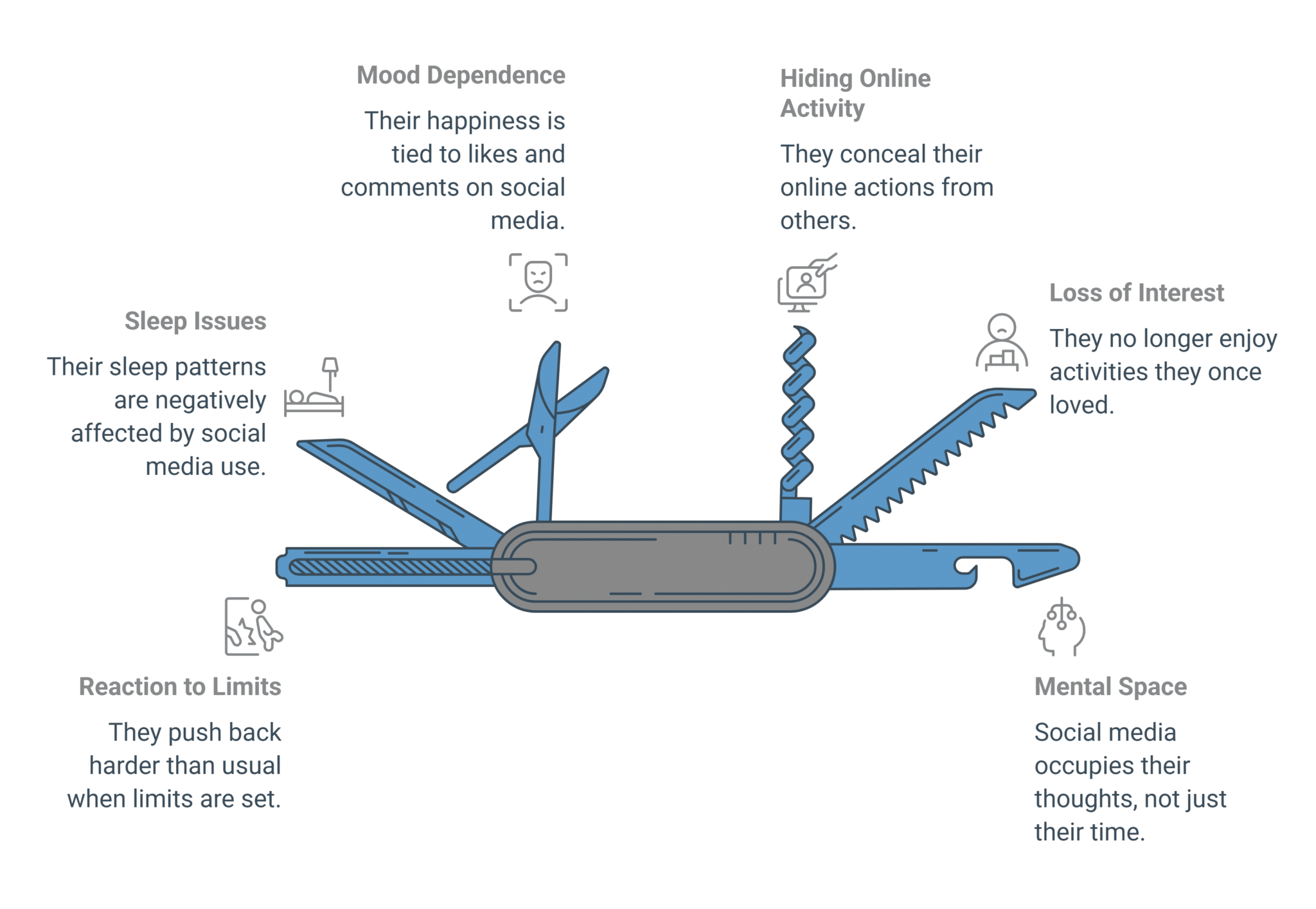
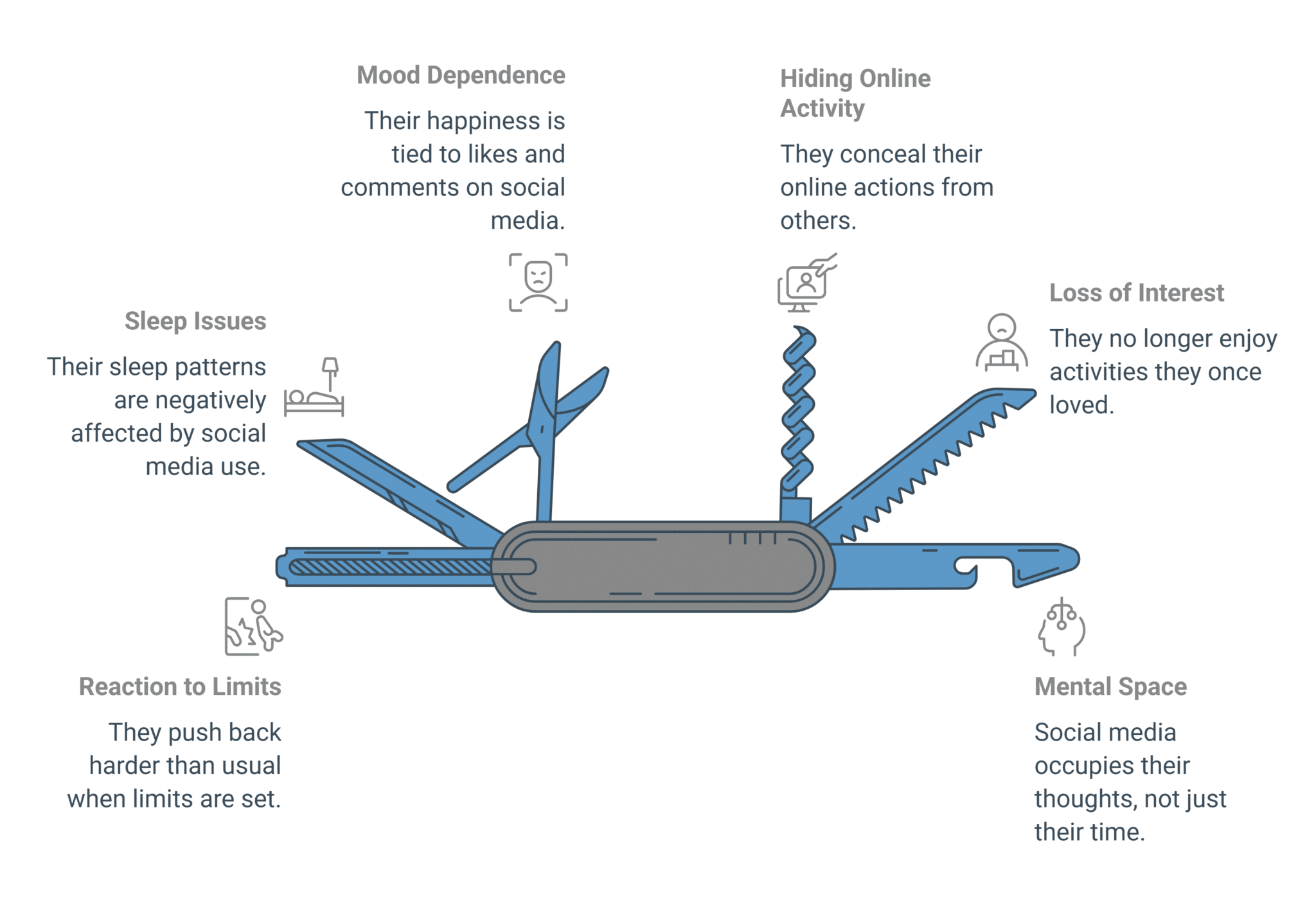
Every child is different, but some patterns are hard to ignore. If you’ve noticed a shift in your child’s mood, behaviour, or habits lately, these signs might help you make sense of what’s going on.
1. Their Reaction to Limits Goes Beyond Typical Pushback
Grumbling or asking for five more minutes is normal. It’s a different picture if your child has a meltdown, screams, or becomes physically agitated almost every time their screen time ends, especially if it’s been happening for weeks and isn’t easing up.
2. Social Media Takes Up Their Mental Space, Not Just Their Time
Most kids think about what they’ll do online later. It becomes a concern when your child checks their phone the moment they wake up, brings up social media multiple times during homework, or seems distracted and irritable, which can lead to increased risks of suicidal ideation.
Example: If your child is eating dinner with the family but keeps glancing at where their phone usually sits, asks to check it mid-meal, or seems distracted and irritable for the first 20 to 30 minutes after logging off, that’s the platform occupying space it shouldn’t for an excessive amount of time.
3. Their Sleep Is Suffering
Late-night scrolling, sneaking phones after bedtime, or waking up to check notifications are common signs. Poor sleep then affects their mood, focus, and energy through the day.
4. They’ve Lost Interest in Other Activities
Hobbies, sports, or time with friends they once enjoyed now feel less appealing compared to being online. Social media has quietly become their default source of fun.
5. Their Mood Depends on Likes and Comments
If your child feels great after a post does well and crushed when it doesn’t, their self-worth is becoming tied to online validation. That’s an emotional pattern worth watching closely.
6. They Hide What They’re Doing Online
Switching screens, deleting apps, or being secretive about who they talk to can signal that they know their usage has gone too far, or that something online feels too important to risk losing, indicating the increasing rates of social media addiction among the world’s population.
Example: If your child is clearing their browser history every day, you discover a second account you didn’t know about, or they switch screens the moment you walk into the room, and this happens repeatedly rather than once, it suggests they know their usage has gone further than they want you to see.
Spotting these signs early doesn’t mean jumping to conclusions. It means paying attention to the pattern, not just the moment.
What Causes Social Media Addiction in Kids?
Social media addiction rarely happens overnight. It builds gradually, and often there are real reasons behind it. Understanding what’s driving your child’s behaviour makes it much easier to help them.
-
Dopamine loops: Dopamine isn’t just a “feel-good” chemical. Its bigger role is creating the urge to check, click, or scroll again, often more than the pleasure of the reward itself. Every like, comment, or notification taps into this, creating a cycle where kids feel compelled to check back, not unlike gambling, where it’s the unpredictability of the reward that keeps pulling them in.
-
Low self-esteem: Online validation feels easier and more immediate than navigating real-world relationships, a sentiment echoed by many young adults as well.
-
Escapism: When real life feels overwhelming, whether from school pressure, loneliness, or family stress, social media becomes a place to switch off and disappear for a while.
-
Fear of missing out: Social media creates a constant stream of moments, trends, and conversations. Kids feel genuine pressure to stay plugged in so they don’t feel left out of what their peers are doing or saying.
-
Validation seeking: When likes and views become the measure of self-worth, children start creating content for approval rather than genuine connection, often shaped by what their peers post, like, and praise. The pressure to match a friend’s highlight reel or keep up with what’s trending pushes kids to chase validation rather than express themselves. That’s a fragile foundation for confidence.
Understanding the cause behind your child’s behaviour is half the battle. Once you know what’s fuelling it, the path to helping them becomes a lot clearer, and that’s exactly what the next section covers.
How Does Social Media Addiction Affect Children?
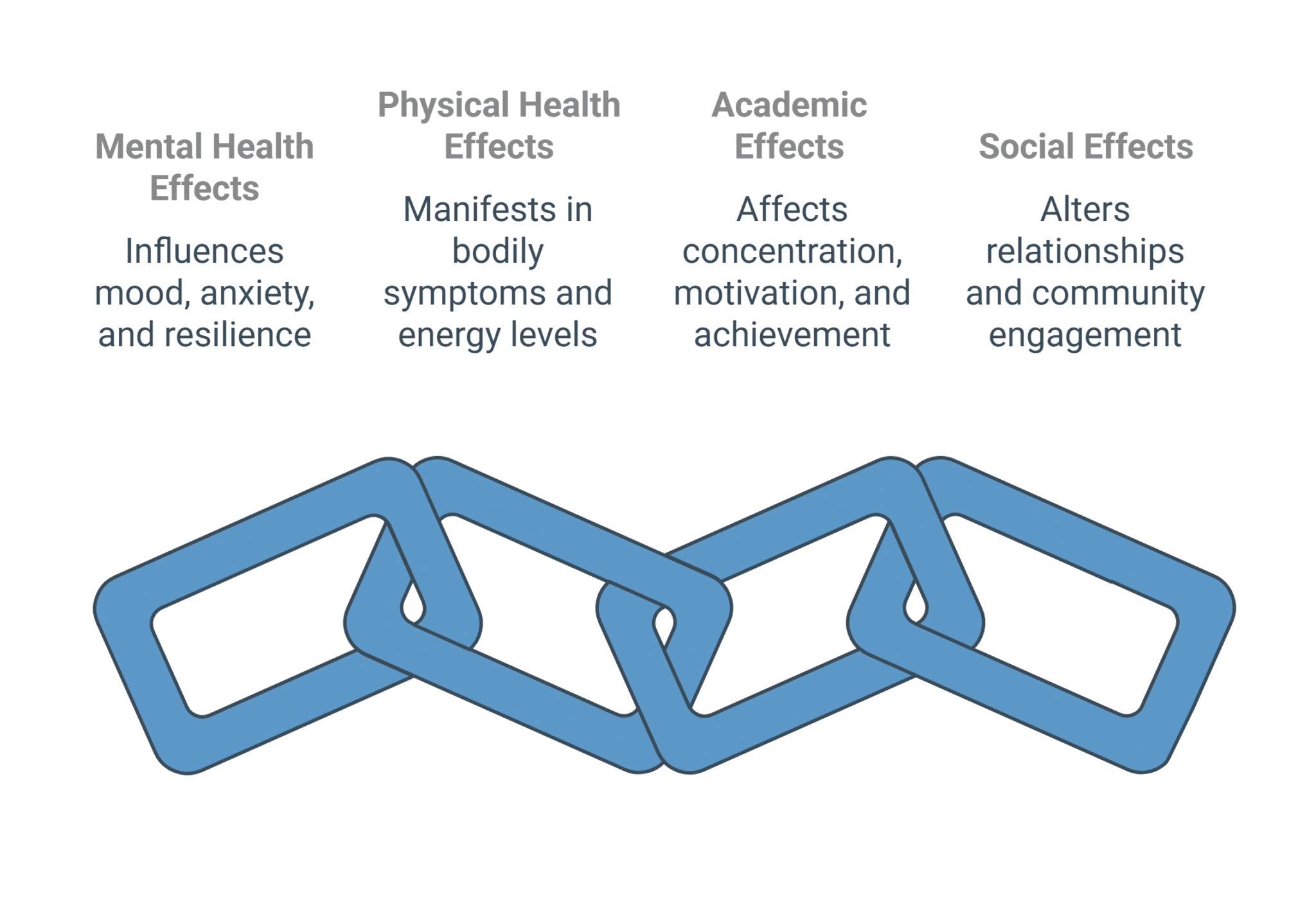
When social media sites use starts to take over, the effects on teen mental health and problematic social media users’ digital technology use don’t stay contained to screen time. They spill into every part of a child’s life, overshadowing the benefits of social media, including various risk factors associated with digital technology use, such as the risk of depression. Here’s what that can look like across four key areas.
1. Mental Health Effects
The emotional toll is often the first thing parents notice. Kids who are heavily dependent on social media are more likely to experience anxiety, depression, and low self-esteem.
Constantly comparing themselves to curated highlight reels, chasing likes, and absorbing negative comments can quietly chip away at how kids see themselves. This emotional cycle is at the heart of why social media is so addictive for kids. The more validation they chase online, the more fragile their sense of self can become offline.
2. Physical Health Effects
It might not look like a physical problem, but the body feels it too. Lack of sleep due to poor sleep is one of the most common consequences, with many children staying up late scrolling or waking up to check notifications.
Over time, this leads to fatigue, headaches, and weakened immunity. Heavy social media use has been linked to higher rates of anxiety, depression, and other mental health problems, including suicidal thoughts in kids and teens. The risk often increases when scrolling replaces sleep, physical activity, and face-to-face interactions, while cycles of comparison and validation-seeking can further affect emotional well-being over time.
3. Academic Effects
When a child is frequently distracted by social media or video games, it can become harder to stay focused on lessons and homework. Constant notifications, multitasking, and the urge to check devices may interrupt concentration and affect academic performance over time.
Missed sleep compounds the problem, leaving kids too tired to retain information or engage in class. Teachers and parents often notice a gradual decline in grades before they connect it to screen habits.
4. Social Effects
There’s a real irony here. At a time when social interaction is more common than ever, many children still feel lonely. Being constantly connected doesn’t always lead to meaningful connection. Kids who are heavily addicted to social media often struggle with face-to-face conversations, find in-person friendships less stimulating, and withdraw from family interactions.
Studies suggest that a significant percentage of kids addicted to social media report feeling more isolated despite being constantly online, putting them at higher risk for mental health issues and experiencing the negative effects on their social interactions. Real relationships require patience and effort, and for children used to the instant feedback of social media, that can start to feel like too much.
The effects of social media on young people build on each other quietly. A child losing sleep loses focus in school. A child seeking online validation withdraws from real friendships, which can lead to poor mental health and body image issues. Understanding how many kids are addicted to social media and what the effects of social media are costing them makes it clear that this isn’t something to wait and see on. The earlier you step in, the better.
If something feels off with your child’s relationship with social media, trust that instinct. Speak to one of our counsellors and get the support your family deserves.
Call for a Complimentary 15 Minute Phone Consultation
Se Habla Español: We have Portuguese and Spanish speaking counselors as well.

What Can Parents Do When Their Kid Is Addicted to Social Media?
The good news is that parents have more influence than they think. Small, consistent changes at home can make a real difference. Here is where to start.
1. Set Clear Digital Boundaries
Kids do not do well with vague rules. Be specific and set a good example.
-
Decide on screen-free times as a family, such as during dinner, one hour before bed, and the first 30 minutes after school
-
Use built-in phone features like iOS Screen Time or Android Digital Wellbeing to set daily app limits
-
Make the rules consistent so your child knows what to expect every day
For some families, a simple rule like “phones charge in the kitchen overnight” can improve sleep quality almost immediately.
2. Encourage Offline Activities
The goal is not to take something away. It is to replace it with something better.
-
Board games and strategy games like chess, Scrabble, or Uno build focus and social skills
-
Outdoor activities like cycling, basketball, swimming, or even a daily walk create natural dopamine without a screen
-
Creative hobbies like drawing, cooking, or building things give kids a sense of achievement social media cannot replicate
When a child has something they genuinely enjoy offline, the pull of social media weakens on its own.
3. Model Healthy Tech Use
Kids notice everything. If you are scrolling through social media accounts and social media apps on your smartphone at dinner, the message your child receives is that screens come first, which can lead to common symptoms of problematic social media use and even serious mental health issues, impacting public health. Put your phone down during family time and be intentional about it, especially considering the rising smartphone use among children.
4. Keep Open, Non-Judgmental Communication
Do not make social media the enemy. Instead, get curious.
-
Ask your child what they enjoy watching or who they follow
-
Talk about what they feel when they put the phone down, as using social media for extended periods could lead to higher rates of anxiety and depression.
-
Share your own struggles with screen time so they feel less alone
When kids feel safe talking to you, they are far more likely to come to you when something online troubles them.
5. Use Parental Control Tools
Parental control tools can help monitor screen time, filter content, and limit screen time by setting healthy boundaries, giving parents added peace of mind regarding social media addiction treatment options.
But a tool is only as effective as the trust surrounding it. If your child discovers restrictions without understanding why they exist, it can feel like surveillance rather than care. Explaining why they are used helps address concerns like how social media is addictive for kids and creates understanding instead of resistance.
These tools should be seen as a safety net, not a complete solution. Combined with open communication and trust, they support healthier long-term digital habits rather than replace them.
6. Create a Family Media Plan
A family media plan sets agreed guidelines around when and how screens are used, covering mealtimes, bedtime, and daily limits. Keep it simple, put it somewhere visible, and revisit it as your child grows. The goal isn’t fewer screens. It’s a healthier relationship with them.
Rules that come out of nowhere rarely stick. But when children have a say in shaping boundaries, they’re far more likely to respect them.
Every child is different, and no single approach works for every family. What matters most is that you stay consistent, stay patient, and stay connected with your child through the process of addressing your kid social media addiction and use of social media on online platforms.
Children with ADHD, autism, or other developmental differences may need a more individualized approach. What works well for one child may not work the same way for another.
When Should You Seek Professional Support?
Helping your child at home goes a long way, but sometimes the situation calls for more than a family conversation. If you’re noticing any of the following, it may be time to seek professional help and speak to a professional.
-
Significant changes in mood, such as increased anxiety, irritability, or sadness, which could indicate levels of depression.
-
Withdrawing from friends, family, or activities they once enjoyed
-
Persistent sleep problems linked to late-night screen use
-
Significant changes in mood, such as increased anxiety, irritability, or sadness
-
Strong emotional reactions when screen time is limited
-
Physical aggression when a phone or device is taken away
-
Damaging objects or hurting themselves during screen-related conflicts
-
Feeling like nothing you’ve tried is helping
These are signs that the situation has moved beyond a habit and needs professional eyes. You don’t have to figure this out alone. Getting the right support early means your child gets healthier coping tools before the pattern becomes harder to shift.
Is Screen Time Becoming a Problem? Total Life Counseling Helps
Watching your child struggle and not knowing how to reach them is one of the hardest parts of parenting. If social media has started affecting their mood, relationships, or sense of self, it may contribute to concerning trends such as increasing suicide rates, and you don’t have to navigate that alone.
If social media use continues to affect your child’s well-being despite your efforts at home, professional support may help uncover the emotional needs, stressors, or challenges that are driving the excessive use behavior, which are common symptoms of social media addiction, associated with your child’s social media addiction.
At Total Life Counseling, we provide a warm, non-judgmental space where children can feel safe, heard, and understood.
How Total Life Counseling supports families:
-
Individual counseling for children and teens struggling with screen dependency and emotional challenges, including evidence-based approaches like cognitive behavioral therapy.
-
Specialised support for anxiety, depression, ADHD, and Autism Spectrum Disorder.
-
Social skills groups to help children rebuild real-world confidence and connections.
-
Play therapy for younger children who express themselves better through activity.
-
Online counseling for families who prefer support from home.
-
Summer camps that give children opportunities to practice social skills, build confidence, stay active, and engage with others away from screens in a structured, supportive environment.
If you’re ready to take that step, schedule a counseling appointment with Total Life Counseling today.
Conclusion
Social media addiction is not just about screen time but often reflects deeper needs like connection, validation, stress relief, or boredom coping, which can be linked to internet addiction as well. Understanding this can help improve mental health outcomes, enabling parents to respond with more patience and less frustration.
The most effective approach combines clear boundaries, open communication, and encouraging offline activities. Simple steps like screen-free meals, device-free bedrooms, and daily hobbies work best when applied consistently.
Small changes made consistently can have a meaningful impact over time. The goal is not to eliminate technology, but to help children develop a healthier relationship with it.
Licensed Counselors & Therapists
Meet Our Team of Certified & Experienced Professionals
Total Life Counseling Center consists of Licensed Counselors, Masters Level Therapists, Espanol Counselors, Licensed Mental Health Counselors, Business Coaches, Image Enhancement Coaches who provide counseling for emotional, mental, physical and spiritual care including marriage, individual, family, substance abuse and more. Our team of certified and experienced professionals, dedicated to serving a comprehensive spectrum of mental health and relationship issues such as couples, women and men’s issues, children and teens with oppositional defiance, video game addiction, ADHD, ASD, anxiety, depression, and trauma survivors, is here to support and guide you through your journey towards healing and navigating life transitions. This approach not only enhances the effectiveness of the counseling provided but also builds trust within the community and among potential clients, who may be seeking support.
We offer next level counselors specialized in areas such as relationships, video game & drug/alcohol addictions, abuse, trauma, depression, and ADHD. Our Therapists are EMDR (eye movement desensitization) trauma therapy trained, cognitive behavioral therapy, specialize in ADHD and Oppositional Defiant Children, and are also professional Gottman method marriage couples counselors to give the best results to couples and to provide the best comprehensive spectrum of mental health and relationship care for our clients.
Struggling with Anger? We offer 8 hour anger management group therapy!
Discounted Rates and the president of Total Life Counseling Center Jim West does not want to turn people away and we have counselors at various levels of experience at a discounted rate that are trained by our next level counselors!

Jim West
MA, LICENSED MENTAL HEALTH COUNSELOR, national certified counselor
President, Counselor, Guest Speaker, Author, Social Skills, ADHD, ODD, ASD, children, teens, and more!

Dana West
MSW, Licensed clinical social worker
Vice President, Counselor, Guest Speaker, Addictions, Trauma, Couples, Abuse, and more!

Mathew Martin
MS, LICENSED MENTAL HEALTH COUNSELOR
Counselor, Coach, Guest Speaker, Marriage, Individual Males, Substance Abuse and more!

Brandon Feinberg
MS, LICENSED MENTAL HEALTH COUNSELOR
Male Counselor, Licensed Mental Health Counselor specializing in ADHD, Asperger Syndrome, Autism Spectrum Disorders, and more!

Lyris Steuber
MS, licesned marriage & family therapist
Counselor, Coach, Marriage & Family, Play Therapy, Divorce, Adolescent and more!

Valerie Ware
Licensed Psychologist and Behavioral Specialist
Psychological Evaluator, Autism, ADHD, Learning Disabilities, Anxiety, Gifted, Career Pathways, and emotional assessments.

Gemima McMahon
MA, LICENSED MENTAL HEALTH COUNSELOR
Licensed Mental Health Counselor specializing in Women’s issues, Trauma, Anxiety, Depression, Cutting, Couples, Children and Teenagers and more!

Audrey DeBruler
MS, LMHC, Licensed Mental Health Counselor
Children, Adolescents, Young Adults, Faith Based Counseling, Trauma Recovery, Anxiety and more!

David Duany
MA, LICENSED MENTAL HEALTH COUNSELOR
Licensed Mental Health Counselor specializing in ADHD, Social Skills, and Anger Management counseling for children, young adults, and families.

Katherine Waldheim
MS, Registered Mental Health Counseling Intern
Trauma, anxiety, couples counseling, and child & adolescent counseling services and more!

Sarah Dornas Albuquerque
MS – Registered Mental Health Counselor Intern
EMDR, Anxiety, Depression, Children, Teens, Young Adults, English, Spanish and Portugues and Adult Counseling

Frequently Asked Questions
Is social media addiction a legitimate concern?
Yes. Excessive social media use can affect sleep, mood, attention, relationships, and daily functioning. While not every child develops problematic use, the risks are significant enough to warrant attention.
What is the main cause of children’s social media addiction?
There is no single cause. Social media platforms are designed to encourage repeated engagement through notifications, rewards, and social feedback, while emotional needs and boredom can also contribute.
What age group is most affected by social media addiction?
Adolescents and teenagers are generally considered the most vulnerable because social connection, peer approval, and identity development become especially important during these years.
Why are Kids so Addicted to Screens?
Kids are drawn to screens due to instant rewards, endless content, social validation, and dopamine-driven engagement loops that make social media and games highly engaging and hard to stop.
How does social media addiction affect kids’ mental health?
It can increase anxiety, low self-esteem, depression, and emotional dependence on likes or comments, while also causing stress from comparison, sleep disruption, and reduced real-world social confidence.
Filed in: Blog, Matthew Martin, Video and Social Media Addiction
Share This Story, Choose Your Platform!
Total Life Counseling Center consists of Licensed Counselors, masters level therapists, Español counselors, Licensed Mental Health Counselors, business coaches, and image enhancement coaches who provide counseling for emotional, mental, physical and spiritual care including marriage, individual, family, substance abuse and more. TLC’s family, trauma and marriage experts have been interviewed on National and Local TV/Radio over 200 times for their expert advice on Fox News, OWN, WETV, ABC’s Medical Minute and more. Our skilled counselors are relational, approachable and specialists providing therapy services in the Central Florida area including: Orlando, Winter Park, MetroWest, Windermere, Dr. Phillips, East Orlando, Lake Mary, and Clermont, Boca Raton Florida, and Dallas, TX.
About the Author: Matthew Martin