
Is Therapy for Work-Life Balance the Support You Need?

Key Highlights
- Therapy for work-life balance helps you manage stress, boundaries, and emotional exhaustion without guilt
- Psychological counseling for work-life balance supports both career performance and personal well-being
- Work-life balance therapy teaches practical tools for saying no, prioritizing, and reducing burnout
- Occupational and work therapy address how your job environment impacts your mental health
- Counseling helps high-pressure professionals, including in-house counsel, cope with constant responsibility
- You do not need to wait for burnout to seek help; early support makes change feel more manageable
- Total Life Counseling offers compassionate support to help you rebalance work and life with care
Some days, it feels like your job follows you everywhere. Even when you are home, your mind is still at work. You may be answering emails late at night, thinking through tomorrow’s tasks, or feeling a quiet pressure that never really turns off.
If this sounds familiar, you are not doing anything wrong. You are responding to real expectations and responsibilities. Still, living in a constant state of stress can slowly affect your mood, relationships, sleep, and overall sense of well-being.
This is where therapy for work-life balance can offer steady, compassionate support. You do not have to figure this out alone. With the right guidance, it is possible to care about your career and your mental health at the same time.
What Is Therapy for Work-Life Balance?
Therapy for work-life balance is a focused form of counseling that helps you understand how work stress is affecting your mental health, relationships, and daily life. It offers a calm space to explore why things feel overwhelming and what needs to change for life to feel more sustainable.
Rather than just improving time management, therapy looks at expectations, responsibilities, and beliefs about success that may be keeping you in a constant state of pressure. The goal is to help you care about your work without neglecting your own well-being.
How Does This Differ From General Stress Counseling?
General stress counseling supports people facing a wide range of life stressors, such as family issues, health concerns, or major transitions. Therapy focused on work-life balance looks more specifically at the strain created by the overlap between professional demands and personal life.
Here’s how they differ:
| Criteria | General Stress Counseling | Work-Life Balance Therapy |
|---|---|---|
| Primary Focus | Addresses stress from multiple life areas | Focuses on stress tied to work and personal life boundaries |
| Emotional Support | Helps with overall emotional regulation | Targets have difficulty disconnecting after work |
| Coping Approach | May explore broad coping strategies | Addresses guilt around rest and taking breaks |
| Daily Responsibilities | Supports stress from various responsibilities | Works on constant mental preoccupation with work |
| Underlying Pressures | Looks at general sources of pressure | Examines how self-worth is tied to productivity |
Beyond calming stress, work-life balance therapy also looks at the beliefs driving it, such as feeling the need to always be available or constantly perform. When needed, it may include discussions about workload, boundaries, or role expectations if your situation is affecting your well-being over time.
Feeling stretched thin and putting yourself last? Are You Making Time for Self Care? for six simple, realistic ways to recharge and care for yourself without guilt.
Why Do People Struggle to Maintain Work-Life Balance?
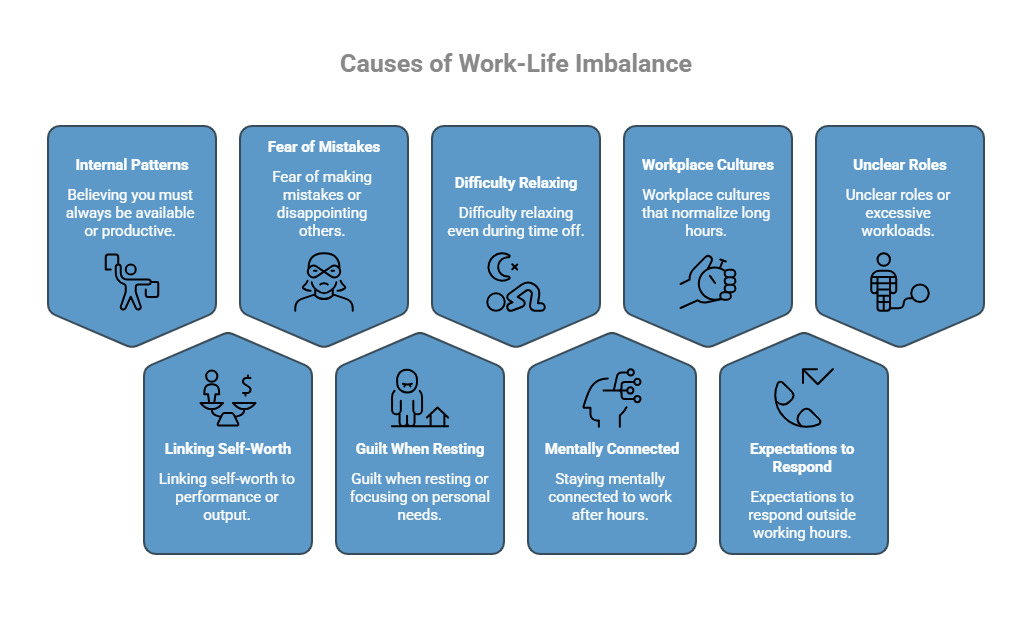
Work-life imbalance is rarely about laziness or poor effort. It often grows from a mix of internal patterns and external pressures that make it hard to disconnect, rest, or feel present outside work.
Common reasons include:
- Believing you must always be available or productive
- Linking self-worth to performance or output
- Fear of making mistakes or disappointing others
- Guilt when resting or focusing on personal needs
- Difficulty relaxing even during time off
- Staying mentally connected to work after hours
- Workplace cultures that normalize long hours
- Expectations to respond outside working hours
- Unclear roles or excessive workloads
These patterns are usually shaped by responsibility and high standards, not personal failure. With support, people can learn to set healthier boundaries, shift unhelpful beliefs, and create a more sustainable balance between work and personal life.
Watch this video for simple, calming ways to ease social anxiety. Learn small steps to feel more confident and comfortable in social situations.
How Counseling Can Help with Work-Life Balance?
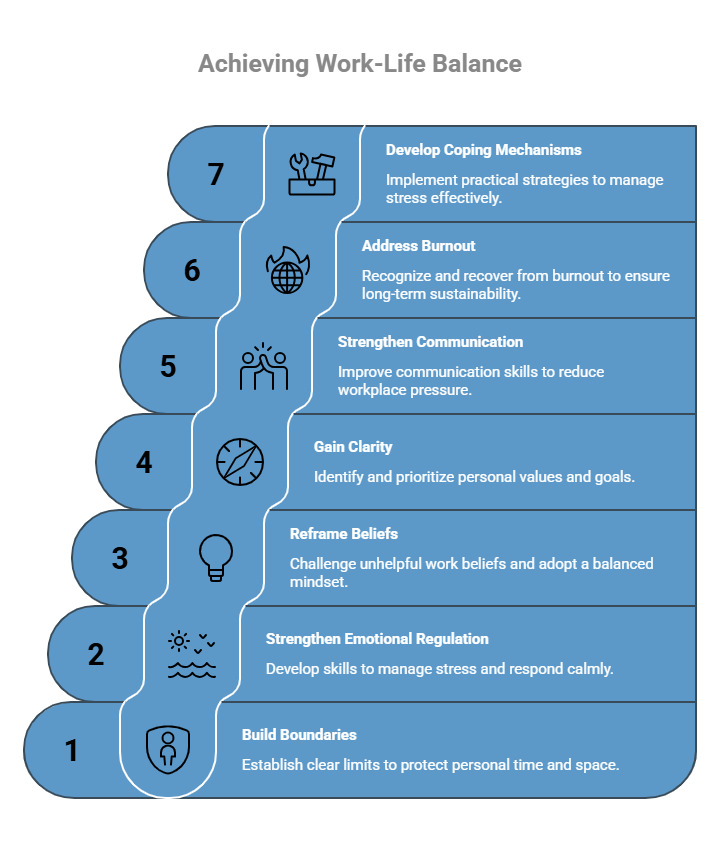
When work pressure feels nonstop, balance can start to feel out of reach. Counseling supports you in looking at how stress, expectations, and habits are shaping your daily experience. Instead of pushing through exhaustion, you learn steadier ways to protect your energy, respond thoughtfully, and create a rhythm that supports both your responsibilities and your wellbeing.
1. Building Healthier Boundaries
Counseling helps you understand where your limits are and how to express them in clear, respectful ways. Boundaries are not about withdrawing from your role. They create a structure that protects your time, attention, and mental space so work does not continuously spill into every part of your life.
2. Strengthening Emotional Regulation
Even with boundaries, stressful moments still happen. Counseling helps you develop emotional regulation skills so you can pause, settle your body, and respond with greater calm. This reduces the intensity of stress and makes it easier to leave work tension behind at the end of the day.
3. Reframing Unhelpful Work Beliefs
Many people carry quiet beliefs, such as needing to be productive at all times or seeing rest as a weakness. Counseling gently helps you examine these patterns and shift toward a more balanced mindset, where rest supports performance and your worth is not defined only by output.
4. Gain Clarity on Your Priorities
When work demands are constant, it can be hard to see what truly matters to you. Counseling creates space to reflect on your values, long-term goals, and personal needs, helping you make decisions that feel more aligned rather than reactive.
5. Strengthen Communication Skills
Clear communication can ease hidden pressure. Counseling supports you in expressing needs, setting expectations, and having steady conversations about workload, timelines, and boundaries, which can reduce stress before it builds.
6. Address Burnout and Prevent Recurrence
If exhaustion has already set in, counseling helps you recognize burnout patterns, recover emotionally, and develop habits that prevent the same cycle from repeating. This supports long-term sustainability, not just short-term relief.
7. Develop Effective Coping Mechanisms
Counseling also focuses on practical coping strategies you can use in everyday situations. These tools help you manage stress in the moment and recover more quickly afterward, making balance feel more achievable.
Over time, as boundaries strengthen, emotions feel steadier, and priorities become clearer, work no longer takes over your entire life. Balance becomes something you build gradually, in ways that feel realistic and sustainable.
Struggling to stay consistent with your wellness goals when life gets busy? Discover practical, realistic ways to rebuild motivation and create habits that support your mental and emotional well-being in our helpful guide.
Who Benefits Most from Work-Life Balance Counseling?
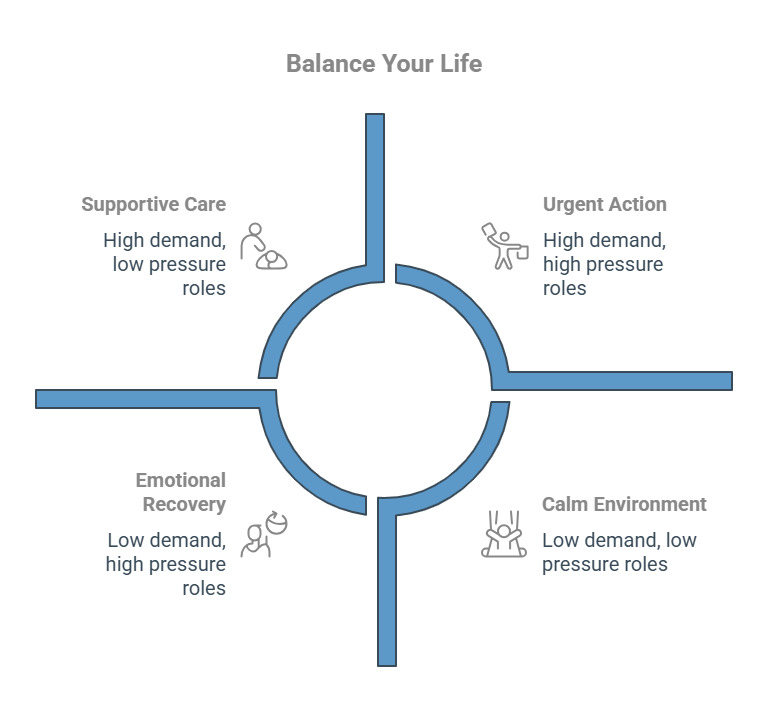
Work-life balance counseling can support anyone feeling stretched, but some people experience deeper strain due to ongoing demands and emotional pressure. Therapy offers space to reset, build coping skills, and create steadier ways to manage responsibilities without sacrificing wellbeing, relationships, or long-term health.
1. Professionals in High-Demand Roles
People in fast-paced or high-responsibility jobs often live in constant urgency. Continuous deadlines and decision-making can keep stress levels elevated. Counseling helps regulate that pressure, improve boundaries, and develop sustainable work habits that protect focus, energy, and mental clarity.
2. Individuals Experiencing Burnout
When exhaustion turns into detachment, low motivation, or reduced effectiveness, it may signal burnout. Therapy focuses on emotional recovery, stress repair, and rebuilding a healthier rhythm. Instead of pushing through, you learn how to restore balance and prevent deeper emotional depletion.
3. Working Parents Managing Dual Roles
Parents, especially those with young children, often feel pulled between professional expectations and family needs. This tension can lead to guilt and fatigue. Counseling supports realistic boundaries, emotional processing, and self-compassion, helping you care for both your career and your family.
4. Professionals in Helping Roles
Therapists, healthcare workers, teachers, and caregivers frequently give emotional energy to others. Over time, this can lead to compassion fatigue. Counseling helps them process emotional load, maintain personal well-being, and continue their work without becoming emotionally overwhelmed or disconnected.
If you see yourself in any of these groups, it does not mean you are not capable. It often means you have been carrying sustained pressure. Work-life balance counseling offers structured, compassionate support to create a steadier, more sustainable way of living and working.
Learn how National Disability Awareness promotes inclusion, understanding, and respect for people with disabilities. Discover simple ways to build empathy and create more supportive communities at home, work, and beyond.
What Therapy Approaches Are Used for Work-Life Balance?
Therapy does not rely on a single technique. Different approaches support how you think, feel, and act under pressure, helping you build practical habits, emotional steadiness, and clearer boundaries so balance feels sustainable, not like another responsibility to manage.
1. Cognitive behavioral therapy (CBT)
CBT helps you identify and shift unhelpful beliefs that fuel overworking, such as perfectionism or linking self-worth to productivity. This reduces guilt, mental strain, and performance-related anxiety while supporting clearer, calmer thinking.
2. Mindfulness-based approaches
Mindfulness techniques help calm your nervous system and ease out of constant work mode. Practices like breathing exercises, grounding, and transition rituals support relaxation and help you feel more present after work hours.
3. Solution-focused therapy
This method emphasizes small, practical adjustments. It helps you notice what is already working, improve routines, and make manageable changes that reduce overwhelm without adding pressure.
4. Goal-setting worksheets
Structured worksheets help you set realistic work and personal goals, clarify priorities, and create boundaries that protect your time and energy.
5. Stress tracking and reflection exercises
Tracking stress patterns builds awareness of triggers and recovery needs. Reflection exercises help you understand what restores balance, making it easier to adjust habits and respond to pressure more effectively.
Together, these approaches help you respond to work demands with more clarity, steadiness, and self-awareness. Over time, balance becomes something you practice gently, not another goal you feel pressured to achieve.
Feeling drained or distracted without knowing why? Learn how social media can quietly affect mood, focus, and self-esteem, and what you can do to create healthier digital habits.
When Should You Seek Professional Help for Work-Related Stress?
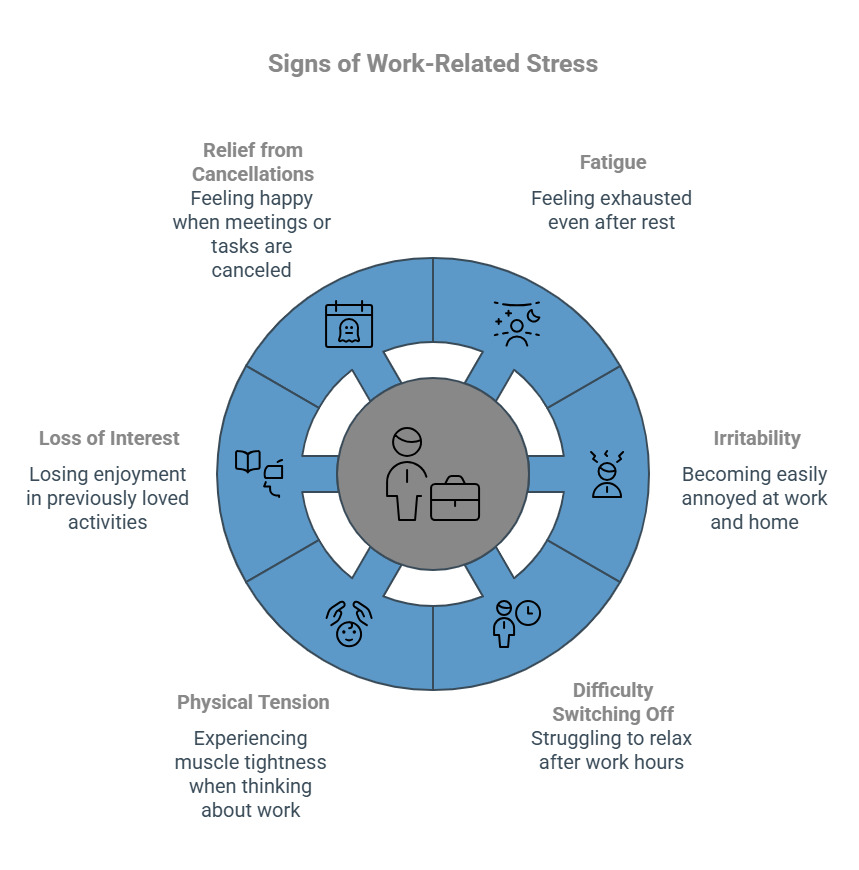
Work stress can ebb and flow, but sometimes it crosses a line where rest, weekends, or vacations no longer feel enough. When work starts affecting your mood, health, or relationships consistently, it may be time for professional support.
You might consider speaking with a therapist if you notice:
- Feeling emotionally drained even after time off
- Irritability carries into home life
- Difficulty mentally disconnecting after work hours
- Ongoing physical tension, headaches, or fatigue
- Loss of interest in activities you once enjoyed
- Feeling relieved when meetings or tasks get canceled
These signs do not mean you are incapable. They often mean your stress load has exceeded what feels sustainable. Professional support can help you understand patterns, develop coping strategies, and build healthier boundaries so that work does not continue to impact your well-being long term.
Ready to feel more supported and less overwhelmed? Reach out to Total Life Counseling today and take the first gentle step toward balance, clarity, and emotional well-being.
How Total Life Counseling Can Support You With Work-Life Balance?
When work starts taking more of your time, energy, and mental space than you intended, it can feel exhausting and discouraging. You may notice constant stress, difficulty switching off, or feeling disconnected from the parts of life that once felt grounding.
At Total Life Counseling, we understand that these struggles are more common than people admit. Our licensed therapists offer a compassionate, non-judgmental space where you can explore what feels overwhelming, understand the patterns behind your stress, and build practical coping tools that fit your real life.
You do not have to keep pushing through alone. Support can help you regain emotional steadiness, clearer boundaries, and a healthier rhythm between your work responsibilities and personal wellbeing, one manageable step at a time.
If you feel ready for support, schedule a counseling appointment through Total Life Counseling to start building a healthier, more balanced routine.
Final Thoughts
Finding balance between work and personal life does not have to feel out of reach. Small, steady changes can ease stress, protect your energy, and help you feel more present in both roles. Therapy offers a supportive space to understand what feels overwhelming and build healthier ways to respond.
If work has been taking more than it gives, reaching out for guidance can be a meaningful first step toward a calmer, more sustainable rhythm that supports your well-being long term.
Frequently Asked Questions
Can work-life balance therapy really help prevent professional burnout?
Yes. Therapy helps you notice early burnout signs and respond before exhaustion deepens. By addressing workload patterns, stress beliefs, and boundary challenges, you build healthier coping skills that protect your mental health and support a more sustainable, long-term balance.
Is there a specific type of work therapy most effective for achieving work-life harmony in demanding careers?
There is no single best approach. Therapists often combine methods. Cognitive Behavioral Therapy helps challenge perfectionism and pressure-driven thoughts, while mindfulness-based techniques improve emotional regulation and make it easier to mentally separate work demands from personal time.
What self-care practices should accompany therapy for sustainable work-life balance?
Support therapy with daily habits that restore energy. Regular sleep, balanced meals, movement, and short breaks reduce stress load. Leisure activities, social connections, and mindfulness practices like breathing or meditation help your mind and body recover consistently.
Can therapy help me set boundaries at work to improve my personal life?
Yes. Therapy teaches respectful, assertive communication so you can express limits clearly. Learning to define work hours, manage expectations, and say no when needed helps protect personal time while maintaining professional relationships and reducing emotional strain.
What are the 4 pillars of work-life balance?
The four pillars include professional responsibilities, home and family life, social connections, and personal well-being. Balance means giving each area attention without one consistently draining the others, allowing you to stay effective, connected, and emotionally healthy.
Do you find it increasingly difficult to separate your work and personal life?
If work thoughts follow you home, rest feels unproductive, or irritability and exhaustion are common, an imbalance may be building. These signs suggest ongoing stress that could benefit from support to restore healthier emotional and mental separation.
How do therapists themselves manage their own work-life balance?
Therapists protect their well-being by maintaining clear boundaries around work hours, limiting caseloads, and scheduling regular breaks. Many seek peer consultation or personal therapy, practice mindfulness or exercise, and prioritize rest and personal time to stay emotionally steady and present for clients.
Filed in: Updates
Share This Story, Choose Your Platform!
Total Life Counseling Center consists of Licensed Counselors, masters level therapists, Español counselors, Licensed Mental Health Counselors, business coaches, and image enhancement coaches who provide counseling for emotional, mental, physical and spiritual care including marriage, individual, family, substance abuse and more. TLC’s family, trauma and marriage experts have been interviewed on National and Local TV/Radio over 200 times for their expert advice on Fox News, OWN, WETV, ABC’s Medical Minute and more. Our skilled counselors are relational, approachable and specialists providing therapy services in the Central Florida area including: Orlando, Winter Park, MetroWest, Windermere, Dr. Phillips, East Orlando, Lake Mary, and Clermont, Boca Raton Florida, and Dallas, TX.
About the Author: Jim West

Related Posts