
New Year Depression: How to Overcome Post-Holiday Blues?

Key Highlights
- Post-holiday blues often feel like sadness, low energy, or emotional emptiness once celebrations end.
- New Year pressure to reset or succeed can increase disappointment and self-criticism.
- Loss of routine, reflection on the past year, and financial stress commonly worsen mood.
- Ongoing rumination, sleep disruption, or appetite changes may signal deeper emotional distress.
- Feeling anxious or lonely around New Year’s is common and not a personal failure.
- Relief comes from lowering expectations, building simple routines, and allowing emotions space.
- Total Life Counseling provides supportive, professional care when emotional heaviness does not ease on its own.
As the holiday season comes to an end, many people hope to feel lighter or renewed. Instead, you may notice a quiet sadness, low energy, or a sense of emptiness settling in. This emotional drop can feel confusing or even discouraging, especially when it seems like everyone else is moving forward with ease.
Here at Total Life Counseling, we understand how unsettling these emotional shifts can be. We work with individuals who feel overwhelmed by the transition back to routine, the pressure of a new year, or the weight of unmet expectations, helping them find steadier ground with compassion and care.
In this article, we gently explore why post-holiday and New Year blues happen and share supportive, practical ways to cope. Our goal is to help you feel less alone in this experience and offer tools to move into the year ahead with greater understanding, balance, and self-kindness.
Why New Year’s Eve Feels Depressing for Many?

Many people quietly ask themselves, “Why is New Year’s so depressing?”, especially when the calendar changes and life feels largely the same. The New Year often carries the idea of a fresh start, but when reality does not match that promise, it can trigger disappointment, sadness, or self-judgment.
The focus on resolutions and transformation can intensify New Year’s depression by highlighting what feels unfinished or out of reach. Instead of hope, the emphasis on change can create pressure, making some feel behind, unmotivated, or stuck as the year begins.
For others, the emotional weight shows up as happy New Year depression, where outward celebrations mask inner struggles. When the noise fades and routines return, it is common to feel overwhelmed, reflective, or unsure about the future. These feelings do not mean you are failing; they reflect how deeply the New Year asks us to evaluate where we are and where we want to be.
What Common Factors Lead to Post-Holiday Blues?
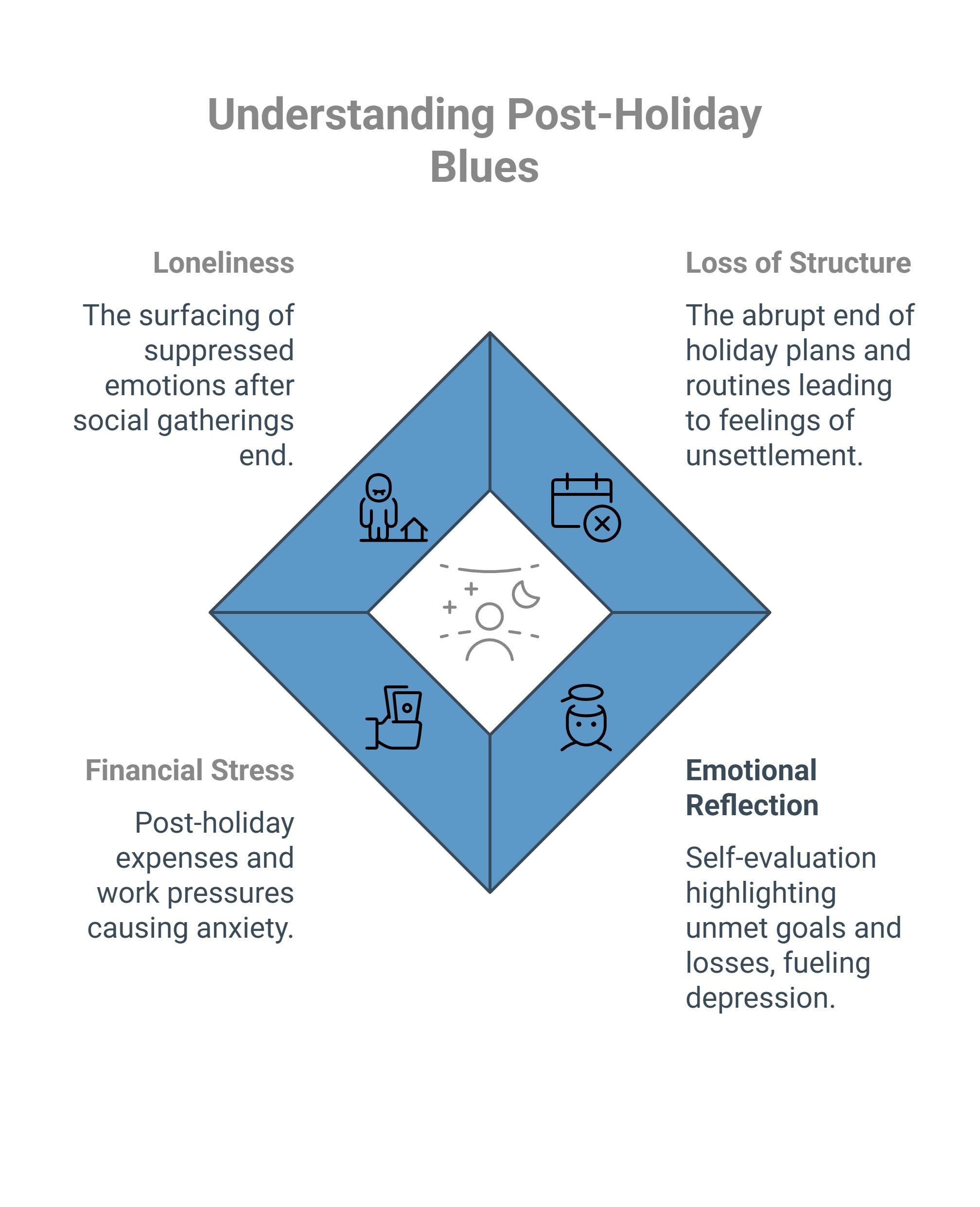
The post-holiday period can feel like an emotional drop rather than a fresh start. Many people feel depressed after the New Year because the pace of life changes abruptly, leaving little time to adjust or recover.
Common factors include:
- Sudden loss of structure and excitement: The holidays provide built-in plans, social connection, and anticipation. When they end, the quietness can feel unsettling and may lead to feeling depressed on New Year’s as routines resume too quickly.
- Emotional reflection and comparison: Looking back on the year can highlight unmet goals, losses, or lingering struggles. This self-evaluation often fuels New Year’s depression, especially when personal growth feels slower than expected.
- Increased financial and work stress: Post-holiday expenses and returning workloads can create pressure and anxiety, making the transition into the new year feel heavy rather than hopeful.
- Loneliness and emotional letdown: Once gatherings end, emotions that were temporarily pushed aside may surface. Without the distractions of the season, sadness or exhaustion can feel more noticeable and harder to ignore.
These factors often overlap, creating a sense of emotional overwhelm. Recognizing them can help you respond with greater understanding instead of self-criticism.
Reach out to Total Life Counseling today.
How to Recognize If You’re Depressed After the New Year?
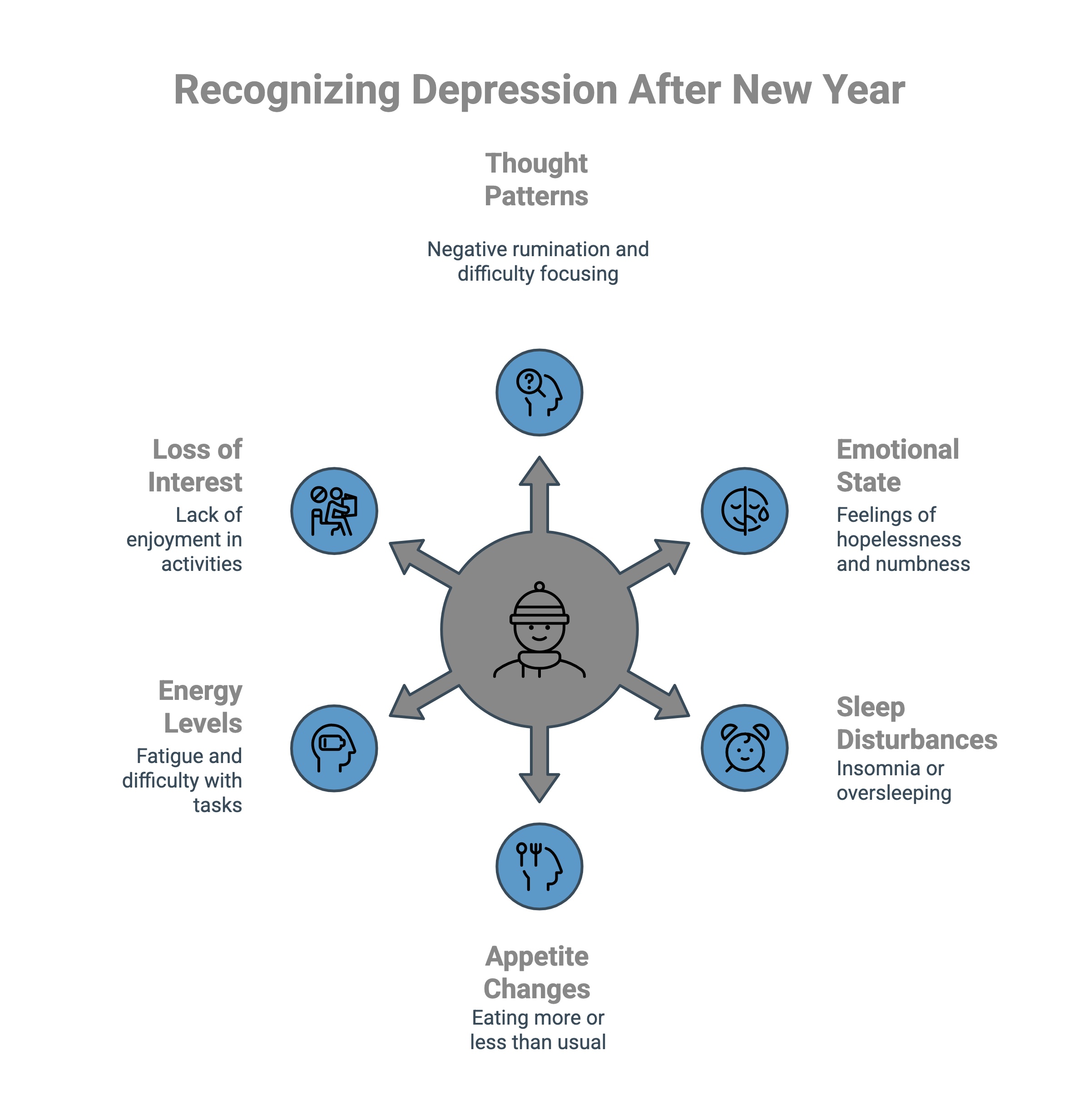
Feeling sad or low after the holidays is common, but depression after the New Year tends to show up in deeper, more persistent ways that don’t easily lift with time or routine changes.
One of the earliest signs is a shift in thought patterns. You may feel mentally stuck, replaying regrets, disappointments, or past failures on a loop. Unlike healthy reflection, this kind of rumination fuels hopelessness and makes it hard to focus on the present or imagine positive change.
Physical and behavioral changes are also important to notice. Depression often affects the body as much as the mind, especially during the winter months.
Common signs to watch for include:
- Persistent rumination or negative self-talk that feels hard to control
- Feelings of hopelessness, emptiness, or emotional numbness
- Disrupted sleep patterns, such as insomnia, restless sleep, or oversleeping
- Appetite changes, including eating significantly more or less than usual
- Low energy, fatigue, or difficulty getting through everyday tasks
- Loss of motivation or interest in activities you usually enjoy
If these symptoms last for weeks and begin to interfere with work, relationships, or daily functioning, it may be more than temporary winter blues. Ongoing New Year’s depression can sometimes signal clinical depression, which responds best to professional mental health support.
Seeking help is not a sign of weakness or failure. It’s a proactive step toward understanding what you’re experiencing and moving toward recovery.
Is It Normal to Feel Anxious, Lonely, or Depressed on New Year’s?
If you’re feeling down around New Year’s, you are far from alone. Is it normal to feel anxious or lonely after New Year’s Day? Absolutely. It’s a well-documented fact that the holiday season can trigger or worsen mental health symptoms for many people. The intense social pressure to celebrate in a specific way can create social anxiety and feelings of isolation if your plans or feelings don’t align with the festive norm.
The problem lies in the unrealistic expectations society places on this single day. The idea that New Year’s Eve must be a monumental event sets many up for disappointment.
Acknowledging that it’s normal to have these feelings can be the first step toward managing them. Letting go of perfection and setting realistic expectations for the holiday can help reduce anxiety and prevent the onset of the holiday blues.
What Can You Do When the New Year Feels Heavy?
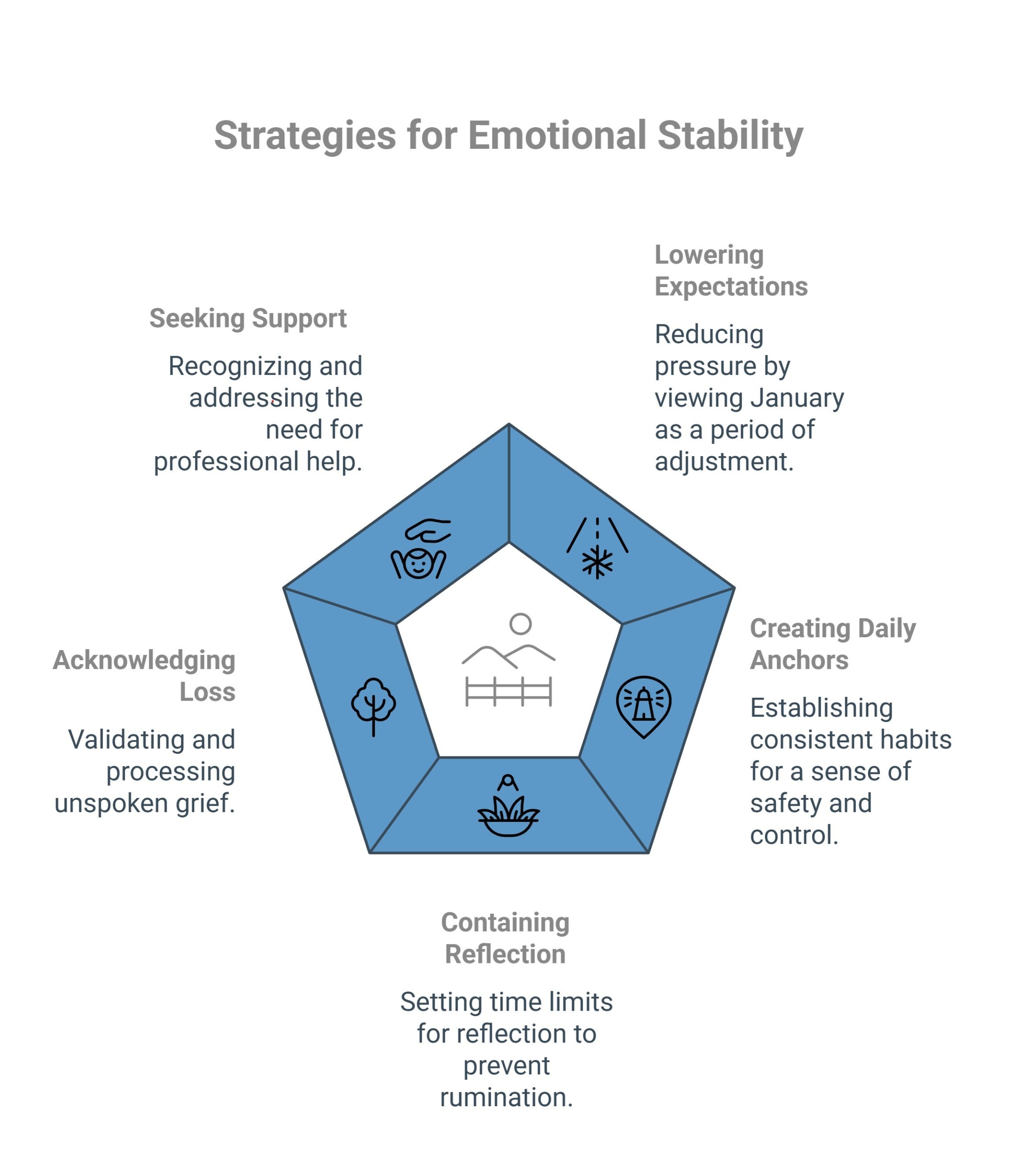
When the calendar changes but your emotional state does not, it can create confusion and self-doubt. Instead of trying to force motivation or positivity, these strategies focus on stabilizing your emotional foundation so you can move forward at your own pace.
1. Lower the Emotional Bar for January
January is often framed as a month for ambition and reinvention, but that pressure can worsen emotional strain. Allow yourself to see this month as a period of adjustment rather than transformation. Shifting expectations can reduce self-criticism and give your nervous system time to recover from the emotional intensity of the holidays.
2. Create One Predictable Anchor in Your Day
Emotional overwhelm often thrives in unpredictability. Establishing one consistent daily habit provides a sense of safety and control when other areas of life feel unstable. This anchor does not need to be productive; it simply needs to be reliable and gentle enough to maintain even on difficult days.
3. Contain Reflection Instead of Letting It Spiral
Reflection can be helpful, but without limits, it often turns into rumination. Setting a short, intentional time to reflect helps you process emotions without becoming consumed by them. Writing thoughts down or speaking them aloud can help your mind release what it has been holding onto.
4. Acknowledge Loss, Even If It Feels “Unofficial.”
Many people carry grief that does not have a clear name. Lost opportunities, unmet goals, or changes in relationships can leave a real emotional impact. Giving yourself permission to acknowledge these experiences validates your pain and reduces the pressure to move on before you are ready.
5. Know When to Ask for Support
When emotional heaviness lingers despite your efforts, it may signal the need for additional support. Talking with a mental health professional can help you understand underlying patterns and develop tools tailored to your situation. Seeking help is not a last resort; it is a proactive form of care.
You do not need to have everything figured out right now; sometimes the most meaningful progress begins with offering yourself patience and compassion exactly where you are.
How Total Life Counseling Can Support You When the New Year Feels Heavy?
When the New Year does not bring the sense of renewal you expected, it can feel isolating and discouraging. Emotional heaviness, lack of motivation, or feeling stuck can make everyday responsibilities harder to manage, especially when you feel the pressure to be “moving forward.”
At Total Life Counseling, we understand that these experiences are more common than they are talked about. Our licensed therapists provide a compassionate, non-judgmental space to explore what you are feeling, identify underlying patterns, and build practical coping tools that fit your life.
You do not have to navigate this season alone. Support can help you regain clarity, emotional balance, and confidence as you move into the year ahead, one steady step at a time.
Final Words
The New Year does not require reinvention or instant clarity. It simply asks you to show up as you are, with honesty and care. If this season feels heavier than expected, that weight is not something to push through or minimize.
Sometimes the most meaningful way forward is slowing down, listening to what your emotions are asking for, and allowing support when you need it. Growth does not always look like momentum. Often, it begins quietly, with understanding, patience, and the choice to be kinder to yourself as the year unfolds.
Frequently Asked Questions
Can happy New Year celebrations make depression worse?
Yes, happy New Year celebrations can worsen low mood when high expectations, social gatherings, alcohol consumption, social media platforms, and financial strain collide. For people with mental illness, bipolar disorder, or seasonal affective disorder, the end of the year can intensify symptoms.
What practical steps can help manage New Year’s Eve depression?
Practical steps include limiting alcohol consumption, reducing social media exposure, setting realistic plans, and prioritizing physical activity. Maintaining a balanced diet, light therapy, and routines are effective ways to manage anxiety disorder symptoms, winter depression, and feelings of sadness.
Are there support resources and helplines for New Year’s depression in the United States?
Yes. In the United States, mental health services, crisis helplines, and community programs support people experiencing symptoms of depression. Mental health services administration resources and providers offer cognitive behavioral therapy, selective serotonin reuptake inhibitors, and guidance for substance abuse recovery.
Is January the worst month for depression?
January can feel hardest due to post-holiday letdown, winter months’ reduced daylight, and routine stress. When expectations peak at the end of the year, New Year’s Eve depressing emotions can linger, making January feel heavier for some people emotionally.
Why do I feel depressed in the New Year?
You may feel depressed in the new year because reflection intensifies unmet goals, loss, and financial pressure. If you were depressed on New Year’s Eve, those emotions often carry forward, amplified by comparison fatigue and sudden routine changes after holidays.
How long do the New Year Blues last?
New year blues often last a few days to several weeks, depending on stress support and coping. If you were feeling depressed on New Year’s Eve, recovery may take longer, but mood usually improves as routines stabilize and expectations soften.
What time of year is depression highest?
Depression rates are often highest during late fall and winter months, especially November through February. Reduced daylight, colder weather, social withdrawal, and post-holiday stress can worsen mood, increase fatigue, and intensify existing mental health challenges for many people.
Filed in: Holiday Depression, Jim West
Share This Story, Choose Your Platform!
Total Life Counseling Center consists of Licensed Counselors, masters level therapists, Español counselors, Licensed Mental Health Counselors, business coaches, and image enhancement coaches who provide counseling for emotional, mental, physical and spiritual care including marriage, individual, family, substance abuse and more. TLC’s family, trauma and marriage experts have been interviewed on National and Local TV/Radio over 200 times for their expert advice on Fox News, OWN, WETV, ABC’s Medical Minute and more. Our skilled counselors are relational, approachable and specialists providing therapy services in the Central Florida area including: Orlando, Winter Park, MetroWest, Windermere, Dr. Phillips, East Orlando, Lake Mary, and Clermont, Boca Raton Florida, and Dallas, TX.
About the Author: Jim West

Related Posts