

What Are the Symptoms of PTSD From Childhood Trauma?
Key Highlights
- Childhood trauma can lead to post-traumatic stress disorder (PTSD), with symptoms sometimes appearing later in life.
- The effects of trauma can manifest as emotional, behavioral, and even physical symptoms.
- Understanding the symptoms of PTSD from childhood trauma is the first step toward healing and better mental health.
- Traumatic stress can impact relationships, daily functioning, and overall well-being in adulthood.
- Recovery is possible with the right support, coping strategies, and professional mental health care.
Childhood experiences can shape far more than memories. According to the CDC, nearly two-thirds of adults report experiencing at least one adverse childhood experience (ACE), and these experiences can have lasting effects on mental and physical health. For some individuals, childhood trauma may contribute to post-traumatic stress disorder (PTSD) or Complex PTSD (C-PTSD), affecting how they respond to stress, relationships, and everyday challenges long after childhood has ended.
The challenge is that PTSD from childhood trauma does not always look the way people expect. While some people experience flashbacks or nightmares, others struggle with chronic shame, low self-worth, emotional numbness, hypervigilance, people-pleasing, or difficulty trusting others. Because these patterns often develop gradually, they are frequently mistaken for personality traits, anxiety, or stress rather than trauma-related symptoms.
Recognizing the symptoms of PTSD from childhood trauma is an important step toward understanding how early experiences may continue affecting daily life, relationships, and emotional well-being. This article explores the emotional, cognitive, physical, behavioral, and relationship symptoms linked to childhood trauma, how PTSD and C-PTSD differ, and the treatment options that may support recovery.
What Is PTSD From Childhood Trauma?
PTSD from childhood trauma occurs when difficult experiences in childhood continue affecting a person’s emotions, thoughts, relationships, and stress responses long into adulthood. These experiences may involve abuse, but they can also include emotional neglect, chronic criticism, abandonment, unstable caregiving, or growing up in an environment that felt unsafe or unpredictable.
Because childhood trauma occurs while the brain is still developing, it can shape how a person responds to stress, trust, and emotional challenges later in life. As a result, adults may experience symptoms such as hypervigilance, emotional flashbacks, chronic shame, avoidance behaviors, trust difficulties, or persistent negative beliefs about themselves. In some cases, prolonged childhood trauma may also contribute to symptoms associated with Complex PTSD (C-PTSD), including relationship difficulties and a lasting negative self-image.
Is Childhood Trauma the Same as PTSD?
Childhood trauma refers to the experience itself, while PTSD is a condition that may develop afterward. Many people experience adversity without developing PTSD, while others continue experiencing trauma-related symptoms years later.
Several factors influence whether childhood trauma leads to PTSD, including the severity and duration of the experience, the support available during and after the event, and individual coping abilities. Understanding this distinction is important because trauma can affect emotional well-being and daily functioning even when someone does not meet the full criteria for PTSD. In fact, trauma and PTSD are often used interchangeably, even though they describe different experiences with different effects on mental health.
What Counts as Childhood Trauma?
Childhood trauma includes experiences that create a lasting sense of fear, danger, loss, or emotional insecurity. Some events are sudden and obvious, while others involve ongoing exposure to stressful or harmful environments that gradually affect a child’s ability to cope.
Examples may include:
- Physical, emotional, or sexual abuse
- Physical or emotional neglect
- Witnessing domestic violence
- Chronic conflict or instability at home
- Parental substance abuse
- Abandonment by a parent or caregiver
- Emotionally unavailable or unpredictable caregivers
- Bullying or repeated social rejection
- The loss of a parent or primary caregiver
- Serious illness or invasive medical procedures
What matters most is not only what happened but how those experiences affected a child’s sense of safety, trust, and emotional development.
How Do PTSD and CPTSD Differ?
PPTSD and Complex PTSD (C-PTSD) share many symptoms, including intrusive memories, avoidance behaviors, nightmares, and hypervigilance. However, C-PTSD is more commonly associated with prolonged or repeated trauma, particularly experiences that occur over an extended period during childhood.
In addition to the symptoms commonly associated with PTSD, complex trauma is often discussed in relation to challenges such as chronic shame, low self-worth, emotional regulation difficulties, and relationship struggles. While there is overlap between PTSD and C-PTSD, the effects of complex trauma may extend beyond trauma memories and influence a person’s sense of self and relationship.
| PTSD | Complex PTSD (C-PTSD) |
|---|---|
| Often linked to a single traumatic event | More commonly associated with prolonged or repeated trauma |
| Symptoms typically center around the traumatic event | May also affect self-worth, emotional regulation, and relationships |
| Emotional distress related to trauma | Chronic shame, low self-worth, and identity struggles may be more prominent |
| Relationship difficulties can occur | Fear of abandonment and relationship challenges may be more persistent |
| Trauma-related negative beliefs | Persistent negative self-image or feeling fundamentally flawed |
Understanding the differences between PTSD and C-PTSD can help explain why childhood trauma affects people in different ways and why some symptoms extend beyond the traditional signs of PTSD.
What Are the Symptoms of PTSD From Childhood Trauma?
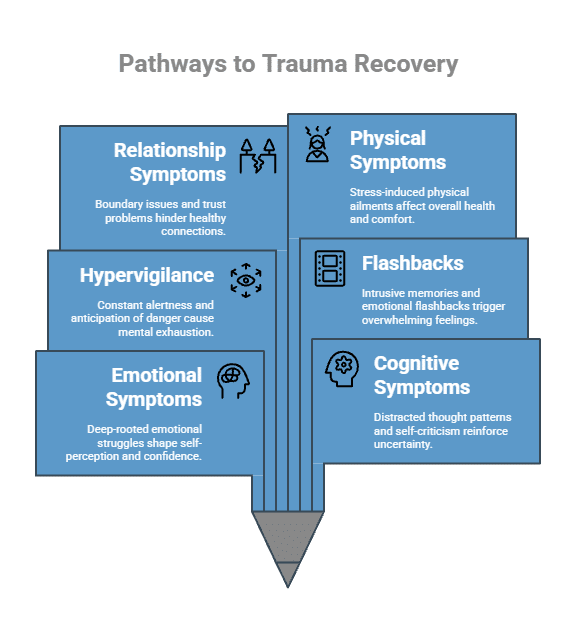
PTSD from childhood trauma can affect emotions, thinking patterns, relationships, physical health, and daily behaviors. While some symptoms are widely recognized, others develop gradually and may be mistaken for personality traits, coping habits, or chronic stress. Understanding how these symptoms appear in adulthood can help explain the lasting impact of unresolved childhood trauma.
1. Emotional Symptoms of PTSD From Childhood Trauma
Many adults with childhood trauma PTSD struggle with emotions that extend beyond occasional sadness or anxiety. These feelings often become deeply rooted beliefs about themselves and their worth.
|
Emotional Symptom |
How It May Appear |
|---|---|
|
Chronic shame |
Feeling defective, inadequate, or “not enough” regardless of achievements |
|
Low self-worth |
Consistently undervaluing your needs, opinions, or accomplishments |
|
Difficulty accepting compliments |
Feeling uncomfortable with praise or dismissing positive feedback |
|
Feeling fundamentally flawed |
Believing something is inherently wrong with you |
|
Guilt and self-blame |
Taking responsibility for situations that were beyond your control |
|
Anxiety |
Persistent worry, tension, or fear in everyday situations |
|
Emotional numbness |
Feeling disconnected from emotions, relationships, or enjoyable experiences |
These emotional struggles often shape how people think about themselves, influencing their confidence, decision-making, and relationships.
2. Cognitive Symptoms of PTSD From Childhood Trauma
Childhood trauma can affect concentration, memory, and thought patterns long after the original experiences have ended. Many adults describe feeling mentally exhausted, distracted, or trapped in cycles of self-criticism.
|
Cognitive Symptom |
How It May Appear |
|---|---|
|
Brain fog |
Difficulty thinking clearly or processing information |
|
Difficulty concentrating |
Trouble staying focused on work, conversations, or responsibilities |
|
Memory problems |
Forgetting details, appointments, or information more often than expected |
|
Negative self-talk |
Constantly criticizing yourself or expecting failure |
|
Intrusive self-criticism |
Harsh internal judgments that are difficult to stop |
|
Indecisiveness |
Struggling to make decisions, even about routine matters |
|
Overthinking |
Replaying conversations, mistakes, or future scenarios repeatedly |
Over time, these thought patterns can reinforce feelings of uncertainty and contribute to chronic stress responses.
3. Hypervigilance and Chronic Stress Responses
Hypervigilance is a state of heightened alertness that can make it difficult to feel safe, even when no immediate threat exists. For many adults with PTSD from childhood trauma, staying alert feels normal because their nervous system learned to constantly prepare for potential danger.
Common signs include:
- Always anticipating problems and planning for worst-case scenarios
- Difficulty relaxing or feeling fully at ease, even in safe environments
- Being easily startled by sounds, movements, or unexpected situations
- Constantly scanning people or situations for signs of danger or conflict
Rather than feeling calm during safe moments, many people remain focused on what could go wrong next. Over time, this heightened state of alertness can become mentally exhausting and make it difficult to feel secure, even in supportive environments.
4. Flashbacks, Emotional Flashbacks, and Intrusive Thoughts
Trauma-related memories do not always appear as vivid visual flashbacks. For many people, childhood trauma resurfaces through intrusive thoughts, emotional flashbacks, or strong reactions to reminders of past experiences.
Common symptoms include:
- Intrusive memories that surface unexpectedly
- Recurring nightmares involving fear, danger, or helplessness
- Emotional flashbacks that trigger overwhelming feelings of shame, fear, rejection, sadness, or panic
- Intense reactions to trauma triggers
- Distressing thoughts that are difficult to control or dismiss
Unlike visual flashbacks, emotional flashbacks often involve reliving the emotions associated with past experiences without recalling a specific memory. A minor disagreement, criticism, or feeling of rejection can trigger emotions that seem much stronger than the current situation warrants.
5. Relationship Symptoms of Childhood Trauma PTSD
Childhood trauma often affects how people form connections, set boundaries, and respond to emotional closeness. Many of these patterns develop as protective strategies during childhood but can create challenges in adult relationships.
|
Relationship Symptom |
How It May Appear |
|---|---|
|
Boundary difficulties |
People pleasing, difficulty saying no, over-apologizing, or avoiding conflict to prevent rejection or criticism |
| Fear of abandonment |
Worrying that others will leave after disagreements, mistakes, or perceived failures |
|
Trust issues |
Struggling to rely on others emotionally or questioning their intentions |
|
Emotional intimacy challenges |
Feeling uncomfortable with vulnerability, closeness, or emotional dependence |
These relationship patterns can affect friendships, family dynamics, romantic relationships, and workplace interactions.
6. Physical Symptoms of PTSD From Childhood Trauma
PTSD can affect the body as much as the mind. Long-term activation of the stress response system may contribute to a range of physical symptoms, even when no immediate threat is present.
|
Physical Symptom |
How It May Appear |
|---|---|
| Headaches | Frequent tension headaches or migraines |
| Jaw tension | Clenching teeth, grinding teeth, or tight facial muscles |
| Sleep disturbances | Difficulty falling asleep, staying asleep, or feeling rested |
| Chronic fatigue | Persistent exhaustion despite adequate sleep |
| Digestive issues | Stomach discomfort, nausea, bloating, or digestive changes during stress |
| Racing heart |
Increased heart rate during stressful situations |
| Panic symptoms | Sweating, shaking, dizziness, chest tightness, or shortness of breath |
Physical symptoms often become more noticeable during stressful periods or when trauma-related triggers are present.
7. Behavioral Symptoms of PTSD From Childhood Trauma
Many adults develop behaviors that help them avoid distress, maintain control, or reduce emotional discomfort. While these strategies may provide temporary relief, they can also reinforce trauma-related patterns over time.
Common behavioral symptoms include:
- Perfectionism and an intense fear of making mistakes
- Overachievement to gain approval, validation, or a sense of worth
- Workaholism or using work to avoid difficult emotions
- Difficulty resting without feeling guilty or unproductive
- A constant need to stay busy or productive
- Avoidance of people, places, conversations, or situations that trigger distress
- Emotional avoidance and difficulty confronting painful feelings
- Self-isolation and withdrawal from relationships
- Difficulty asking for help or relying on others
- Unhealthy coping habits used to manage overwhelming emotions
For some adults, staying busy can feel safer than slowing down. Over time, these behaviors may provide temporary relief from distress but can also contribute to burnout, emotional exhaustion, and ongoing trauma-related difficulties.
How Can PTSD From Childhood Trauma Affect Daily Life?
PTSD from childhood trauma can affect far more than emotional well-being. Symptoms such as hypervigilance, emotional flashbacks, concentration difficulties, sleep disturbances, and chronic stress can influence relationships, work performance, daily responsibilities, and overall quality of life. Many adults become so accustomed to these patterns that they may not recognize how significantly trauma is affecting their day-to-day functioning.
PTSD from childhood trauma can affect far more than emotional well-being. Symptoms such as hypervigilance, emotional flashbacks, concentration difficulties, sleep disturbances, and chronic stress can influence relationships, work performance, daily responsibilities, and overall quality of life. Many adults become so accustomed to these patterns that they may not recognize how significantly trauma is affecting their day-to-day functioning.
How Can PTSD Symptoms Affect Relationships and Social Connections?
The effects of childhood trauma can extend into friendships, family relationships, romantic partnerships, and workplace interactions. Difficulties with trust, communication, emotional safety, or conflict can create distance between people, even when there is a strong desire for connection.
Over time, these challenges may lead to misunderstandings, strained relationships, loneliness, or social withdrawal. For many adults, the impact is less about individual symptoms and more about how those patterns affect their ability to build and maintain healthy relationships.
How Can PTSD Symptoms Affect Work, School, and Daily Responsibilities?
The effects of childhood trauma can extend into nearly every aspect of daily life. Difficulties with concentration, memory, sleep, and stress management can make routine responsibilities feel more demanding than they appear to others.
| Area of Life | Potential Impact |
|---|---|
|
Work |
Difficulty concentrating, managing deadlines, handling feedback, or staying productive under pressure |
|
School |
Trouble focusing, retaining information, completing assignments, or participating in group activities |
|
Daily Responsibilities |
Feeling overwhelmed by routine tasks, decision-making, or unexpected changes |
|
Social Activities |
Avoiding gatherings, events, or situations that feel emotionally draining |
|
Self-Care |
Neglecting sleep, exercise, healthy habits, or personal needs during periods of stress |
When trauma-related symptoms affect multiple areas of life, everyday responsibilities can feel far more demanding than they appear to others. Recognizing these patterns is often an important step toward finding effective support and treatment.
When trauma-related symptoms affect multiple areas of life, everyday responsibilities can feel far more demanding than they appear to others. Recognizing these patterns is often an important step toward finding effective support and treatment.
What Are the Treatment Options for PTSD From Childhood Trauma?
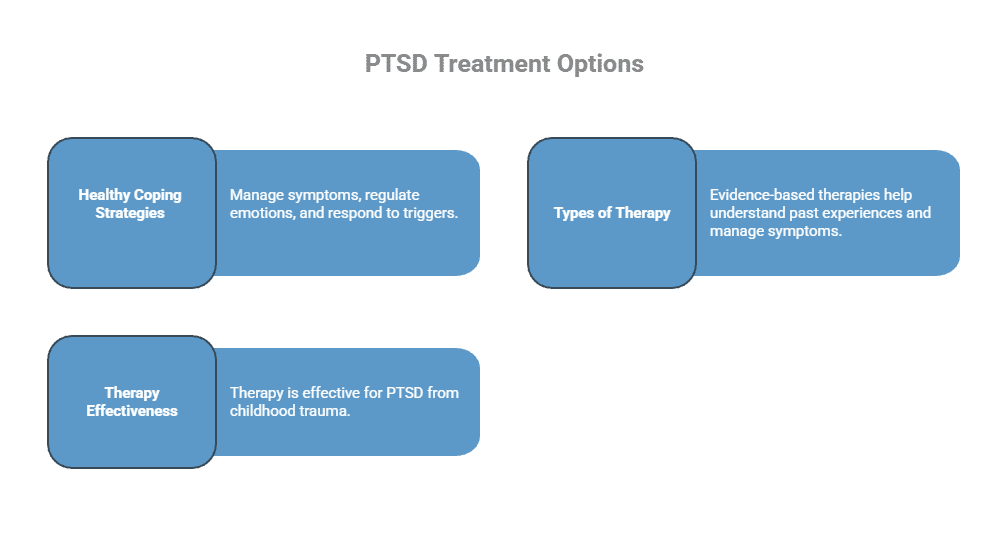
Recovery from PTSD caused by childhood trauma often involves a combination of professional treatment, healthy coping strategies, and ongoing support. The goal is not to erase past experiences but to reduce their impact on daily life and improve emotional well-being.
1. What Healthy Coping Strategies Can Support Recovery?
Healthy coping strategies can help people manage symptoms, regulate emotions, and respond more effectively to trauma triggers. While they do not replace professional treatment, they can support long-term recovery.
|
Coping Strategy |
Potential Benefit |
|---|---|
|
Regular physical activity |
Helps reduce stress and improve mood |
| Mindfulness and grounding techniques |
Encourages present-moment awareness during periods of distress |
|
Healthy sleep habits |
Supports emotional and cognitive functioning |
| Journaling |
Helps process thoughts and emotions |
| Supportive relationships |
Reduces isolation and increases emotional support |
|
Identifying triggers |
Improves awareness and preparation for difficult situations |
Recovery often involves learning how to respond to symptoms rather than avoiding them. Over time, small and consistent changes can help create a greater sense of stability and control.
2. What Types of Therapy Are Used to Treat Childhood Trauma PTSD?
Several evidence-based therapies are commonly used to treat PTSD from childhood trauma.
|
Therapy Type |
How It Helps |
||
|---|---|---|---|
|
Trauma-Focused Cognitive Behavioral Therapy (TF-CBT) |
Helps identify and change unhelpful thoughts related to trauma |
||
| Cognitive Behavioral Therapy (CBT) |
Develops coping skills for managing symptoms |
||
|
Eye Movement Desensitization and Reprocessing (EMDR) |
Helps process traumatic memories in a less distressing way |
||
|
Exposure Therapy |
|
The most effective treatment approach varies from person to person. Working with a trauma-informed therapist can help individuals find strategies that fit their needs and recovery goals.
3. What Types of Therapy Are Used to Treat Childhood Trauma PTSD?
Therapy is one of the most effective treatments for PTSD from childhood trauma. A qualified mental health professional can help individuals understand how past experiences continue to affect their thoughts, emotions, and behaviors while teaching practical strategies to manage symptoms.
Common evidence-based therapies include:
|
Therapy Type |
How It Works |
|---|---|
|
Trauma-Focused Cognitive Behavioral Therapy (TF-CBT) |
Helps identify and change unhelpful thought patterns connected to trauma |
|
Cognitive Behavioral Therapy (CBT) |
Teaches coping skills to manage anxiety, avoidance, and negative thinking |
|
Eye Movement Desensitization and Reprocessing (EMDR) |
Helps the brain process traumatic memories in a less distressing way |
|
Exposure Therapy |
Gradually reduces fear responses by safely confronting trauma-related triggers |
|
Somatic or Body-Based Therapies |
Focus on how trauma is stored in the body and improving nervous system regulation |
The most effective treatment approach varies from person to person. Factors such as symptom severity, trauma history, and personal goals often influence which therapies are most appropriate. Working with a trauma-informed therapist can help individuals find an approach that fits their specific needs and supports long-term recovery.
Call for a Complimentary 15 Minute Phone Consultation
Se Habla Español: We have Portuguese and Spanish speaking counselors as well.
How Does Total Life Counseling Support Trauma Recovery?
When choosing a therapist for childhood trauma or PTSD, it can be helpful to look for experience with trauma-informed care and evidence-based approaches such as CBT, EMDR, or trauma-focused therapy. Finding a therapist who understands the effects of childhood trauma, emotional neglect, and Complex PTSD can make it easier to build trust and work through difficult experiences at a comfortable pace.
At Total Life Counseling, therapists work with individuals experiencing PTSD, childhood trauma, anxiety, emotional regulation difficulties, relationship challenges, and other trauma-related concerns. Treatment plans are tailored to each person’s needs and may incorporate evidence-based approaches designed to help clients better understand their symptoms, develop coping skills, and support long-term recovery.
Whether someone is struggling with emotional flashbacks, hypervigilance, chronic shame, or difficulties in relationships, professional support can help them gain insight into these patterns and develop healthier ways of responding to them.
Conclusion
PTSD from childhood trauma can affect far more than memories of the past. Symptoms may appear through chronic shame, hypervigilance, emotional flashbacks, relationship difficulties, physical stress responses, and persistent patterns of self-criticism that continue into adulthood. Because many of these experiences develop gradually, people do not always recognize their connection to childhood trauma.
Understanding these symptoms can provide valuable insight into how the impact of childhood trauma and early experiences may still be influencing daily life, relationships, and emotional well-being. With the right support and treatment, it is possible to better manage trauma-related symptoms, build healthier coping strategies, and develop a greater sense of stability and self-understanding.
Jim West
MA, LICENSED MENTAL HEALTH COUNSELOR, national certified counselor
President, Counselor, Guest Speaker, Author, Social Skills, ADHD, ODD, ASD, children, teens, and more!

Dana West
MSW, Licensed clinical social worker
Vice President, Counselor, Guest Speaker, Addictions, Trauma, Couples, Abuse, and more!

Mathew Martin
MS, LICENSED MENTAL HEALTH COUNSELOR
Counselor, Coach, Guest Speaker, Marriage, Individual Males, Substance Abuse and more!
Brandon Feinberg
MS, LICENSED MENTAL HEALTH COUNSELOR
Male Counselor, Licensed Mental Health Counselor specializing in ADHD, Asperger Syndrome, Autism Spectrum Disorders, and more!
Lyris Steuber
MS, licesned marriage & family therapist
Counselor, Coach, Marriage & Family, Play Therapy, Divorce, Adolescent and more!

Valerie Ware
Licensed Psychologist and Behavioral Specialist
Psychological Evaluator, Autism, ADHD, Learning Disabilities, Anxiety, Gifted, Career Pathways, and emotional assessments.

Gemima McMahon
MA, LICENSED MENTAL HEALTH COUNSELOR
Licensed Mental Health Counselor specializing in Women’s issues, Trauma, Anxiety, Depression, Cutting, Couples, Children and Teenagers and more!

Audrey DeBruler
MS, LMHC, Licensed Mental Health Counselor
Children, Adolescents, Young Adults, Faith Based Counseling, Trauma Recovery, Anxiety and more!
David Duany
MA, LICENSED MENTAL HEALTH COUNSELOR
Licensed Mental Health Counselor specializing in ADHD, Social Skills, and Anger Management counseling for children, young adults, and families.

Katherine Waldheim
MS, Registered Mental Health Counseling Intern
Trauma, anxiety, couples counseling, and child & adolescent counseling services and more!

Sarah Dornas Albuquerque
MS – Registered Mental Health Counselor Intern
EMDR, Anxiety, Depression, Children, Teens, Young Adults, English, Spanish and Portugues and Adult Counseling

Julissa Gonzalez
MS – Candidate Mental Health Counselor Intern
Children & teens, anxiety, women, and family counseling.
Licensed Counselors & Therapists
Meet Our Team of Certified & Experienced Professionals
Total Life Counseling Center consists of Licensed Counselors, Masters Level Therapists, Espanol Counselors, Licensed Mental Health Counselors, Business Coaches, Image Enhancement Coaches who provide counseling for emotional, mental, physical and spiritual care including marriage, individual, family, substance abuse and more. Our team of certified and experienced professionals, dedicated to serving a comprehensive spectrum of mental health and relationship issues such as couples, women and men’s issues, children and teens with oppositional defiance, video game addiction, ADHD, ASD, anxiety, depression, and trauma survivors, is here to support and guide you through your journey towards healing and navigating life transitions. This approach not only enhances the effectiveness of the counseling provided but also builds trust within the community and among potential clients, who may be seeking support.
We offer next level counselors specialized in areas such as relationships, video game & drug/alcohol addictions, abuse, trauma, depression, and ADHD. Our Therapists are EMDR (eye movement desensitization) trauma therapy trained, cognitive behavioral therapy, specialize in ADHD and Oppositional Defiant Children, and are also professional Gottman method marriage couples counselors to give the best results to couples and to provide the best comprehensive spectrum of mental health and relationship care for our clients.
Struggling with Anger? We offer 8 hour anger management group therapy!
Discounted Rates and the president of Total Life Counseling Center Jim West does not want to turn people away and we have counselors at various levels of experience at a discounted rate that are trained by our next level counselors!
Frequently Asked Questions
Can childhood trauma cause PTSD?
Yes. Childhood trauma can increase the risk of developing PTSD, particularly when experiences involve abuse, neglect, violence, abandonment, or ongoing instability. Symptoms may appear during childhood or later in life.
Can I have PTSD from childhood trauma even if it happened years ago?
Yes. Some people do not recognize trauma-related symptoms until adulthood. Life changes, relationships, parenting, or stressful situations can trigger reactions connected to unresolved childhood experiences.
What are the emotional symptoms of PTSD from childhood trauma?
Emotional symptoms may include chronic shame, low self-worth, guilt, anxiety, emotional numbness, fear of rejection, and difficulty managing emotions in response to a stressful event. Many people also experience persistent self-criticism or feelings of being fundamentally flawed.
Are nightmares and flashbacks common with childhood trauma PTSD?
Yes. Nightmares, intrusive memories, and flashbacks are common symptoms of PTSD, causing extreme emotional and physical distress. For many adults with childhood trauma, flashbacks are emotional rather than visual and may involve sudden feelings of fear, shame, or helplessness.
Can PTSD from childhood trauma affect physical health?
Yes. PTSD can contribute to headaches, jaw tension, sleep disturbances, chronic fatigue, digestive issues, racing heart, and other stress-related physical symptoms.
What behavioral signs show that someone may have PTSD from childhood abuse?
Behavioral signs may include avoidance, perfectionism, overachievement, emotional withdrawal, self-isolation, difficulty asking for help, and unhealthy coping habits used to manage distress.
How soon after a traumatic childhood event can PTSD symptoms appear?
Symptoms may appear within weeks or months of a traumatic experience, but they can also emerge years later, depending on the severity of the trauma. In some cases, major life events or stressful situations bring unresolved trauma responses to the surface.
Filed in: Blog, Children, Gemima McMahon, Post Traumatic Stress Disorder (PTSD)
Share This Story, Choose Your Platform!
Total Life Counseling Center consists of Licensed Counselors, masters level therapists, Español counselors, Licensed Mental Health Counselors, business coaches, and image enhancement coaches who provide counseling for emotional, mental, physical and spiritual care including marriage, individual, family, substance abuse and more. TLC’s family, trauma and marriage experts have been interviewed on National and Local TV/Radio over 200 times for their expert advice on Fox News, OWN, WETV, ABC’s Medical Minute and more. Our skilled counselors are relational, approachable and specialists providing therapy services in the Central Florida area including: Orlando, Winter Park, MetroWest, Windermere, Dr. Phillips, East Orlando, Lake Mary, and Clermont, Boca Raton Florida, and Dallas, TX.
About the Author: Gemima McMahon