

What Is Marriage Counseling and Can It Help Couples?

Key Highlights
- Marriage counseling is a form of couples therapy that helps partners improve relationship dynamics and address recurring challenges.
- Couples often seek counseling for communication problems, trust concerns, emotional distance, or ongoing conflict.
- Early intervention may help prevent resentment and unhealthy relationship patterns from becoming more difficult to address.
- Marriage counseling sessions focus on understanding relationship patterns, concerns, and shared goals.
- Evidence-based approaches such as the Gottman Method and Emotionally Focused Therapy (EFT) are commonly used in couples counseling.
- Research suggests many couples experience improvements in relationship satisfaction through structured therapy.
- Progress is often strongest when both partners participate consistently and apply strategies outside sessions.
Many couples don’t start thinking about marriage counseling after one major argument. More often, it happens after months of having the same conversations without resolution. Small disagreements become recurring conflicts, communication feels increasingly frustrating, and both partners may start feeling unheard, disconnected, or unsure how to move forward.
At that point, the challenge is often bigger than a single disagreement. Patterns such as defensiveness, emotional withdrawal, unresolved resentment, or difficulty discussing sensitive topics can begin affecting the relationship as a whole. When those patterns continue repeating, many couples wonder whether outside support could help them communicate and reconnect more effectively.
Marriage counseling is designed to help couples understand and address these relationship patterns. This guide explains what marriage counseling is, how it works, what to expect during sessions, common therapy approaches, and how counseling may help couples strengthen their relationship over time.
What Is Marriage Counseling?
Marriage counseling helps couples address relationship challenges, improve communication, and work through recurring conflicts with the right tools and guidance of a trained counselor. Sessions provide a structured space for partners to discuss concerns, identify unhealthy patterns, and develop healthier ways of responding to conflict and emotional needs.
Marriage counseling is not only for married couples. Dating, engaged, and long-term partners may also seek support through relationship counseling to strengthen their relationship and address relationship problems, navigate challenges, or prepare for future commitments through premarital counseling.
What Are the Main Benefits of Marriage Counseling?
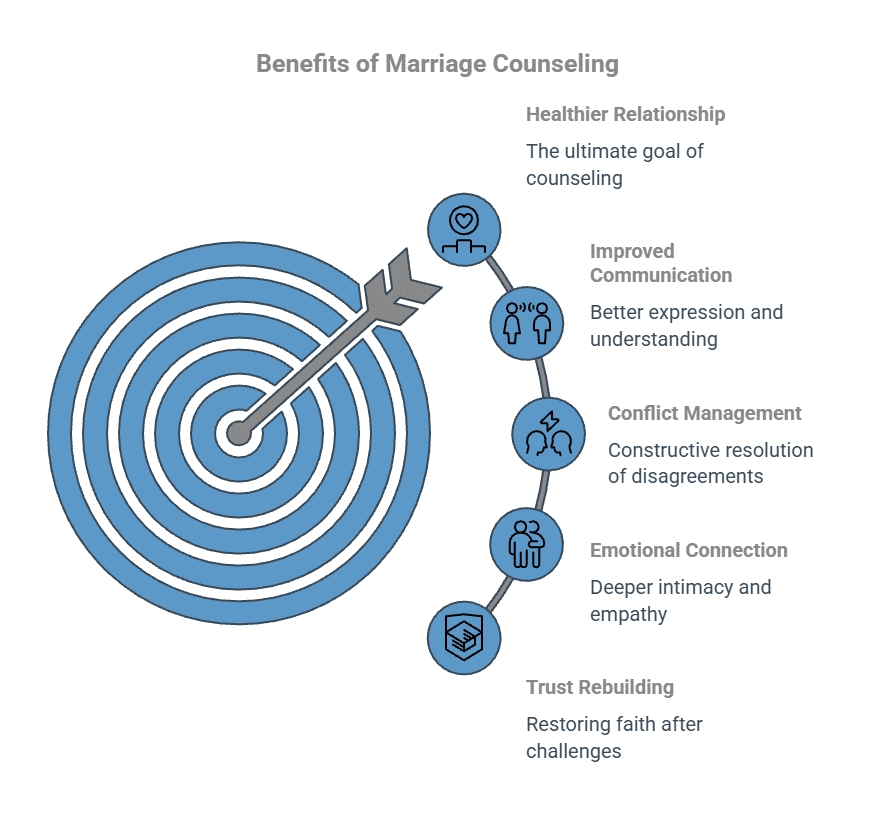
Marriage counseling helps couples better understand the communication patterns, emotional reactions, and unresolved issues affecting their relationship. Many couples enter therapy feeling stuck in recurring conflict, emotional distance, or ongoing tension that continues resurfacing despite repeated attempts to address it. Seeking professional help through counseling helps identify the underlying patterns contributing to these challenges and provides practical strategies for healthier relationship dynamics.
Some of the main benefits of marriage counseling include:
- Improving communication during difficult conversations
- Managing conflict more constructively and reducing recurring arguments
- Strengthening emotional connection and mutual understanding
- Rebuilding trust after relationship challenges or unresolved resentment
- Improving teamwork around parenting, finances, and shared responsibilities
- Navigating major life transitions and relationship stress more effectively
- Developing healthier long-term relationship habits and expectations
While every relationship faces challenges, counseling can help couples build the tools and understanding needed to navigate those challenges more effectively and maintain a healthier relationship over time.
When Should Couples Consider Marriage Counseling?
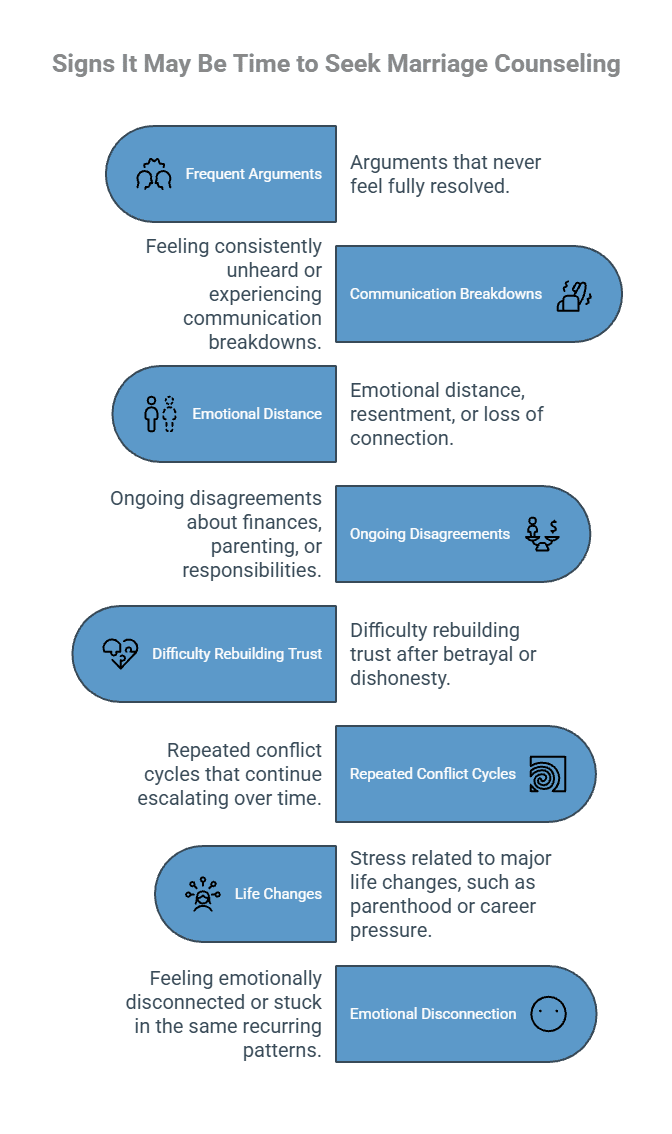
Many couples seek counseling only after months or years of having the same unresolved conversations. Addressing these deeper issues earlier can make it easier to break unhelpful patterns and work through challenges together, especially when it comes to improving conflict resolution skills.
Signs It May Be Time to Seek Marriage Counseling
- Frequent arguments that never feel fully resolved
- Communication breakdowns or feeling consistently unheard
- Emotional distance, resentment, or loss of connection
- Ongoing disagreements about finances, parenting, or responsibilities
- Difficulty rebuilding trust after betrayal or dishonesty
- Repeated conflict cycles that continue escalating over time
- Stress related to major life changes, such as parenthood or career pressure
- Feeling emotionally disconnected or stuck in the same recurring patterns
Counseling is not only for relationships in crisis. Some couples seek support proactively to strengthen communication, improve conflict resolution, and build healthier relationship habits before problems become more difficult to manage.
How Does Marriage Counseling Work?
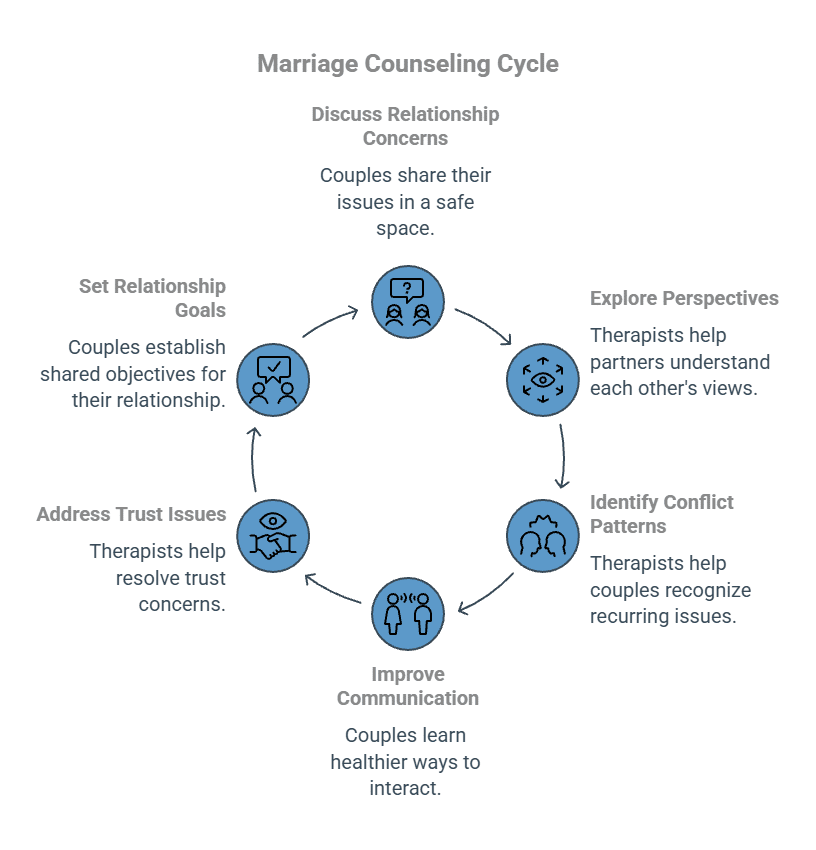
Marriage counseling helps couples work through relationship challenges with the support of a licensed therapist. The process focuses on understanding the factors contributing to tension within the relationship and developing healthier ways to communicate, respond to conflict, and navigate challenges together.
What Happens During Marriage Counseling Sessions?
During counseling sessions, couples discuss relationship concerns and recurring areas of conflict in a structured, supportive environment. Therapists help both partners explore their perspectives, recognize patterns that may be contributing to tension, and work toward shared relationship goals.
Sessions often focus on:
- Identifying recurring sources of conflict
- Improving listening and emotional awareness
- Reducing blame and defensiveness
- Practicing healthier communication strategies
- Addressing trust concerns or unresolved issues
- Setting goals for the relationship
The therapist may also observe how couples interact during discussions to better understand relationship dynamics and areas where communication tends to break down.
What Should Couples Expect During the First Few Sessions?
Many couples wonder whether the therapist will take sides. Marriage counselors are not there to determine who is right or wrong. Instead, they focus on understanding the relationship and helping both partners feel heard throughout the process.
The first few sessions typically focus on learning about the relationship, discussing current concerns, and exploring what each partner would like to improve. Therapists may ask questions about communication challenges, recurring disagreements, relationship history, and areas where couples feel stuck or disconnected.
Finding a counselor both partners feel comfortable working with can help create a more productive counseling experience. Couples looking for additional relationship guidance may also benefit from exploring expert tips to strengthen their marriage.
How Do Marriage Counselors Help Couples Communicate Better?
Many communication problems are not caused by a lack of conversation but by how partners interpret, respond to, and react during difficult discussions. Over time, assumptions, frustration, and unresolved concerns can make productive communication increasingly difficult.
Marriage counselors help couples slow down these interactions and recognize patterns that may be preventing meaningful conversations. Instead of focusing only on the topic being discussed, therapists often help couples understand how their communication skills and style influence the outcome of the conversation.
Counselors may help couples:
- Recognize recurring communication patterns that create conflict
- Identify misunderstandings before they escalate into arguments
- Understand how different communication styles affect interactions
- Express concerns in a way that encourages discussion rather than defensiveness
- Navigate difficult conversations with greater clarity and respect
- Develop healthier ways to discuss sensitive relationship issues
By helping couples become more aware of how they communicate, counselors can support more productive conversations and reduce the misunderstandings that often contribute to ongoing relationship tension.
What Therapy Approaches Are Used in Marriage Counseling?
Marriage counselors may use different therapeutic approaches depending on a couple’s communication patterns, relationship concerns, and goals. Some approaches focus on improving communication and conflict resolution, while others help couples strengthen emotional connection and better understand recurring relationship patterns.
Two of the most widely used approaches in marriage counseling are the Gottman Method and Emotionally Focused Therapy (EFT).
How Does the Gottman Method Help Couples?
The Gottman Method, developed by John Gottman and his wife, Julie Gottman, is a research-based approach that helps couples improve communication, manage conflict more effectively, and strengthen their relationship. One of its best-known concepts is the “Four Horsemen,” which are communication patterns associated with relationship distress.
| Avoiding accountability or shifting blame during disagreements can be a significant barrier in communication that marriage therapy aims to resolve. | What It Looks Like |
|---|---|
| Criticism | Attacking a partner’s character instead of addressing a specific concern |
| Contempt | Using sarcasm, disrespect, mockery, or hostility during conflict |
| Defensiveness | Avoiding accountability or shifting blame during disagreements |
| Stonewalling | Emotionally withdrawing or shutting down during conversations |
Rather than focusing on who is right or wrong, the Gottman Method helps couples recognize these patterns and replace them with healthier ways of communicating during conflict.
What Is Emotionally Focused Therapy (EFT)?
Emotionally Focused Therapy (EFT) helps couples understand how emotional needs and attachment patterns influence their interactions. The approach focuses on identifying recurring cycles of disconnection and helping partners respond to each other with greater emotional awareness and support.
EFT aims to help couples:
- Recognize recurring emotional patterns
- Reduce withdrawal and defensiveness
- Improve emotional responsiveness
- Strengthen trust and connection
- Build greater emotional security
Progress in marriage counseling is rarely immediate. Many couples gradually improve communication, emotional understanding, and conflict resolution through small but consistent changes in how they interact outside therapy sessions.
How Does Total Life Counseling Support Couples?
Every relationship faces unique challenges, which is why Total Life Counseling takes an individualized approach to couples counseling. Rather than focusing on a one-size-fits-all solution, therapists work with couples to understand the specific patterns, concerns, and relationship dynamics contributing to ongoing stress or conflict.
Counseling may help couples address concerns such as:
- Recurring communication challenges
- Ongoing conflict that feels difficult to resolve
- Trust-related concerns
- Emotional disconnection
- Substance abuse issues
- Relationship challenges related to major life transitions
The counseling process focuses on helping couples gain greater insight into their relationship patterns while developing practical strategies that align with their goals and circumstances. Sessions are tailored to the needs of each couple, allowing therapy to address the concerns most relevant to their relationship.
If you’re ready to seek support for your relationship, book an appointment with us to connect with a counselor at Total Life Counseling.
Conclusion
Marriage counseling and online therapy can help couples better understand relationship patterns, communication challenges, and unresolved concerns, including issues related to intimate partner violence, that affect their connection. Whether couples are experiencing ongoing conflict, emotional distance, trust issues, or major life transitions, finding the right fit in our team of clinical experts, including psychiatrists of various specialties, provides structured support to work through challenges more effectively together.
Seeking support is not a sign that a relationship is failing; it is often a proactive step toward building a healthier, stronger partnership. While meaningful change takes time, many couples find that with consistent effort, open communication, and professional guidance from online marriage counseling resources, positive growth and reconnection are possible.
Frequently Asked Questions
Can marriage counseling save a relationship facing serious issues?
Marriage counseling can help couples address trust concerns, emotional disconnection, and recurring conflict. Progress often depends on both partners’ willingness to participate openly and work toward healthier relationship patterns together.
Is premarital counseling different from marriage counseling?
Yes. Premarital counseling helps couples prepare for marriage by discussing expectations, communication, and future goals. Marriage counseling typically focuses on addressing existing relationship challenges within an established partnership.
Are there situations where marriage counseling may not be effective?
Marriage counseling may be less effective when one or both partners are unwilling to engage in the process or when ongoing abuse, threats, or serious safety concerns are present.
How many marriage counseling sessions does it usually take to see results?
Some couples notice improvements within the first several sessions, while more complex concerns may require longer-term counseling. Progress depends on the relationship challenges involved and both partners’ level of participation.
What is the actual success rate of marriage counseling based on recent studies?
Research supports the effectiveness of couples therapy, including Imago Relationship Therapy, for substance use disorders provided by family therapists. Studies on Emotionally Focused Therapy (EFT) have found that approximately 70–73% of distressed couples move toward positive change and recovery, with recovery rates reported by many others who experience significant relationship improvement.
How long is pre-marriage counseling?
The length of premarital counseling varies based on a couple’s goals and needs. Many couples attend several sessions over a period of weeks or months before marriage.
What to expect from marriage counseling?
Marriage counseling typically involves guided conversations about communication patterns, relationship concerns, emotional needs, and recurring conflict, addressing common questions couples have regarding the type of couple therapy. Couples work with a therapist to identify unhealthy dynamics and develop healthier ways of navigating challenges together, often utilizing individual therapy and cognitive behavioral therapy strategies.
Filed in: Blog, Dana West, Marriage Counseling
Share This Story, Choose Your Platform!
Total Life Counseling Center consists of Licensed Counselors, masters level therapists, Español counselors, Licensed Mental Health Counselors, business coaches, and image enhancement coaches who provide counseling for emotional, mental, physical and spiritual care including marriage, individual, family, substance abuse and more. TLC’s family, trauma and marriage experts have been interviewed on National and Local TV/Radio over 200 times for their expert advice on Fox News, OWN, WETV, ABC’s Medical Minute and more. Our skilled counselors are relational, approachable and specialists providing therapy services in the Central Florida area including: Orlando, Winter Park, MetroWest, Windermere, Dr. Phillips, East Orlando, Lake Mary, and Clermont, Boca Raton Florida, and Dallas, TX.
About the Author: Dana West