

What Are the 4 Signs You’re in a Selfish Relationship?

Key Highlights
- Relationship selfishness often develops through repeated one-sided behaviors rather than a single disagreement.
- Learn the 4 signs you’re in a selfish relationship and how to recognize unhealthy relationship patterns.
- Understand the difference between occasional selfish behavior and a pattern that affects trust and emotional connection.
- Discover practical ways to respond, including setting healthy boundaries and improving communication.
- Explore why some people become selfish in relationships and when professional support may help create positive change.
Have you ever found yourself questioning whether you’re asking for too much or whether your partner simply isn’t making room for your needs? When one person repeatedly expects understanding, support, and compromise without offering the same in return, the relationship can begin to feel emotionally one-sided.
The challenge is that relationship selfishness isn’t always obvious. It rarely begins with major conflicts. More often, it appears in everyday moments your opinions are dismissed, your concerns are brushed aside, or you’re expected to adjust while your partner rarely does. Over time, these small patterns can leave you feeling unheard, unappreciated, and emotionally disconnected.
Not every selfish moment signals an unhealthy relationship. Everyone can be self-focused during stressful periods. The difference is whether these behaviors become a consistent pattern that affects trust, communication, and emotional closeness. In this article, we’ll explore the 4 signs you’re in a selfish relationship, why these patterns may develop, and practical ways to respond while protecting your emotional well-being.
What Does It Mean to Be in a Selfish Relationship?
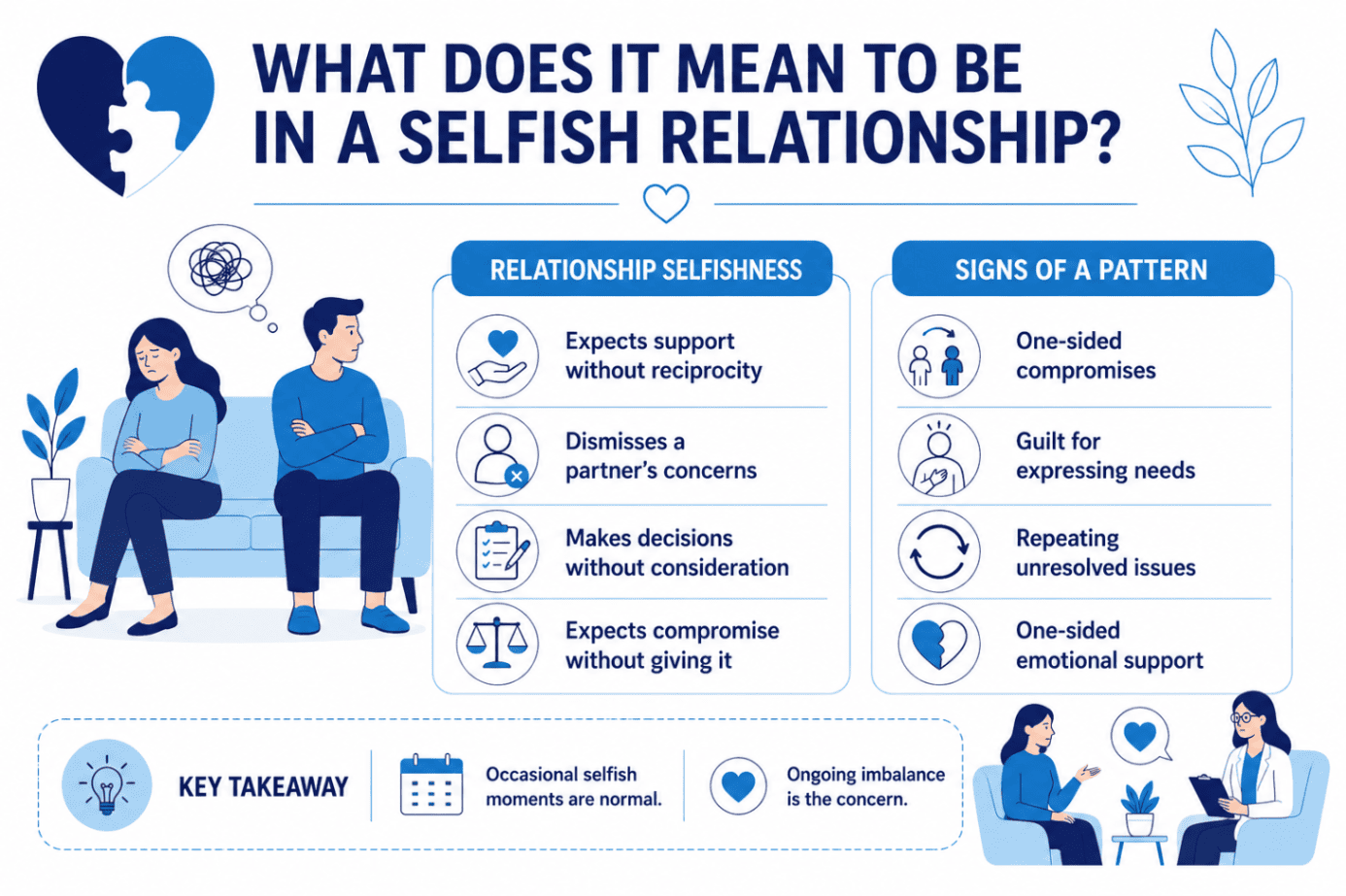
Every relationship goes through moments when one person’s needs take priority over the other’s. That doesn’t automatically make someone selfish. The concern arises when the relationship consistently revolves around one partner’s expectations, feelings, or priorities, leaving the other person feeling unheard, unsupported, or responsible for most of the emotional burden. Over time, this imbalance can affect trust, communication, and emotional connection.
1. What Does Selfishness Mean in a Relationship?
Selfishness in a relationship is more than an occasional disagreement or putting yourself first during a stressful time. It becomes a concern when one partner repeatedly prioritizes their own wants while showing little consideration for the other’s needs or feelings.
Relationship selfishness often looks like:
- Expecting support without offering the same in return.
- Dismissing or minimizing a partner’s concerns during disagreements.
- Making important decisions without considering how they affect the relationship.
- Expecting compromise from one partner while rarely compromising themselves.
2. When Does Selfish Behavior Become a Relationship Pattern?
Everyone can have selfish moments, especially during periods of stress or personal challenges. The difference is whether those behaviors reflect temporary tendencies or become an ongoing pattern of indifference that shapes the relationship. When repeated conversations lead to little or no change, the issue often extends beyond isolated incidents.
Some signs that selfish behavior may be becoming a pattern include:
- One partner consistently makes the majority of the compromises.
- Feeling guilty for expressing your own needs or boundaries.
- The same relationship issues are repeating without meaningful change.
- Emotional support feels one-sided during difficult situations.
Recognizing these patterns doesn’t mean labeling your partner. Instead, it creates an opportunity to better understand the relationship and decide what steps may help improve it.
What Are the 4 Signs You’re in a Selfish Relationship?
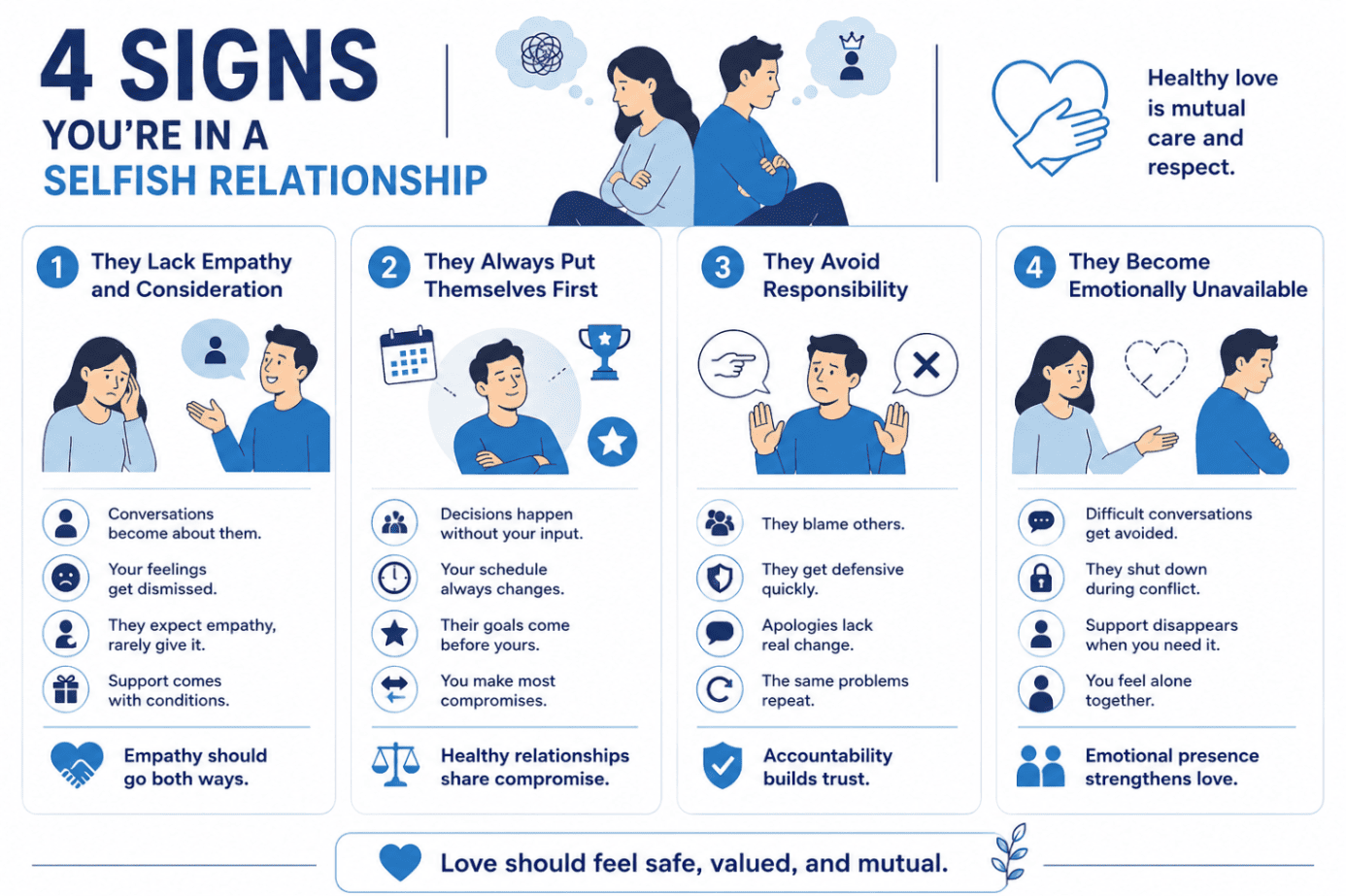
Relationship selfishness rarely begins with one major incident. More often, it develops through repeated interactions that leave one partner feeling overlooked, emotionally drained, or responsible for carrying the relationship forward. Looking at individual disagreements may not reveal much, but consistent patterns can provide a clearer picture of whether the relationship has become unbalanced.
1. They Consistently Lack Empathy and Consideration
One of the earliest signs of relationship selfishness isn’t always what your partner says; it’s how they respond when something matters to you. If conversations repeatedly leave you feeling dismissed, misunderstood, or as though your emotions are an inconvenience, the issue may be more than poor communication. Feeling emotionally overlooked over time can create distance, even when you’re spending plenty of time together.
You may notice that they:
- Change to redirect the conversation back to themselves.
- Dismiss your emotions instead of trying to understand your perspective.
- Expect patience and understanding for their feelings while showing little curiosity about yours.
- Offer support only when it’s convenient or benefits them.
When empathy consistently flows in one direction, it becomes harder to feel emotionally safe, making honest communication and mutual understanding more difficult.
2. They Regularly Prioritize Their Own Needs
Healthy compromise isn’t about keeping score, but both partners should feel that their opinions and priorities matter. If you’re regularly adjusting your plans, preferences, or boundaries while your partner rarely does the same, the relationship can gradually become one-sided without either of you noticing at first.
This may look like:
- Making important decisions without asking for your input.
- Expecting you to adjust your schedule while protecting their own.
- Prioritizing their goals or interests without considering yours.
- Assuming you’ll always be the one to compromise after disagreements.
When one person’s needs consistently take priority, the relationship can begin to feel more like responsibility than partnership.
3. They Avoid Responsibility for Their Actions
Conflict isn’t what damages most relationships; it’s what happens after the conflict. A partner who is selfish may focus more on protecting themselves than resolving the issue. Instead of acknowledging how their behavior affected you, they may shift blame, make excuses, or avoid difficult conversations altogether.
Some common patterns include:
- Blaming circumstances or other people instead of accepting responsibility.
- Becoming defensive whenever concerns are raised.
- Offering apologies without making meaningful changes.
- Repeating the same behaviors after promising things will improve.
Without accountability, the same problems often return, making it difficult for trust and emotional security to grow.
4. They Become Emotionally Unavailable When It Matters Most
Emotional support is often tested during life’s difficult moments. If your partner consistently withdraws, shuts down, or avoids meaningful conversations when challenges arise, you may feel like you’re facing important situations alone. Emotional distance doesn’t always involve silence; it can also look like being physically present while remaining emotionally disconnected.
You may notice that they:
- Avoid conversations about important relationship issues.
- Shut down instead of working through conflict together.
- Struggle to provide emotional support when you’re going through a difficult time.
Feeling emotionally connected requires both partners to remain present during difficult moments, not only when the relationship feels easy.
What are the signs of being selfish in a relationship?
Recognizing selfishness isn’t about judging your partner based on one disagreement or a difficult period. It’s about noticing whether certain behaviors appear repeatedly and leave the relationship feeling one-sided. If you consistently feel unheard, expected to compromise, or emotionally unsupported while your partner’s needs take priority, those patterns deserve attention.
Rather than focusing on isolated incidents, look at how the relationship functions over time. The more consistently these behaviors appear, the more likely they reflect relationship selfishness rather than temporary stress or occasional mistakes. Understanding why these patterns develop can also make it easier to decide how to respond constructively.
Does a lack of self-interest impede connection?
What occurs when a partner’s unwaveringly selfless actions are constructed, layer by layer, into a barrier so impenetrable that it becomes impossible to grasp the passions and wishes they cherish?
Establishing a strong and healthy relationship involves open dialogue, mutual support, and an understanding of affection. Recognizing signs of an unhealthy balance is crucial, such as when one partner habitually defers to the other on decisions or puts their needs below the other’s to make the relationship work. The good news is that effective communication requires a reciprocal exchange where both individuals feel at ease sharing their thoughts, emotions, and experiences. If your partner is consistently eager to hear about your struggles but rarely divulges their own, it may signal an absence of emotional closeness. Pay close attention to their level of genuine support and concern for your well-being, rather than just telling you what you want to hear.
A thriving relationship relies on trust, honesty, and a balance in both providing and receiving support. Engaging in acts of care may offer immediate satisfaction, yet it could jeopardize deeper connections over time. Focusing too much on others might prevent you from discovering your partner’s true likes, such as whether they enjoy Mexican cuisine or comedy. Avoiding significant discussions, including those about politics, might cause uncertainty regarding shared beliefs. Authentic relationships require open communication, mutual understanding, and the honest exchange of thoughts and feelings.
Are you encountering pushback?
Constantly agreeing with your partner can lead to frustration and resentment, as you may question the sincerity of their kind gestures. It’s natural to want to believe that your partner’s intentions are genuine, but it’s important to address any concerns you may have. In more severe cases, this pattern of agreement can give rise to emotional withdrawal, a concept outlined by Dr. John Gottman, where the giver disengages from meaningful dialogue.
Have you ever felt like your partner’s willingness to engage in conversation was merely a strategy to shut down discussions and avoid deeper emotional involvement? This behavior could be a way to make concessions in order to sidestep conflict. It’s essential to communicate openly with your partner about your feelings and to ensure that both parties actively participate in honest, authentic conversations.
Achieving the ideal equilibrium
Maintaining a healthy relationship requires a delicate balance between authenticity and honesty, especially when dealing with a selfless partner. One effective strategy to navigate this balance is to engage in meaningful, intimate conversations with your partner. These conversations can help reveal their fundamental beliefs and values, laying the groundwork for open, intentional, and reciprocal communication. By gaining a deeper understanding of each other’s viewpoints and requirements, you can strengthen the foundation of your relationship and effectively address any obstacles that may arise when dealing with a selfless partner.
Furthermore, practicing active listening during these discussions can foster a sense of validation and understanding within the relationship. It is essential to create a safe space where both partners feel heard and respected. Additionally, expressing gratitude and appreciation for your partner’s selflessness can reinforce their positive behavior and strengthen the emotional connection between both individuals.
It is important to remember that maintaining a healthy balance between authenticity and honesty requires continuous effort and mutual respect from both partners. By prioritizing open communication, empathy, and understanding, you can cultivate a strong and fulfilling relationship with a selfless partner.
Three guidelines for engaging in intimate discussions.
- Dr. Gottman presents three fundamental rules:
- 1. Articulate your feelings
- 2. Pose open-ended questions
- 3. Show empathy.
Engaging in deep and meaningful conversations with your partner can greatly enhance your relationship and strengthen your emotional connection. By prioritizing the last two suggestions, you can create a space for authentic, open communication that allows both partners to express themselves.
To encourage your partner to communic understanding towards your partner’s perspective, even if you may not agree with it. Validate their emotions and experiences, acknowledging their feelings without judgment. By creating a non-judgmental atmosphere, you invite your partner to be vulnerable and honest in their communication.
Furthermore, consider setting aside dedicated time for meaningful conversations without distractions such as phones or television. This allows both partners to focus on each other fully and engage in deeper discussions about their thoughts, dreams, and feelings. Building this habit of quality time together can strengthen your bond and intimacy.
Incorporating these techniques into your daily interactions can cultivate a deeper level of emotional intimacy with your partner. By creating a supportive and understanding environment for communication, you pave the way for honest expressions of thoughts and emotions that can deepen your connection as a couple.
Pose questions that don’t have a simple yes or no answer.
Paying attention to how you communicate with your partner can significantly impact the dynamics of your relationship. If your partner tends to prioritize others’ needs over their own, it is important to avoid asking yes or no questions. By steering clear of such closed-ended queries, you create space for your partner to express their thoughts and feelings about their inner world more freely. Opt for open-ended questions that encourage deeper conversations and allow your partner to share their opinions fully.
Consistently utilizing open-ended questions, whether it’s about dinner choices or financial decisions, can signal to your partner that you value their input and want to engage more meaningfully with them. While the shift in communication style may not yield immediate results, over time, it can lead to a more profound connection and understanding between you and your partner.
By fostering an environment where both partners feel heard and respected, you lay the foundation for a stronger and more fulfilling relationship. Remember that effective communication is key to building trust, intimacy, and mutual support in any partnership.
Demonstrate understanding and compassion.
Your partner might find it challenging to express their true self because their deepest opinions have never been intentionally validated. If you’ve begun asking your spouse open-ended questions, they might be sharing their genuine preferences and desires. The next step is to turn toward them, as Dr. Gottman often emphasizes, by actively participating in the conversation. Show your partner that you understand and value their thoughts and own needs. If they are gradually moving away from always being selfless, accompany them on this journey by taking small steps together.
You can demonstrate empathy even in simple situations, such as when your typically accommodating spouse confesses a preference for Italian over Mexican cuisine (we know it might sound odd). You might respond, “I totally get that! I feel like we get more value at our favorite Italian place down the street, plus their bread basket is fantastic! What’s the best Italian dish you’ve ever enjoyed?” Engaging in this manner signals to your partner that you are attentive to their needs and that you often find common ground with them! Start by acknowledging their dining preferences, and you’ll notice them becoming more comfortable expressing their views in more significant matters.
Why Can Someone Become Selfish in a Relationship?
Selfishness in a relationship can have detrimental effects on its health and longevity, affecting both partners emotionally and mentally. One of the most common signs of selfish behavior is consistently prioritizing one’s own needs over one’s partner’s, often without regard for their feelings or desires. This lack of consideration can result in difficulties in finding common ground, leading to a breakdown in communication and empathy within the relationship.
Moreover, failing to acknowledge or appreciate your partner’s efforts and sacrifices can breed resentment and create an imbalance in the partnership. Over time, this imbalance can erode trust and intimacy between partners, making it challenging to maintain a healthy and fulfilling connection.
Recognizing these signs of selfishness early on is crucial for addressing underlying issues and fostering a more supportive and caring dynamic. Open communication, empathy, and mutual respect are fundamental aspects of building a strong foundation for any respectful partnership. By actively working towards understanding each other’s needs and perspectives, partners can cultivate a harmonious and fulfilling bond based on trust and mutual support.
Call for a Complimentary 15 Minute Phone Consultation
Se Habla Español: We have Portuguese and Spanish speaking counselors as well.

Why Can Someone Become Selfish in a Relationship?
Selfishness in a relationship can have detrimental effects on its health and longevity, affecting both partners emotionally and mentally. One of the most common signs of selfish behavior is consistently prioritizing one’s own needs over one’s partner’s, often without regard for their feelings or desires. This lack of consideration can result in difficulties in finding common ground, leading to a breakdown in communication and empathy within the relationship.
Moreover, failing to acknowledge or appreciate your partner’s efforts and sacrifices can breed resentment and create an imbalance in the partnership. Over time, this imbalance can erode trust and intimacy between partners, making it challenging to maintain a healthy and fulfilling connection.
Recognizing these signs of selfishness early on is crucial for addressing underlying issues and fostering a more supportive and caring dynamic. Open communication, empathy, and mutual respect are fundamental aspects of building a strong foundation for any respectful partnership. By actively working towards understanding each other’s needs and perspectives, partners can cultivate a harmonious and fulfilling bond based on trust and mutual support.
How Can Total Life Counseling Help?
Living with ongoing relationship conflict can be emotionally exhausting, especially when the same patterns continue despite repeated conversations and genuine efforts to improve things. Recognizing relationship selfishness is an important first step, but creating lasting change often requires a deeper understanding of how both partners communicate, respond to conflict, and support one another.
At Total Life Counseling, relationship counseling is designed to help individuals and couples move beyond repeated arguments and one-sided relationship patterns. Our licensed therapists work with you to identify unhealthy dynamics, strengthen communication, improve emotional awareness, and develop practical strategies that encourage mutual respect, empathy, and accountability.
Every relationship has its own challenges, which is why counseling is tailored to your unique experiences and goals. Whether you’re trying to rebuild trust, navigate ongoing conflict, or better understand recurring relationship patterns, therapy provides a supportive environment to explore those challenges and work toward healthier, more balanced relationships.
If you’re ready to strengthen your relationship or gain greater clarity about the challenges you’re facing, connect with the team at Total Life Counseling to learn more about the support that’s right for you.
Conclusion
Recognizing the signs of a selfish relationship isn’t about judging your partner over one disagreement. It’s about noticing repeated patterns that leave you feeling unheard, unsupported, or responsible for carrying more of the relationship than you should.
If these patterns continue despite honest conversations and mutual effort, you don’t have to navigate them alone. Professional counseling can help you better understand your relationship, strengthen communication, and explore healthier ways to move forward together, especially if feelings of contempt begin to surface.
Licensed Counselors & Therapists
Meet Our Team of Certified & Experienced Professionals
Total Life Counseling Center consists of Licensed Counselors, Masters Level Therapists, Espanol Counselors, Licensed Mental Health Counselors, Business Coaches, Image Enhancement Coaches who provide counseling for emotional, mental, physical and spiritual care including marriage, individual, family, substance abuse and more. Our team of certified and experienced professionals, dedicated to serving a comprehensive spectrum of mental health and relationship issues such as couples, women and men’s issues, children and teens with oppositional defiance, video game addiction, ADHD, ASD, anxiety, depression, and trauma survivors, is here to support and guide you through your journey towards healing and navigating life transitions. This approach not only enhances the effectiveness of the counseling provided but also builds trust within the community and among potential clients, who may be seeking support.
We offer next level counselors specialized in areas such as relationships, video game & drug/alcohol addictions, abuse, trauma, depression, and ADHD. Our Therapists are EMDR (eye movement desensitization) trauma therapy trained, cognitive behavioral therapy, specialize in ADHD and Oppositional Defiant Children, and are also professional Gottman method marriage couples counselors to give the best results to couples and to provide the best comprehensive spectrum of mental health and relationship care for our clients.
Struggling with Anger? We offer 8 hour anger management group therapy!
Discounted Rates and the president of Total Life Counseling Center Jim West does not want to turn people away and we have counselors at various levels of experience at a discounted rate that are trained by our next level counselors!

Jim West
MA, LICENSED MENTAL HEALTH COUNSELOR, national certified counselor
President, Counselor, Guest Speaker, Author, Social Skills, ADHD, ODD, ASD, children, teens, and more!

Dana West
MSW, Licensed clinical social worker
Vice President, Counselor, Guest Speaker, Addictions, Trauma, Couples, Abuse, and more!

Mathew Martin
MS, LICENSED MENTAL HEALTH COUNSELOR
Counselor, Coach, Guest Speaker, Marriage, Individual Males, Substance Abuse and more!

Brandon Feinberg
MS, LICENSED MENTAL HEALTH COUNSELOR
Male Counselor, Licensed Mental Health Counselor specializing in ADHD, Asperger Syndrome, Autism Spectrum Disorders, and more!
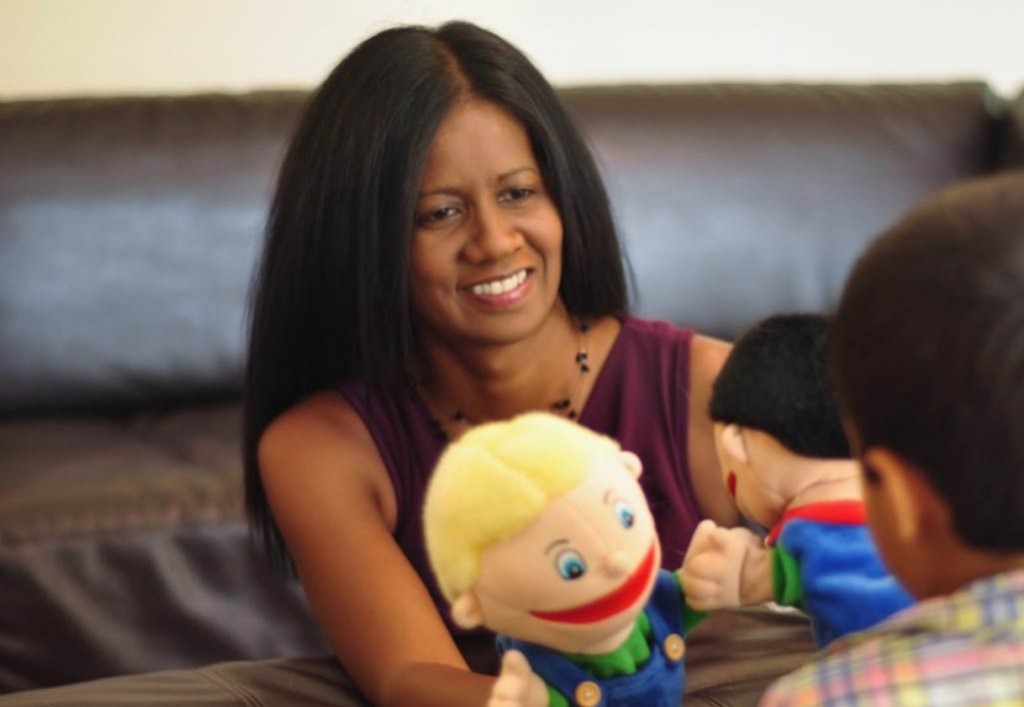
Lyris Steuber
MS, licesned marriage & family therapist
Counselor, Coach, Marriage & Family, Play Therapy, Divorce, Adolescent and more!

Valerie Ware
Licensed Psychologist and Behavioral Specialist
Psychological Evaluator, Autism, ADHD, Learning Disabilities, Anxiety, Gifted, Career Pathways, and emotional assessments.

Gemima McMahon
MA, LICENSED MENTAL HEALTH COUNSELOR
Licensed Mental Health Counselor specializing in Women’s issues, Trauma, Anxiety, Depression, Cutting, Couples, Children and Teenagers and more!

Audrey DeBruler
MS, LMHC, Licensed Mental Health Counselor
Children, Adolescents, Young Adults, Faith Based Counseling, Trauma Recovery, Anxiety and more!

David Duany
MA, LICENSED MENTAL HEALTH COUNSELOR
Licensed Mental Health Counselor specializing in ADHD, Social Skills, and Anger Management counseling for children, young adults, and families.

Katherine Waldheim
MS, Registered Mental Health Counseling Intern
Trauma, anxiety, couples counseling, and child & adolescent counseling services and more!

Sarah Dornas Albuquerque
MS – Registered Mental Health Counselor Intern
EMDR, Anxiety, Depression, Children, Teens, Young Adults, English, Spanish and Portugues and Adult Counseling

Frequently Asked Questions
What should I do if I realize I am being a selfish partner?
Start by acknowledging the behavior without becoming defensive. Listen to your partner’s concerns, take responsibility for your actions, and make consistent efforts to improve communication, empathy, and compromise. If these patterns continue, relationship counseling can provide additional support.
What does being with a selfish partner feel like?
Being with a selfish partner can leave you feeling unheard, emotionally drained, or like your needs always come second. Over time, these patterns may affect trust, communication, and emotional connection.
How can attachment styles contribute to selfish behavior in relationships?
Attachment styles can influence how people communicate, respond to conflict, or express emotional needs. However, they don’t automatically make someone selfish. Lasting relationship selfishness is defined by repeated behaviors and choices, not attachment style alone.
Can someone be too selfish for a relationship?
Yes. If someone consistently ignores their partner’s needs, avoids compromise, and shows little willingness to change, they may be too selfish for a relationship to remain healthy and balanced.
Can selfishness ruin a marriage, and what can be done about it?
Yes, ongoing selfishness can damage trust, communication, and emotional connection if left unaddressed. Honest conversations, mutual accountability, and a willingness to change can help rebuild the relationship. When these efforts aren’t enough, couples counseling may provide additional guidance and support.
What is the selfish meaning in a relationship?
Selfishness in a relationship means consistently prioritizing your own needs, feelings, or interests while giving little consideration to your partner’s well-being. It becomes a concern when this behavior is repeated and creates an unhealthy imbalance in the relationship.
What are some practical steps to address selfishness in my relationship?
Start with honest, respectful conversations about your needs and expectations. Set healthy boundaries, practice active listening, and focus on mutual compromise. If the same patterns continue despite consistent effort, relationship counseling can help both partners develop healthier communication and relationship habits.
What are the signs of a selfish partner?
Signs of a selfish partner may include consistently prioritizing their own needs, showing little empathy, avoiding responsibility for their actions, and expecting you to make most of the compromises in their own world relationship.
How do you deal with a selfish partner?
The best way to deal with a selfish partner is through honest communication, healthy boundaries, and mutual accountability. If these patterns continue despite your efforts, relationship counseling can help both partners improve communication and rebuild trust.
Filed in: adults, Blog, Couples, Dating, Divorce, Marriage, Matthew Martin, Orlando, Pre-Marital, Relationships, Womens Issues
Share This Story, Choose Your Platform!
Total Life Counseling Center consists of Licensed Counselors, masters level therapists, Español counselors, Licensed Mental Health Counselors, business coaches, and image enhancement coaches who provide counseling for emotional, mental, physical and spiritual care including marriage, individual, family, substance abuse and more. TLC’s family, trauma and marriage experts have been interviewed on National and Local TV/Radio over 200 times for their expert advice on Fox News, OWN, WETV, ABC’s Medical Minute and more. Our skilled counselors are relational, approachable and specialists providing therapy services in the Central Florida area including: Orlando, Winter Park, MetroWest, Windermere, Dr. Phillips, East Orlando, Lake Mary, and Clermont, Boca Raton Florida, and Dallas, TX.
About the Author: Jim West