

What Is Attachment-Based Therapy and How Does It Work?

Key Highlights
- Attachment-based therapy focuses on how early relationships with caregivers influence emotional development, trust, and communication patterns throughout life.
- Understanding what attachment-based therapy helps explain how attachment experiences shape emotional responses, relationship behaviors, and mental health.
- Therapists use various attachment-based therapy interventions to help individuals improve emotional awareness, communication, and relationship security.
- Attachment-based family therapy is a structured approach that helps parents and children rebuild trust, resolve family conflict, and strengthen emotional bonds.
- Guided exercises and attachment-based family therapy activities help families practice healthy communication and develop stronger emotional connections.
- Attachment therapy can support individuals, couples, and families dealing with anxiety, relationship challenges, and emotional stress linked to early experiences.
- Total Life Counseling (TLC) offers compassionate therapy services to help clients strengthen relationships, heal emotional wounds, and develop healthier attachment patterns.
Many people experience challenges with trust, emotional closeness, emotional regulation, or communication in their relationships. These difficulties can sometimes stem from early-life experiences and from how individuals learned to form emotional bonds with caregivers and loved ones.
When early relationships feel inconsistent, distant, or stressful, they may also shape how a person understands and manages emotions later in life. In some cases, unresolved early experiences or trauma can influence emotional responses, relationship patterns, and coping strategies. These patterns may affect friendships, romantic partnerships, family connections, and a person’s ability to regulate emotions during stressful situations.
This blog explains what attachment-based therapy is, how it works, and the different approaches used to support emotional regulation, heal from early relational trauma, and strengthen emotional bonds. It also explores attachment-based family therapy, common interventions, and how therapy can help individuals, couples, and families build healthier relationships and emotional patterns.
What Is Attachment-Based Therapy?
Attachment-based therapy is a form of psychotherapy that focuses on how early relationships with caregivers influence emotional development, trust, and relationship patterns later in life. The goal of this therapeutic approach is to help individuals understand how attachment experiences shape the way they connect with others and respond to emotional challenges.
In attachment-based therapy, therapists explore early family relationships, emotional bonds, and patterns of communication that may affect current relationships. By identifying these patterns, individuals can develop healthier ways of building trust, expressing emotions, and forming secure connections.
This type of therapy is often used with individuals, couples, and families. By strengthening emotional awareness and improving relationship skills, attachment-based therapy can support healthier connections and long-term emotional well-being.
Not sure how therapy conversations support emotional well-being? Explore what talk therapy is and how it can improve mental health and learn how it helps people manage emotions and life challenges.
How Does Attachment-Based Therapy Work?
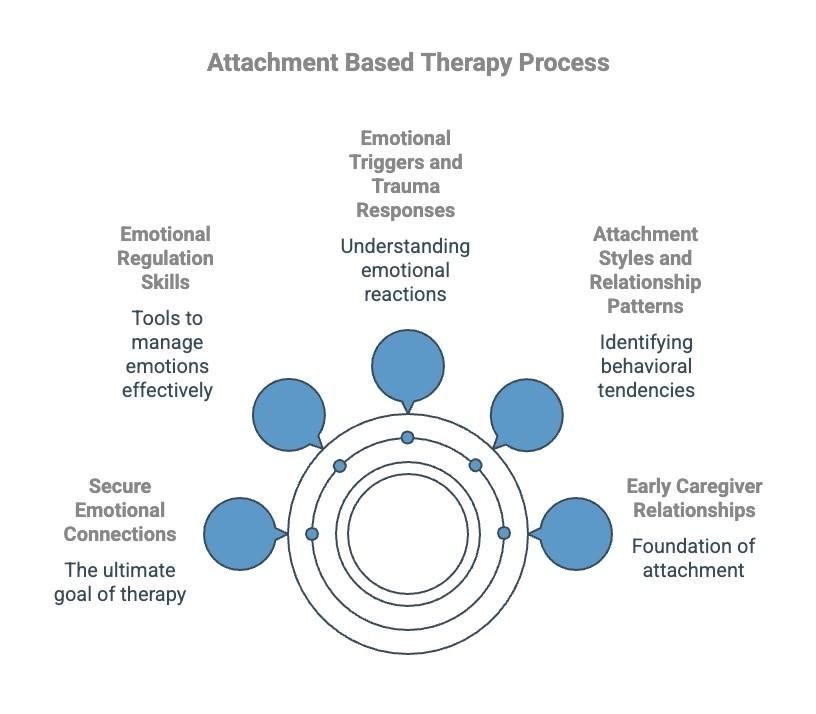
Attachment-based therapy focuses on understanding how early relationships influence emotional patterns, trauma responses, and interpersonal behaviors later in life. Instead of only addressing present relationship difficulties, therapists explore how early attachment experiences shape emotional regulation, trust, and coping mechanisms.
Below are several ways attachment-based therapy helps individuals understand and reshape these patterns.
1) Exploring Early Caregiver Relationships
Therapists often begin by examining early interactions with caregivers and important family members. These experiences help shape a person’s expectations of safety, trust, and emotional support.
By reflecting on early relational experiences, individuals can begin to understand how childhood environments may have influenced their emotional responses, relationship behaviors, and patterns of seeking or avoiding closeness.
2) Identifying Attachment Styles and Relationship Patterns
A key component of attachment-based therapy involves identifying attachment styles, such as secure, anxious, avoidant, or disorganized attachment.
Recognizing these patterns helps individuals understand how they respond to closeness, conflict, or perceived rejection. This awareness allows therapists and clients to explore how these attachment styles influence current relationships and emotional reactions.
3) Understanding Emotional Triggers and Trauma Responses
Early relational experiences can create emotional triggers that activate strong reactions in adulthood. Situations involving rejection, conflict, or emotional distance may activate memories or patterns connected to earlier relationships.
Attachment-based therapy helps individuals identify these triggers and understand how past experiences may shape present emotional responses.
4) Developing Emotional Regulation Skills
Beyond awareness, therapy focuses on helping individuals regulate emotional responses that may feel overwhelming during stress or relationship conflict.
Through guided reflection and therapeutic support, individuals learn strategies for managing emotional intensity, responding thoughtfully to difficult situations, and creating more stable emotional patterns.
5) Strengthening Secure Emotional Connections
As individuals better understand their attachment patterns and emotional responses, therapy works toward developing more secure and stable relational behaviors.
This process may involve building trust, improving emotional communication, and learning how to form relationships that feel safe, supportive, and consistent.
Through insight, reflection, and guided therapeutic work, attachment-based therapy helps individuals reshape emotional patterns and develop healthier ways of relating to others.
What Are Common Attachment-Based Therapy Interventions?
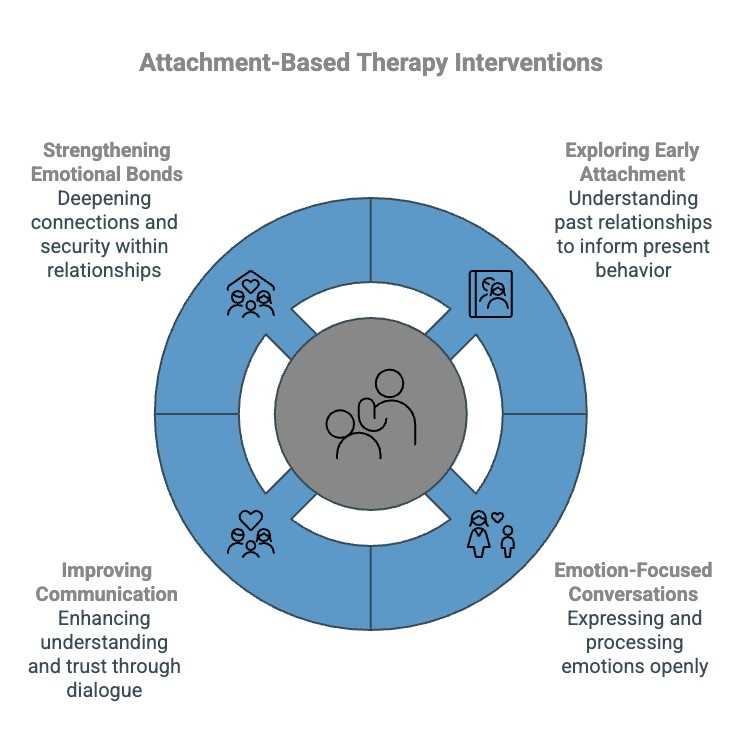
Attachment-based therapy uses structured strategies to help individuals and families understand emotional bonds, communication patterns, and trust within relationships. These approaches support emotional healing and stronger connections.
Below are common attachment-based therapy interventions used in therapy:
1) Exploring Early Attachment Experiences
Therapists often guide individuals in reflecting on early relationships with caregivers to understand how those experiences shaped emotional development. Discussing childhood memories and family dynamics can reveal patterns that influence trust, communication, and emotional responses in current relationships. Recognizing these patterns helps individuals develop healthier ways of connecting with others and responding to emotional challenges.
2) Emotion-Focused Conversations
Emotion-focused discussions encourage individuals to openly express feelings, concerns, and emotional needs in a supportive environment. Therapists help clients identify emotional triggers and understand how past experiences may influence present reactions. Over time, these conversations improve emotional awareness and help individuals communicate their feelings more clearly within relationships.
Wondering how emotional closeness helps relationships grow stronger? Learn what emotional intimacy is, how it strengthens bonds, and why it matters for healthy relationships.
3) Improving Communication and Trust
Attachment-based therapy often includes exercises that strengthen communication and rebuild trust. Therapists guide individuals in expressing their needs, listening actively, and responding with empathy. These interventions are particularly helpful for couples and families working to repair misunderstandings and strengthen emotional connections.
4) Strengthening Emotional Bonds
Many attachment-based therapy interventions focus on rebuilding emotional closeness between individuals, couples, or family members. Therapists may use guided discussions and relationship exercises that encourage empathy and understanding. These activities help repair emotional distance and support stronger, more secure relationships.
Through these interventions, attachment-based therapy helps individuals and families develop healthier communication, stronger emotional connections, and greater relationship security.
What Activities Are Used in Attachment-Based Family Therapy?
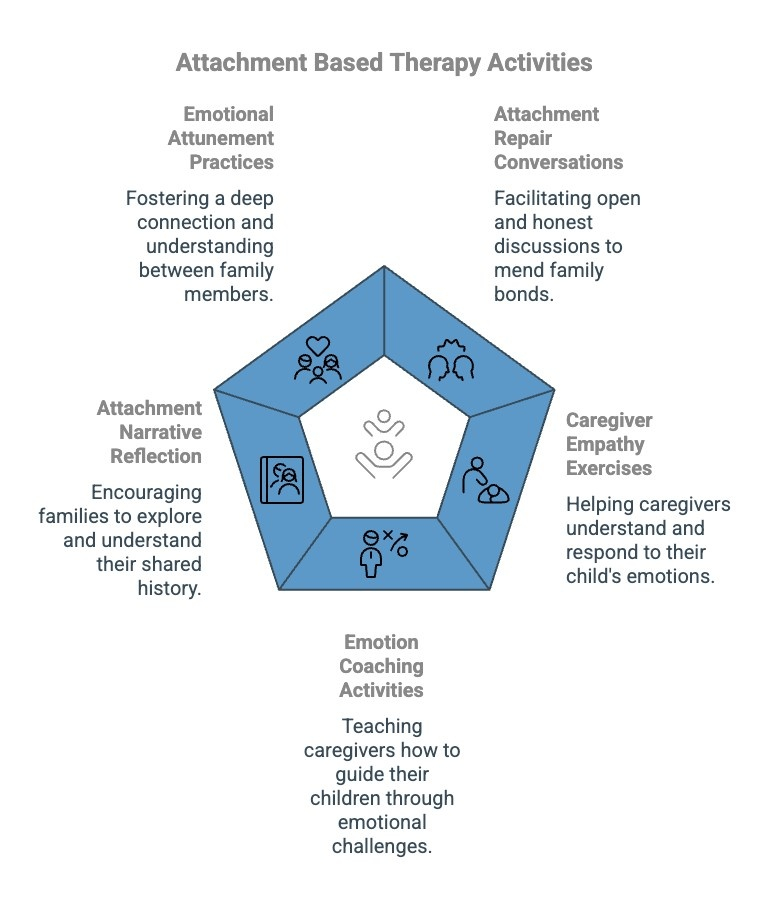
Attachment-based family therapy often includes structured activities designed to repair attachment bonds between parents and children. Rather than focusing only on communication skills, these activities help families explore emotional experiences, rebuild trust after relational injuries, and develop stronger emotional attunement.
Below are several common activities therapists may use during attachment-based family therapy sessions.
1) Attachment Repair Conversations
One of the central activities in attachment-based family therapy involves structured conversations focused on repairing emotional ruptures between parents and children.
In these sessions, therapists guide family members through discussions about past experiences where a child may have felt misunderstood, rejected, or unsupported. The goal is not to assign blame but to create space for acknowledgment, empathy, and emotional repair.
Through these conversations, parents learn to respond with understanding and reassurance, helping rebuild trust and strengthen the emotional bond within the family.
2) Caregiver Empathy Exercises
Caregiver empathy exercises help parents better understand their child’s emotional experiences and perspective. Therapists may ask parents to reflect on how certain situations might feel from the child’s point of view or explore the emotional meaning behind a child’s behavior.
These exercises encourage caregivers to respond with greater sensitivity and support. By strengthening parental empathy, therapy helps create a more emotionally safe environment where children feel understood and valued.
3) Emotion Coaching Activities
Emotion coaching activities focus on helping parents guide children in recognizing, expressing, and managing emotions. Therapists teach caregivers how to validate their child’s feelings while also helping them develop healthier coping strategies.
Instead of dismissing or minimizing emotions, parents learn how to acknowledge emotional experiences and help children process them constructively. Over time, this approach supports stronger emotional regulation and more supportive parent-child interactions.
4) Attachment Narrative Reflection
Attachment narrative reflection involves exploring personal and family stories related to relationships, emotional experiences, and important life events.
Therapists may encourage children and parents to reflect on past moments that shaped their relationship, including both supportive experiences and difficult ones. Discussing these narratives helps families better understand how past interactions influence present emotional patterns and relationship dynamics.
5) Emotional Attunement Practices
Emotional attunement practices help family members become more responsive to each other’s emotional cues. These activities focus on recognizing subtle signs of distress, frustration, or emotional needs during everyday interactions.
Therapists guide families in practicing attentive listening, validating emotional experiences, and responding with supportive behaviors. Developing emotional attunement helps parents and children feel more connected, understood, and secure within their relationships.
Through these structured activities, attachment-based family therapy helps families repair emotional disconnections, strengthen trust, and create more secure and supportive relationships.
Who Can Benefit from Attachment-Based Therapies?
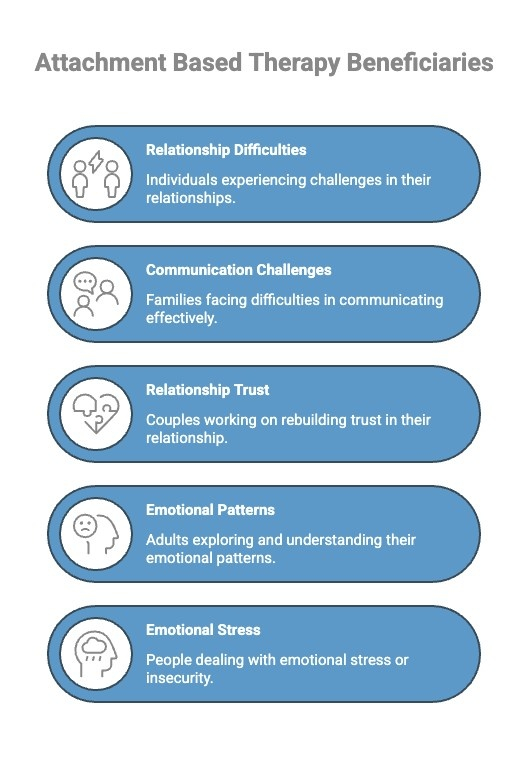
Attachment-based therapies are designed to help individuals understand how early relationship experiences influence emotional patterns and connections with others. This approach can support people facing various relationship or emotional challenges.
Below are some groups who may benefit from attachment-based therapies:
- Individuals experiencing relationship difficulties: Therapy can help people understand patterns that affect trust, communication, or emotional closeness.
- Families facing communication challenges: Attachment-based family therapy helps improve understanding and strengthen emotional bonds between family members.
- Couples working on relationship trust: Attachment-based couples therapy can help partners address emotional needs and develop healthier communication patterns.
- Adults exploring emotional patterns: Attachment-based therapy for adults can support individuals who want to understand how early experiences influence their current relationships.
- People dealing with emotional stress or insecurity: Therapy can help individuals develop healthier coping strategies and stronger emotional awareness.
Through guided support, attachment-based therapies can help people build more secure relationships and improve emotional well-being.
Curious about therapy approaches that focus on improving relationships? Learn what interpersonal therapy is and how it works and how it helps strengthen communication and emotional connections.
Why Is Attachment-Based Therapy Important for Emotional Health?
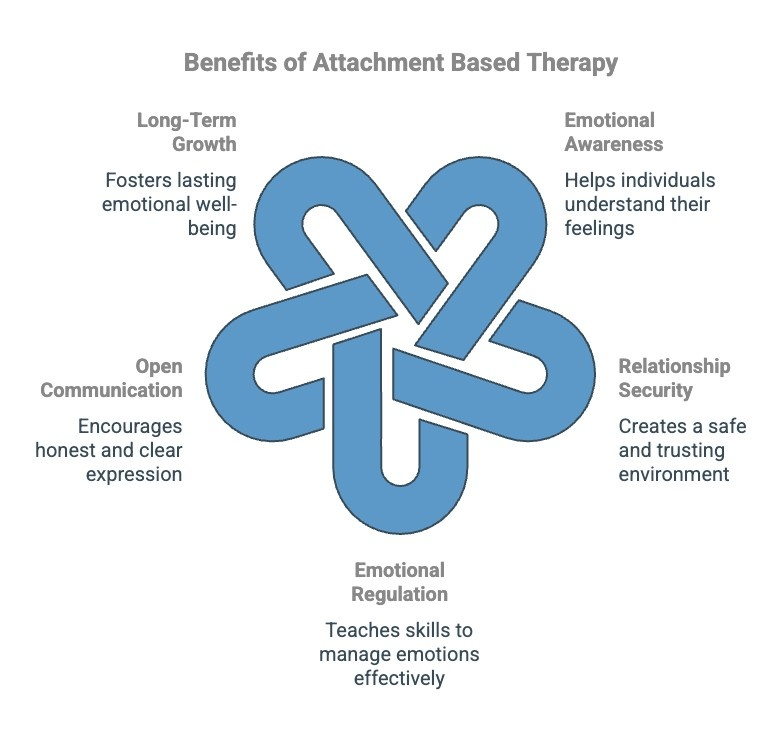
Emotional health is closely connected to how people form relationships, trust others, and respond to emotional experiences. Attachment-based therapy helps individuals understand how early emotional bonds influence current feelings and behaviors.
Below are ways attachment-based therapy supports emotional health:
- Strengthens emotional awareness: Therapy helps individuals understand their emotional responses and how early attachment experiences shape their reactions.
- Improves relationship security: By addressing attachment patterns, individuals can develop healthier and more trusting relationships.
- Supports emotional regulation: Understanding emotional triggers can help people respond to difficult situations with greater balance.
- Encourages open communication: Therapy helps individuals express emotions and needs more clearly within relationships.
- Promotes long-term emotional growth: Insight into attachment patterns can support lasting improvements in emotional well-being.
Through deeper understanding and supportive guidance, attachment-based therapy helps individuals build healthier emotional connections and stronger relationships.
Want to build stronger and healthier connections with the people in your life? Discover practical tips for nurturing relationships and learn simple ways to improve trust and emotional connection.
How Can Total Life Counseling Help With Attachment-Based Therapy?
Total Life Counseling (TLC) provides compassionate therapy services that help individuals, couples, and families strengthen emotional connections and build healthier relationships. Through attachment-based therapy, TLC therapists support clients in understanding how early relationship experiences may influence current emotional patterns and communication styles.
At TLC, therapists create a supportive and safe environment where clients can explore trust, emotional needs, and relationship dynamics. Using personalized therapy approaches, they help families improve communication, rebuild emotional bonds, and develop stronger connections.
Whether someone is seeking attachment-based family therapy, couples counseling, or individual support, TLC therapists tailor treatment to each person’s needs and goals. If you are exploring attachment-based therapy, contact Total Life Counseling to learn how professional guidance can support emotional healing and healthier relationships.
Conclusion
Attachment-based therapy offers a meaningful approach to understanding how early relationships influence emotional patterns, trust, and interpersonal connections. By exploring attachment styles, emotional triggers, and past relational experiences, individuals can gain deeper insight into how these factors shape their current behaviors and responses.
Through supportive therapeutic work, attachment-based therapy helps individuals and families strengthen emotional regulation, repair relational bonds, and develop healthier ways of relating to others. Over time, this process can lead to stronger emotional resilience, improved communication, and more secure relationships across different areas of life.
Frequently Asked Questions
What types of conditions are commonly treated with attachment-based therapy?
Attachment-based therapy helps individuals dealing with anxiety disorders, depression, and other mental health conditions linked to early-life experiences. It can also support those affected by childhood trauma, reactive attachment disorder, or the effects of negative early attachment with a primary caregiver.
How does attachment-based therapy help adults improve their relationships?
Attachment-based therapy helps adults understand different attachment styles, including avoidant attachment, and how these patterns affect interpersonal relationships. By learning healthier communication and emotional regulation strategies, individuals can develop new ways to build trust and strengthen relationships with romantic partners.
Are there specific qualifications needed for attachment-based therapists?
Attachment-based therapists are usually licensed professionals trained in counseling or psychology. Many ABFT therapists receive specialized training in attachment theory and family therapy models, often recognized within professional mental health practice and supported by organizations like the American Psychological Association.
What is attachment-based family therapy?
Attachment-based family therapy is a structured family therapy model influenced by John Bowlby’s attachment theory. Therapists often guide families through conversations and attachment-based family therapy activities that repair trust, reduce family conflict, and strengthen emotional bonds between parents and adolescents.
Can attachment-based therapy help adults?
Yes, attachment-based therapy for adults often involves understanding how early-life experiences and relationships with attachment figures influence emotional patterns. This approach helps adults address attachment issues, strengthen emotional awareness, and build more secure relationships.
Can attachment-based therapy help couples?
Attachment-based therapy helps couples understand relational patterns shaped by earlier attachment experiences. By improving emotional awareness and communication, partners can rebuild trust, strengthen their connection, and develop healthier patterns in their relationship.
What is attachment-based compassion therapy?
Attachment-based compassion therapy integrates attachment theory with compassion-focused practices. It helps individuals heal the inner child, address fear of abandonment, and build emotional resilience by fostering emotional safety, self-understanding, and stronger attachment security.
Are there any risks or limitations to attachment-based therapy?
Attachment-based therapy may involve discussing painful experiences such as childhood trauma or family conflict. While this can feel uncomfortable initially, working within a supportive therapeutic relationship helps individuals safely process emotions and develop healthier coping strategies.
Share This Story, Choose Your Platform!
Total Life Counseling Center consists of Licensed Counselors, masters level therapists, Español counselors, Licensed Mental Health Counselors, business coaches, and image enhancement coaches who provide counseling for emotional, mental, physical and spiritual care including marriage, individual, family, substance abuse and more. TLC’s family, trauma and marriage experts have been interviewed on National and Local TV/Radio over 200 times for their expert advice on Fox News, OWN, WETV, ABC’s Medical Minute and more. Our skilled counselors are relational, approachable and specialists providing therapy services in the Central Florida area including: Orlando, Winter Park, MetroWest, Windermere, Dr. Phillips, East Orlando, Lake Mary, and Clermont, Boca Raton Florida, and Dallas, TX.
About the Author: Sarah Dornas


