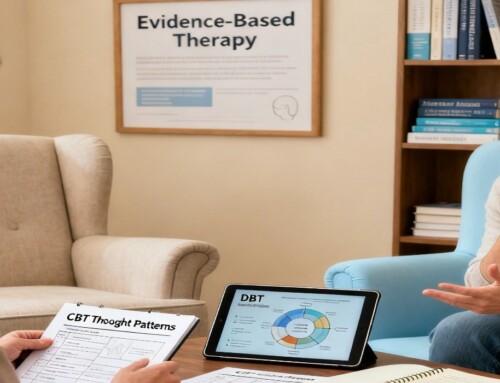

How Therapy Helps With Teenage Exam Stress at School?

Key Highlights
- Therapy teaches teens practical tools to manage exam stress without feeling overwhelmed
- Counseling supports better focus, sleep, and emotional balance during academic pressure
- Teens build confidence that is not tied only to grades or performance
- Parents learn how to reduce pressure and create a more supportive home environment
- Early therapy reduces the risk of long-term anxiety and burnout
- Evidence-based techniques help teens build resilience for future challenges
- Support from specialized teen counselors, like those at Total Life Counseling, provides structured guidance for both teens and parents during high-pressure academic periods
Academic pressure today feels heavier than ever. Your teen is not just preparing for exams. They are carrying expectations about their future, their performance, and sometimes even their worth. If you have noticed your teen showing more tension, tearfulness, irritability, or withdrawal during exam season, these changes are not imagined. The stress they are experiencing is real, and it can feel overwhelming for young minds.
Exam stress does not stay in textbooks and classrooms. It shows up as sleep problems, emotional outbursts, self-doubt, stomachaches, and fear of failure. Many teens want to do well, but inside, they may feel like they are constantly falling behind. Over time, this pressure can affect confidence, motivation, and mental health.
In this guide, you will learn how therapy helps with teenage exam stress, what signs to watch for, and how professional support can help teens feel calmer, more capable, and more balanced, both during exams and beyond.
What Is Teenage Exam Stress?
Teenage exam stress is the emotional and mental pressure teens feel before and during exams. While some nervousness is normal, stress becomes a concern when it feels constant, overwhelming, and begins affecting mood, sleep, focus, or confidence.
This stress often comes from multiple sources at once:
- High academic expectations from school, family, or themselves
- Fear of failure and worry about future consequences
- Perfectionism and harsh self-criticism
- Time pressure from heavy workloads and deadlines
- Comparison with peers, which can lower self-esteem
When these pressures build, teens can get stuck in a cycle of worry and exhaustion. Therapy helps by identifying personal stress triggers and teaching healthier coping strategies, so academic challenges feel more manageable and less emotionally overwhelming.
How Does Stress Affect a Teen’s Ability to Study and Perform?
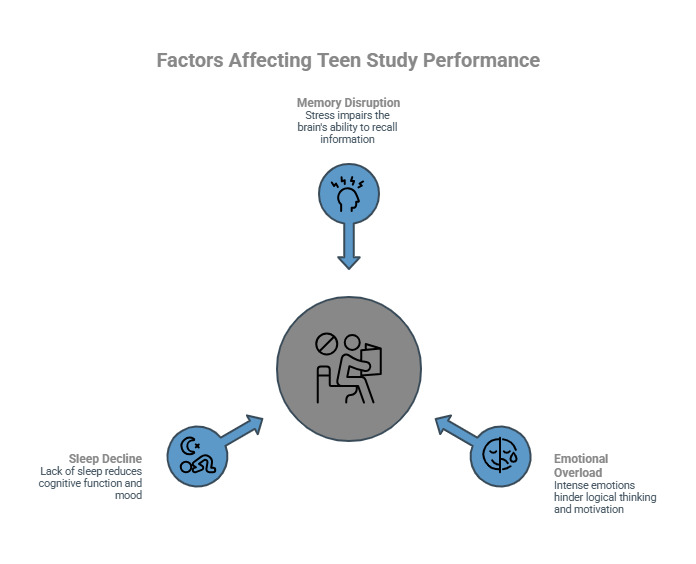
When stress rises beyond a teen’s comfort zone, it does more than create worry. It begins to interfere with how the brain processes information, manages emotions, and restores energy. Over time, this can quietly affect learning, confidence, and overall well-being in meaningful ways.
1. Memory and Focus Disruption
Stress activates the brain’s survival system, which shifts attention away from learning and toward perceived threats. This makes it harder for teens to concentrate, organize their thoughts, and retrieve information during exams, even when they studied carefully.
Teens may notice:
- Difficulty staying focused on study material
- Forgetting things they understood earlier
- Feeling mentally blank during tests
- Growing frustration that further blocks concentration
As calming skills improve, the brain can return to a state that supports clearer thinking and better recall.
2. Emotional Overload
Exam pressure often brings strong emotions such as fear, self-doubt, or worry about disappointing others. When these feelings build up, they can overwhelm a teen’s ability to think logically or stay motivated.
This may show up as:
- Sudden irritability, tears, or emotional shutdown
- Feeling overwhelmed before starting schoolwork
- Harsh self-criticism about performance
- Avoiding studying to escape uncomfortable feelings
Learning to recognize and regulate emotions helps teens respond to stress with more balance and steadiness.
3. Sleep-Related Performance Decline
Stress frequently disrupts sleep, especially when a teen’s mind stays active with worries about exams. Difficulty falling or staying asleep reduces the brain’s ability to process information and regulate mood the next day.
Poor sleep can lead to:
- Reduced concentration and slower thinking
- Weaker memory retention
- Lower patience and emotional control
- Physical fatigue and headaches
This cycle, stress affecting sleep and sleep affecting performance, can feel discouraging. Support and coping strategies help teens rest more fully and approach learning with greater clarity.
Stress-related struggles are not signs of laziness or lack of effort. They show that a teen’s mind and body are under significant pressure. With understanding and the right tools, these patterns can shift, helping teens feel more capable and supported.
How Does Therapy Help with Teenage Exam Stress?
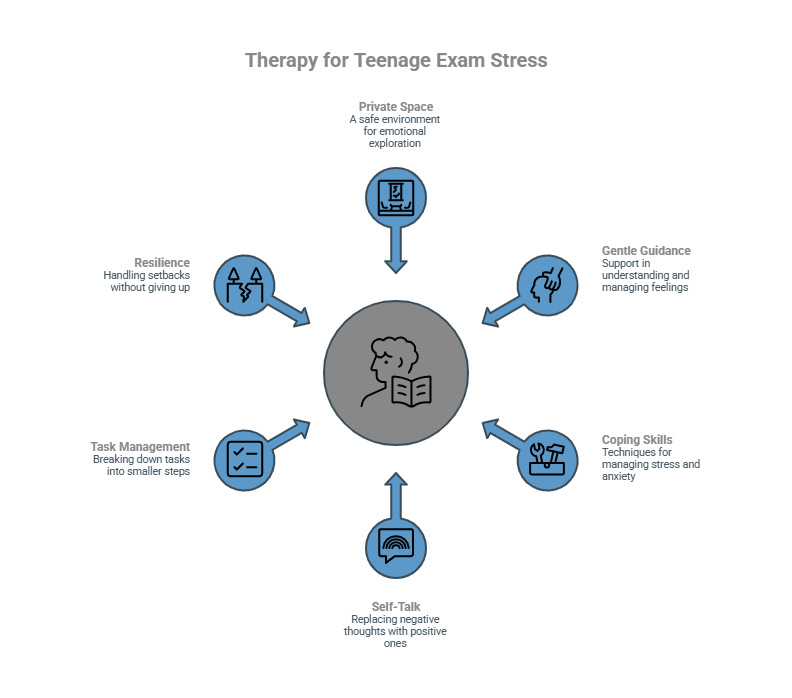
Therapy gives teens a calm, private space to explore what is driving their stress. Exam anxiety is often connected to fear of failure, perfectionism, or pressure to meet expectations. With gentle guidance, teens begin to understand these feelings, making them feel less intense and easier to manage.
Sessions focus on practical coping skills, not just conversation. Teens learn to notice stress early, calm their bodies, and respond to pressure in healthier, more balanced ways.
Therapy helps teens:
- Recognize stress signals in thoughts and body
- Use breathing and grounding to settle anxiety
- Replace harsh self-talk with more balanced thinking
- Break study tasks into smaller, doable steps
- Handle setbacks without shutting down
Over time, teens feel more in control of their emotions and better able to focus, even during high-pressure periods.
If your teen is feeling overwhelmed by exam pressure, support can make a meaningful difference. You can schedule a counseling session with Total Life Counseling to help them build calmer, healthier ways to cope.
What Signs Indicate a Need for Therapy for a Teenager?
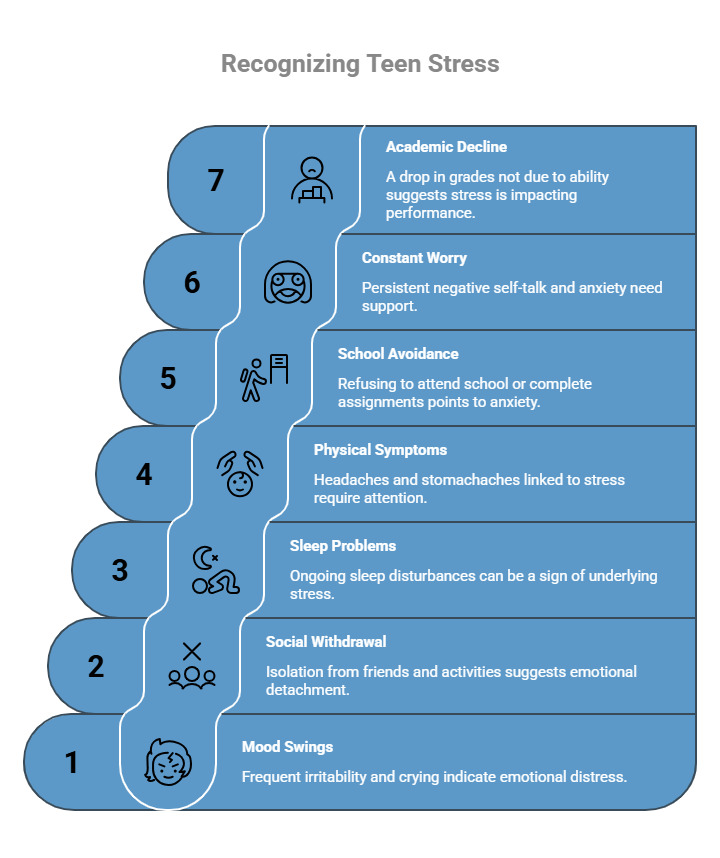
Some exam stress is normal. But extra support may help when stress starts affecting daily life.
Consider therapy if you notice:
- Frequent mood swings, irritability, or crying
- Withdrawal from friends or activities
- Ongoing sleep problems
- Headaches, stomachaches, or fatigue linked to stress
- Avoiding schoolwork or refusing to go to school
- Constant worry or negative self-talk
- Academic decline caused by anxiety, not ability
These signs show your teen may be overwhelmed. Therapy offers gentle support to help them feel steadier and more capable again.
Is social media affecting your child’s mood or focus? Learn how social media addiction impacts children’s mental health and ways to build healthier digital habits.
What Happens in Teenage Therapy for Stress Sessions?
Therapy sessions are designed to feel safe, respectful, and supportive. Your teen is not judged or pushed to talk before they are ready. Building trust comes first.
As therapy continues, the focus shifts toward understanding stress patterns and building real-life coping tools.
Sessions often include:
- Exploring school pressure, emotions, and daily routines
- Practicing calming and mindfulness techniques
- Learning ways to manage racing or negative thoughts
- Planning how to use skills during exams and study time
- Noticing small improvements to build confidence
Therapy becomes a place where teens learn that stress can be managed, not just endured.
If you feel your teen could benefit from this kind of support, you can schedule a session with Total Life Counseling to help them build healthier ways to cope with academic pressure.
What Therapy Techniques Are Used for Exam Anxiety?
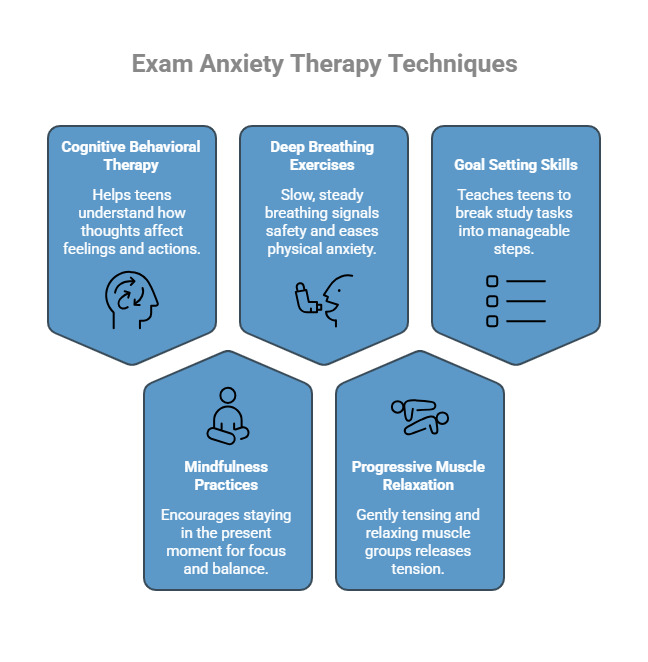
Therapy focuses on giving teens practical tools to handle exam anxiety in the moment and reduce how strongly stress affects them. Support targets both anxious thinking and physical tension so teens feel more in control during high-pressure situations.
Some commonly used techniques include:
- Cognitive Behavioral Therapy: Helps teens understand how thoughts affect feelings and actions, and teaches them to respond to exam stress in healthier ways.
- Mindfulness practices: Encourage staying in the present moment instead of worrying about future results or past mistakes, which supports focus and emotional balance.
- Deep breathing exercises: Slow, steady breathing signals safety to the body, lowering heart rate and easing physical anxiety symptoms.
- Progressive muscle relaxation: Gently tensing and relaxing muscle groups releases built-up tension and helps teens feel more grounded during stressful periods.
- Goal setting and time management skills: Teach teens how to break study tasks into clear, manageable steps, reducing last-minute pressure and overwhelm.
Over time, these skills help teens feel that stress is something they can work through, not something that controls them.
Big emotions can feel just as overwhelming as exam pressure. Learn practical, teen-friendly ways to handle frustration and intense feelings with these anger management techniques for teens, designed to build emotional control, confidence, and healthier responses in stressful moments.
How Can Parents Support Therapy Outcomes at Home?
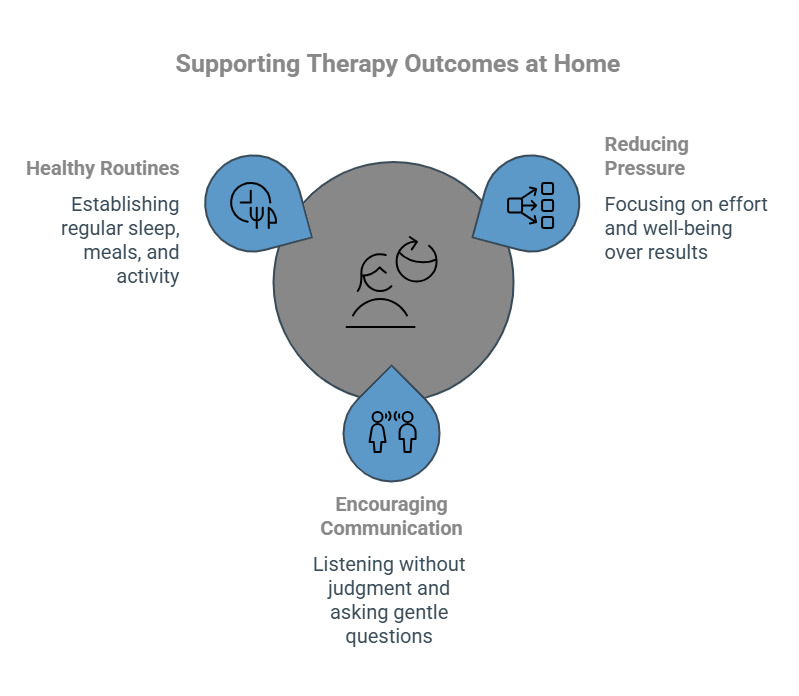
What happens at home can either increase pressure or create relief. You do not have to act like a therapist. Simply offering steady support and understanding can make therapy more effective.
When teens feel emotionally safe at home, they are more likely to practice the coping skills they learn in counseling. Your approach can help them feel supported rather than judged.
Here are meaningful ways to help:
1. Reducing Pressure
It is natural to care about your teen’s success. Still, constant focus on grades or future outcomes can add to their fear. When you highlight effort, growth, and well-being instead of only results, your teen learns that their value is not tied only to performance.
2. Encouraging Communication
Teens open up more when they feel heard without immediate correction or advice. Gentle questions and patient listening show them their feelings matter. Talking about stress out loud often makes it feel less heavy and easier to manage.
3. Healthy Routines
Daily habits strongly affect stress levels. Regular sleep, nutritious meals, physical activity, and short study breaks help regulate mood and concentration. A predictable routine gives teens a sense of stability, which supports both emotional balance and learning.
When therapy and home support work together, teens feel surrounded by care instead of pressure. That sense of safety helps resilience grow in a lasting way.
Big emotions can feel overwhelming for kids, especially during stressful times. Discover gentle, practical anger management techniques for kids to help them cope in healthier ways.
How Total Life Counseling Supports Teens with Academic Stress?
When teens feel overwhelmed by school pressure, they need more than study tips. They need a safe space to feel heard. At Total Life Counseling, therapists take time to understand your teen’s emotional experience, academic worries, and personal stress, not just the symptoms.
Support focuses on both immediate relief and long-term resilience. Teens learn practical tools they can use during study sessions and exams, while also working through deeper patterns like fear of failure or perfectionism. With the right guidance, they begin to feel calmer, more confident, and better prepared to handle academic pressure step by step.
Teens are supported through:
- A calm, teen-friendly environment where they can speak openly
- Practical coping tools for handling stress during exams
- Gentle guidance to shift unhelpful thought patterns
- Emotional regulation skills for intense feelings
- Encouragement that builds confidence beyond grades
Exam stress does not have to take over your teen’s well-being. A conversation with a counselor at Total Life Counseling can be a steady first step toward relief. Book an appointment and help your teen build healthier ways to handle academic pressure.
Final Thoughts
Watching your teen struggle with exam stress can feel heavy, but the right support can gently shift things. Therapy offers more than quick relief. It helps teens understand their emotions, manage anxious thoughts, and build coping skills that last beyond one exam season.
Over time, they gain confidence that is not tied only to grades. With caring guidance, academic challenges can feel more manageable, helping your teen move forward with greater calm, resilience, and emotional balance.
Frequently Asked Questions
What signs indicate my teen should consider therapy for exam stress?
If young people show persistent symptoms of anxiety, falling academic performance, sleep trouble, or physical symptoms like headaches, it may signal deeper mental health issues. Withdrawal, irritability, or poor focus during exam time are signs that they may benefit from structured stress management support.
Can therapy help all teenagers with test anxiety?
Yes, therapy supports young people by teaching coping mechanisms, improving time management, and addressing negative thought patterns. With the right therapist, teens gain a more balanced perspective, a healthier mindset, and tools that strengthen confidence, focus, and long-term academic success.
How can parents support their teen’s therapy journey?
Parents can create a supportive environment, encourage good sleep, limit overwhelming social media, and support healthy extracurricular activities. Practicing coping mechanisms like deep breaths or box breathing at home reinforces therapy skills and helps teens manage stress in everyday life.
Is therapy suitable for all teens experiencing test anxiety?
Therapy is beneficial for most young people when feelings of anxiety affect school or physical health problems emerge. Addressing poor time management, stress, or avoidance early supports children’s mental health and prevents unhealthy coping behaviors like substance abuse.
How to help teens with mental health?
Support young people by encouraging open conversations, enough sleep, balanced routines, and healthy study sessions. Early stress management and professional guidance when needed are signs of strength, helping teens build emotional resilience and long-term stability.
How can I overcome exam anxiety and enjoy my summer?
After exams, shift focus from pressure to recovery. Practice deep breaths, box breathing, and limit academic stress. Spend time outdoors, reconnect with hobbies, and rest. Stepping away from constant pressure helps restore emotional balance and supports overall physical health.
Filed in: Therapy
Share This Story, Choose Your Platform!
Total Life Counseling Center consists of Licensed Counselors, masters level therapists, Español counselors, Licensed Mental Health Counselors, business coaches, and image enhancement coaches who provide counseling for emotional, mental, physical and spiritual care including marriage, individual, family, substance abuse and more. TLC’s family, trauma and marriage experts have been interviewed on National and Local TV/Radio over 200 times for their expert advice on Fox News, OWN, WETV, ABC’s Medical Minute and more. Our skilled counselors are relational, approachable and specialists providing therapy services in the Central Florida area including: Orlando, Winter Park, MetroWest, Windermere, Dr. Phillips, East Orlando, Lake Mary, and Clermont, Boca Raton Florida, and Dallas, TX.
About the Author: Jim West

Related Posts