

What Are the Best Anger Management Techniques for Teens?

Key Highlights
- Teen anger often stems from unmet expectations, disappointment, stress, and emotional challenges.
- Recognizing triggers early helps teens manage emotions before anger escalates into conflict.
- Relaxation, mindfulness, and breathing exercises can quickly reduce emotional and physical tension.
- CBT techniques help teens recognize and challenge negative thoughts, fostering healthier emotional responses.
- Effective communication and problem-solving skills foster the constructive expression of anger and frustration.
- Supportive parents and professional counselling strengthen emotional regulation and long-term resilience.
- Consistent practice of healthy coping strategies helps teens build lasting emotional control.
Teen anger can be exhausting for everyone involved. One day, it might look like constant arguments over small things, and the next it could be slammed doors, emotional outbursts, or a teen who suddenly shuts everyone out. Many parents find themselves wondering whether this is normal teenage behavior or a sign that something deeper is going on.
Anger doesn’t have to be something teens simply grow out of on their own. With the right techniques and support, teens can learn to recognize what they’re feeling, slow down their reactions, and handle conflict in ways that don’t leave everyone feeling worse.
In this guide, we’ll cover why teen anger feels so intense, how to spot warning signs early, and the techniques that actually help, now and well beyond the teenage years.
What Is Anger Management for Teens?
Anger management is the process of understanding, expressing, and controlling anger in healthy ways.
It helps teens recognize emotional triggers, respond thoughtfully instead of reacting impulsively, and develop coping skills that support stronger relationships, better decision-making, and emotional well-being.
Why Do Teens Experience Intense Anger More Often Than Adults?
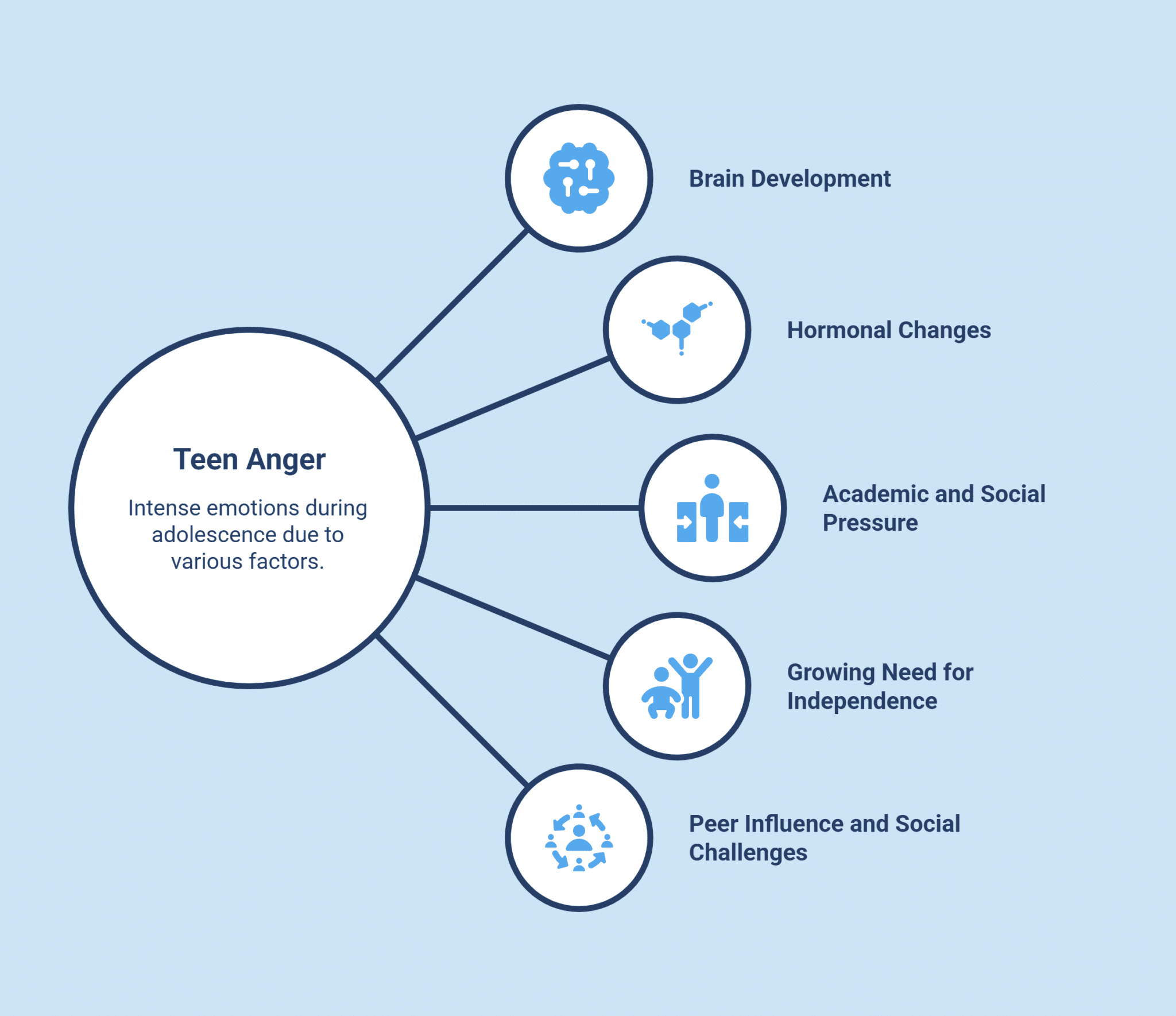
Teens don’t just get angrier more often than adults. They feel it more deeply, more suddenly, and often with far less ability to pump the brakes, especially during the teen years. That’s not a character flaw. A lot changes in the brain and body between adolescence and adulthood, and those changes have everything to do with why teen anger hits differently.
- Brain Development: The parts of the brain responsible for emotional control and decision-making are still developing throughout adolescence.
- Hormonal Changes: Fluctuating hormones can intensify emotions, making frustration, disappointment, and anger feel more overwhelming than usual.
- Academic and Social Pressure: School demands, friendships, family expectations, and future concerns can create ongoing stress and emotional tension.
- Growing Need for Independence: Teens often seek more freedom, which can lead to conflicts when boundaries or rules feel restrictive.
- Peer Influence and Social Challenges: Relationship issues, social comparison, and concerns about fitting in can trigger strong emotional responses, including feelings of anger.
Understanding why anger feels so intense can help teens and parents respond with greater patience and awareness. The next step is learning to identify the specific triggers and thought patterns that fuel anger so they can be managed more effectively.
What Are the Warning Signs of Anger in Teens?
Teen anger is a normal part of growing up, but there’s a difference between frustration that passes and anger that keeps building beneath the surface. Recognizing the signs early is what makes the difference
Emotional Signs |
Behavioral Signs |
Physical Signs |
|---|---|---|
|
|
|
Wondering when teen anger becomes a cause for concern? Our guide explains the key signs of ODD in teens to look out for.
How Can Teens Identify Their Anger Triggers?
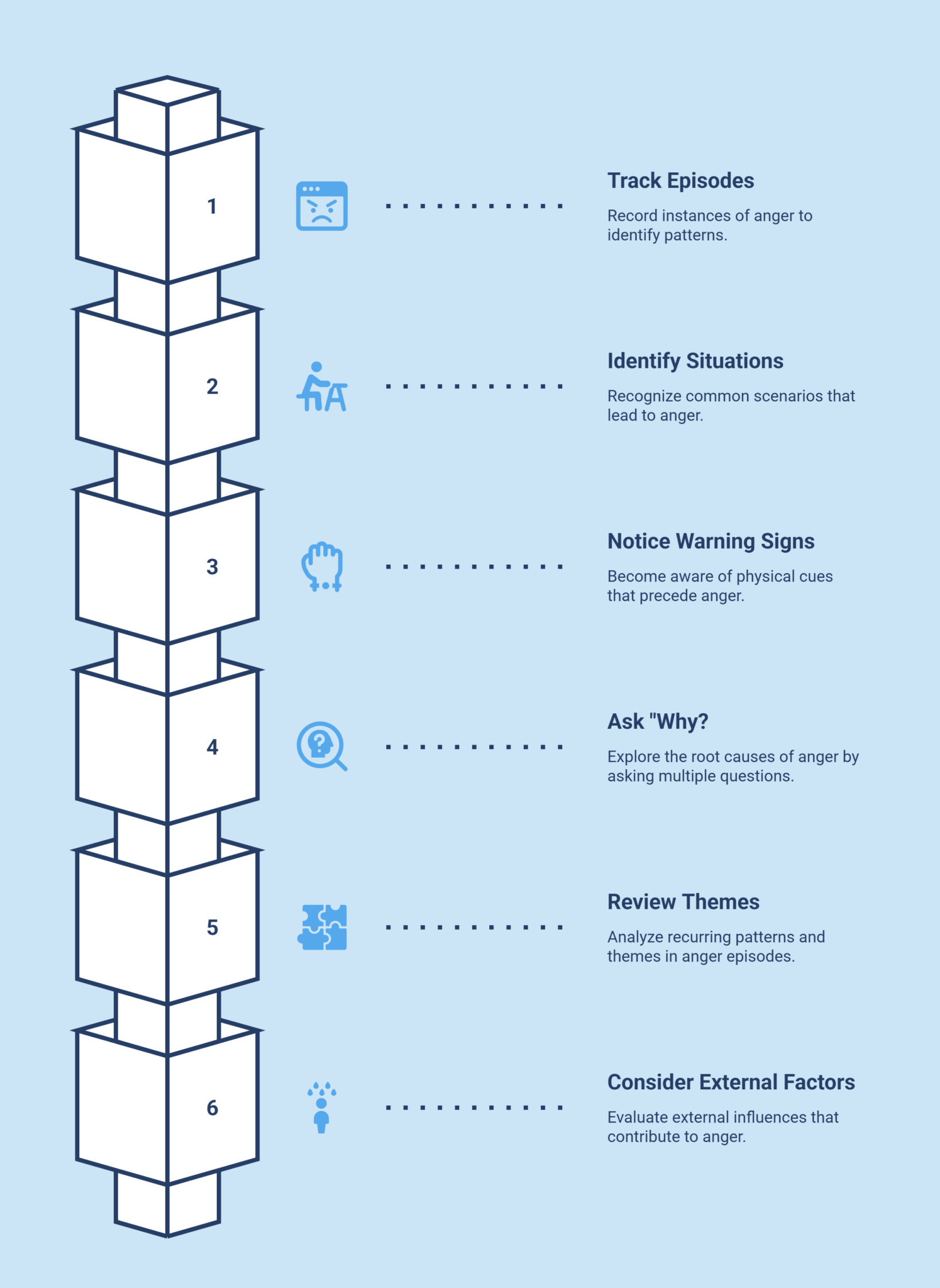
Managing anger becomes much easier when teens understand what is causing it in the first step. While anger may feel sudden, it is often triggered by specific situations, thoughts, or experiences.
1. Keep Track of Anger Episodes
After an angry moment, take a few minutes to reflect on what happened. Consider questions such as:
- What happened?
- Who was involved?
- What was I thinking at the time?
- What emotion did I feel before the anger, such as hurt, fear, embarrassment, or disappointment?
- How intense was the anger on a scale of 1 to 10?
Writing these details in a journal or notes app can help reveal patterns over time.
2. Look for Common Situations
Certain experiences tend to trigger anger more often than others. Common triggers include:
- Being criticized
- Feeling ignored or unheard
- Unfair treatment
- Broken promises
- Being interrupted
- Feeling a lack of control
- Stress, fatigue, or hunger
- Conflicts with friends, family members, or other important relationships
Recognizing these recurring situations can help teens anticipate and manage their reactions more effectively.
3. Notice Physical Warning Signs
The body often signals anger before the mind fully recognizes it. Paying attention to physical changes can help teens catch anger early.
Common warning signs include:
- A tight jaw
- Clenched fists
- Faster heartbeat
- Muscle tension
- Feeling hot or flushed
- Shallow breathing
Spotting these signals early creates an opportunity to pause and use coping strategies before emotions intensify.
4. Ask “Why?” More Than Once
Sometimes the event itself is not the real trigger. Asking deeper questions can uncover the emotions beneath the anger.
For example:
- “I’m angry because they didn’t reply to my message.”
- Why does that bother me? “Because I feel ignored.”
- Why does that matter? “Because it makes me feel unimportant.”
In many cases, the underlying feeling, rather than the situation itself, is what fuels the anger.
5. Review Recurring Themes
After tracking several anger episodes, look for common patterns. Ask yourself:
- Do I get angry when I feel disrespected?
- When plans change unexpectedly?
- When I’m under pressure?
- Around certain people?
- When are my boundaries crossed?
Identifying recurring themes can provide valuable insight into emotional triggers.
6. Consider External Factors
Sometimes anger becomes more frequent because of what is happening around you, rather than a single triggering event.
Common contributing factors include:
- Lack of sleep
- Academic pressure
- Ongoing stress
- Personal challenges
- Family conflict
- Social pressures
Addressing these underlying stressors can often reduce anger and improve emotional well-being overall.
The goal was never to avoid every hard moment. It’s to know yourself well enough that when those moments come, you’re ready for them.
Call for a Complimentary 15 Minute Phone Consultation
Se Habla Español: We have Portuguese and Spanish speaking counselors as well.

What Are the 10 Most Effective Anger Management Techniques for Teens?
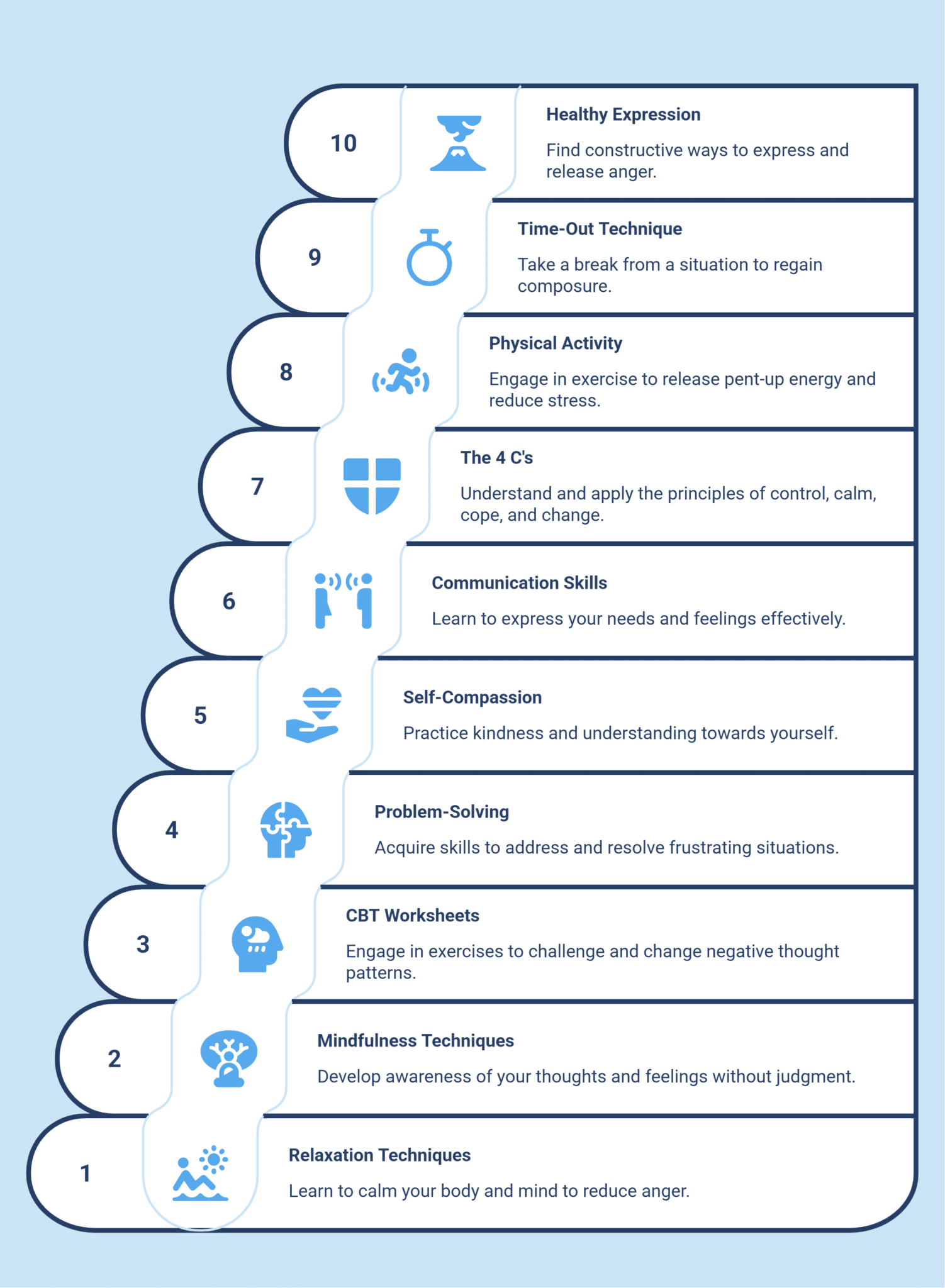
The most effective anger management techniques for teens help them recognize triggers, regulate emotions, and respond calmly in challenging situations. The good news is that these are learnable skills, and with the right tools and a little practice, most teens can get genuinely better at managing what they feel before it manages them.
1. Relaxation Techniques for Anger Management
When anger strikes, the body goes into a stressful “fight or flight” mode that causes muscles to tighten and hearts to race, potentially raising blood pressure. Learning how to physically calm the nervous system is the quickest way for a teen to regain control.
- Box Breathing: Inhale for four counts, hold for four counts, exhale for four counts, and hold again for four counts before repeating.
- 4-4-4 Breathing: Breathe in for four counts, hold for four counts, and exhale for four counts. This simple rhythm can help restore a sense of control during stressful moments.
- 4-7-8 Breathing: Inhale through the nose for four counts, hold the breath for seven counts, and slowly exhale for eight counts. This technique encourages deeper relaxation and can be especially helpful when emotions feel overwhelming.
- Progressive Muscle Relaxation: PMR gives teens a way to physically release that tension before it tips into an outburst. Find somewhere comfortable to sit or lie down. Scrunch the muscles in your feet as tight as you can and hold for 5 to 10 seconds. Let go completely and pay attention to how different that feels.
Learning to relax the body is always the first line of defense against an emotional storm. Once physical tension starts to ease, it becomes much easier to recognize emotions, slow down reactions, and choose healthier ways to respond.
2. Mindfulness Techniques for Anger Management
Mindfulness is all about training the mind to stay anchored in the present moment instead of spiraling into rage. These exercises help teens notice their angry thoughts without immediately reacting to them.
- The 5-4-3-2-1 Grounding Method: This technique forces teens to name 5 things they can see,4 they can touch, 3 they can hear, 2 they can smell, and 1 they can taste. It pulls them out of an angry mental loop and anchors them safely back into the present moment.
- Emotional Check-ins: Pausing to label the anger without judgment helps de-escalate its power and allows for avoidance techniques. When teens acknowledge their feelings simply as passing clouds, the emotion loses its tight grip, allowing them to feel more in control.
- Mindful Walking: Mindful walking combines movement with awareness. Instead of replaying arguments or focusing on frustrations, teens pay attention to each step, their breathing, and the sensations around them. Even a short 5 to 10-minute walk can help reduce emotional intensity, clear the mind, and provide a healthy outlet for built-up stress.
- Guided Meditation Apps: Many teens find it easier to practice mindfulness with guidance. Meditation apps provide short, structured sessions that focus on breathing, relaxation, stress reduction, and emotional awareness.
Mindfulness acts like a pause button on a chaotic day, giving teens the space to breathe. By mastering this mental stillness, they prepare themselves for more structured, practical exercises. This leads beautifully into cognitive behavioral strategies that actively reshape mental health and negative thinking habits.
3. CBT Worksheets and Exercises for Anger Control
Cognitive Behavioral Therapy helps teens see the connection between what they think and how they feel. These exercises encourage teens to challenge unhelpful thinking patterns and respond to difficult situations more calmly.
- Use thought records: Writing down what happened, what they thought, how they felt, and how they reacted helps teens spot the patterns driving their anger, often ones they hadn’t noticed before.
- Examine the evidence: Most angry thoughts feel true in the moment. Testing them against actual evidence usually reveals a more balanced picture than the one anger was painting.
- Practice cognitive reframing: Swapping out thoughts like “Everything is ruined” for something more grounded doesn’t mean pretending things are fine. It means choosing a perspective that actually helps.
- Track anger triggers: Keeping a record of situations, people, and reactions over time helps teens recognize what consistently sets them off, so they can prepare instead of just reacting.
These exercises aren’t about dismissing emotions or forcing a positive spin on something painful. They’re about helping teens understand their own minds well enough to stay in control of them.
4. Problem-Solving Techniques for Managing Frustration
A lot of teen anger comes from feeling trapped, overwhelmed, or completely helpless in tough situations, such as sadness and frustration. Teaching them concrete problem-solving skills transforms that blind rage into effective, independent action and helps to manage uncontrolled anger.
- Brainstorming Alternative Solutions: Instead of reacting with a blowout, teens learn to list multiple ways to handle a tough situation. This expands their mindset, proving that anger isn’t the only option available to fix a problem.
- Evaluating Pros and Cons: Looking at the potential consequences of each choice teaches teens responsibility and foresight. It encourages them to choose actions that lead to positive outcomes rather than messy conflicts they might regret later.
Shifting from a place of frustration to a mindset of action gives teens a sense of true independence. However, solving problems externally is only half the battle; they must also look inward. Cultivating self-compassion ensures they don’t judge themselves harshly when things don’t go perfectly.
5. Self-Compassion and Self-Reflection Exercises
Teens are often incredibly hard on themselves, and that internal pressure can easily explode outward as anger. Practicing self-kindness helps them process their deeper, hidden hurts without turning to aggression.
- Positive Self-Talk: Replacing harsh inner criticism with kind, encouraging words helps soothe an angry, hurting mind. Treating themselves like a good friend reduces the internal pressure that often explodes outward as rage.
- Journaling for Release: Writing down raw thoughts provides a private, safe space to vent complicated emotions without consequences. It uncovers hidden feelings, like hurt or fear, that are frequently masked by the shield of anger.
Being kind to oneself builds a resilient emotional foundation that can withstand daily stressors. When teens feel secure on the inside, they are much better equipped to interact with the world around them. This self-care and awareness naturally improve how they express their needs to others.
6. Communication Skills for Reducing Conflict
Misunderstandings and feeling unheard are major catalysts for explosive teenage arguments. Mastering basic communication skills allows teens to express their intense frustrations clearly without starting a war.
- Using “I” Statements: Saying “I feel frustrated when…” instead of “You always…” prevents others from becoming defensive. It keeps conversations productive and focused on resolving the issue rather than winning a heated argument.
- Active Listening: Teaching teens to truly hear the other person’s side lowers the temperature of a debate. It builds mutual respect and prevents simple misunderstandings from spiraling into massive, angry confrontations.
Clear and respectful communication bridges the gap between feeling misunderstood and feeling heard. When these verbal skills are combined into a memorable framework, managing everyday interactions becomes second nature. A perfect example of this framework is the 4 C’s strategy.
7. The 4 C’s of Anger Management for Teens
The 4 C’s offer an all-in-one, memorable framework designed specifically to guide teenagers through a crisis. It bundles different emotional tools into four simple pillars that are easy to remember when tempers flare.
- Control: Learning to manage emotional reactions helps teens avoid impulsive behavior and make more thoughtful decisions during challenging situations.
- Calm: Taking a moment to pause, breathe, and relax can reduce emotional intensity and create space for clearer thinking.
- Cope: Using healthy coping strategies and effective anger management strategies helps teens handle frustration, disappointment, and stress in constructive ways.
- Connect: Communicating openly and respectfully strengthens relationships and encourages support from family, friends, and trusted adults.
This method keeps them grounded; flexibility is just as vital for long-term relief. Sometimes, the quickest way to break the tension is to shift perspective entirely through lightheartedness.
8. Physical Activity
Physical activity gives the intense energy that comes with anger somewhere healthy to go. Moving the body helps reduce stress, lift mood, and create just enough breathing room to think clearly before reacting.
- Go for a walk or run: Even a short loop around the block can take the edge off racing thoughts and release the tension that’s been building up.
- Play a sport or exercise: Basketball, swimming, cycling, or strength training all give frustration a productive place to land instead of a person.
- Dance or move to music: There’s something about movement and music together that loosens the grip of a hard emotion faster than most things.
- Movement: Teens who move regularly tend to handle anger more steadily over time, not because the hard moments disappear, but because their nervous system gets better at recovering from them.
Physical activity isn’t about pushing emotions aside. It’s about giving the body a way to process what the mind is still working through.
9. Time-Out Technique
Taking a time-out is one of the simplest and most effective ways for teens to prevent anger from escalating. Not forever, not to avoid it, but long enough for the brain to catch up with what the body is feeling.
- Step away from the situation: Leave the conversation, room, or environment that is triggering intense emotions.
- Set a time limit: Take 10–20 minutes to cool down rather than avoiding the issue completely.
- Use calming activities: Practice deep breathing, go for a walk, listen to music, or use grounding techniques during the break.
- Return when calm: Revisit the situation with a clearer mindset and better self-control.
A time-out is not about avoiding problems. It is about creating enough emotional distance to respond thoughtfully instead of reacting impulsively.
10. Express and Release Anger in a Healthy Way
Knowing how to express anger healthily is just as important as learning how to manage it by seeking professional help when needed.
- Talk it out: Speaking openly and respectfully with a trusted friend, parent, teacher, or counsellor helps teens express frustration without blame or added conflict.
- Write it down: Journaling gives anger somewhere private and safe to land, and often helps teens understand what they’re actually feeling beneath the surface.
- Move or create: Exercise, sports, music, art, and yoga all provide a productive outlet for built-up tension.
- Step away first: Taking a break before responding gives emotions time to settle and makes it far less likely that something gets said or done that can’t be taken back.
These outlets aren’t about suppressing anger or pretending it isn’t there. They’re about giving it direction that doesn’t damage relationships, others, or the teen themselves.
Also watch our Anger Management Video and learn insights that can support lasting emotional control.
When Does Teen Anger Become a Serious Problem?
Some teen anger is just part of growing up. But when it starts costing a teen their friendships, their focus at school, or their relationship with the people who love them most, it has moved past something that will sort itself out on its own.
Watch for these signs that anger has crossed a line:
- Outbursts that are becoming more frequent or more intense over time
- Physical aggression toward people or property
- A teen who seems genuinely frightened by their own reactions
- Withdrawal from friends, family, or activities they used to care about
- Anger that’s been intense and persistent for months without easing
- Signs of depression, anxiety, or substance use appearing alongside the anger
When a teen says they feel out of control, or like they become a completely different person when they’re angry, that’s not something to wait out. That’s a teen telling you, in the clearest way they know how, that they need more support than they currently have.
Looking for more than one-on-one support? TLC’s 8-hour anger management group therapy gives teens a safe space to learn, practice, and find healthier ways to cope.
How Can Parents Build a Supportive Environment for Teen Emotional Regulation?
Parents play an important role in helping teens learn how to manage emotions. A supportive environment does not eliminate anger, but it can make it easier for teens to feel safe, understood, and willing to develop healthier coping skills.
- Listen Without Immediate Judgment: Giving teens space to express their feelings can reduce defensiveness and encourage open communication.
- Model Healthy Emotional Responses: Teens often learn by observing adults. Calmly handling frustration sets a positive example.
- Create Consistent Boundaries: Clear expectations and consequences help teens feel secure while learning responsibility.
- Validate Their Feelings: Acknowledging emotions does not mean agreeing with behavior. It shows teens that their feelings matter.
- Encourage Healthy Coping Strategies: Support activities such as mindfulness, exercise, journaling, or relaxation techniques.
- Seek Professional Support When Needed: If anger frequently affects daily life, counselling or online therapy can provide additional guidance and support.
When teens feel supported rather than criticized, they are more likely to develop the emotional skills needed to manage anger effectively. Small, consistent actions from parents can make a lasting difference in a teen’s emotional well-being.
Need more parenting insights? Check out these 5 expert tips for responding to angry teens and strengthening your bond.
How Does Total Life Counseling Help Your Teen Build Lasting Emotional Control?
Anger doesn’t have to be something your teen just learns to live with. At Total Life Counseling, teens communicate with counsellors who genuinely understand what this stage of life feels like and how overwhelming it can be to manage big emotions without the right support.
- Personalized Support: Every teen experiences anger differently. Our platform is shaped around teens’ specific triggers, patterns, and needs rather than a one-size-fits-all approach.
- Adult-Based Approaches: Techniques like CBT, mindfulness, and emotional regulation strategies help teens build thinking and behavior patterns that actually hold up under pressure.
- Improved Communication Skills: Teens learn how to express what they’re feeling without it turning into conflict, which makes a real difference in their relationships with family and friends.
- Better Coping Strategies: Rather than just getting through hard moments, teens walk away with practical tools they can reach for when frustration, stress, or disappointment shows up.
- Long-Term Emotional Growth: The goal is not only to manage anger today but also to build the kind of emotional foundation that stays with them well into adulthood.
Every teen deserves to feel understood, not just managed. If your teen is struggling, reaching out to our team is a meaningful first step toward helping them find steadier ground.
Licensed Counselors & Therapists
Meet Our Team of Certified & Experienced Professionals
Total Life Counseling Center consists of Licensed Counselors, Masters Level Therapists, Espanol Counselors, Licensed Mental Health Counselors, Business Coaches, Image Enhancement Coaches who provide counseling for emotional, mental, physical and spiritual care including marriage, individual, family, substance abuse and more. Our team of certified and experienced professionals, dedicated to serving a comprehensive spectrum of mental health and relationship issues such as couples, women and men’s issues, children and teens with oppositional defiance, video game addiction, ADHD, ASD, anxiety, depression, and trauma survivors, is here to support and guide you through your journey towards healing and navigating life transitions. This approach not only enhances the effectiveness of the counseling provided but also builds trust within the community and among potential clients, who may be seeking support.
We offer next level counselors specialized in areas such as relationships, video game & drug/alcohol addictions, abuse, trauma, depression, and ADHD. Our Therapists are EMDR (eye movement desensitization) trauma therapy trained, cognitive behavioral therapy, specialize in ADHD and Oppositional Defiant Children, and are also professional Gottman method marriage couples counselors to give the best results to couples and to provide the best comprehensive spectrum of mental health and relationship care for our clients.
Struggling with Anger? We offer 8 hour anger management group therapy!
Discounted Rates and the president of Total Life Counseling Center Jim West does not want to turn people away and we have counselors at various levels of experience at a discounted rate that are trained by our next level counselors!

Jim West
MA, LICENSED MENTAL HEALTH COUNSELOR, national certified counselor
President, Counselor, Guest Speaker, Author, Social Skills, ADHD, ODD, ASD, children, teens, and more!

Dana West
MSW, Licensed clinical social worker
Vice President, Counselor, Guest Speaker, Addictions, Trauma, Couples, Abuse, and more!

Mathew Martin
MS, LICENSED MENTAL HEALTH COUNSELOR
Counselor, Coach, Guest Speaker, Marriage, Individual Males, Substance Abuse and more!

Brandon Feinberg
MS, LICENSED MENTAL HEALTH COUNSELOR
Male Counselor, Licensed Mental Health Counselor specializing in ADHD, Asperger Syndrome, Autism Spectrum Disorders, and more!

Lyris Steuber
MS, licesned marriage & family therapist
Counselor, Coach, Marriage & Family, Play Therapy, Divorce, Adolescent and more!

Valerie Ware
Licensed Psychologist and Behavioral Specialist
Psychological Evaluator, Autism, ADHD, Learning Disabilities, Anxiety, Gifted, Career Pathways, and emotional assessments.

Gemima McMahon
MA, LICENSED MENTAL HEALTH COUNSELOR
Licensed Mental Health Counselor specializing in Women’s issues, Trauma, Anxiety, Depression, Cutting, Couples, Children and Teenagers and more!

Audrey DeBruler
MS, LMHC, Licensed Mental Health Counselor
Children, Adolescents, Young Adults, Faith Based Counseling, Trauma Recovery, Anxiety and more!

David Duany
MA, LICENSED MENTAL HEALTH COUNSELOR
Licensed Mental Health Counselor specializing in ADHD, Social Skills, and Anger Management counseling for children, young adults, and families.

Katherine Waldheim
MS, Registered Mental Health Counseling Intern
Trauma, anxiety, couples counseling, and child & adolescent counseling services and more!

Sarah Dornas Albuquerque
MS – Registered Mental Health Counselor Intern
EMDR, Anxiety, Depression, Children, Teens, Young Adults, English, Spanish and Portugues and Adult Counseling

Frequently Asked Questions
How Can Teens Practice Self-Compassion When Working on Anger Management?
Teens can practice self-compassion by treating themselves with kindness after mistakes, recognizing that everyone struggles sometimes, and focusing on learning from experiences rather than harsh self-criticism.
What Types of Professional Support Are Available for Teen Anger Management?
Professional support may include individual counselling, cognitive behavioral therapy (CBT), family therapy, group therapy, and school-based counselling services that help teens develop healthier emotional regulation skills. Total Life Counseling offers personalized, compassionate support to help teens work through anger in ways that genuinely last.
Can Progressive Muscle Relaxation Help Teens Release Physical Anger?
Yes. Progressive muscle relaxation helps teens release built-up physical tension by systematically tightening and relaxing muscle groups, reducing stress and promoting a calmer emotional state.
What Peer-to-Peer Support Strategies Can Help Teens Handle Anger Together?
Teens can support each other through active listening, open conversations, shared coping activities, positive encouragement, and helping friends recognize healthy ways to manage frustration.
Are Online Anger Management Programmes Effective for Teenagers?
Online anger management programmes can be effective when they provide evidence-based strategies, interactive learning, and professional guidance. They may also offer greater flexibility and accessibility. Total Life Counseling provides flexible online counseling sessions so teens can get the support they need from wherever they are.
How Can Breathing Techniques Help Calm Teen Anger Immediately?
Breathing techniques slow the body’s stress response, lower heart rate, and reduce tension. This helps teens regain emotional control, think more clearly, and avoid impulsive reactions.
Filed in: Anger, Blog, Brandon Feinberg
Share This Story, Choose Your Platform!
Total Life Counseling Center consists of Licensed Counselors, masters level therapists, Español counselors, Licensed Mental Health Counselors, business coaches, and image enhancement coaches who provide counseling for emotional, mental, physical and spiritual care including marriage, individual, family, substance abuse and more. TLC’s family, trauma and marriage experts have been interviewed on National and Local TV/Radio over 200 times for their expert advice on Fox News, OWN, WETV, ABC’s Medical Minute and more. Our skilled counselors are relational, approachable and specialists providing therapy services in the Central Florida area including: Orlando, Winter Park, MetroWest, Windermere, Dr. Phillips, East Orlando, Lake Mary, and Clermont, Boca Raton Florida, and Dallas, TX.
About the Author: Brandon Feinberg