

Is ADHD A Disability, Or Simply A Different Way Of Thinking?
Key Highlights
- Yes, ADHD can be considered a disability under U.S. law (ADA, Section 504) when it significantly limits daily functioning like learning or working.
- It’s classified as a neurodevelopmental disorder in the DSM-5 and often qualifies for school or workplace accommodations.
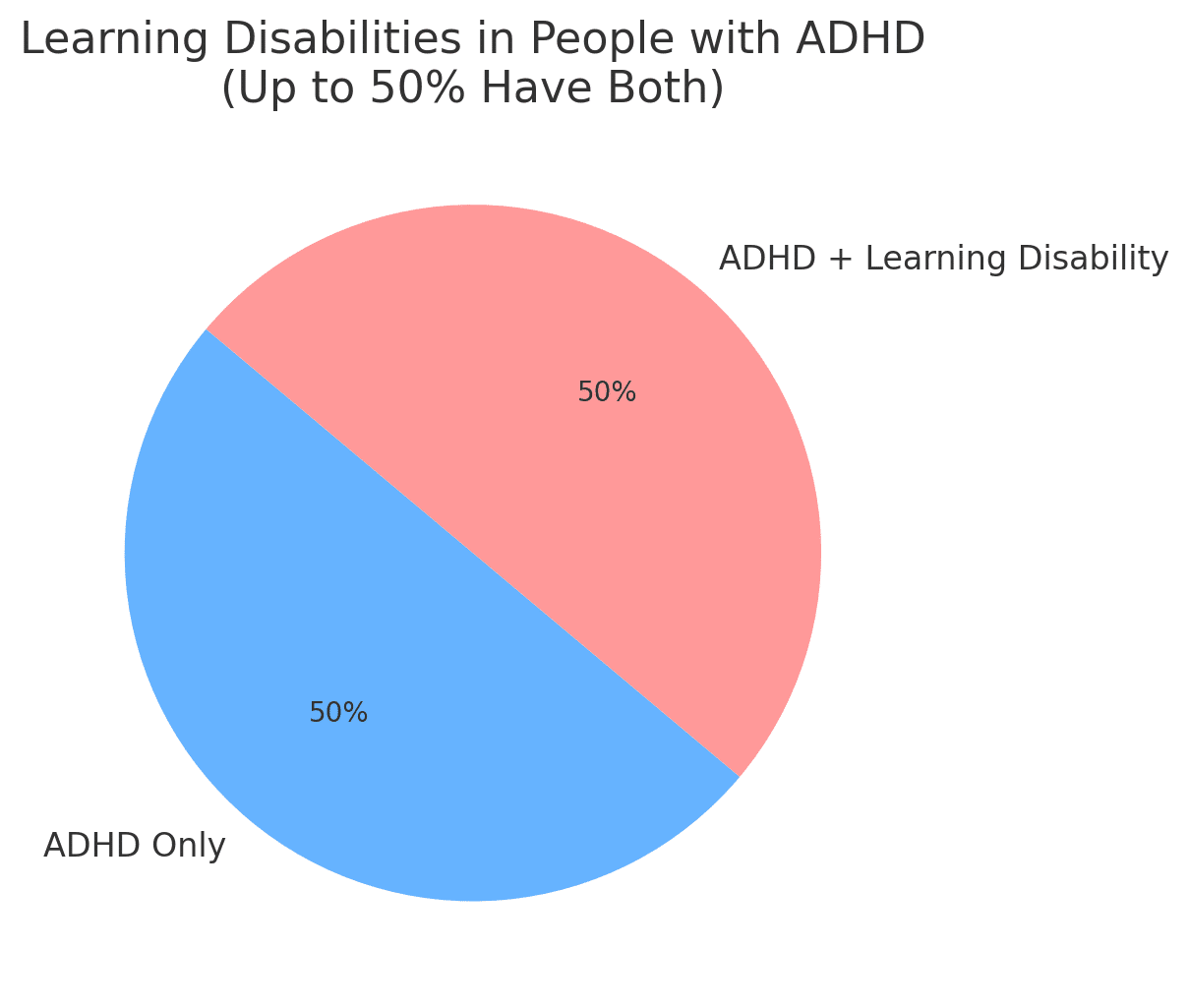
- ADHD is not a learning disability, but it often co-occurs with one, up to 50% of people with ADHD also have a specific learning disability.
- It is also considered a developmental and cognitive disability, but not an intellectual one—people with ADHD often have average or above-average IQs.
- Legal protections include extended test time, flexible work setups, and IEPs/504 plans in schools.
- Disability benefits (SSI/SSDI) may apply for severe cases that meet strict federal requirements.
- Reframing ADHD as a disability helps unlock support, not define limitations.
Yes, ADHD can be considered a disability.
ADHD may qualify as a disability under the ADA when it substantially limits one or more major life activities.
Clinically, it’s classified as a neurodevelopmental disorder in the (Diagnostic and Statistical Manual of Mental Disorders), the standard used by mental health professionals to diagnose and categorize psychiatric conditions.
But here’s where it gets complicated:
Not everyone with ADHD identifies as having a disability. For some, the symptoms are manageable. For others, they can be profoundly disruptive, affecting school performance, relationships, career stability, and even self-esteem.
This guide breaks down what ADHD is, and isn’t, from a legal, clinical, and real-world perspective.
Is ADHD a Learning Disability?
This is a common point of confusion, so let’s clear it up:
ADHD is not a learning disability.
A learning disability affects how a person processes specific types of information, like reading (dyslexia), math (dyscalculia), or writing (dysgraphia). These are challenges tied directly to academic skills.
ADHD, on the other hand, affects attention, impulse control, memory, and focus. It’s about how the brain manages tasks, not how it learns a particular subject.
That said, ADHD can still have a major impact on learning.
Here’s why:
- People with ADHD may struggle to stay organized, or follow multi-step instructions
- They may forget assignments, zone out during lessons, or need more time to finish tasks
- This often mimics a learning disability, especially in classroom settings
In many cases, ADHD and learning disabilities co-occur, meaning a person can have both. In fact, according to IDA America, 30% of individuals with ADHD also have a specific learning disability.
So while ADHD is not a learning disability, it can make learning harder and often requires similar school accommodations.
When does ADHD become disabling rather than simply challenging?
This is where the answer becomes more personal.
Many people with ADHD experience occasional distractions, forget appointments, or struggle with organization from time to time. That alone does not necessarily make ADHD disabling.
ADHD is more likely to be considered a disability when symptoms consistently interfere with major areas of life such as education, work, finances, relationships, or independent living. Examples may include:
- Repeatedly missing deadlines despite making genuine efforts to stay organized.
- Struggling to manage bills, appointments, or important responsibilities.
- Finding it difficult to maintain consistent performance at school or work.
- Experiencing emotional overwhelm that regularly affects daily functioning.
- Facing ongoing challenges in relationships because of impulsivity, forgetfulness, or communication difficulties.
- Needing significantly more time, support, or accommodations than others to complete everyday tasks.
The key factor is not whether ADHD creates challenges. It is whether those challenges significantly limit daily functioning over time.
Is ADHD a Developmental, Cognitive, or Mental Disability?
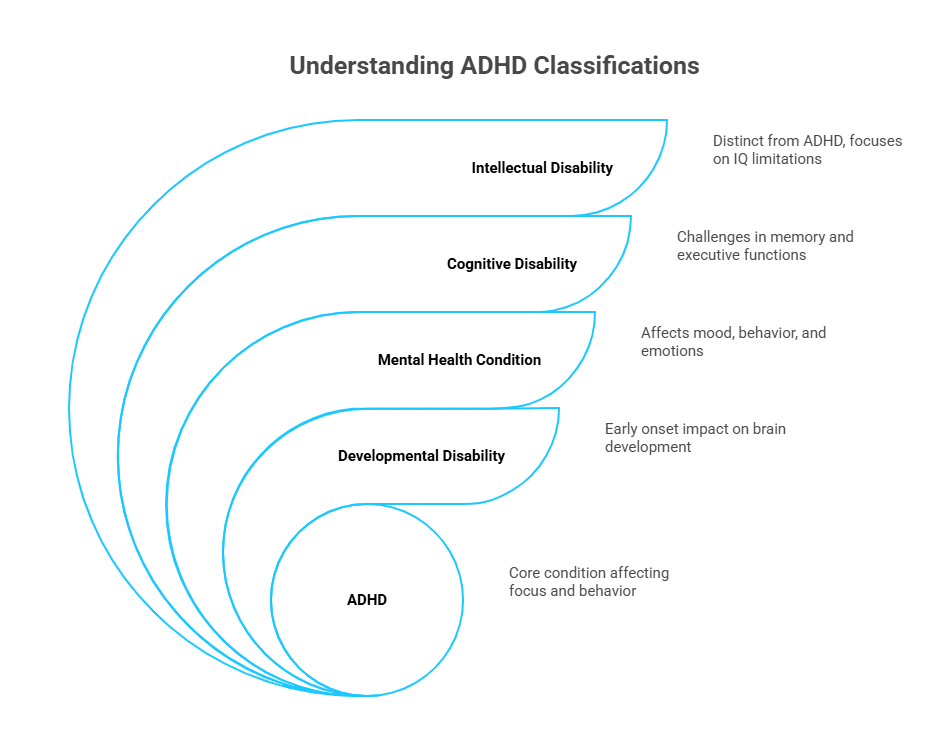
The answer is: a little bit of everything.
And that’s part of what makes ADHD so misunderstood and often misdiagnosed.
ADHD often impacts core executive functions like self-control, working memory, and task switching. As Dr. Edward Hallowell describes it, “ADHD is like having a Ferrari engine for a brain, but with bicycle brakes.” (Source)
Here’s how the classifications break down:
1. Is ADHD a Developmental Disability?
Yes. ADHD begins in childhood and affects brain systems that control focus, attention, and self-regulation. Like other developmental disorders, ADHD shows up early and shapes how a person interacts with the world over time.
Example: A 7-year-old constantly interrupts class and can’t sit still for five minutes. It’s not defiance, it’s that their brain hasn’t yet developed the ability to filter impulses the way their peers’ brains have.
2. Is ADHD a Mental Disability?
ADHD falls under the umbrella of mental health conditions, since it affects mood, behavior, and executive function. It’s listed in the DSM-5, the official manual used by psychologists and psychiatrists to diagnose mental disorders.
Example: An adult with ADHD feels emotionally overwhelmed by minor frustrations, snapping at a partner, then spiraling into shame minutes later. This isn’t a mood swing; it’s difficulty regulating emotion in the moment.
3. Is ADHD a Cognitive Disability?
People with ADHD often have challenges with:
- Working memory– holding information in mind
- Inhibitory control– pausing before reacting
- Task switching and planning– executive function skills
These are known as cognitive functions. ADHD can create cognitive impairments that significantly affect executive functioning and may be considered disabling in this context.
Example: You know you need to leave for work in 20 minutes, but you’re frozen, unable to decide what to wear, what to eat, or which task to tackle first. Time slips away, and you leave in a panic.
4. Is ADHD an Intellectual Disability?
This is another key distinction:
- Intellectual disabilities involve limitations in both intellectual functioning (IQ) and adaptive behaviors.
- People with ADHD typically have average or above-average intelligence; the issue lies in managing that intelligence consistently and effectively.
Example: A college student with ADHD gets straight A’s on essays written the night before, but misses deadlines regularly and fails classes due to poor time management.
Any of these resonating with you? Start here. Read our blog on 6 Essential Tips for ADHD Support.
How does ADHD compare with other disabilities?
Part of the confusion around ADHD comes from the fact that not all conditions fit neatly into one category. Some conditions are automatically recognized as disabilities, while others depend on how much they affect a person’s daily functioning.
|
Condition |
Disability? |
Notes |
|---|---|---|
| ADHD | Sometimes | Depends on the severity of symptoms and functional impairment. |
|
Dyslexia |
Yes | Considered a specific learning disability that affects reading and language processing. |
|
Autism |
Often | Typically classified as a developmental disability, although experiences vary widely. |
|
Anxiety Disorders |
Sometimes | Disability status often depends on symptom severity and impact on daily life. |
This is one reason why the answer to is ADHD a disability is rarely a simple yes or no. In many cases, the diagnosis matters less than the degree to which symptoms affect a person’s ability to learn, work, and manage everyday responsibilities.
Is ADHD disabling because of attention problems or executive function problems?
Many people think ADHD is simply a problem with paying attention. In reality, attention is often only one part of the picture.
For many people, the greater challenge involves executive functioning, the mental processes responsible for planning, organizing, prioritizing, regulating emotions, managing time, and following through on tasks. Research increasingly shows that executive function difficulties are a core feature of ADHD and often explain why symptoms affect daily life so significantly.
This helps explain why someone with ADHD may:
- Know exactly what needs to be done but struggle to start.
- Consistently underestimate how long tasks will take.
- Forget appointments, deadlines, or important responsibilities.
- Feel overwhelmed by projects that involve multiple steps.
- Move from one unfinished task to another despite good intentions.
- Struggle to shift attention between tasks or recover after interruptions.
- Experience emotional reactions that feel bigger or harder to control than expected.
It also explains one of the most confusing parts of ADHD: a person may be able to spend hours focused on something interesting while finding it extremely difficult to begin a routine task such as answering emails, paying bills, or completing paperwork.
For many people with ADHD, it is these executive function difficulties rather than inattentiveness alone that have the greatest impact on education, work performance, relationships, and independent living.
What Rights and Protections Do You Have If You Have ADHD?
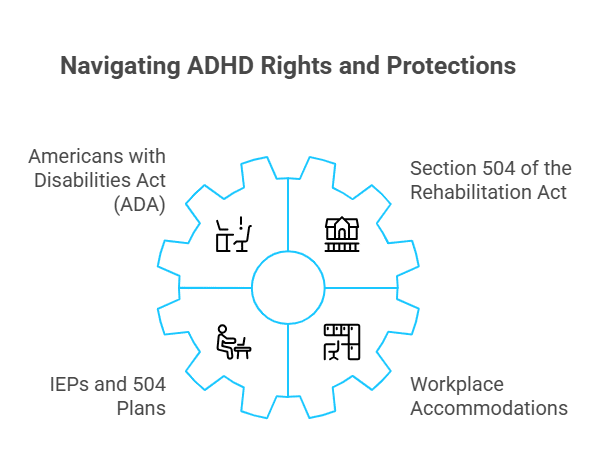
If you have ADHD and it significantly impacts your daily life, school performance, or ability to work, you may be legally entitled to protections and accommodations; you just need to know your rights.
In the United States, ADHD is recognized as a disability when it interferes with major life activities such as learning, focusing, communicating, or maintaining employment. That means you’re protected under several federal laws designed to promote equal access, not just in theory, but in practice.
1. Americans with Disabilities Act (ADA)
The ADA protects individuals with disabilities, including ADHD, from discrimination in employment, education, public services, and more.
If you qualify, you may be entitled to:
- Adjustments in your work environment
- Modified schedules
- Task management support
- Non-punitive solutions for missed deadlines or attention-based errors
Example: An employee with ADHD may ask for written instructions instead of verbal ones, or permission to wear noise-canceling headphones in a shared office.
2. Section 504 of the Rehabilitation Act
Section 504 is a civil rights law that prevents discrimination in any school or program receiving federal funding. It requires schools to provide reasonable accommodations for students with disabilities, including ADHD.
Common 504 accommodations for students with ADHD include:
- Extended time on tests
- Quiet testing environments
- Breaks between tasks
- Seating near the front of the classroom
- Permission to use organizational tools
3. Individuals with Disabilities Education Act (IDEA)
The Individuals with Disabilities Education Act (IDEA) provides special education services and support for eligible students whose ADHD significantly affects their educational performance.
Under IDEA, students may qualify for an Individualized Education Program (IEP) that outlines specialized instruction, accommodations, and support services tailored to their needs.
While not every student with ADHD qualifies for an IEP, those who do are legally entitled to the services included in their plan.
3. IEPs and 504 Plans in Schools
For students whose ADHD significantly affects learning or behavior, Individualized Education Programs (IEPs) or 504 Plans outline specific support strategies.
IEPs typically apply when a student qualifies for special education services, while 504 Plans are for students who don’t need full special education but still require help to learn effectively.
Both are legally binding and designed to ensure the student receives equal educational access.
4. Workplace Accommodations
Under the ADA, if your ADHD meets the criteria for a disability, you can request reasonable accommodations at work, meaning changes that help you do your job effectively, without placing an undue burden on your employer.
Examples of ADHD-friendly workplace accommodations:
- A quieter workspace or a remote work option
- Written summaries of meetings or verbal instructions
- Extra time to complete certain tasks
- A flexible schedule with time for breaks or task batching
You do not have to disclose your diagnosis unless you’re requesting accommodations, but if you do, your employer is legally obligated to engage in an “interactive process” to find reasonable solutions.
Call for a Complimentary 15 Minute Phone Consultation
Se Habla Español: We have Portuguese and Spanish speaking counselors as well.

Can adults with ADHD qualify for disability protections?
Yes. Disability protections for ADHD do not end after school.
Adults with ADHD may qualify for workplace accommodations if their symptoms substantially affect major life activities or make it harder to perform essential parts of their job. These protections are not designed to lower expectations. They exist to remove barriers that make certain tasks unnecessarily difficult.
In practice, accommodations may include:
- Written instructions instead of verbal ones.
- Quieter workspaces or reduced distractions.
- Flexible scheduling or task batching.
- Breaking large projects into smaller deadlines with regular check-ins.
- Organizational tools, reminders, or other forms of executive functioning support.
- Permission to use noise-canceling headphones or similar focus aids.
For example, someone who struggles with verbal instructions may perform just as well when expectations are provided in writing. Others may benefit from clearer priorities, structured workflows, or fewer interruptions.
Many adults only seek support after years of missed deadlines, burnout, workplace stress, or unexplained performance issues. In these situations, accommodations can help create a work environment that supports how the ADHD brain functions rather than forcing someone to work against it every day.
Does ADHD automatically qualify for disability benefits?
No. An ADHD diagnosis alone does not automatically qualify someone for disability benefits.
When determining eligibility, agencies such as the Social Security Administration (SSA) focus less on the diagnosis itself and more on how much ADHD affects daily functioning, education, employment, and independent living.
To qualify, applicants typically need evidence showing that symptoms create significant and long-term limitations. This may include:
- Medical records and treatment history
- Documentation of functional impairments
- School or workplace accommodations
- Reports from healthcare providers, teachers, or employers
Because the SSA criteria are strict, many people with ADHD do not qualify for benefits even though they may still qualify for accommodations or other forms of support.
Why is ADHD often called an invisible disability?
Unlike many physical disabilities, ADHD often has no obvious outward signs. There is no cast, mobility aid, or visible marker that shows how much effort everyday tasks may require. ADHD is considered an invisible disability because many of its challenges happen internally and are easy for others to overlook.
This can create a difficult situation for many people with ADHD. Others may only see the missed deadline, forgotten appointment, unfinished project, or emotional reaction without seeing the effort that went into trying to prevent it in the first place.
As a result, people with ADHD often hear comments such as:
- “Everyone gets distracted sometimes.”
- “You just need to be more organized.”
- “If you can focus on that, why can’t you focus on this?”
- “You don’t seem like you have ADHD.”
Many adults spend years masking symptoms or creating systems to hide their struggles from employers, friends, and even family members. In some cases, this can delay diagnosis, discourage people from asking for support, or leave them feeling as though their difficulties are personal failures rather than symptoms of a recognized condition.
Why do some people prefer to describe ADHD as a difference rather than a disability?
Not everyone with ADHD identifies with the word disability. Many people connect more strongly with the neurodiversity movement, which views ADHD as a different way of thinking rather than something that is inherently broken.
This perspective highlights strengths that can sometimes be associated with ADHD, including:
- Creativity and unconventional thinking
- Strong problem-solving skills
- Hyperfocus on meaningful tasks
- Entrepreneurial thinking and adaptability
At the same time, strengths do not cancel out challenges. Someone can be highly creative or successful while still struggling with organization, time management, or emotional regulation.
This is why many people see ADHD as both a difference and a disability, depending on the context and the support available.
Why are women with ADHD diagnosed later?
Many women with ADHD are diagnosed later because their symptoms often do not match the hyperactive, disruptive behavior traditionally associated with ADHD in boys.
Instead, they may be more likely to:
- Struggle with disorganization, forgetfulness, or overwhelm rather than hyperactivity.
- Become known as the “daydreamer” rather than the student who interrupts class.
- Work harder to mask symptoms and avoid drawing attention to their difficulties.
- Develop coping strategies that hide challenges until responsibilities increase.
- Be misdiagnosed with anxiety, depression, or stress-related conditions first.
For many women, ADHD only becomes obvious during major life transitions such as university, parenthood, demanding careers, or managing a household alongside work responsibilities.
How to Talk to Your Doctor or Employer About ADHD?
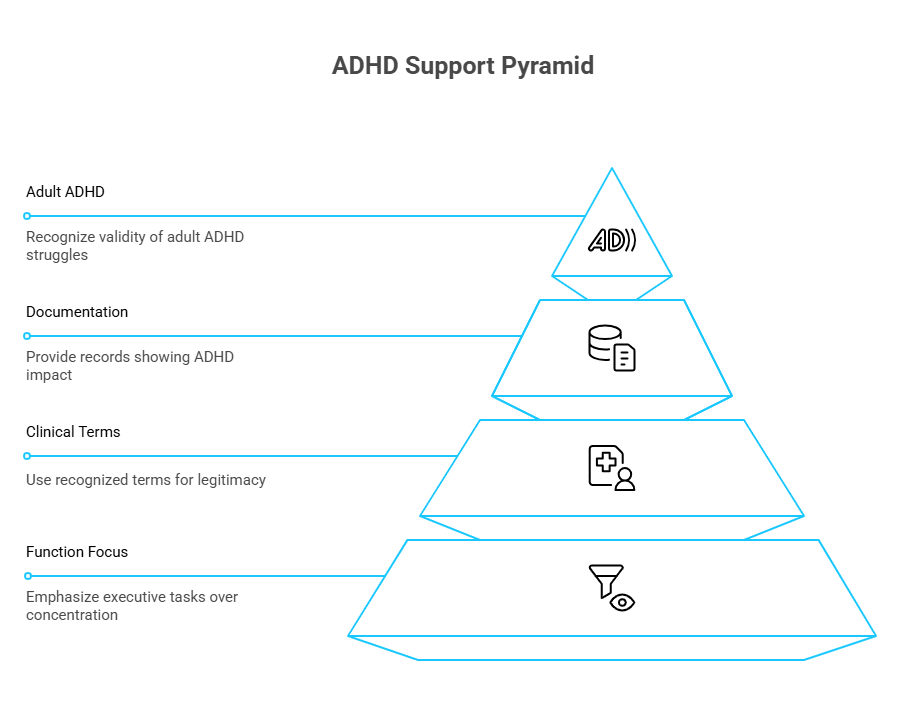
If you suspect ADHD is affecting your life, but don’t have a formal diagnosis, it can feel intimidating to bring it up. Many adults carry years of self-doubt or shame, believing their struggles are personal failings rather than signs of a treatable, support-worthy condition.
But here’s the truth: You have every right to seek clarity and support.
Whether you’re talking to your doctor about a diagnosis or your employer about accommodations, the way you frame your experience can make a big difference.
1. Talk About Function, Not Just Focus
Instead of saying “I’m bad at concentrating,” try:
- “I often struggle with executive tasks like organizing and prioritizing.”
- “I lose focus quickly, even on tasks I care about, and it affects my performance.”
- “I start projects easily but find it hard to finish without external structure.”
These are not character flaws; they’re hallmark symptoms of ADHD.
2. Use Key Terms That Are Clinically Recognized
When speaking with a healthcare provider or HR rep, using accurate language helps legitimize your concerns. Helpful terms include:
- Executive dysfunction
- Working memory challenges
- Time blindness
- Impulse control issues
- Need for reasonable accommodations under the ADA
3. Documentation That Helps
When meeting with a medical provider or requesting accommodations, bring:
- A personal symptom log (real-life examples of how ADHD affects your functioning)
- Past academic or employment records showing patterns of struggle
- Any previous mental health evaluations
- Family history of ADHD or related conditions (if applicable)
Even if you weren’t diagnosed in childhood, these pieces help paint a fuller picture of your needs and open the door to real solutions.
4. If You’re Navigating ADHD as an Undiagnosed Adult
You’re not alone. Many adults were missed as children, especially if they weren’t “disruptive” or outwardly hyperactive, or if they developed ways to mask their symptoms early on. But adult ADHD is just as valid, and it deserves support.
Whether it’s struggling with deadlines, emotional overwhelm, missed promotions, or burnout from overcompensating, there’s help available. And you don’t have to figure it out alone.
That’s exactly what we specialize in at Total Life Counseling.
If ADHD is affecting your life, when should you consider ADHD therapy?
ADHD treatment is not only about medication. Many adults and children benefit from therapy for ADHD because it focuses on the day-to-day challenges that medication alone may not fully address, such as organization, emotional regulation, communication, and routines. Therapy can also help people develop practical systems that work with the way their brain naturally functions rather than against it.
It may be worth considering ADHD therapy or ADHD counseling if you find yourself:
- Repeatedly running into the same difficulties despite trying new systems or productivity strategies.
- Spending more energy managing everyday responsibilities than feels sustainable.
- Avoiding tasks, decisions, or responsibilities because they feel overwhelming.
- Feeling that ADHD symptoms are affecting your confidence, relationships, or quality of life.
- Reaching a new stage of life or work where previous coping strategies are no longer enough.
- Wanting practical tools rather than continuing to rely on trial and error.
Many people benefit from ADHD behavioral therapy or working with an ADHD therapist who understands executive function challenges and can help build realistic strategies for work, relationships, and daily life. For individuals seeking additional support, ADHD counseling can help turn insight into practical, sustainable change.
Support That Goes Beyond the Session- At Total Life Counseling
ADHD doesn’t just affect your focus; it impacts your entire day, from how you manage time to how you regulate emotions, handle relationships, and get through a work or school routine. That’s why at Total Life Counseling, therapy isn’t just talk, it’s practical, action-oriented support.
Our ADHD-trained therapists use evidence-based approaches like CBT, ARTT, and behavior coaching to help you (or your child) build real-world strategies that actually work. That means:
- Tools to improve organization, focus, and emotional control
- Support for routines at home, school, or work
- Coaching techniques that involve the whole family when needed
- A holistic lens that considers emotional, physical, and even spiritual well-being
You won’t leave with vague advice. You’ll leave each session with a personalized plan, rooted in what’s going on in your life right now, and what’s needed to make daily challenges feel more manageable.
Schedule a free 15-minute consultation to see how we can help you or your child build clarity, structure, and confidence, one practical step at a time.
Conclusion
Recognized by the American Psychiatric Association as a neurodevelopmental disorder and listed in the DSM-5, Attention-Deficit/Hyperactivity Disorder (ADHD) is far more than occasional distraction or restlessness. It’s a medically recognized condition that affects how the brain regulates focus, attention, emotion, and behavior.
In many cases, ADHD qualifies for protections under laws like the Americans with Disabilities Act (ADA), the Individuals with Disabilities Education Act (IDEA), and Section 504, especially when symptoms interfere with a person’s ability to work, learn, or manage daily life.
And while it may not be a visible disability, ADHD can have a very real impact on a person’s quality of life, especially without diagnosis or support.
Licensed Counselors & Therapists
Meet Our Team of Certified & Experienced Professionals
Total Life Counseling Center consists of Licensed Counselors, Masters Level Therapists, Espanol Counselors, Licensed Mental Health Counselors, Business Coaches, Image Enhancement Coaches who provide counseling for emotional, mental, physical and spiritual care including marriage, individual, family, substance abuse and more. Our team of certified and experienced professionals, dedicated to serving a comprehensive spectrum of mental health and relationship issues such as couples, women and men’s issues, children and teens with oppositional defiance, video game addiction, ADHD, ASD, anxiety, depression, and trauma survivors, is here to support and guide you through your journey towards healing and navigating life transitions. This approach not only enhances the effectiveness of the counseling provided but also builds trust within the community and among potential clients, who may be seeking support.
We offer next level counselors specialized in areas such as relationships, video game & drug/alcohol addictions, abuse, trauma, depression, and ADHD. Our Therapists are EMDR (eye movement desensitization) trauma therapy trained, cognitive behavioral therapy, specialize in ADHD and Oppositional Defiant Children, and are also professional Gottman method marriage couples counselors to give the best results to couples and to provide the best comprehensive spectrum of mental health and relationship care for our clients.
Struggling with Anger? We offer 8 hour anger management group therapy!
Discounted Rates and the president of Total Life Counseling Center Jim West does not want to turn people away and we have counselors at various levels of experience at a discounted rate that are trained by our next level counselors!

Jim West
MA, LICENSED MENTAL HEALTH COUNSELOR, national certified counselor
President, Counselor, Guest Speaker, Author, Social Skills, ADHD, ODD, ASD, children, teens, and more!

Dana West
MSW, Licensed clinical social worker
Vice President, Counselor, Guest Speaker, Addictions, Trauma, Couples, Abuse, and more!

Mathew Martin
MS, LICENSED MENTAL HEALTH COUNSELOR
Counselor, Coach, Guest Speaker, Marriage, Individual Males, Substance Abuse and more!

Brandon Feinberg
MS, LICENSED MENTAL HEALTH COUNSELOR
Male Counselor, Licensed Mental Health Counselor specializing in ADHD, Asperger Syndrome, Autism Spectrum Disorders, and more!

Lyris Steuber
MS, licesned marriage & family therapist
Counselor, Coach, Marriage & Family, Play Therapy, Divorce, Adolescent and more!

Valerie Ware
Licensed Psychologist and Behavioral Specialist
Psychological Evaluator, Autism, ADHD, Learning Disabilities, Anxiety, Gifted, Career Pathways, and emotional assessments.

Gemima McMahon
MA, LICENSED MENTAL HEALTH COUNSELOR
Licensed Mental Health Counselor specializing in Women’s issues, Trauma, Anxiety, Depression, Cutting, Couples, Children and Teenagers and more!

Audrey DeBruler
MS, LMHC, Licensed Mental Health Counselor
Children, Adolescents, Young Adults, Faith Based Counseling, Trauma Recovery, Anxiety and more!

David Duany
MA, LICENSED MENTAL HEALTH COUNSELOR
Licensed Mental Health Counselor specializing in ADHD, Social Skills, and Anger Management counseling for children, young adults, and families.

Katherine Waldheim
MS, Registered Mental Health Counseling Intern
Trauma, anxiety, couples counseling, and child & adolescent counseling services and more!

Sarah Dornas Albuquerque
MS – Registered Mental Health Counselor Intern
EMDR, Anxiety, Depression, Children, Teens, Young Adults, English, Spanish and Portugues and Adult Counseling

Frequently Asked Questions
Is ADHD considered a disability under the law still?
Yes. Under the ADA and Section 504, ADHD is considered a disability when it significantly impairs a person’s ability to perform daily tasks or substantial gainful activity, especially in school or the workplace.
Is ADHD a disability or mental illness?
ADHD is classified as a neurodevelopmental disorder, but in legal and educational contexts, it is treated as a mental disability. So, it can be both a disorder and a disability, depending on the lens.
Is ADHD a permanent disability?
ADHD is generally considered a lifelong condition, although symptoms and coping strategies can improve with treatment. So yes, it is often seen as a permanent disability, but not an unchangeable one.
Can I get disability benefits for ADHD?
Possibly. The Social Security Administration (SSA) offers disability benefits for ADHD if you (or your child) meet strict eligibility criteria. This typically includes documented ADHD diagnosis, functional limitations, and proof that symptoms prevent you from maintaining substantial gainful activity. Children may qualify for Supplemental Security Income (SSI); adults may apply for Social Security Disability Insurance (SSDI).
What are common ADHD symptoms that may qualify for support?
Examples include frequent task switching, chronic disorganization, symptoms of hyperactivity or inattentiveness that disrupt school, work, or relationships. These symptoms can qualify a person for classroom accommodations, workplace adjustments, and in some cases, federal benefits.
Is ADHD a disorder or disability in children?
Attention-Deficit/Hyperactivity Disorder (ADHD) is diagnosed as a disorder, but it can be considered a disability if it impacts a child’s ability to function. With proper ADHD treatment, children can meet strict requirements for support during early child development.
Are there online communities where people discuss ADHD as a disability?
Yes. Many people use online forums, advocacy groups, and ADHD communities to discuss accommodations, diagnosis experiences, and support options, including recommendations for an “ADHD therapist near me”.
Does ADHD qualify for FMLA leave?
ADHD may qualify for FMLA leave if it is considered a serious health condition and requires ongoing treatment or appointments. Eligibility depends on the severity of symptoms and individual circumstances.
Can ADHD qualify for accommodations in college?
Yes. Colleges may provide accommodations such as extra exam time, note-taking support, reduced-distraction testing environments, or flexible deadlines when ADHD significantly affects academic performance.
Filed in: ADHD, Blog, Gemima McMahon
Share This Story, Choose Your Platform!
Total Life Counseling Center consists of Licensed Counselors, masters level therapists, Español counselors, Licensed Mental Health Counselors, business coaches, and image enhancement coaches who provide counseling for emotional, mental, physical and spiritual care including marriage, individual, family, substance abuse and more. TLC’s family, trauma and marriage experts have been interviewed on National and Local TV/Radio over 200 times for their expert advice on Fox News, OWN, WETV, ABC’s Medical Minute and more. Our skilled counselors are relational, approachable and specialists providing therapy services in the Central Florida area including: Orlando, Winter Park, MetroWest, Windermere, Dr. Phillips, East Orlando, Lake Mary, and Clermont, Boca Raton Florida, and Dallas, TX.
About the Author: Gemima McMahon




HOW CAN AN ADULT WITH ADHD GET SOME PSYCHOLOGICAL HELP AFTER LOSING A JOB iIN ARKANSAS WHICH WAS VERY HARD TO MAINTAIN? HE NOW HAS NO IMSURANCE OR A JOB WHATSOEVER
Hey Nancy this is so sad. Please call us and see if we can do some ADHD coaching to try to get him on track.