

What Is Cyberbullying and How Can You Stop It?
Key Highlights
- Cyberbullying is repeated online harassment via messages, posts, or fake accounts
- It is 24/7, public, and hard to escape compared to offline bullying
- Common forms include harassment, impersonation, exclusion, and cyberstalking
- Victims are often targeted based on visibility, differences, or low support
- Signs include mood changes, withdrawal, secrecy, and reduced online activity
- Stop it early by blocking, reporting, saving evidence, and telling someone trusted
- Total Life Counseling provides therapy to help process, cope, and recover
You post something online, and the comments turn hostile. What starts as a small jab can turn into public humiliation, screenshots, and repeated messages. This is common. Many teens and adults face online harassment, with cyberbullying on social media making it faster and harder to control.
It does not stop when you close the app. It continues through messages and notifications. Many people fail to recognize it early, often dismissing it as trolling. This delay allows it to escalate and impact confidence and mental health.
This blog will help you identify cyberbullying, spot warning signs, and take clear steps to handle it. It is designed to give you practical guidance whether you are facing it or helping someone else.
What Is Cyber Bullying?
So, what exactly is cyberbullying? It’s the use of electronic communication to harass, threaten, or humiliate someone. This can happen through mean text messages, hurtful posts on social media sites, or the spread of rumors online. For many young people, this type of online harassment can feel inescapable and incredibly damaging.
Unlike other forms of conflict, cyberbullying is persistent and intended to cause harm. There are many types of cyberbullying, each with its own way of targeting an individual. Understanding these different forms is key to recognizing when it’s happening.
What Are the Most Important Facts About Cyberbullying in the United States?
Cyberbullying continues to be a serious and growing issue across the United States, especially among teens who are constantly active online. The rise of social media and digital communication has made it easier for harassment to happen more frequently and on a larger scale.
- About 46% of U.S. teens have experienced cyberbullying
- Girls are more likely than boys to experience cyberbullying
- About 32% of teens say they have been called offensive names online
- About 19% of U.S. students report being bullied at school, and 22% of those cases involve cyberbullying
These are just a few facts about cyberbullying that highlight its scale; many more studies continue to reveal how widespread and impactful the issue truly is.
How Is Cyberbullying Different from Traditional Bullying?
Understanding the difference between cyberbullying and traditional bullying helps you recognize why online harassment can be more persistent and damaging.
|
Aspect |
Cyberbullying |
Traditional Bullying |
|---|---|---|
|
Location |
Happens online across platforms |
Happens in physical spaces (school, workplace) |
| Time | Can occur 24/7 | Usually limited to specific times |
|
Audience |
Can reach a large or unlimited audience | Typically limited to people present |
|
Anonymity |
Often, anonymous or fake identities are involved | Bully is usually known |
|
Permanence |
Content can be saved, shared, and remains online | No permanent digital record |
|
Speed of Spread |
Spreads instantly | Spreads slowly through word of mouth |
|
Escape |
Hard to avoid, follows through devices |
Can be avoided by leaving the location |
|
Evidence |
Digital proof (screenshots, messages) available | Limited or no concrete proof |
What Are The Common Forms and Examples of Cyberbullying?
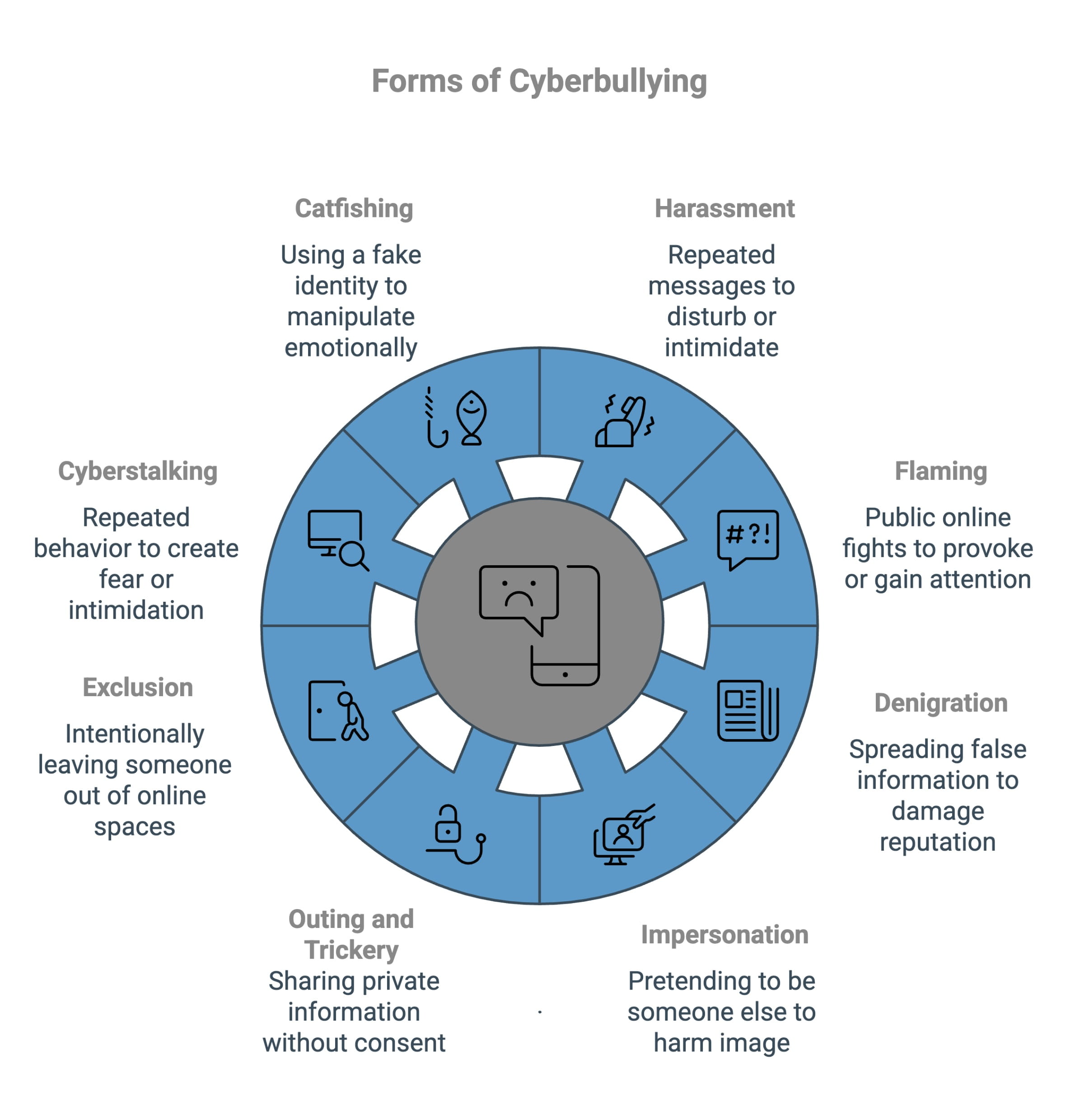
Cyberbullying is not just “someone being mean online.” It usually follows repeated patterns where intent, visibility, and power imbalance play a role. These forms differ in how they are executed and how they impact the victim.
Here are the most common forms:
- Harassment: Repeated, targeted messages meant to disturb or intimidate someone, such as constant abusive DMs or negative comments on every post.
- Flaming: Public online fights or insults designed to provoke or gain attention, often seen in aggressive comment threads or group chats.
- Denigration (Dissing): Spreading false or harmful information to damage someone’s reputation, like sharing edited screenshots or circulating rumors.
- Impersonation: Pretending to be someone else online to harm their image, such as using fake accounts or hacked profiles to post inappropriate content.
- Outing and Trickery: Sharing someone’s private information or secrets without consent, including personal messages or images that were shared in confidence.
- Exclusion: Intentionally leaving someone out of online spaces, such as removing them from group chats or ignoring them in digital communities.
- Cyberstalking: Repeated online behavior that creates fear or intimidation, including constant monitoring or sending threatening messages.
- Catfishing: Using a fake identity to manipulate someone emotionally, often by building trust and later exploiting or exposing them.
Cyberbullying often overlaps with broader online challenges. Exploring the negative effects of social media can help understand the bigger picture.
Who Are the Victims of Cyberbullying?
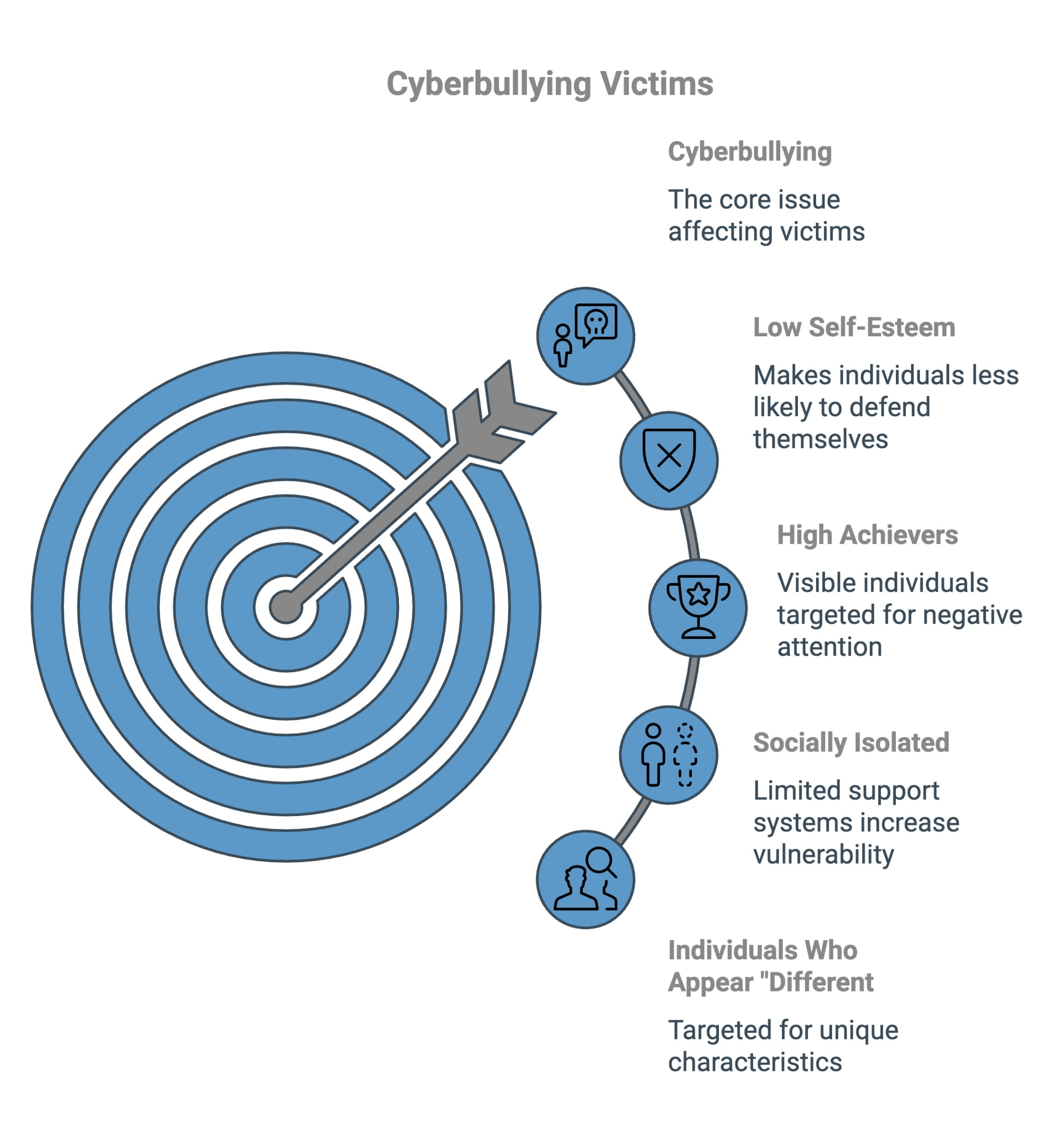
Cyberbullying does not affect everyone in the same way. The people most at risk are not just “frequent users,” but those whose identity, visibility, or emotional state makes them easier to target and harder to defend themselves.
1. Teenagers and Young Adults
This group is heavily affected because their social life is closely tied to online platforms. When bullying happens, it is not just an isolated incident. It becomes public, shareable, and often permanent.
A single embarrassing post or rumor can spread across peer groups within hours, leading to real-world consequences like social exclusion, anxiety, or avoidance of school and social spaces.
2. Individuals Who Appear “Different.”
People who stand out in any visible way often become easy targets because cyberbullies look for characteristics they can repeatedly highlight and mock. This could be appearance, language, cultural background, or identity.
The impact is not just the attack itself, but the repeated reinforcement that they are “different,” which can lead to isolation and long-term confidence issues.
3. Socially Isolated Individuals
Those with limited support systems are more vulnerable because they have fewer people to defend them or validate their experience. Without peer support, bullying can go unchecked for longer periods. This increases the likelihood of internalizing the abuse, leading to withdrawal, silence, and prolonged emotional impact.
4. High Achievers or Visible Individuals
People who stand out positively often become targets of negative attention. High-performing students or individuals with a public presence may face criticism, trolling, or attempts to bring them down.
In these cases, cyberbullying is driven by visibility. The more visible the person, the larger the audience and the greater the potential for public embarrassment.
5. Individuals with Low Self-Esteem
Cyberbullies often continue targeting individuals who are less likely to respond or defend themselves. People with low self-confidence may not challenge the behavior, which can signal to the bully that the target is “safe” to continue attacking. Over time, this creates a cycle where the victim becomes increasingly affected while the behavior escalates.
Victims are not random. They are often chosen based on visibility, vulnerability, and reaction. The more exposed or emotionally affected someone appears, the more likely the behavior is to continue.
Cyberbullying often reflects a larger mental health pattern. Explore this in student mental health issues on the rise.
Who Are the People Behind Cyberbullying and Why Do They Do It?
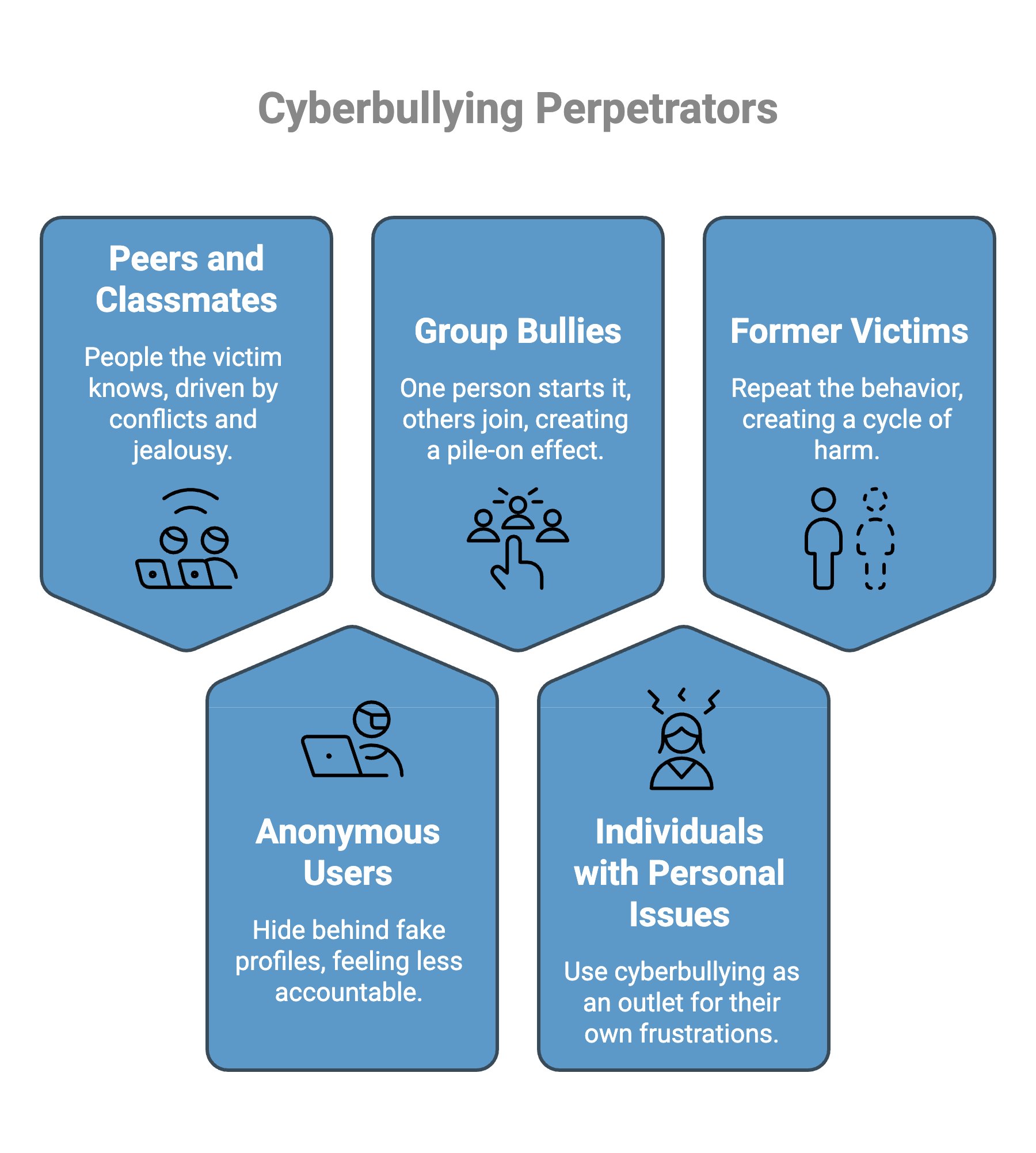
Cyberbullying is rarely random. The people behind it are often influenced by social dynamics, personal insecurities, or the environment they operate in. Understanding who they are and how they behave helps explain why cyberbullying escalates and repeats.
1. Peers and Classmates
Most cyberbullying comes from people the victim already knows. Conflicts, jealousy, or competition can move online, where it becomes easier to attack without immediate consequences. Because they share the same social circle, the impact is stronger. Harmful content spreads faster and affects the victim’s real-world relationships.
2. Anonymous Users
Anonymity changes behavior. When individuals hide behind fake profiles, they feel less accountable and more willing to say things they would not in person. This often leads to more extreme language, repeated attacks, and a lack of empathy toward the victim.
3. Group Bullies (Mob Mentality)
Cyberbullying often becomes a group activity. One person starts it, and others join by liking, sharing, or adding comments. This creates a pile-on effect where the volume of negativity increases rapidly. For the victim, this feels overwhelming because it is no longer one attacker but an entire group reinforcing the behavior.
4. Individuals Dealing with Personal Issues
Some perpetrators use cyberbullying as an outlet for their own frustrations. Stress, insecurity, or a lack of control in their personal life can lead them to target others online. The behavior is less about the victim and more about the perpetrator’s need to assert control or release emotion.
5. Former Victims of Bullying
In some cases, individuals who have experienced bullying themselves may repeat the behavior. This creates a cycle where harm is passed on rather than resolved. The online environment makes this transition easier because it removes immediate consequences.

Struggling with ADHD, ASD or Defiance?
It’s Time to Stress Less!
Everyone knows someone struggling with ADHD, ASD or Defiance. So, Jim West Developed the StressLess Educational Series as a comprehensive video program to help people all over the world! StressLess Now or Book Jim as a Guest Speaker Today! Click for more info and free video tips.
What Are the Early Warning Signs of Cyberbullying You Should Not Ignore?
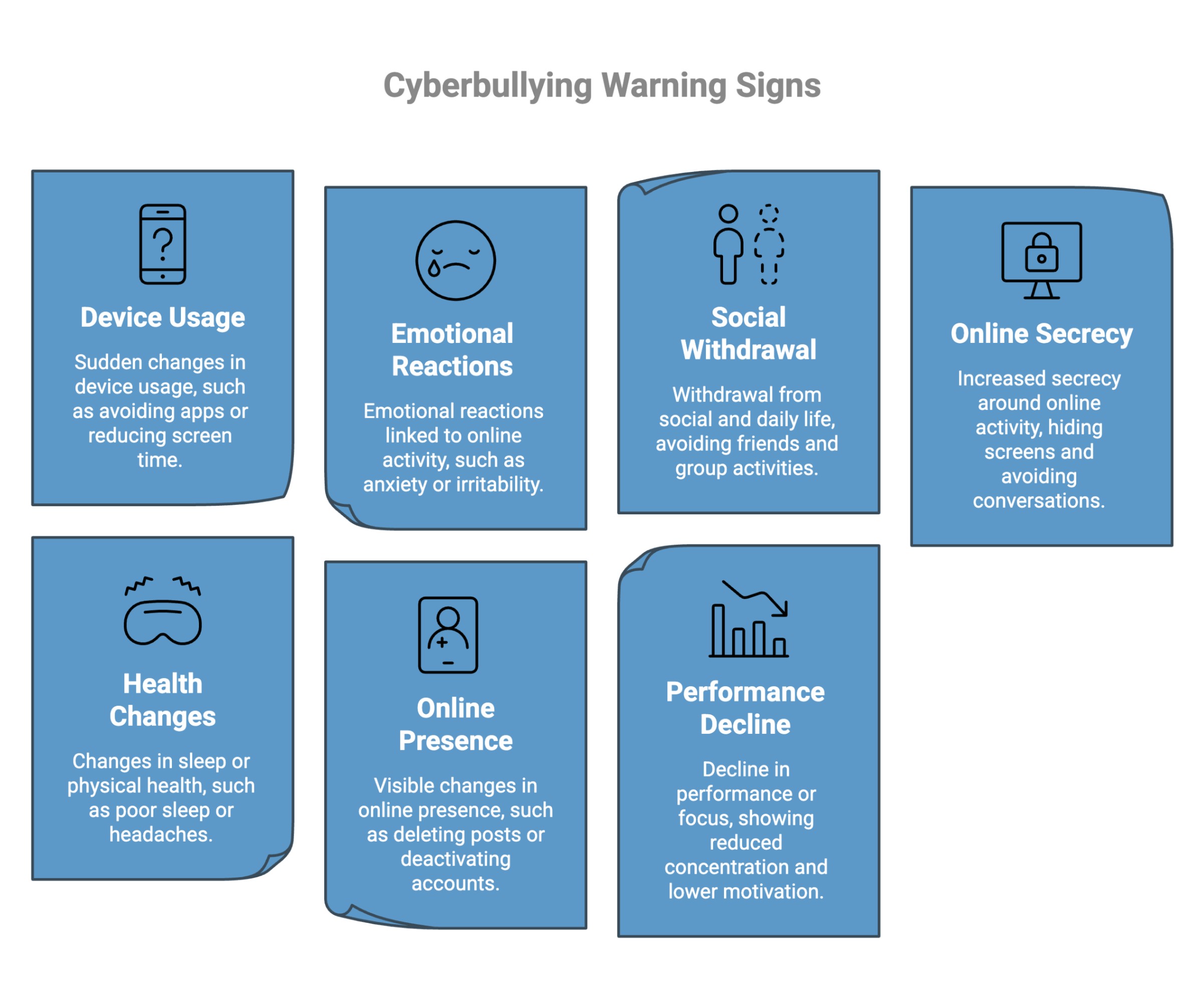
Cyberbullying rarely starts with something obvious. It builds through repeated interactions that begin to affect how a person behaves, feels, and engages online.
According to a World Health Organization study, around 1 in 6 school-aged children have experienced cyberbullying, highlighting how common and often unnoticed it is. Because many cases go unreported, recognizing early warning signs becomes critical.
Here are the key warning signs to look for:
- Sudden changes in device usage: Avoids certain apps, reduces screen time, or appears tense while using devices.
- Emotional reactions linked to online activity: Becomes anxious, upset, or irritable after going online.
- Withdrawal from social and daily life: Avoids friends, group activities, or public interactions.
- Increased secrecy around online activity: Hides screens, avoids conversations, or becomes overly private about phone use.
- Changes in sleep or physical health: Experiences poor sleep, fatigue, headaches, or loss of appetite.
- Visible changes in online presence: Deletes posts, deactivates accounts, or faces repeated negative comments or exclusion.
- Decline in performance or focus: Shows reduced concentration, lower academic or work performance, and a lack of motivation.
What Are the Effects of Cyberbullying on Victims Over Time?
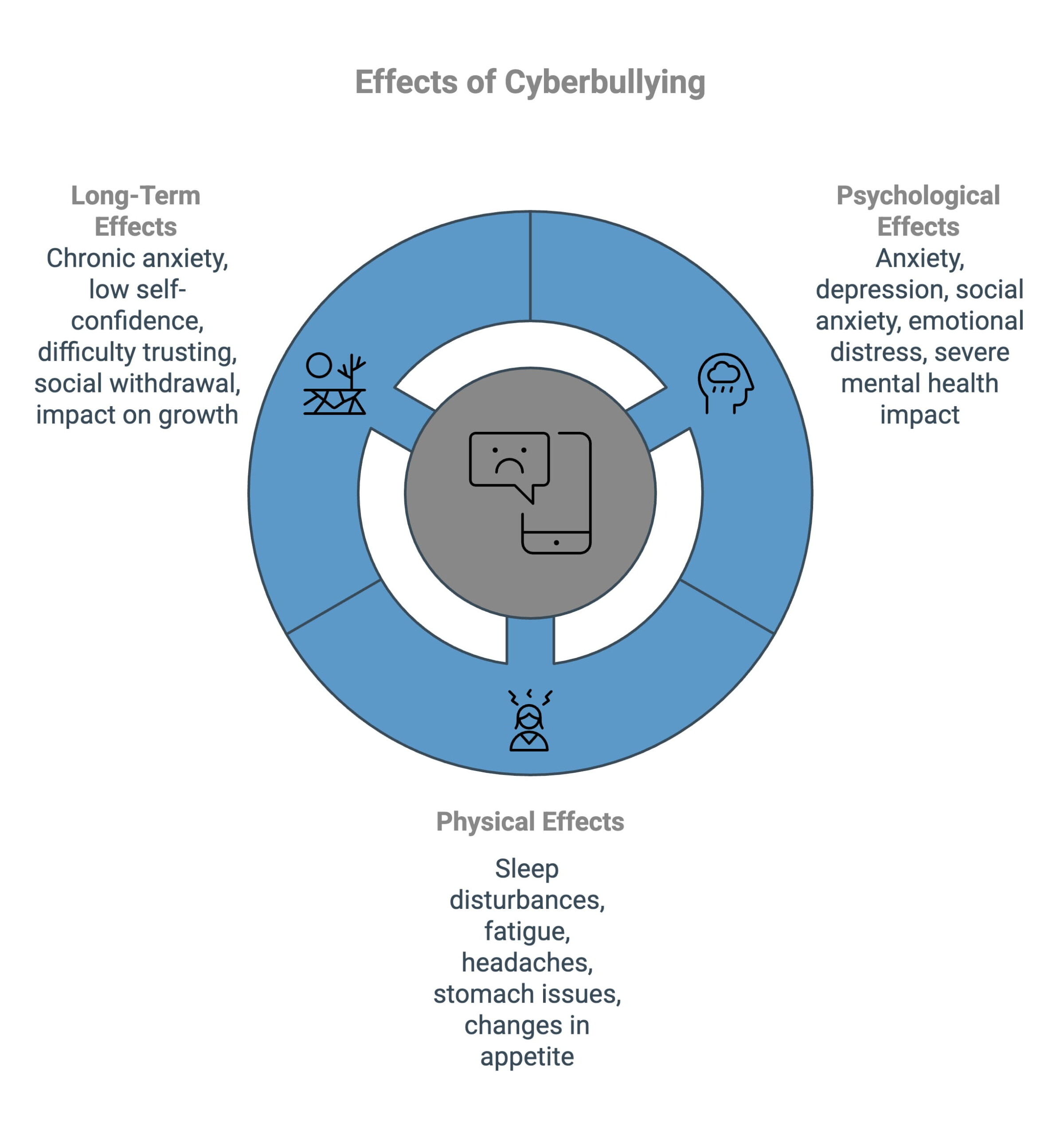
Cyberbullying impacts victims on multiple levels. It is not limited to temporary emotional reactions but can develop into deeper psychological, physical, and long-term consequences, especially when the behavior is repeated and public.
1. Psychological Effects of Cyberbullying
Cyberbullying creates continuous mental pressure because the content can be seen, shared, and revisited at any time. This ongoing exposure affects how individuals think, feel, and perceive themselves.
Here are the most common psychological effects:
- Anxiety and constant fear due to the anticipation of further attacks
- Depression and low self-esteem from repeated humiliation or criticism
- Social anxiety and fear of being judged in public or online spaces
- Emotional distress such as mood swings, irritability, or helplessness
- Severe mental health impact, including risk of self-harm in extreme cases
2. Physical and Health Impacts
The stress caused by cyberbullying does not remain psychological. Over time, it begins to affect the body through stress-related responses.
These physical effects often include:
- Sleep disturbances such as difficulty falling or staying asleep
- Fatigue and low energy levels due to poor rest and mental strain
- Headaches and stomach issues linked to anxiety and stress
- Changes in appetite, either reduced eating or stress eating
- General physical exhaustion from prolonged emotional pressure
3. Long-Term Effects of Cyberbullying
If cyberbullying continues or is not addressed early, its impact can extend beyond the immediate situation and affect long-term behavior and development.
Over time, victims may experience:
- Chronic anxiety or depression that persists even after bullying stops
- Lasting low self-confidence and negative self-image
- Difficulty trusting others and forming healthy relationships
- Social withdrawal and isolation as a coping mechanism
- Impact on academic or career growth due to reduced focus and motivation
If you’re noticing deeper emotional struggles tied to online pressure, explore how therapy can help in our guide on eating disorders and teens counseling.
How Is Cyberbullying Addressed by Laws in the United States?
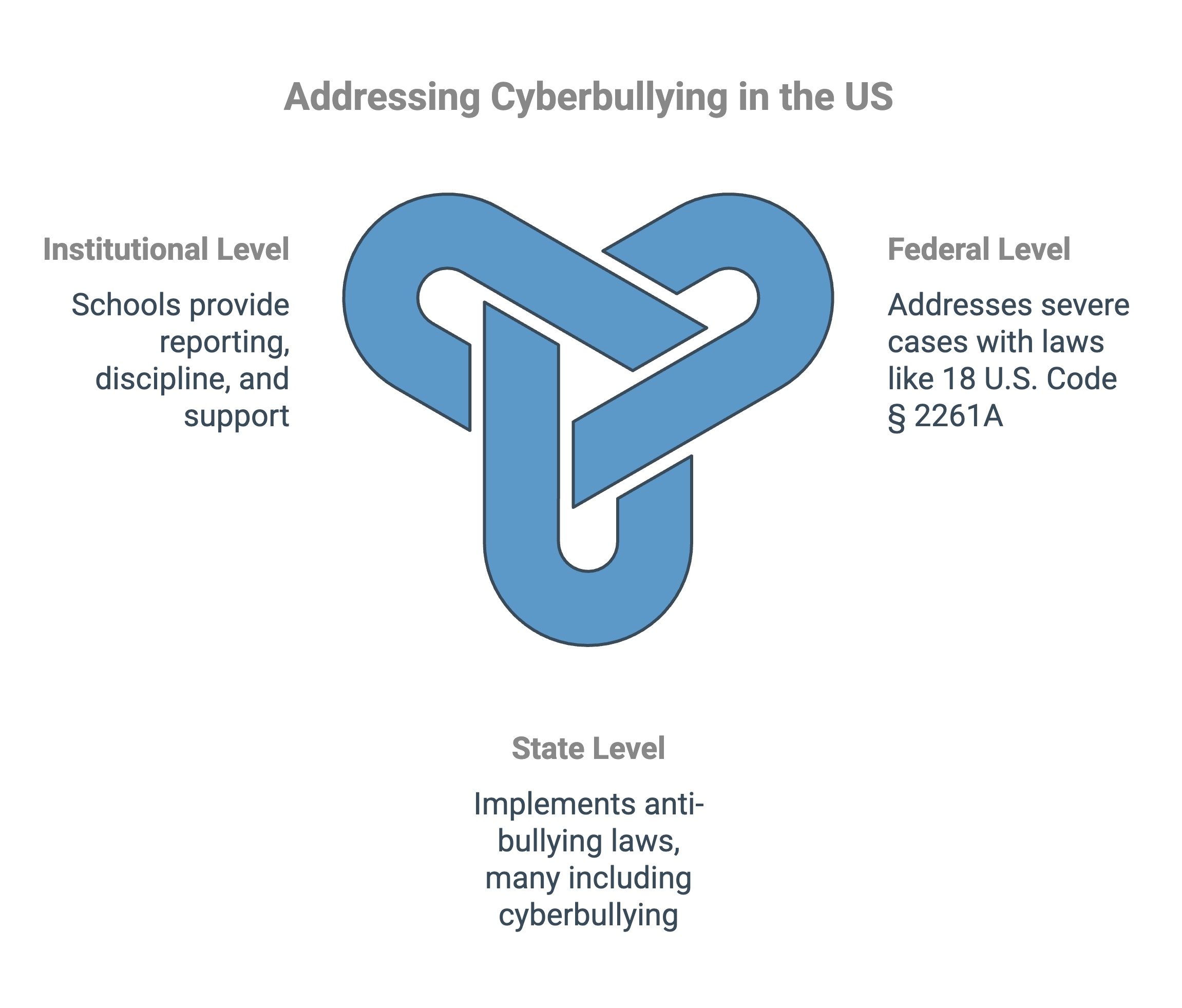
Cyberbullying in the United States is not covered by a single law. Instead, it is addressed through a combination of federal provisions, state-level regulations, and school enforcement policies.
Here is how it works in practice:
- Federal level: Laws like 18 U.S. Code § 2261A are used in severe cases involving threats, stalking, or repeated harassment through digital platforms.
- State level: Every state has anti-bullying laws, and many specifically include cyberbullying. Acts such as the California Safe Place to Learn Act and the Dignity for All Students Act require schools to actively prevent and respond to bullying, including online incidents.
- Institutional level: Schools implement reporting systems, take disciplinary action, and provide support to victims, even when the behavior happens outside campus but affects students.
Together, this structure allows cyberbullying to be handled based on severity, from school intervention to legal consequences.
How Can You Prevent and Stop Cyberbullying?
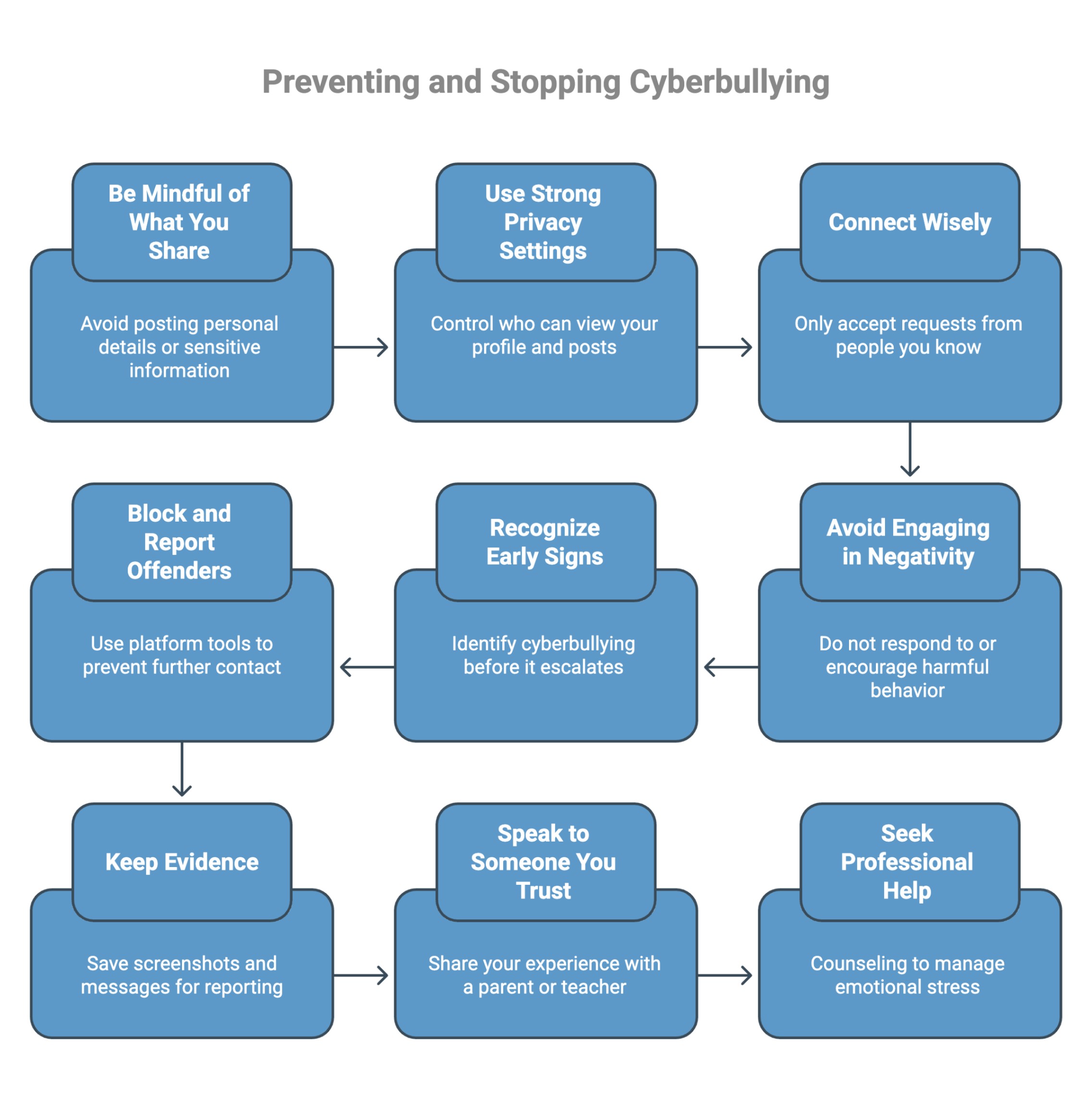
Cyberbullying can escalate quickly if it is not addressed early, which is why both prevention and action need to work together. Building safe online habits helps reduce risk, while knowing how to respond ensures you can handle situations confidently if they arise.
- Be mindful of what you share: Avoid posting personal details, sensitive information, or content that could be misused.
- Use strong privacy settings: Control who can view, message, or interact with your profiles and posts.
- Connect wisely: Only accept requests from people you know and trust.
- Avoid engaging in negativity: Do not respond to or encourage harmful behavior, as it can make the situation worse.
- Recognize early signs: Identifying cyberbullying early makes it easier to stop before it escalates.
- Block and report offenders: Use platform tools to prevent further contact and flag abusive behavior.
- Keep evidence: Save screenshots, messages, or links in case the issue needs to be reported or escalated.
- Speak to someone you trust: Share your experience with a parent, teacher, or counselor for support.
- Seek professional help if needed: Counseling can help manage emotional stress and rebuild confidence.
Taking a combined approach of prevention and timely action can significantly reduce the impact of cyberbullying and create a safer online environment.
For a quick visual guide on handling cyberbullying, watch this:
Does Counseling Decrease Cyberbullying?
Cyberbullying counseling does not directly eliminate cyberbullying, but it plays an important role in reducing its impact and preventing it from continuing. It works by addressing both the emotional effects on victims and the underlying behavior of those involved.
Here’s how counseling helps reduce cyberbullying:
- Supports victims emotionally by helping them process experiences, rebuild confidence, and develop coping strategies
- Reduces long-term mental health impact, such as anxiety, depression, and low self-esteem
- Addresses behavior in perpetrators by identifying causes like insecurity, anger, or peer pressure
- Encourages accountability and empathy so individuals better understand the consequences of their actions
- Improves communication and coping skills, which helps break the cycle of repeated bullying
Overall, counseling for cyberbullying contributes to reducing its impact by focusing on behavior change and emotional recovery, rather than just reacting to individual incidents.
When Should You Seek Help for Cyberbullying?
Recognizing cyberbullying is one step. Deciding when to seek help is another. You do not need to wait for the situation to become severe or unmanageable. The right time to seek support is when the impact starts affecting your ability to feel safe, focused, or in control.
Here are clear situations where taking action becomes important:
- When the behavior is repeated or escalating, rather than a one-time incident
- When it starts affecting your daily functioning, such as concentration, routine, or interactions
- When you feel unable to handle the situation on your own
- When attempts to ignore, block, or report the behavior do not stop it
- When there is fear, intimidation, or threats involved
Seeking help can start with someone you trust, such as a parent, teacher, or mentor, and can extend to professional support if needed. Early action helps prevent the situation from becoming more complex and reduces long-term impact.
If you want structured guidance on handling bullying situations, explore this Anti-bullying class designed to help students and parents respond more effectively.
What Therapy Options Help Victims Recover from Cyberbullying?
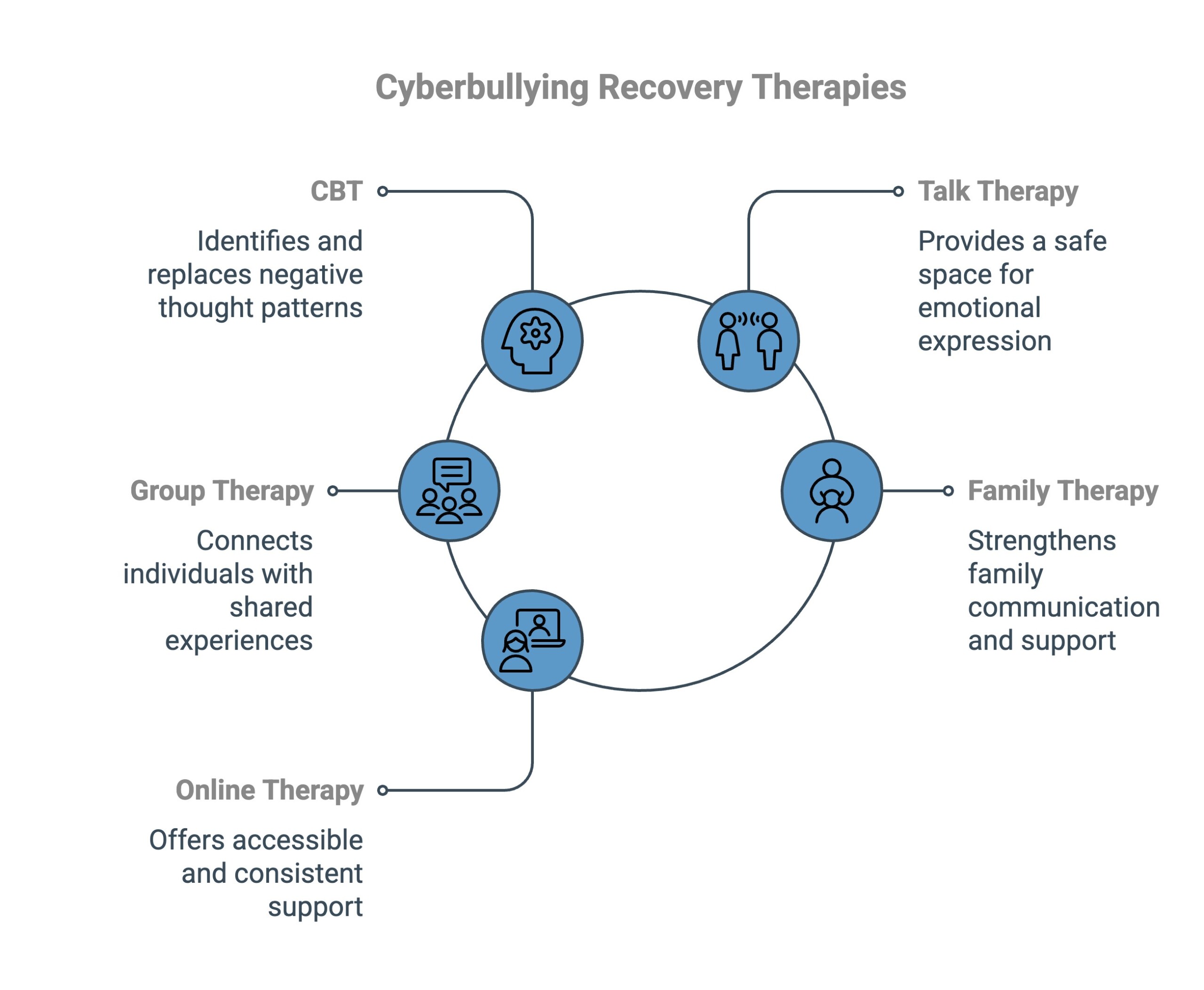
Recovering from cyberbullying is not just about stopping the abuse. It involves rebuilding confidence, processing emotional harm, and learning how to respond to similar situations in the future. This is where cyberbullying therapy plays a key role by providing structured support and long-term coping strategies.
1. Cognitive Behavioral Therapy (CBT)
CBT helps individuals identify negative thought patterns caused by cyberbullying and replace them with more balanced thinking. It reduces anxiety, improves self-esteem, and gives practical tools to manage triggers, overthinking, and fear of judgment.
2. Talk Therapy (Individual Counseling)
Talk therapy creates a safe space to express emotions that are often suppressed. It helps individuals process feelings like shame, anger, or fear while building emotional clarity and healthier responses to stress.
3. Group Therapy and Peer Support
Group therapy helps individuals realize they are not alone in their experience. It rebuilds social confidence, reduces isolation, and introduces coping strategies through shared experiences.
4. Family Therapy
Family therapy strengthens communication and support at home. It helps families respond more effectively, creating a stable and understanding environment that supports recovery.
5. Online Therapy and Digital Support
Online therapy makes support more accessible and consistent. It allows individuals to seek help comfortably, maintain privacy, and stay engaged with therapy without barriers like travel or scheduling.
Facing Cyberbullying? Get Support from Total Life Counseling
If cyberbullying is starting to affect how you feel, think, or show up daily, you don’t have to deal with it on your own. Talking to the right professional can make things feel more manageable, faster than you might expect.
Total Life Counseling offers support for teens, adults, and families dealing with anxiety, stress, trauma, and emotional challenges that often come with experiences like cyberbullying. Our approach is practical and personalized, so you’re not just talking, you’re actually learning how to cope, process, and move forward.
Here’s what we focus on:
- Specialized support for teens and adults dealing with anxiety, emotional stress, and behavioral challenges
- Experienced therapists who tailor sessions based on your situation, not a one-size-fits-all approach
- Family and individual counseling options are especially helpful when support at home matters
- Flexible online and in-person sessions, making it easier to get help when you need it
Getting help is not a big step. It is the right step. And the earlier you take it, the easier it becomes to regain control and feel like yourself again.
Want practical tips to manage stress and mental health daily? Listen to The StressLess Podcast by Total Life Counseling with Jim and Dana West, available on Apple Podcasts, Spotify, and YouTube.
Final Words
Cyberbullying is not always loud or obvious, but its impact is real and lasting. The sooner it is recognized, the easier it becomes to manage and stop.
If you are experiencing it, remember this: you are not expected to handle it alone. Small steps like setting boundaries, speaking up, or seeking support can change how the situation unfolds.
Awareness is the first step. Action is what makes the difference.
Licensed Counselors & Therapists
Meet Our Team of Certified & Experienced Professionals
Total Life Counseling Center consists of Licensed Counselors, Masters Level Therapists, Espanol Counselors, Licensed Mental Health Counselors, Business Coaches, Image Enhancement Coaches who provide counseling for emotional, mental, physical and spiritual care including marriage, individual, family, substance abuse and more. Our team of certified and experienced professionals, dedicated to serving a comprehensive spectrum of mental health and relationship issues such as couples, women and men’s issues, children and teens with oppositional defiance, video game addiction, ADHD, ASD, anxiety, depression, and trauma survivors, is here to support and guide you through your journey towards healing and navigating life transitions. This approach not only enhances the effectiveness of the counseling provided but also builds trust within the community and among potential clients, who may be seeking support.
We offer next level counselors specialized in areas such as relationships, video game & drug/alcohol addictions, abuse, trauma, depression, and ADHD. Our Therapists are EMDR (eye movement desensitization) trauma therapy trained, cognitive behavioral therapy, specialize in ADHD and Oppositional Defiant Children, and are also professional Gottman method marriage couples counselors to give the best results to couples and to provide the best comprehensive spectrum of mental health and relationship care for our clients.
Struggling with Anger? We offer 8 hour anger management group therapy!
Discounted Rates and the president of Total Life Counseling Center Jim West does not want to turn people away and we have counselors at various levels of experience at a discounted rate that are trained by our next level counselors!

Jim West
MA, LICENSED MENTAL HEALTH COUNSELOR, national certified counselor
President, Counselor, Guest Speaker, Author, Social Skills, ADHD, ODD, ASD, children, teens, and more!

Dana West
MSW, Licensed clinical social worker
Vice President, Counselor, Guest Speaker, Addictions, Trauma, Couples, Abuse, and more!

Mathew Martin
MS, LICENSED MENTAL HEALTH COUNSELOR
Counselor, Coach, Guest Speaker, Marriage, Individual Males, Substance Abuse and more!

Brandon Feinberg
MS, LICENSED MENTAL HEALTH COUNSELOR
Male Counselor, Licensed Mental Health Counselor specializing in ADHD, Asperger Syndrome, Autism Spectrum Disorders, and more!

Lyris Steuber
MS, licesned marriage & family therapist
Counselor, Coach, Marriage & Family, Play Therapy, Divorce, Adolescent and more!

Valerie Ware
Licensed Psychologist and Behavioral Specialist
Psychological Evaluator, Autism, ADHD, Learning Disabilities, Anxiety, Gifted, Career Pathways, and emotional assessments.

Gemima McMahon
MA, LICENSED MENTAL HEALTH COUNSELOR
Licensed Mental Health Counselor specializing in Women’s issues, Trauma, Anxiety, Depression, Cutting, Couples, Children and Teenagers and more!

Audrey DeBruler
MS, LMHC, Licensed Mental Health Counselor
Children, Adolescents, Young Adults, Faith Based Counseling, Trauma Recovery, Anxiety and more!

David Duany
MA, LICENSED MENTAL HEALTH COUNSELOR
Licensed Mental Health Counselor specializing in ADHD, Social Skills, and Anger Management counseling for children, young adults, and families.

Katherine Waldheim
MS, Registered Mental Health Counseling Intern
Trauma, anxiety, couples counseling, and child & adolescent counseling services and more!

Sarah Dornas Albuquerque
MS – Registered Mental Health Counselor Intern
EMDR, Anxiety, Depression, Children, Teens, Young Adults, English, Spanish and Portugues and Adult Counseling

Frequently Asked Questions
What is the act of cyberbullying?
Cyberbullying is a form of online harassment using digital devices like mobile phones, social media platforms, instant messaging, or chat rooms to target someone repeatedly. This bullying behavior often involves sharing private information or causing negative impacts.
What are the social issues of cyberbullying?
Cyberbullying creates serious social issues by affecting relationships, increasing school violence, and disrupting a safe school environment. It exposes high school students and primary school students to online abuse, leading to negative impacts across social situations and the online world.
What is the therapy for cyberbullying?
Therapy for cyberbullying includes approaches like Cognitive Behavioral Therapy (CBT), talk therapy, and group therapy. These help the target of cyberbullying process online experiences, manage stress, and build resilience, often with support from a trusted adult or school personnel.
How can school counselors help with bullying?
School counselors and school staff help by identifying bullying behavior, supporting victims, and guiding appropriate action. They work with school administrators to maintain a safe school environment, educate students, and intervene early during the school year.
Why would someone be a cyberbully?
Someone may engage in online bullying due to insecurity, peer pressure, or the use of technology enabling anonymity. Social media use and digital devices create a virtual world where harmful actions feel distant, increasing the chance of repeated bullying behavior.
What should someone do when they see cyberbullying?
When witnessing cyberbullying, take appropriate action by reporting it to a trusted adult, school personnel, or social media providers. Avoid engaging, save evidence, and if there is immediate danger, contact law enforcement to prevent serious consequences.
What can be done to support the emotional and physical well-being of youth experiencing cyberbullying?
Support includes encouraging open communication with a trusted adult, limiting harmful online experiences, and involving school staff or counselors. Following cyberbullying research center guidance and ensuring safe social media use helps reduce negative impacts and promote recovery.
Filed in: Blog, Cyber Bullying, Jim West
Share This Story, Choose Your Platform!
Total Life Counseling Center consists of Licensed Counselors, masters level therapists, Español counselors, Licensed Mental Health Counselors, business coaches, and image enhancement coaches who provide counseling for emotional, mental, physical and spiritual care including marriage, individual, family, substance abuse and more. TLC’s family, trauma and marriage experts have been interviewed on National and Local TV/Radio over 200 times for their expert advice on Fox News, OWN, WETV, ABC’s Medical Minute and more. Our skilled counselors are relational, approachable and specialists providing therapy services in the Central Florida area including: Orlando, Winter Park, MetroWest, Windermere, Dr. Phillips, East Orlando, Lake Mary, and Clermont, Boca Raton Florida, and Dallas, TX.
About the Author: Jim West