

What Are the Latest Cyberbullying Statistics in 2026?
Key Highlights
- Cyberbullying affects children, teens, and adults, mostly through social media, messaging apps, and online gaming.
- Common types include threatening messages, rumors, embarrassing posts, impersonation, and exclusion.
- About 58% of students have experienced cyberbullying; rates are rising, with YouTube, Snapchat, and TikTok most common.
- It impacts mental health, causing depression, anxiety, social anxiety, sleep disruption, and increased risk of suicidal thoughts.
- Effective support includes individual counseling, CBT, group therapy, family counseling, and school-based programs.
- Counseling helps manage emotions, break negative thought patterns, and reduce repeated harassment.
- Total Life Counseling provides in-person and online therapy, resilience programs, and resources for cyberbullying victims.
Cyberbullying is a growing problem affecting children, teens, and adults online. Harassment, threats, and humiliation can take a serious toll on mental health and self-esteem, leaving victims feeling trapped and powerless.
In fact, according to a recent World Health Organization study, around 1 in 6 adolescents (15%) have experienced cyberbullying globally.
Its effects go beyond emotional distress, disrupting daily life, relationships, and long-term well-being. Social media, messaging apps, and online communities, while connecting people, can also become breeding grounds for harmful behavior.
This blog will break down cyberbullying trends, social media risks, and age-specific impacts. It will also explore practical solutions like counseling and therapy, giving you a clear understanding of the issue and ways to reduce its harm.
What Is Cyberbullying?

Cyberbullying is the use of digital platforms such as social media, messaging apps, online forums, or gaming platforms to harass, threaten, or humiliate someone. Unlike traditional bullying, it can happen at any time, reach a wide audience, and often be anonymous, which makes it harder for victims to escape or respond.
Cyberbullying can take many forms, including:
- Sending hurtful or threatening messages
- Spreading rumors or false information online
- Posting embarrassing photos or videos without consent
- Impersonating someone to cause harm
- Deliberately excluding someone from online groups or communities
Anyone can be a target, but teenagers and young adults are the most frequently affected because they spend more time on digital platforms. Understanding cyberbullying helps identify its signs early, recognize its impact on mental health, and take steps toward prevention or intervention.
Feeling overwhelmed by cyberbullying? Check out StressLess with School Bullying, a comprehensive program that helps students manage stress, build resilience, and cope with online harassment confidently.
What Are the Most Recent Statistics in Cyberbullying?
Cyberbullying affects people of all ages, with teens being particularly vulnerable. The rise of social media and digital communication has made online harassment easier and often anonymous.
Here are some key cyberbullying statistics (quick overview):
- 58% of students have experienced cyberbullying at some point in their lives
- 33% of students reported being cyberbullied in the last 30 days
- 1 in 3 young people globally has been victims of online bullying
- Cyberbullying rates have increased from 33.6% (2016) to 58.2% (2025)
- Around 50% of children aged 10–18 have experienced cyberbullying
How Common Is Cyberbullying on Social Media?
Social media is where cyberbullying happens most often. The latest cyberbullying on social media statistics show that online harassment affects a large number of teens and young adults.
- YouTube (79%), Snapchat (69%), and TikTok (64%) report the highest rates of cyberbullying among kids
- 49% of teens aged 15–17 have experienced online harassment
- 42% of teens report being called offensive names online
- 32% of teens have had false rumors spread about them
Which Age Groups Are Most Affected by Cyberbullying?
Teenagers are the most vulnerable group when it comes to cyberbullying.
- 73% of teen girls and 56% of teen boys have experienced online harassment
- Older teens (15 to 17) are more likely to face cyberbullying than younger teens
- Cyberbullying increases with age during adolescence
- 26.5% of American teenagers experienced cyberbullying in the past 30 days
What Are the Statistics of Suicide from Cyberbullying?
Cyberbullying can have serious consequences on mental health, sometimes leading to suicidal thoughts or behaviors.
- Adolescents who experience cyberbullying are more than 4 times as likely to report suicidal thoughts or attempts
- Cyberbullying victimization is associated with being nearly two times more likely to attempt suicide than non-
- Around 17.1% of adolescents report suicidal behavior linked to cyberbullying
- Studies show cyberbullying victims are 2.5 times more likely to attempt suicide compared to those not bullied
What Are the Effects of Cyberbullying on Mental Health?
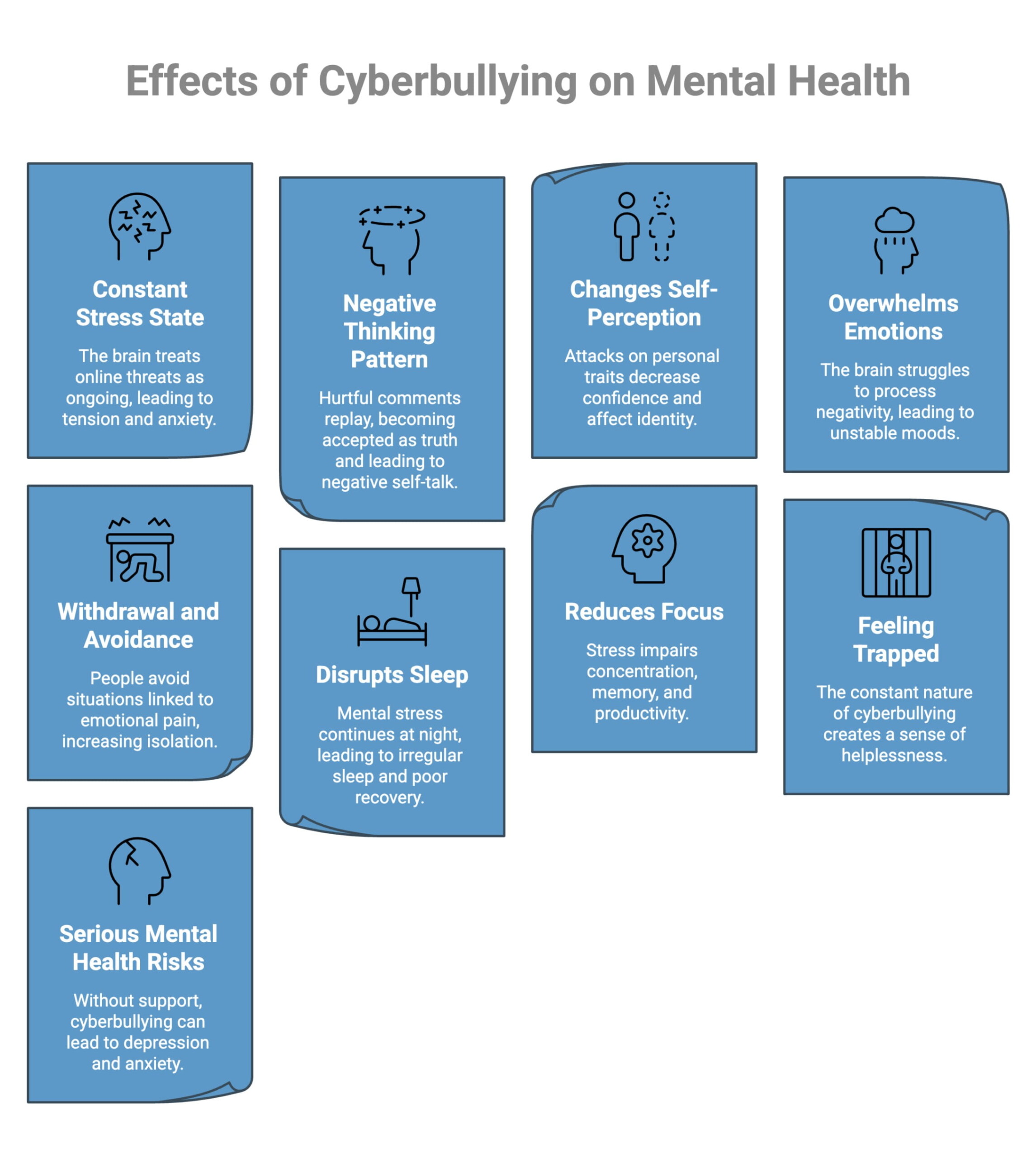
Cyberbullying affects mental health by changing how the brain reacts to stress, how a person thinks about themselves, and how they behave daily. It’s not just emotional; it becomes psychological and even physical over time.
Here’s how it actually affects someone step by step:
1. It Keeps The Brain In A Constant Stress State
When someone is repeatedly targeted online, the brain begins to treat it as an ongoing threat.
- The body stays alert even when nothing is happening
- The person starts expecting more negative messages
- Relaxing becomes difficult
This leads to constant tension and anxiety, even during normal daily activities.
2. It Builds A Negative Thinking Pattern
Cyberbullying messages do not just disappear after being seen. They repeat in the mind.
- Hurtful comments replay over and over
- The brain starts accepting them as true
- Self-talk becomes more negative
Over time, this creates a habit of thinking negatively about oneself without realizing it.
3. It Changes How A Person Sees Themselves
Many cyberbullying attacks focus on personal traits such as appearance or personality.
- The person starts questioning their worth
- Confidence slowly decreases
- They may begin to define themselves through bullying
This affects identity, not just mood.
4. It Overwhelms Emotions
The brain has a limit to how much stress and negativity it can process.
- Emotions build up without release
- Small situations trigger strong reactions
- Mood becomes unstable
This is why victims may feel sudden sadness, anger, or frustration without a clear reason.
5. It Leads To Withdrawal And Avoidance
To reduce emotional pain, people start avoiding situations linked to it.
- Avoiding social media or messages
- Avoiding friends, school, or conversations
- Keeping feelings to themselves
While this feels safer in the moment, it increases isolation over time.
6. It Disrupts Sleep And Recovery
Mental stress does not stop when the day ends.
- Overthinking continues at night
- Sleep becomes irregular or of poor quality
- The mind does not fully rest
Lack of sleep then makes anxiety, mood, and focus worse the next day.
7. It Reduces Focus And Performance
When the brain is dealing with stress, it cannot function at full capacity.
- Difficulty concentrating
- Reduced memory and clarity
- Lower productivity in school or work
This often creates a cycle where poor performance adds more stress.
8. It Creates A Feeling Of Being Trapped
Cyberbullying can happen anytime and anywhere.
- There is no clear break from it
- Content can spread quickly and repeatedly
- The person feels like it will not stop
This leads to a sense of helplessness and loss of control.
9. It Can Lead To Serious Mental Health Risks
If the situation continues without support, the impact becomes more severe.
- Persistent sadness or depression
- Intense anxiety
- Thoughts of self-harm in extreme cases
This is why early support and intervention are important.
Cyberbullying affects mental health by keeping the mind under constant pressure, shaping negative thoughts, and slowly reducing emotional stability and self-worth. The longer it continues, the deeper the impact becomes.
Looking for practical ways to manage stress and cope with challenges like cyberbullying? Check out The StressLess Podcast by Total Life Counseling. Jim and Dana West share weekly tips, advice, and tools on Apple Podcasts, Spotify, and YouTube.
Call for a Complimentary 15 Minute Phone Consultation
Se Habla Español: We have Portuguese and Spanish speaking counselors as well.

How Have Cyberbullying Trends Changed Over Time?
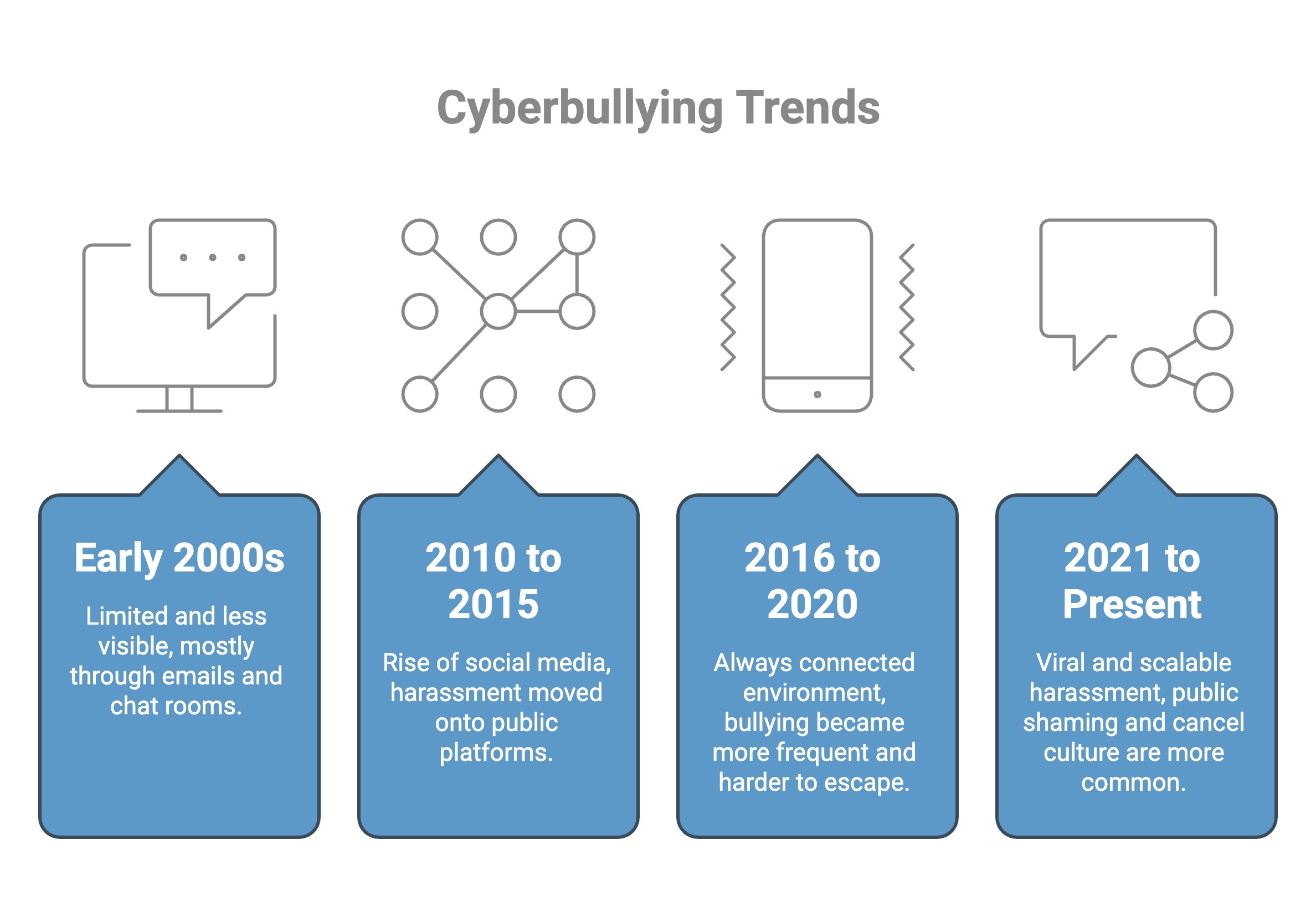
Cyberbullying has not just grown in numbers over time. It has changed in how it happens, how often it occurs, and how deeply it affects people. What started as occasional online harassment has now become a constant and highly visible issue shaped by social media, smartphones, and digital culture.
Early 2000s: Limited and Less Visible
In the early days of the internet, cyberbullying existed but was relatively uncommon and contained.
- It mostly happened through emails, chat rooms, and online forums
- The audience was small, so incidents stayed more private
- There was very little awareness or structured support from schools or parents
2010 to 2015: Rise of Social Media
As social media platforms became mainstream, cyberbullying became more noticeable and widespread.
- Harassment moved onto public platforms like Facebook, Instagram, and Twitter
- Content could be shared quickly, increasing exposure
- Likes and comments encouraged group participation in bullying
2016 to 2020: Always Connected Environment
With the rapid growth of smartphones, cyberbullying became more frequent and harder to escape.
- People were connected all the time, which meant bullying could happen at any hour
- Messaging apps allowed both private and group-based harassment
- Indirect forms of bullying, such as exclusion and rumor spreading, became more common
2021 to Present: Viral and Scalable Harassment
Today, cyberbullying spreads faster and reaches larger audiences than ever before.
- Short-form video platforms increase the chances of content going viral
- Public shaming, online pile-ons, and cancel culture are more common
- New threats include edited content, impersonation, and AI-generated media.
Does Counseling Decrease Cyberbullying?
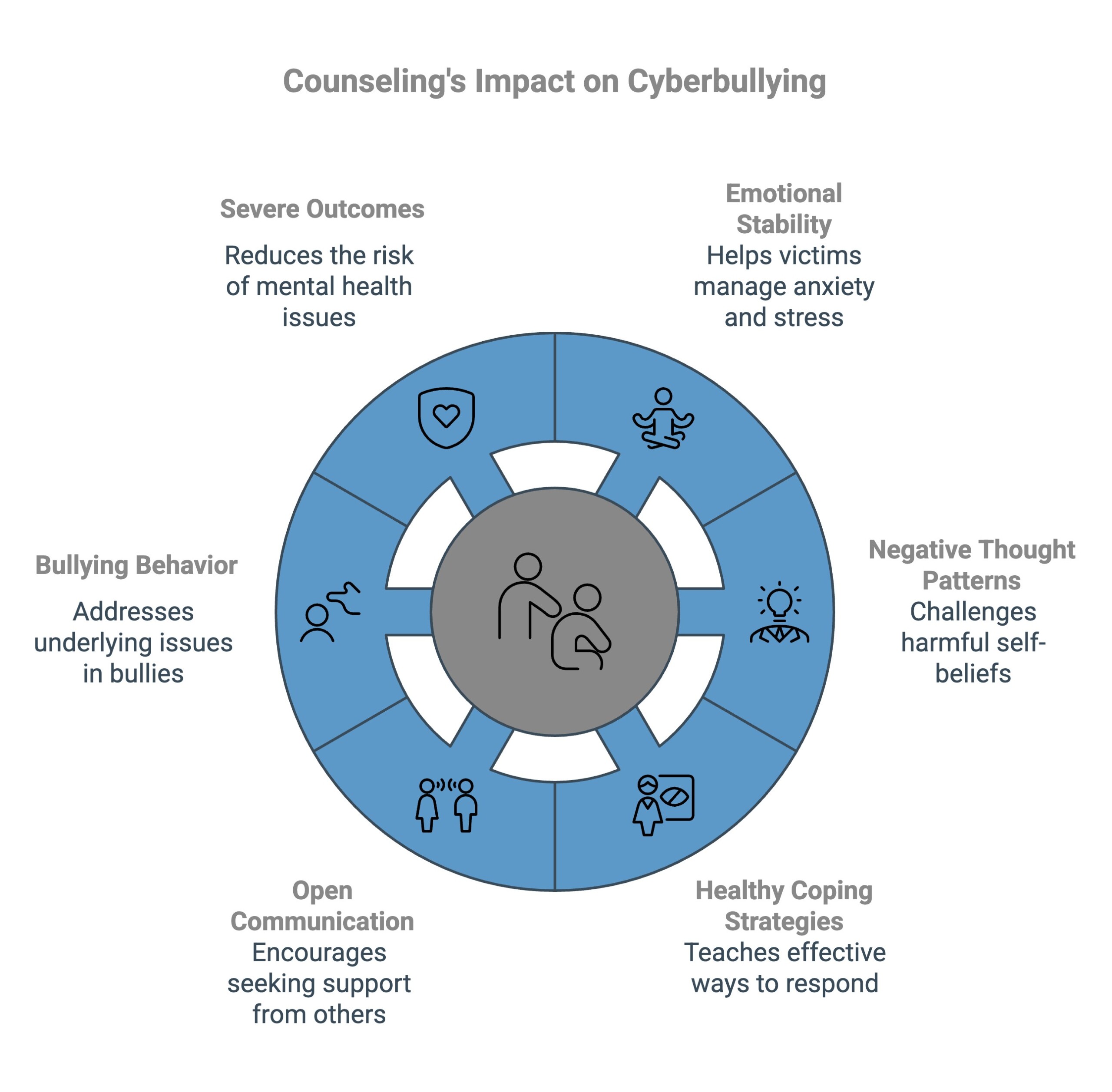
Counseling does not directly stop cyberbullying from happening, but it plays an important role in reducing its impact and preventing it from continuing or escalating.
It helps individuals understand what they are experiencing, build healthier responses, and regain a sense of control over their thoughts and emotions. Over time, this can make cyberbullying less damaging and, in some cases, reduce repeated behavior.
Here is how counseling for cyberbullying helps in a practical way:
- Improves Emotional Stability: Counseling helps victims manage anxiety, stress, and overwhelming emotions, making it easier to cope with ongoing situations.
- Breaks Negative Thought Patterns: It teaches individuals how to recognize and challenge harmful self-beliefs that develop from repeated online harassment.
- Builds Healthy Coping Strategies: People learn when to ignore, block, report, or seek help instead of reacting impulsively or withdrawing completely.
- Encourages Open Communication: Counseling creates a safe space to talk, which reduces isolation and helps individuals seek support from trusted people.
- Addresses Bullying Behavior: For those engaging in cyberbullying, counseling can uncover underlying issues such as anger or insecurity and promote more empathetic behavior.
- Reduces Risk Of Severe Outcomes: Early counseling support can lower the chances of depression, anxiety, and more serious mental health risks developing.
What Types of Counseling Are Effective for Cyberbullying?
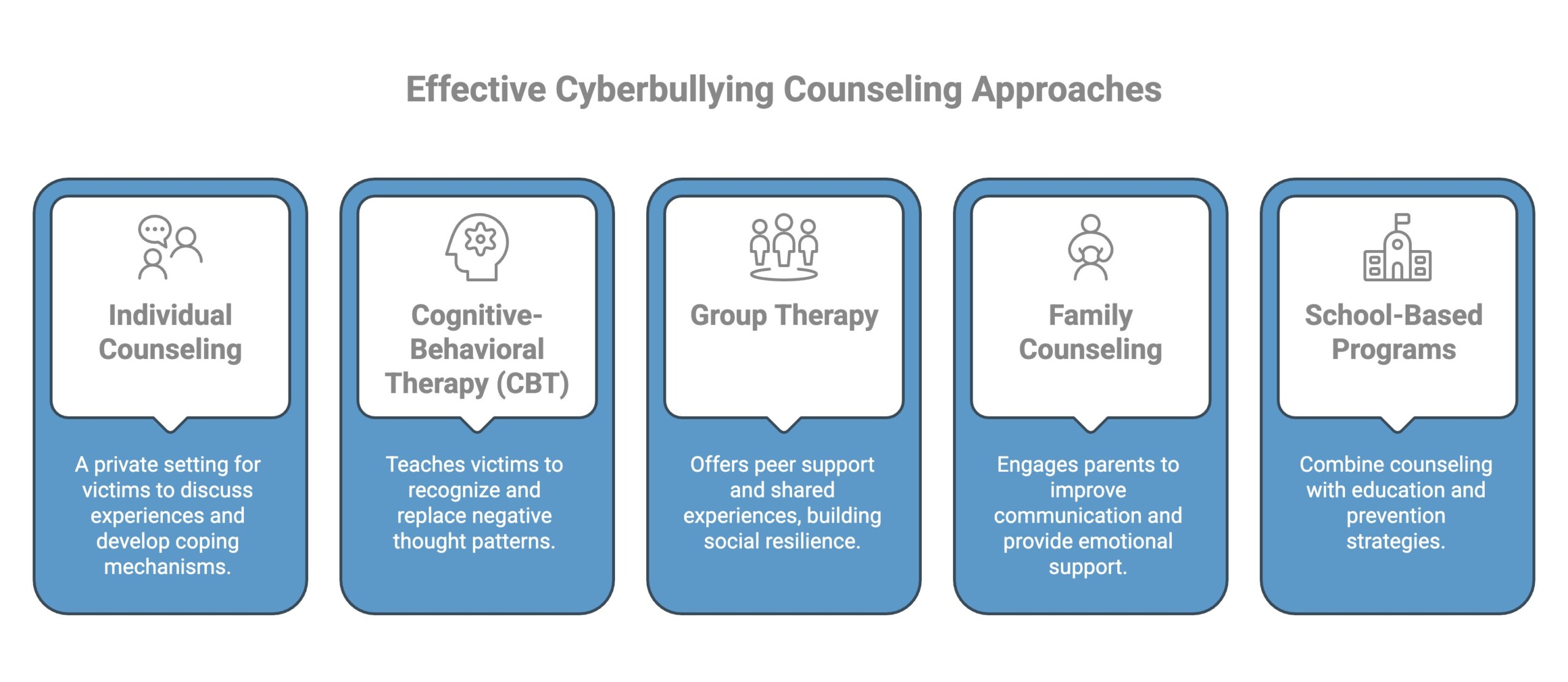
Victims of cyberbullying often face anxiety, depression, low self-esteem, and social withdrawal. Cyberbullying therapy helps individuals process these experiences, manage emotions, and develop practical coping strategies to reduce the impact of online harassment.
Some effective approaches in cyberbullying therapy and how they help:
- Individual counseling: Provides a private setting where victims can discuss their experiences, identify emotional triggers, and develop personalized coping mechanisms.
- Cognitive-behavioral therapy (CBT): Teaches victims to recognize negative thought patterns caused by online harassment and replace them with constructive thinking, reducing stress and emotional reactivity.
- Group therapy: Offers peer support and shared experiences, helping victims realize they are not alone and building social resilience against bullying.
- Family counseling: Engages parents or guardians to improve communication, set healthy boundaries for online activity, and provide emotional support, which strengthens the victim’s safety network.
- School-based programs: Combine counseling with education and prevention strategies, helping victims understand the dynamics of cyberbullying and develop skills to respond effectively.
These therapies work by addressing both the emotional impact and the behavioral consequences of cyberbullying, helping victims regain confidence, improve mental health, and reduce the likelihood of future incidents.
Want to learn more about the types of therapy that can help with cyberbullying stress? Check out our guide on CBT vs DBT Therapy: Which Method Fits Your Needs to see which approach might work best for you.
How Can You Take Action Against Cyberbullying?
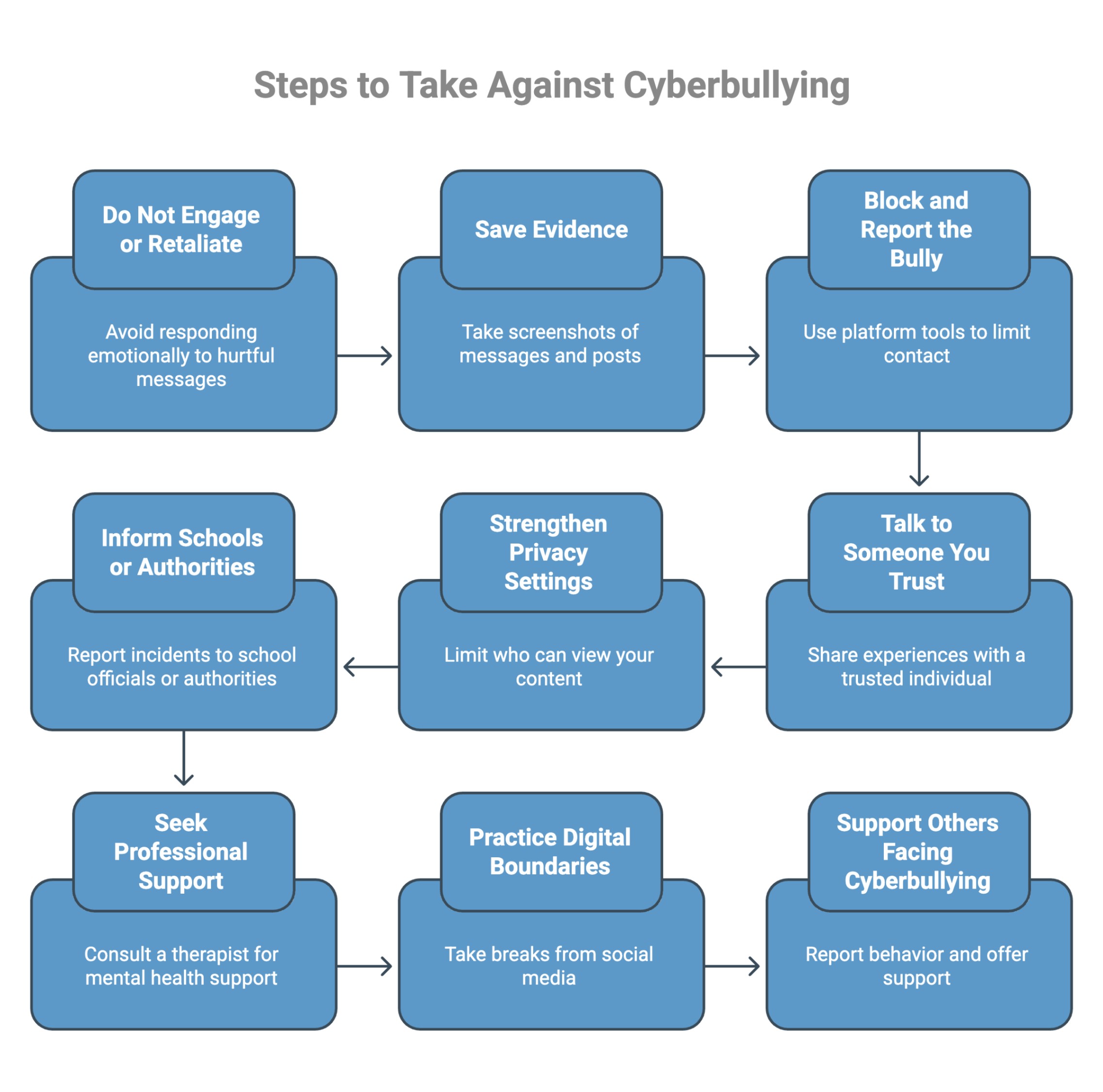
Cyberbullying rarely stops on its own. Taking clear, practical steps early can protect your mental well-being and prevent the situation from escalating. Here’s how to respond effectively:
- Do Not Engage or Retaliate: Responding emotionally can often make things worse. Avoid replying to hurtful messages or comments. Instead, focus on protecting yourself and documenting what’s happening.
- Save Evidence: Take screenshots of messages, posts, usernames, and timestamps. This documentation can be important if you need to report the behavior to schools, platforms, or legal authorities.
- Block and Report the Bully: Most platforms like Instagram, Facebook, and Snapchat offer tools to block users and report abusive behavior. Use these features to limit contact and flag harmful content.
- Talk to Someone You Trust: Whether it’s a parent, teacher, friend, or counselor, sharing what you’re experiencing helps reduce isolation and opens the door to support and guidance.
- Strengthen Privacy Settings: Review your social media privacy settings. Limit who can message you, tag you, or view your content. This can reduce exposure to unwanted interactions.
- Inform Schools or Authorities if Needed: If the cyberbullying involves classmates or escalates into threats, inform school officials or local authorities. Many schools have anti-bullying policies and protocols to handle such cases.
- Seek Professional Support: If cyberbullying is affecting your mental health, consider speaking with a therapist. Professional support can help you process emotions, rebuild confidence, and develop coping strategies.
- Practice Digital Boundaries: Take breaks from social media if needed. Logging off, muting notifications, or limiting screen time can give you space to recover emotionally.
- Support Others Facing Cyberbullying: If you see someone else being targeted, avoid joining in or staying silent. Report the behavior and offer support to the victim. A small action can make a big difference.
Taking action may feel difficult at first, but these steps can help you regain control, protect your well-being, and create a safer online experience.
How Can Total Life Counseling Help Victims of Cyberbullying?

Dealing with cyberbullying can feel overwhelming, but you don’t have to face it alone. At Total Life Counseling, we help teens, adults, and families manage the emotional and social impact of online harassment and rebuild confidence.
Our services include:
- Individual counseling to work through anxiety, depression, and stress caused by cyberbullying
- Family counseling to improve communication and create a supportive home environment
- Group therapy and social skills programs for teens to connect with peers and build resilience
- Specialized therapies like trauma therapy, anger management, and coping skill development
We offer support both in-person across multiple Florida locations, including Orlando, Winter Park, Lake Mary, Clermont, Windermere, Kissimmee, and surrounding areas, as well as online, making it easy to get help wherever you are. With us, victims of cyberbullying can learn to manage their emotions, regain control, and feel safe again online.
Final Words
Cyberbullying can affect anyone, but understanding it is the first step to taking control. Knowing the signs, the risks on social media, and how it impacts mental health helps us respond better.
Counseling and therapy give victims the tools to cope, heal, and build resilience. Whether through individual sessions, family support, or group programs, professional help makes a real difference.
By staying aware, seeking support, and taking action early, we can reduce the impact of cyberbullying and help victims regain confidence and safety online.
Licensed Counselors & Therapists
Meet Our Team of Certified & Experienced Professionals
Total Life Counseling Center consists of Licensed Counselors, Masters Level Therapists, Espanol Counselors, Licensed Mental Health Counselors, Business Coaches, Image Enhancement Coaches who provide counseling for emotional, mental, physical and spiritual care including marriage, individual, family, substance abuse and more. Our team of certified and experienced professionals, dedicated to serving a comprehensive spectrum of mental health and relationship issues such as couples, women and men’s issues, children and teens with oppositional defiance, video game addiction, ADHD, ASD, anxiety, depression, and trauma survivors, is here to support and guide you through your journey towards healing and navigating life transitions. This approach not only enhances the effectiveness of the counseling provided but also builds trust within the community and among potential clients, who may be seeking support.
We offer next level counselors specialized in areas such as relationships, video game & drug/alcohol addictions, abuse, trauma, depression, and ADHD. Our Therapists are EMDR (eye movement desensitization) trauma therapy trained, cognitive behavioral therapy, specialize in ADHD and Oppositional Defiant Children, and are also professional Gottman method marriage couples counselors to give the best results to couples and to provide the best comprehensive spectrum of mental health and relationship care for our clients.
Struggling with Anger? We offer 8 hour anger management group therapy!
Discounted Rates and the president of Total Life Counseling Center Jim West does not want to turn people away and we have counselors at various levels of experience at a discounted rate that are trained by our next level counselors!

Jim West
MA, LICENSED MENTAL HEALTH COUNSELOR, national certified counselor
President, Counselor, Guest Speaker, Author, Social Skills, ADHD, ODD, ASD, children, teens, and more!

Dana West
MSW, Licensed clinical social worker
Vice President, Counselor, Guest Speaker, Addictions, Trauma, Couples, Abuse, and more!

Mathew Martin
MS, LICENSED MENTAL HEALTH COUNSELOR
Counselor, Coach, Guest Speaker, Marriage, Individual Males, Substance Abuse and more!

Brandon Feinberg
MS, LICENSED MENTAL HEALTH COUNSELOR
Male Counselor, Licensed Mental Health Counselor specializing in ADHD, Asperger Syndrome, Autism Spectrum Disorders, and more!

Lyris Steuber
MS, licesned marriage & family therapist
Counselor, Coach, Marriage & Family, Play Therapy, Divorce, Adolescent and more!

Valerie Ware
Licensed Psychologist and Behavioral Specialist
Psychological Evaluator, Autism, ADHD, Learning Disabilities, Anxiety, Gifted, Career Pathways, and emotional assessments.

Gemima McMahon
MA, LICENSED MENTAL HEALTH COUNSELOR
Licensed Mental Health Counselor specializing in Women’s issues, Trauma, Anxiety, Depression, Cutting, Couples, Children and Teenagers and more!

Audrey DeBruler
MS, LMHC, Licensed Mental Health Counselor
Children, Adolescents, Young Adults, Faith Based Counseling, Trauma Recovery, Anxiety and more!

David Duany
MA, LICENSED MENTAL HEALTH COUNSELOR
Licensed Mental Health Counselor specializing in ADHD, Social Skills, and Anger Management counseling for children, young adults, and families.

Katherine Waldheim
MS, Registered Mental Health Counseling Intern
Trauma, anxiety, couples counseling, and child & adolescent counseling services and more!

Sarah Dornas Albuquerque
MS – Registered Mental Health Counselor Intern
Anxiety, Depression, Children, Teens, Young Adults, English, Spanish and Portugues and Adult Counseling

Frequently Asked Questions
Which countries or regions have the highest rates of cyberbullying?
Cyberbullying is a major problem worldwide, particularly in the United States, where high school students report a higher risk online. Social media companies and public health agencies monitor harmful content affecting youth and LGBTQ students.
How does frequent social media use relate to cyberbullying statistics?
Frequent use of electronic communication increases exposure to types of cyberbullying. Internet users, especially high school students, face a higher risk from text messages, online gaming, and pieces of content targeting physical appearance or hate speech.
What are the rates of depression from cyberbullying?
Victims of cyberbullying often develop mental health issues, including depression (47%) and anxiety (53%). Female students, LGBTQ students, and youth experiencing electronic bullying are at higher risk, highlighting an urgent need for suicide prevention.
What percentage of people report cyberbullying?
About 50% of high school students report being targets of cyberbullying. Female students, LGBTQ students, Hispanic teens, and black teens face a higher risk, emphasizing the most common forms of bullying in the online world.
Is the cyberbullying rate increasing?
Cyberbullying rates are rising globally, especially among internet users and high school students. Increased use of electronic communication, social media, online gaming, and harmful content has led to a higher risk for youth in the online world.
How much of cyberbullying is on social media?
The majority of cyberbullying occurs on social media platforms. Social media companies report that the most common form of cyberbullying includes hate speech, text messages, and harmful content shared through posts, targeting physical appearance.
How prevalent is cyberbullying in today’s digital age?
Cyberbullying is a major problem affecting internet users, high school students, and youth globally. Types of cyberbullying target female students, LGBTQ students, and academic performance, creating mental health issues and an urgent need for intervention.
What are the statistics of cyberbullying on social media in 2026?
In 2026, cyberbullying on social media remains widespread. Half of LGBTQ students face electronic bullying. The most common types target physical appearance or use text messages, highlighting harmful content and the urgent need for suicide prevention.
What are the latest cyberbullying statistics for 2024 or 2025?
Recent cyberbullying statistics show that around 58% of students have experienced online harassment, about 33% were cyberbullied in the past month, and nearly half of teens report being targeted on social media platforms.
Filed in: Blog, Cyber Bullying, Jim West
Share This Story, Choose Your Platform!
Total Life Counseling Center consists of Licensed Counselors, masters level therapists, Español counselors, Licensed Mental Health Counselors, business coaches, and image enhancement coaches who provide counseling for emotional, mental, physical and spiritual care including marriage, individual, family, substance abuse and more. TLC’s family, trauma and marriage experts have been interviewed on National and Local TV/Radio over 200 times for their expert advice on Fox News, OWN, WETV, ABC’s Medical Minute and more. Our skilled counselors are relational, approachable and specialists providing therapy services in the Central Florida area including: Orlando, Winter Park, MetroWest, Windermere, Dr. Phillips, East Orlando, Lake Mary, and Clermont, Boca Raton Florida, and Dallas, TX.
About the Author: Jim West