

Struggling to Find ADHD Activities for Kids That Works?
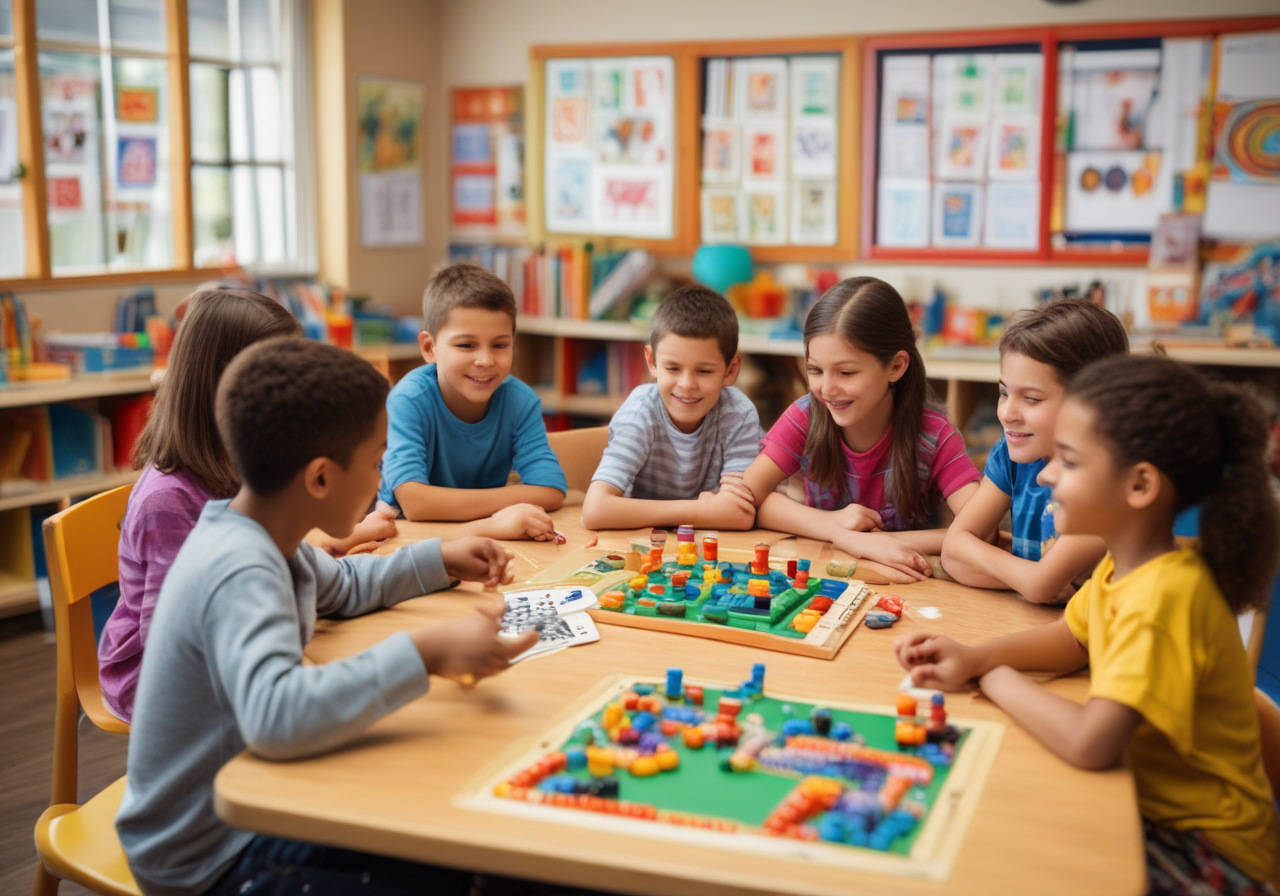
Key Highlights
- ADHD-friendly activities improve focus, impulse control, emotional regulation, and social skills.
- Physical activity and ADHD management often work together to support attention and behavior.
- Indoor games and movement activities help children release energy in healthy ways.
- Creative activities encourage emotional expression, confidence, and problem-solving skills.
- Social games teach turn-taking, communication, and cooperation among children with ADHD.
- Short, engaging activities often work better than long or highly structured tasks.
- Parents can track progress through improved focus, behavior, and emotional regulation.
- Consistent practice and positive support help children build lasting skills and confidence.
Many parents and caregivers struggle to keep children engaged when attention, impulsivity, and high energy levels get in the way. Simple daily tasks, learning routines, and even playtime can quickly turn overwhelming, leading to frustration for both the child and the parent.
The good news is that the right ADHD activities for kids can make a meaningful difference. With structured yet fun games, children can improve focus, regulate emotions, and release energy in a positive way without feeling pressured or restricted.
This blog explores a wide range of ADHD-friendly activities, including movement games, calming exercises, focus-building tasks, creative expression ideas, and social skill activities. Each section is designed to help you choose practical, easy-to-apply strategies for everyday use.
Here are some fun ADHD-friendly games and activities designed for elementary-age children. These activities support attention, self-regulation, impulse control, and emotional expression, while also being fun and engaging.
What Makes an Activity ADHD-Friendly?
Not every activity works well for children with ADHD. The best ADHD activities for kids are engaging, easy to follow, and provide opportunities for movement, creativity, or problem-solving.
ADHD-friendly activities often:
- Keep instructions short and simple.
- Include movement or hands-on participation.
- Offer immediate feedback or rewards.
- Encourage focus without creating frustration.
- Match a child’s interests and energy level.
Physical activity and ADHD often go hand in hand because movement helps many children release energy and improve concentration. Whether you choose games for adhd kids like calming activities for ADHD, movement games, or creative exercises, the goal is to help children build confidence while having fun.
The most effective activities for kids with ADHD are the ones they enjoy and want to do repeatedly.
If you would like to learn how social media habits can affect attention, impulsivity, and daily routines, read our guide on How ADHD and Social Media Impact Focus and Behavior.
What Are the Common Symptoms of ADHD in Children and Adults?
According to the Diagnostic and Statistical Manual of Mental Disorders (DSM-5), as defined by the National Institutes of Health, ADHD, including inattentive ADHD, is characterized by persistent patterns of inattention and/or hyperactivity-impulsivity that interfere with functioning or development.
A proper ADHD diagnosis of ADHD includes common symptoms of attention deficit disorder, mood disorders, and attention deficit hyperactivity disorder (ADHD symptoms) and signs of ADHD in children, including symptoms of inattentive type ADHD such as impulsivity, hyperactivity, and difficulty focusing, which are often noted by healthcare providers during assessments.
ADHD, as a medical condition and neurodevelopmental disorder, can also present diagnostic criteria in challenges for adults with time management, organization, and attention, impacting overall brain development. Both groups often struggle with forgetfulness and task prioritization in their daily activities.
Recognizing these symptoms of ADHD and the type of ADHD can enhance support and management strategies for ADHD in daily life. There are three main types of ADHD: predominantly inattentive presentation, predominantly hyperactive-impulsive presentation, and combined presentation, each characterized by distinct behaviors and challenges that affect daily functioning
ADHD treatment often involves a multifaceted approach that includes behavioral therapy, psychoeducation, and medication to help manage symptoms and improve overall functioning.
1. Movement-Based Games
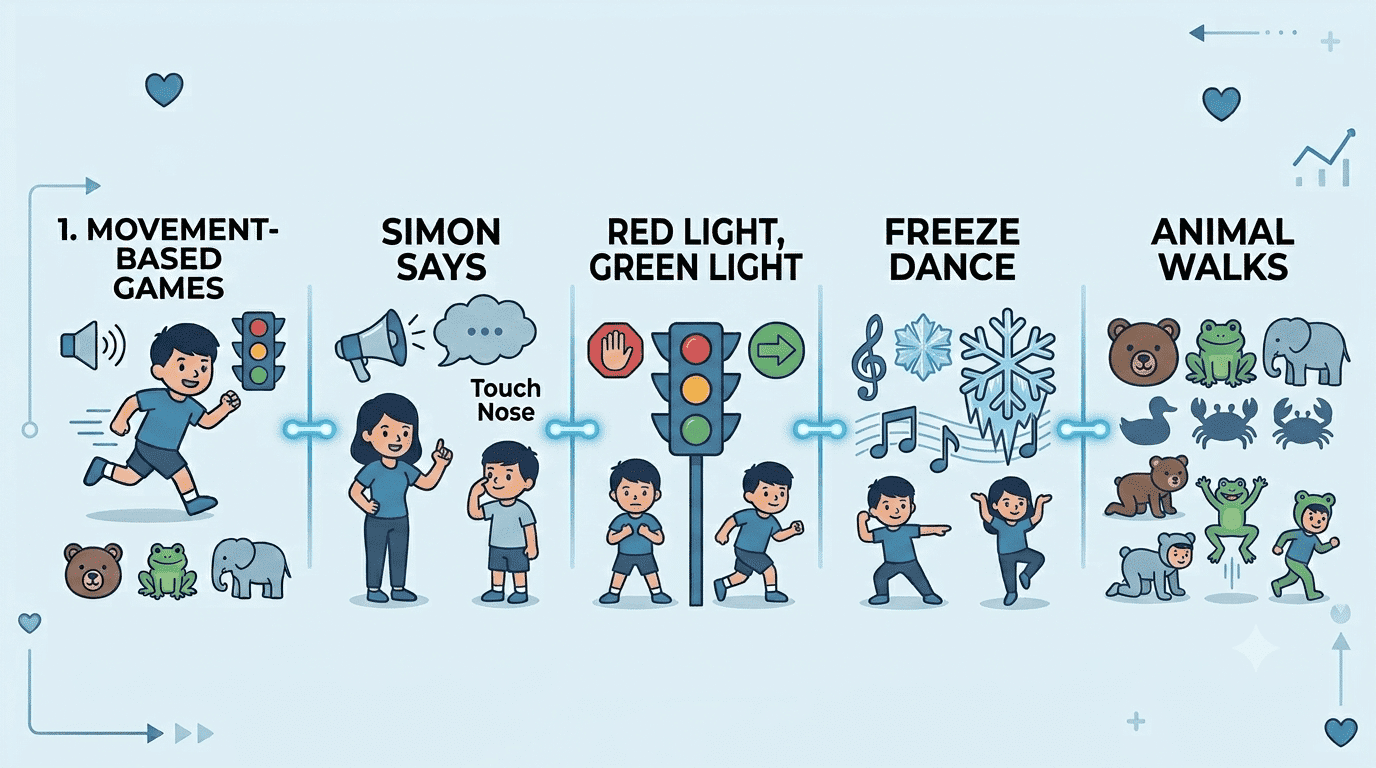
Before diving into individual movement activities, it’s important to understand how physical play supports impulse control, attention, and coordination. These games channel excess energy into structured actions that build listening skills and self-regulation in an engaging way.
Simon Says
Impulse control and listening skills are crucial aspects of a child’s development that younger children with ADHD, or as part of ADHD, may struggle with, often leading to behavior problems in young adults.
Teaching these skills can be facilitated through engaging activities like playing games that require turn-taking, following instructions, and active listening, alongside parent training in special education strategies.
By practicing impulse control, children learn to think before acting, make better decisions, and regulate their emotions effectively. Improving listening skills helps children understand and process information better, enhancing their communication abilities and academic performance.
Encouraging activities that promote these skills from a young age can have long-lasting positive effects on a child’s social and emotional development.
Red Light, Green Light
Learning to stop and start on command is vital for developing self-regulation. This skill helps individuals control impulses and behaviors, crucial for managing emotions, focusing, and making thoughtful decisions. Activities that promote this ability improve attention span, impulse control, and self-discipline, benefiting both personal and professional life.
For children, this practice fosters essential executive functioning skills necessary for academic success and social interactions. For adults, it enhances productivity, stress management, and relationships. Incorporating exercises that emphasize stopping and starting can enhance self-control across all ages.
Freeze Dance
“Dance to music and freeze when it stops” is not only a fun activity but also a great way to encourage motor control and attention in children. This game promotes physical coordination as kids need to move their bodies in time with the music and then stop abruptly when it ends.
It helps them develop a sense of rhythm, balance, and spatial awareness. Additionally, the element of freezing requires focus and concentration, enhancing their attention span and self-regulation skills. This interactive game can be beneficial for both physical and cognitive development in young learners.
Animal Walks
Incorporating animal movements like bear crawl, crab walk, and bunny hop into adhd and physical activities can be highly beneficial for sensory integration. These movements not only engage the muscles but also stimulate the senses, providing valuable sensory input to the brain.
Activities that mimic animal movements can help improve coordination, balance, and body awareness. They are particularly effective for children with sensory processing issues or individuals seeking sensory stimulation. Additionally, these exercises offer a fun and engaging way to promote physical fitness and overall well-being.
2. Mindfulness & Calm-Down Activities
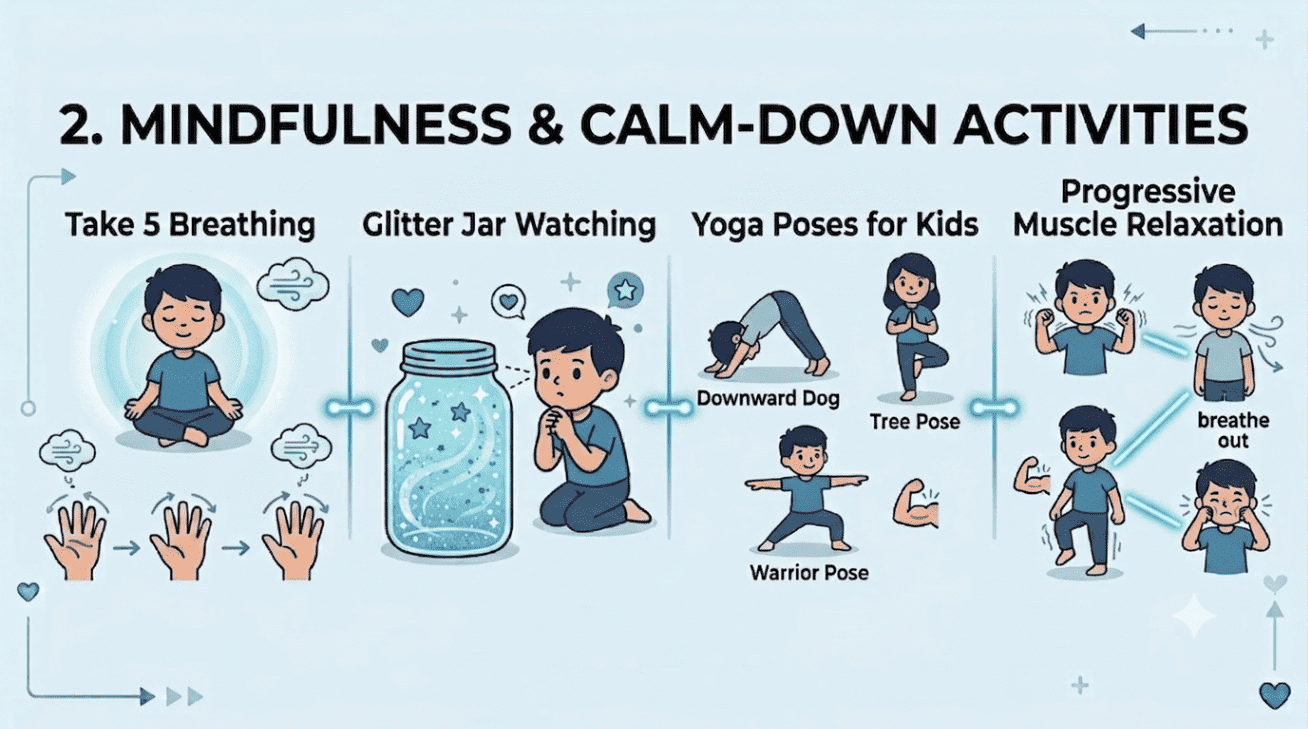
After high-energy movement, children often need guided strategies to settle their bodies and emotions. The following calming techniques help shift focus inward, supporting relaxation, emotional regulation, and improved attention through gentle, structured mindfulness practices.
Take 5 Breathing
Tracing your hand while focusing on your breath can be a simple yet effective mindfulness exercise. As you move up and down each finger, take slow, deep breaths in and out, allowing yourself to fully concentrate on the sensation of your fingers being traced and the rhythm of your breathing.
This practice can help center your mind, reduce stress, and bring a sense of calmness to your body. Additionally, incorporating this mindful activity into your daily routine can promote relaxation and enhance your overall well-being.
Glitter Jar Watching
Observing the mesmerizing effect of shaking a jar filled with glitter and water and then watching it settle can be a calming and grounding experience. As you shake the jar, the glitter swirls around in a dance-like motion, reflecting light and creating a beautiful spectacle.
Taking deep, slow breaths while watching the glitter gradually settle back to the bottom can help promote relaxation and mindfulness. This simple activity is often used as a mindfulness exercise to bring focus to the present moment and soothe the mind amidst chaos or stress.
Children with ADHD are more prone to strong, intense feelings. The gentle movement of the glitter mimics the thoughts in our minds settling down, allowing for a moment of peace and clarity. Next time you’re feeling overwhelmed, try this visual meditation technique to reset and find inner calm.
Yoga Poses for Kids
Yoga can be a powerful tool for relaxation and focus, especially during times of stress or anxiety. Using cards or videos to guide simple yoga poses can be an effective way to calm the mind and center your focus. Poses such as Child’s Pose, Cat-Cow Stretch, and Legs Up the Wall are great for promoting relaxation and grounding energy.
Incorporating deep breathing exercises along with these poses can further enhance the calming effect. Whether you prefer following along with yoga cards that outline the poses step by step or watching instructional videos online, incorporating these practices into your routine can help create a sense of peace and mindfulness for a child with ADHD.
Progressive Muscle Relaxation
Tensing and relaxing different body parts can enhance the mind-body connection and release tension in children with ADHD. Start from your toes, tensing each part before gradually releasing the tension. Notice the relaxation spreading through your feet, then move to your calves, thighs, buttocks, abdomen, chest, arms, shoulders, neck, and face. Pay attention to sensations like warmth or lightness in the muscles without judgment, allowing yourself to fully relax.
3. Focus and Memory Games
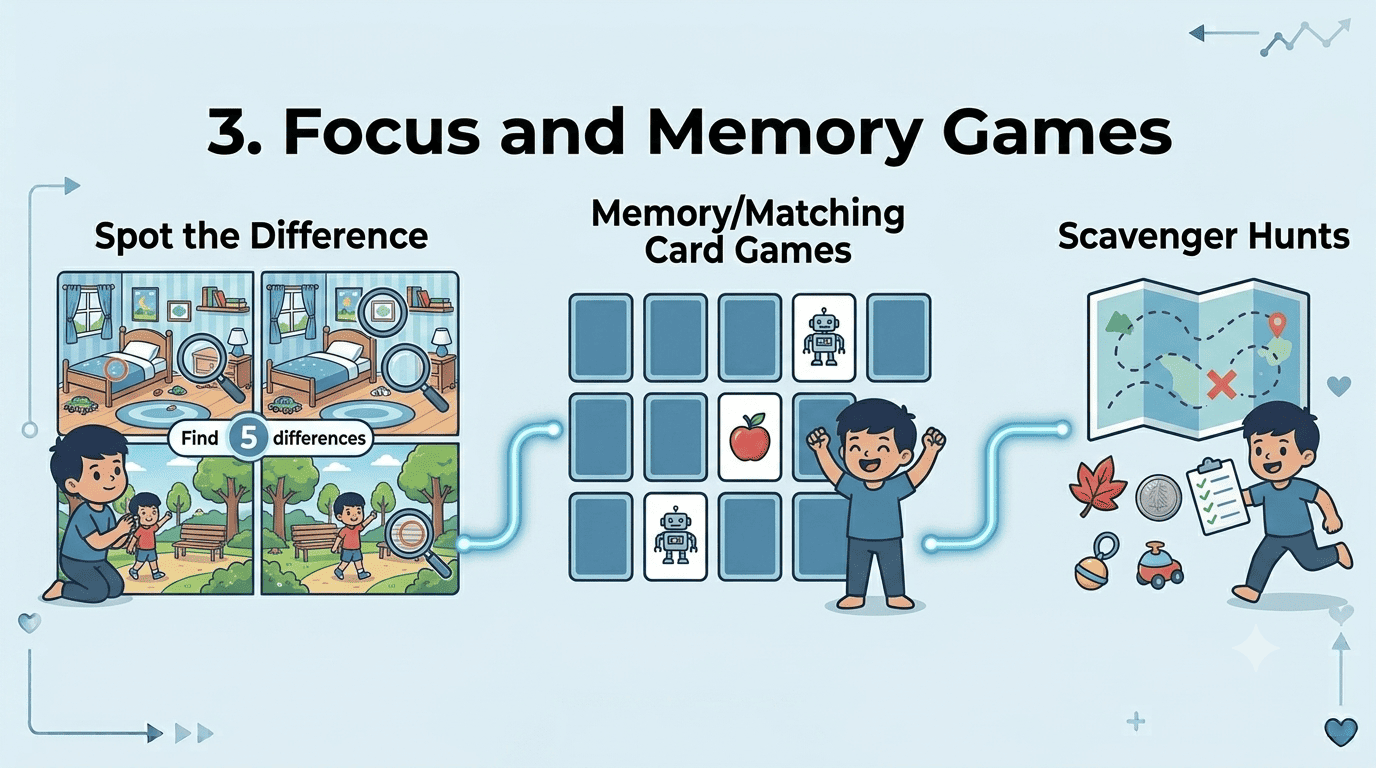
Once children are calm and regulated, attention can be redirected toward cognitive engagement. These games strengthen working memory, visual focus, and sustained attention by encouraging children to observe carefully, recall information, and follow structured patterns.
Spot the Difference
Visual games that aim to enhance attention to detail are not only entertaining but also beneficial for cognitive development activities for adhd kids. These games can help individuals sharpen their observation skills, improve focus, and enhance visual memory.
One example of such a game is spot the difference, where players have to identify variances between two seemingly identical images. This activity requires keen attention to detail and the ability to quickly discern subtle differences.
Another popular visual game is puzzles, which come in various forms such as jigsaw puzzles or logic puzzles. Working on puzzles challenges the brain to analyze patterns, shapes, and colors, thus improving attention to detail and problem-solving abilities.
Additionally, activities like hidden object games or optical illusions can also be effective in training the mind to pay close attention to visual cues and details.
Memory/Matching Card Games
Working memory and visual focus are essential cognitive functions that play a crucial role in enhancing the quality of life in our daily lives. Improving these functions can enhance productivity, concentration, and overall cognitive performance in children with ADHD, including through the most effective treatment methods such as cognitive behavioral therapy techniques that assess the efficacy of treatment in normalizing brain activity.
One effective way to boost working memory is through brain-training exercises that challenge your memory capacity and retention. Activities like puzzles, memory games, and learning new skills can help strengthen your working memory over time. Additionally, practicing mindfulness techniques such as meditation can improve focus and attention span, which are integral components of working memory.
Scavenger Hunts
To enhance sustained attention and cognitive skills, providing clues or visual checklists can be highly beneficial for finding objects. Visual checklists offer a structured way to break down tasks and help individuals focus on completing each step systematically.
By offering hints or clues, you can engage the individual’s problem-solving abilities and encourage them to actively search for the objects based on the provided information. This method not only promotes sustained attention but also sharpens observation skills and enhances memory retention.
Additionally, incorporating interactive elements such as time limits or rewards for successful completion can make the activity more engaging and rewarding, further boosting motivation and concentration levels.
4. Creative Expression Activities
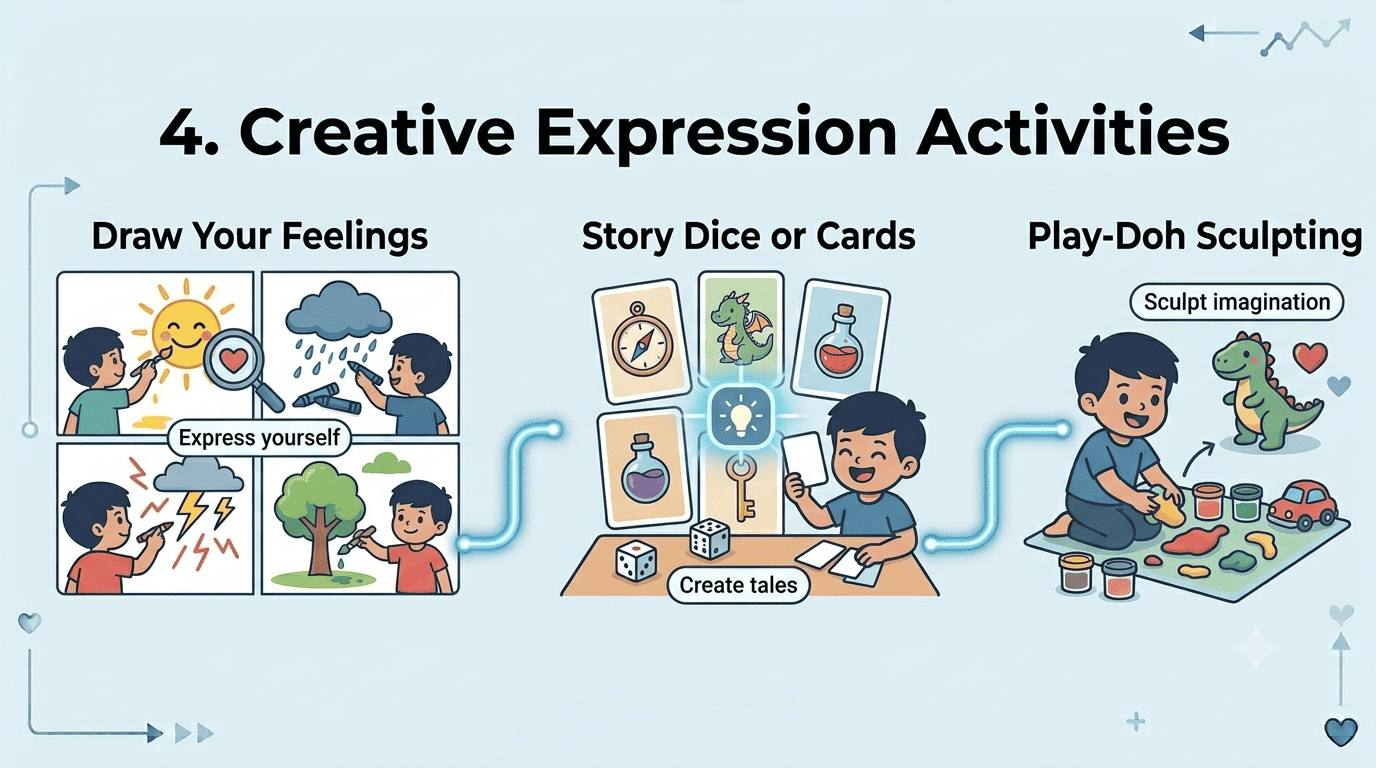
After developing focus skills, creative activities allow children to express thoughts and emotions in imaginative ways. These exercises encourage storytelling, sensory exploration, and emotional release, helping children communicate feelings while building creativity and confidence.
Draw Your Feelings
Externalizing emotions and expanding emotional vocabulary are crucial aspects of emotional intelligence and well-being. By expressing our emotions outwardly, whether through writing, art, or talking to others, we can gain a deeper understanding of our feelings and experiences.
This process can help us make sense of our emotions and navigate through them effectively. Children with ADHD may struggle to express their emotions.
Practicing mindfulness, journaling, engaging in creative activities, or seeking therapy are some effective ways to externalize emotions and expand emotional vocabulary. These practices empower individuals to develop a healthier relationship with their emotions and cultivate emotional resilience.
Story Dice or Cards
Engaging in creative storytelling by rolling dice or drawing cards with pictures is a fantastic way to spark imagination and develop narrative skills. This activity can be particularly beneficial for children as it encourages them to think outside the box and construct unique stories based on the visuals they encounter.
By incorporating elements of chance through dice rolls or card draws, storytellers are prompted to weave unexpected twists and turns into their narratives, fostering creativity and spontaneity. Furthermore, this interactive storytelling method can be a fun and collaborative way for individuals to come together, share ideas, and build upon each other’s stories in a playful and imaginative manner.
Whether used as a learning tool in educational settings or as a recreational activity among friends and family, rolling dice or drawing cards with pictures offers endless possibilities for creating captivating and original tales.
Play-Doh Sculpting
Engaging in soothing tactile activities not only sparks creativity but also serves as an effective stress-relief technique. These activities involve using your sense of touch to create or interact with different textures, materials, or objects. Tactile activities such as sculpting with clay, knitting, coloring intricate patterns, or playing with sensory toys can help calm the mind and reduce anxiety levels.
The act of physically engaging with these materials can be meditative and provide a sense of relaxation. Furthermore, these activities can stimulate the brain and encourage creative thinking, making them beneficial for both mental well-being and artistic expression.
Incorporating tactile activities into your daily routine can be a simple yet powerful way to unwind and channel your inner creativity while promoting overall relaxation.
5. Turn-Taking and Social Skill Games
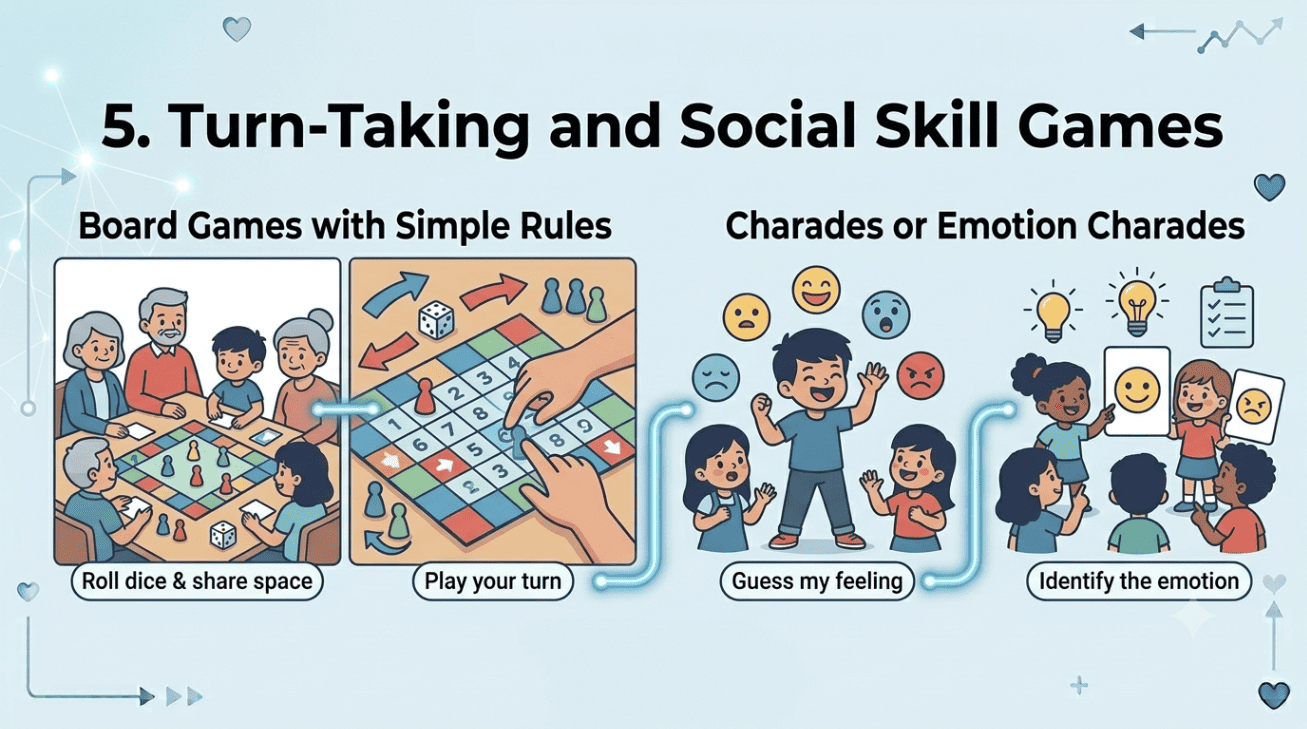
To complete the learning cycle, social games help children apply self-regulation in group settings. These activities reinforce patience, cooperation, and empathy, allowing children to practice real-world interaction skills through structured play and shared rules.
Board Games with Simple Rules
Playing board games such as Connect 4, Uno, and Guess Who can be a fun way to practice turn-taking and develop frustration tolerance in both children and adults. These games require players to take turns, teaching them patience and the importance of waiting for their chance to play.
Additionally, when faced with setbacks or losses during the game, players can learn how to manage their emotions and build resilience. By engaging in these activities, individuals can enhance their social skills, strategic thinking, and emotional regulation while having an enjoyable time with friends and family.
Charades or Emotion Charades
Engaging in activities that involve acting out feelings, animals, or objects can be a fun and effective way to develop body awareness and empathy. By embodying different emotions or mimicking animal movements, individuals can deepen their understanding of non-verbal communication cues and enhance their ability to empathize with others.
This practice encourages individuals to express themselves physically and interpret the emotions of those around them, fostering stronger interpersonal connections and emotional intelligence. Additionally, incorporating elements of role-playing can promote creativity and imagination, allowing participants to explore different perspectives and experiences in a safe and playful environment.
Overall, acting out feelings, animals, or objects is a valuable exercise that not only strengthens self-awareness but also cultivates empathy and understanding towards others.
Call for a Complimentary 15 Minute Phone Consultation
Se Habla Español: We have Portuguese and Spanish speaking counselors as well.

How Can Parents Tell if an Activity Is Working?
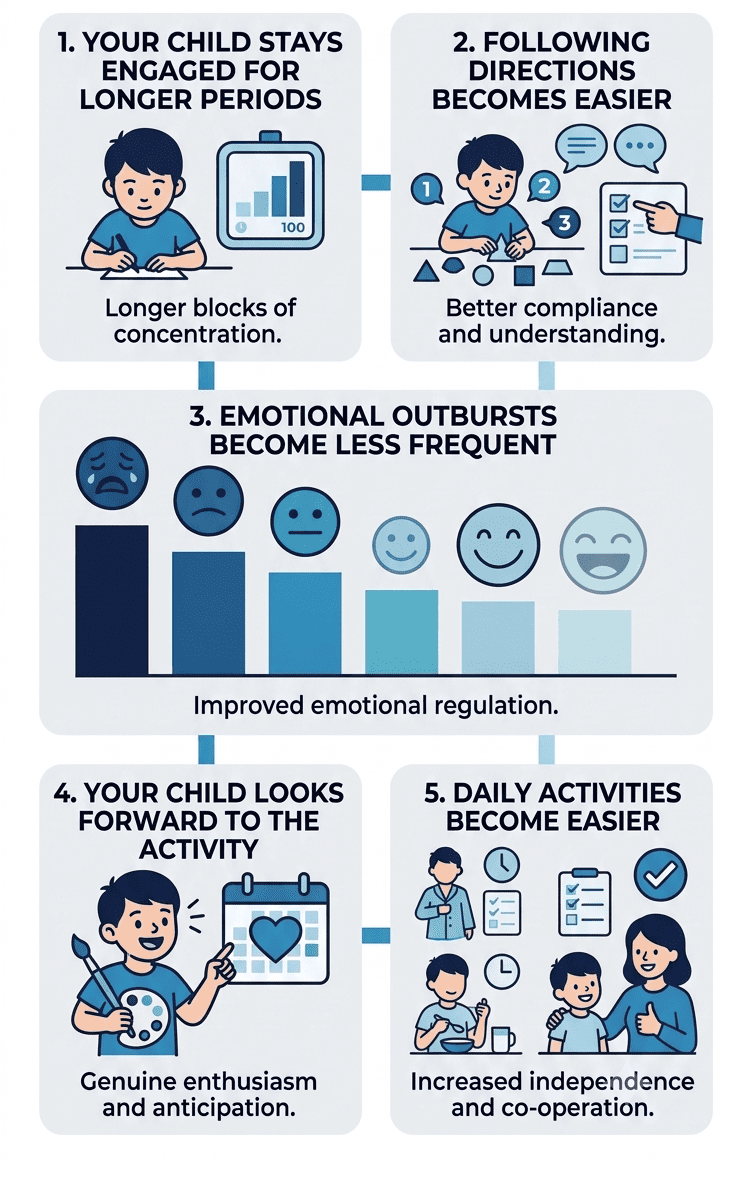
Every child responds differently to ADHD games for kids and other activities, so progress may look different from one child to another. Instead of looking for immediate changes, parents should pay attention to small improvements that happen over time.
1. Your Child Stays Engaged for Longer Periods
Many children with ADHD have difficulty staying focused on one task for an extended period. If your child begins spending a few extra minutes participating in activities for kids with ADHD without becoming frustrated or distracted, it may be a sign that the activity is helping improve attention and concentration.
2. Following Directions Becomes Easier
Some children may initially need frequent reminders or repeated instructions. Over time, you may notice your child following steps more independently or completing activities with less assistance. This can indicate improvements in listening skills and self-regulation.
3. Emotional Outbursts Become Less Frequent
Calming activities for ADHD can help children manage strong emotions and frustration. If your child recovers more quickly from mistakes, handles losing a game better, or becomes less upset during challenging tasks, the activity may be supporting emotional regulation skills.
4. Your Child Looks Forward to the Activity
Children often show what works by asking to play again. When a child willingly participates or becomes excited about a particular game or exercise, it usually means the activity feels enjoyable rather than stressful. This can help build consistency and long-term success.
5. Daily Activities Become Easier
Sometimes the benefits appear outside the activity itself. Parents may notice better listening at home, smoother transitions between tasks, or improved interactions with siblings and friends. Small changes in everyday routines can be meaningful signs that ADHD therapy activities are making a positive impact.
Small changes can often be the best indicator that an activity is working. Whether your child stays focused a little longer, follows instructions more easily, or simply enjoys participating, these improvements can build over time. By consistently using ADHD activities for kids, parents can help support attention, emotional regulation, and confidence in a positive and engaging way.
If you are considering professional support, read Which Therapy Center Has the Best ADHD Therapist? to learn how specialized ADHD therapy can help children build confidence and lasting skills.
What Mistakes Should Parents Avoid?
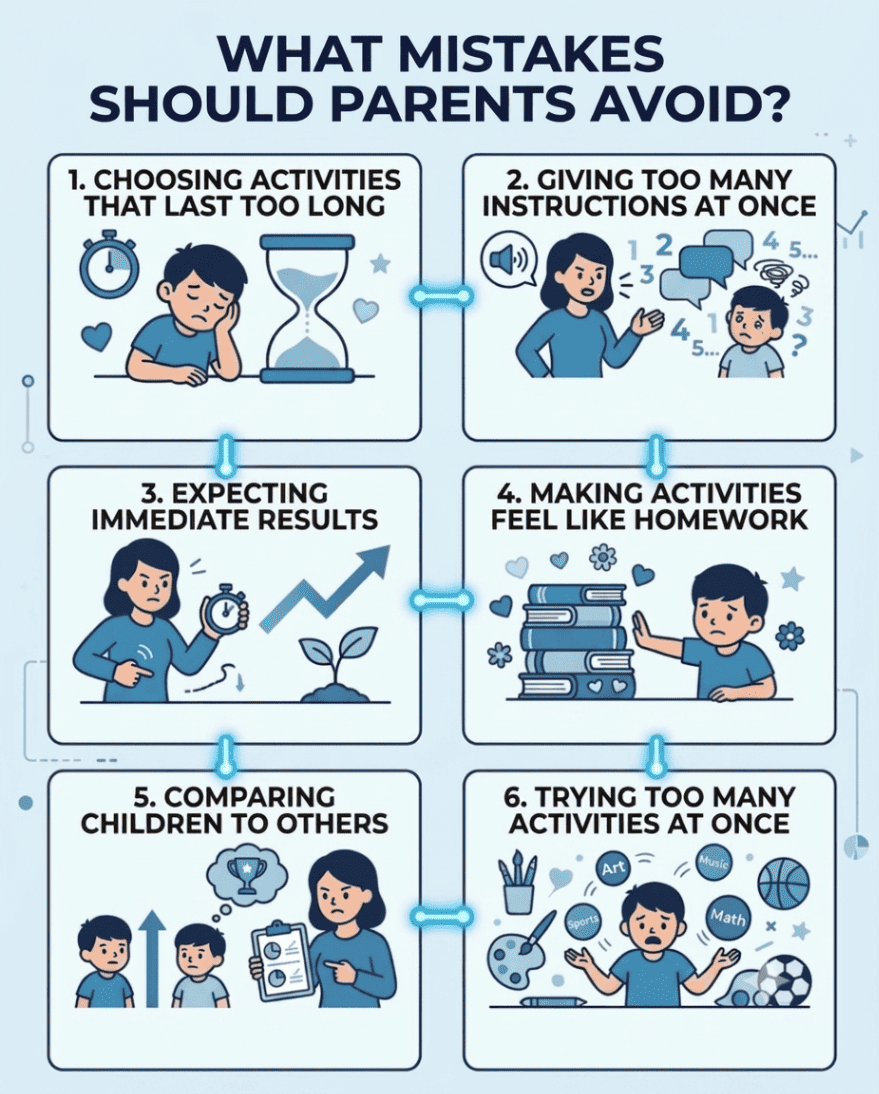
The goal of ADHD activities for kids is to build confidence, encourage participation, and make learning enjoyable. However, certain approaches can make activities feel overwhelming instead of helpful.
1. Choosing Activities That Last Too Long
Children with ADHD often do better with shorter activities that match their attention span. Long sessions can lead to frustration and loss of interest. Breaking games or activities into smaller segments usually keeps children engaged and motivated.
2. Giving Too Many Instructions at Once
Complex directions can feel overwhelming for children with ADHD. Try introducing one or two steps at a time and demonstrating the activity whenever possible. Keeping instructions simple helps children feel successful and reduces frustration.
3. Expecting Immediate Results
Physical activity and ADHD interventions often work gradually. Parents may hope to see instant improvements in focus or behavior, but progress usually happens through consistent practice. Celebrating small victories can help both parents and children stay encouraged.
4. Making Activities Feel Like Homework
Children are more likely to participate when activities feel enjoyable rather than mandatory. Games for kids with ADHD should include fun, movement, creativity, or positive interaction. If an activity starts to feel like another assignment, children may lose interest quickly.
5. Comparing Children to Others
Every child develops skills at their own pace. Some children may respond quickly to indoor activities for ADHD child support, while others need more time and repetition. Focusing on your child’s individual progress helps build confidence and reduces unnecessary pressure.
6. Trying Too Many Activities at Once
Parents sometimes introduce several activities at the same time, hoping for faster results. However, adding too many games or routines can become overwhelming. Starting with one or two activities and building a consistent routine often leads to better results for both children and parents.
There is no perfect activity that works for every child. The key is to keep activities simple, enjoyable, and suited to your child’s individual needs. When parents focus on progress rather than perfection, activities for kids with ADHD can become valuable opportunities for learning, movement, and emotional growth.
How Can Total Life Counseling Help Children With ADHD?
While ADHD activities for kids can support focus, emotional regulation, and social skills, some children may benefit from additional guidance. At Total Life Counseling, our experienced therapists work with children, teens, and families to help manage ADHD symptoms and build practical skills that support success at home, school, and in everyday life.
Our ADHD services may include:
- Individual ADHD counseling to improve focus, attention, and self-regulation.
- Play therapy techniques that help children express emotions and develop coping skills.
- Social skills training to build confidence and improve peer relationships.
- Parent coaching and family support to provide practical strategies at home.
- Behavioral therapy approaches that encourage positive habits and routines.
- Emotional regulation support to help children manage frustration, anxiety, and impulsivity.
- School and academic support strategies to improve organization and classroom success.
Every child experiences ADHD differently, which is why our team creates personalized treatment plans based on each child’s strengths, challenges, and goals.
You do not have to handle ADHD alone. Contact our team today to learn how our experienced counselors can help your child build stronger coping skills, improve confidence, and thrive in everyday life.
Conclusion
Supporting a child with ADHD does not require doing every activity at once. Start with one or two ADHD activities for kids that match your child’s interests and energy level, and practice them consistently throughout the week. Small improvements in focus, emotional regulation, social skills, and confidence can grow over time.
If you would like to continue learning, explore our resources on ADHD symptoms in children, ADHD treatment options, natural support strategies, and parent guidance for ADHD. With the right tools, encouragement, and support, children with ADHD can build skills that help them succeed both at home and at school.
Licensed Counselors & Therapists
Meet Our Team of Certified & Experienced Professionals
Total Life Counseling Center consists of Licensed Counselors, Masters Level Therapists, Espanol Counselors, Licensed Mental Health Counselors, Business Coaches, Image Enhancement Coaches who provide counseling for emotional, mental, physical and spiritual care including marriage, individual, family, substance abuse and more. Our team of certified and experienced professionals, dedicated to serving a comprehensive spectrum of mental health and relationship issues such as couples, women and men’s issues, children and teens with oppositional defiance, video game addiction, ADHD, ASD, anxiety, depression, and trauma survivors, is here to support and guide you through your journey towards healing and navigating life transitions. This approach not only enhances the effectiveness of the counseling provided but also builds trust within the community and among potential clients, who may be seeking support.
We offer next level counselors specialized in areas such as relationships, video game & drug/alcohol addictions, abuse, trauma, depression, and ADHD. Our Therapists are EMDR (eye movement desensitization) trauma therapy trained, cognitive behavioral therapy, specialize in ADHD and Oppositional Defiant Children, and are also professional Gottman method marriage couples counselors to give the best results to couples and to provide the best comprehensive spectrum of mental health and relationship care for our clients.
Struggling with Anger? We offer 8 hour anger management group therapy!
Discounted Rates and the president of Total Life Counseling Center Jim West does not want to turn people away and we have counselors at various levels of experience at a discounted rate that are trained by our next level counselors!

Jim West
MA, LICENSED MENTAL HEALTH COUNSELOR, national certified counselor
President, Counselor, Guest Speaker, Author, Social Skills, ADHD, ODD, ASD, children, teens, and more!

Dana West
MSW, Licensed clinical social worker
Vice President, Counselor, Guest Speaker, Addictions, Trauma, Couples, Abuse, and more!

Mathew Martin
MS, LICENSED MENTAL HEALTH COUNSELOR
Counselor, Coach, Guest Speaker, Marriage, Individual Males, Substance Abuse and more!

Brandon Feinberg
MS, LICENSED MENTAL HEALTH COUNSELOR
Male Counselor, Licensed Mental Health Counselor specializing in ADHD, Asperger Syndrome, Autism Spectrum Disorders, and more!
Lyris Steuber
MS, licesned marriage & family therapist
Counselor, Coach, Marriage & Family, Play Therapy, Divorce, Adolescent and more!

Valerie Ware
Licensed Psychologist and Behavioral Specialist
Psychological Evaluator, Autism, ADHD, Learning Disabilities, Anxiety, Gifted, Career Pathways, and emotional assessments.

Gemima McMahon
MA, LICENSED MENTAL HEALTH COUNSELOR
Licensed Mental Health Counselor specializing in Women’s issues, Trauma, Anxiety, Depression, Cutting, Couples, Children and Teenagers and more!

Audrey DeBruler
MS, LMHC, Licensed Mental Health Counselor
Children, Adolescents, Young Adults, Faith Based Counseling, Trauma Recovery, Anxiety and more!

David Duany
MA, LICENSED MENTAL HEALTH COUNSELOR
Licensed Mental Health Counselor specializing in ADHD, Social Skills, and Anger Management counseling for children, young adults, and families.

Katherine Waldheim
MS, Registered Mental Health Counseling Intern
Trauma, anxiety, couples counseling, and child & adolescent counseling services and more!

Sarah Dornas Albuquerque
MS – Registered Mental Health Counselor Intern
EMDR, Anxiety, Depression, Children, Teens, Young Adults, English, Spanish and Portugues and Adult Counseling

Frequently Asked Questions
How to entertain a bored ADHD child?
Keep activities short, engaging, and hands-on. Movement games, obstacle courses, art projects, scavenger hunts, and sensory activities can help children stay interested while supporting focus, creativity, and emotional regulation.
What are some good activities for kids with ADHD?
Physical games, creative projects, social activities, mindfulness exercises, and sensory play are often helpful. Activities that combine movement, structure, and fun can improve attention, impulse control, and emotional regulation skills.
How do I know if an activity is helpful or overstimulating for my child with ADHD?
Helpful activities improve focus, mood, and engagement. If your child becomes frustrated, overwhelmed, irritable, or overly energetic afterward, the activity may be too stimulating and may need adjustments.
What helps calm down an ADHD child?
Deep breathing, calming sensory activities, quiet spaces, movement breaks, and consistent routines can help children regulate emotions. Every child responds differently, so finding calming strategies that match their needs is important.
How to keep an ADHD child busy at home?
Create a routine that includes physical activity, creative play, chores, educational games, and regular breaks. Rotating activities throughout the day can help reduce boredom and keep children engaged at home.
Filed in: ADHD, Orlando, Social Skills, Tessa McKee, Treatment Alternatives
Share This Story, Choose Your Platform!
Total Life Counseling Center consists of Licensed Counselors, masters level therapists, Español counselors, Licensed Mental Health Counselors, business coaches, and image enhancement coaches who provide counseling for emotional, mental, physical and spiritual care including marriage, individual, family, substance abuse and more. TLC’s family, trauma and marriage experts have been interviewed on National and Local TV/Radio over 200 times for their expert advice on Fox News, OWN, WETV, ABC’s Medical Minute and more. Our skilled counselors are relational, approachable and specialists providing therapy services in the Central Florida area including: Orlando, Winter Park, MetroWest, Windermere, Dr. Phillips, East Orlando, Lake Mary, and Clermont, Boca Raton Florida, and Dallas, TX.
About the Author: Tessa McKee


