


Our Positive Approach to ADHD
Jim West is the current president and founder of Total Life Counseling Center. Since 2003 Jim has expanded his staff by training counselors, his approach to connect with teens to handle the demands and needs of families and teens. Currently we have offices in Metro Orlando including Metro West, Winter Park, East Orlando, Lake Mary and Clermont. Additionally, Jim has always thought of creative experiential treatment approaches to reach those who might not respond to traditional therapies.
Our Child ADHD Counselors not only meet with your children, they get to know them in a much more exciting way then just talking. Our therapists go beyond traditional therapies and incorporate special techniques!
Special Techniques like play therapy, recreation therapy, video games, board games, and more! TLC ADD therapists interact with the children and make a connection while also making counseling comfortable and fun. Our child therapists often use groups, retreats, and camps to help the children while in a more social environment, not just within the walls of the counseling center. Popcorn, Xbox, and humor are a usual experience in a counseling session at our center. Your children will learn, connect, and have fun all while getting the benefits of counseling.
In order to keep up with demand for Jim’s expertise he has trained TLC Counselors to utilize his approach with ADHD. His positive approach to ADHD is refreshing and helps parents, and teachers get in the head of their students and truly empathize with their attentional issues.
Stanford did a study that showed the learning style of the average person as follows: 89% Visual, 10% Auditory & 1% the remaining 3 senses. As we reflect on the teaching style in our schools we realize that the average student will struggle because the primary learning style is Auditory and then we expect an ADHD child that is primarily Visual and Tactile in their learning style to assimilate and learn.
ADHD students are entrepreneurial, inventors like Thomas Edison, visionaries, creators, scientists like Albert Einstein, professional athletes like Terry Bradshaw, CEO’s, entertainers, and more because they are full of passion. If we can help them through school and let them loose in their area of passion they will far exceed their peers.
ADHD Symptoms
Pre-School ADHD
- Restless
- Always up and on the go
- Acting as if driven by a motor
- Frequently climbing on and getting into things.”
- ODD (Oppositional Defiance Disorder) if parents have mental disorders, marital stress or alcohol abuse
Middle Childhood ADHD
- More social problems develop; often behind 25-30% socially and emotionally.
- Sitting still
- Attending
- Listening
- Obeying
- Inhibiting impulsive behavior
- Cooperating
- Organizing actions
- Following through on instructions
- Difficulty sharing, playing well, and interacting socially.
- 20-35% will be diagnosed with a reading disorder during this time span.
- The level of parental and teacher negative feedback increases and self-esteem decreases, leading to a sense of rejection and depression.
- 40%-60% diagnosed as ODD
- 25%-40% have symptoms as Conduct Disorder
- 60%-80% are now on stimulant medication
- 30-45% are receiving special education services
Educational Problems
- 25-35% Retained
- 60% Suspended (18%)
- 14% Expelled (5%)
- 30-40% Drop out (9%)
- Lower GPA (1.7/2.6)
Social Relationship Problems (75%)
- Fewer Close Friends
- Shorter Dating Relationships
- Greater Use of Alcohol & Marijuana
- More use of cocaine and speed (300%-400% greater risk)
- Behind Socially and Emotionally 25-30% according to Dr. Russell Barkley, MD
Call for a Complimentary 15 Minute Phone Call to Speak To An Expert About ADD ADHD – (407) 248-0030
Connects quickly with students
ADHD Counseling and Coaching Expectations
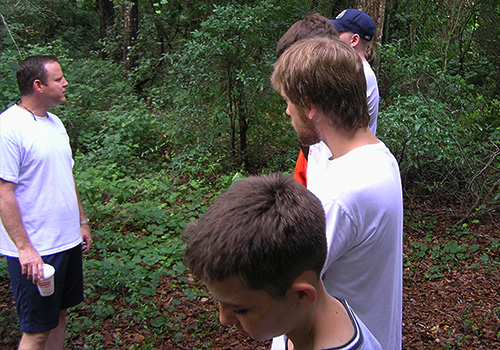

Jim has a unique way of bonding with children and teenagers through Play Therapy, Power Point Presentations, Interactive Games, Recreation Therapy and staying current with the constantly changing world of the children & adolescents. Jim also stays current with adolescents through his 20+ years experience in youth ministry in speaks to students at school assemblies, youth groups and conventions.
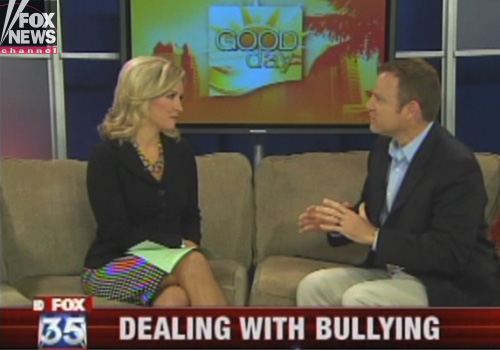
Local and National TV & Radio
Our counselors are child experts and are asked to provide advice on local & national TV & Radio including the Fox News, Daily Buzz, Fox 35, Channel 13, CBS, ABC’s Medical Minute, NBC, and more. Our child and family experts give advice on ADHD, Defiance, Anxiety, Bullying, Social Skills, Alternatives to Medication using Vitamins and Diet, Cutting, Eating issues, Video Game Addiction and more!

School Consultations & Staffing
Our therapists are invited as guest speakers across the country on many topics effecting children! Our Orlando counselors have provided consultation to several private and public schools in the country as well as many local schools: Lake Highland Preparatory, First Academy, Pinecastle Christian Academy, Ocoee Elementary, Clarcona Elementary, Foundation Academy, Colonial High School and more. Our consultations include conflict resolution, accommodations for ADHD, character building, anti-bullying, student retention, and school improvement programs. We advocate for children and students with their IEP or Indivdiualized Education Plan & 504 Plans.
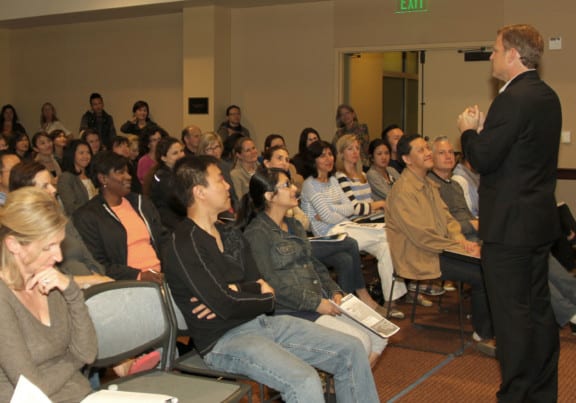
Seminars for Counselors, Teachers, Schools, Parents
Jim West Child Expert in Orlando, East Orlando, Winter Park & Clermont International Communicator: Jim has been invited to speak for private school accreditation boards over the past 6 years including ACSI, Childrens Home Society, National School Social Workers & FACCS. He has spoken to thousands of teachers over the years and influenced private schools to provide special programs for students with learning disabilities, and accommodations for ADHD. His recordings at seminars are often the top requested!
Jim West, MA, LMHC Specializes in Child/Adult/Adolescent ADD/ADHD
Our ADHD Holistic Approach
POSITIVES OF ADHD
- Clients travel from the Central America, the Caribbean, South America, Egypt, Belgium and all over Florida as 85% of patients since 2003 did not need medication or their medication was reduced significantly.
- Clients benefited almost immediately from FDA approved supplements/vitamins and dietary changes. We take a holistic approach incorporating, parent/child or adult education, behavior modification, positive reinforcement, coordination with the school, support for the child, dietary interventions and referral for medication consults (if necessary).
- “Food for Thought – How what we Eat effects how we Think!” In February 2006 the FDA black labeled several drugs for ADHD. See this link for more information.
- Dr. Marc Seigel, MD Professor at NYU states that 25% of teens in the United States are on medication. “Families and pediatricians need to look at what their kids are eating.”
- The Lancet Journal did a study: “Diet May Help ADHD Kids More than Drugs.”
- In the past several years we have read articles, and watched television programs talking about the negative aspects of ADHD.
- ADHD has several positive aspects and if properly treated and educated families can nurture ADHD individuals that possess incredible creativity, entrepreneurial traits, spontaneity, sensitivity, passion and much more.
- Click here to see U.S. News & World Report article about famous people and celebrities with ADHD.
- “ADHD is a Good Thing?” article by James L West, LMHC, NCC
- Social Delays | 60% of ADHD Students are behind Socially by up to 25%. Jim leads a social skills group for ages 6-10, 11-13 and 14-17.
- This group is covers anger management, social skills, dealing with perceptions, greeting people, starting conversation, resolving conflict, apologizing, etc.
- The group utilizes interactive games focusing on building trust, focusing, not interrupting, etc.
- Utilizes short Power Point presentations to maintain attention and focus.
- Group also processes appropriate ways to express feelings of frustration or hurt.
- Social Delays | 60% of ADHD Students are behind Socially by up to 25%. Jim leads a social skills group for ages 6-10, 11-13 and 14-17.
- This group is covers anger management, social skills, dealing with perceptions, greeting people, starting conversation, resolving conflict, apologizing, etc.
- The group utilizes interactive games focusing on building trust, focusing, not interrupting, etc.
- Utilizes short Power Point presentations to maintain attention and focus.
- Group also processes appropriate ways to express feelings of frustration or hurt.
Choosing the Right Counselor
ADD/ADHD Online Checklists
Deciding to seek out counseling can be very scary, but picking out a specific counselor can sometimes be even scarier. Here at Total Life Counseling you can be sure that your child is receiving the best care possible. We have a highly qualified staff that is full of caring and approachable individuals. These very counselors are often asked to provide advice on local news networks,print media, and radio, as well as speak at various conferences and seminars across the state of Florida. We often hear that it is easy to relate and open up to our counselors, and that is something that we take great pride in. But what makes Total Life Counseling a different, interactive counseling experience?
A positive or negative score does not necessarily mean you do or do not have ADD/ADHD. This is meant to be a screening tool to help you decide if you should further explore these symptoms with a professional ADHD expert. If you plan to come in for an assessment please bring the results of the checklist in to your session.
Diagnostic & Statistical Manual for Mental Disorders
Diagnostic & Statistical Manual for Mental Disorders (DSM-V) provides criteria for diagnosing ADHD. The criteria are presented here in modified form in order to make them more accessible to the general public. They are listed here for information purposes and should be used only by trained health care providers to diagnose or treat ADHD. DSM-V Criteria for ADHD I. Either A or B:
- Six or more of the following symptoms of inattention have been present for at least 6 months to a point that is disruptive and inappropriate for developmental level:
Inattention
- Often does not give close attention to details or makes careless mistakes in schoolwork, work, or other activities.
- Often has trouble keeping attention on tasks or play activities.
- Often does not seem to listen when spoken to directly.
- Often does not follow instructions and fails to finish schoolwork, chores, or duties in the workplace (not due to oppositional behavior or failure to understand instructions).
- Often has trouble organizing activities.
- Often avoids, dislikes, or doesn’t want to do things that take a lot of mental effort for a long period of time (such as schoolwork or homework).
- Often loses things needed for tasks and activities (e.g. toys, school assignments, pencils, books, or tools).
- Is often easily distracted.
- Is often forgetful in daily activities.
- Six or more of the following symptoms of inattention have been present for at least 6 months to a point that is disruptive and inappropriate for developmental level:
Hyperactivity
- Often fidgets with hands or feet or squirms in seat.
- Often gets up from seat when remaining in seat is expected.
- Often runs about or climbs when and where it is not appropriate (adolescents or adults may feel very restless).
- Often has trouble playing or enjoying leisure activities quietly.
- Is often “on the go” or often acts as if “driven by a motor”.
- Often talks excessively.
Impulsivity
- Often blurts out answers before questions have been finished.
- Often has trouble waiting one’s turn.
- Often interrupts or intrudes on others (e.g., butts into conversations or games).
- Some symptoms that cause impairment were present before age 7 years.
- Some impairment from the symptoms is present in two or more settings (e.g. at school/work and at home).
- There must be clear evidence of significant impairment in social, school, or work functioning.
- The symptoms do not happen only during the course of a Pervasive Developmental Disorder, Schizophrenia, or other Psychotic Disorder. The symptoms are not better accounted for by another mental disorder (e.g. Mood Disorder, Anxiety Disorder, Dissociative Disorder, or a Personality Disorder).
Based on these criteria, three types of ADHD are identified:
- ADHD, Combined Type: if both criteria 1A and 1B are met for the past 6 months
- ADHD, Predominantly Inattentive Type: if criterion 1A is met but criterion 1B is not met for the past six months
- ADHD, Predominantly Hyperactive-Impulsive Type: if Criterion 1B is met but Criterion 1A is not met for the past six months.
American Psychiatric Association: Diagnostic and Statistical Manual of Mental Disorders, Fourth Edition, Text Revision. Washington, DC, American Psychiatric Association, 2014.
Speak To An Expert About ADD ADHD – (407) 248-0030
Helpful websites related to ADHD
ADHD Articles
- Overcoming ADHD Classroom Challenges DVD, Video, Audio Download, Workbook, Behavior Charts & Power Point Files
- CHADD-Children and Adults with Attention Deficit/Hyperactivity Disorder
- Amen clinic
- ADDA Organization
- Council for Exceptional Education (CEC)
- National Information Center for Children and Youth with Disabilities
- National Institute of Mental Health
- Learning Disabilities Association of America
- ADD Warehouse
- At-Risk Resources
- Childs Work Childs Play
- ADHD is a Good Thing? by James L West, MA, LMHC, NCC
- Food for Thought – How What We Eat Effects How We Think – by James L West, MA, LMHC, NCC
- The Upside of ADHD – by James L West, MA, LMHC, NCC
- “Diet May Help ADHD Kids More than Drugs” – The Lancet Journal
- Study: Removing Tonsils May Cure ADHD in Children – Fox News
- The Multitasking Generation – How Excessive Video Games, Instant Messaging, Computer, My Space, TV, etc. can impact a students ability to connect and relate to family members and peers.
- Hyper Kids? Cut out Preservatives – TIME Magazine

Licensed Mental Health Male & Female Teen Counselors, National Certified Counselor – Child Experts
Testimonials
He is doing so well! We are continuing with the diet changes and vitamins and his attitude is so much better. You were right! – kids don’t see you for very long [because of the diet, supplements and coaching]! We are so grateful for your help. We were in a bad place before we saw you and I am really amazed at the difference.
So glad you duked it out with us. You always gave way above and beyond what I think most in your field would have. And I don’t think anyone else could have reached our teenage son as you did. Thanks from the bottom of my heart.
Jim, thank you again for giving so much of your time on Friday. The feedback I got from everyone that attended was extremely positive. I also gave a copy of your DVD to one of our teachers. Your help will make an enormous difference for Daniel both at home and at school.
Adult ADHD & Bi-Polar | I wanted to Thank You for your suggestions in dealing with my issues. I have made many changes and I am now drug [medication] free!
A late but very big thank you! We wanted to thank you for your counsel with Brian…. you were very encouraging and gave us some great tips the real payoff is to see a notebook loaded with paper, pen and a pencil! That system is being put to use with putting clothes away as well. It speaks volumes! The natural vitamins have helped along with good eating habits. Many blessings back to you and your family!
After just 3 sessions, vitamins and dietary adjustments, “We are going to celebrate a miracle on Thanksgiving. Our son colored in the most beautiful colorful turkey as if I had colored it. For the first time in years he has slept straight through in his own bed all night. He is working independently at school after repeating a year because of attention problems. But the best is, he had a starring role as the preacher in the Thanksgiving program at school. For the first time after years of watching him in programs we heard his voice sing above all others. He followed all the moves and he clearly and confidently spoke his line 3 times to the crowd. This is what we are doing today. Thank you for your help.”
“Hope you do not mind my responding to your announcement, but I have been wanting to let you know how much you helped our son! He saw you about a year ago, after I first met you at our Annual Statewide Teachers conference. Your suggestions were great for him, and he continues to take the supplements and last spring made the Dean’s List and he was also voted president of his senior class this year! He is now beginning the process of applying to Law School. The supplements has also been a help to my husband who never realized he had ADD until a few years ago! We appreciate your help!”
“He has been on the supplements [about 4 weeks] and he is absolutely amazing. So calm, cooperative, pleasant. He is the most perfect sweet little child parents wish for.”

Media Interviews and Seminars with our ADHD Experts
Articles From Our ADHD Experts



 Psychology Today Verified
Professional Memberships:
- LMHC MH6561 – State of Florida’s Department of Health
- NBCC – National Board of Certified Counselors (NBCC)
- AACC
- Psychology Today Verified
- GoodTherapy.org Credentials Verified
Total Life Counseling Center Location
Total Life Counseling Center provides counseling, therapy, coaching, camps and career services for all of central Florida, including: Orlando, Winter Park, Maitland, College Park, Dr. Phillips, Pine Castle, Conway, Windermere, Winter Garden, Ocoee, Oviedo, Longwood, Altamonte Springs, Casselberry, Lake Mary, Sanford, Deland, De Bary, Deltona, Daytona, New Smyrna, Cocoa, Titusville, Merritt Island, Kissimmee, St. Cloud, Celebration, Mt. Dora, the Villages and the tri-cities of Tavares, Eustis and Leesburg.
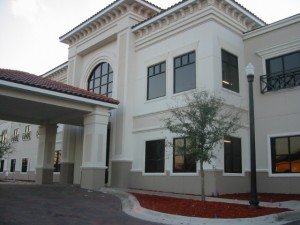
Our counseling, therapy, camps, group, coaching and career services are conveniently located in:
Main Office:
Southwest Orlando FL | Metrowest, Windermere, Winter Garden, FL | 1507 S. Hiawassee Road #101, Orlando, FL 32835
Satellite Offices:
1. Winter Park, FL | Downtown Orlando, Maitland, Altamonte Springs, FL | 1850 Lee Road #215, Winter Park, FL 32789
2. East Orlando, FL | Waterford Lakes UCF | 1850 Alafaya Trail, Orlando, FL 32826
3. Clermont, FL | Minneola Groveland, FL | 100 N. Hwy 27, Clermont, FL 34711
4. Lake Mary, FL | Longwoord, Sanford, Oviedo, Winter Springs, FL | 1325 S International Pkwy #2221, Lake Mary, FL 32746
Teen Resources:
Teens Talk – Central Florida Help Line: (407) 740-7477 or (407) 740-TALK