

Aaron Carter Personal Struggles Mental Health Addiction: What Can We Learn?
Key Highlights
- Aaron Carter publicly discussed his experiences with mental health challenges, addiction, and recovery.
- Childhood fame, public scrutiny, and career pressures can affect emotional well-being.
- Mental health conditions and substance use disorders often occur together and may require dual diagnosis treatment.
- Shame, stigma, and fear of judgment can prevent people from seeking help early and speaking openly about their struggles or own life.
- Recovery is rarely a straight line and may involve symptoms such as anxiety, mood changes, or delusions in some individuals.
- Professional treatment and support systems are often more effective than relying on willpower alone.
- Total Life Counseling provides support for individuals and families facing mental health and addiction challenges.
If you remember the song “I want candy” or the New Kids on the Block, you remember the pop singer and child star, Aaron Carter. We were sad to find out that he passed this weekend after suffering from addiction and mental health issues. Aaron revealed to fans that he was diagnosed with “multiple personality disorder, schizophrenia, acute anxiety, and manic depression” on the TV program The Doctors. You don’t have to be a mental health expert to understand how serious that combination of issues must be. Addiction and substance abuse was a concern of his friends and family as they urged him to attend an inpatient rehab program in the weeks before his death.
Serious mental health issues aren’t isolated to the world of entertainment, everyone suffers from some level of mental health issues, diagnosable or not. Even still, we sometimes let our issues go untreated. According to a study done by the National Institute of Mental Health, “51 percent of adults in the U.S. with bipolar disorder and 40 percent with schizophrenia were untreated during a one-year study period.” The amount of progression a mental health issue of any kind can develop over a year without treatment is no joke. Aaron isn’t the only person who will lose their life because of a mental health issue, but his death can teach us something about the importance of making sure we and our loved ones are getting help when we need it.
So what can we do to prevent tragedies like this from happening? Mental health issues are as serious as any other diagnosis and in many cases, have more serious consequences when left untreated. Carter’s friends, family, and child are survived by him and we hope they are able to find hope and healing as they cope with the grief of losing a loved one. If you or a loved one are suffering from a mental health issue, don’t let anything prevent you from getting the care you need.
Our mental health counselors are available to help in person or online! Help is just a phone call away so call now for help 407-248-0030!
Who Was Aaron Carter Beyond the Headlines?
Before Aaron Carter became associated with conversations around mental health and addiction, he was one of the biggest young stars of the late 1990s and early 2000s. He released his debut album at just nine years old and quickly became a familiar name through hit songs such as I Want Candy and Aaron’s Party (Come Get It).
As the younger brother of Backstreet Boys member Nick Carter, Aaron grew up in the spotlight during some of the most formative years of his life. Alongside music, he appeared on television, toured internationally, and experienced a level of fame and public attention that few children ever encounter.
Like many young performers, Aaron Carter personal struggles mental health addiction unfolded under intense public scrutiny. His story serves as a reminder that fame, success, and public recognition do not protect someone from experiencing emotional pain, addiction, or mental health challenges.
What Mental Health Struggles Did Aaron Carter Discuss Publicly?
Aaron Carter spoke publicly about his mental health on several occasions and shared that he had received multiple diagnoses throughout his life. During interviews and television appearances, he discussed living with:
- Bipolar disorder
- Schizophrenia
- Anxiety
- Multiple personality disorder, now more commonly referred to as dissociative identity disorder (DID)
Aaron Carter mental issues disclosures helped bring greater visibility to conversations that many families continue to find difficult to have openly.
At the same time, discussions around Aaron Carter mental health issues often focus on diagnosis alone, when the reality is usually far more complex. Mental health struggles can overlap with addiction, trauma, stress, and life experiences, making every person’s journey unique. No public interview can fully capture someone’s experience or replace professional assessment and treatment.
How Are Addiction and Mental Health Connected?
The conversation around Aaron Carter personal struggles mental health addiction highlights something mental health professionals see every day: addiction and mental health challenges often occur together.
For some people, substances become a way to cope with difficult emotions, intrusive thoughts, anxiety, trauma, or depression. In other cases, substance use itself can worsen mental health symptoms, creating a cycle that becomes increasingly difficult to break.
This relationship, often called a co-occurring disorder or dual diagnosis, can make both conditions harder to recognise and treat.
Some of the ways mental health and addiction can affect each other include:
- Using drugs or alcohol to temporarily numb emotional pain or anxiety.
- Substance use making symptoms such as depression, paranoia, or mood swings worse over time.
- Mental health symptoms making it harder to maintain recovery or avoid relapse.
- Sleep disruption and stress affecting both emotional well-being and substance use patterns.
- Feelings of shame or stigma preventing people from seeking help early.
Aaron Carter mental illness and addiction highlight why treatment often works best when both challenges are addressed together rather than separately. Early support, professional treatment, and strong support systems can make a significant difference in long-term recovery.
Why Do People With Addiction Often Hide Their Struggles?
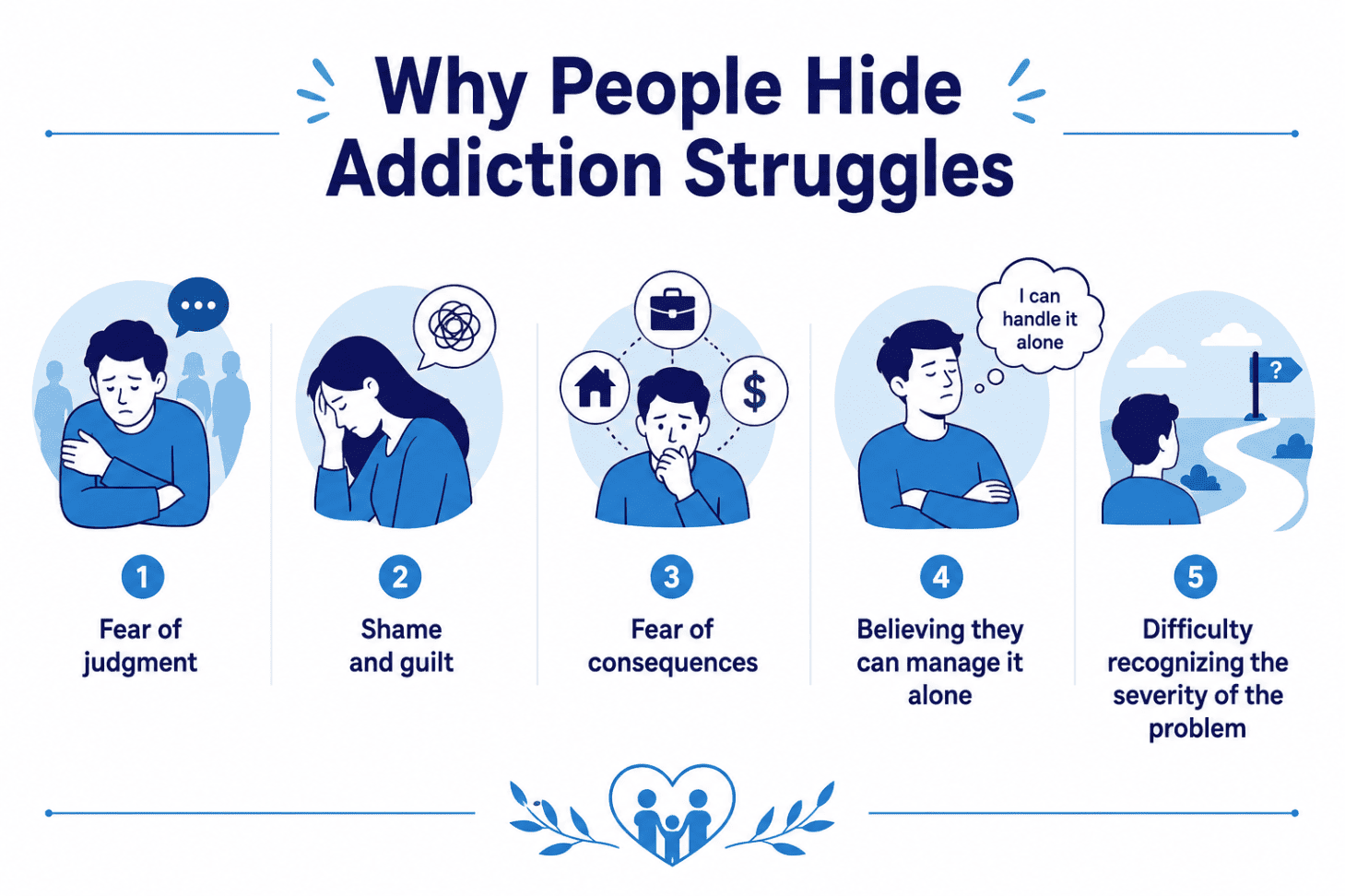
Many people assume that if someone needs help, they will simply ask for it. In reality, addiction is often accompanied by feelings that make reaching out much more difficult.
Some of the reasons people hide their struggles include:
- Fear of judgment: Many worry about disappointing family members, damaging relationships, or being labeled because of their addiction.
- Shame and guilt: People may recognize that they need help but feel embarrassed by their behavior or choices.
- Fear of consequences: Concerns about losing a job, financial stability, housing, or custody arrangements can prevent people from speaking openly.
- Believing they can manage it alone: Many people convince themselves they can stop using substances without treatment or support.
- Difficulty recognizing the severity of the problem: Addiction often develops gradually, making it harder for someone to recognize how much their life has changed.
For families, this can make addiction feel confusing or frustrating. A loved one’s reluctance to seek help is not always a sign that they do not care or do not want support. In many cases, fear, shame, and stigma become barriers long before treatment ever begins.
How Can Childhood Fame Affect Mental Health?
Childhood fame can bring opportunities, but it can also introduce pressures that most young people never have to navigate while they are still developing emotionally and psychologically.
Some of the challenges often associated with growing up in the public eye include:
- Constant public scrutiny: Mistakes, relationship challenges, and personal struggles can become headlines instead of remaining private experiences.
- Identity becoming tied to success: Young performers may begin to connect their self-worth to popularity, sales, awards, or public approval rather than who they are outside of their career.
- Missing out on normal childhood experiences: Busy schedules, touring, and media attention can limit opportunities to build friendships, routines, and experiences that many peers take for granted.
- Pressure to keep performing: Expectations from fans, the media, or the industry can make it difficult to slow down or step away during periods of stress or emotional exhaustion.
- Sudden changes in fame or income: Shifts in public attention or career opportunities can create uncertainty, financial pressure, and a sense of loss.
- Difficulty building trusting relationships: Growing up in the spotlight can make it harder to know who genuinely cares for the person versus the celebrity.
While childhood fame does not cause mental illness, these experiences can increase emotional strain and make it harder for some individuals to ask for help or step away when support is needed most. Aaron Carter’s story has become part of a broader conversation about how the entertainment industry supports young performers long after the spotlight fades.
Why Do Celebrities Often Struggle to Seek Help?
For public figures, asking for help can come with challenges that many people never have to consider. Seeking treatment may feel risky when personal struggles can quickly become headlines or public discussion.
Some of the barriers celebrities may face include:
- Public scrutiny: Therapy appointments, treatment programs, or difficult periods can attract media attention and public speculation.
- Fear of stigma: Concerns about being viewed differently by fans, employers, or the public can discourage people from speaking openly about mental health.
- Financial dependence on performance: For entertainers, athletes, and performers, taking time away from work can affect contracts, income, and career opportunities.
- Fear of damaging careers: Some individuals worry that discussing mental health challenges could affect future roles, endorsements, or professional relationships.
While these pressures are unique to public figures, the fear of judgment prevents many people from seeking help. Aaron Carter’s story continues to highlight the importance of creating environments where asking for support feels safe rather than risky.
What Was Aaron Carter’s Official Cause of Death?
According to the Los Angeles County Medical Examiner, aaron carter cause of death was ruled accidental and involved both substance use and drowning.
While public interest often focuses on the circumstances surrounding Aaron Carter’s death, many mental health professionals believe the more important conversation lies in understanding the challenges that can lead people to these situations in the first place.
Aaron Carter’s personal struggles with mental health and addiction highlighted the complex relationship between substance use, emotional well-being, access to treatment, and the importance of strong support systems. His story continues to serve as a reminder of the value of early intervention, reducing stigma, and making mental health care more accessible for those who need it.
Call for a Complimentary 15 Minute Phone Consultation
Se Habla Español: We have Portuguese and Spanish speaking counselors as well.

Why Is Recovery Rarely a Straight Line?
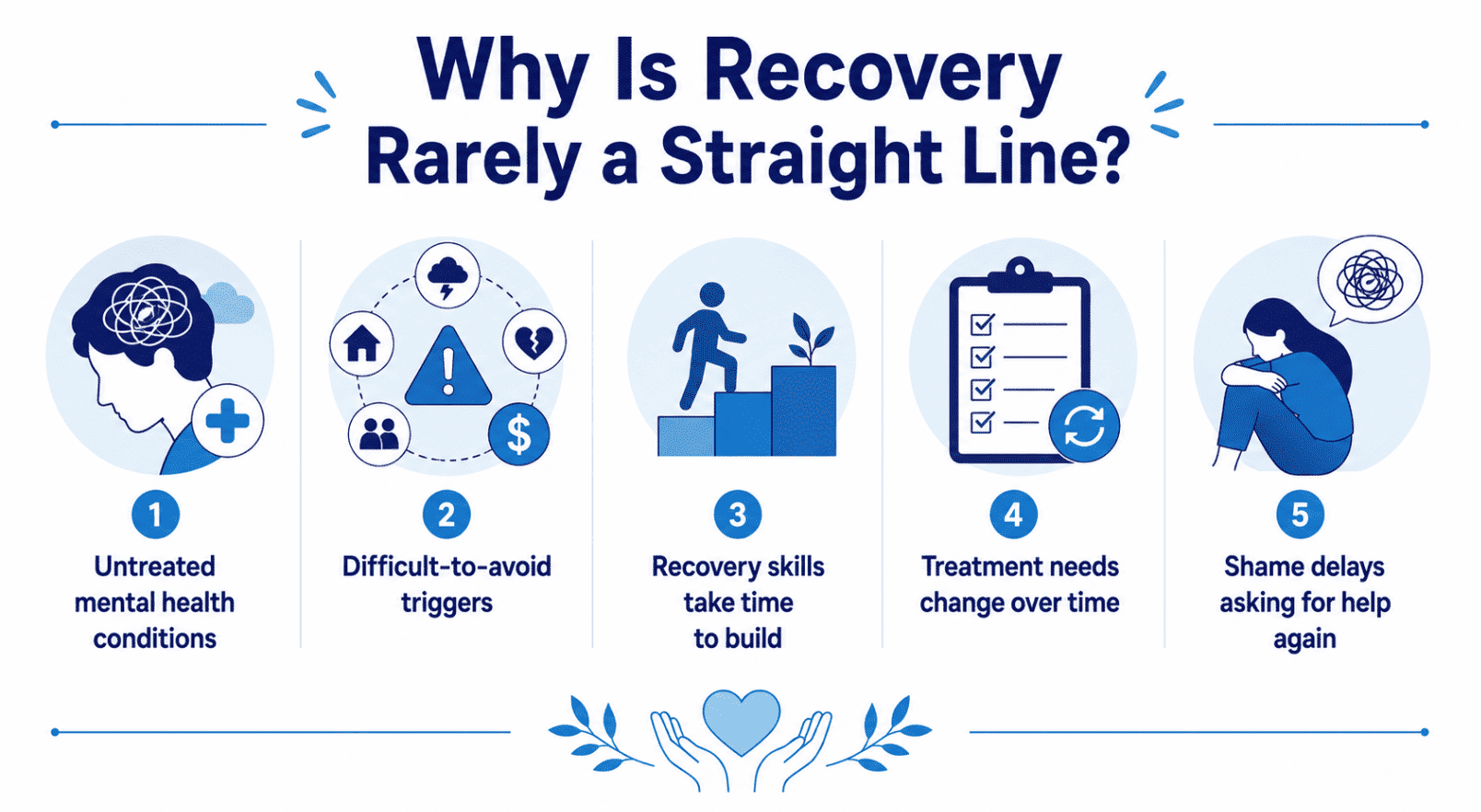
Recovery from addiction and mental health challenges rarely follows a predictable path. Progress often happens gradually, with periods of improvement, setbacks, and adjustment along the way.
Aaron Carter’s story highlighted a reality that many families and professionals understand well: recovery is often more complicated than simply deciding to get better. There are several reasons why the process can feel inconsistent.
1. Underlying mental health conditions may remain untreated
Anxiety, depression, trauma, or other mental health challenges can continue to affect recovery if they are not addressed alongside addiction. Treating only the substance use while ignoring the underlying emotional struggles can make long-term recovery more difficult.
2. Triggers are difficult to avoid completely
Stress, grief, relationship problems, financial pressure, or major life changes are part of everyday life and can increase the risk of setbacks, particularly during the early stages of recovery.
3. Recovery skills take time to build
Learning healthier ways to cope with emotions, stress, and difficult situations often requires practice, support, and repetition. These skills are developed over time rather than overnight.
4. Treatment needs can change over time
What works during one stage of recovery may not be enough during another. Therapy approaches, medications, support groups, and treatment plans often need to evolve as a person’s needs change.
5. Shame can delay asking for help again
Many people view relapse or setbacks as personal failure rather than as a sign that additional support may be needed. This shame can prevent individuals from reaching out quickly when they need help the most.
Setbacks do not mean treatment has failed or that recovery is impossible. Aaron Carter personal struggles mental health addiction serve as a reminder that recovery often involves persistence, support, and adapting along the way rather than achieving immediate perfection.
What Warning Signs Should Families Watch For?
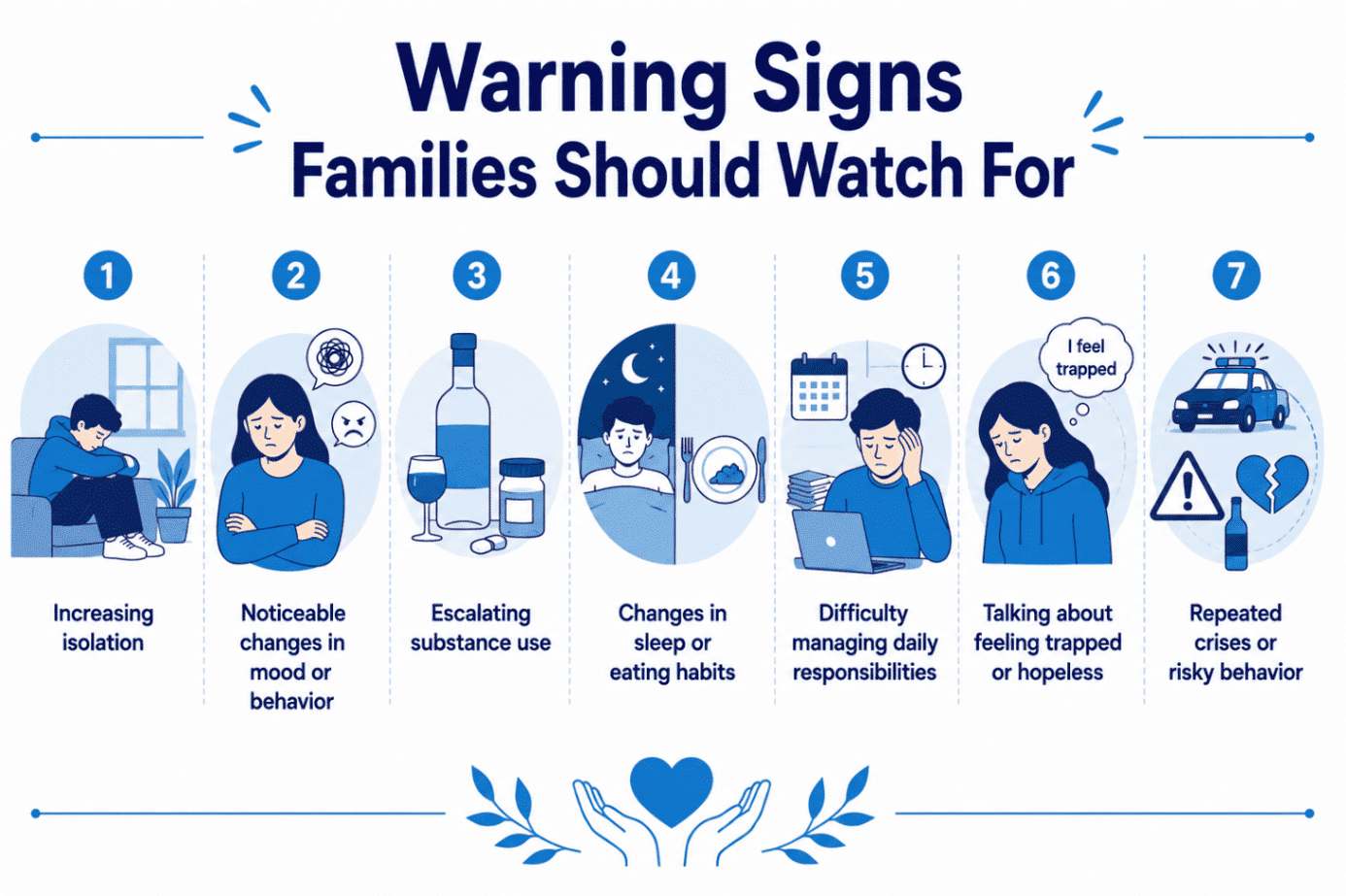
Aaron Carter’s story reminded many families how difficult it can be to know when someone is struggling or how serious those struggles may have become. Mental health challenges and addiction rarely appear overnight, and the warning signs are often easier to recognize in hindsight.
1. Increasing isolation
Pulling away from family, friends, or activities that once mattered can sometimes signal that a person is struggling emotionally or trying to hide their difficulties from others.
2. Noticeable changes in mood or behavior
Increased irritability, hopelessness, anger, anxiety, or emotional outbursts that seem out of character may indicate that additional support is needed.
3. Escalating substance use
Using alcohol or drugs more frequently, in larger amounts, or in riskier situations can be a sign that someone is using substances to cope with emotional distress or other underlying challenges.
4. Changes in sleep or eating habits
Significant shifts in sleeping patterns, appetite, energy levels, or daily routines can sometimes accompany both mental health conditions and substance use issues.
5. Difficulty managing daily responsibilities
Struggling with work, school, finances, appointments, or personal care that was previously manageable may suggest that a person’s challenges are beginning to affect their daily functioning.
6. Talking about feeling trapped or hopeless
Statements about feeling like a burden, having no future, or believing that things will never improve should always be taken seriously and responded to with support and professional guidance.
7. Repeated crises or risky behavior
Legal problems, accidents, impulsive decisions, or situations that repeatedly place someone’s safety at risk can sometimes indicate that underlying issues are going unaddressed.
Recognizing these signs does not mean someone is experiencing addiction or mental illness, but it can create an opportunity for early conversations and support. One of the lasting lessons from Aaron Carter’s story is that reaching out early is often easier than waiting for a crisis to force the conversation.
What Can Aaron Carter’s Story Teach Us About Getting Help Earlier?
Aaron Carter spoke publicly at different points in his life about his experiences with mental health challenges, addiction, and recovery. His story became a reminder that struggles are often far more complex than they appear from the outside and that support is often most effective when it arrives before a crisis develops.
1. Mental health struggles can affect anyone
Aaron Carter achieved a level of fame and success that many people only dream about, yet he still experienced significant personal challenges. His story highlights an important reality: mental health conditions and addiction do not discriminate based on age, wealth, career success, or public recognition.
2. Early intervention often leads to better outcomes
Many mental health and addiction challenges become harder to manage the longer they go untreated. Recognizing concerns early, having open conversations, and seeking professional support sooner can often prevent problems from becoming more severe or more difficult to treat.
3. Mental health and addiction often need to be treated together
Aaron Carter’s personal struggles brought attention to the close relationship between addiction and mental health. When both are present, addressing only one challenge while ignoring the other can make recovery more difficult and increase the risk of setbacks.
4. Recovery works best with strong support systems
Long-term recovery rarely happens in isolation. Family members, friends, therapists, support groups, and healthcare professionals can all play important roles in helping someone navigate treatment, setbacks, and progress over time.
5. Asking for help is a sign of strength, not weakness
One of the most important lessons from Aaron Carter’s story is the need to continue reducing stigma around mental health treatment. Reaching out for support, speaking honestly about struggles, and accepting help are often some of the strongest decisions a person can make.
While no one can know how another person’s story might have unfolded under different circumstances, Aaron Carter’s experience continues to encourage conversations about early intervention, reducing stigma, and making mental health support more accessible to those who need it.
Can Family Support Alone Overcome Addiction?
Family support can make a meaningful difference during recovery, but it is rarely enough to overcome addiction on its own.
Addiction can affect brain chemistry, decision-making, emotional regulation, and behavior in ways that often require professional treatment and specialized care. Even the most supportive families cannot replace therapy, medical treatment, or addiction services when they are needed.
At the same time, recovery rarely happens in isolation. Encouragement from loved ones, accountability, stable relationships, and emotional support can all strengthen a person’s willingness to seek help and remain engaged in treatment.
Aaron Carter’s story serves as a reminder that while family support matters, long-term recovery often depends on combining that support with accessible treatment, mental health care, and professional guidance.
At Total Life Counseling, clinicians frequently work with families navigating both substance use and mental health concerns simultaneously.
What Should You Do If Someone You Love Is Struggling?
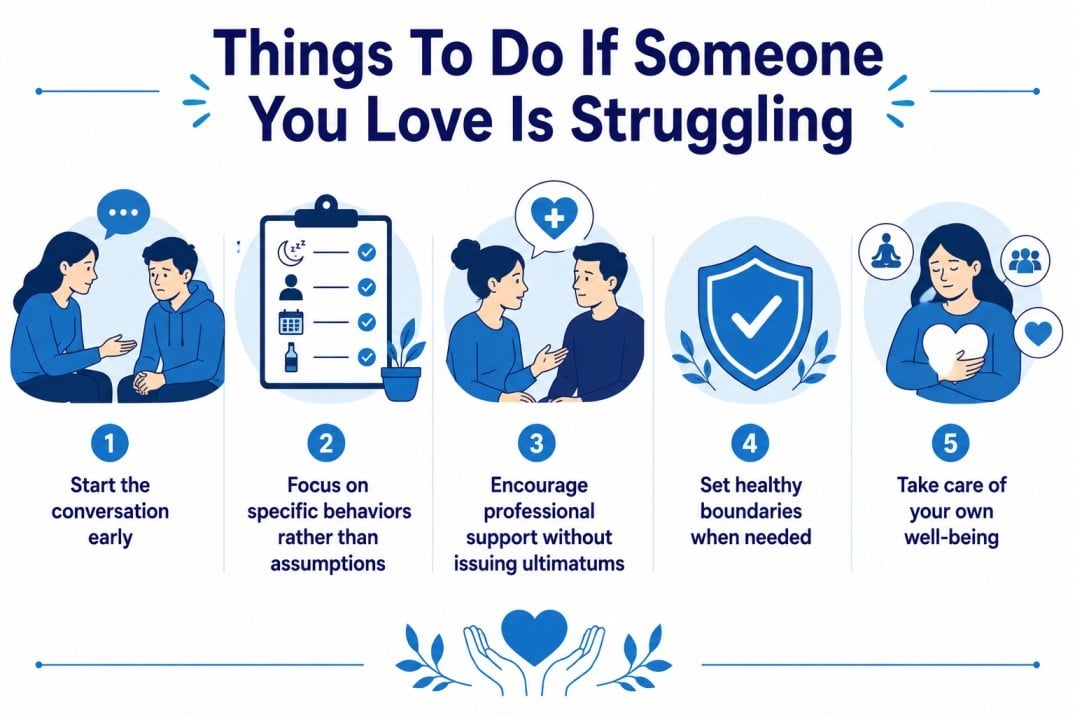
Supporting someone with mental health challenges or addiction can feel overwhelming, especially when you are unsure what to say or do. Aaron Carter’s story led many families to ask an important question: What can loved ones do when they see someone struggling but cannot force them to accept help?
While every situation is different, several practical steps can make a meaningful difference.
1. Start the conversation early
Do not wait for a crisis, hospitalization, or major incident before bringing up your concerns. A simple conversation such as “I’ve noticed you don’t seem like yourself lately” can open the door to support much earlier.
2. Focus on specific behaviors rather than assumptions
Instead of saying “You have a problem,” talk about what you have observed, such as changes in sleep, increased isolation, missed responsibilities, or escalating substance use. Specific examples are often easier for people to hear than labels or accusations.
3. Encourage professional support without issuing ultimatums
Many people are more willing to seek help when they feel supported rather than pressured. Offering to help research providers, schedule appointments, or attend a first session can reduce some of the barriers to treatment.
4. Set healthy boundaries when needed
Supporting someone does not mean accepting unsafe behavior, financial harm, or repeated crises without limits. Clear and consistent boundaries can protect both the individual and their loved ones.
5. Take care of your own well-being
Family members and caregivers often experience stress, exhaustion, guilt, and burnout while trying to help someone they love. Seeking support for yourself through counseling, support groups, or trusted friends is not selfish; it is part of being able to continue helping effectively.
Supporting someone through mental health challenges or addiction is rarely simple, and outcomes are not always within a family’s control. What families can control is creating opportunities for conversation, connection, and support long before a crisis develops.
Why Seeking Help Early Can Change Outcomes
Many people seek help only after reaching a breaking point, but support is often most effective when it begins earlier. Mental health challenges and addiction can be difficult to navigate alone, especially when both occur together.
Total Life Counseling provides compassionate, evidence-based support for individuals and families facing mental health concerns, addiction, and co-occurring disorders through both in-person and online counseling services.
Conclusion
Aaron Carter’s story was never just about fame, addiction, or mental illness. It was a reminder that struggles are often more complex than they appear and that support is most effective when it comes early. Conversations, treatment, and compassion may not change every outcome, but they can change many lives. The lasting lesson from his experience is simple: do not wait for a crisis before reaching out, listening, reducing stigma, or asking for help when it is needed most.
Licensed Counselors & Therapists
Meet Our Team of Certified & Experienced Professionals
Total Life Counseling Center consists of Licensed Counselors, Masters Level Therapists, Espanol Counselors, Licensed Mental Health Counselors, Business Coaches, Image Enhancement Coaches who provide counseling for emotional, mental, physical and spiritual care including marriage, individual, family, substance abuse and more. Our team of certified and experienced professionals, dedicated to serving a comprehensive spectrum of mental health and relationship issues such as couples, women and men’s issues, children and teens with oppositional defiance, video game addiction, ADHD, ASD, anxiety, depression, and trauma survivors, is here to support and guide you through your journey towards healing and navigating life transitions. This approach not only enhances the effectiveness of the counseling provided but also builds trust within the community and among potential clients, who may be seeking support.
We offer next level counselors specialized in areas such as relationships, video game & drug/alcohol addictions, abuse, trauma, depression, and ADHD. Our Therapists are EMDR (eye movement desensitization) trauma therapy trained, cognitive behavioral therapy, specialize in ADHD and Oppositional Defiant Children, and are also professional Gottman method marriage couples counselors to give the best results to couples and to provide the best comprehensive spectrum of mental health and relationship care for our clients.
Struggling with Anger? We offer 8 hour anger management group therapy!
Discounted Rates and the president of Total Life Counseling Center Jim West does not want to turn people away and we have counselors at various levels of experience at a discounted rate that are trained by our next level counselors!

Jim West
MA, LICENSED MENTAL HEALTH COUNSELOR, national certified counselor
President, Counselor, Guest Speaker, Author, Social Skills, ADHD, ODD, ASD, children, teens, and more!

Dana West
MSW, Licensed clinical social worker
Vice President, Counselor, Guest Speaker, Addictions, Trauma, Couples, Abuse, and more!

Mathew Martin
MS, LICENSED MENTAL HEALTH COUNSELOR
Counselor, Coach, Guest Speaker, Marriage, Individual Males, Substance Abuse and more!
Brandon Feinberg
MS, LICENSED MENTAL HEALTH COUNSELOR
Male Counselor, Licensed Mental Health Counselor specializing in ADHD, Asperger Syndrome, Autism Spectrum Disorders, and more!

Lyris Steuber
MS, licesned marriage & family therapist
Counselor, Coach, Marriage & Family, Play Therapy, Divorce, Adolescent and more!

Valerie Ware
Licensed Psychologist and Behavioral Specialist
Psychological Evaluator, Autism, ADHD, Learning Disabilities, Anxiety, Gifted, Career Pathways, and emotional assessments.

Gemima McMahon
MA, LICENSED MENTAL HEALTH COUNSELOR
Licensed Mental Health Counselor specializing in Women’s issues, Trauma, Anxiety, Depression, Cutting, Couples, Children and Teenagers and more!

Audrey DeBruler
MS, LMHC, Licensed Mental Health Counselor
Children, Adolescents, Young Adults, Faith Based Counseling, Trauma Recovery, Anxiety and more!

David Duany
MA, LICENSED MENTAL HEALTH COUNSELOR
Licensed Mental Health Counselor specializing in ADHD, Social Skills, and Anger Management counseling for children, young adults, and families.

Katherine Waldheim
MS, Registered Mental Health Counseling Intern
Trauma, anxiety, couples counseling, and child & adolescent counseling services and more!

Sarah Dornas Albuquerque
MS – Registered Mental Health Counselor Intern
EMDR, Anxiety, Depression, Children, Teens, Young Adults, English, Spanish and Portugues and Adult Counseling

Frequently Asked Questions
Did Aaron Carter have mental illness and what conditions did he discuss publicly?
Aaron Carter publicly stated that he had received diagnoses including schizophrenia, anxiety, bipolar disorder, and dissociative identity disorder. Discussions around aaron carter mental disorders often focused on labels rather than the broader challenges of treatment, recovery, and support.
What role did substance misuse play in Aaron Carter’s mental health struggles?
The story of aaron carter personal struggles mental health addiction highlighted how drug addiction, benzodiazepines, opiates, and substances such as Xanax can complicate existing mental health conditions and recovery efforts.
How did Aaron Carter’s mental health impact his career and personal life?
Aaron Carter’s mental health challenges affected relationships, public appearances, and career stability. His experiences also influenced media coverage, social media discussions, and decisions involving treatment, recovery, and maintaining sobriety.
How did Aaron Carter’s experiences with schizophrenia affect his behavior?
Aaron Carter publicly stated that he had received diagnoses, including schizophrenia. However, only his healthcare providers would have known the full details of his medical history, making it difficult to draw direct links between diagnoses and specific behaviors.
Why did Aaron Carter cancel tour dates due to his mental health issues?
Aaron Carter cited health concerns and personal struggles, including the need for an official diagnosis, at different points in his career. Like many people facing mental health challenges, periods of treatment and recovery can affect work commitments and public appearances.
What lessons about mental health can be learned from Aaron Carter’s tragic death?
The conversation around aaron carter personal struggles mental health addiction reminds us that early intervention, reducing stigma, and improving access to treatment can make a meaningful difference before situations reach crisis levels.
How did Aaron Carter’s family relationships relate to his mental health challenges?
Public reports often referenced family tensions involving brother Nick, sister Leslie, and other relatives. Family relationships can influence recovery, support systems, and willingness to seek treatment.
What did Aaron Carter reveal about living with dissociative identity disorder?
Aaron Carter spoke publicly about dissociative identity disorder and described experiencing different personality states. His disclosures helped bring greater visibility to conversations about complex mental health conditions.
Did Aaron Carter talk about facing anxiety and how he managed it?
Yes. Aaron Carter spoke publicly about living with anxiety as part of his broader mental health challenges. During an episode of The Doctors, the singer Aaron Carter discussed receiving treatment, taking prescribed medications, and seeking professional support while navigating recovery.
How did public discussions about Aaron Carter being mentally ill affect conversations around stigma?
Public conversations surrounding Aaron Carter mentally ill helped bring greater attention to mental health awareness, but they also highlighted how labels can sometimes overshadow treatment, recovery, and the importance of compassionate support.
Filed in: Addictions, adults, Depression, Grief, Multiple Personality Disorder
Share This Story, Choose Your Platform!
Total Life Counseling Center consists of Licensed Counselors, masters level therapists, Español counselors, Licensed Mental Health Counselors, business coaches, and image enhancement coaches who provide counseling for emotional, mental, physical and spiritual care including marriage, individual, family, substance abuse and more. TLC’s family, trauma and marriage experts have been interviewed on National and Local TV/Radio over 200 times for their expert advice on Fox News, OWN, WETV, ABC’s Medical Minute and more. Our skilled counselors are relational, approachable and specialists providing therapy services in the Central Florida area including: Orlando, Winter Park, MetroWest, Windermere, Dr. Phillips, East Orlando, Lake Mary, and Clermont, Boca Raton Florida, and Dallas, TX.
About the Author: Jim West